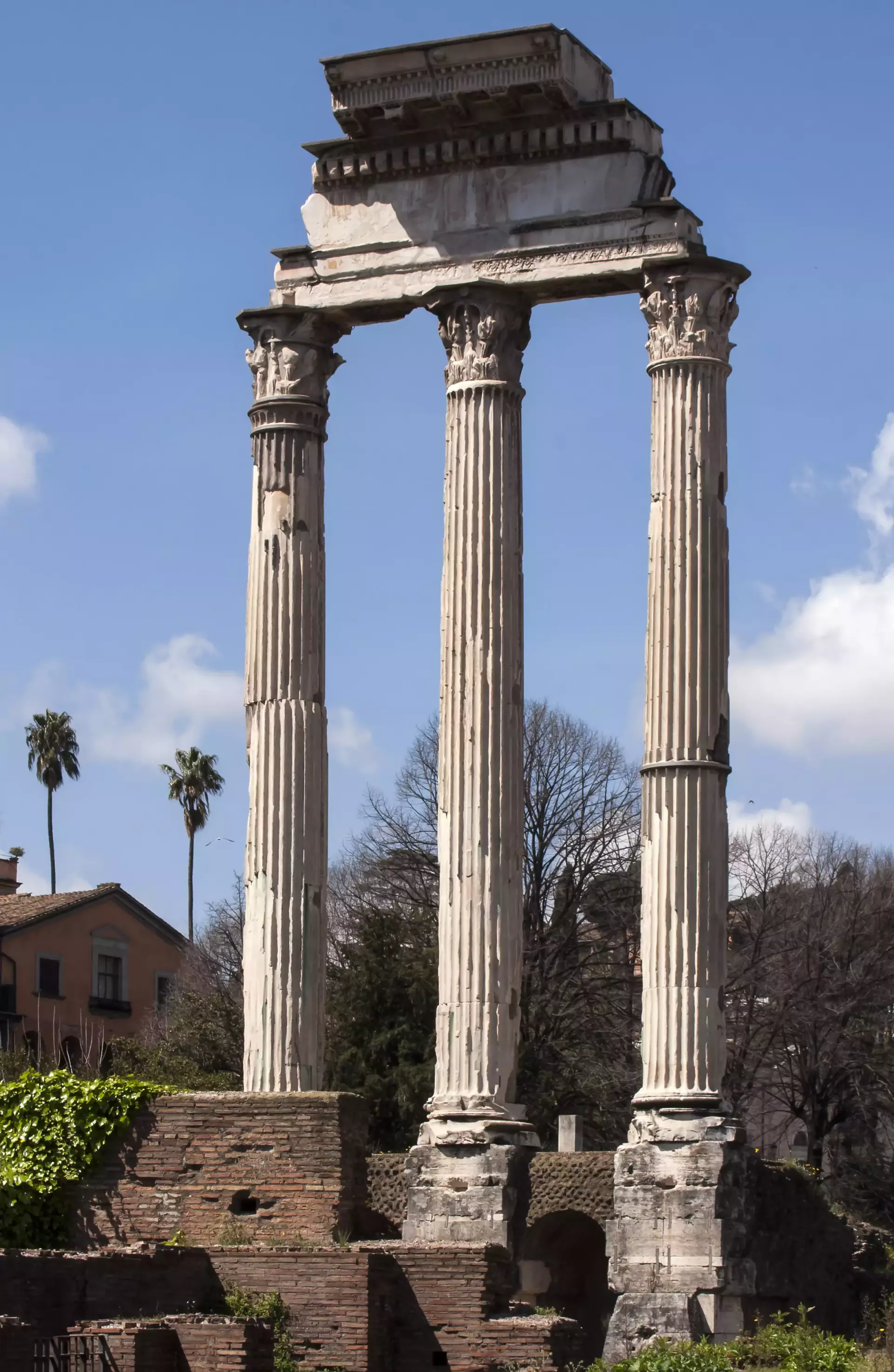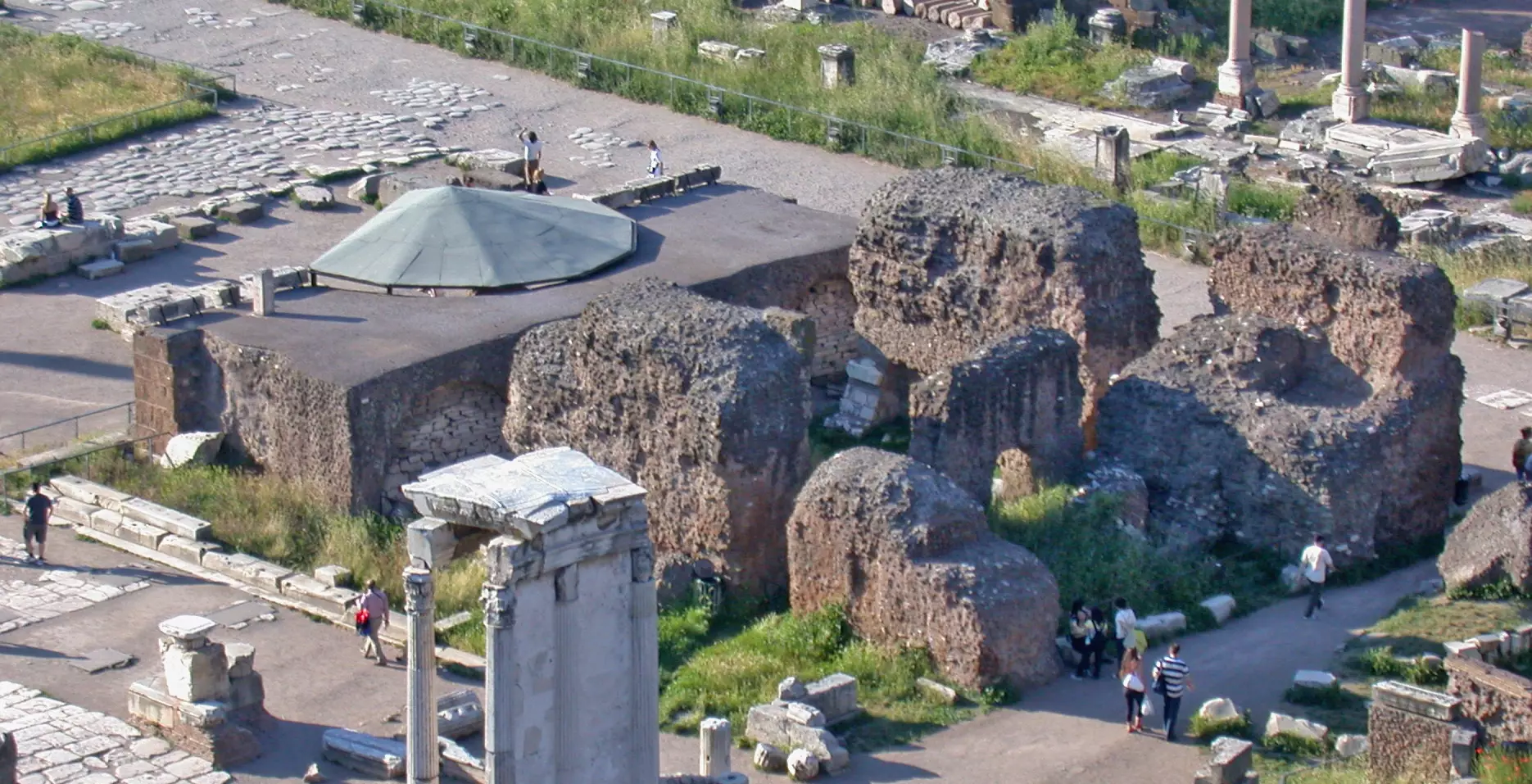
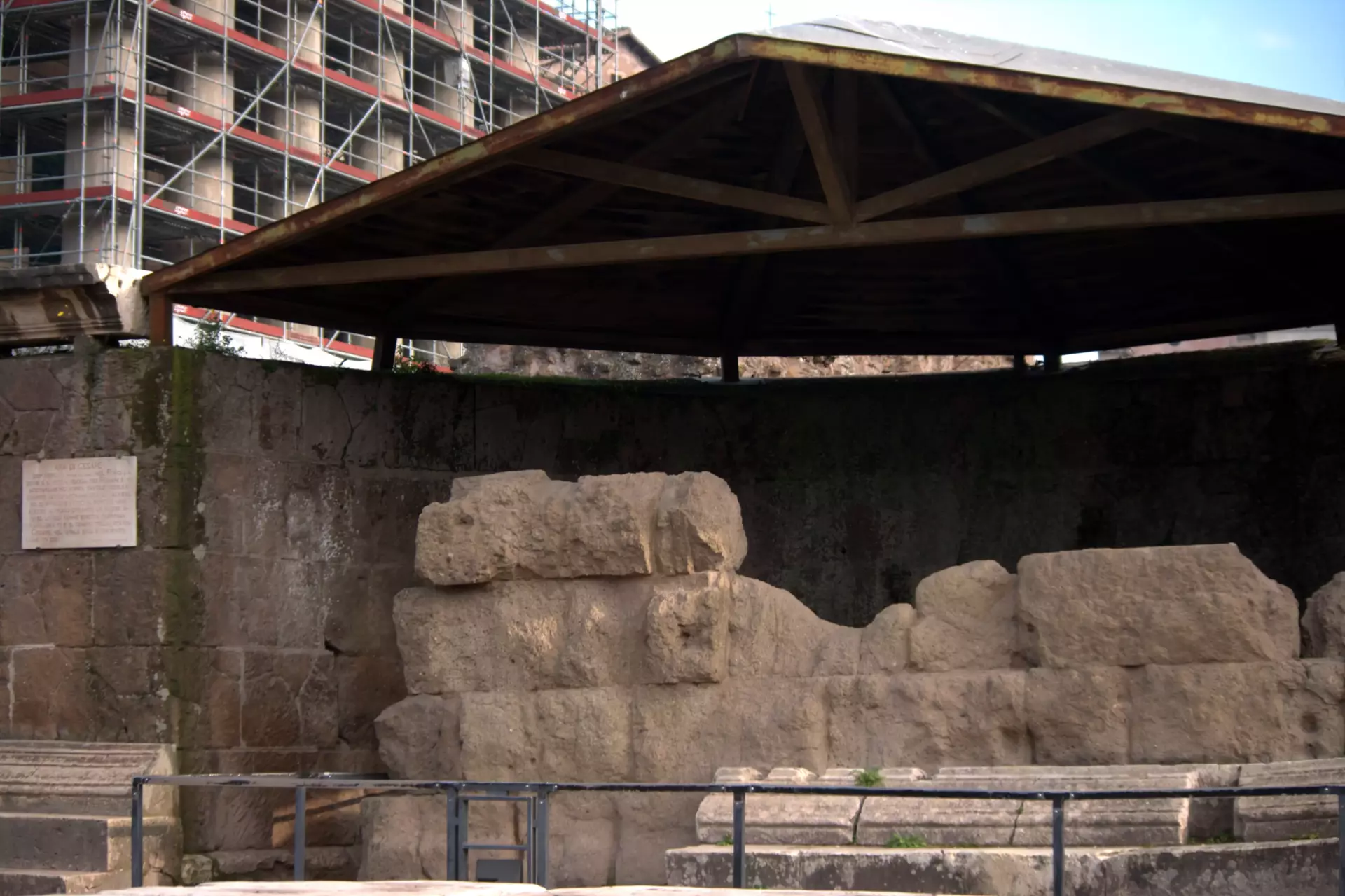
In the heart of ancient Rome, there’s a place where history and legend blend seamlessly. Finished in 29 BC, the Temple of Caesar stands as a tribute to one of the most iconic figures in world history. This unassuming ruin marks the very spot where Julius Caesar’s friends and followers gathered after his shocking assassination, igniting events that would shape the course of an empire.
It was here, amidst the tumult of grief and outrage, that Caesar’s body was cremated in an impromptu ceremony. The air must have been heavy with sorrow and tension, as Romans came to pay their last respects to their fallen leader. This was no ordinary funeral—spontaneous and charged with emotion, it captured the collective heart of the city.
The temple is also immortalized by one of history’s most famous speeches. Mark Antony, a loyal friend of Caesar, delivered his stirring funeral address on these very grounds. Shakespeare’s imagined words for Antony—“Friends, Romans, Countrymen, lend me your ears…”—echo through centuries, conjuring the drama and passion that unfolded here. The speech galvanized the crowd and set in motion a series of events that forever altered Rome’s destiny.
Today, visitors can wander through the Roman Forum and pause at the Temple of Caesar, reflecting on the magnitude of what transpired. Though only a few remnants remain, the history embedded in this site is palpable. It’s a powerful reminder of how a single moment can ripple through time, leaving an indelible mark on the world.
Source - https://en.wikipedia.org/wiki/Temple_of_Caesar
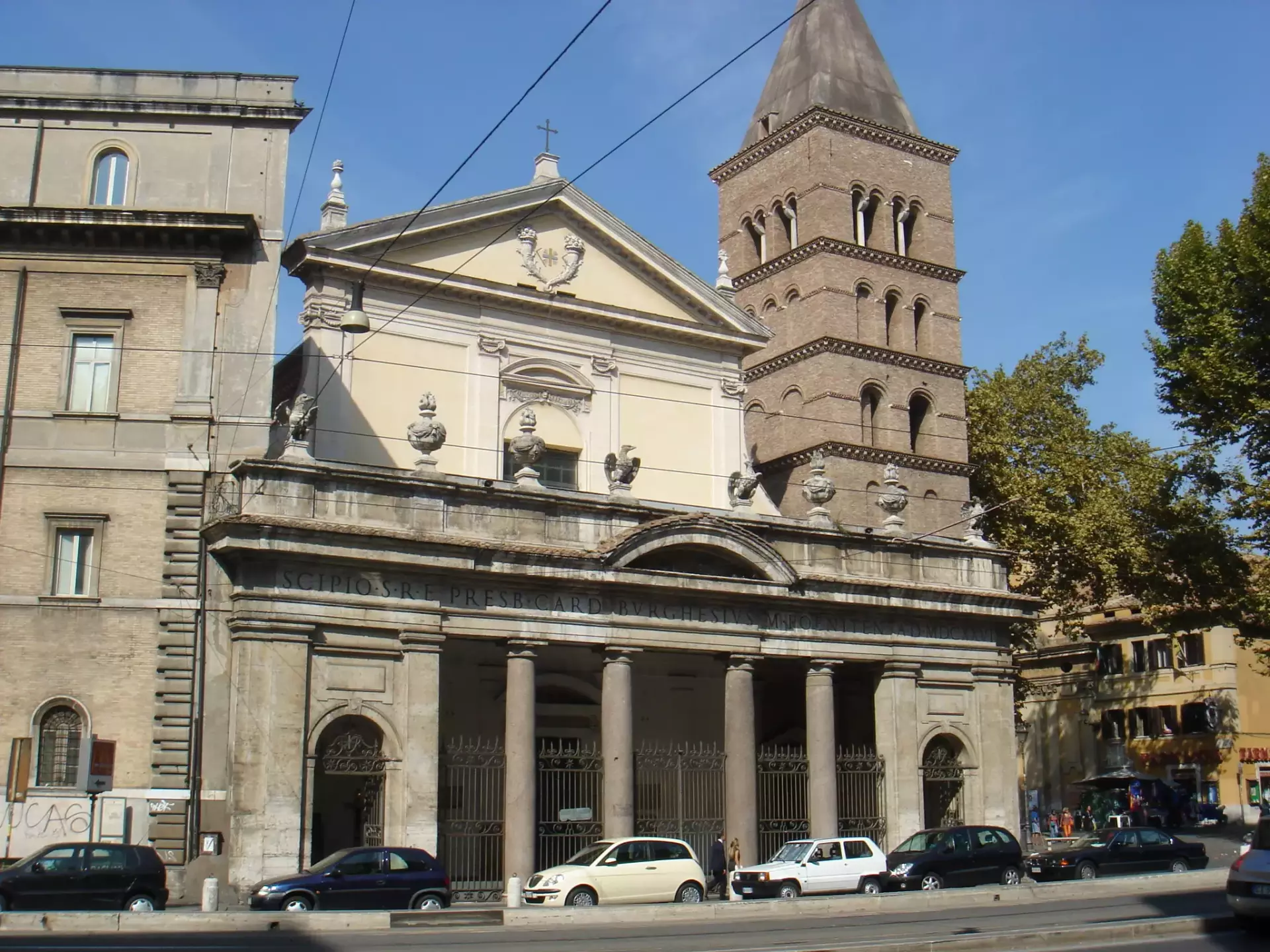
In addition to Santa Maria in Cosmedin there is a lot to be seen around this piazza. Opposite the church is the round temple dedicated to Hercules Invictus (the Unconquered Hercules), and not far from that the rectangular Fortuna Virilis, both constructed in the 1st Century. Opposite, to the back of the piazza is the Arch of Argentari and behind that the church of San Giorgio in Velabro, the front of which was repaired after being damaged by a terrorist bomb in July 1993.
Known properly as the Flavian Amphitheatre, this most famous of Roman landmarks takes its name from the giant statue of the emperor Nero that once stood near this location. The amphitheatre was capable of seating 50,000 spectators for animal fights and gladiatorial combats. It was a project started by the Emperor Vespasian in 72 and completed by his son Domitian sometime in the 80s. The Colosseum when completed measured 48 m high, 188 m in length, and 156 m in width. The wooden arena floor was 86 m by 54 m, and covered by sand.;Expect a long queue and an even longer wait. You can skip the queue if you decide to take a tour, but if you don't want a tour, you can STILL skip the queue. If you walk to the entrance for the Roman Forum, you can buy tickets there which allow you to bypass the queues. You can also buy tickets online. There are lots of people offering tours in English just outside the entrance to the Colosseum. Inside you can take a tour (English, Spanish, or German) every 30 minutes or so for an additional fee. The tours are given by knowledgeable archeologists, but they don't take you to any areas you couldn't visit on your own.
Built in 141 AD and dedicated to the Empress Faustina; after her husband emperor Antoninus Pius died in 161 AD the temple was rededicated to the couple.
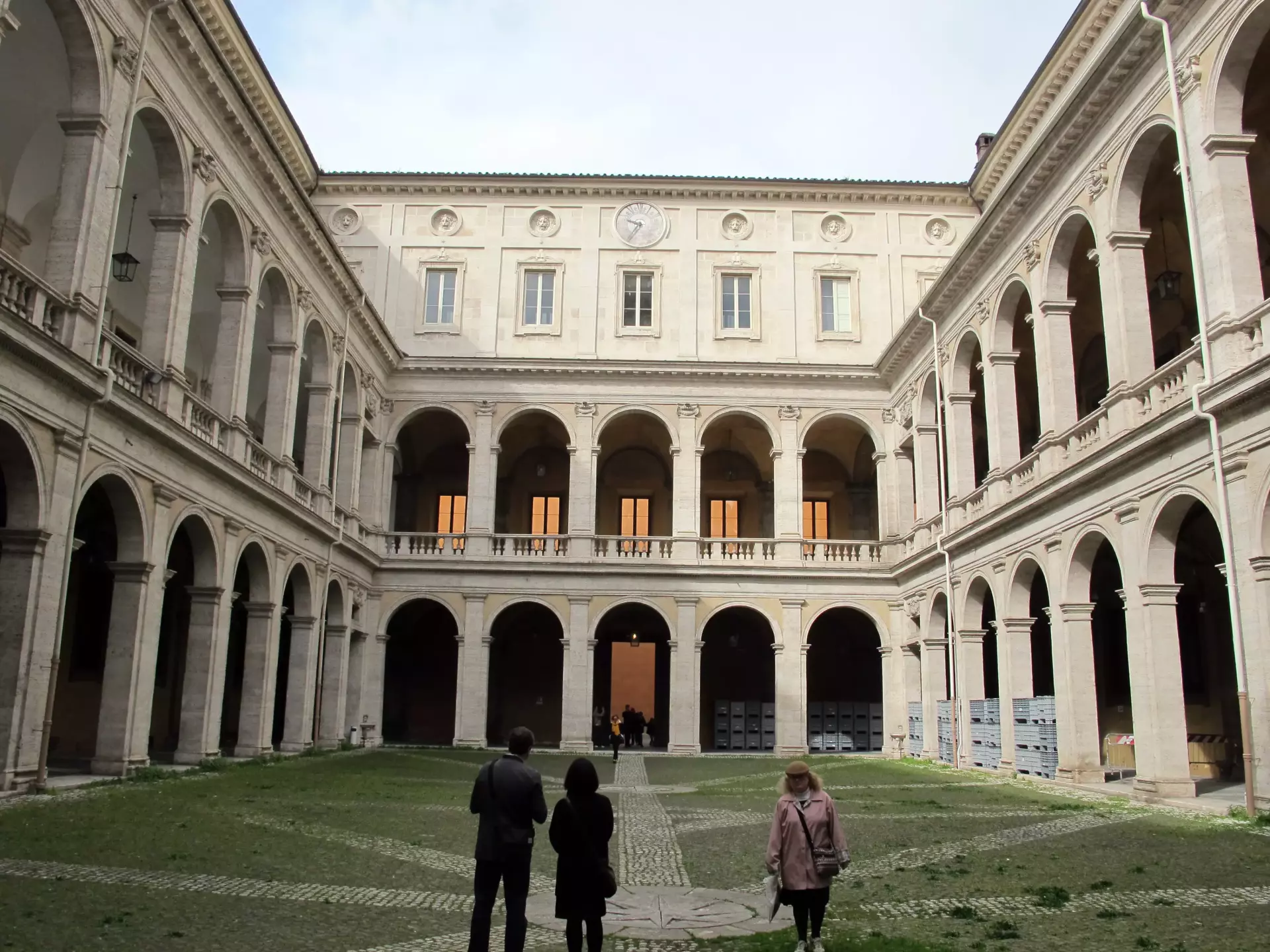
An example of urban planning that goes back to Pope Julius II, who, in 1508, envisioned it as a street that would connect all major government buildings. It is around a kilometer long and is in a straight line, an unusual feature for the time. It is lined with some interesting palaces but these days is more known for its antique shops. Via Giulia runs parallel with and one block from the River Tiber.
Ballroom-like church which crowns part of the Capitoline Hill. Don't be fooled by the plain stone exterior.
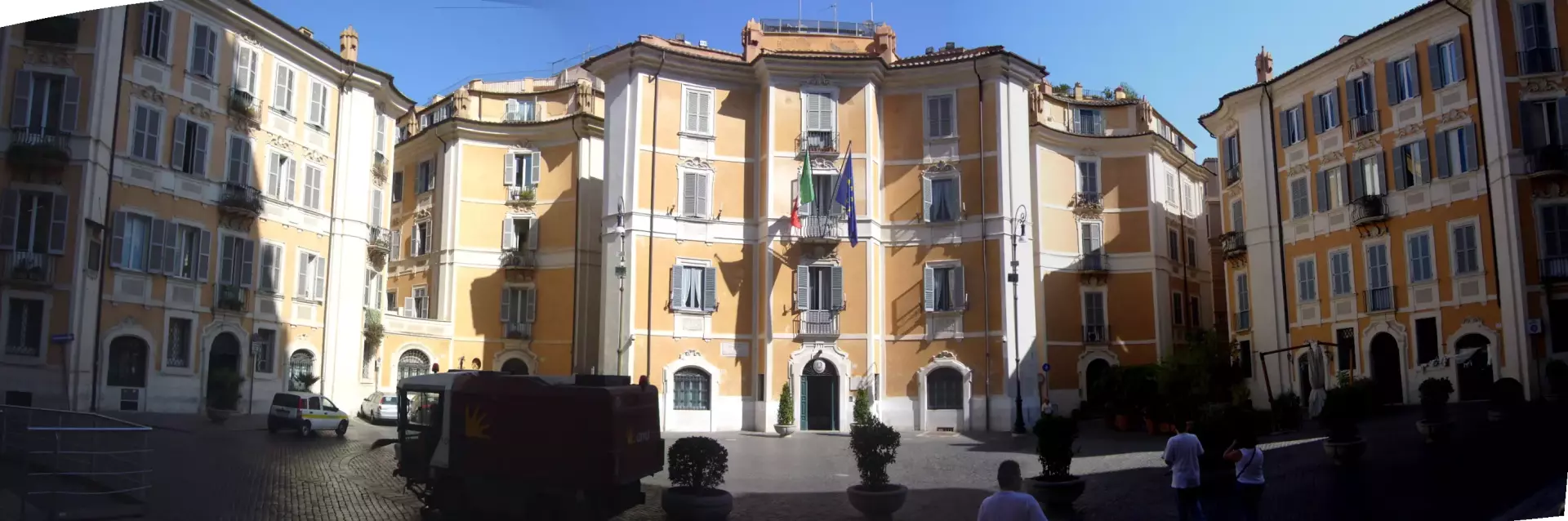
With its strange Liberty- style buildings with influence from the Art Nouveau of the 1920s this small bunch of blocks is one of the most interesting, and less known, landmarks of the city. A must see.
A tomb for the wealthy Gaius Cestius, who died in 12 BC. Admission to the monument only by guided tours on specific dates (2nd and 4th Saturday every month, and in combination with a ticket to the Museum of Via Ostiense also on the 1st and 3rd Saturday of every month).
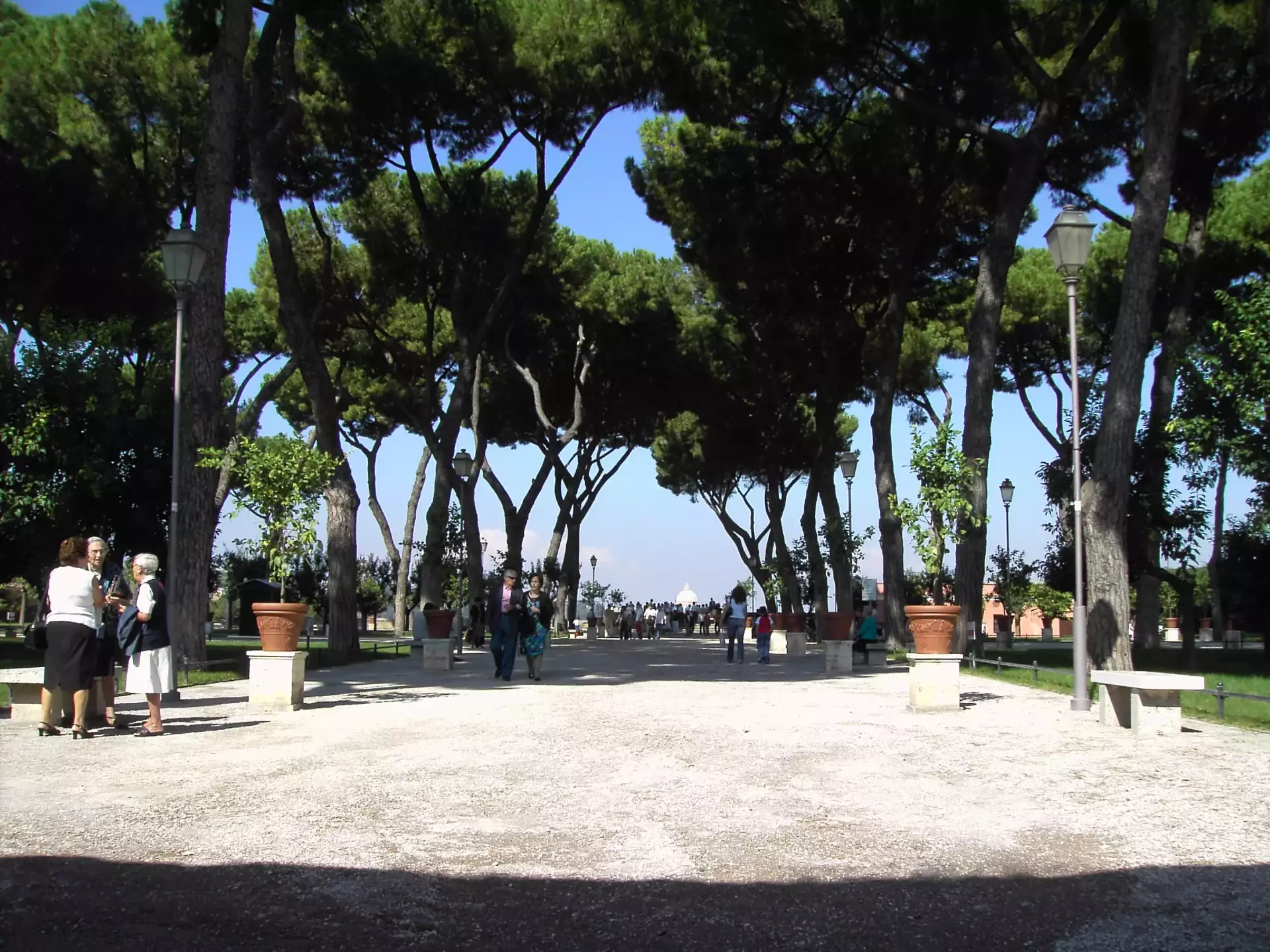
A lovely, if somewhat run-down park (parts of it are blocked due to the poor state of the roads) with statues and a great view on the city.
Like Pasquino, the Facchino is one the so-called "speaking figures" which are peculiar to Rome. He is looking out of the Banco di Roma building. The man depicted is holding a barrel in his hands and is carrying water. It is sometimes said that he is looking similar to Martin Luther, but more probably a porter who died while carrying a barrel is depicted here.
housed in the baroque palace Corsini where Christina, Queen of Sweden settled down in the last years of her life
Pope Nicholas III connected Castel Sant'Angelo to St. Peter's by a covered fortified corridor called the Passetto di Borgo. This proved useful for Pope Clement VII during the Sack of Rome (1527). You can still see much of the Passetto by walking along the Borgo Sant'Angelo, which runs parallel to, and north of, the Via della Conciliazione.
Designed by Bramante to mark the spot of St. Peter's martyrdom, this delightful miniature building is considered a masterpiece of Renaissance architecture. Open to the public.