Via del Governo Vecchio is a historic street in Rome, carrying echoes of centuries past in its name and architecture. The street takes its name from the Palazzo del Governo Vecchio, which served as the headquarters of the Papal government during the 17th and 18th centuries. This building stands as a reminder of Rome’s important role in religious and political history.
This street once formed part of the Via Papalis, the ceremonial route that connected two of Rome’s greatest churches: St. John Lateran and St. Peter's. Walking along Via del Governo Vecchio is like stepping back through time, with notable buildings that date to the Renaissance and earlier. For example, house numbers 104 and 106 are from the 15th century, and several other buildings along the street have origins in the 16th century.
At number 123, a palace was originally intended to become the residence of the famous architect Bramante. Just opposite this, the Palazzo del Governo Vecchio itself stands, watching over the street that bears its name.
On top of the Capitoline hill. The piazza was designed by Michelangelo. The Capitoline Museum is housed in the palaces flanking the piazza. You can walk behind the Palazzo Senatorio, where Rome's government meets, to a wonderful viewpoint which overlooks the entire Roman Forum. In the centre of the square you can admire an exact copy of the Statue of Marcus Aurelius on horseback; the original is kept in one of the two museums, to preserve it from pollution.
Good collection of Renaissance and Baroque art, including by Velasquez, Titian, Raphael, and Bernini, all owned by the Doria Pamphilj family. Excellent audio guides really bring the paintings to life.
More of an enormous traffic circle than a piazza, but a good central location. The centerpiece is the enormous Vittorio Emanuele Monument (aka the Wedding Cake or the Typewriter) with the Capitoline hill next door. Mussolini used to harangue Romans from the first floor balcony of Palazzo Venezia (see under Museums), to the west of the square.
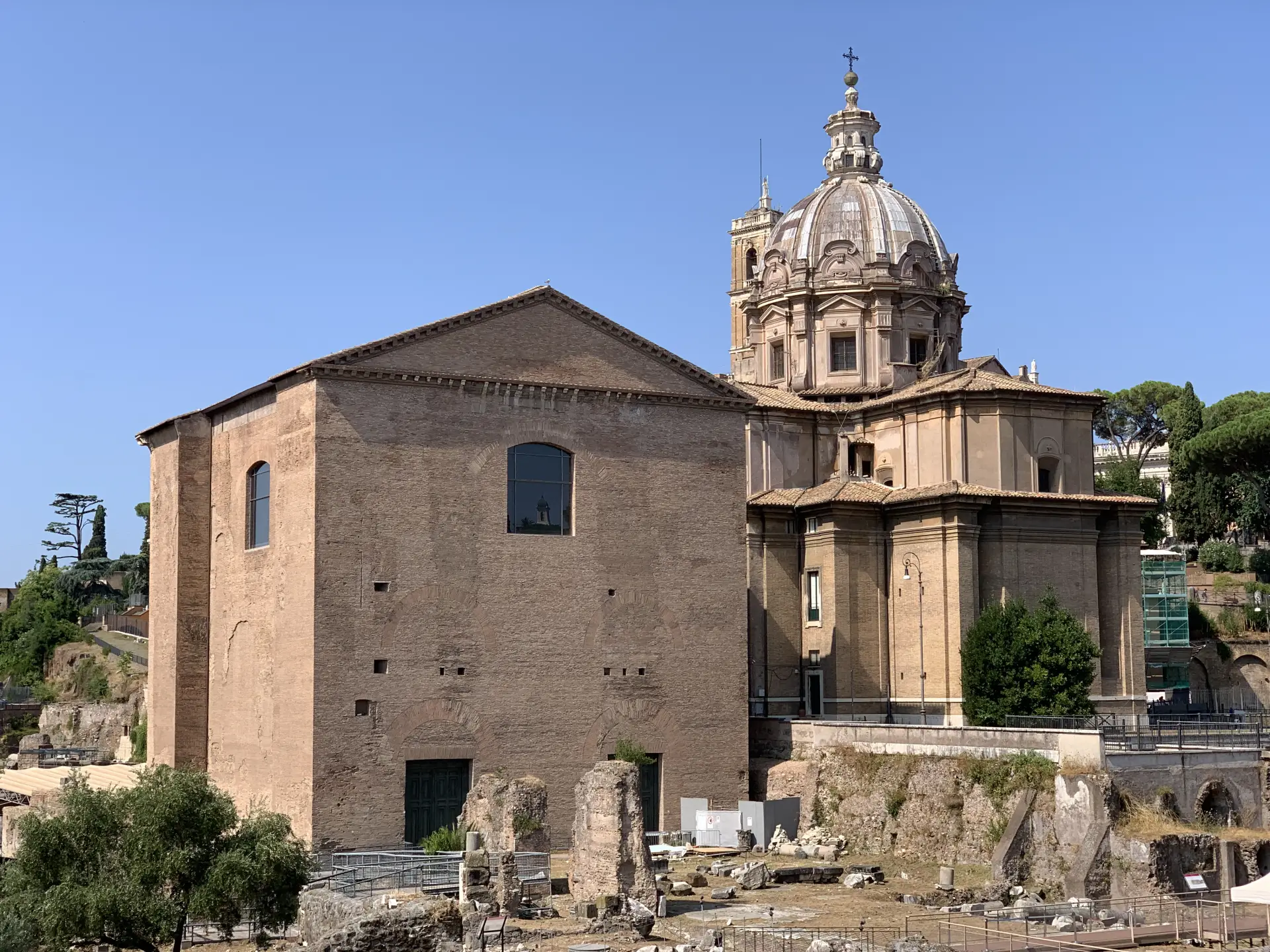
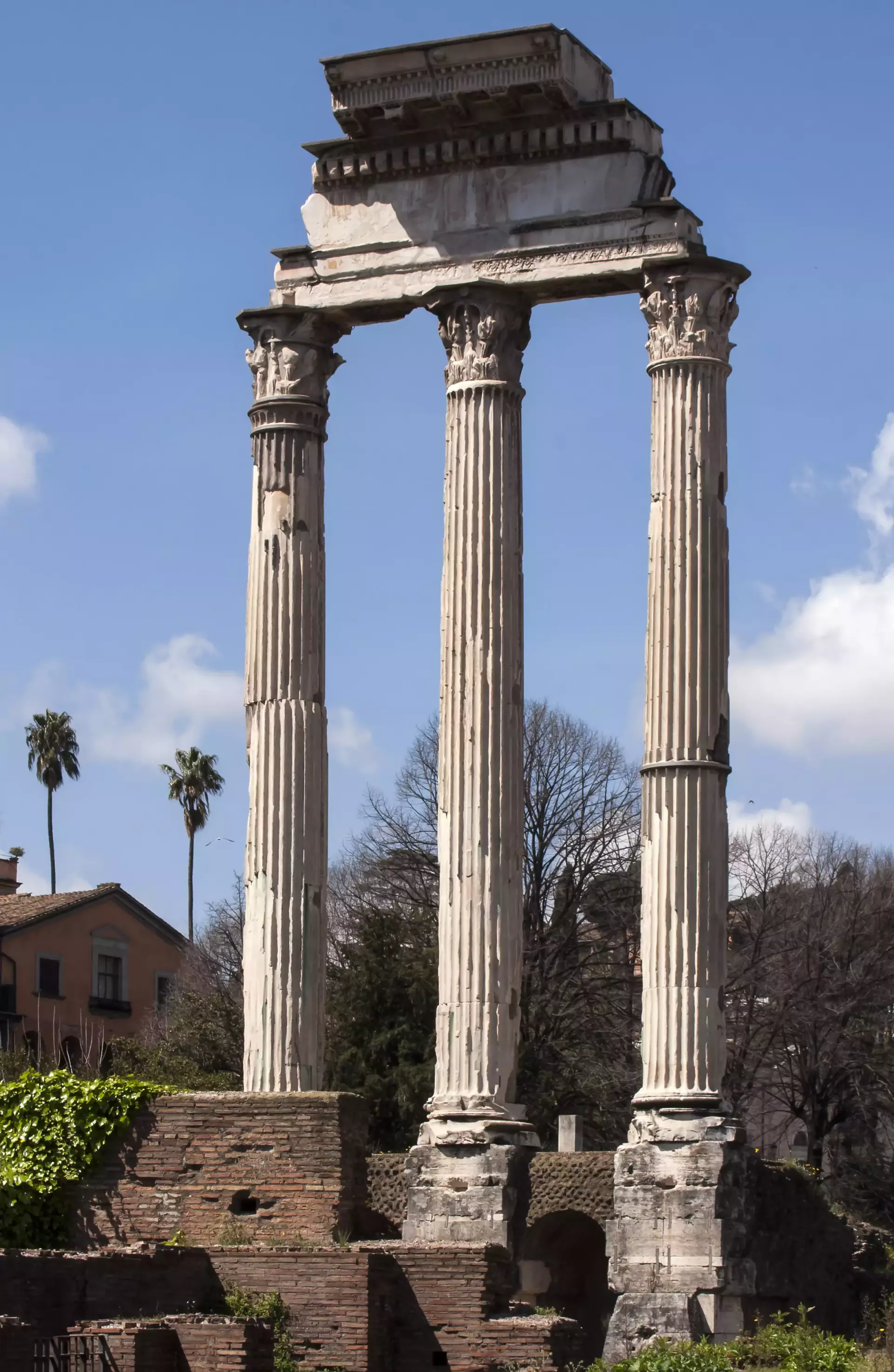
If stones could talk: these hallowed ruins were the most powerful seat of government in the world. To stand in the political, legal and religious centre of the whole Roman Empire brings shivers down one's spine. It is the best way of imagining the splendour and glory of ancient Rome. Located in a small valley between the Capitoline and Palatine hills, access to the Forum is by foot only, from an entrance on the Via dei Fori Imperiali. Wheelchair access is available for most of the Forum but be aware that the path is often bumpy due to it containing original stones from the ancient Roman period. The Forum is much less crowded than the Colosseum and, from a historical perspective, much more interesting. You can hire an audioguide for €5.5 from a small booth just above the Arch of Titus near the Colosseum. These audioguides contain an audio jack so that two people can easily share one. Built in 141 AD and dedicated to the Empress Faustina; after her husband emperor Antoninus Pius died in 161 AD the temple was rededicated to the couple. Completed in 179 BC. The 4th rebuilding of the meeting place for the Roman Senate, once converted into a church during the Middle Ages, but now restored since the 1930s. Erected in 203. You can see it close up from Via della Curia also (without entering the Forum). Finished in 29 BC, marks the spot of Caesar's spontaneous cremation and Mark Antony's funeral speech, made famous by Shakespeare in his play Julius Caesar ("Friends, Romans, Countrymen, lend me your ears ..."). Built in 81 AD by the emperor Domitianus in dedication to his brother Titus, who died earlier that year and reigned as emperor from 79-81, overseeing the opening of the Colosseum in 80 and the eruption of Mt Vesuvius the previous year. The remains of the ancient Roman archives, where Cicero and Seneca did research. Visible from the Forum and accessible through the Capitoline Museum.
The museum is dedicated to Napoleon Bonaparte and his family. After Napoleon's death in 1821 the Pope gave permission to his family to settle down in Rome. His sister married Prince Camillo Borghese.
The mausoleum of Cecilia Metella, who died in 69 BC, is the best preserved monument on the Appian Way and dominates the surroundings. In the Middle Ages it was transformed into a fortress and battlements were added. At that time there was considerable competition for ownership because of its strategic location.
A great little cathedral to visit, lovingly looked after by Irish Dominicans. There is an excavated older church below the medieval church you enter and a Mithraeum (temple to Mithras, whose cult was very popular with Roman soldiers from the 1st to 4th century AD) below that. The only place in Rome to hear the underground river that flows beneath the city.
By Bernini, in the very centre of Piazza Navona. Incorporates an Egyptian obelisk and symbolises four of the world's great rivers (the Ganges, the Nile, the Danube and the Plata), representing the four continents known at the time.
The Collegio Romano was a college of the Jesuit order. Many popes, cardinals and bishops were educated here. Since 1870 it has been a secular (non-monastic) school. The coat of arms on the doorway is that of Pope Gregory XIII (1572–1585). The tower was erected in 1787 and served as an observatory. Until 1925 all clocks in Rome were set after that of the Collegio Romano.
The building is in one of the most hidden corners of the city center among Piazza Navona and Castel Sant'Angelo. It served as residence for the Orsini family. Nowadays it is private property and one can only glance at the courtyard and the amazing fountain inside, erected in 1618 by architect Antonio Casoni. However, the brief moment is worth it.
A very ancient church named after a saint who was in 1969 removed from the Roman Catholic calendar of saints for the lack of details of her life. But the church retains the name and is well worth visiting for an excellent 4th-century mosaic and attractive decorations on the facade. Visiting hours are short, but if you arrive close to 11:30, try talking to the attendant if you see him, and he might let you visit for a few minutes. The church is small, so 15 minutes should be long enough to see and absorb everything.