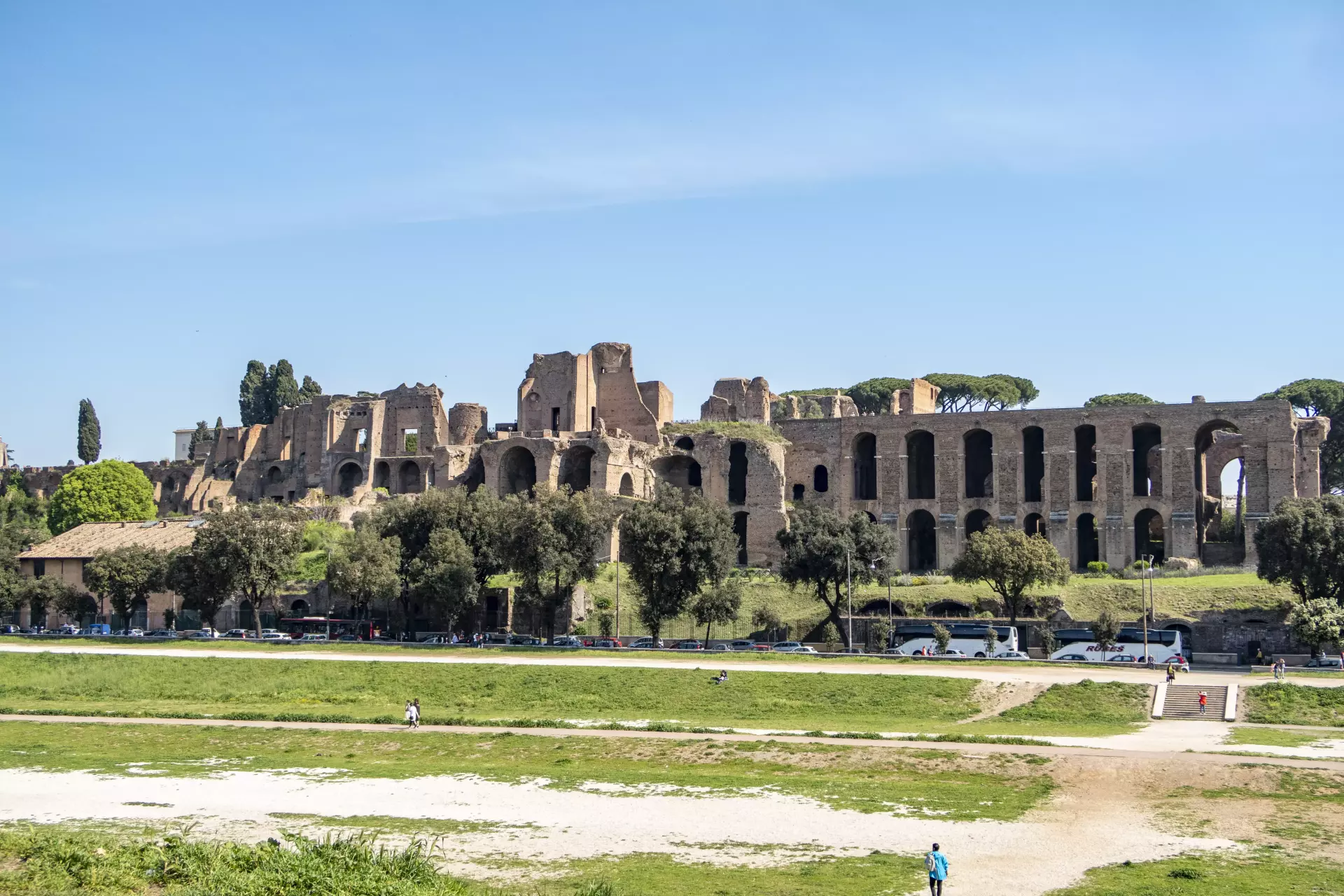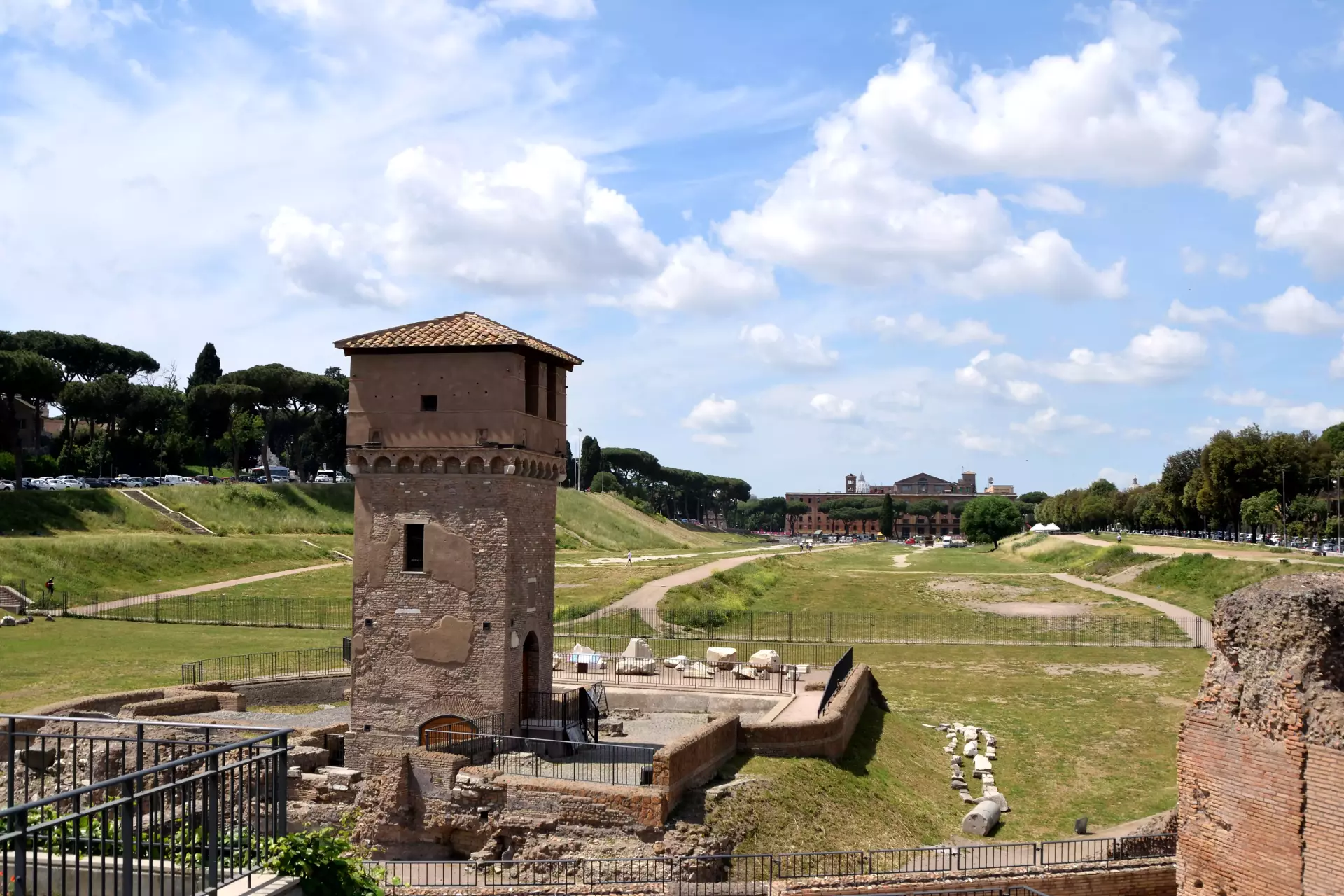
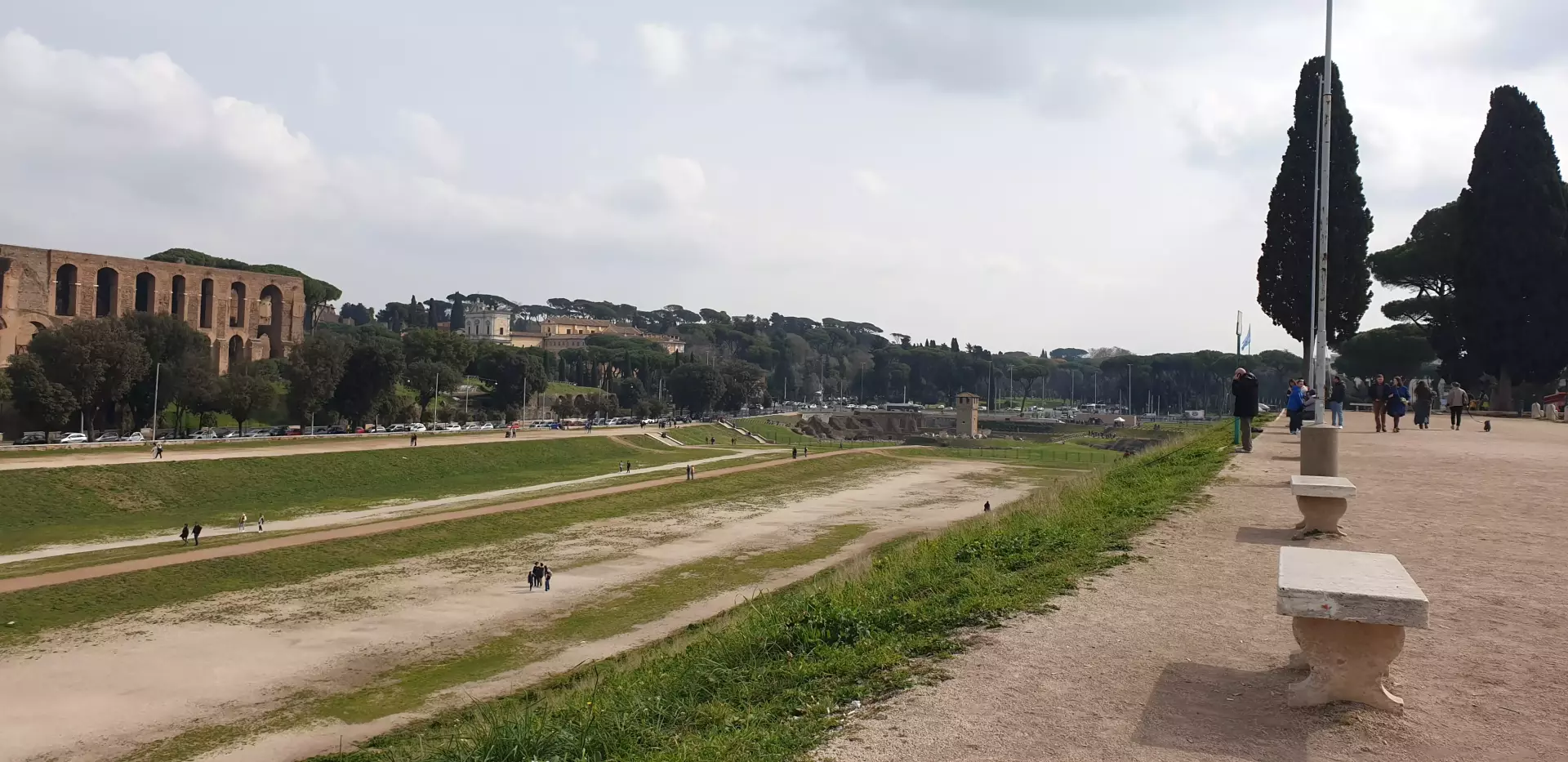
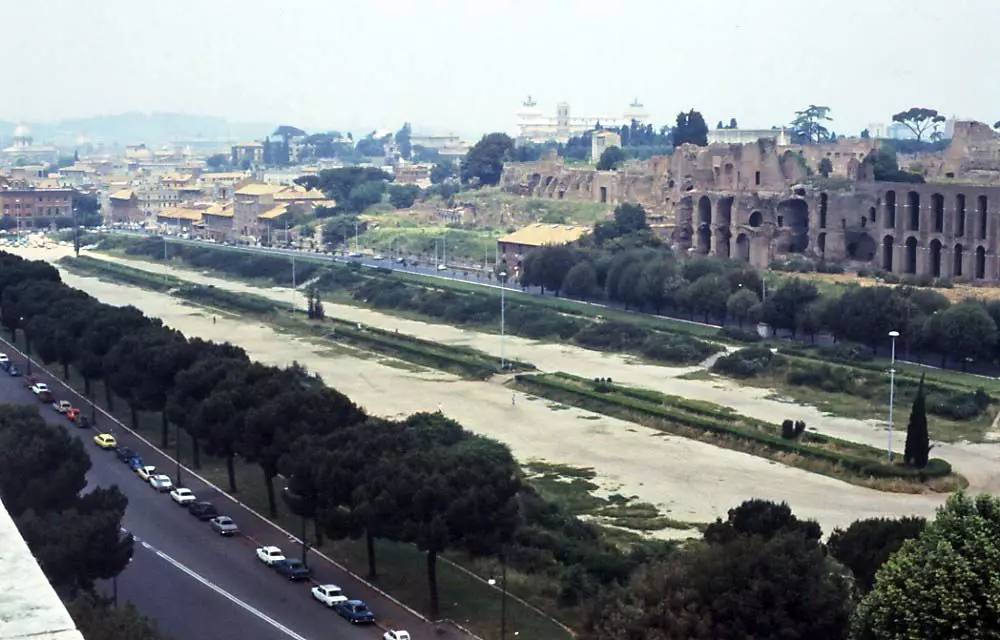
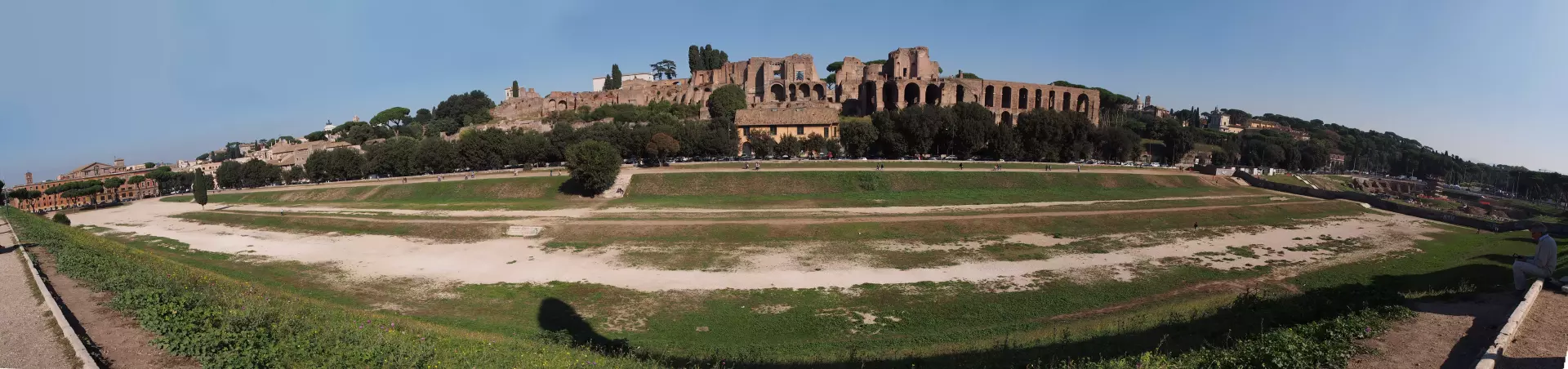
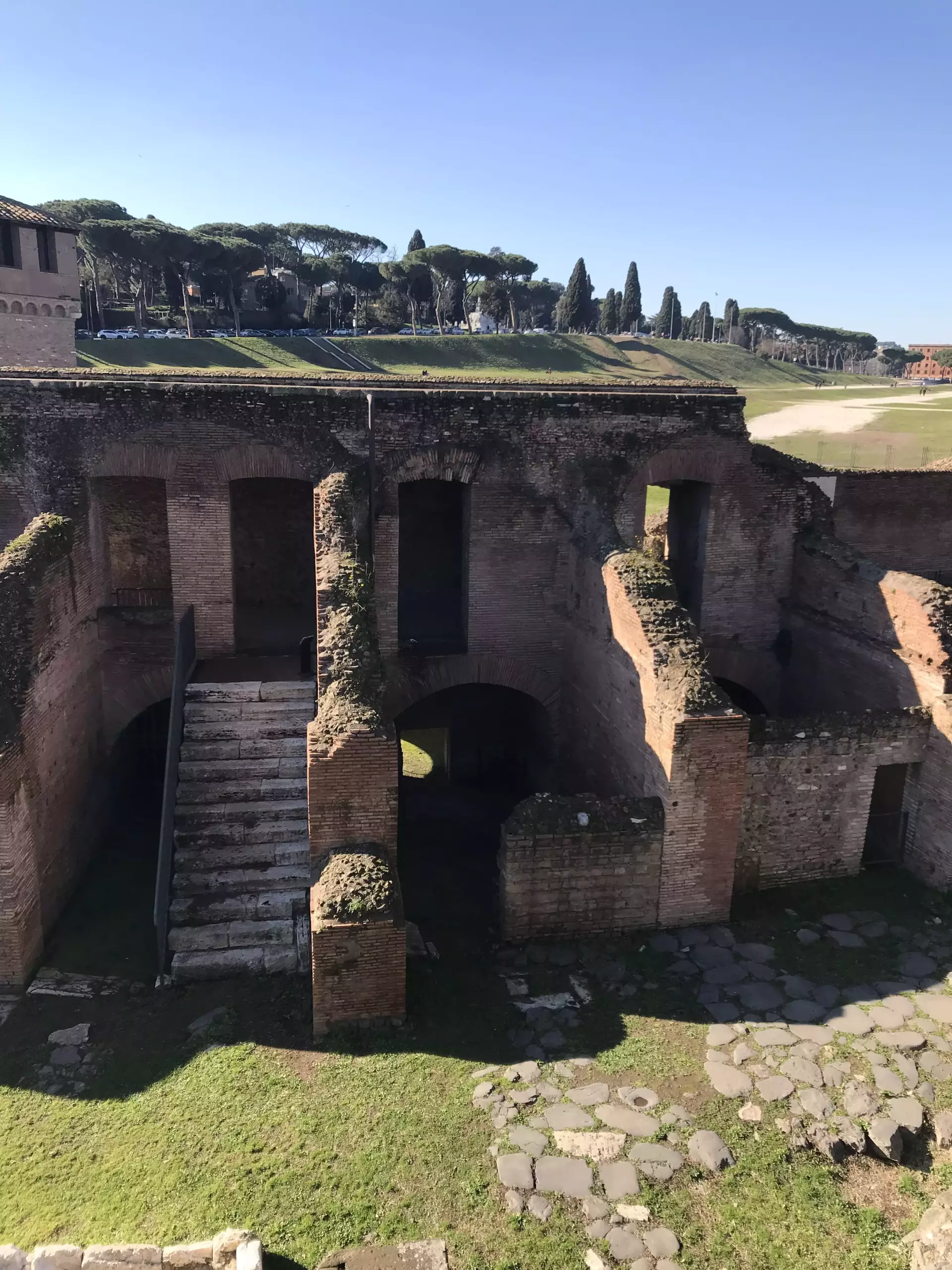
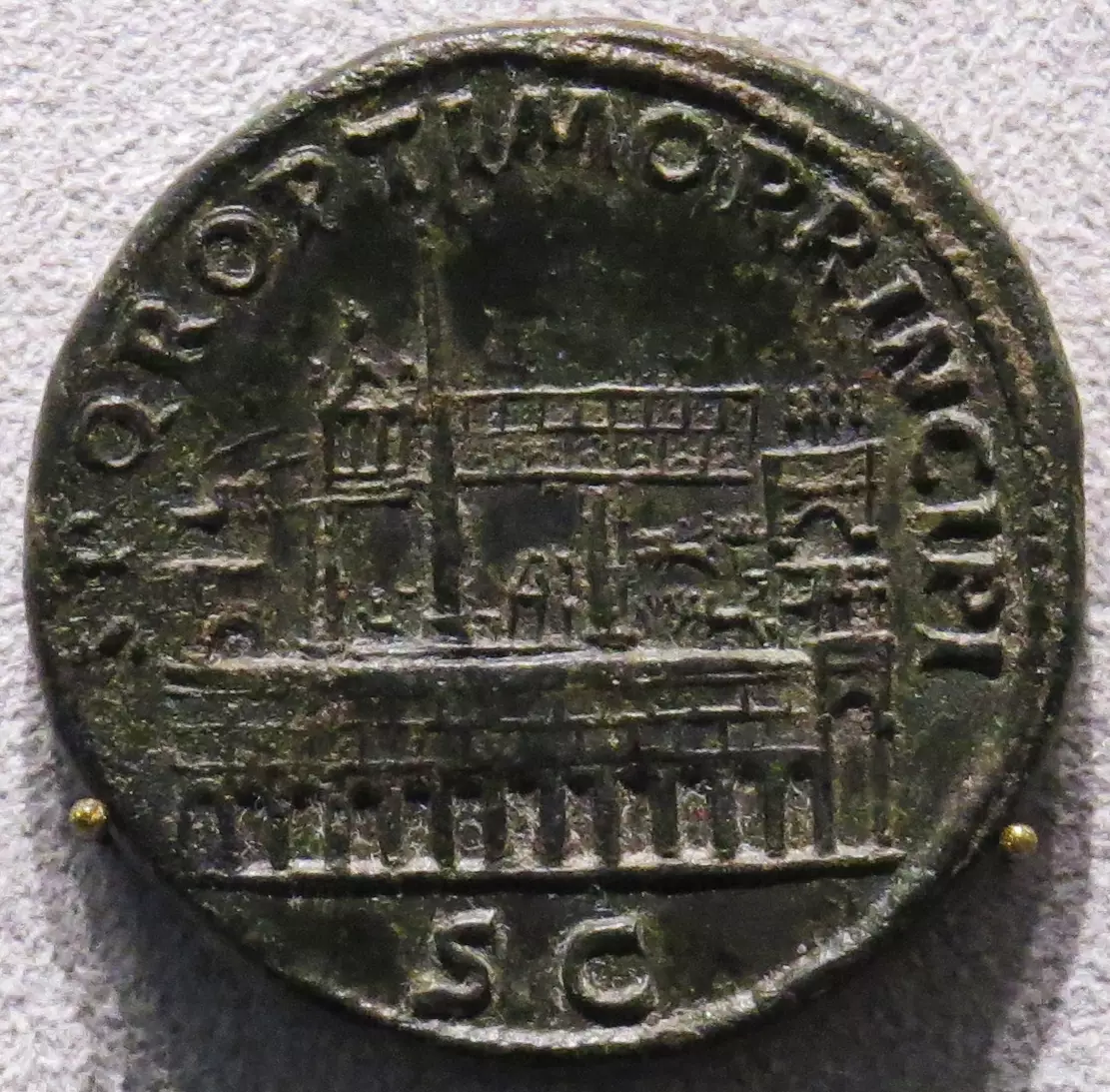
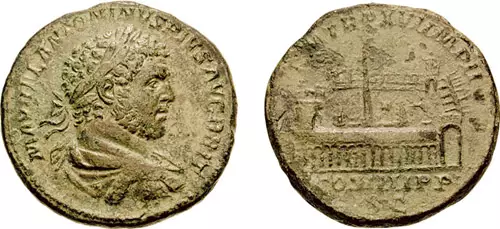
The remains of an ancient stadium can still be seen today in a wide park area beneath the Palatine Hill. This is the Circus Maximus, a place with a long and colorful history that stretches back to the 6th century B.C. For centuries, it was a center of excitement and entertainment in ancient Rome.
Circus Maximus was most famous for its thrilling chariot races. Spectators would fill the massive arena, which could hold up to 150,000 people at its peak. The roar of the crowd and the thunder of horses’ hooves once echoed between the stone walls, making it the largest stadium in ancient Rome. Races and public events continued there until about 550 AD.
When first built, the stadium was made mostly of wood. Unfortunately, this made it vulnerable to fire. On two occasions, the Circus Maximus burned down. The second fire was especially devastating and is connected to a famous moment in Roman history, when Emperor Nero was rumored to have played music while the city of Rome was in flames. The site also holds darker stories; it was in one of the stadium’s tunnels that Emperor Caligula met his end.
Today, visitors walking through the park can still trace the outlines of the ancient stadium. Archaeological work continues, with new excavations at the east end of the Circus starting in 2009. These digs are expected to reveal more about the daily life and grand events that once took place here, with researchers planning to continue their work for years to come.
Source - https://en.wikipedia.org/wiki/Circus_Maximus
A truly quiet oasis close to the hustle and bustle of EUR. There are three churches in this complex and the doors are open all day, unlike city churches. The monks produce a range of products such as liqueurs, chocolate and honey, as well as a cure for the illnesses Romans suffer when the Scirocco wind blows in from the Sahara. These are on sale at a shop at the Abbey.
One of Bernini's masterpieces, an obelisk on the back of an elephant.
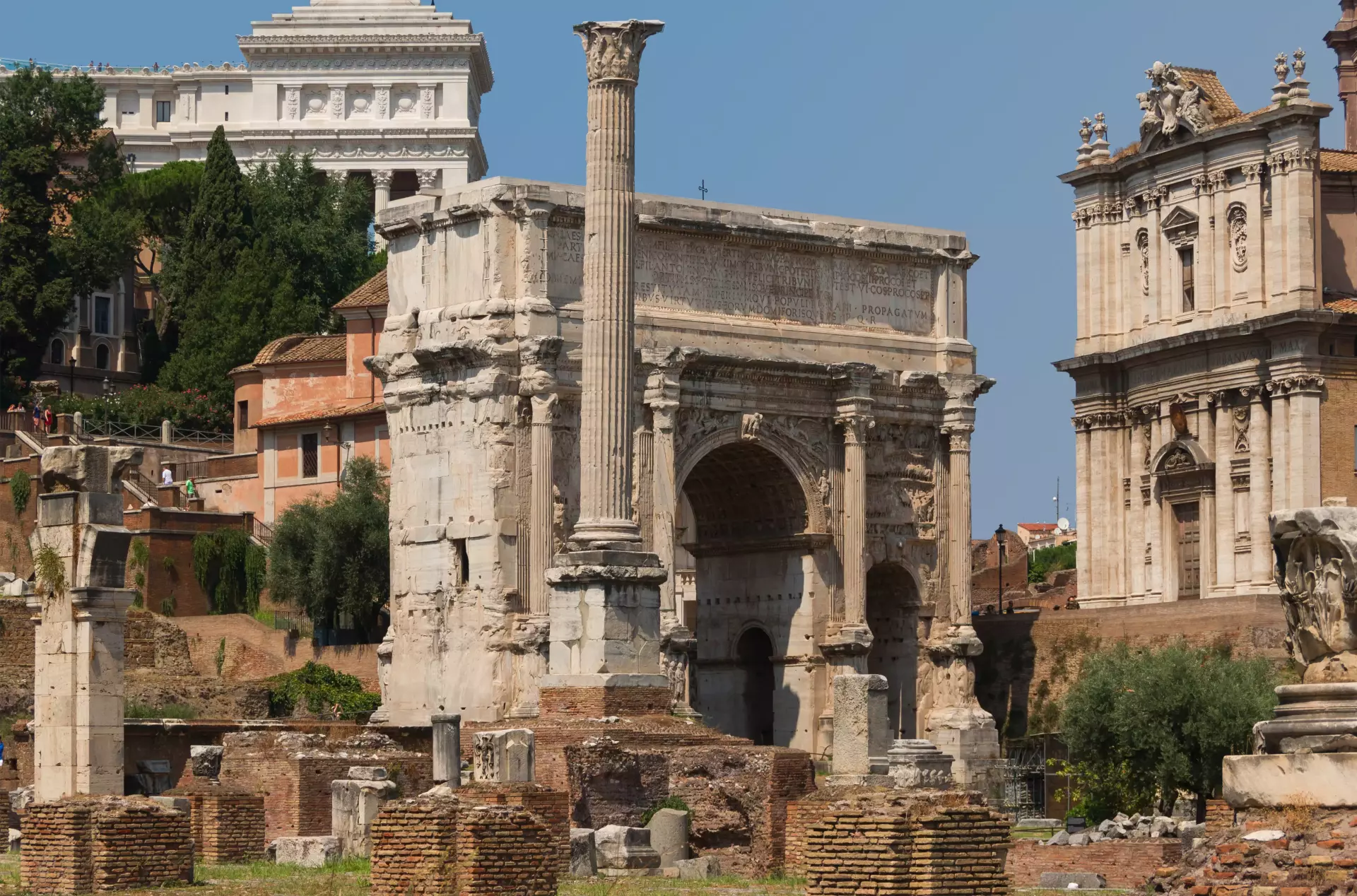
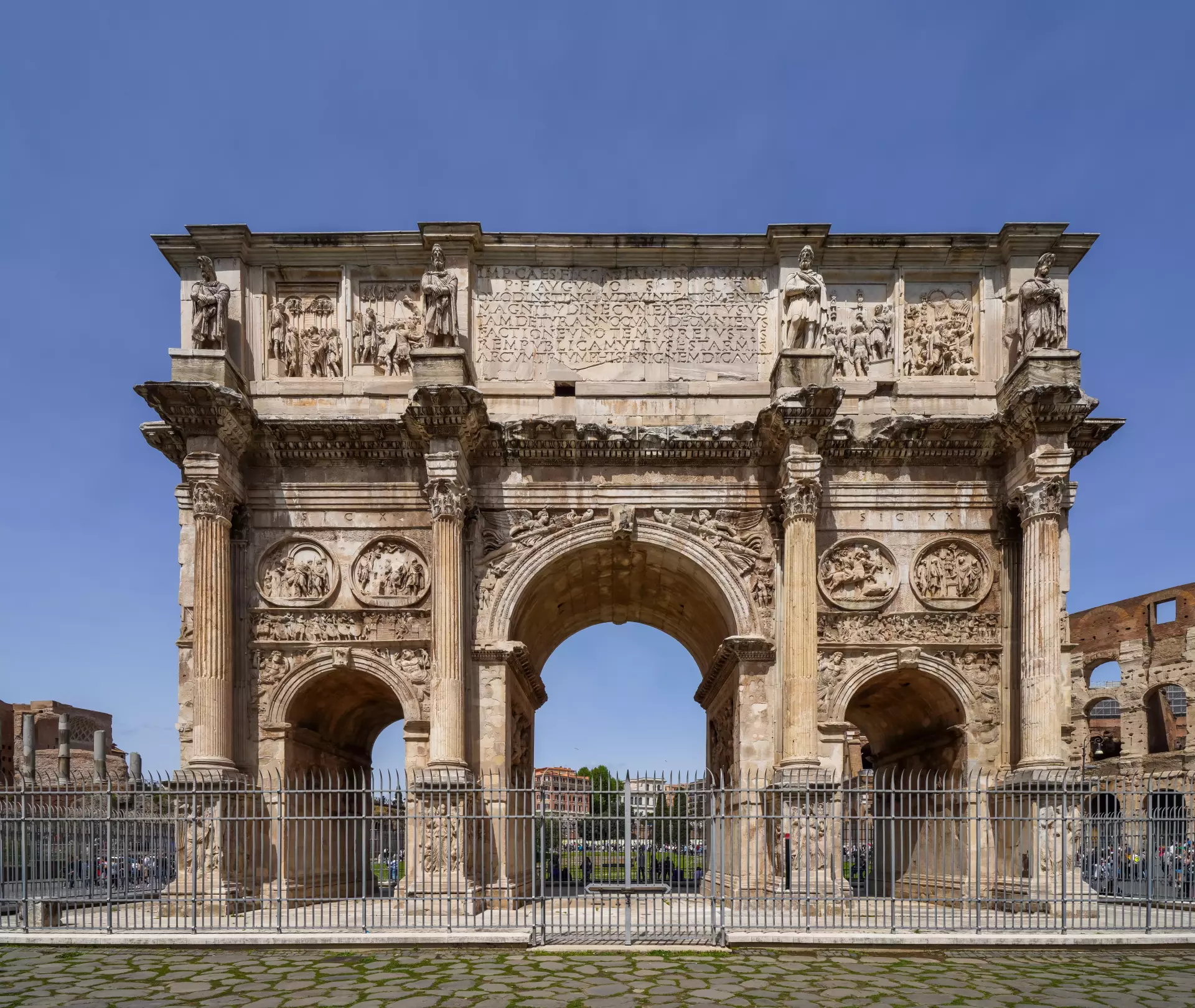
Erected in 203. You can see it close up from Via della Curia also (without entering the Forum).
This museum is built on top of the excavation site of the Balbi Crypt, a building from the first century A.D. which underwent considerable modifications in the following centuries. Through the building's history, the museum gives us glimpses of what Roman life across the ages was like. Free visits of the ruins are possible. The Essedra ruins are only accessible on Saturdays and Sundays, at 10:45, 11:45, 12:45, 14:45 and 15:45.
Completed in 1762 to a design by Nicola Salvi, this spectacular Baroque fountain features a mythological sculptural composition of Neptune, god of the sea, flanked by two Tritons: one Triton labours to control a violent sea-horse, the other controls a pacified creature, both symbolising the dual nature of the world's oceans. The location of the Trevi fountain marks the terminus of the ancient Aqua Virgo aqueduct, completed in 19 BCE in order to supply the Baths of Agrippa, and is so named on account of its position at the junction of three roads (tre vie). The legend says that one who throws a coin in the fountain shall one day return to Rome. The coins in the fountain are regularly collected to finance charities. The fountain has been made even more famous by the 1954 film, Three Coins in the Fountain, and by a famous scene in Federico Fellini's film La Dolce Vita. According to popular superstition and custom, throwing coins with one's right hand over one's left shoulder into the Trevi Fountain is a practice endowed with good luck. Throwing one coin ensures that the thrower will return to Rome; throwing two coins will ensure that the thrower will fall in love with a beautiful Roman girl (or handsome boy); throwing three coins, finally, ensures that the thrower will marry that girl or boy in Rome itself. The fountain is one of Rome's most famous attractions, but the square isn't exactly as large as St. Peter's, therefore it might be packed with crowds almost like at a rock festival. For this reason it's reportedly also a pickpocket hotspot, so do watch your pockets and bags here!
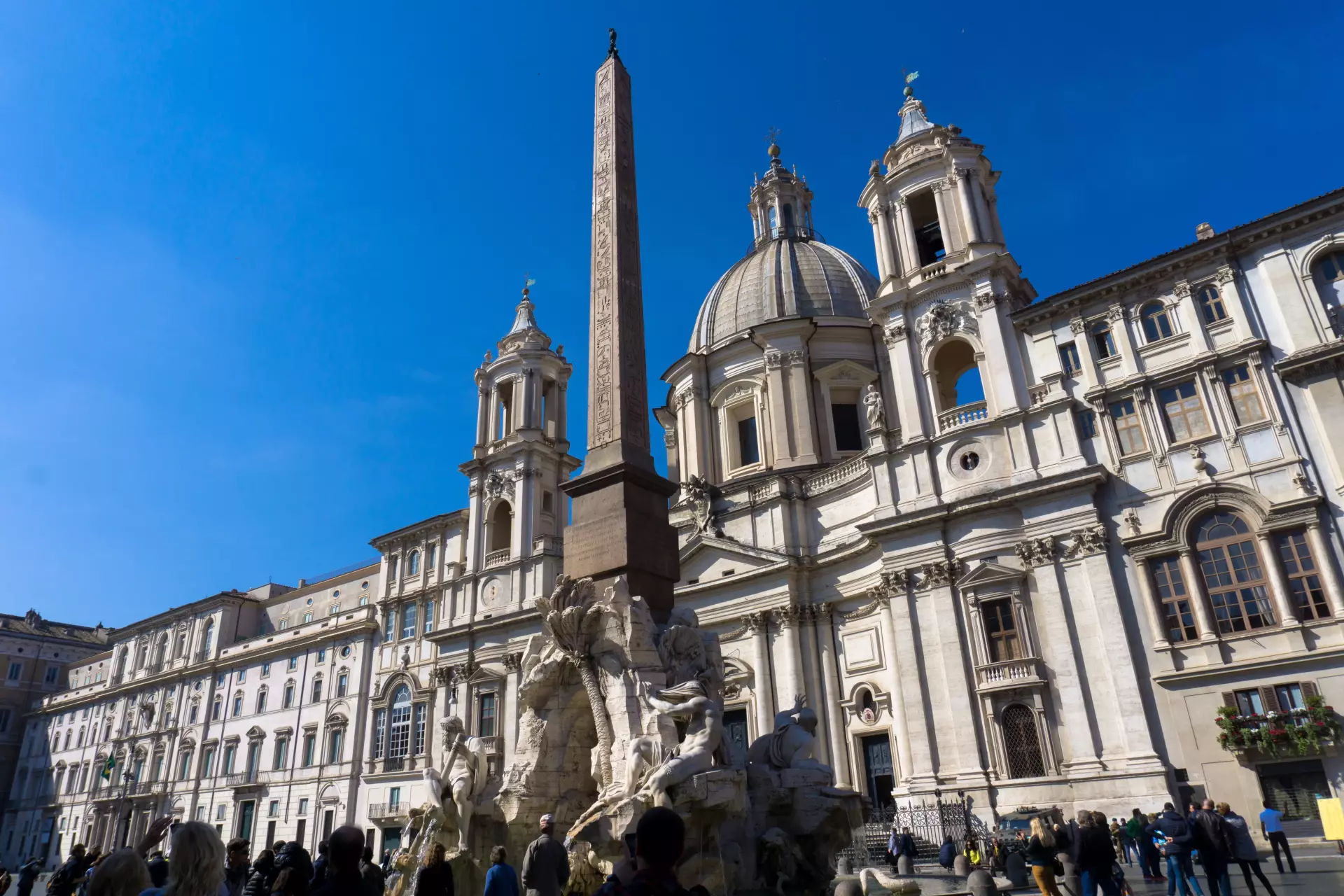
By Bernini, in the very centre of Piazza Navona. Incorporates an Egyptian obelisk and symbolises four of the world's great rivers (the Ganges, the Nile, the Danube and the Plata), representing the four continents known at the time.
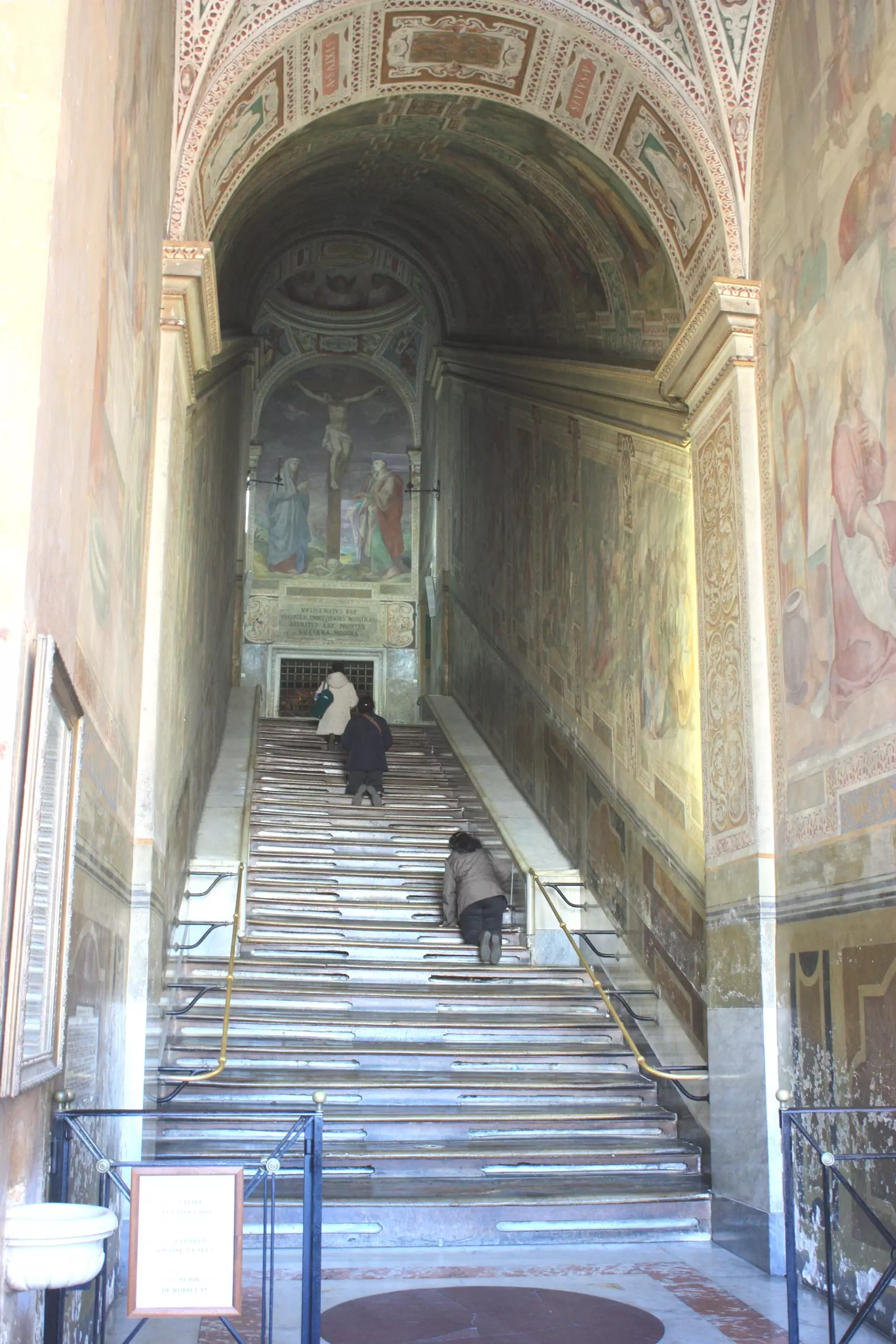
The Scala Sancta (Holy Stairs) is, according to Roman Catholic tradition, the staircase used by Jesus Christ to approach Pontius Pilate to be sentenced to death. Attracts numerous pilgrims who climb the stairs on their knees.
Parco Savello is the name of the grounds and orange grove next to the Santa Sabina church at the top of the Aventino and also where you have one of the best views of the city. Families gather here to sit under the dozens of orange trees. The "Giardino degli Aranci" is also a well known spot for lovers at night. The best views are arguably from Janiculum hill, just across the Tevere (Tiber) river. Immediately below you, the Tiber snakes its way through the city, and directly beyond it you can see the lively medieval quarter of Trastevere. Beyond that is the majestic dome of St. Peter's Basilica, with the historic centre of Rome visible to the right.
An ethnographic collection of around 60,000 pieces from European indigenous cultures. Documents evolution from the Palaeolithic age to the Iron Age.
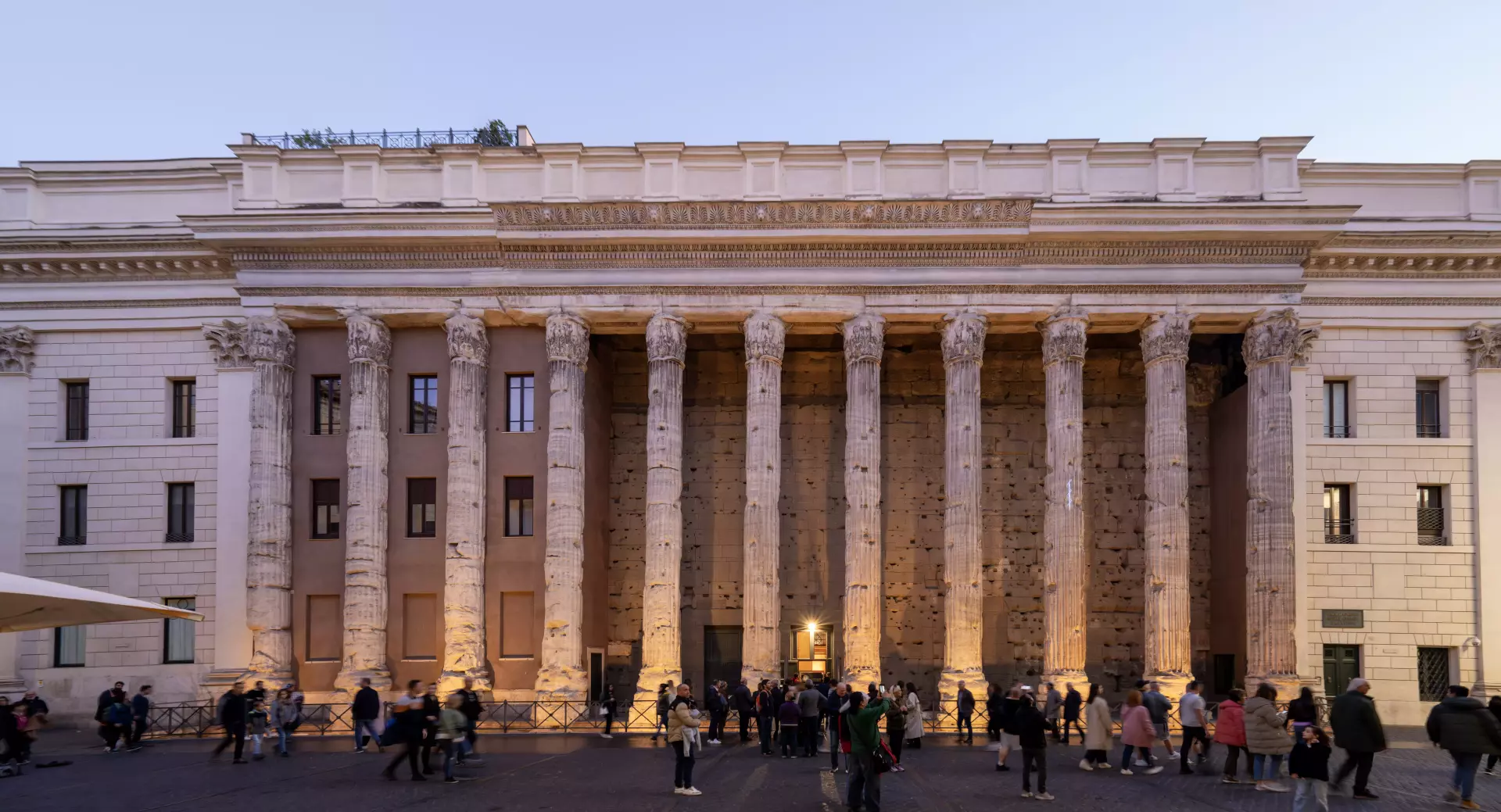
The temple of the Emperor Hadrian was consecrated in 145 AD by Emperor Antoninus Pius. The remains of the antique temple were incorporated into a new building that served as the Papal Customs House. It was finished around 1690 and today accommodates the Stock Exchange (Borsa).
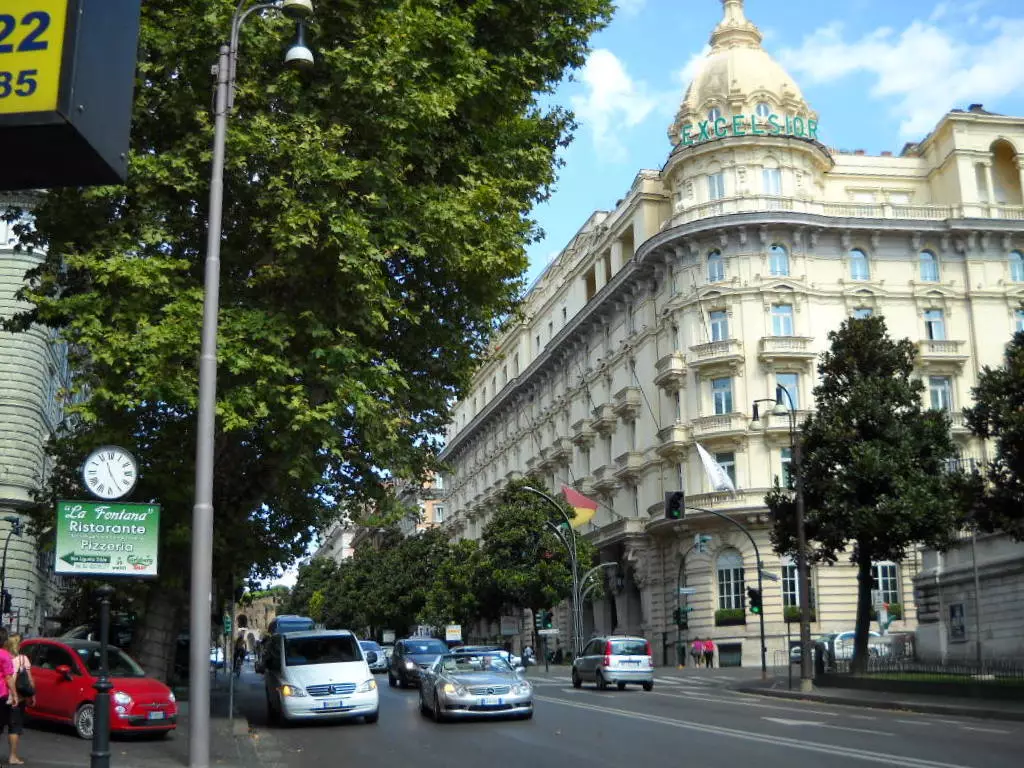
It was immortalised in 1960 by the Federico Fellini film La Dolce Vita. It is also the location of the US Embassy, in the massive Palazzo Margherita. Via Veneto went into a period of decline in the 1980s but has returned to popularity and the roadside cafes are the place to be seen if you are into that sort of thing.
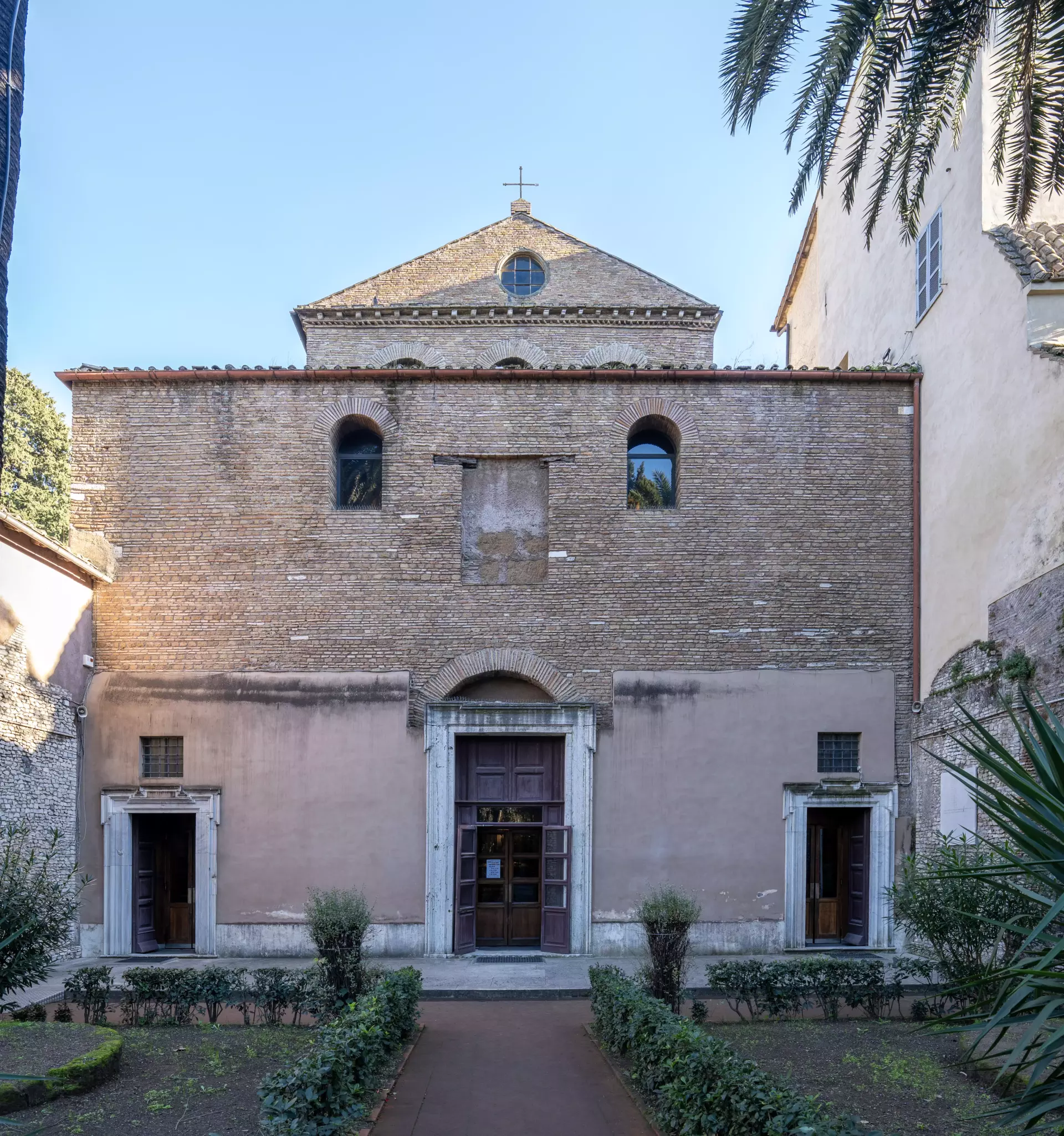
A 5th-century basilica, simply and attractively decorated. The wooden door, of which 18 carved panels of scenes from the Bible survive, is believed to date from the church's construction.
The palace was built by the architect Baldassare Peruzzi on behalf of the Massimo family. The former palace was destroyed during the pillage of Rome in 1527. The Massimo family can be traced back to Quintus Fabius Maximus who defeated Hannibal in the 3rd century BC. The building is open to the public on March 16, only in order to commemorate the miraculous reanimation of Paolo Massimo by St. Philip Neri in 1538.
If it is sunny, you'll catch a few young people and older gentlemen sitting at the base of a statue in the middle of the open space. The statue is a brooding, hooded Giordano Bruno—an excommunicated Dominican monk and one of the earliest cosmologists who held the idea of an infinite universe. He was burnt at the stake for heresy on this spot on 17 February 1600. The piazza is used as a marketplace during the day, and party central for college students and tourists at night. When the sky gets dark and the street lamps go on, the Campo de' Fiori fills with people and lovers wander arm in arm in the crowd. Over the buzzing of conversation and the occasional burst of laughter you may hear a young vocalist belt out O Sole Mio at the top of his lungs as change plunks into his accordion case.
This is an important place of pilgrimage for Catholics because of the supposedly miraculous powers of an image of the Virgin Mary. The first miracle was in 1740 when a traveller being attacked by a pack of dogs called out to the Virgin’s image for rescue and the dogs calmed down. The image was moved to Rome in the Second World War and is credited with saving the city from destruction, as a result of which Romans vowed to construct this new sanctuary.