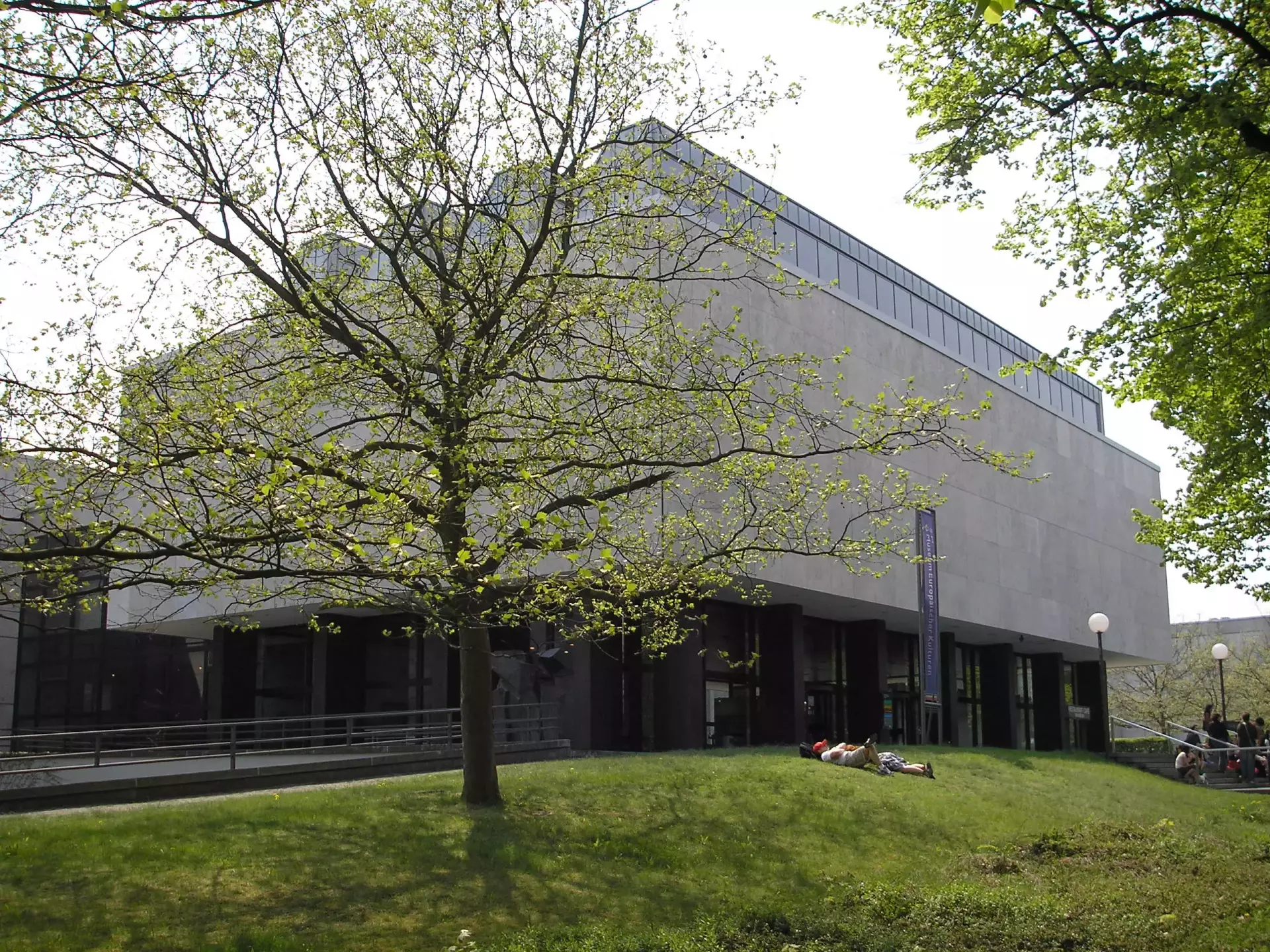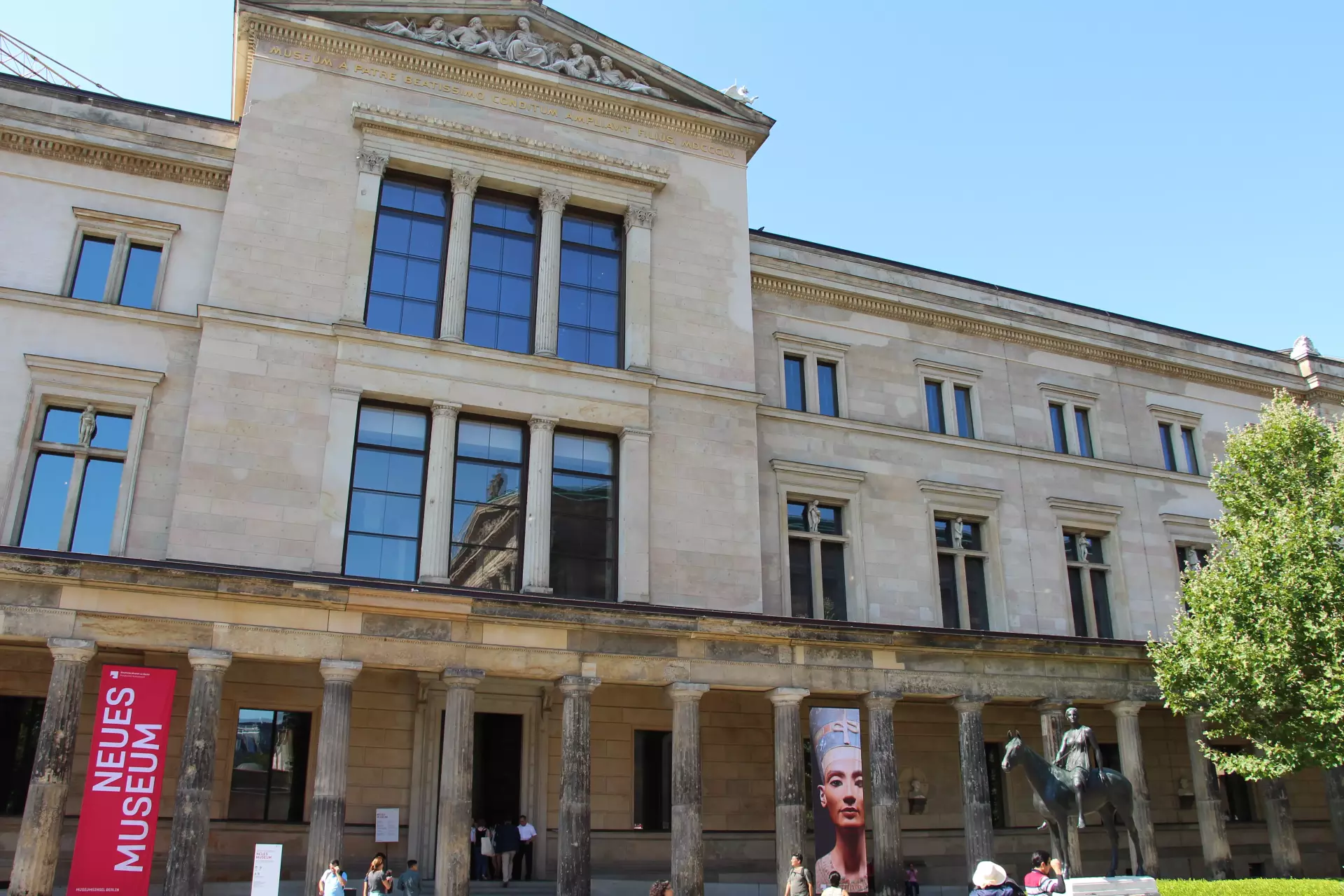
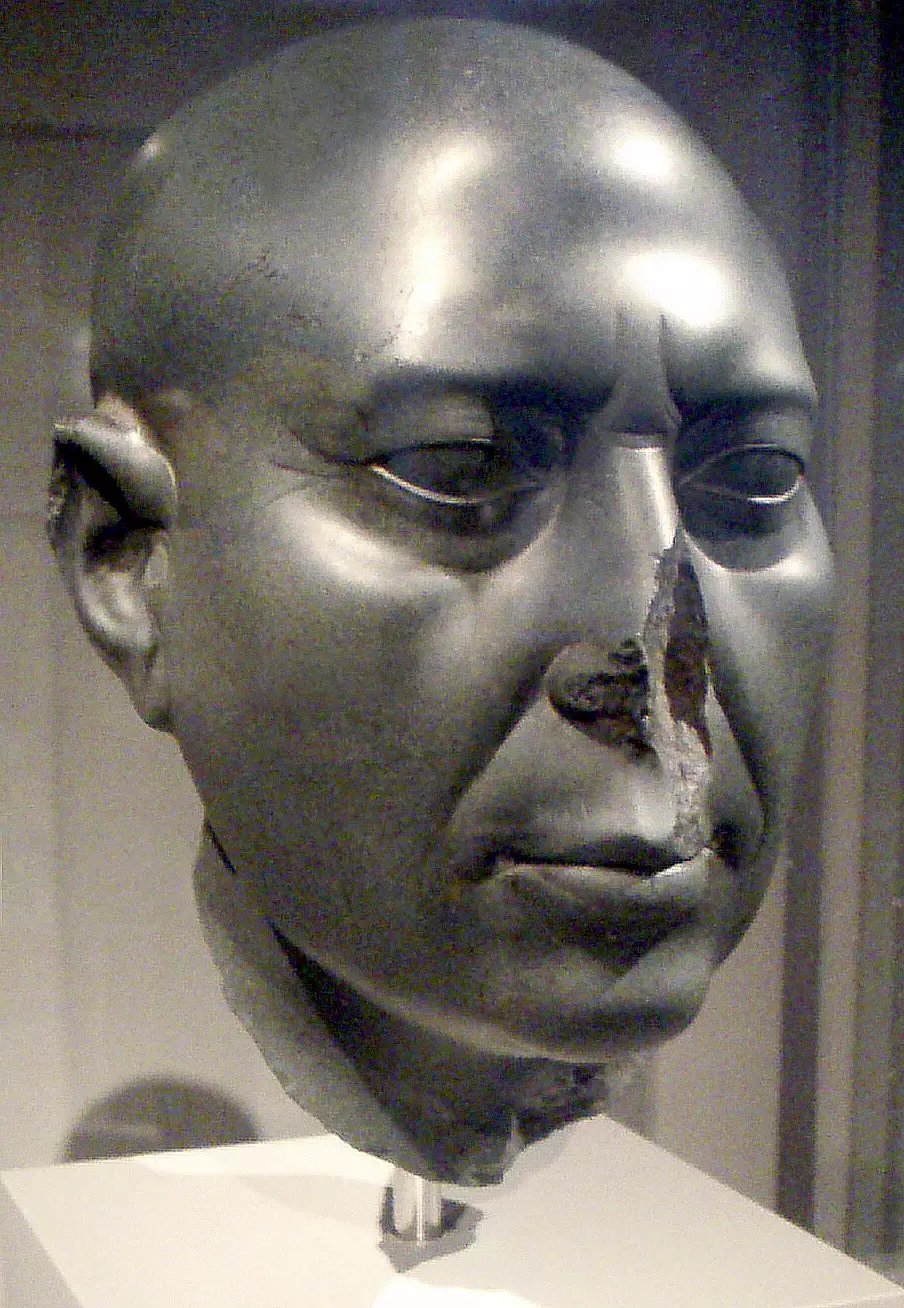
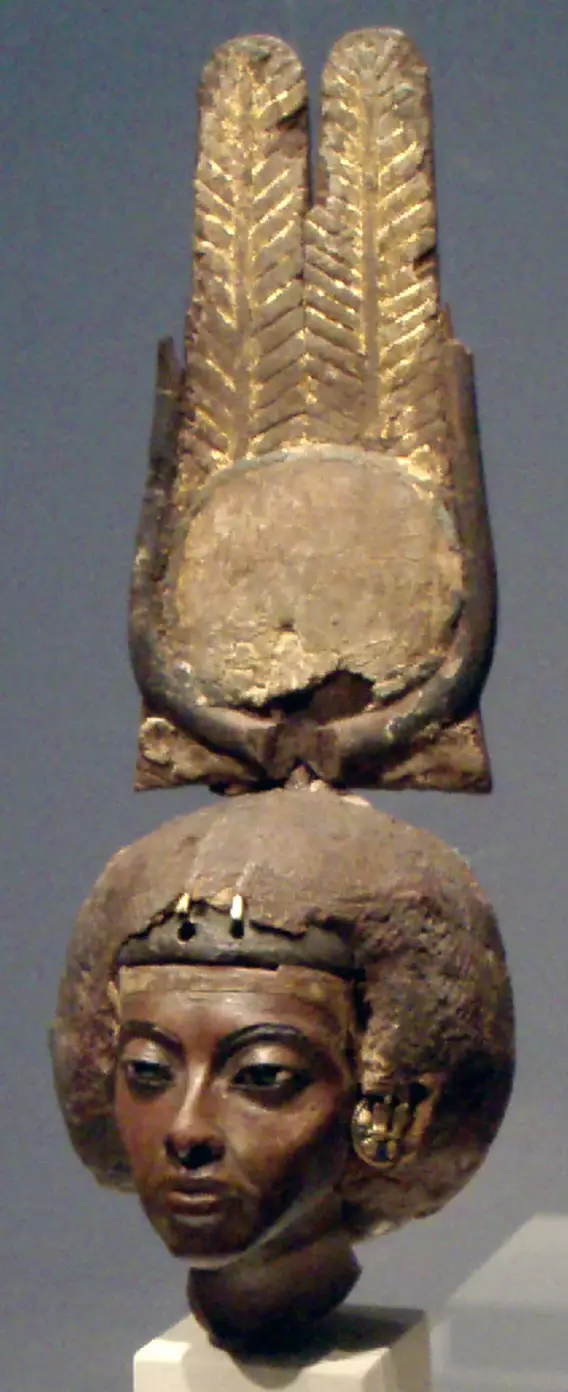
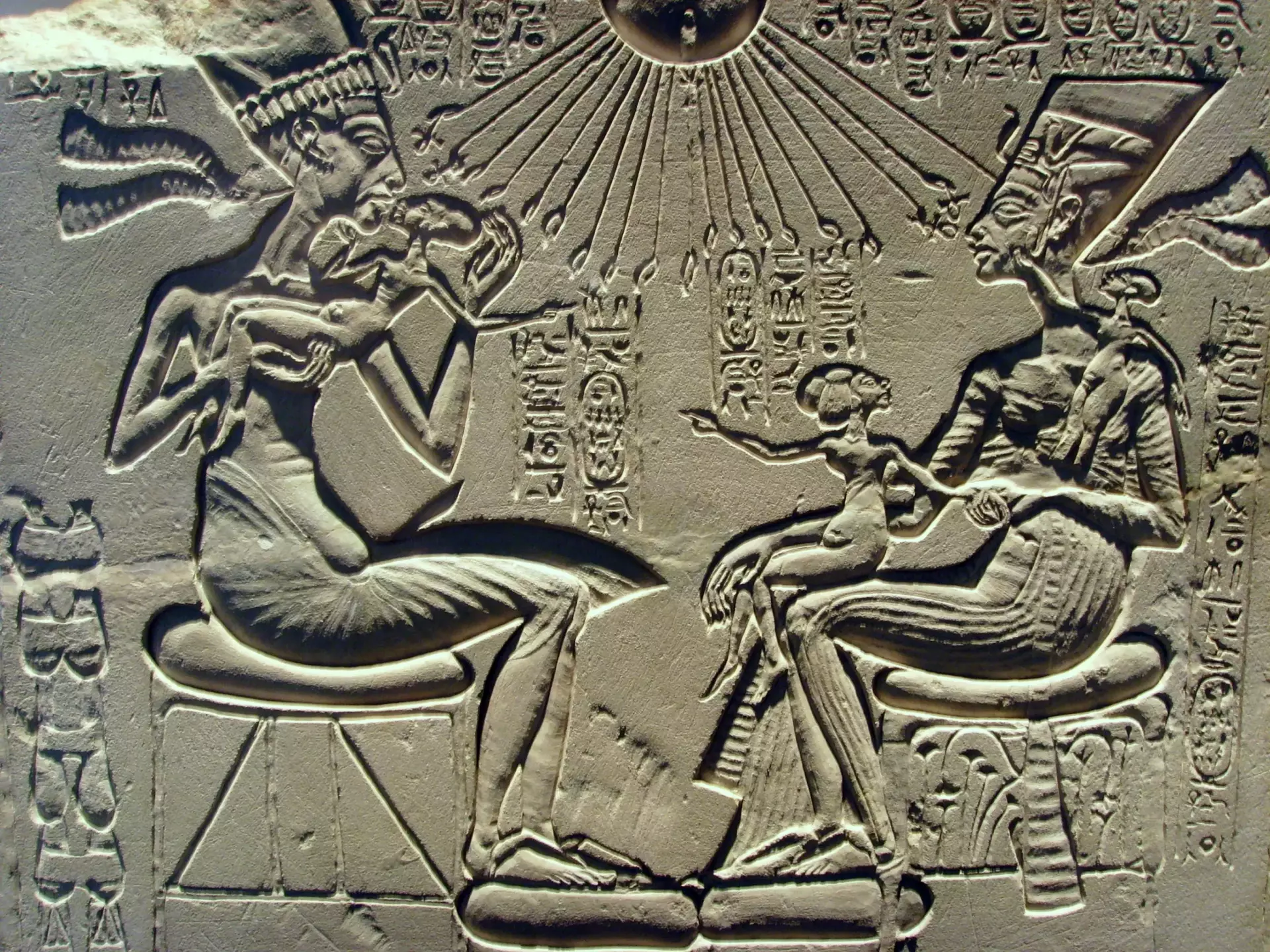
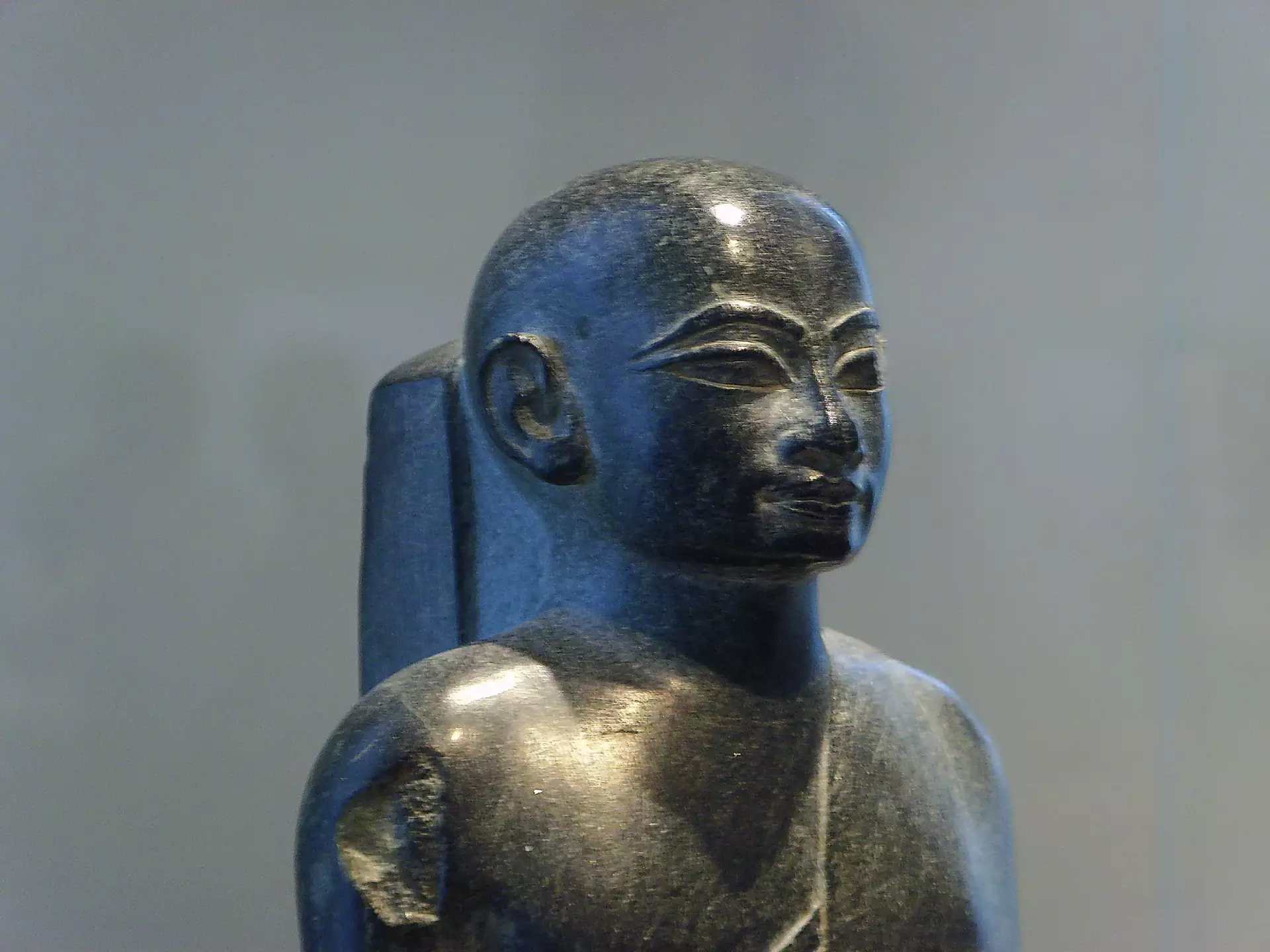
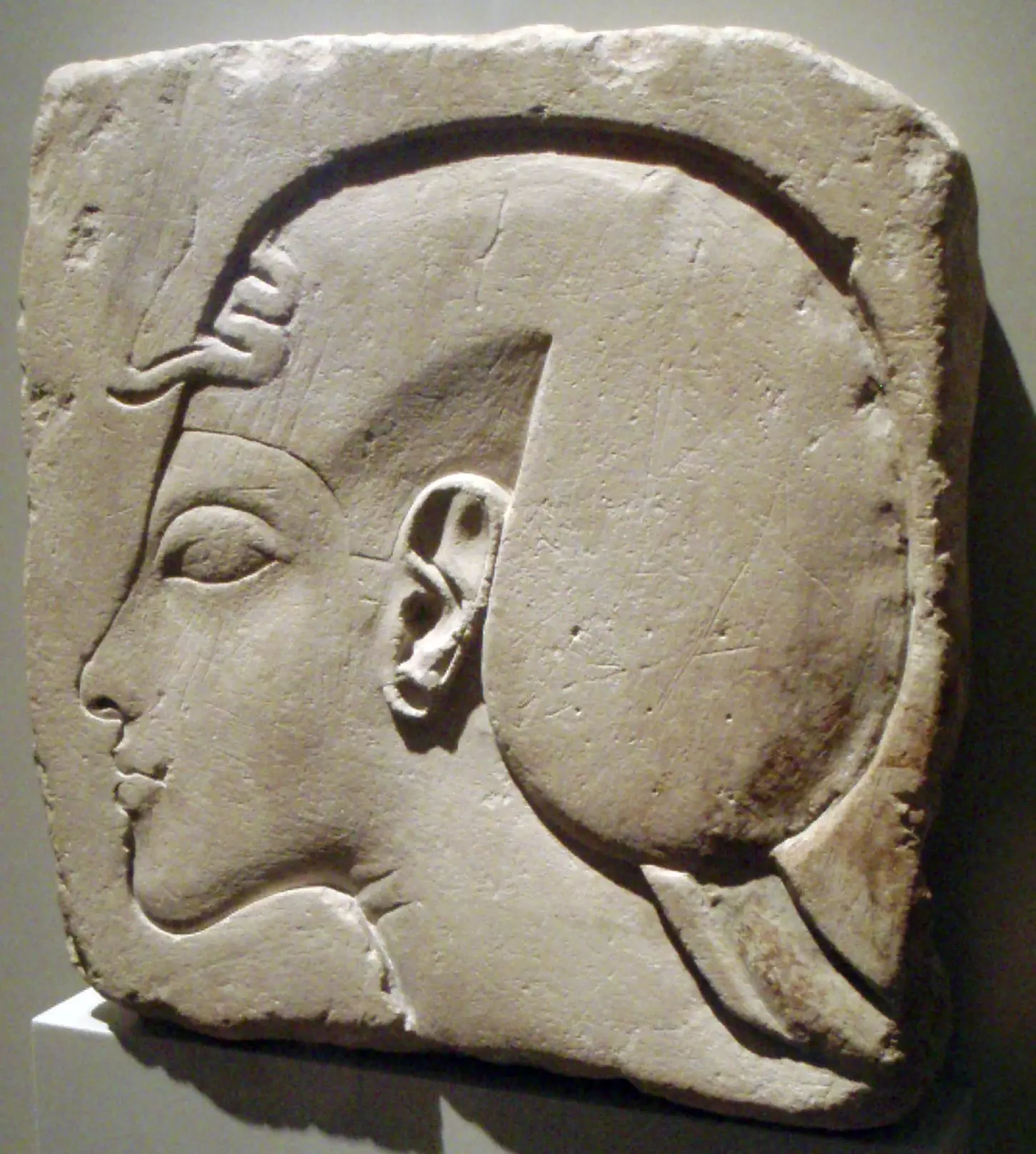
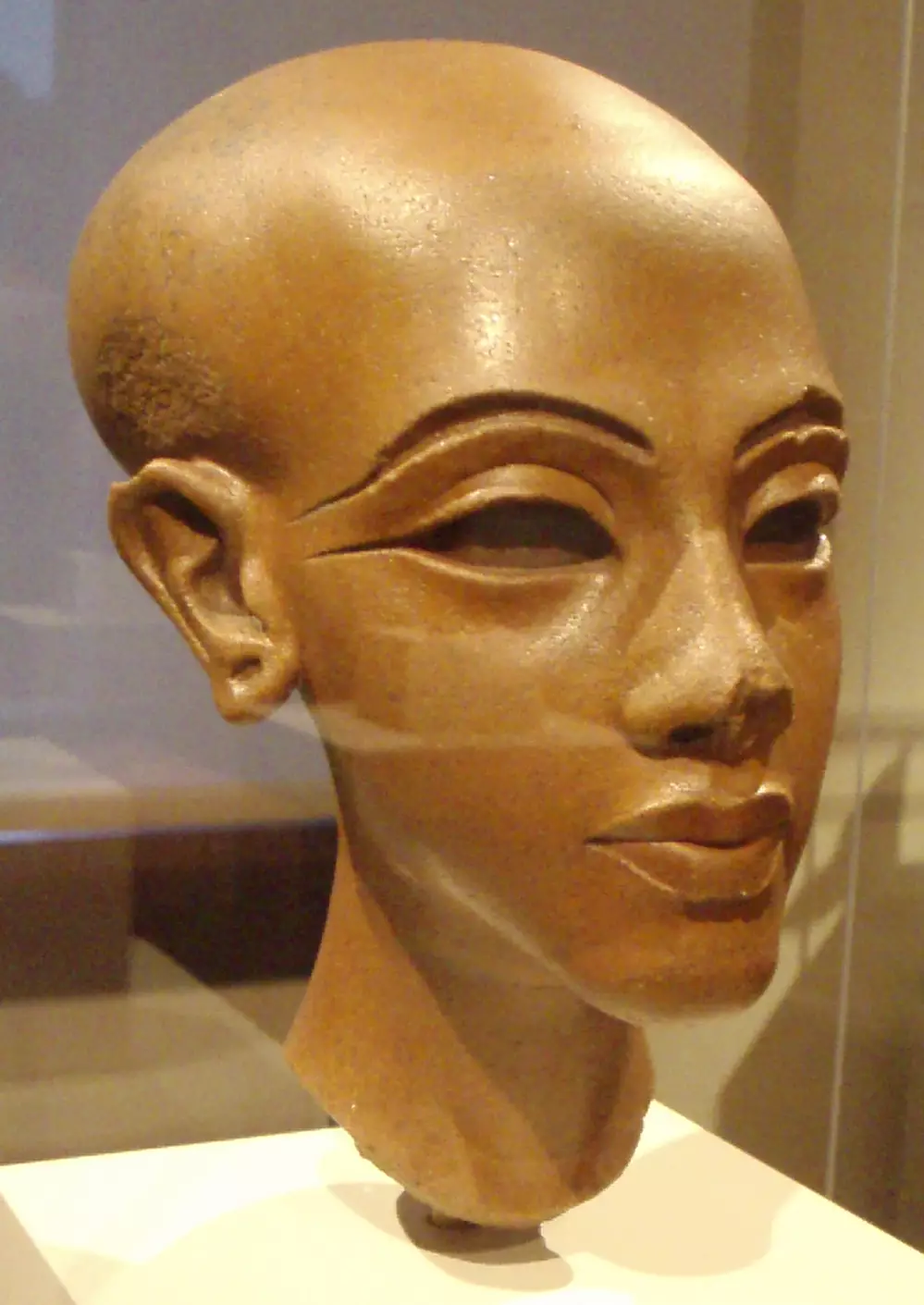
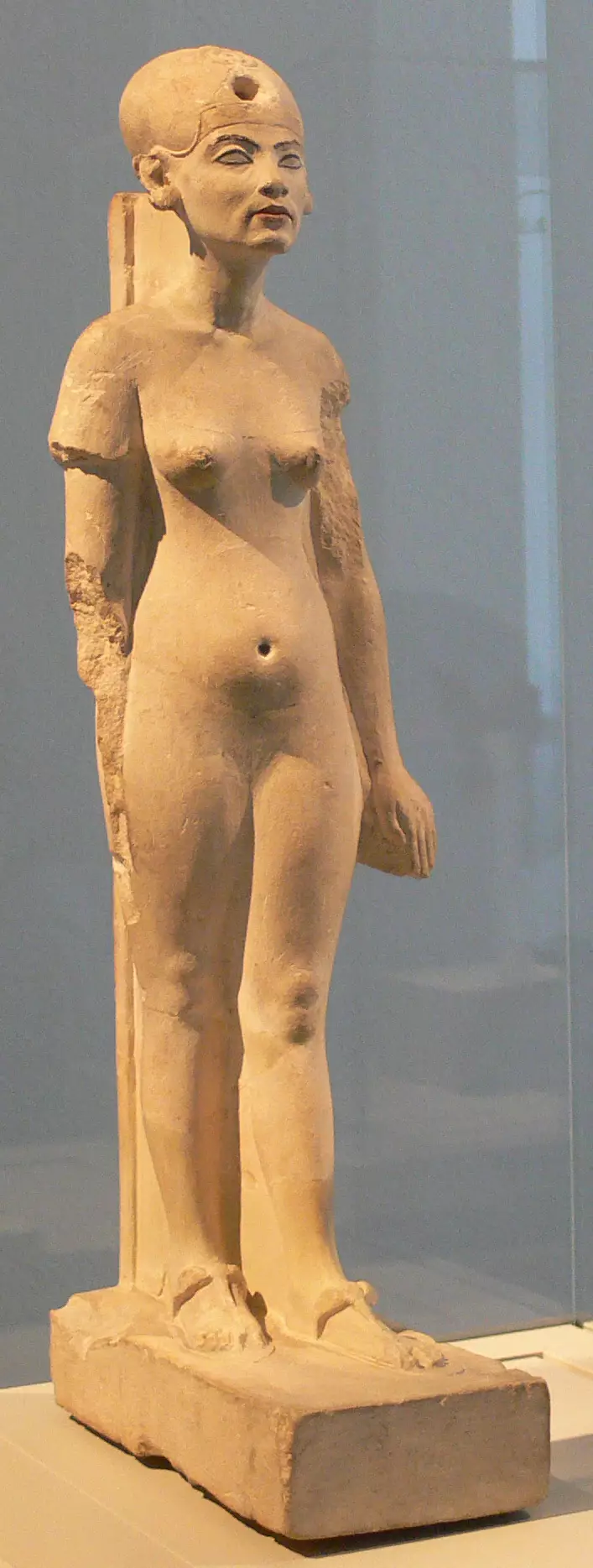
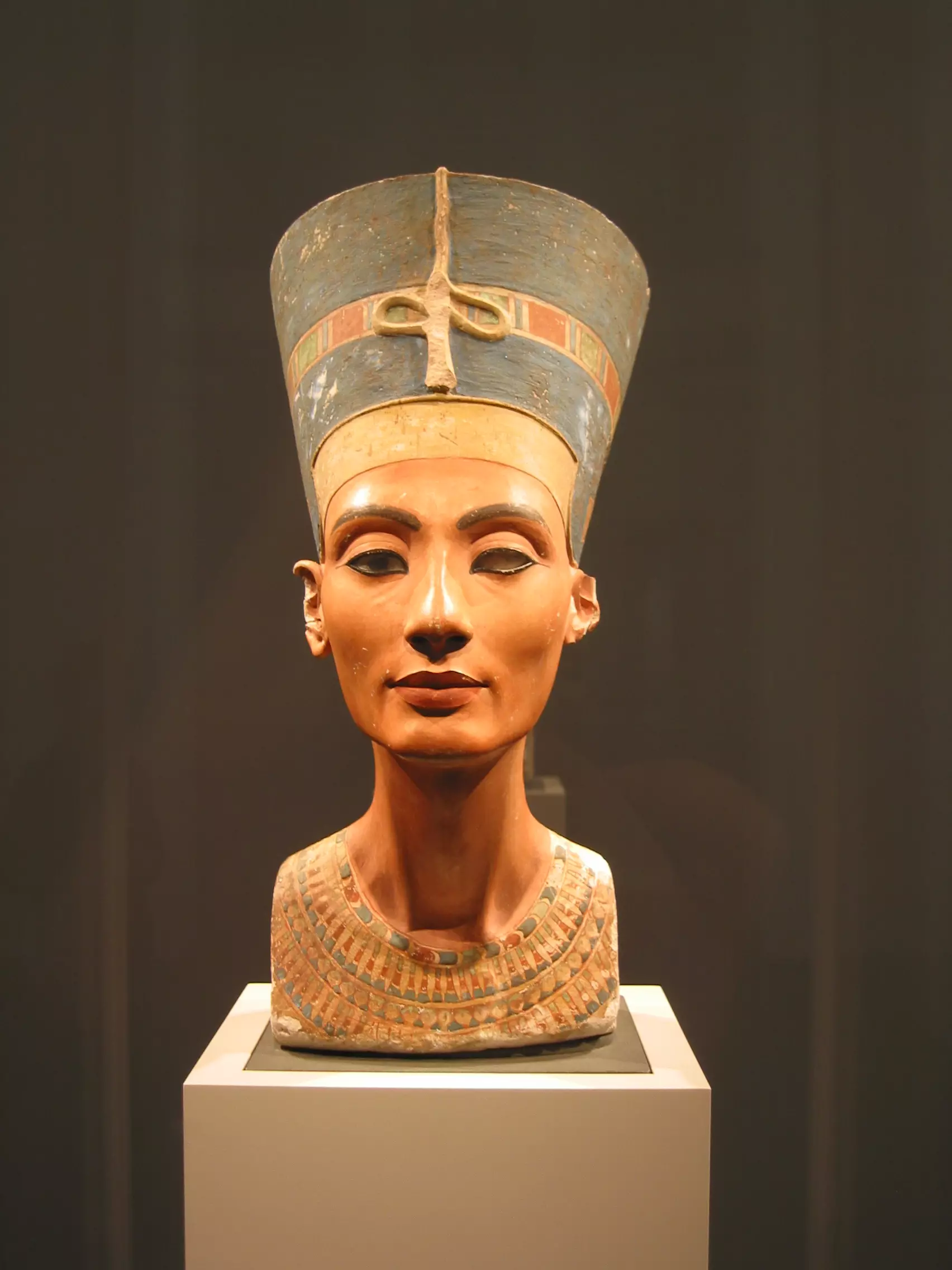
The museum features a wide range of artifacts that trace human stories across time. Highlights include the Egyptian collection and the Prehistory and Early History displays, each offering a different window into ancient life and culture.
Among the most recognized pieces on view is the bust of Nefertiti. Its beauty and craftsmanship draw steady attention, and its history continues to spark discussion. The Egyptian government disputes the legality of its acquisition and seeks its return, a debate that adds a contemporary layer to this centuries-old masterpiece.
Source - https://en.wikipedia.org/wiki/Egyptian_Museum_of_Berlin
Small terrace on the top of the Park Inn, publicly accessible. Take the elevator to the 40th floor, and follow the signs up the stairs. Pay the attendant who also serves beer and coffee. Great views of the Fernsehturm. In the summer, consider base jumping off the roof with Jochen Schweizer. It is often closed in bad/windy weather, so look for a notice posted near the elevator that the terrace is closed.
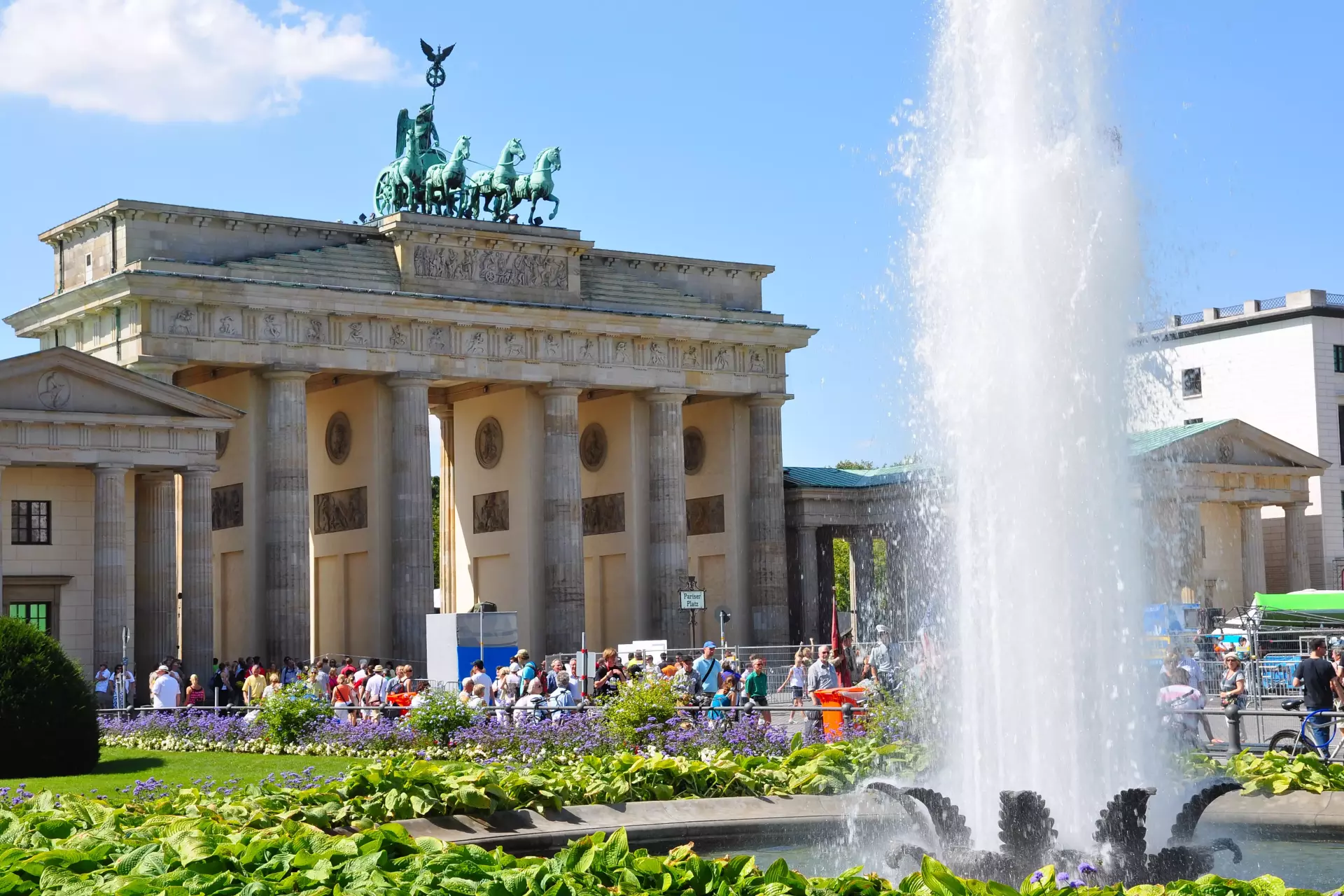
The only surviving Berlin city gate and a potent symbol of the city. This is the point where Straße des 17. Juni becomes Unter den Linden. The gate was designed by Carl Gotthard Langhans in 1791 and was intended to resemble the Acropolis in Athens. The Brandenburg Gate now symbolizes reunification, after dividing East and West Berlin for decades. This is the site of Reagan's "Mr. Gorbachev open this gate, Mr. Gorbachev tear down this wall" speech.
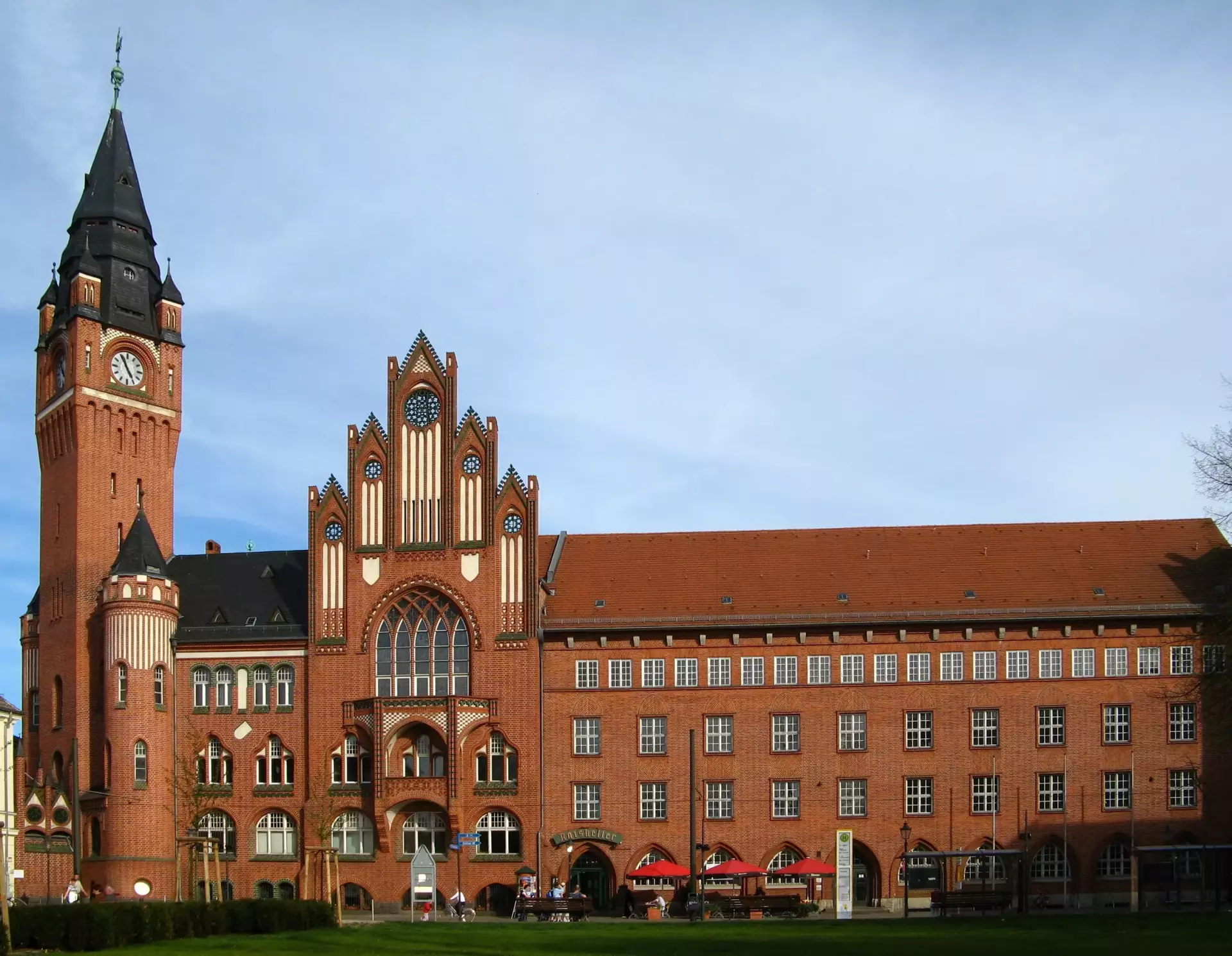
The town hall of Berlin is known as such because it is made of red brick, not due to its former political persuasion. There are nice Prussian rooms inside, which are worth a look.
The Bendlerblock building complex has long held ties to the German military, first serving as the offices of the Imperial German Navy and today housing the Berlin offices of the Ministry of Defense. It was here where, on 20 July 1944, Colonel Claus von Stauffenberg and other officers led a coup that sought to remove Hitler and the Nazis from power. They failed and were summarily executed in the courtyard, where a memorial stands for these men who are considered German heroes by many. Inside the building you'll find the German Resistance Memorial Center, a permanent exhibit dedicated to the July 20 plot and other individuals in the German resistance.
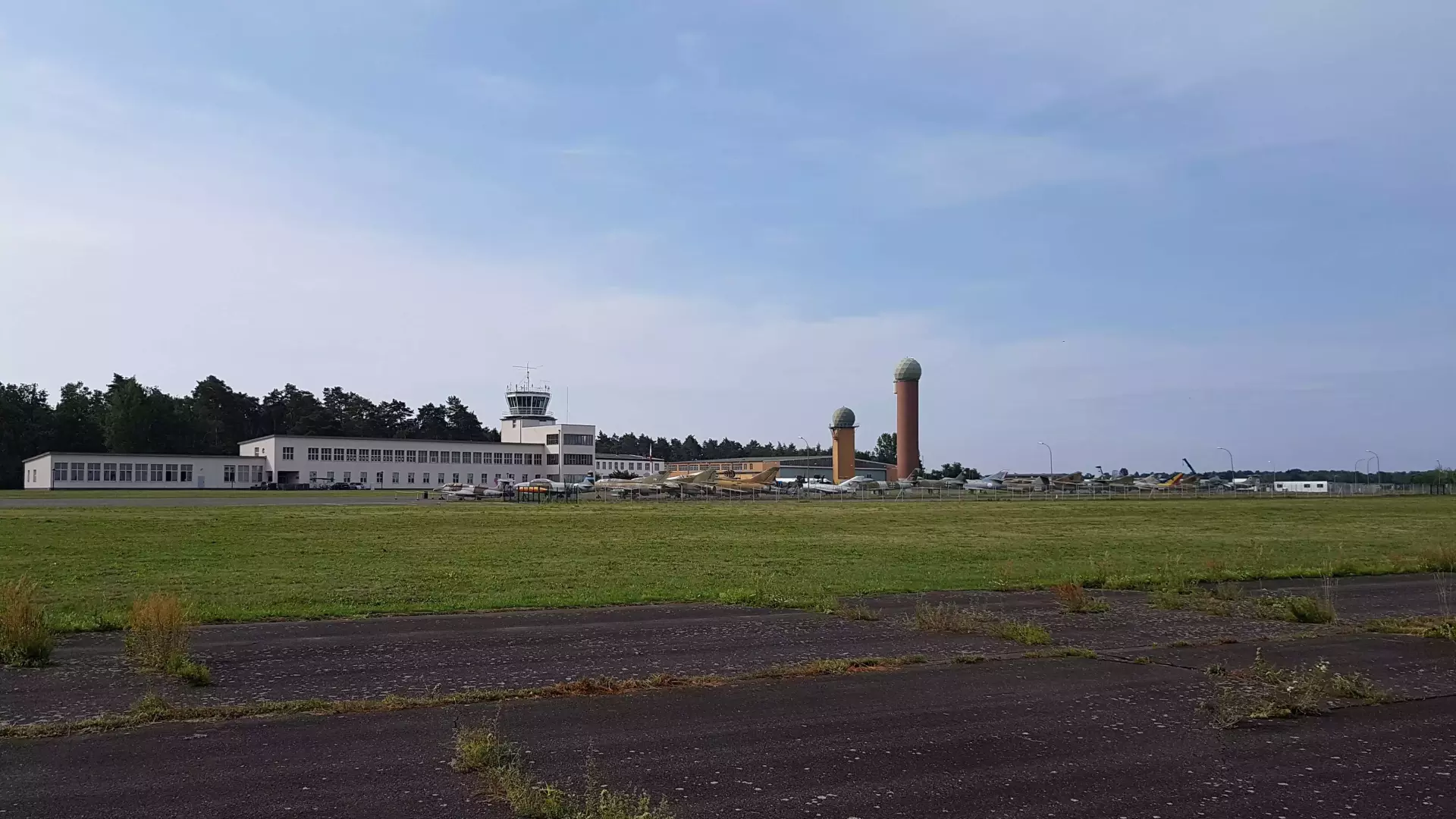
At a former Luftwaffe and Royal Air Force (RAF) airfield, RAF Gatow. The museum's focus is on military history, particularly the history of the Luftwaffe of the Bundeswehr, with a collection of more than 200,000 items, including 155 aeroplanes, 5,000 uniforms and 30,000 books. There are also displays (including aeroplanes) on the history of the airfield when it was used by the RAF. Aircraft include reproductions of Otto Lilienthal's gliders, of World War I planes such as the Fokker E.III, and World War II planes such as the Bf 109 and Me-262, as well as at least one aircraft of every type ever to serve in the air forces of East and West Germany. Most of those postwar aircraft are stored outside on the tarmac and runways, however, and many are in bad condition. There are long term restoration projects, including a Focke-Wulf Fw 190. RAF Gatow is notable as the "missing third airport" of West Berlin. Each sector used to have its own airport; the French sector had Tegel, the American sector had Tempelhof and the British had Gatow. However, RAF Gatow never saw much traffic of any kind, was more kept as a political statement than for transportation value, and thus was shut down after reunification. Tempelhof, after having been shut down for civilian traffic from 1975 to 1981, closed for all flights in 2008, while Tegel shut down in November 2020.
The city's Protestant cathedral and the burial place of the Prussian kings. You can climb to the top and get a view of the city.
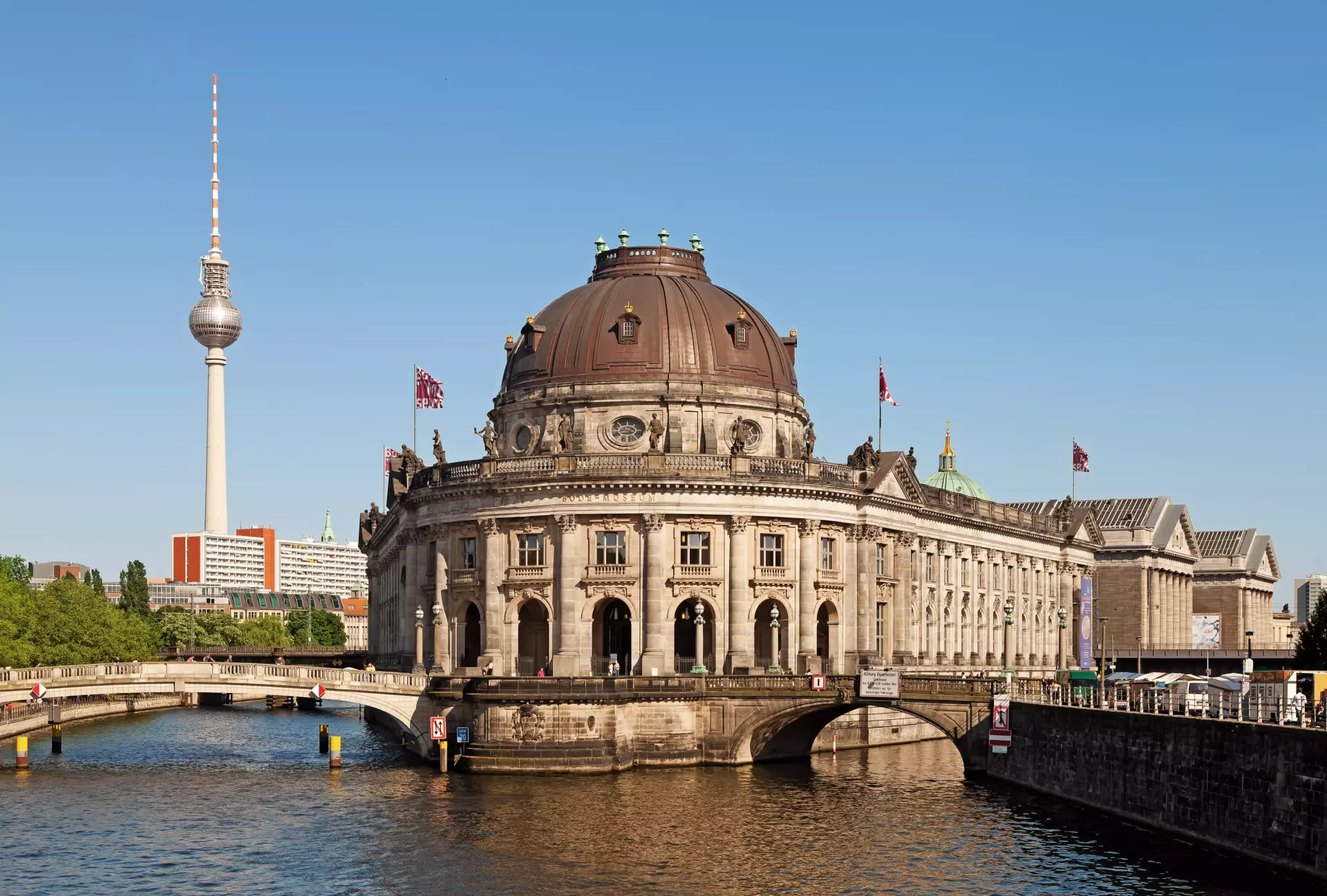
The museum’s treasures include the sculpture collection with works of art from the middle ages to the 18th century. The Bode museum is best known for its Byzantine art collection and the coin cabinet.
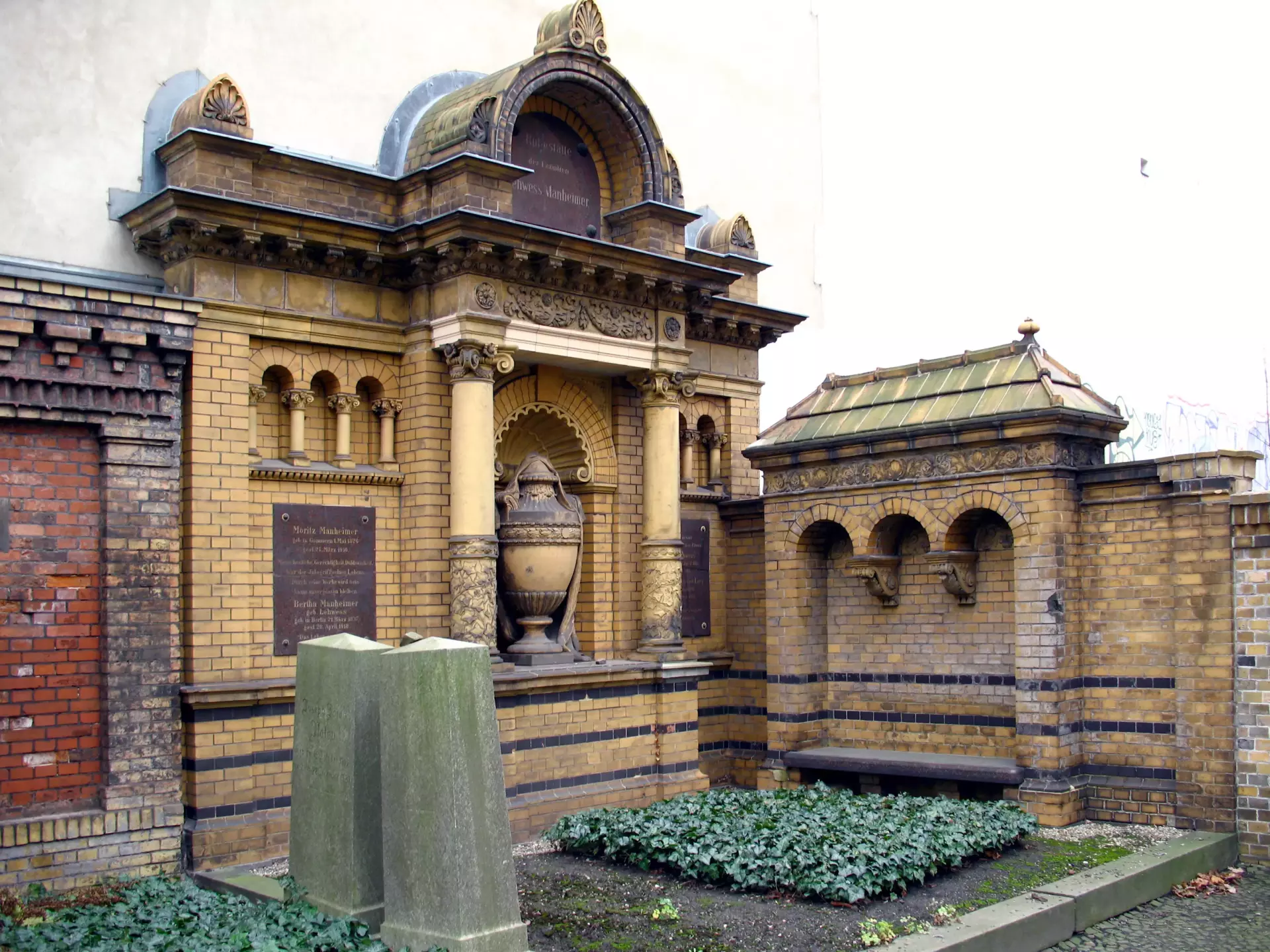
Jewish cemetery and lapidarium with old tombstones.
150 m high lattice tower with open-air observation deck 124 m above ground.
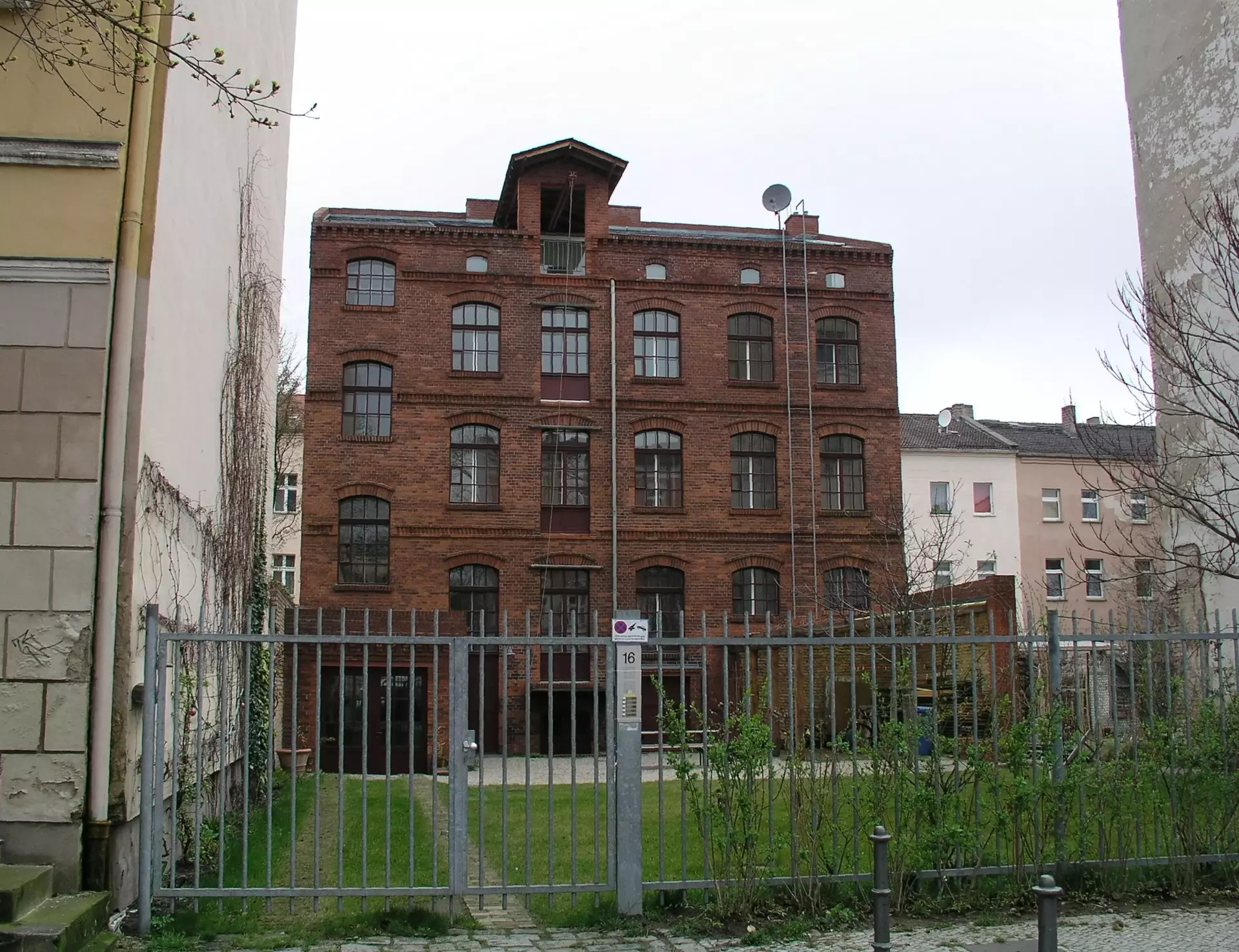
The synagogue in the backyard of an apartment house is one of the biggest in Germany.
Started in the 15th century and finished in the mid-18th century, the baroque palace was the residence of electors, kings and emperors until 1918, when it became a museum. The palace was badly damaged during World War II and later razed in 1950, replaced by the GDR with a modernist Palast der Republik. The Palast was in turn gradually dismantled at the turn of the century, as it was discovered to contain asbestos and its former function of housing the GDR parliament became obsolete. Berlin has started in June 2013 construction on a new version of its historic Stadtschloss. The Schlüterhof, an inner courtyard, was also rebuilt. The building opened with a delay in 2021 with museums inside and a roof terrace with a good view. Among the Berlin museums this is perhaps the most controversial due to reconstruction of a monarchist palace being seen as a questionable political statement and due to the fact that many of the exhibits were sourced from German colonies under ethically questionable circumstances leading to demands to return some or all of them to their places of origin.
Specializes in 19th-century painting and sculpture; Monet, Manet, Cézanne, C. David Friedrich and other important 18th- and 19th-century artists are well-represented.
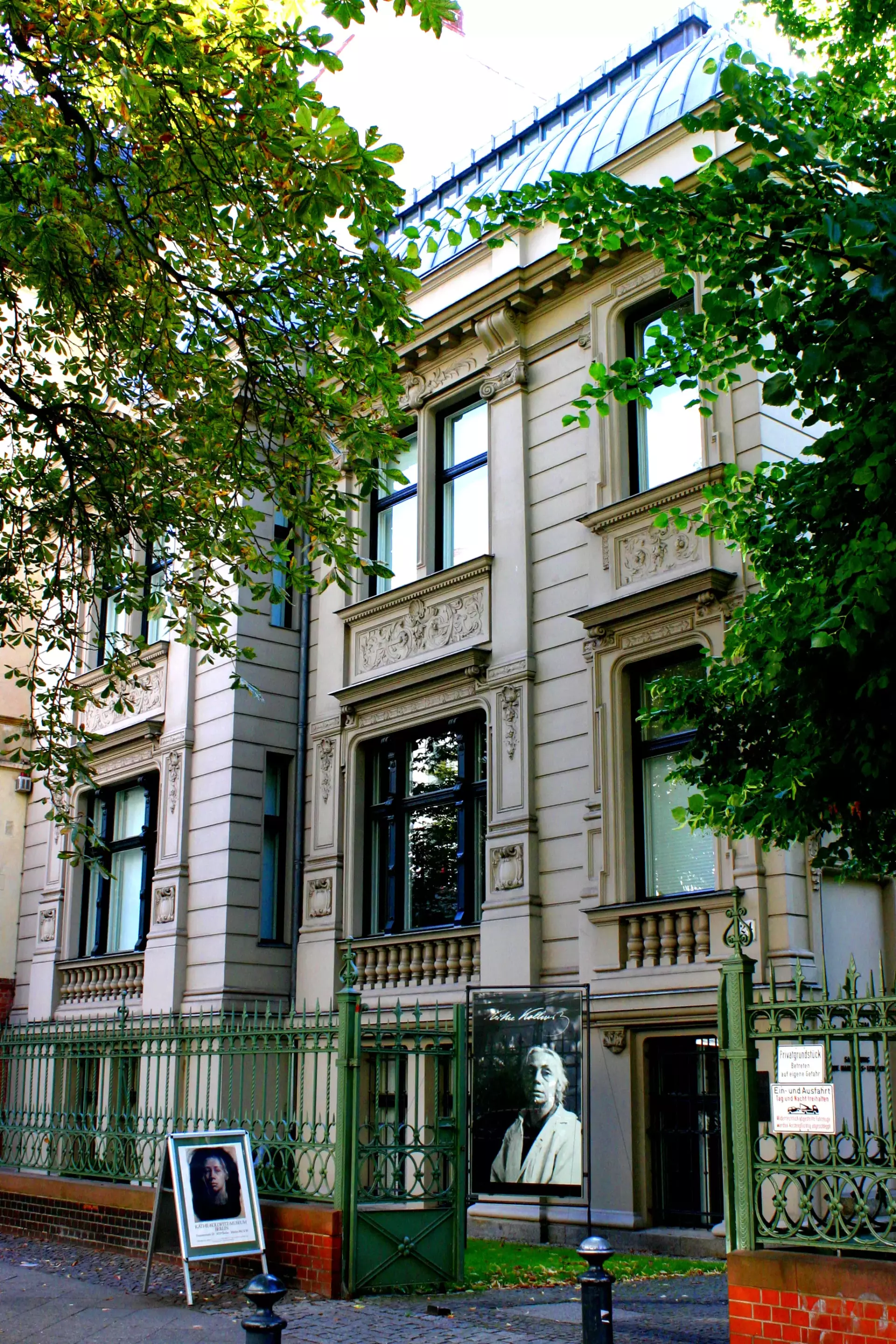
House museum on Max Liebermann, German painter and printmaker. Has about 15 Lieberman paintings.
The meeting point of one of the leading oppositions against the GDR regime and is a great Neogothic church. Also the only ecumenical Lord's supper with Protestants and Catholics together took place in the Gethsemanekirche (2003).
The main floor houses the antiquities collection in an ongoing exhibit called "Neue Antike im Alten Museum" (New Antiquities in the Old Museum). Directly through the front door, entering from the Lustgarten (Pleasure Garden, now under reconstruction), there is a domed rotunda with red and white cameos, Greek-style, with statues of the gods. To reach the Hildesheim silver collection, go to the back of the rotunda, turn left, walk through the long gallery and turn left into a small room at the end.
Oderberger Straße is known for its beautiful and generous Gründerzeit architecture, as well as its cafés and restaurants. Since before Germany's reunification the street has been the desired place for alternative folks and avant-gardists, but the area has seen continual gentrification since the early 2000s.