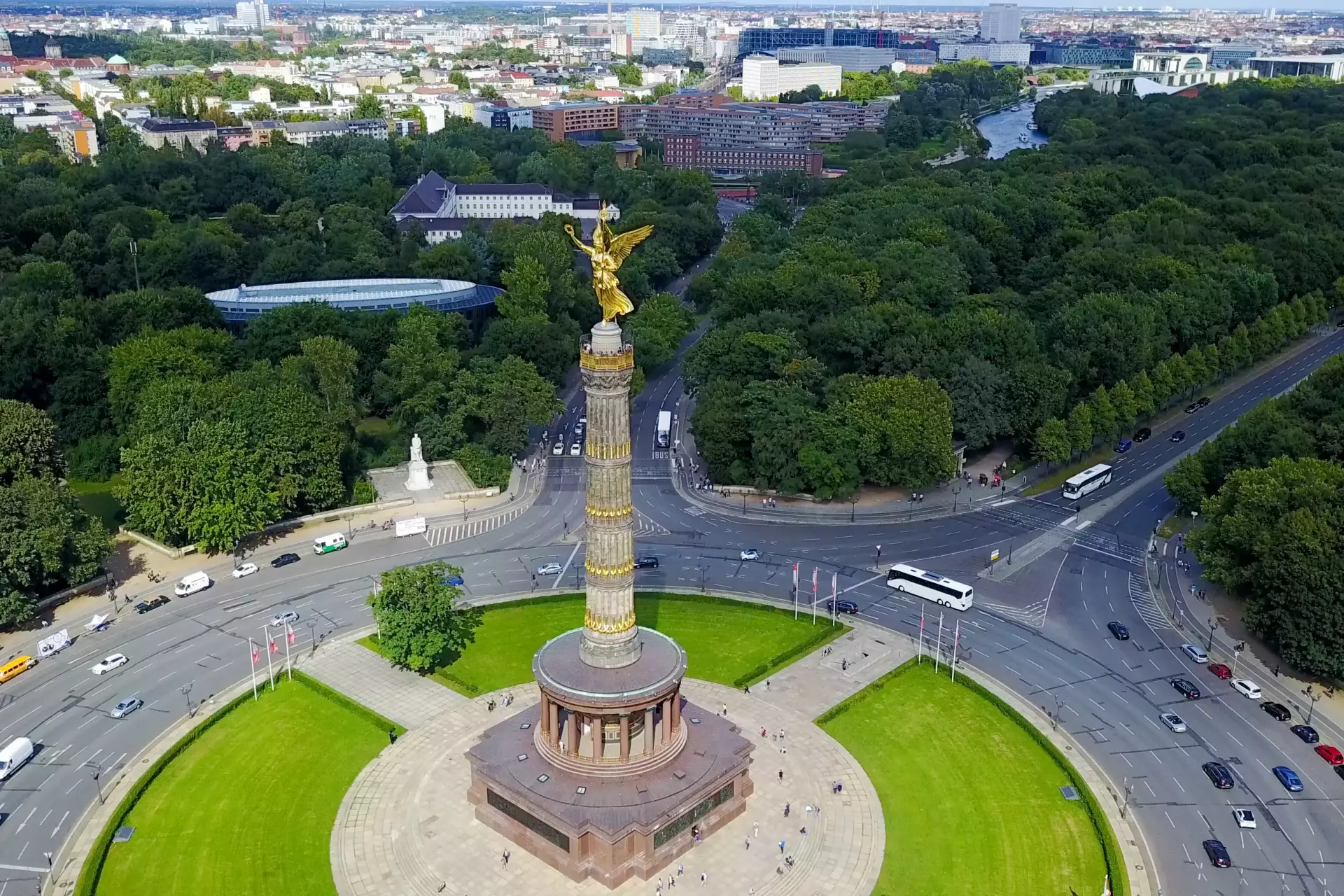
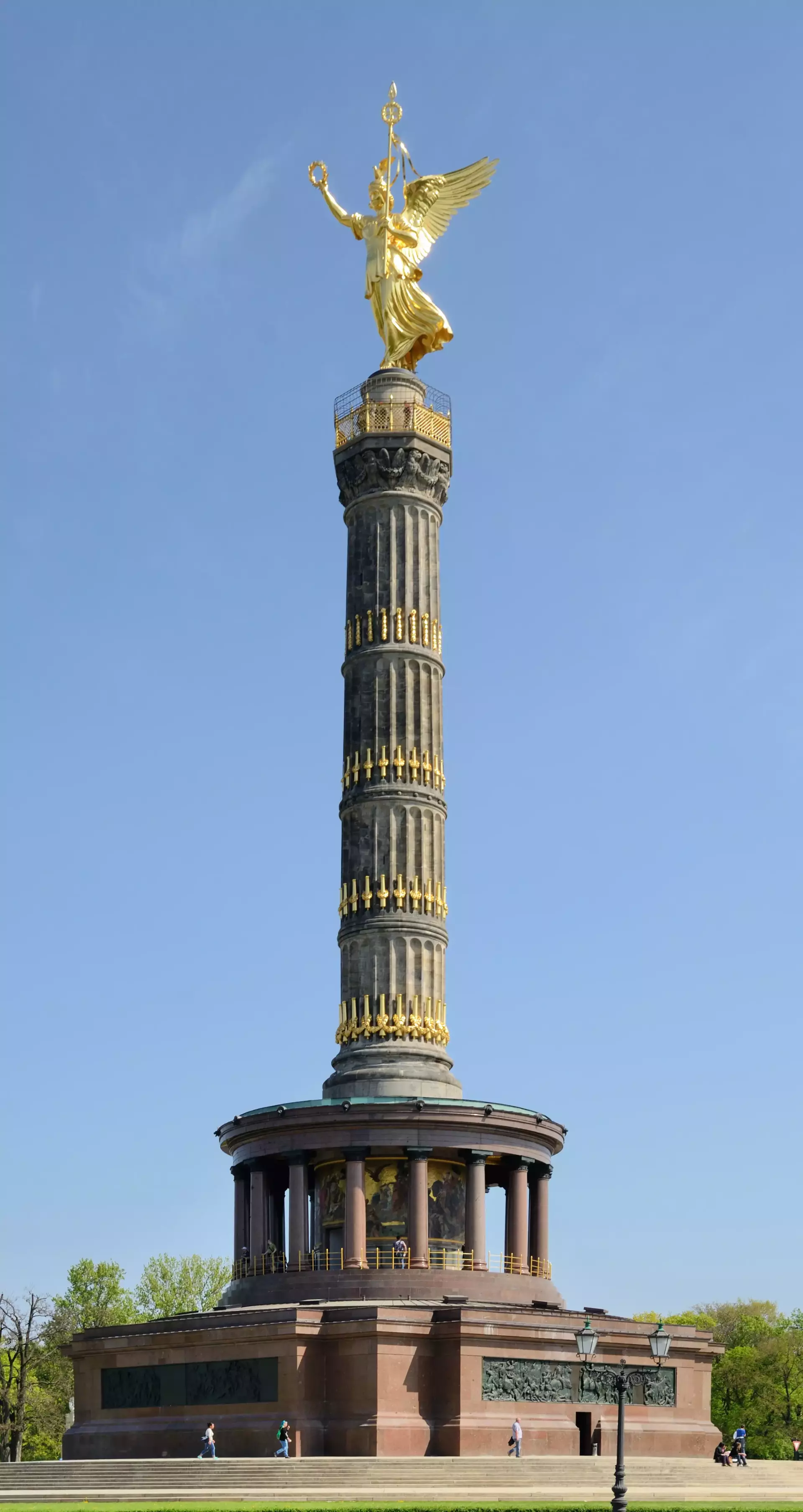
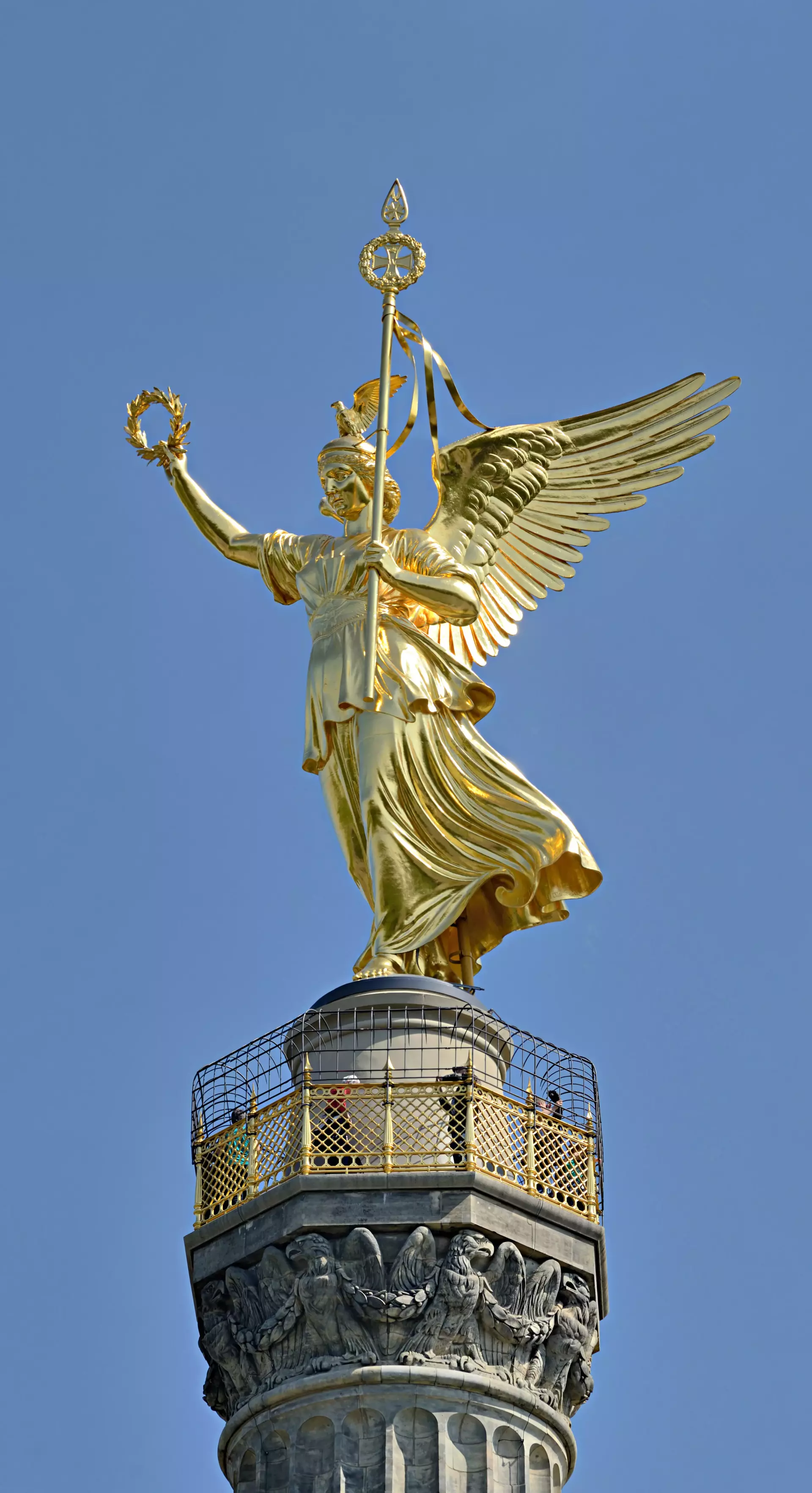
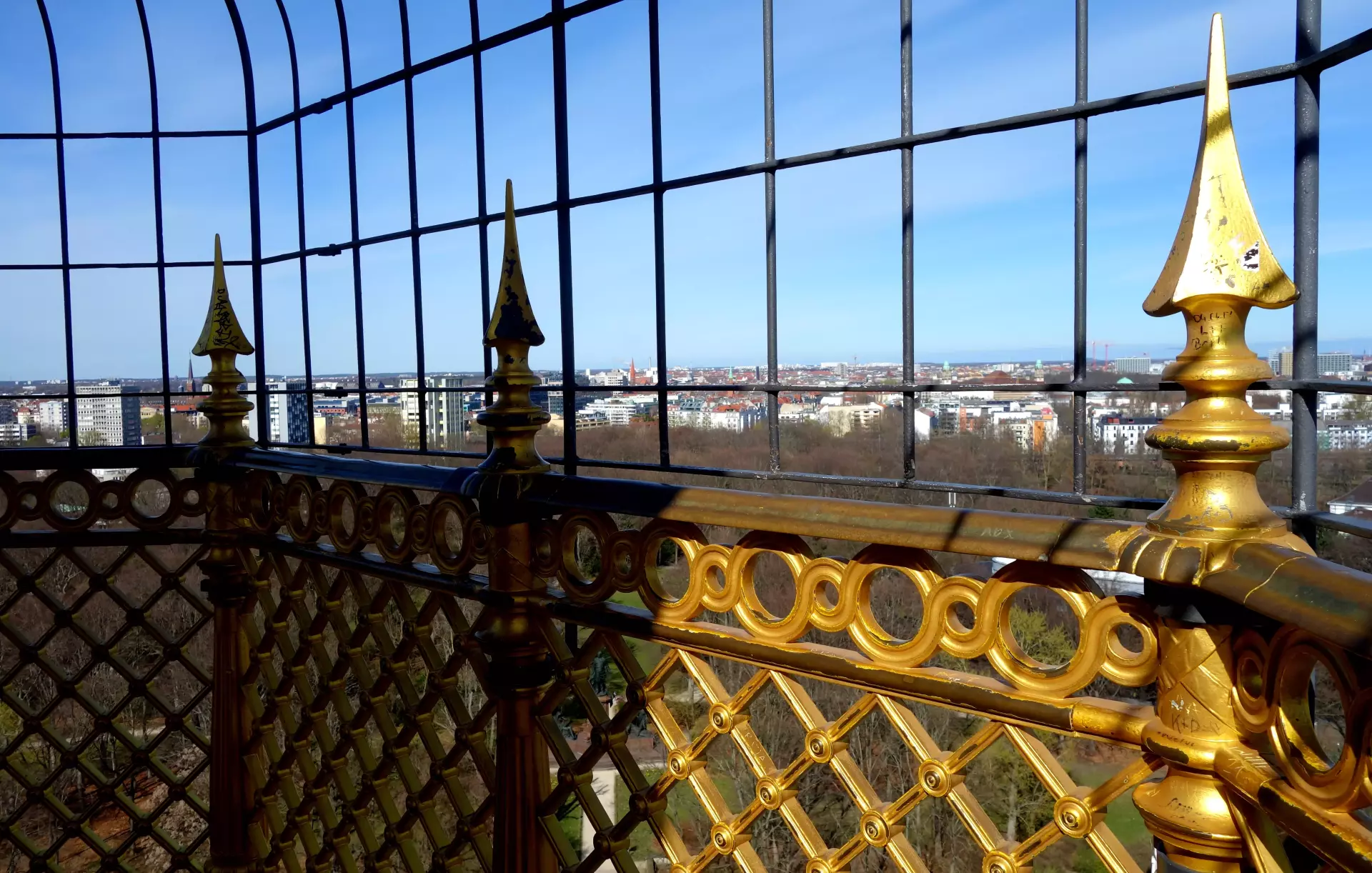
High above the trees of Berlin’s Tiergarten, a gilded figure catches the light. This is the Victory Column, crowned by “Goldelse” — the statue of Victory — a landmark that shines over a busy traffic circle called Großer Stern, where five roads meet. The column’s viewing platform sits 50.7 meters above the ground, reached by a narrow staircase of 285 steps. There is no elevator, so the climb is part of the experience. Film fans may recognize the scene: the monument features in Wim Wenders’ Wings of Desire, where angels survey the city from on high.
The monument began as a tribute to Prussian military victories in three 19th-century wars: against Denmark in 1864, Austria in 1866, and France in 1870–71. Later, during the Nazi era, the column was moved to its present position at the center of Großer Stern. Today, Goldelse is visible from many corners of the Tiergarten district, standing as a striking point of orientation amid parkland and broad avenues.
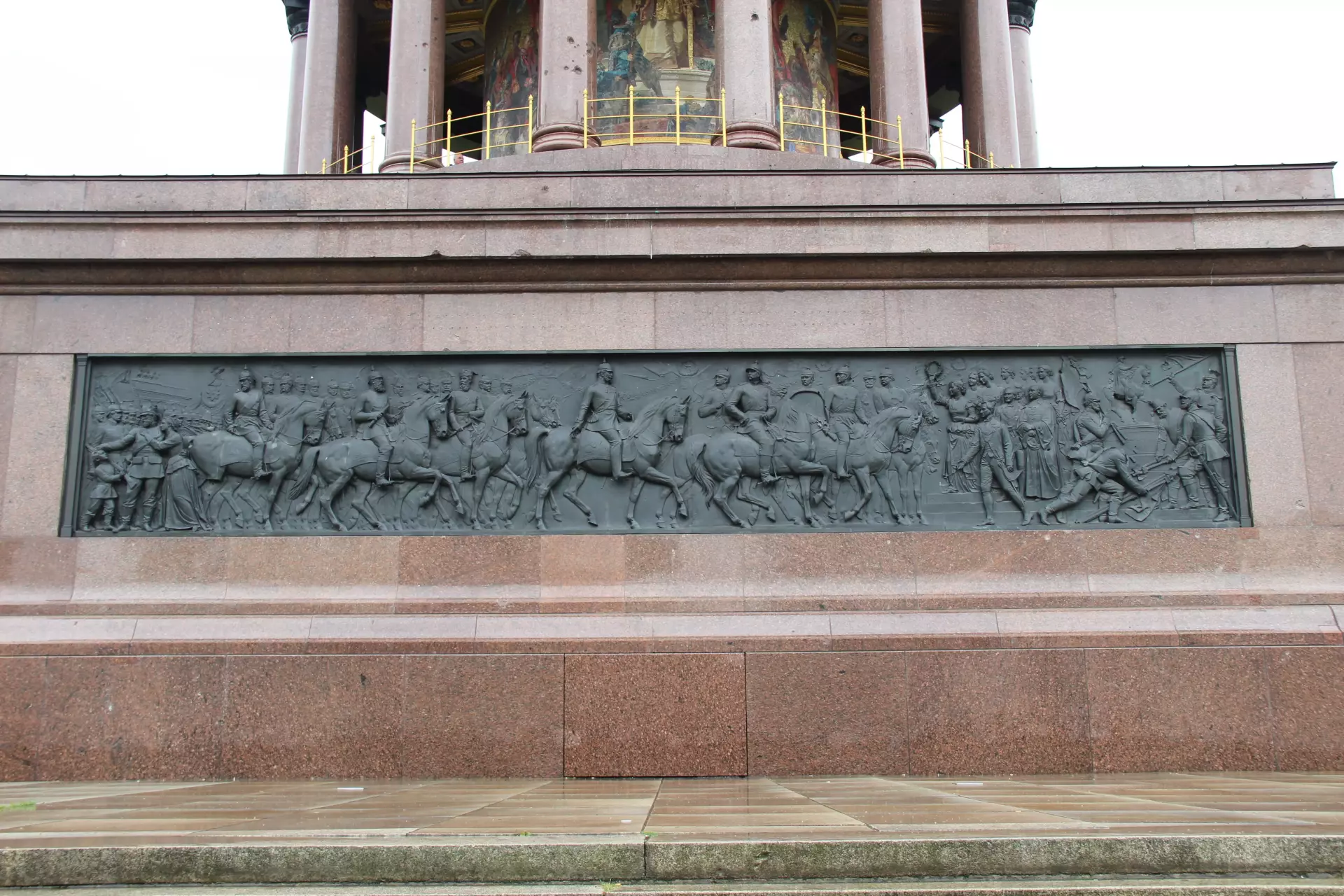
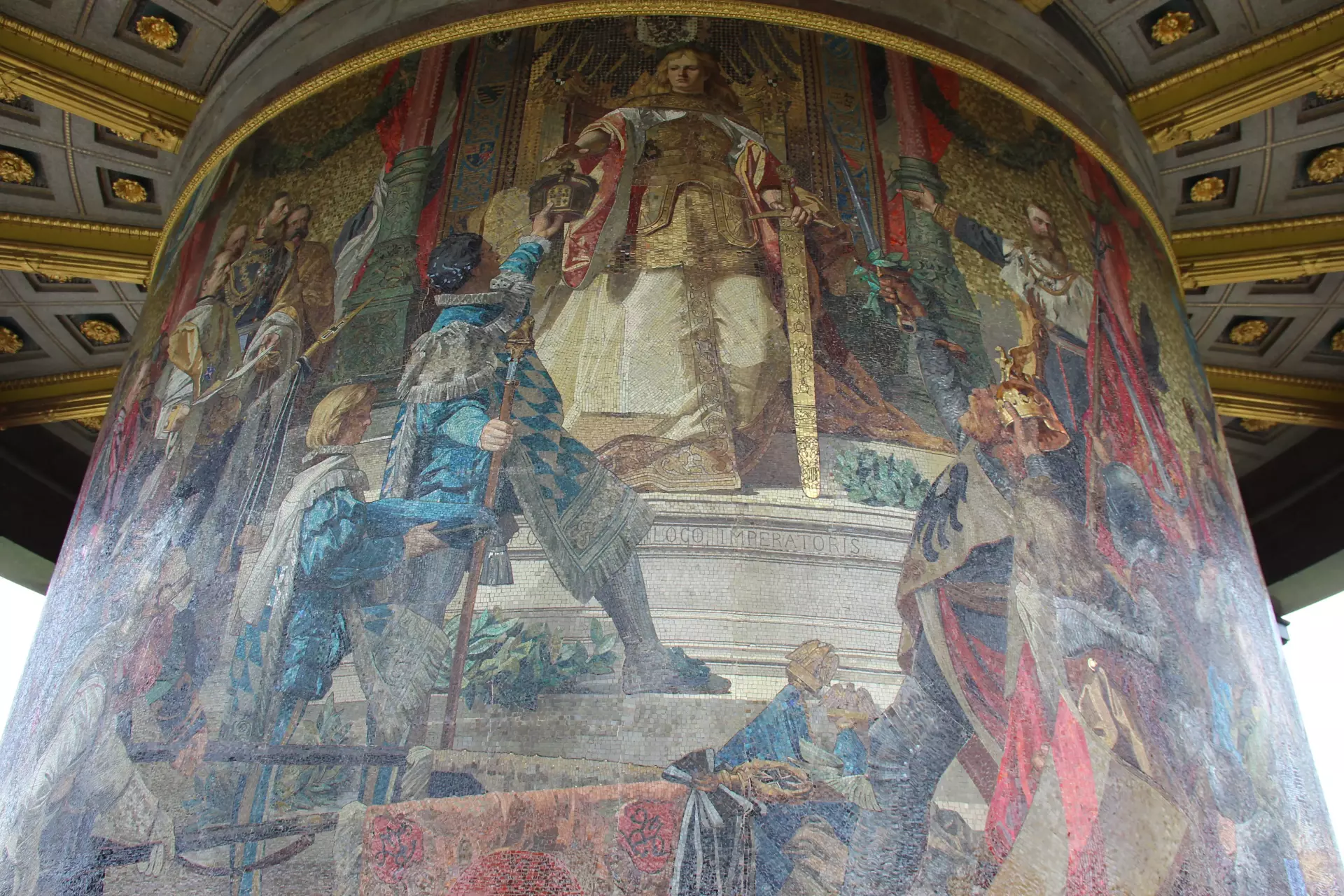
At the base, relief panels depict scenes from the conflicts the column commemorates. These artworks have their own complicated history. In 1945, the Allied powers ordered their removal. Decades later, the panels were remounted, returning in stages in 1984 and 1987. The monument thus carries layers of memory — artistic, political, and civic — in its stone and bronze surfaces.
The Victory Column also plays a role in contemporary public life. In 2008, it formed the backdrop for a major speech by then U.S. Senator Barack Obama, after a debate in Germany over whether he should appear at the Brandenburg Gate. The choice placed the column once again at the center of global attention, linking its 19th-century origins to modern political moments.
Source - https://en.wikipedia.org/wiki/Berlin_Victory_Column
Small terrace on the top of the Park Inn, publicly accessible. Take the elevator to the 40th floor, and follow the signs up the stairs. Pay the attendant who also serves beer and coffee. Great views of the Fernsehturm. In the summer, consider base jumping off the roof with Jochen Schweizer. It is often closed in bad/windy weather, so look for a notice posted near the elevator that the terrace is closed.
Experience the Stasi Secret Police Prison first-hand. Tours are compulsory. Some of the tours are done by former inmates.
Take a stroll for a few kilometers along this canal which runs right through the heart of Kreuzberg. It's peaceful and mostly traffic-free, but full of life in summer. Some parts are lined with bars and restaurants with terraces. Sit on a bench or terrace and watch the world go by on a summer evening.
Nazi Propaganda Minister Josef Goebbels made Bebelplatz (then called Opernplatz) infamous on 10 May 1933, when he used the square across from Humboldt University to burn 20,000 books by "immoral" authors of whom the Nazis did not approve. Their list included Thomas and Heinrich Mann, Arnold Zweig, Kurt Tucholsky and Sigmund Freud. Today a monument is the reminder, though it blames Nazi students for the episode. When entering the square it's easy to miss the monument. It is in that part of Bebelplatz bounded on one side by the Opera House and on the other side by Humboldt University. Look dead centre: the monument is underground. A piece of plexiglass allows the viewer to look underground into a large, white room, filled with entirely empty, blank white bookcases. The room is large enough to hold the 20,000 books that were burnt. The absence of books reminds the viewer just what was lost here: ideas. But the event did reveal things to come, as ethnically Jewish author and philosopher Heinrich Heine, whose books were burned, let one of his characters say in an 1821 play: "This was only the foreplay. Where they burn books, they will also burn people." He was correct.
It was the only border crossing between East and West Berlin that permitted foreigners passage. Residents of East and West Berlin were not allowed to use it. This contributed to Checkpoint Charlie's mythological status as a meeting place for spies and other shady individuals. Checkpoint Charlie gained its name from the phonetic alphabet; checkpoints "Alpha" and "Bravo" were at the autobahn checkpoints Helmstedt and Dreilinden respectively. Checkpoint Charlie's atmosphere was not improved at all on 27 Oct 1961 when the two Cold War superpowers chose to face each other down for a day. Soviet and American tanks stood approximately 200 m apart, making an already tense situation worse. Now the remains of the Berlin Wall have been moved to permit building, including construction of the American Business Center and other institutions.At the intersection of Zimmerstraße and Friedrichstraße (U-Bahn Kochstraße U6) is the famous "You Are Leaving the American Sector" sign. The actual guardhouse from Checkpoint Charlie is now housed at the Allied Museum on Clayallee. For a more interesting exhibit go to the Haus am Checkpoint Charlie. This is a private museum with kitschy memorabilia from the Wall and the devices GDR residents used to escape the East (including a tiny submarine!). There are also people who set up booths here offering to stamp your passport with souvenir stamps in exchange for a small fee. You are highly advised not to put these stamps in your passport, as these are not official stamps and could invalidate it. Instead, bring along an expired passport or a small booklet to put the stamps in.
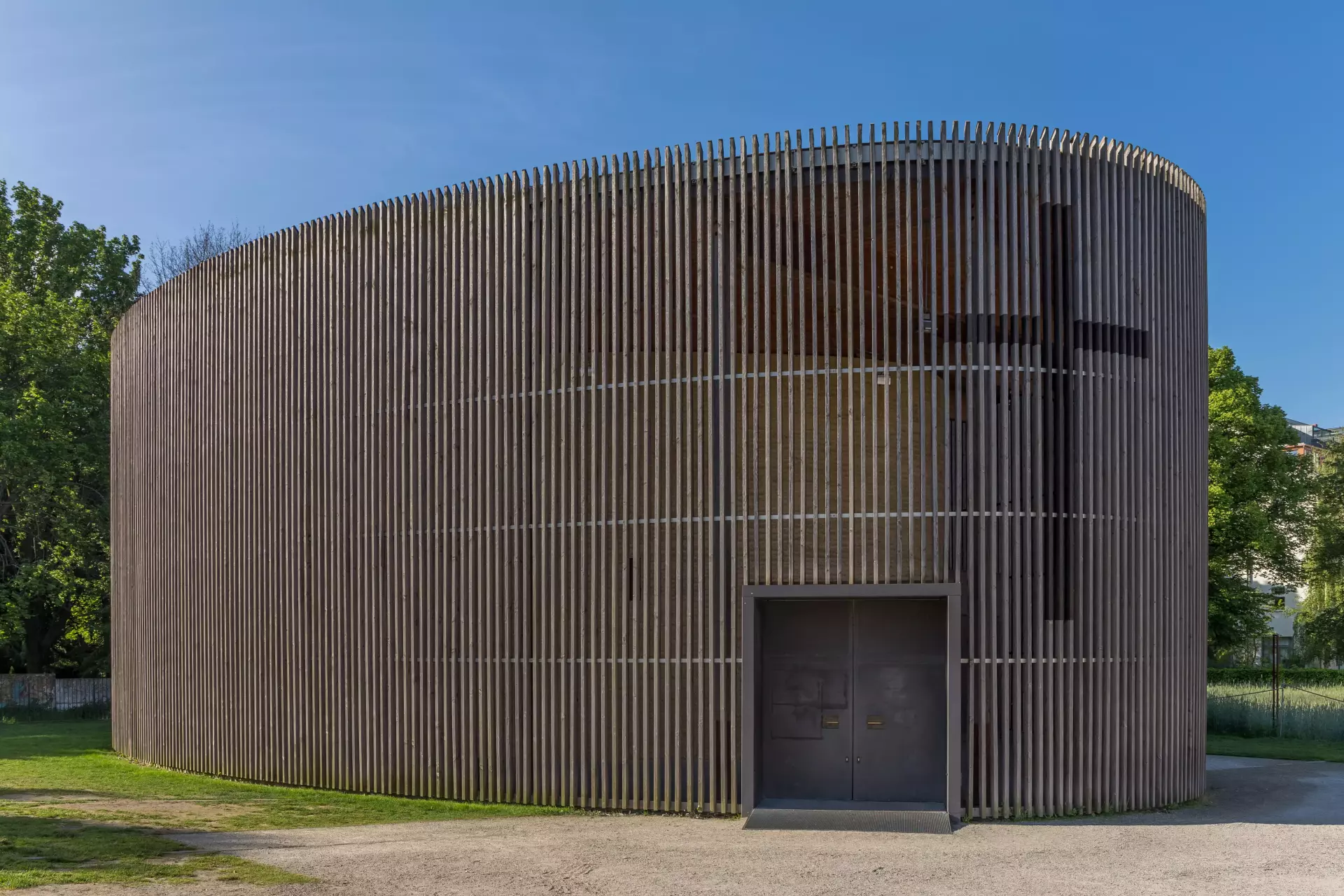
This chapel was built on the site of a church built in 1894 which sat on the "death strip" and was thus blown up by the GDR authorities in 1985. The chapel is the site of occasional memorial services for victims of the wall.
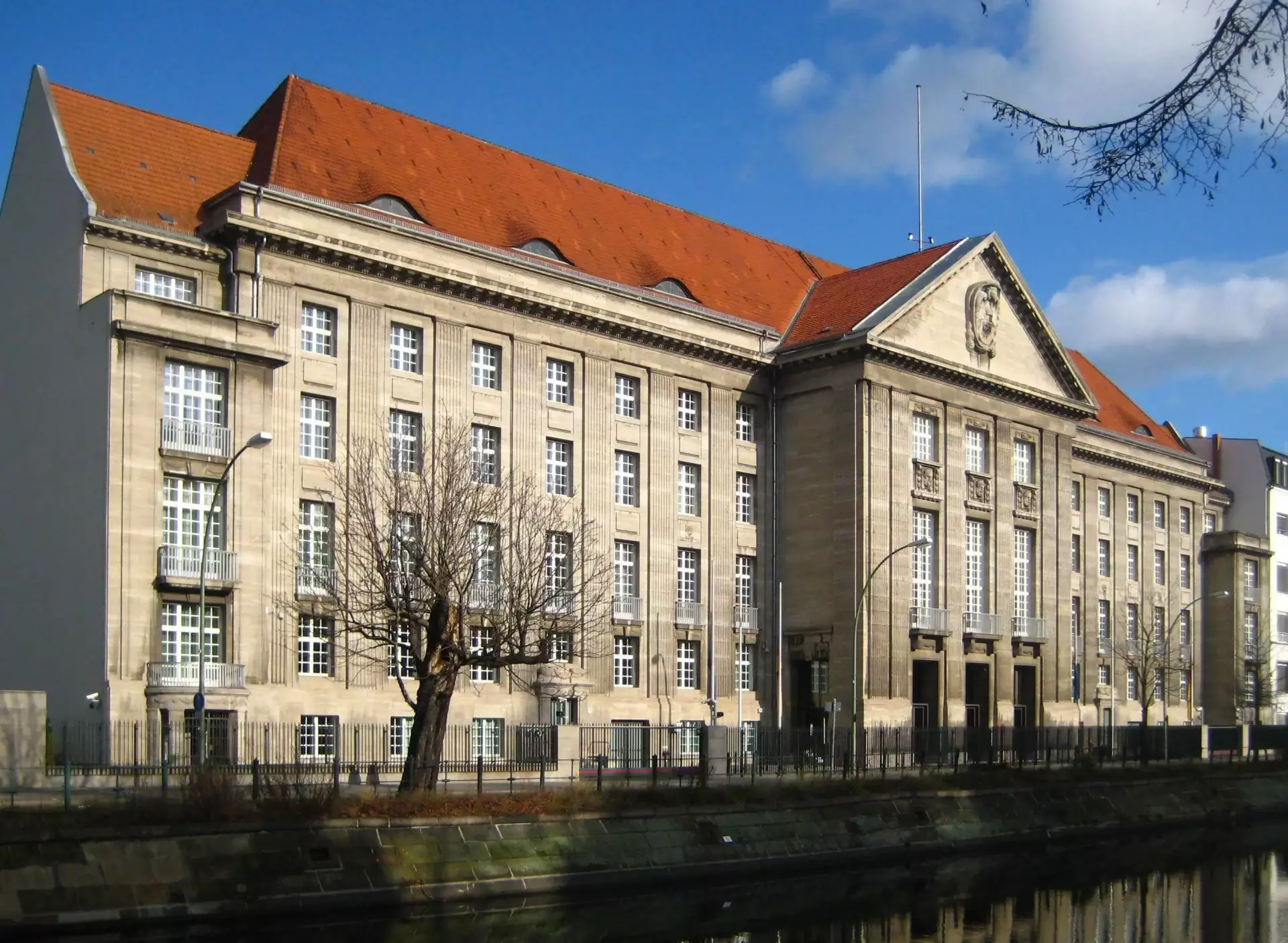
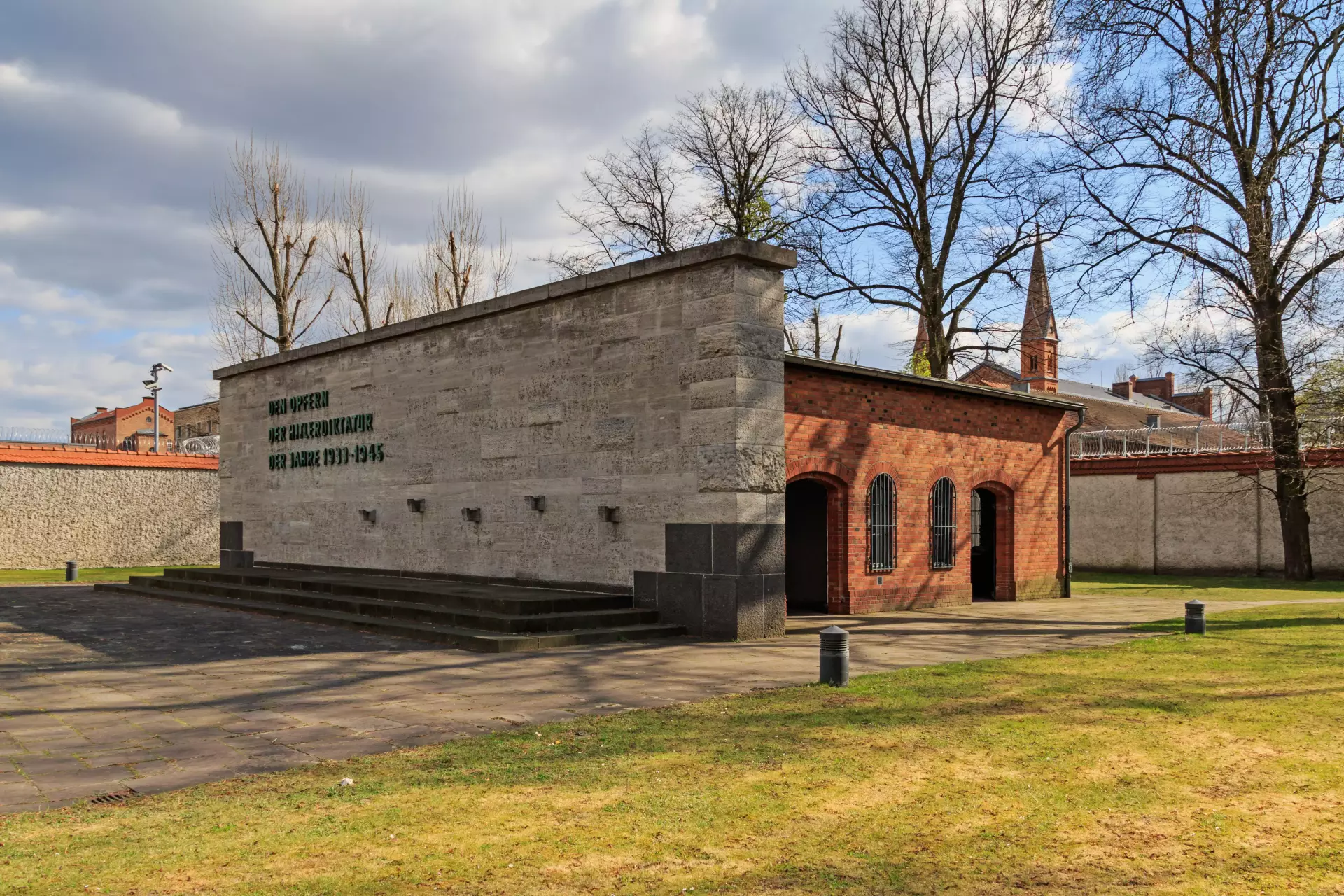
The Bendlerblock building complex has long held ties to the German military, first serving as the offices of the Imperial German Navy and today housing the Berlin offices of the Ministry of Defense. It was here where, on 20 July 1944, Colonel Claus von Stauffenberg and other officers led a coup that sought to remove Hitler and the Nazis from power. They failed and were summarily executed in the courtyard, where a memorial stands for these men who are considered German heroes by many. Inside the building you'll find the German Resistance Memorial Center, a permanent exhibit dedicated to the July 20 plot and other individuals in the German resistance.
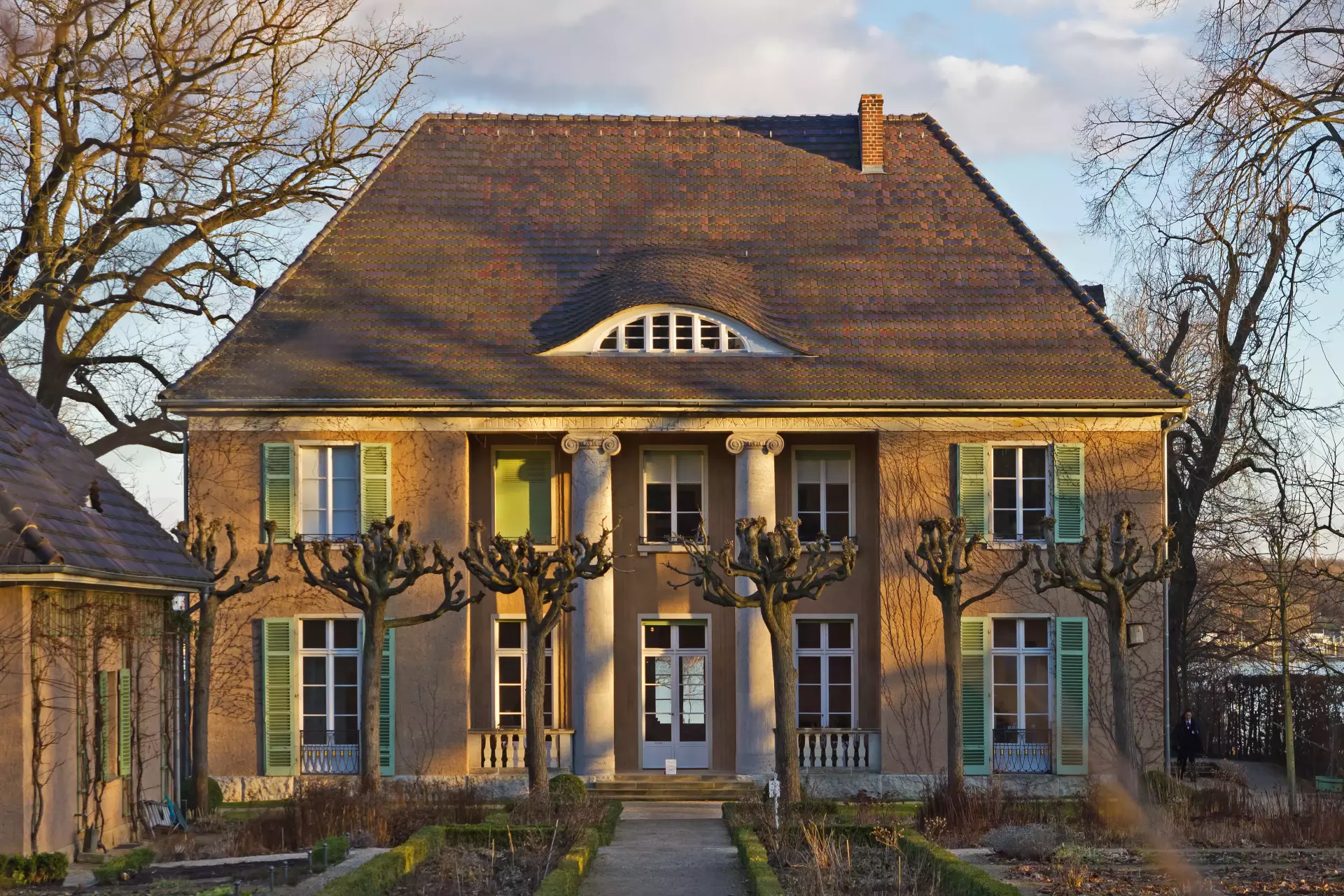
House museum on Max Liebermann, German painter and printmaker. Has about 15 Lieberman paintings.
The complex consists of eight interconnected courtyards. Plenty of designer boutiques can be found here.
The longest stretch of the Berlin Wall still in existence, painted by artists in 1991 and restored in 2009, after years of decay. At Mühlenstraße, next to the river Spree. The murals are painted on the east side of the wall after the fall of Communism; so they are not from the Cold War, during which murals could only be painted on the west side. Make sure not to miss the famous mural of a car seemingly crashing through the wall with Leonid Brezhnev and Erich Honecker kissing above it. It is actually on the back side of the gallery (it is facing away from the street.) It is just inside the entrance of the Eastern Comfort Hostel, near the east end of the gallery.
The museum’s treasures include the sculpture collection with works of art from the middle ages to the 18th century. The Bode museum is best known for its Byzantine art collection and the coin cabinet.
Also known as "Picasso und seine Zeit", this not so large, but precious museum hosts a very good collection of paintings and sculptures signed by Picasso, Klee, Matisse, Giacometti, and others from the first decades of the 20th century.
Official residence of the (largely ceremonial) President of Germany since 1994. Only Roman Herzog (president 1994-1999) actually lived here, his successors have preferred a quiet apartment on the outskirts of Berlin, but this is where the president will usually host guests and do public events. Guided tours are possible, but plan to book up to nine months ahead and be prepared for having to reschedule if the president decides to hold an event on short notice which preempts tours.
One of the most authentic and oldest villages (1247) in the outskirts of Berlin, it looks the same way it did some hundred years ago. Take S-Bahn 1 to Waidmannslust and then bus 222 to Alt-Lübars.
150 m high lattice tower with open-air observation deck 124 m above ground.
Spectacular building by Mies van der Rohe contains its own collection and temporary exhibitions.