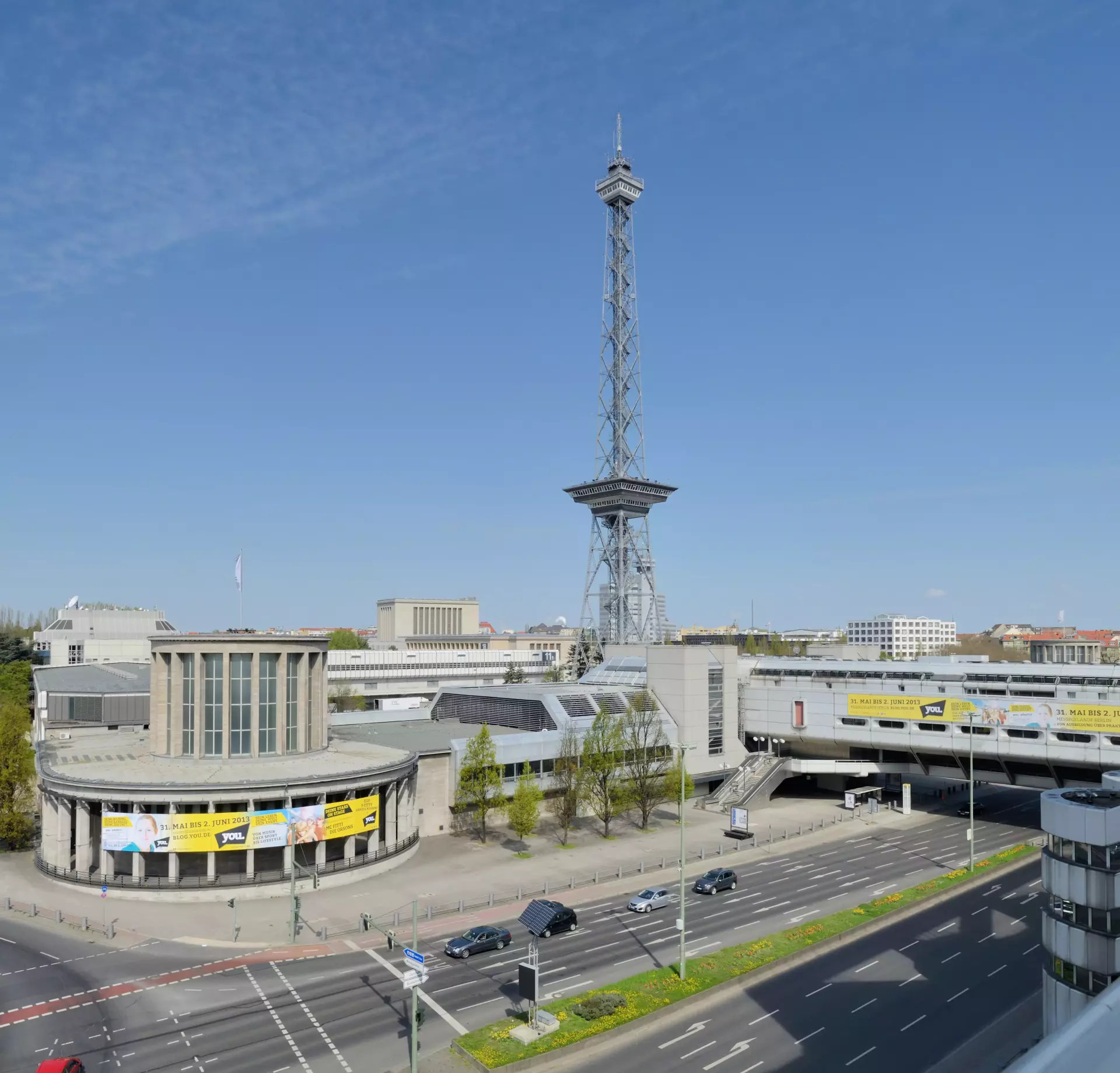
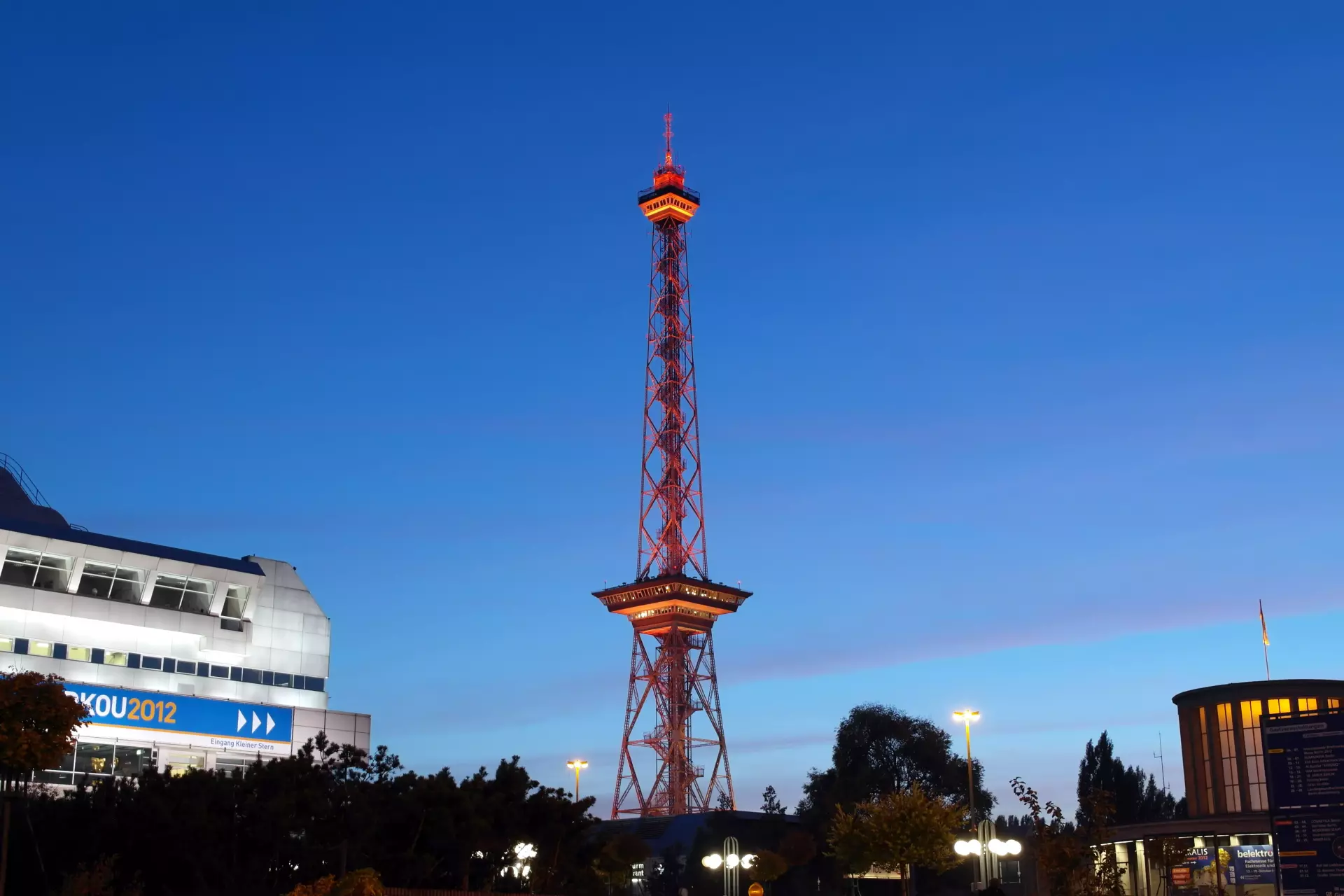
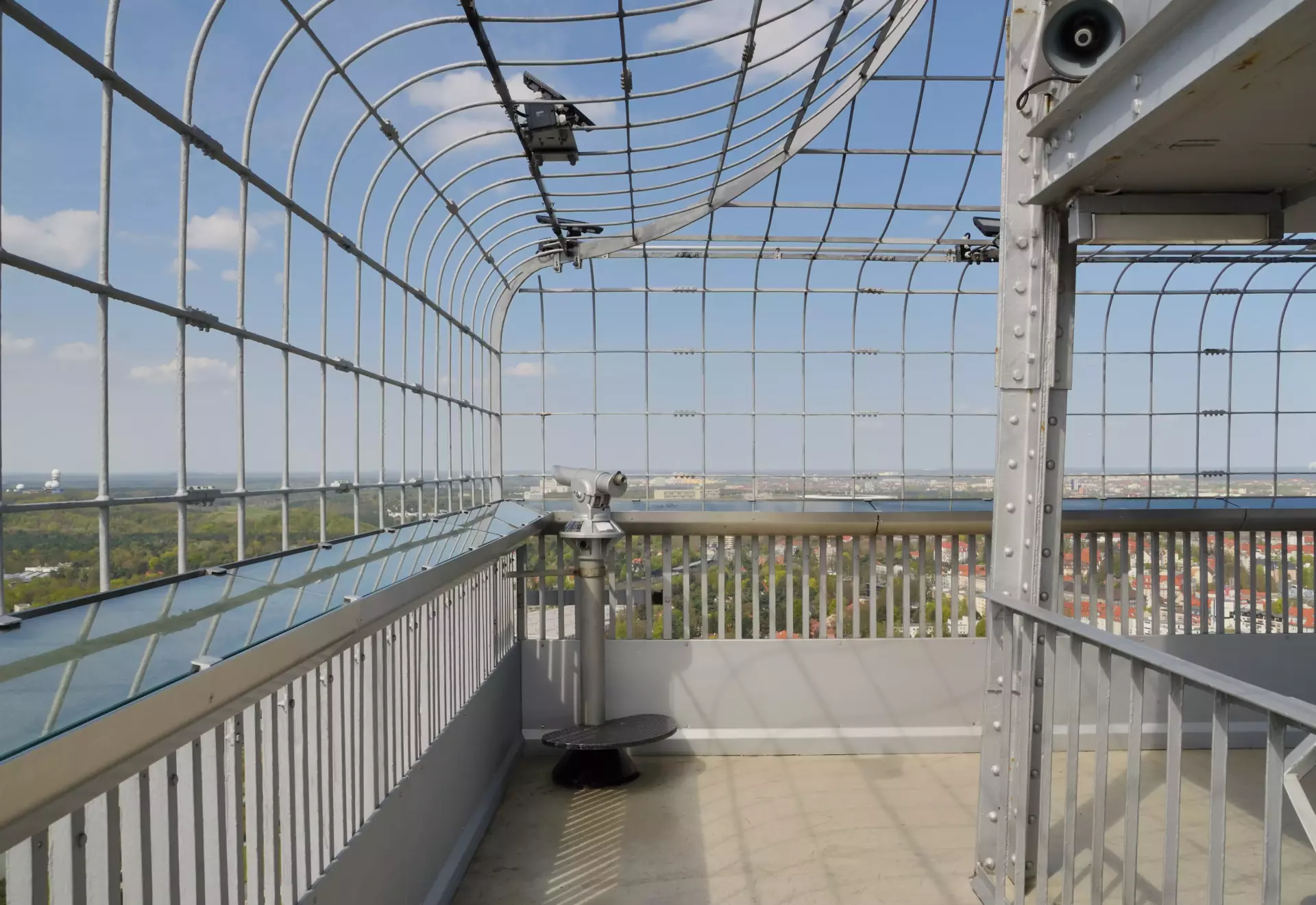
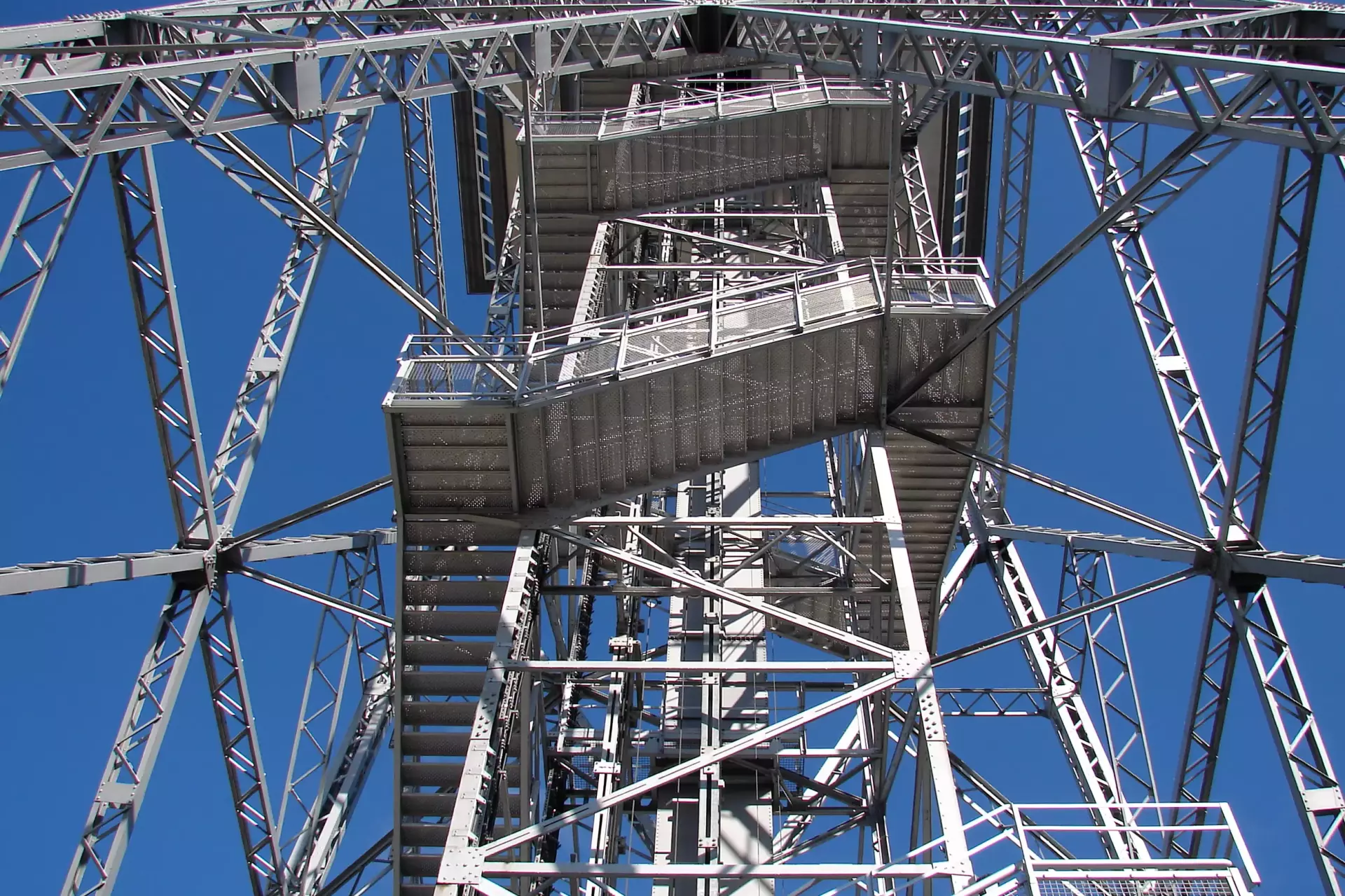
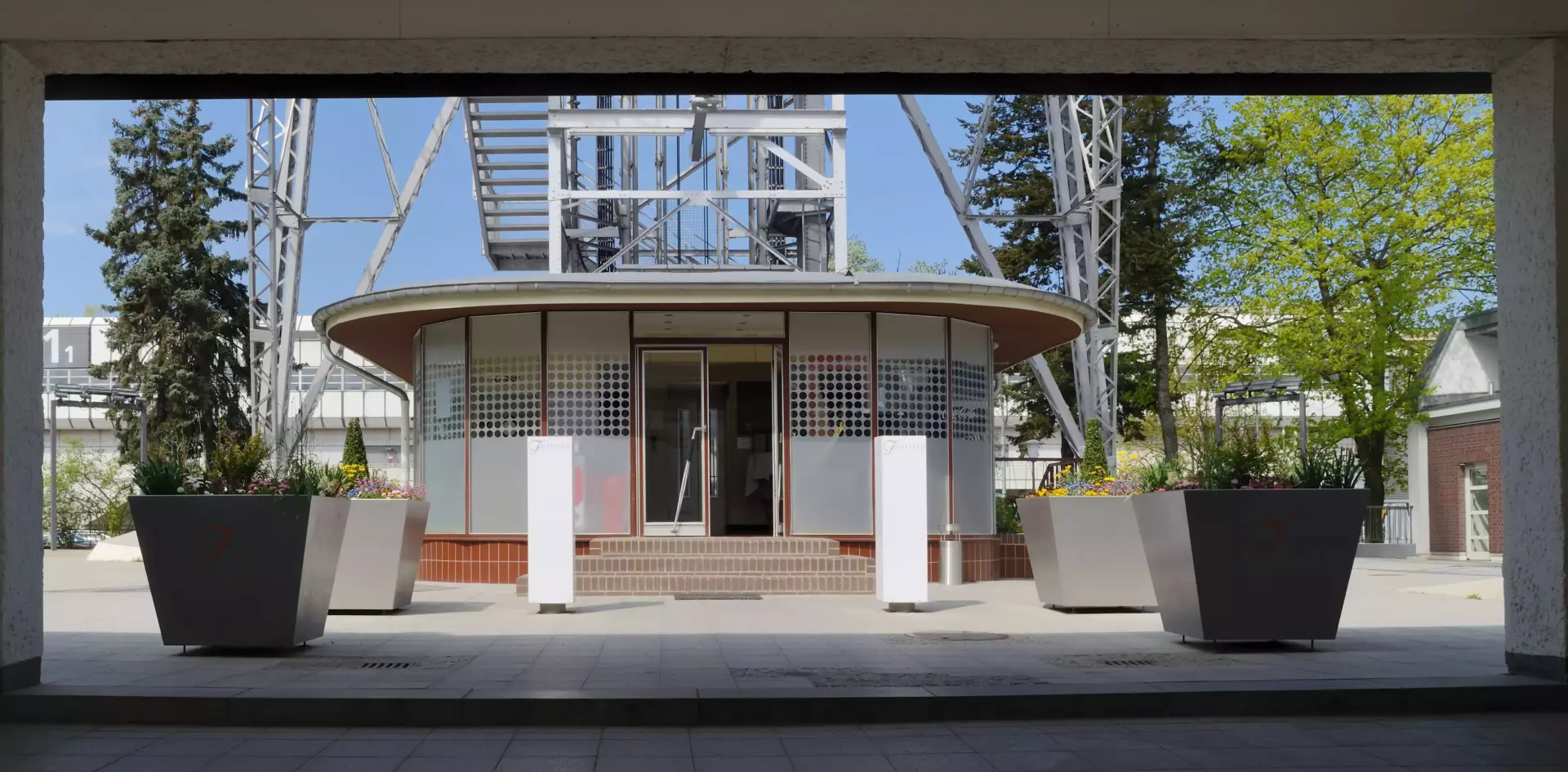
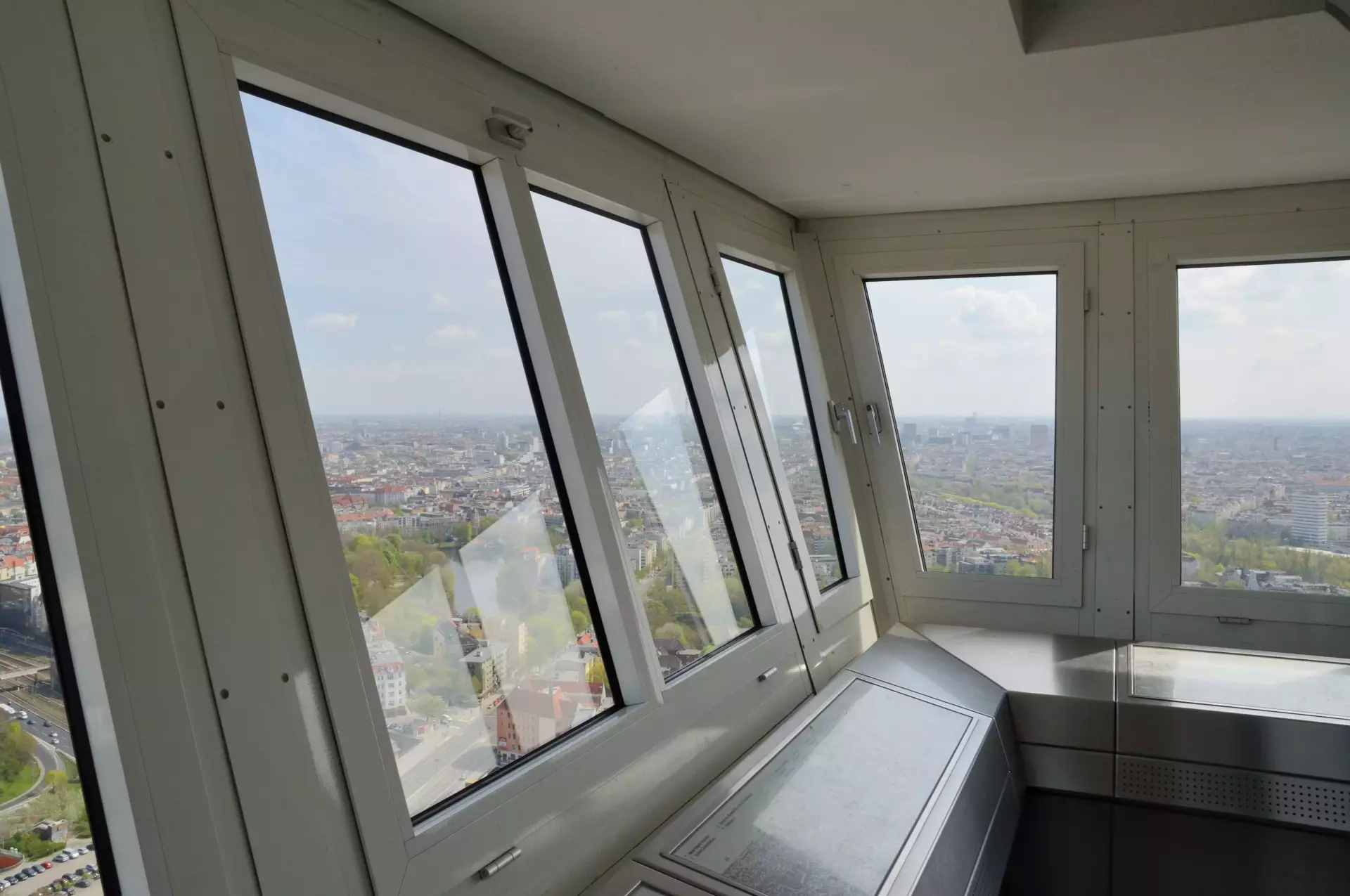
A striking lattice tower rises 150 meters above Berlin, its metal frame tapering to a sharp point against the sky. Built as a broadcast landmark, it offers a classic view of the city’s west side and the surrounding exhibition grounds.
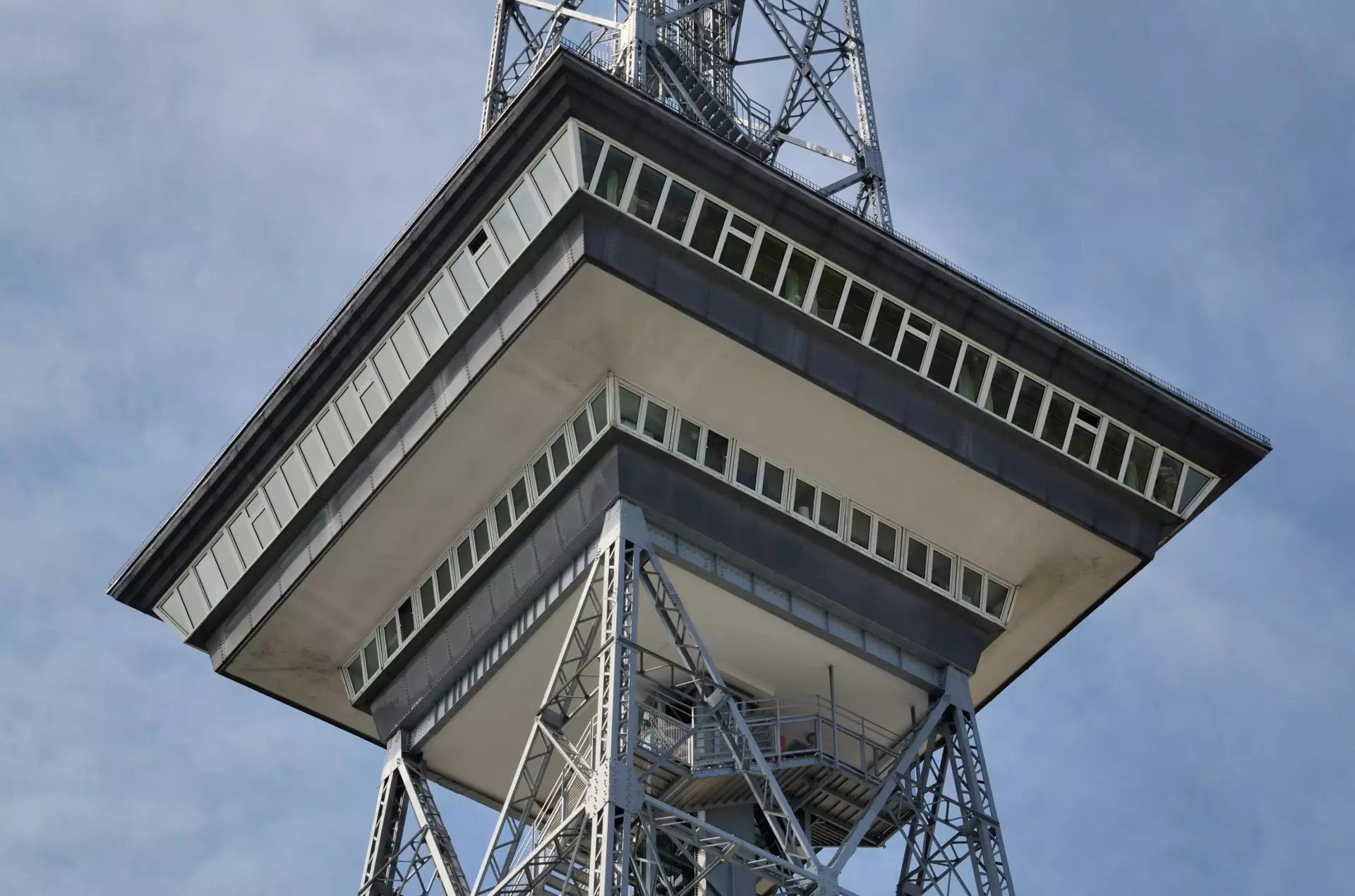
An observation deck sits 124 meters above ground, open to the air and ringed by safety railings. From here, the sweep of rooftops, parks, and thoroughfares spreads out in every direction. The height brings a steady breeze, clearer light, and a sense of space that shifts with the weather—crisp on cold days, hazy in summer.
The tower stands beside the Messehallen, Berlin’s expansive trade fair complex. Its lattice construction, both functional and elegant, reflects an era when radio and television signals needed tall, robust platforms. The exhibition halls below host major events, and the tower’s silhouette has long served as their companion and beacon.
Source - https://en.wikipedia.org/wiki/Berlin_Radio_Tower
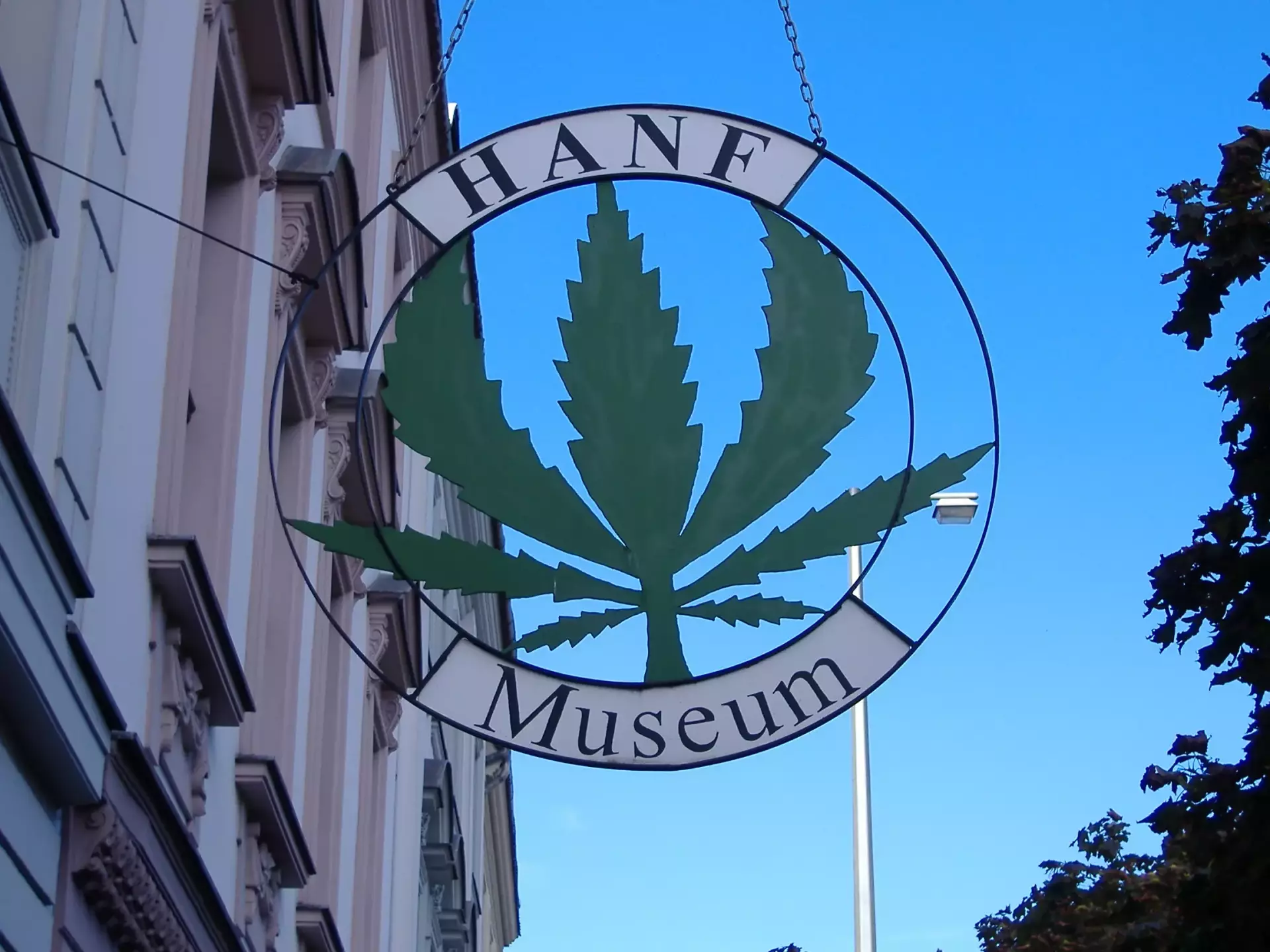
The large square in front of the Brandenburg Gate contains the French and American embassies, the rebuilt Hotel Adlon, and the new building of the Academy of Arts.
A remarkable medium-sized classical castle by the famous K.F. Schinkel built 1820 to 1824, also called "Humboldtschlösschen", because Alexander and Wilhelm von Humboldt (and their family) lived here once. Still privately owned.
Millions of visitors leaving East Berlin by train said tearful goodbyes to their friends and relatives from the East at this former border checkpoint. Hardly a year after the wall came down, the building was turned into a nightclub until it was forced to close in 2006. It re-opened as a museum in September 2011 and now houses a permanent exhibition that brings the absurd normality of everyday life in the divided city back to life.
The museum’s treasures include the sculpture collection with works of art from the middle ages to the 18th century. The Bode museum is best known for its Byzantine art collection and the coin cabinet.
Also known as "Picasso und seine Zeit", this not so large, but precious museum hosts a very good collection of paintings and sculptures signed by Picasso, Klee, Matisse, Giacometti, and others from the first decades of the 20th century.
The former Imperial General Post Office, now Museum for telecommunication and post with many interesting historical objects.
Official residence of the (largely ceremonial) President of Germany since 1994. Only Roman Herzog (president 1994-1999) actually lived here, his successors have preferred a quiet apartment on the outskirts of Berlin, but this is where the president will usually host guests and do public events. Guided tours are possible, but plan to book up to nine months ahead and be prepared for having to reschedule if the president decides to hold an event on short notice which preempts tours.
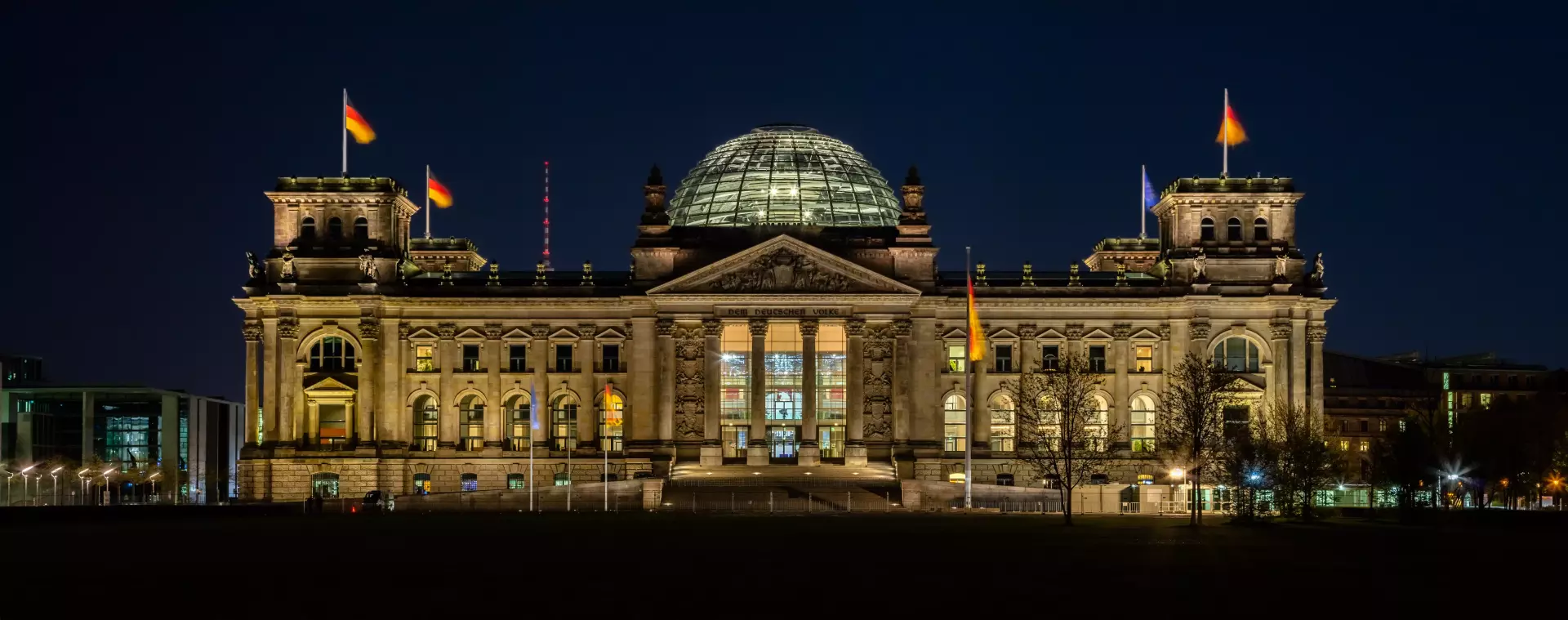
This imposing building houses the Federal German Parliament or "Bundestag" and was completed in 1894 to meet the need of the newly-unified German Empire of the Kaisers for a larger parliamentary building. The Reichstag was intended to resemble a Renaissance palace, and its architect, Paul Wallot, dedicated the building to the German people. The massive inscription in front still reads: "Dem Deutschen Volke" - 'For the German people'. The Nazi leader Adolf Hitler exploited the fire which gutted the Reichstag building in 1933 by blaming the Communists for the arson and for attempted revolution. There is good evidence to suggest, however, that his followers were actually responsible and that this was a manufactured crisis. The iconic photo symbolizing the Soviet victory over Nazi Germany shows a Soviet soldier planting the Soviet flag on top of the building and there are to this day graffiti left by Soviet soldiers on some walls of the Reichstag which were deliberately preserved by the new Germany as a memento of the war. It's perhaps the only national parliament to have traces left by a foreign army deliberately preserved. When German reunification became a reality, the new republic was proclaimed here at midnight on 2 October 1990. The Reichstag building is well-known in the art world thanks to Paris-based Bulgarian artist Christo's mammoth 'Wrapped Reichstag' project in 1995. The entire building was swathed in silver cloth for two weeks that summer.The Reichstag has undergone considerable restoration and alteration, including the addition of a spectacular glass dome designed by the British architect Norman Foster completed in 1999. You can visit the Reichstag building proper and even listen to a parliamentary debate but you need to book on their website sometimes weeks or even months in advance. Fortunately its much easier to visit the glass dome. You can reserve a visiting time and date on their website or in the small building across Scheidmannstrasse, except during the high season you should be able to arrange a time later the same day or the next day. Photo ID or passport is required to make the booking. A passsport is required during your visit. This is a very popular tourist attraction in Berlin and can get quite crowded however it is worth the effort. The helical path up the inside of the dome is a lot of fun and the 360 degree views at the top are splendid.
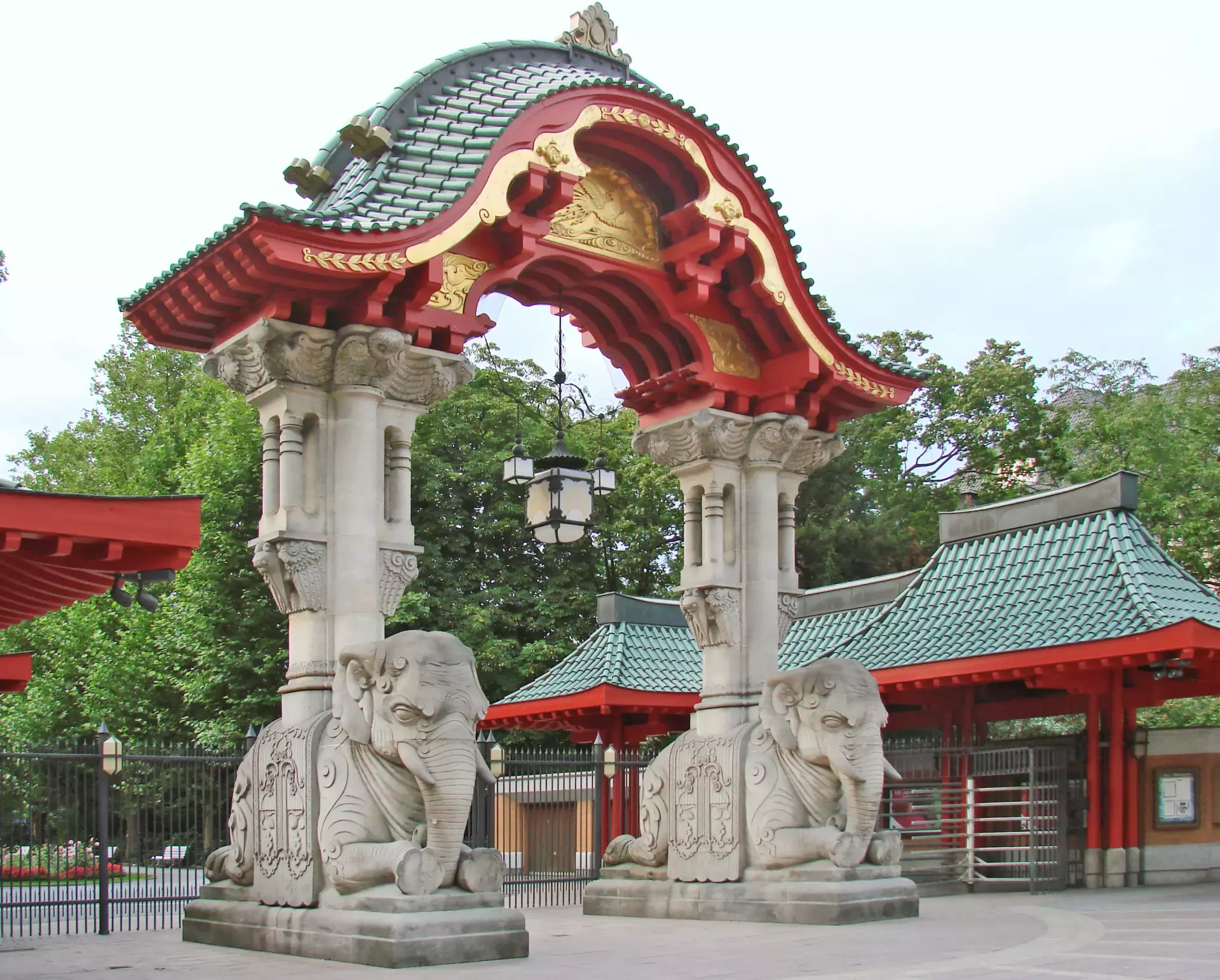
The largest zoo in the world, both in terms of number of species (1500) and animal population (14,000). It is especially famous for its pandas. The Elephant Gate (Budapester Straße), one of the two entrances and next to the Aquarium, is a traditional photo stop for most visitors because of the architecture.
Huge technical museum, on a former railroad depot, featuring from ancient water and wind mills to computer pioneer Konrad Zuse's inventions, a collection of old to new vehicles of all types -bicycles, boats, trains, etc - and the interactive Spectrum science center with various hands-on experiments. There's an actual C-17 "Candy Bomber" airplane hanging on its façade. The railroad and aeronautical sections are hard to beat.
With the Kreuzberg, a hill in Kreuzberg 61, the Prussian National Monument by Schinkel and a waterfall. Superb panoramic views across south Berlin.
In 1893 the authorities of Berlin issued the artistic entrance to the National Park Friedrichshain. The fountain of fairy tales was commissioned by the National Park and later designed by Ludwig Hoffmann.
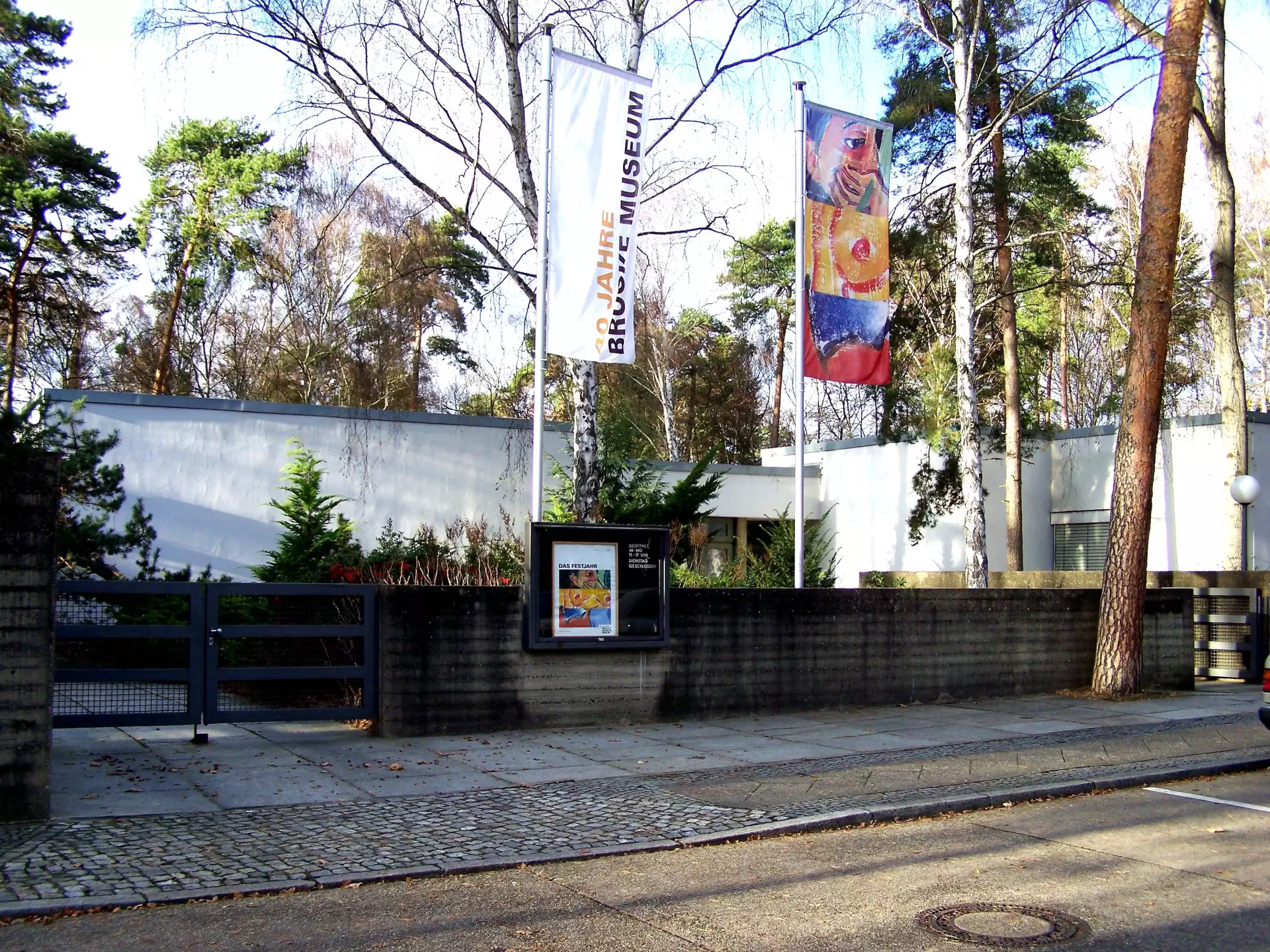
House museum on Max Liebermann, German painter and printmaker. Has about 15 Lieberman paintings.
The charming Baroque water palace of the Hohenzollern electors surrounded by the Dahme river and an English garden.
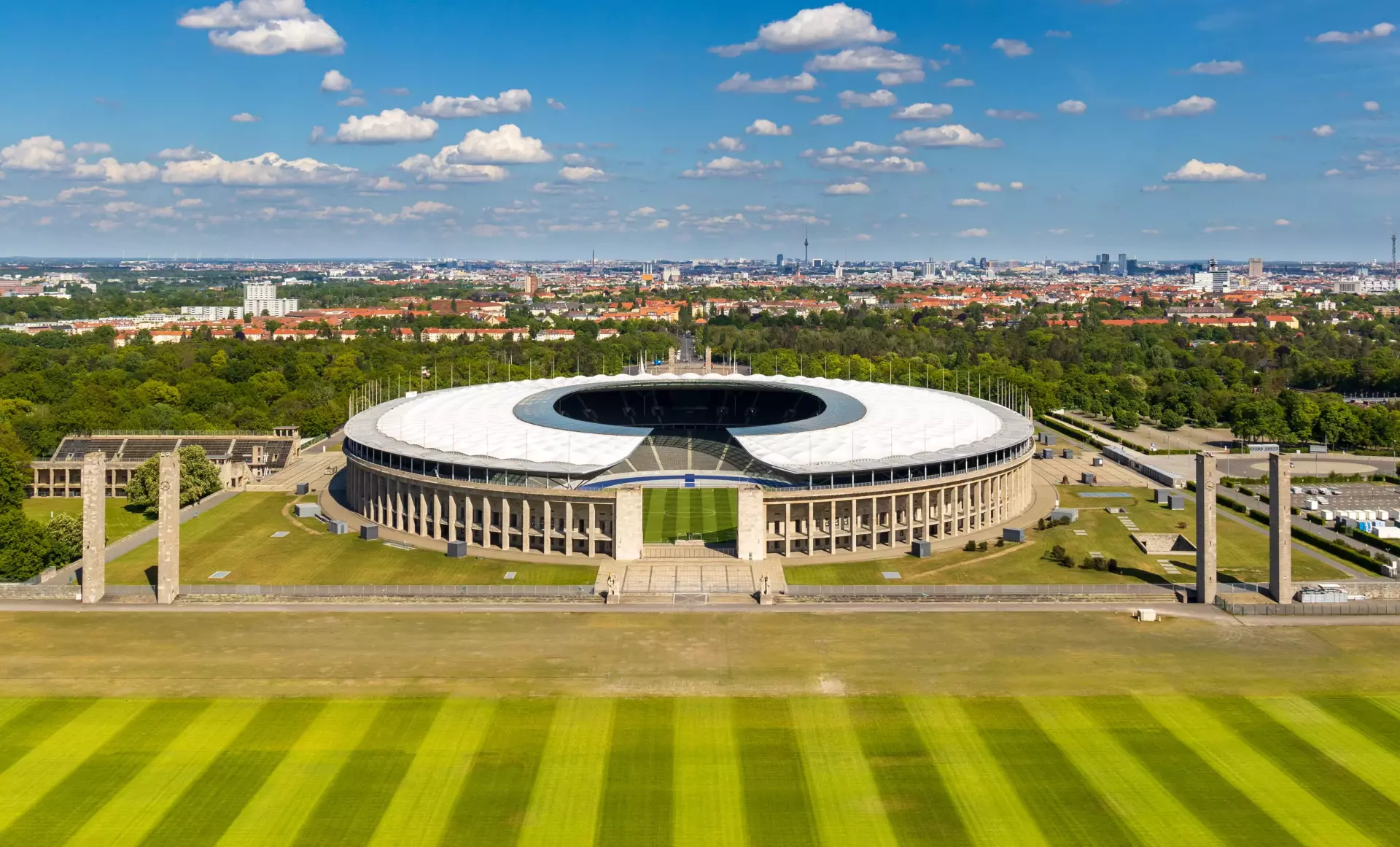
Built by Hitler for the 1936 Olympic Games, this is one of the better examples of Nazi neoclassical architecture (laying claim to the legacy of Rome, fasces and all) and is still used for sporting events. At those Olympics, African-American athlete Jesse Owens won four gold medals, a party-spoiler for Aryan superiority. It's the home of soccer team Hertha BSC - they were relegated in 2023 and now play in 2. Bundesliga the second tier. In 2024 this stadium hosted games in the UEFA Euro Finals, including the final itself. For a glimpse of the Olympiastadion in its original state, seek out Leni Riefenstahl's movie Olympia - clips are shown in the Kinemathek and elsewhere.