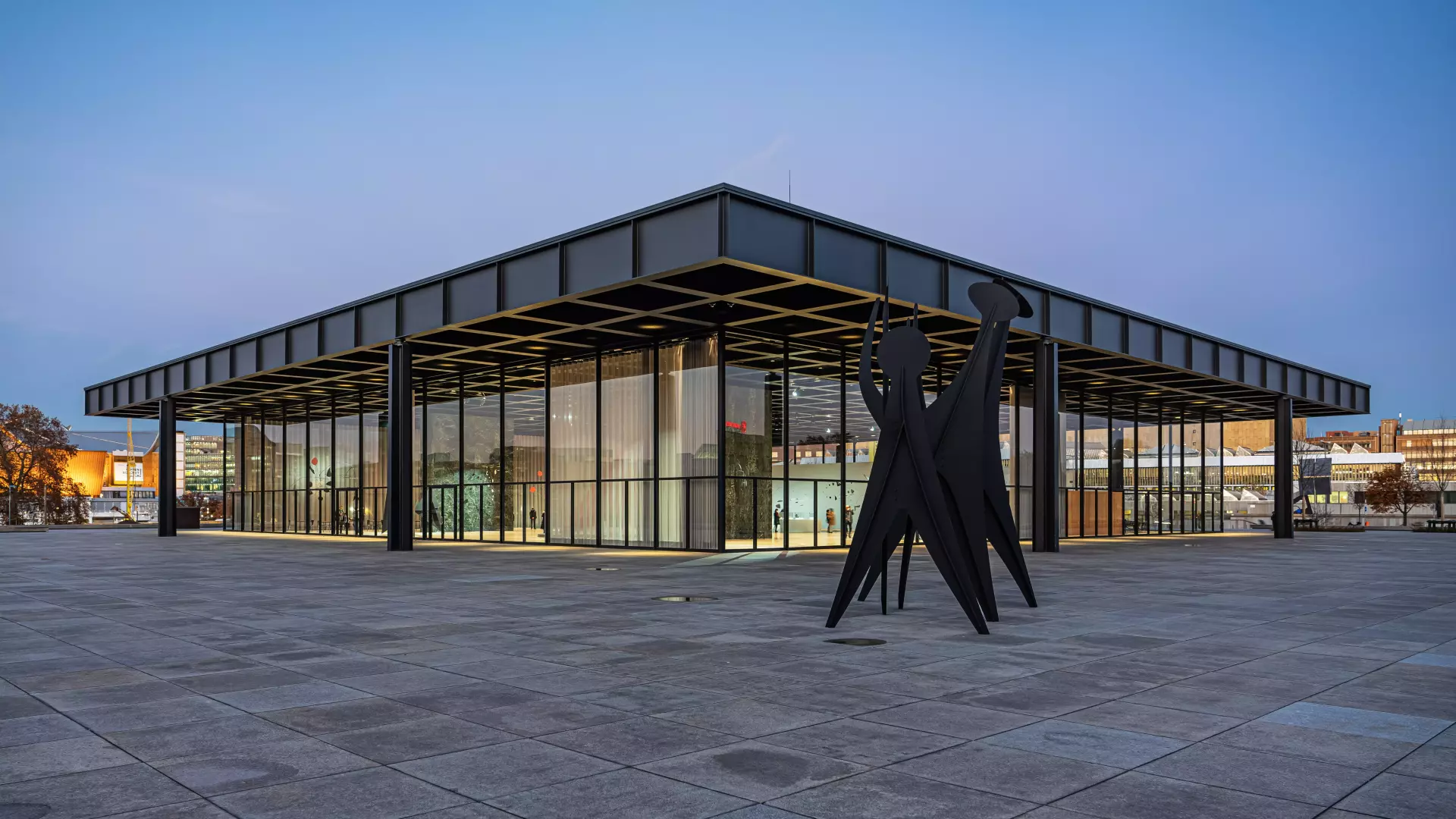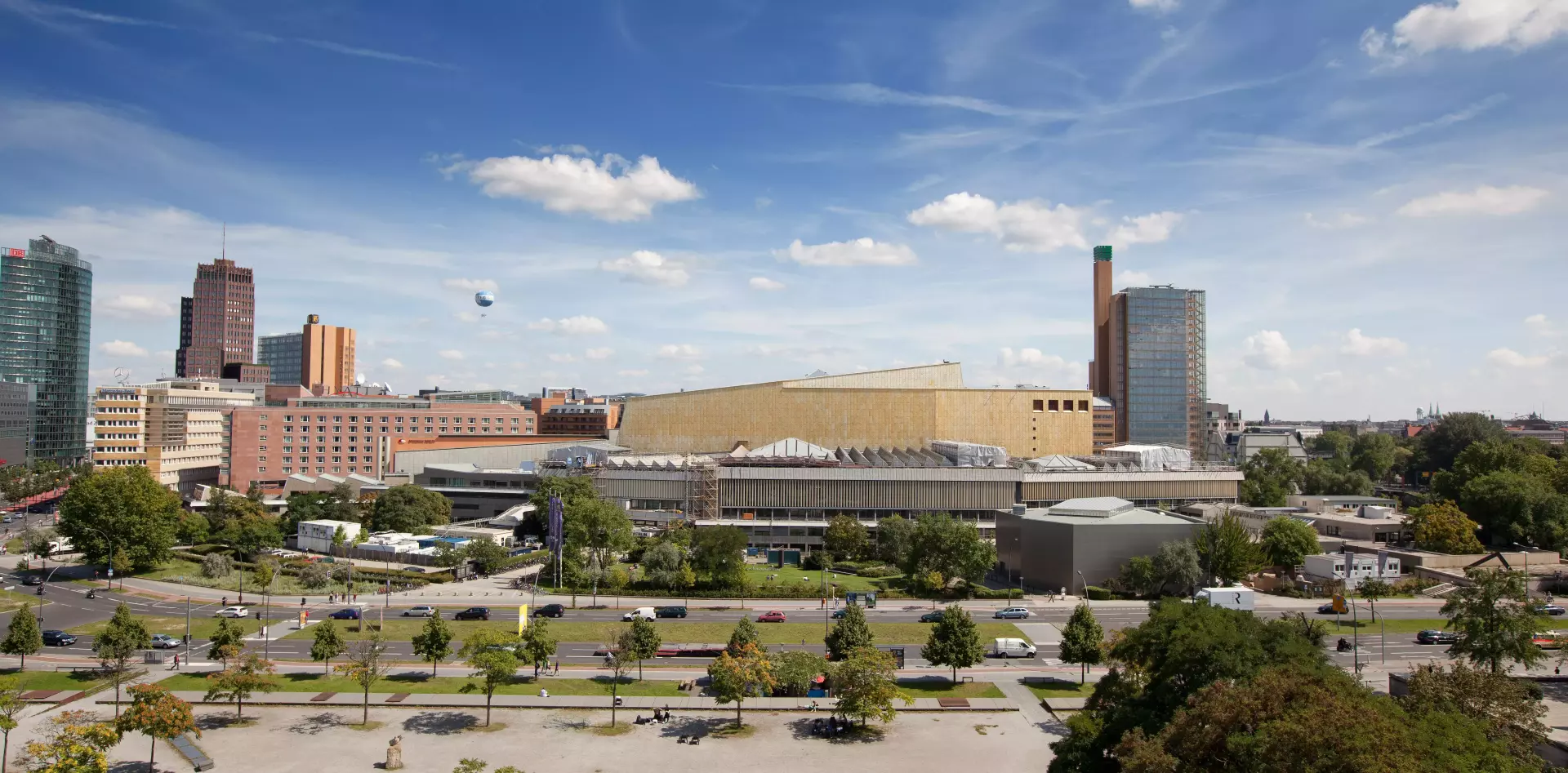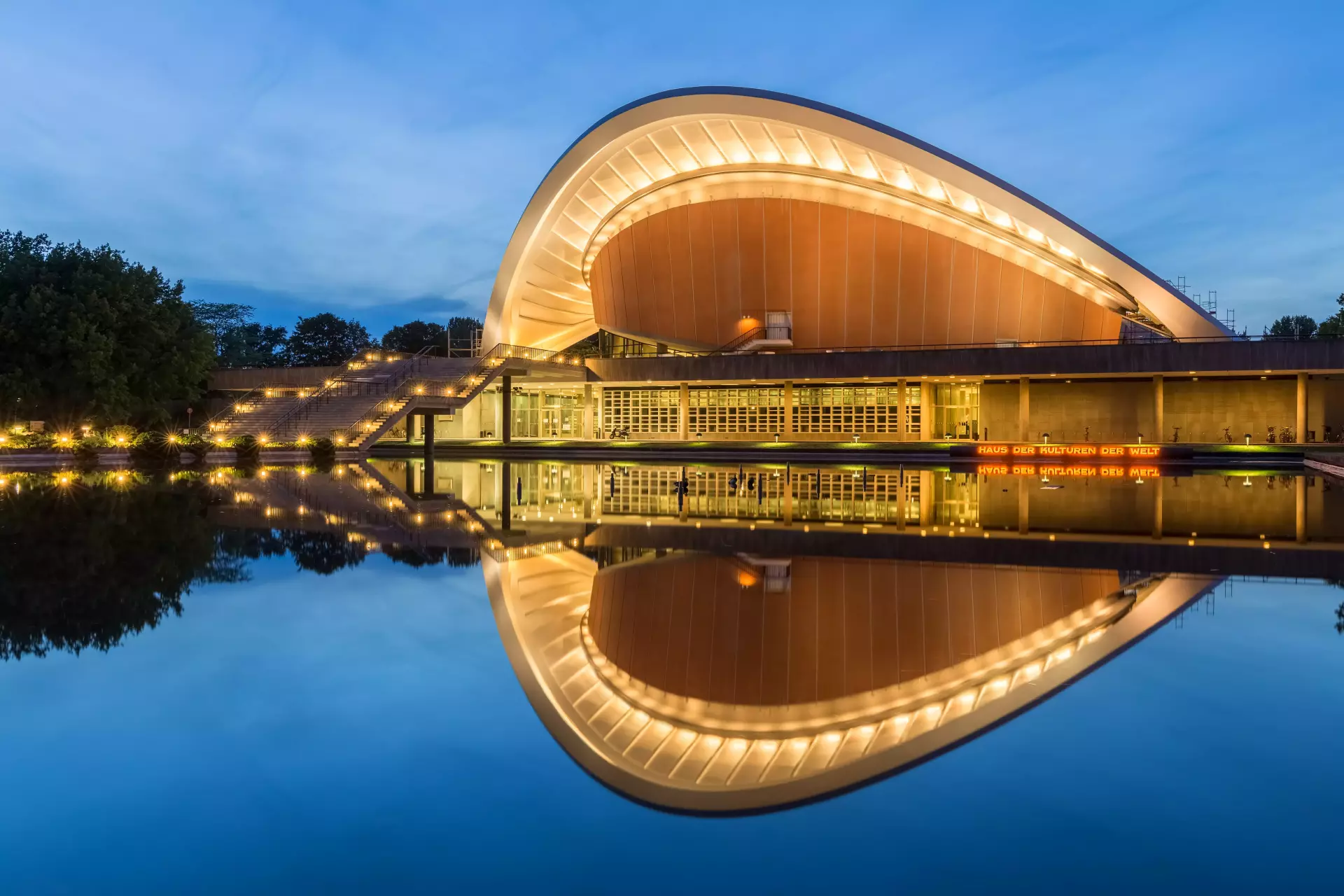
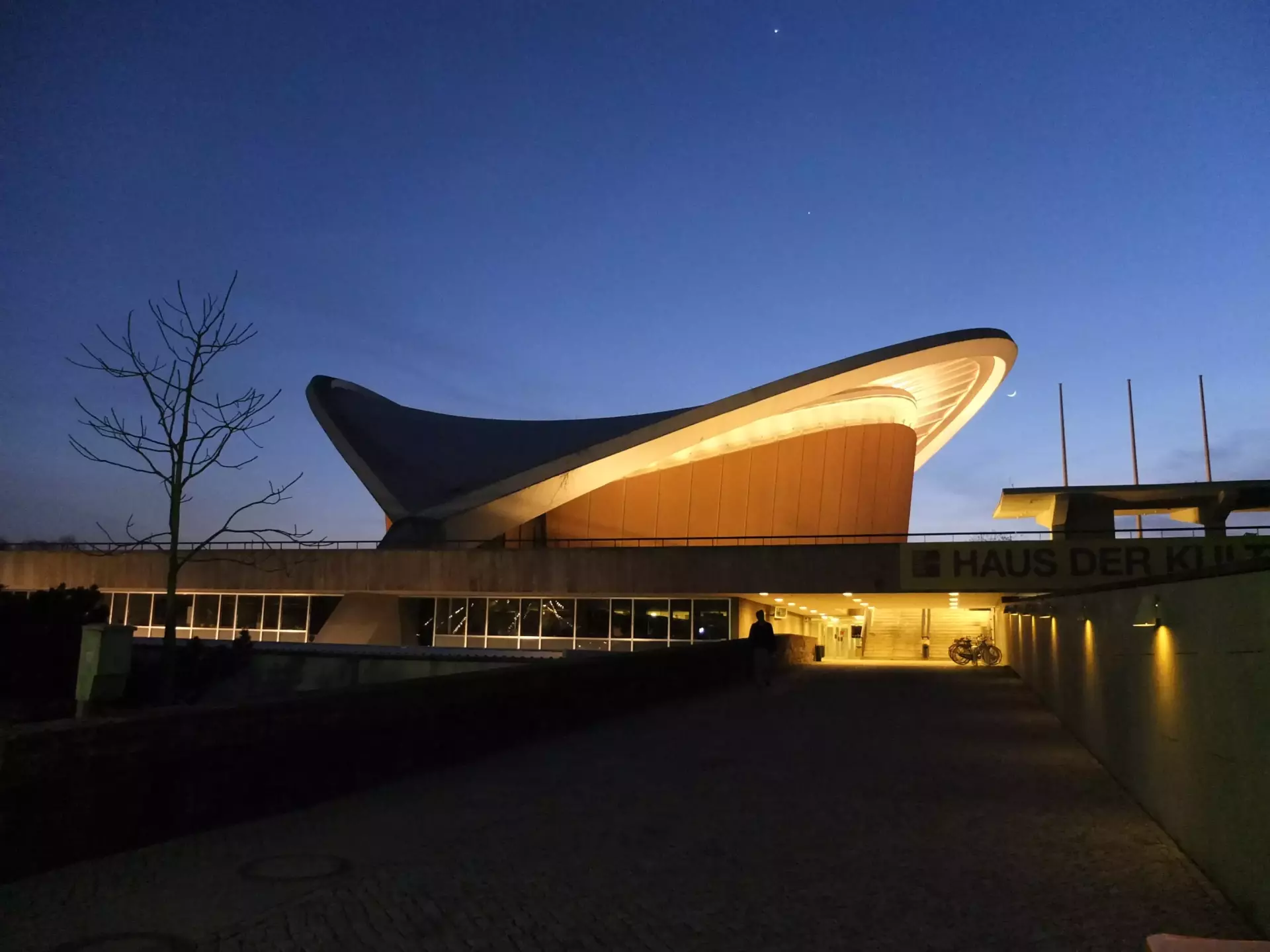
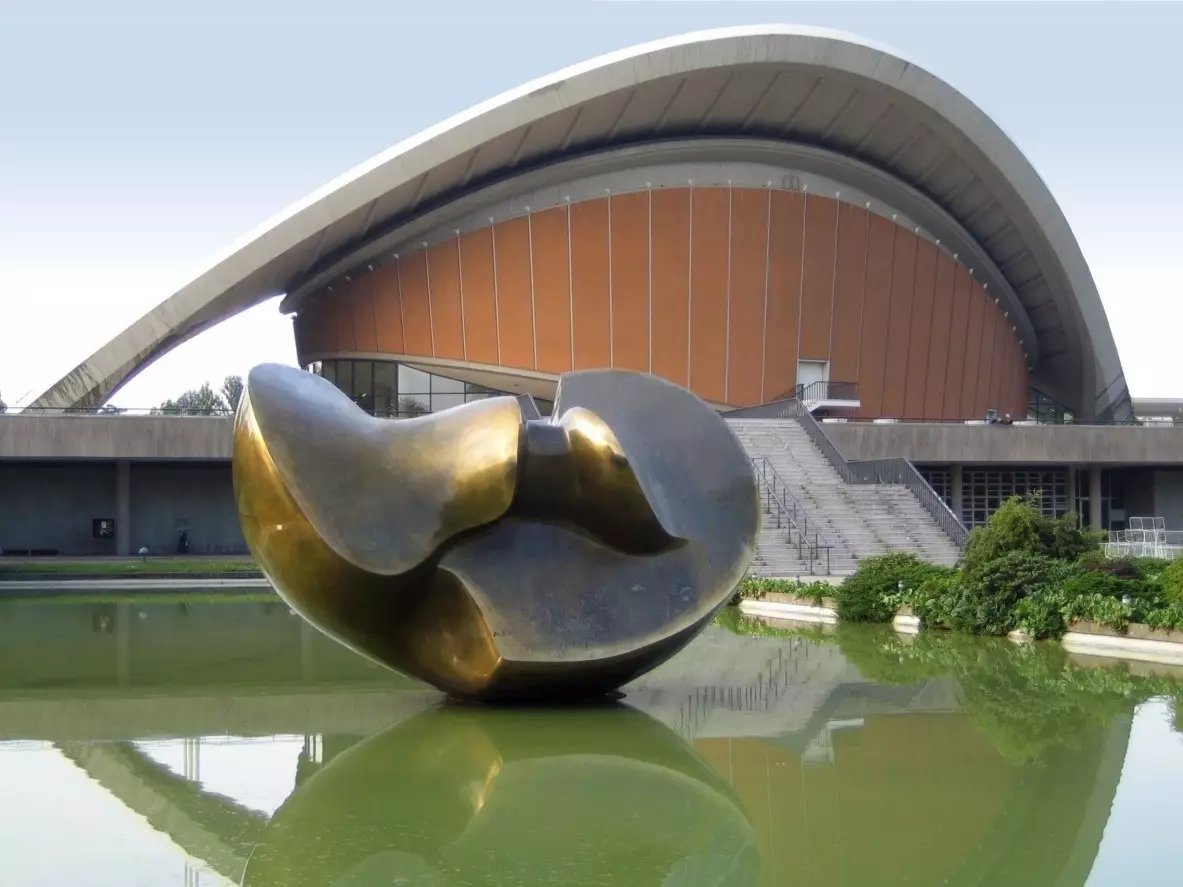
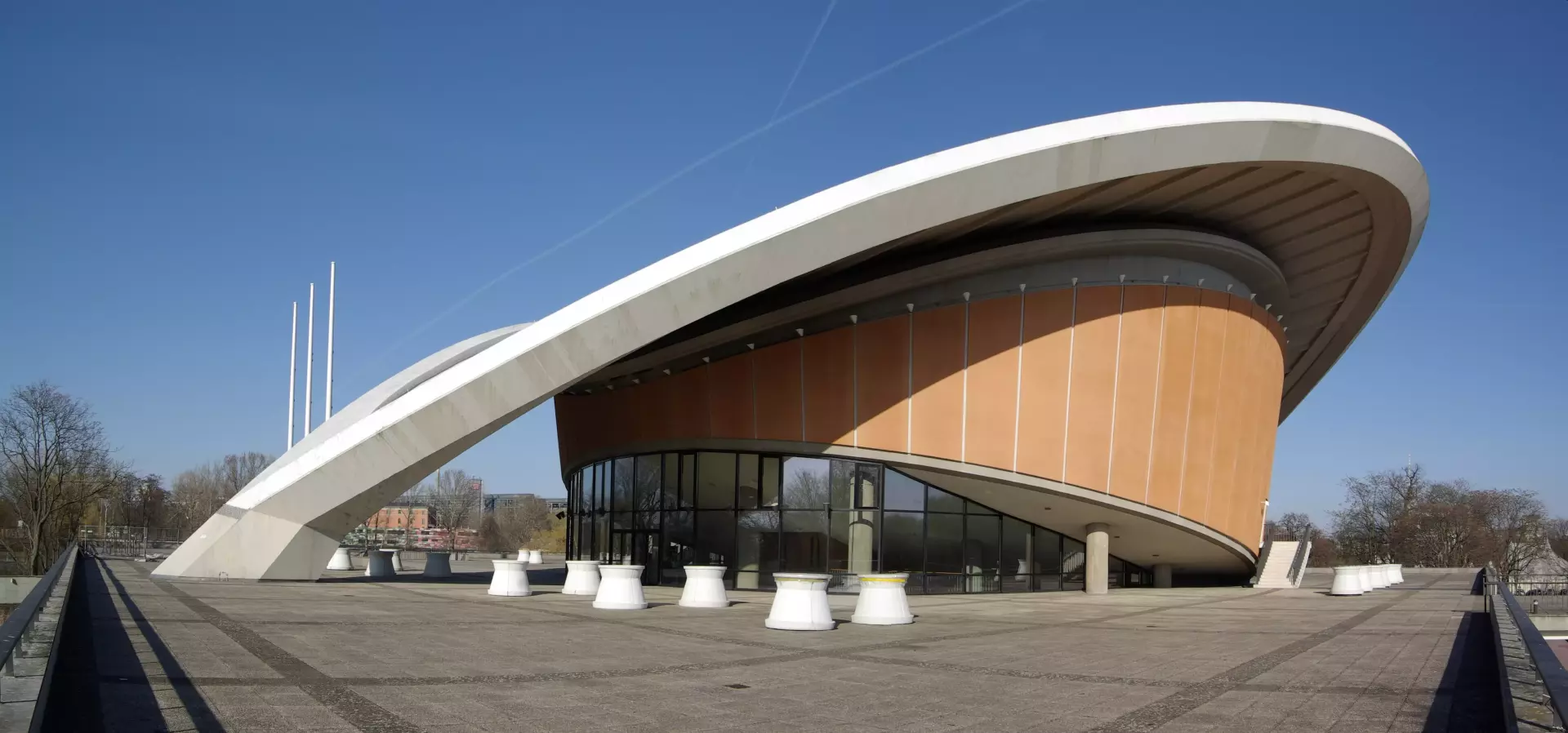
Germany’s national center for contemporary non-European art, the Haus der Kulturen der Welt, is known for presenting bold, boundary-pushing projects across many disciplines. It serves as a platform where visual arts, performance, music, and discourse meet, encouraging new connections and experimental ideas.
This striking building is an architectural landmark with a transatlantic backstory. Constructed as the American contribution to the Interbau 1957 international building exhibition, it was intended as a symbol of open dialogue and the free exchange of ideas during a pivotal moment in postwar history. Its dramatic sweeping roofline has made it instantly recognizable, and the building is affectionately nicknamed the “Schwangere Auster,” or “Pregnant Oyster,” by locals.
The house functions as a leading center for contemporary arts with a global outlook, focusing especially on non-European perspectives. Its programs often cross traditional categories, bringing together artists, thinkers, and audiences to explore themes that cut across cultures and disciplines. Exhibitions, performances, and research projects share space here, creating a lively environment where art meets critical conversation and new forms take shape.
Designed by Daniel Libeskind with an excellent exposition on the Jewish life in Berlin and the impact of the Holocaust. You can easily spend a day here. There is a metal scanner and other security features you'd rather expect at an airport than a museum.
150 m high lattice tower with open-air observation deck 124 m above ground.
It is the only hemp museum in Germany; you can see the history of hemp, the culture and use of it. You can see hemp grow. There is a cafe downstairs, with an open WiFi access. Everything going on here is legal - including the hemp growing under artificial light (a low THC strain grown with a special permit) - but they do not refrain from political commentary on the legal situation of cannabis in their exhibits.
Became famous from the film named after this street. During the Cold War, the street was split, with one section belonging to East Berlin and one to West Berlin.
A beautiful landscape of water canals and vegetation with charming little fish restaurants.
The complex consists of eight interconnected courtyards. Plenty of designer boutiques can be found here.
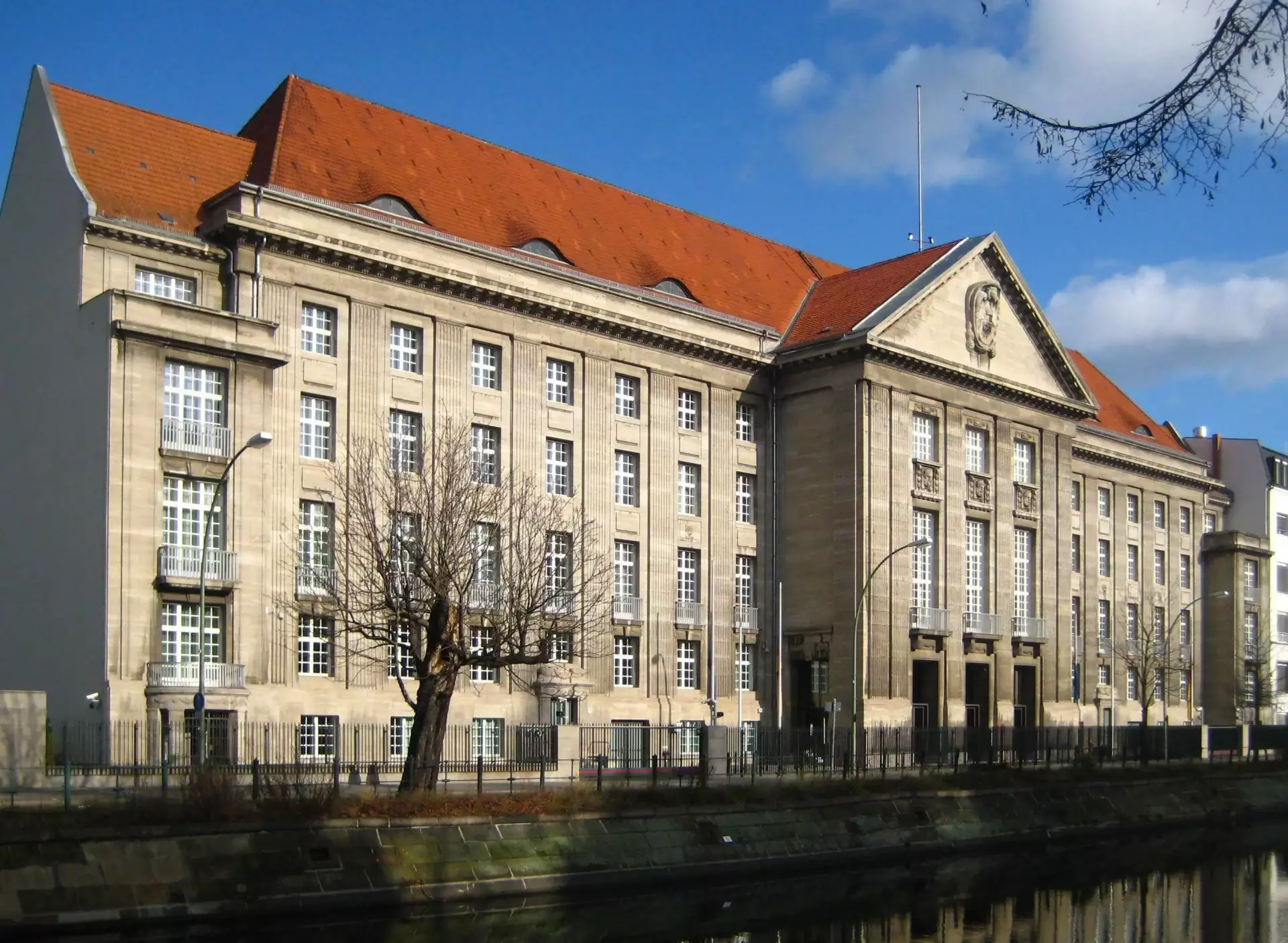
The Bendlerblock building complex has long held ties to the German military, first serving as the offices of the Imperial German Navy and today housing the Berlin offices of the Ministry of Defense. It was here where, on 20 July 1944, Colonel Claus von Stauffenberg and other officers led a coup that sought to remove Hitler and the Nazis from power. They failed and were summarily executed in the courtyard, where a memorial stands for these men who are considered German heroes by many. Inside the building you'll find the German Resistance Memorial Center, a permanent exhibit dedicated to the July 20 plot and other individuals in the German resistance.
Also known as "der hohle Zahn" (the Hollow Tooth), this church in Breitscheidplatz is a memorial to Kaiser Wilhelm, and one of Berlin's most famous landmarks. Thick walls and plain decor mark it as neo-Romanesque, but with what's left of the Gedächtniskirche, it's tough to distinguish it as any one style. Allied bombing left only one tower standing on 22 November 1943, but a new location for worship designed by Egon Eiermann was completed in December 1961 (it's the octagonal structure with blue stained glass windows). There is a small memorial museum beneath the tower filled with artifacts from the original church, which was built from 1891-95 to architect Franz Schwechten's specifications.Controversy arose after the war over the various options presented by the half-ruined cathedral - should it be torn down completely and rebuilt? Or should the destroyed sections be left standing as a memorial? The four major sections of the Kaiser-Wilhelm-Gedächtniskirche (central space, foyer, new tower and chapel) surround the ruined tower of the old church bridge and show the time gap between old and new. Mosaics and other remnants from the old church serve as a monument against war.
Jewish cemetery and lapidarium with old tombstones.
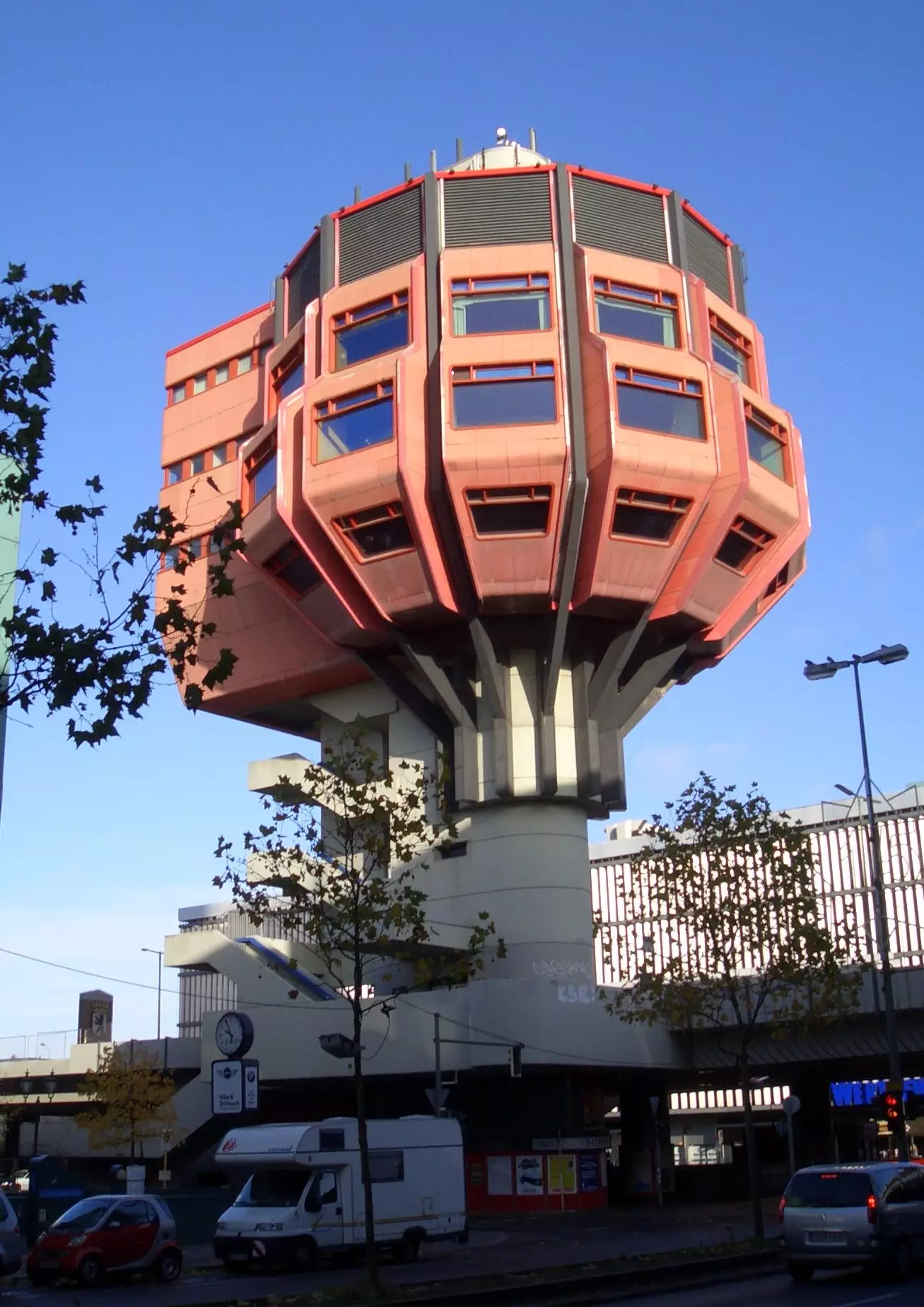
The Bierpinsel ("beer brush") is a building in Steglitz which resembles an observation tower and is famous for its pop-art appearance. The futuristic, landmarked building was built from 1972 to 1976 and has since been used as restaurant, night club, bar, radio station and art café.
Arguably the most beautiful bridge in Berlin and the only connection between Friedrichshain and Kreuzberg. As signage on the bridge indicates, it was built twice - once in the 1890s and once in the 1990s. Before reunification the border ran where the bridge now is.
The former Imperial General Post Office, now Museum for telecommunication and post with many interesting historical objects.
Erected in 1818 to a classically-inspired design by Karl Friedrich Schinkel as a guardhouse for the imperial palace, since 1993 this compact building has housed a small, but extremely powerful war cenotaph, the Central Memorial of the Federal Republic of Germany, continuing its use under East German rule as the primary "Memorial to the Victims of Fascism and Militarism". The interior of the Doric column-fronted building is intentionally empty, but for a small but moving sculpture by Käthe Kollwitz depicting a mother cradling a dead child. The statue is positioned beneath a round hole in the ceiling, exposing the figures to the rain and snow.
A small castle in late classical style. It was built 1868 by Martin Gropius (uncle of the Bauhaus-founder and other architects, the von Siemens family changed the castle a bit around 1900 and they enlarged the dimensions of the park, which is today renovated and nice to wander around when the sun is shining. Located within a few minutes' walking distance from Biesdorf station (take the S5 from the city centre) or Elsterwerdaer Platz station (U5).