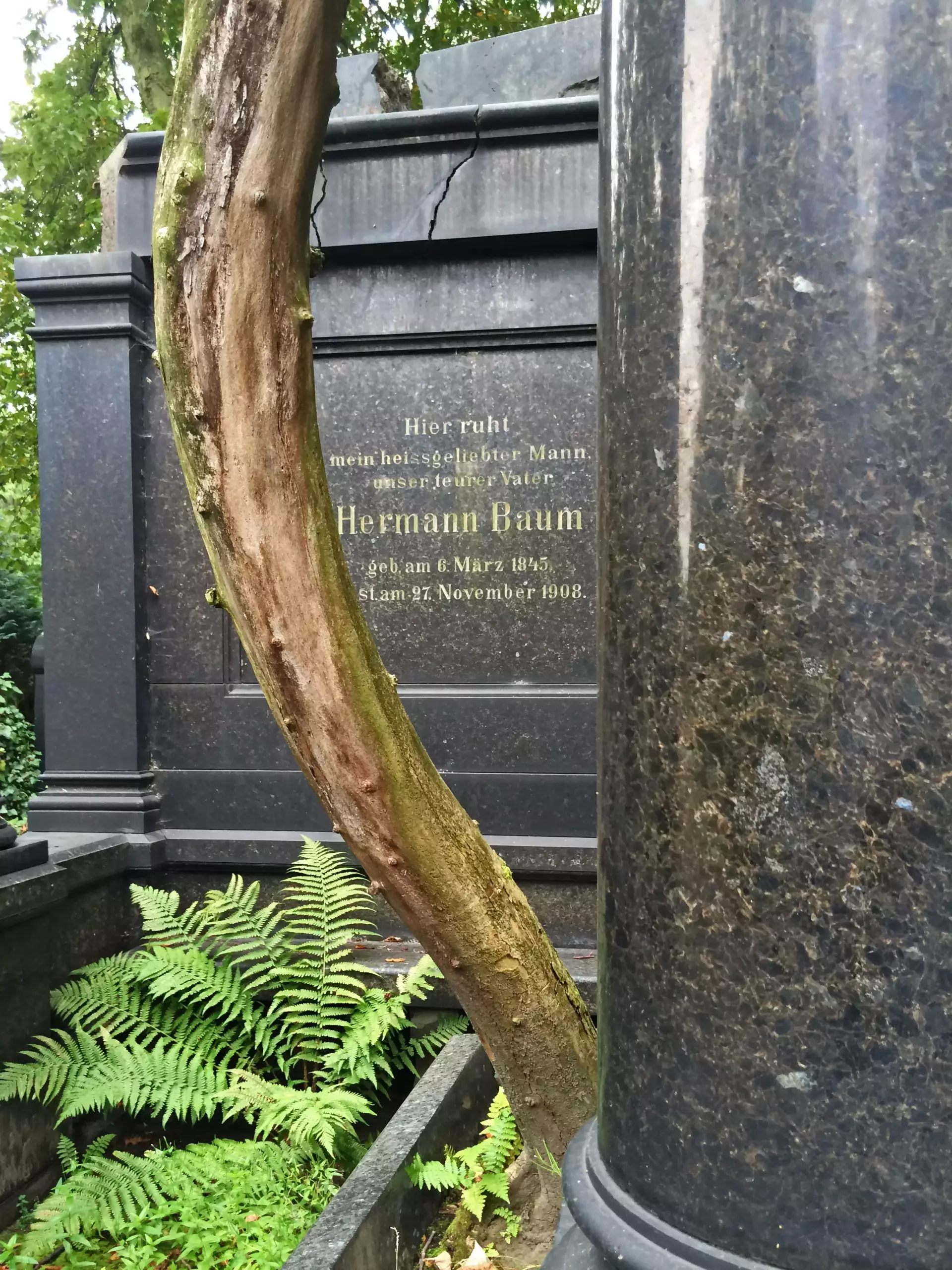
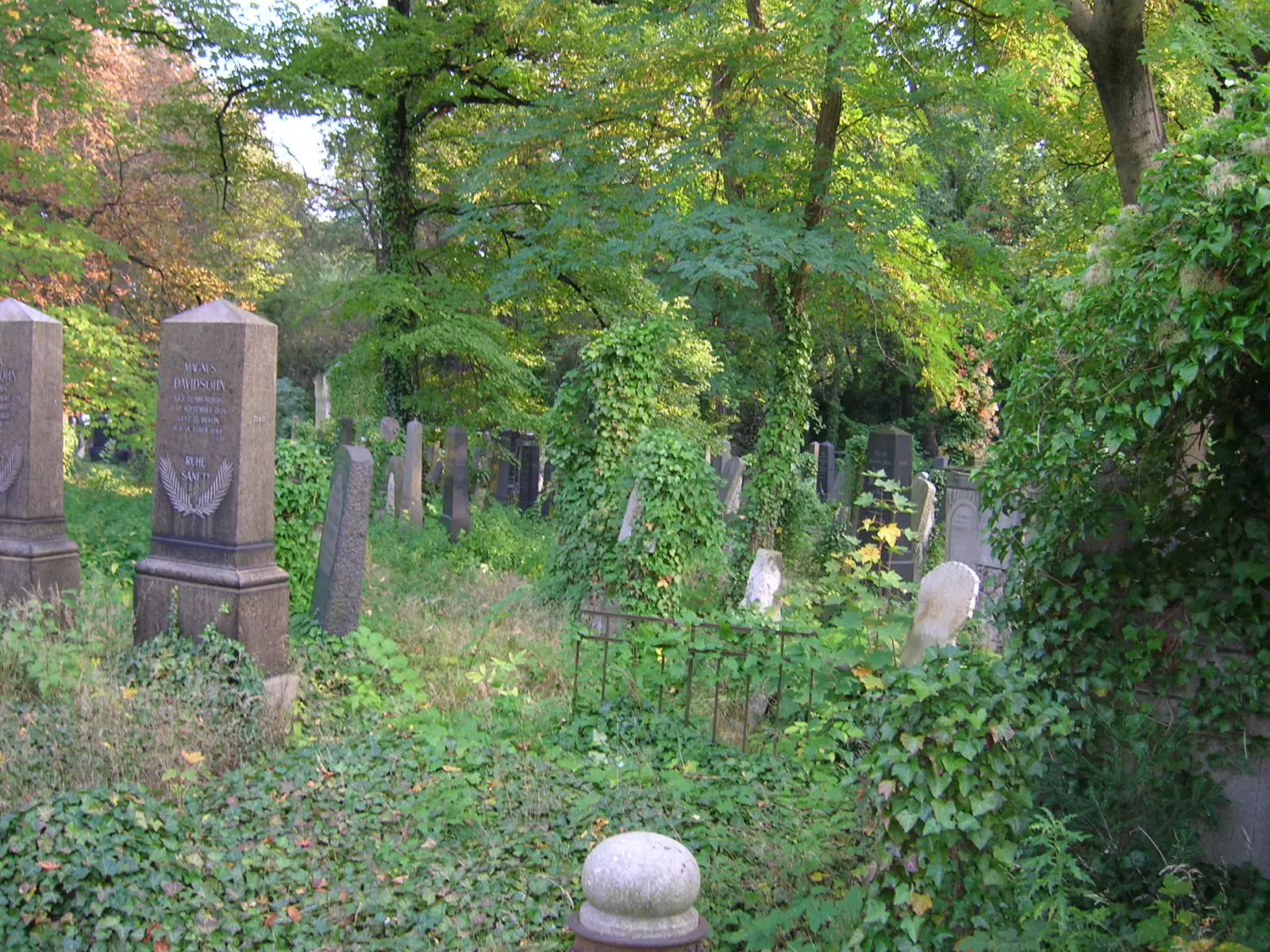
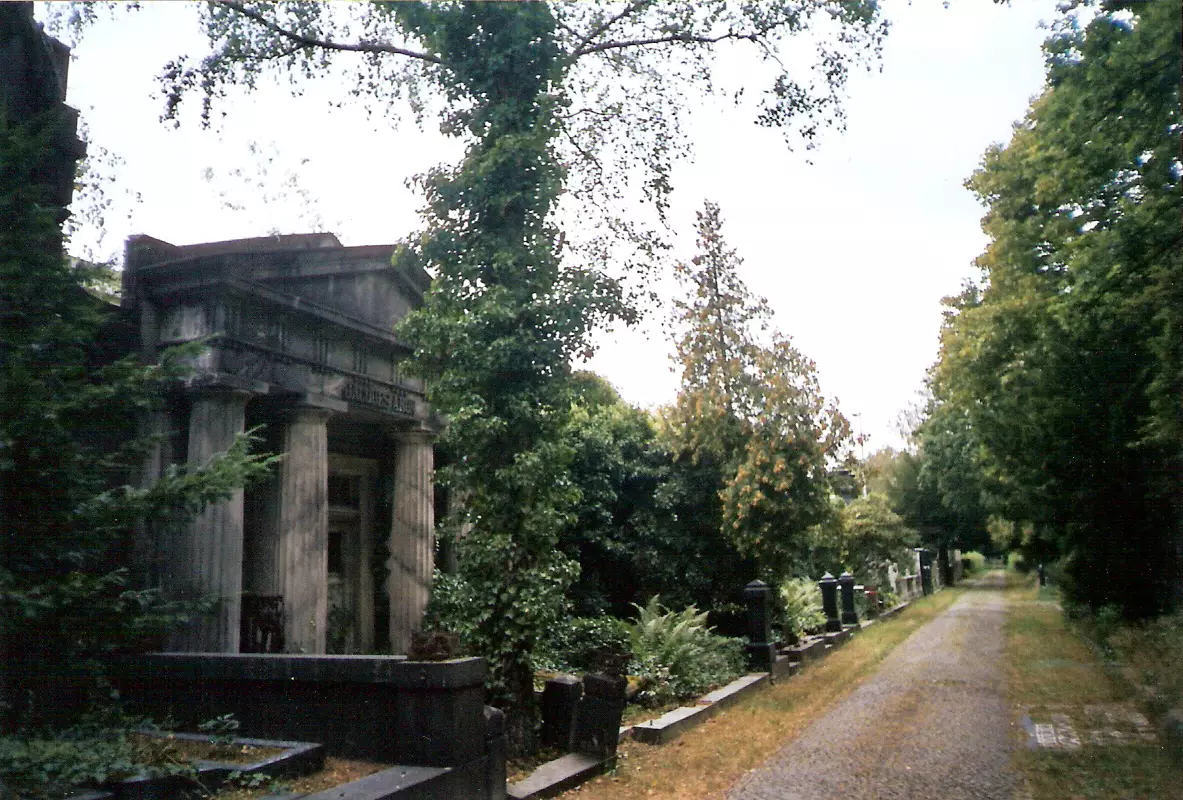
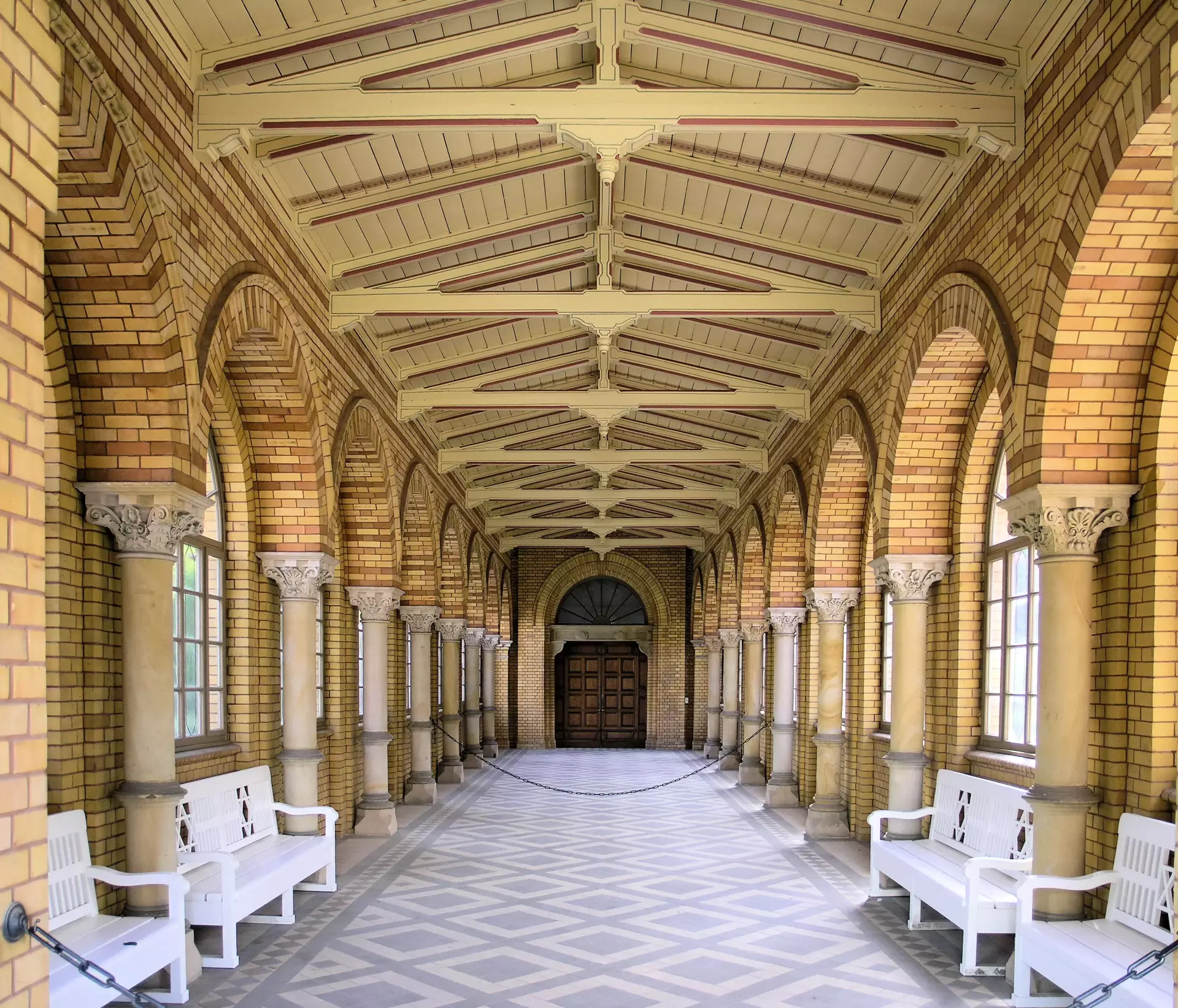
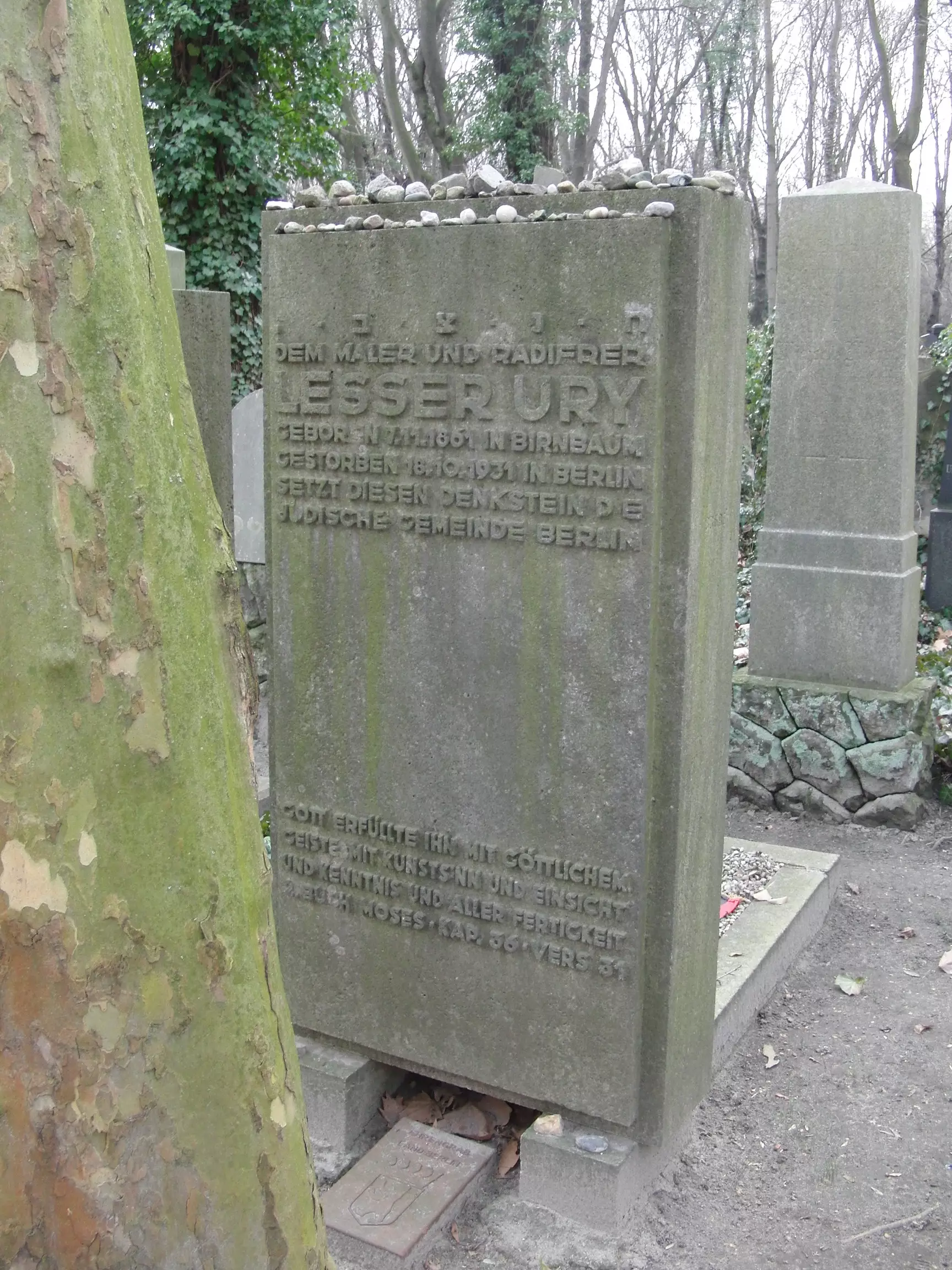
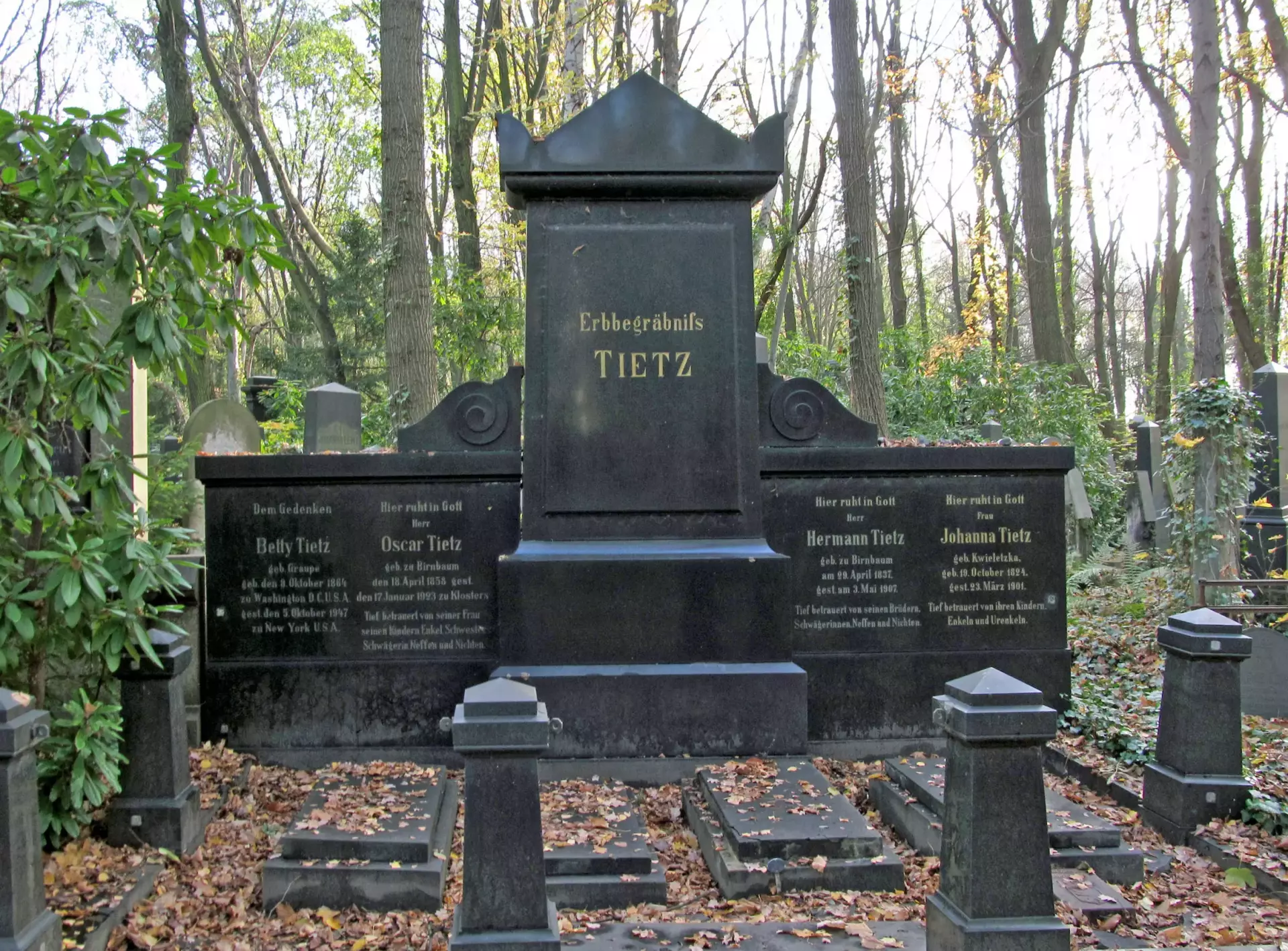
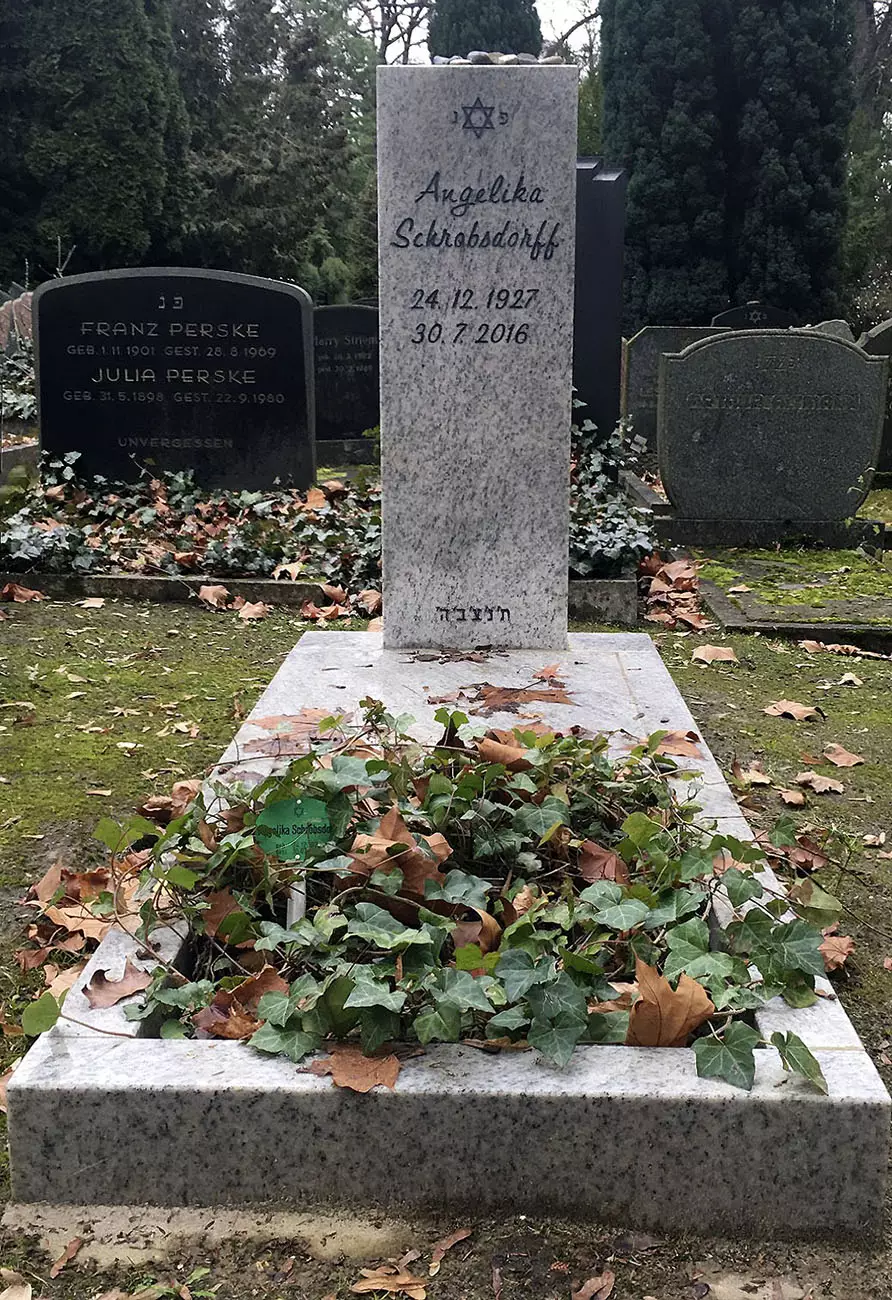
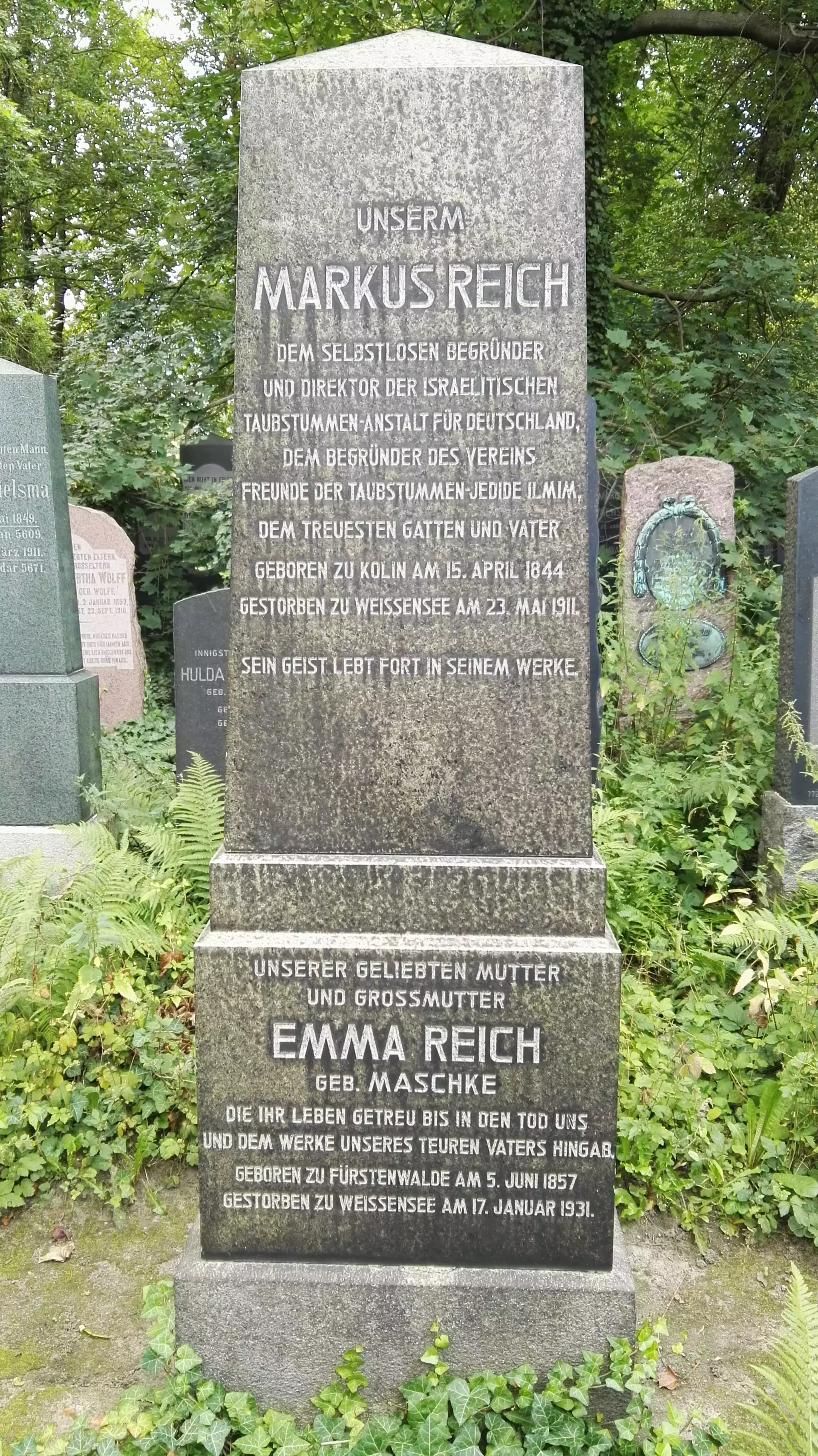
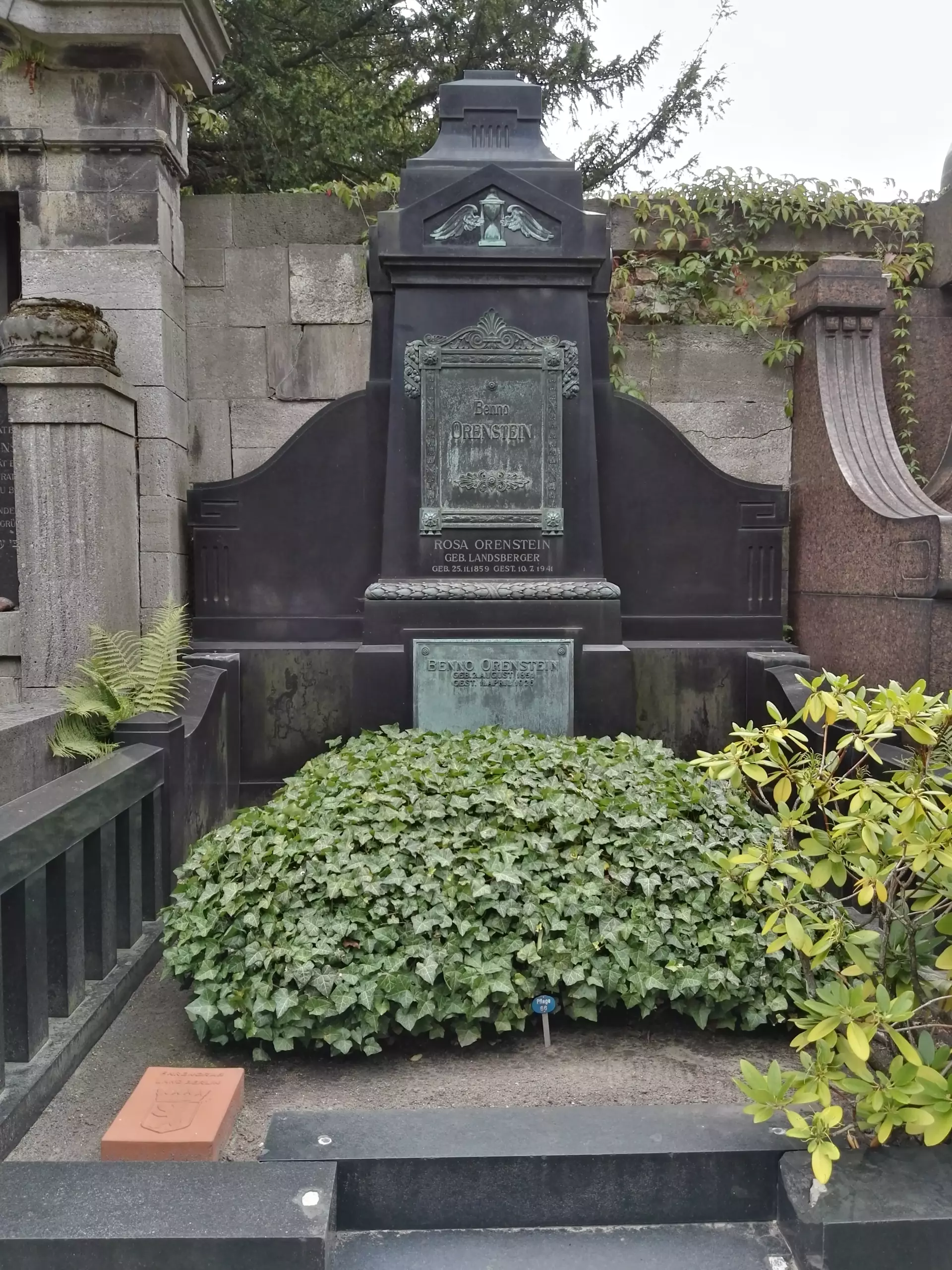
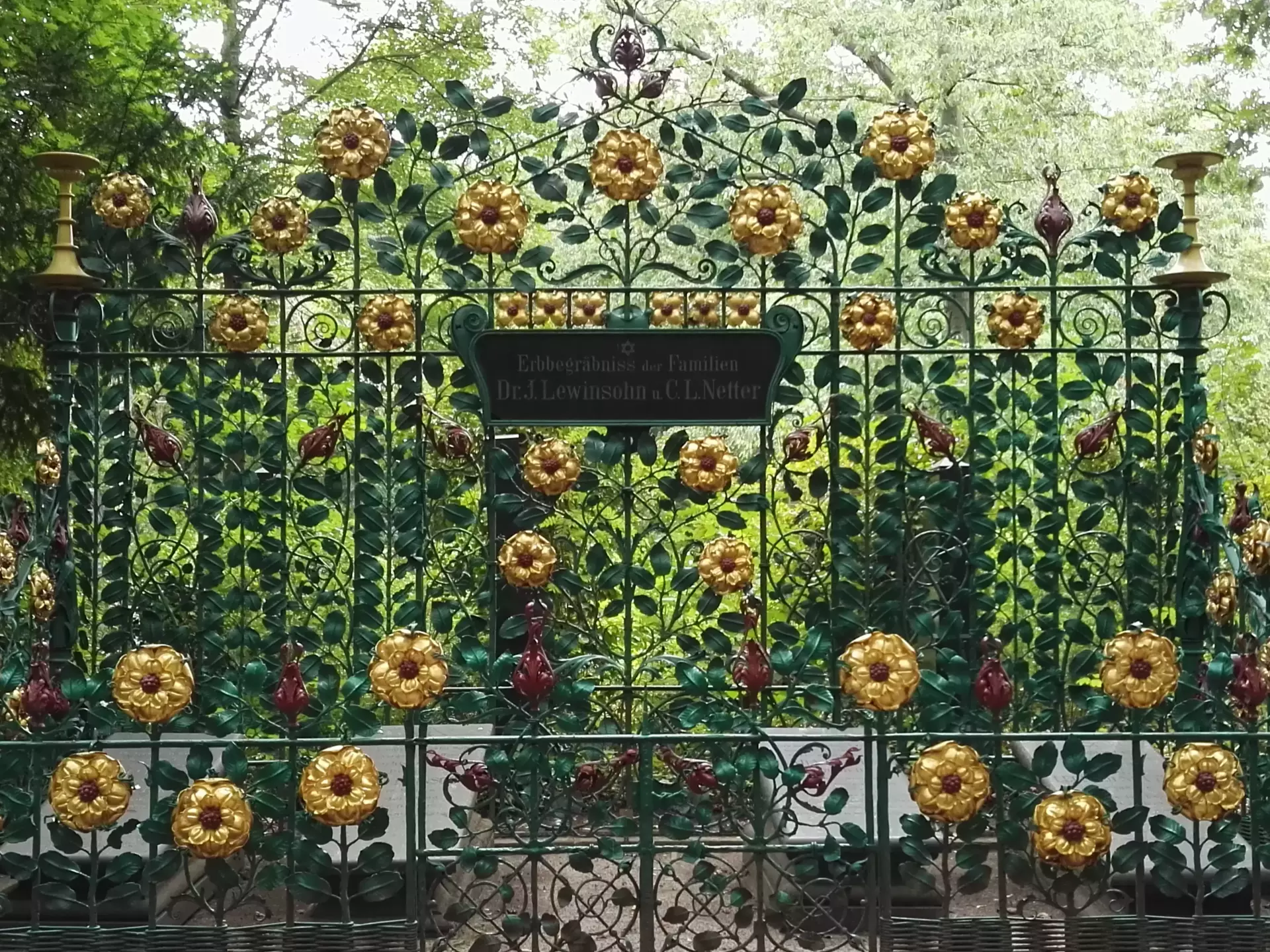
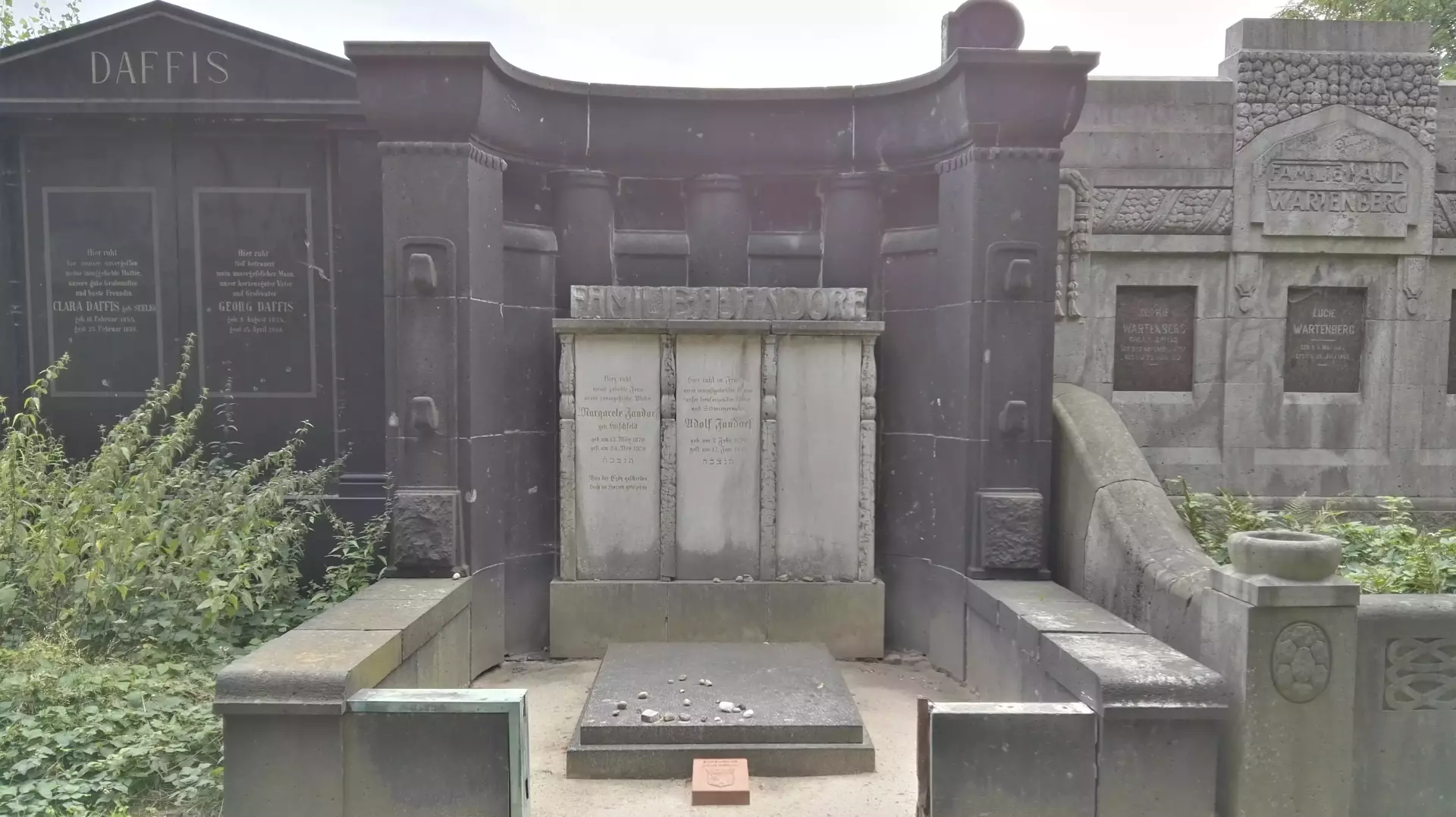
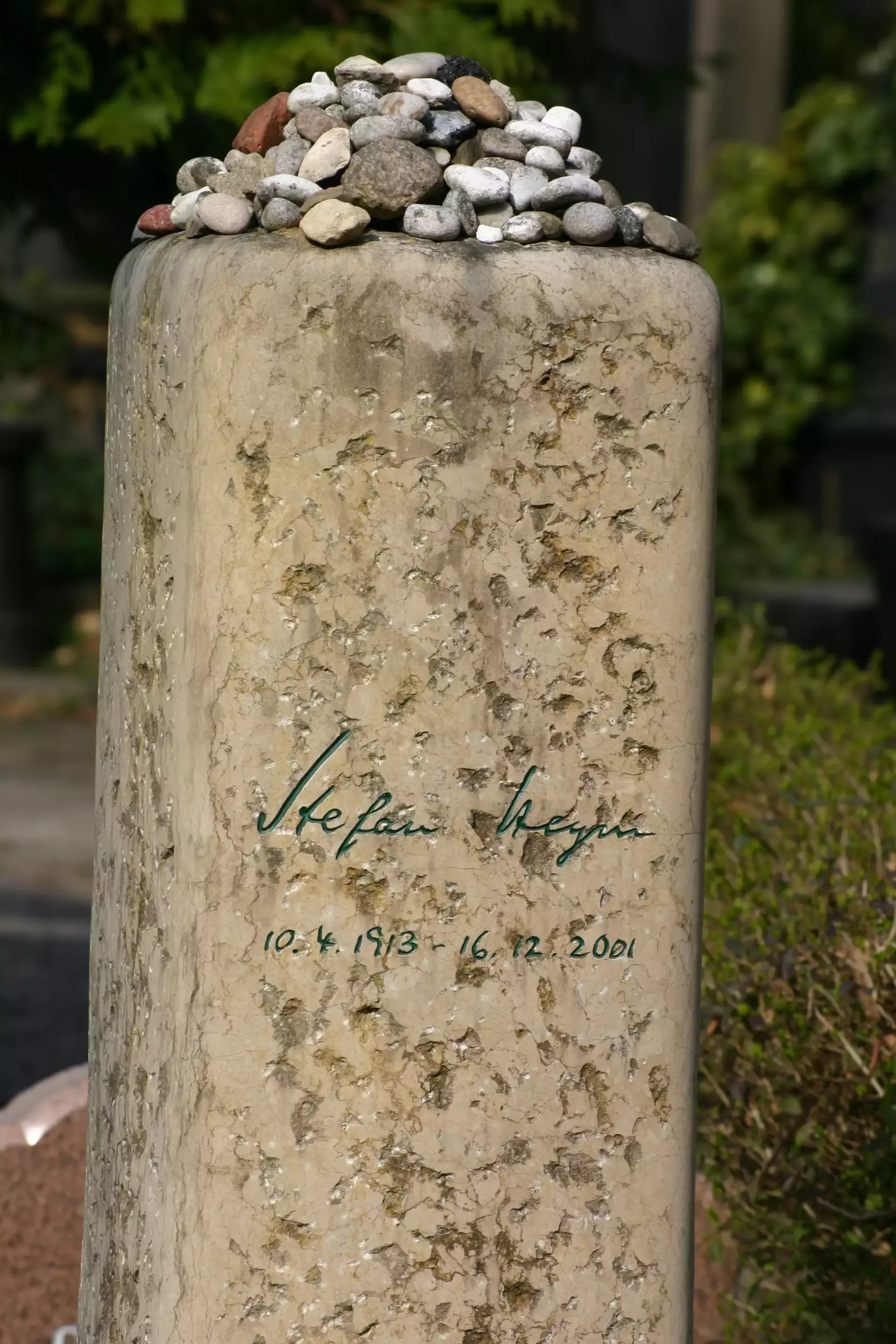
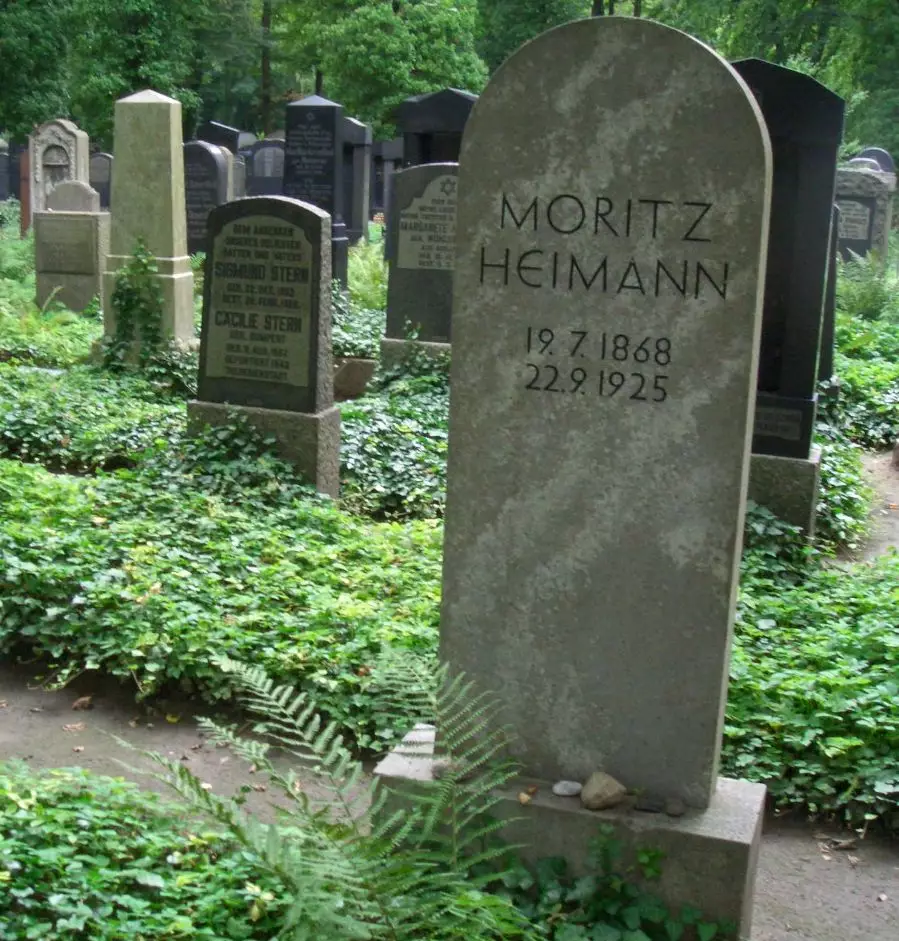
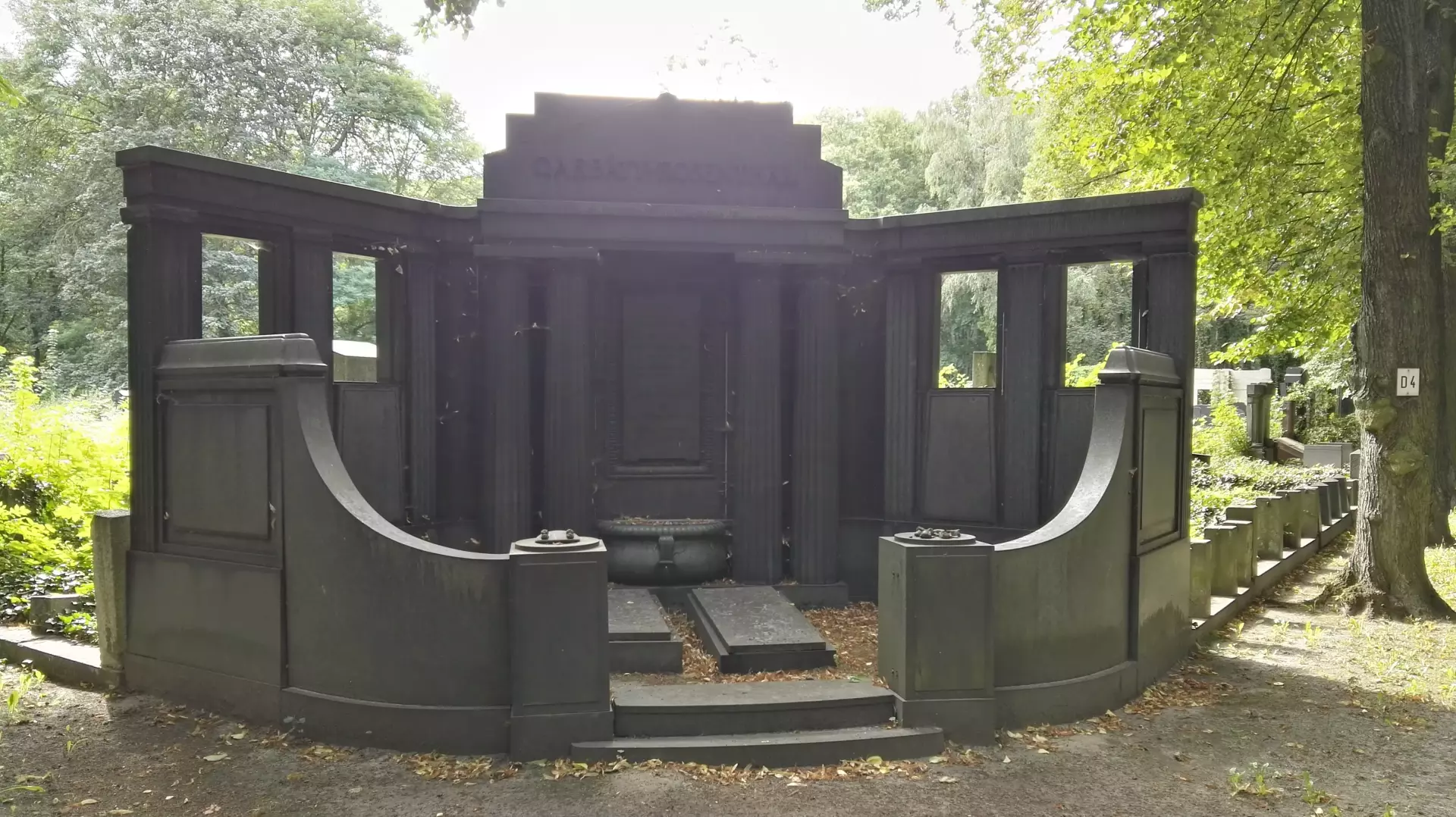
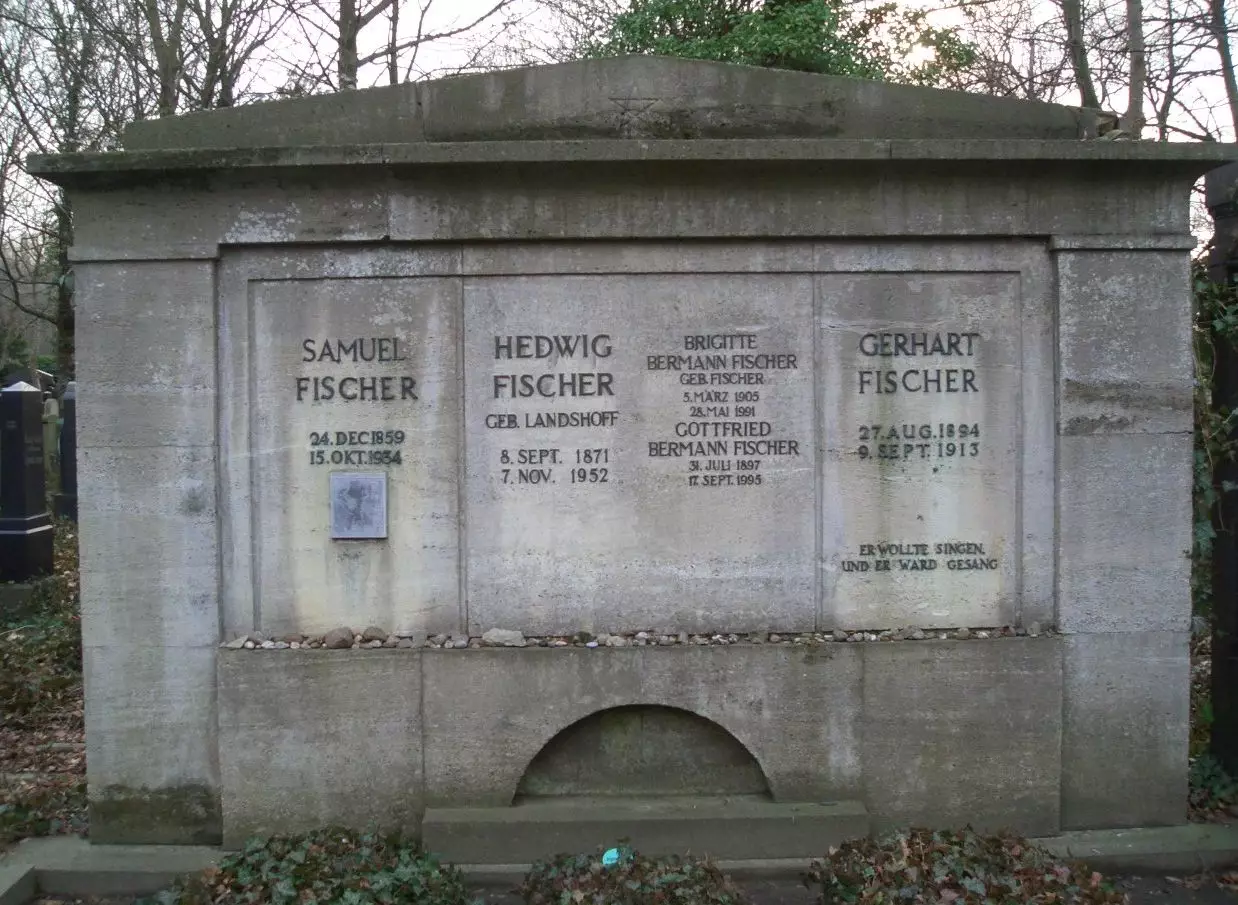
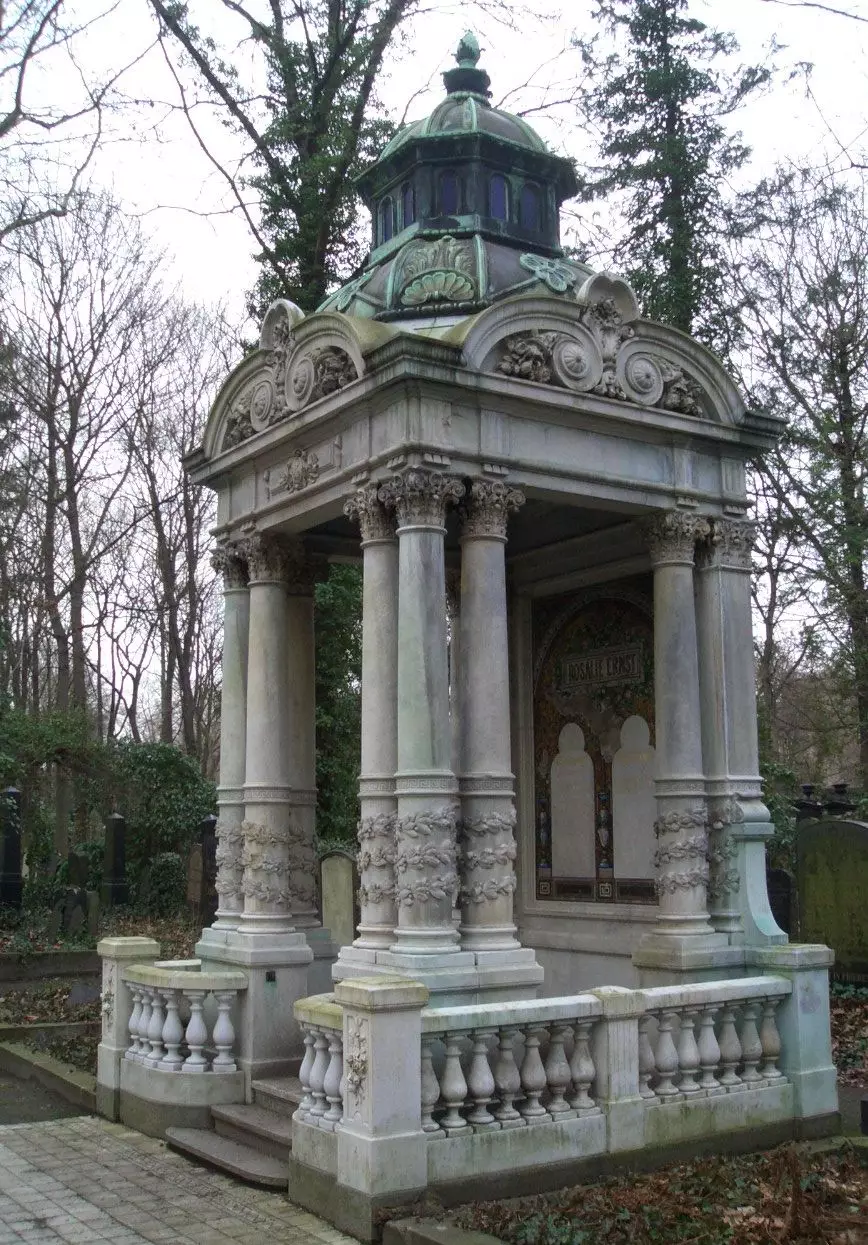
Weißensee Cemetery in Berlin is the second largest Jewish cemetery in Europe. Established in 1880, it extends over 100 acres and holds more than 115,000 graves, offering a quiet record of Jewish life in the city across generations.
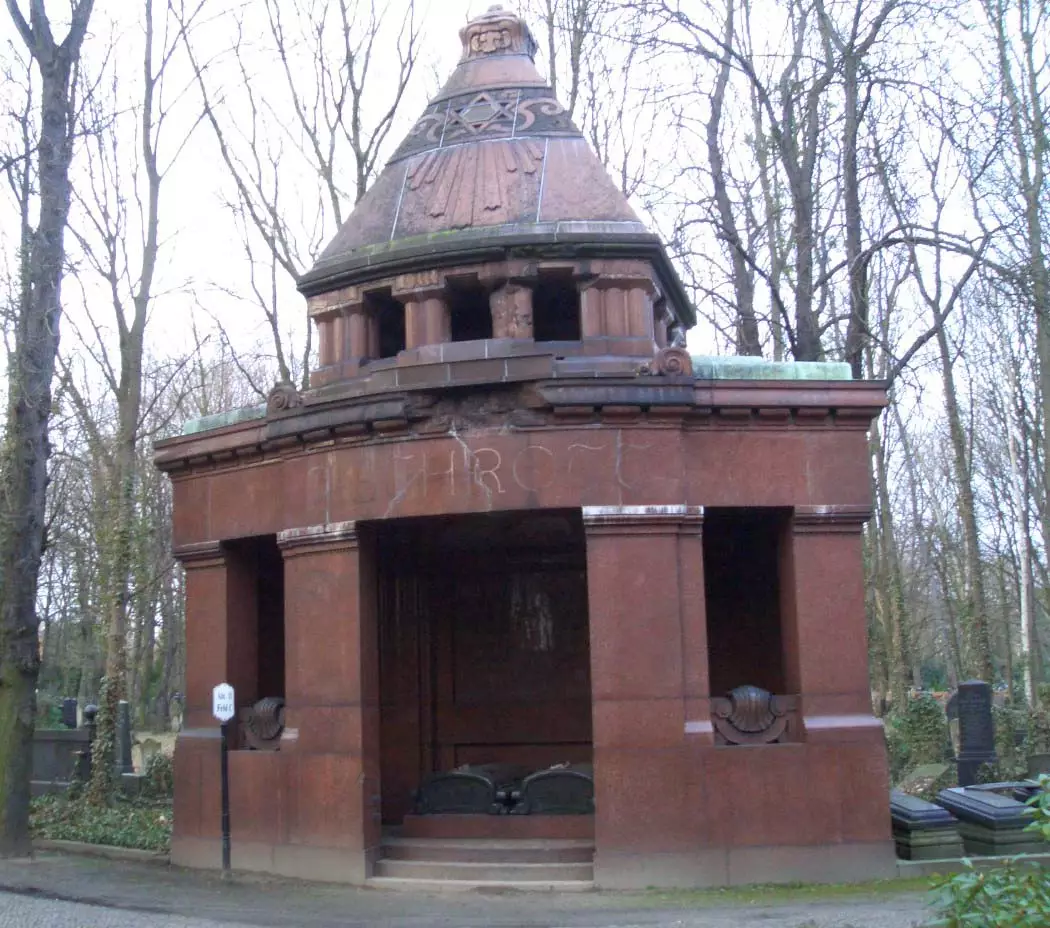
The cemetery opened when Berlin’s Jewish community needed a new, spacious burial ground. Its broad avenues and orderly sections reflect late 19th‑century planning, designed to serve a growing population. Family plots, modest stones, and elaborate mausoleums stand side by side, marking the rise of Berlin’s Jewish bourgeoisie and the many trades, arts, and professions they shaped.
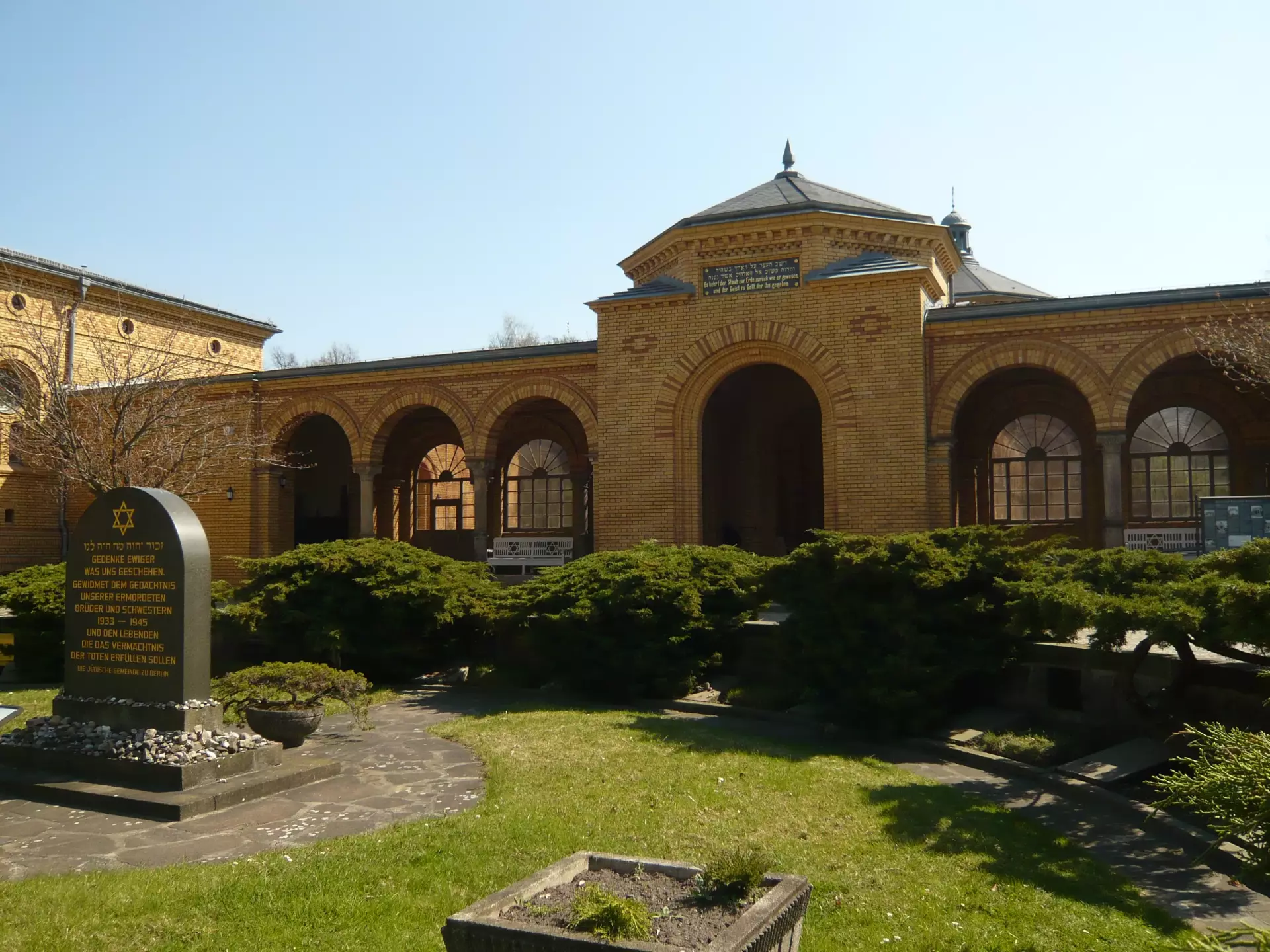
Weißensee is known for its sculpted headstones and symbolic motifs. Carvings of hands, lions, broken columns, and wreaths appear throughout, each with meaning in Jewish tradition and mourning culture. Art Nouveau and Neo‑Classical influences can be seen in tomb façades and ironwork. The cemetery’s ceremonial hall and entrance complex add to the architectural character, blending function with dignity.
The site endured the Nazi period and the war years with comparatively little damage. Many graves tell stories interrupted by persecution and exile; others trace lines of continuity before and after 1945. Memorials within the grounds honor victims of the Holocaust and commemorate Jewish institutions that once shaped Berlin’s neighborhoods.
Tall trees shade the paths, and ivy climbs over stone and brick. Seasonal changes are striking, from spring blossoms along the avenues to autumn leaves settling on the graves. The sense of seclusion is strong despite the urban setting, with birdsong and the rustle of leaves softening the city’s noise beyond the walls.
Weißensee remains an active cemetery and a valuable resource for historians, genealogists, and conservationists. Meticulous records, ongoing restoration, and careful landscaping support both heritage work and daily operations. The grounds serve as a place of mourning, memory, and learning, connecting present‑day Berlin to centuries of Jewish history.
Source - https://en.wikipedia.org/wiki/Wei%C3%9Fensee_cemetery
A museum dedicated to everyday life in communist East Germany. The museum has very relaxed rules and you are allowed to touch and examine almost every object, which adds greatly to the experience.
The zoo in the former East Berlin is more spacious than its West Berlin counterpart, the historic Berlin Zoo and has been open for some 50 years. The Tierpark has nearly as many animals, but fewer reptiles and aquatic animals. It appears rather like a park with animals than a classic zoo, in fact it is one of the biggest zoos in Europe. There is an old castle from the late 17th century in the northeast of the Tierpark (Schloss Friedrichsfelde).
The longest stretch of the Berlin Wall still in existence, painted by artists in 1991 and restored in 2009, after years of decay. At Mühlenstraße, next to the river Spree. The murals are painted on the east side of the wall after the fall of Communism; so they are not from the Cold War, during which murals could only be painted on the west side. Make sure not to miss the famous mural of a car seemingly crashing through the wall with Leonid Brezhnev and Erich Honecker kissing above it. It is actually on the back side of the gallery (it is facing away from the street.) It is just inside the entrance of the Eastern Comfort Hostel, near the east end of the gallery.
At a former Luftwaffe and Royal Air Force (RAF) airfield, RAF Gatow. The museum's focus is on military history, particularly the history of the Luftwaffe of the Bundeswehr, with a collection of more than 200,000 items, including 155 aeroplanes, 5,000 uniforms and 30,000 books. There are also displays (including aeroplanes) on the history of the airfield when it was used by the RAF. Aircraft include reproductions of Otto Lilienthal's gliders, of World War I planes such as the Fokker E.III, and World War II planes such as the Bf 109 and Me-262, as well as at least one aircraft of every type ever to serve in the air forces of East and West Germany. Most of those postwar aircraft are stored outside on the tarmac and runways, however, and many are in bad condition. There are long term restoration projects, including a Focke-Wulf Fw 190. RAF Gatow is notable as the "missing third airport" of West Berlin. Each sector used to have its own airport; the French sector had Tegel, the American sector had Tempelhof and the British had Gatow. However, RAF Gatow never saw much traffic of any kind, was more kept as a political statement than for transportation value, and thus was shut down after reunification. Tempelhof, after having been shut down for civilian traffic from 1975 to 1981, closed for all flights in 2008, while Tegel shut down in November 2020.
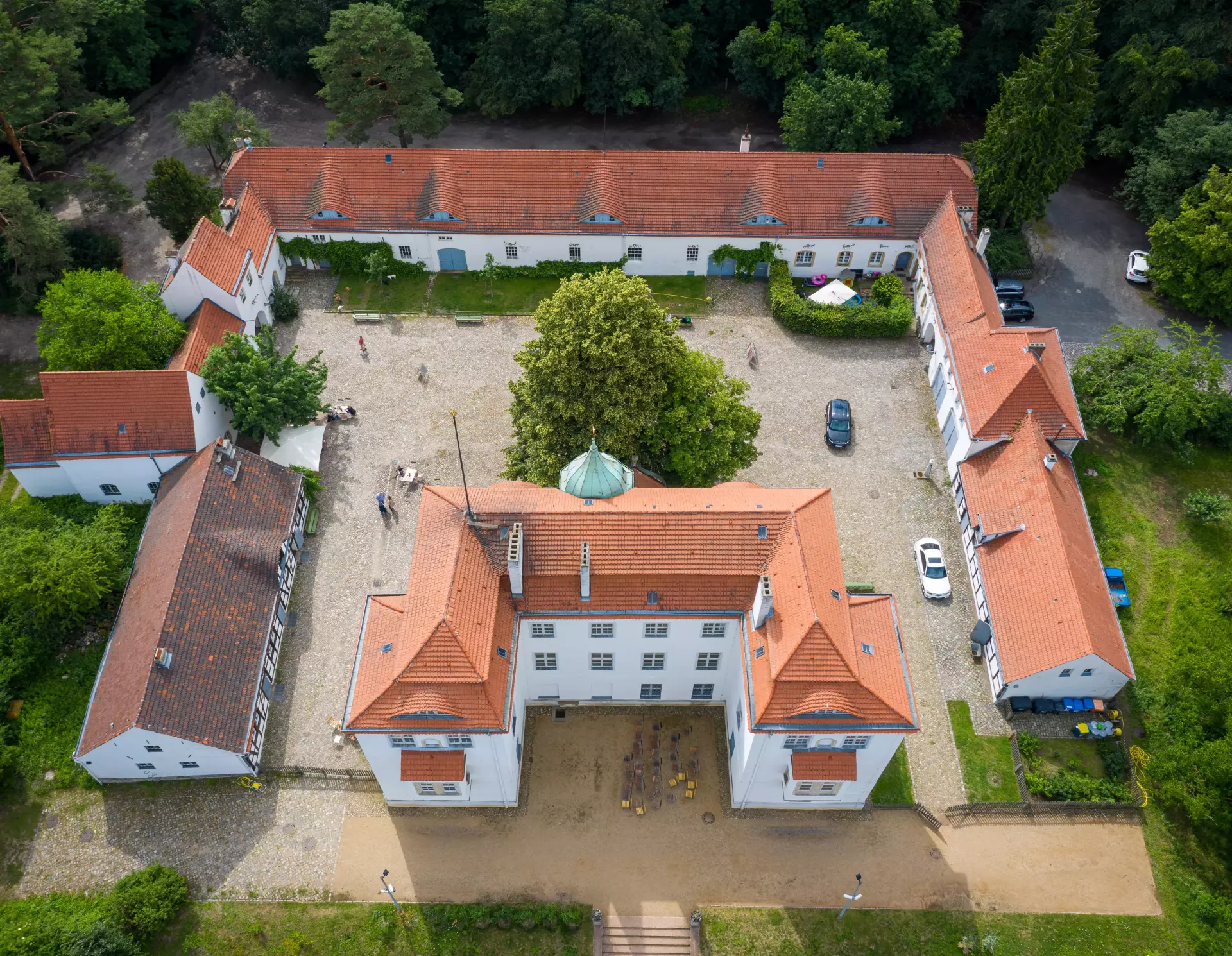
A small castle in late classical style. It was built 1868 by Martin Gropius (uncle of the Bauhaus-founder and other architects, the von Siemens family changed the castle a bit around 1900 and they enlarged the dimensions of the park, which is today renovated and nice to wander around when the sun is shining. Located within a few minutes' walking distance from Biesdorf station (take the S5 from the city centre) or Elsterwerdaer Platz station (U5).
House museum on Max Liebermann, German painter and printmaker. Has about 15 Lieberman paintings.
Small terrace on the top of the Park Inn, publicly accessible. Take the elevator to the 40th floor, and follow the signs up the stairs. Pay the attendant who also serves beer and coffee. Great views of the Fernsehturm. In the summer, consider base jumping off the roof with Jochen Schweizer. It is often closed in bad/windy weather, so look for a notice posted near the elevator that the terrace is closed.
The synagogue in the backyard of an apartment house is one of the biggest in Germany.
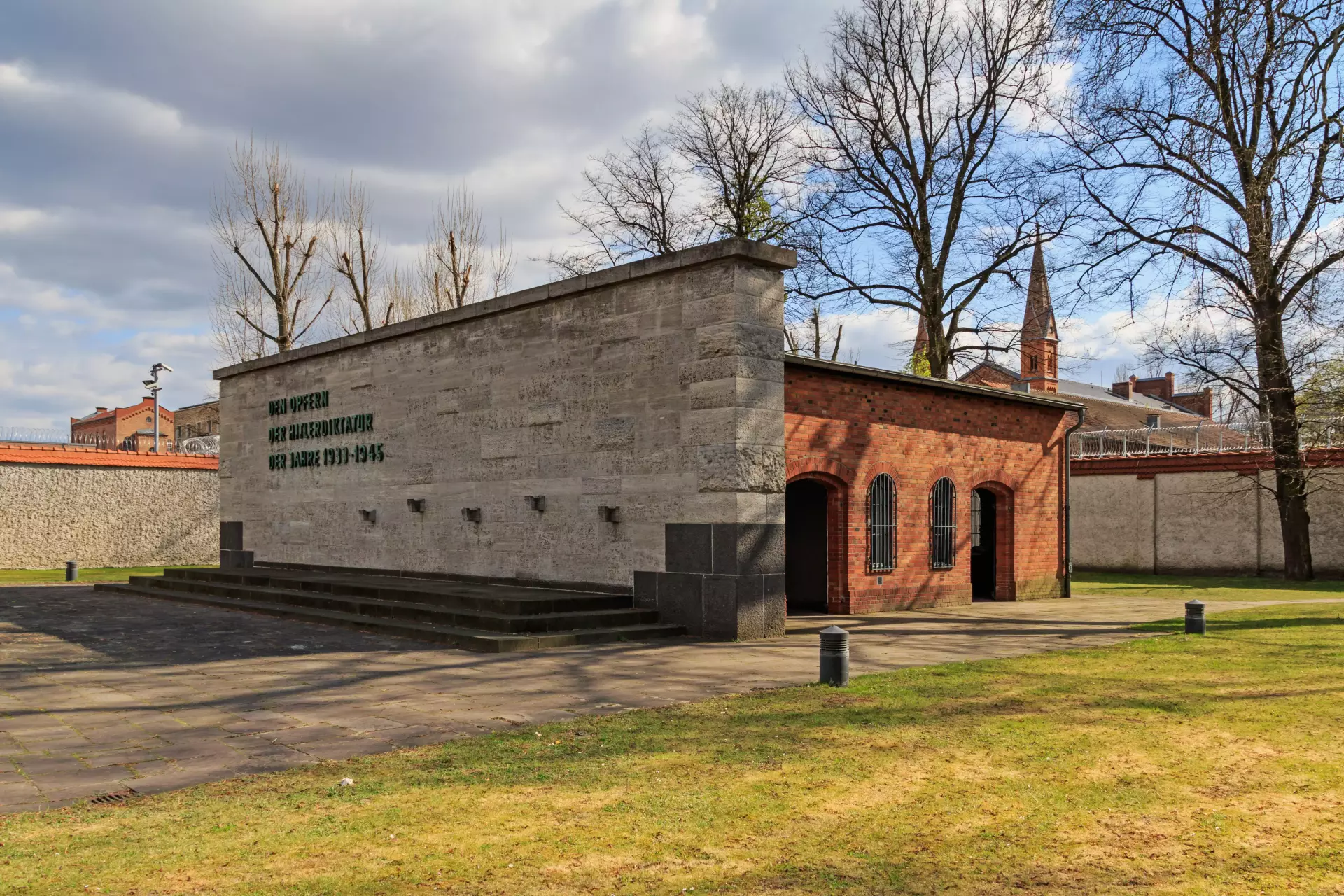
An eerie memorial to victims of the Nazi regime built on the place of a former execution room, where nearly 2900 people where put to death between 1933 and 1945.
German historical museum covering everything from pre-history up to the present day. One can spend many, many hours here! The building from 1695/1730 was the Zeughaus (Arsenal) until 1876.
The largest aquarium in Germany with over 9000 animals that are presented on three storeys in a historic building. Aquarium Berlin is found on the premises of the Zoo, but can also be visited separately. One of the best places on a rainy day with children.
This outdoor and indoor history museum documents the terror applied by the Nazi regime. It is on the site of buildings which during the Nazi regime from 1933 to 1945 were the headquarters of the Gestapo and the SS, the principal instruments of repression during the Nazi era.
The area to the north of Tiergarten, along the bow of the river Spree (Spreebogen), is home to the German federal institutions such as the parliament (Bundestag, in the historic Reichstag building) and the federal government, as well as the new central train station (Hauptbahnhof) across the river.
The large square in front of the Brandenburg Gate contains the French and American embassies, the rebuilt Hotel Adlon, and the new building of the Academy of Arts.