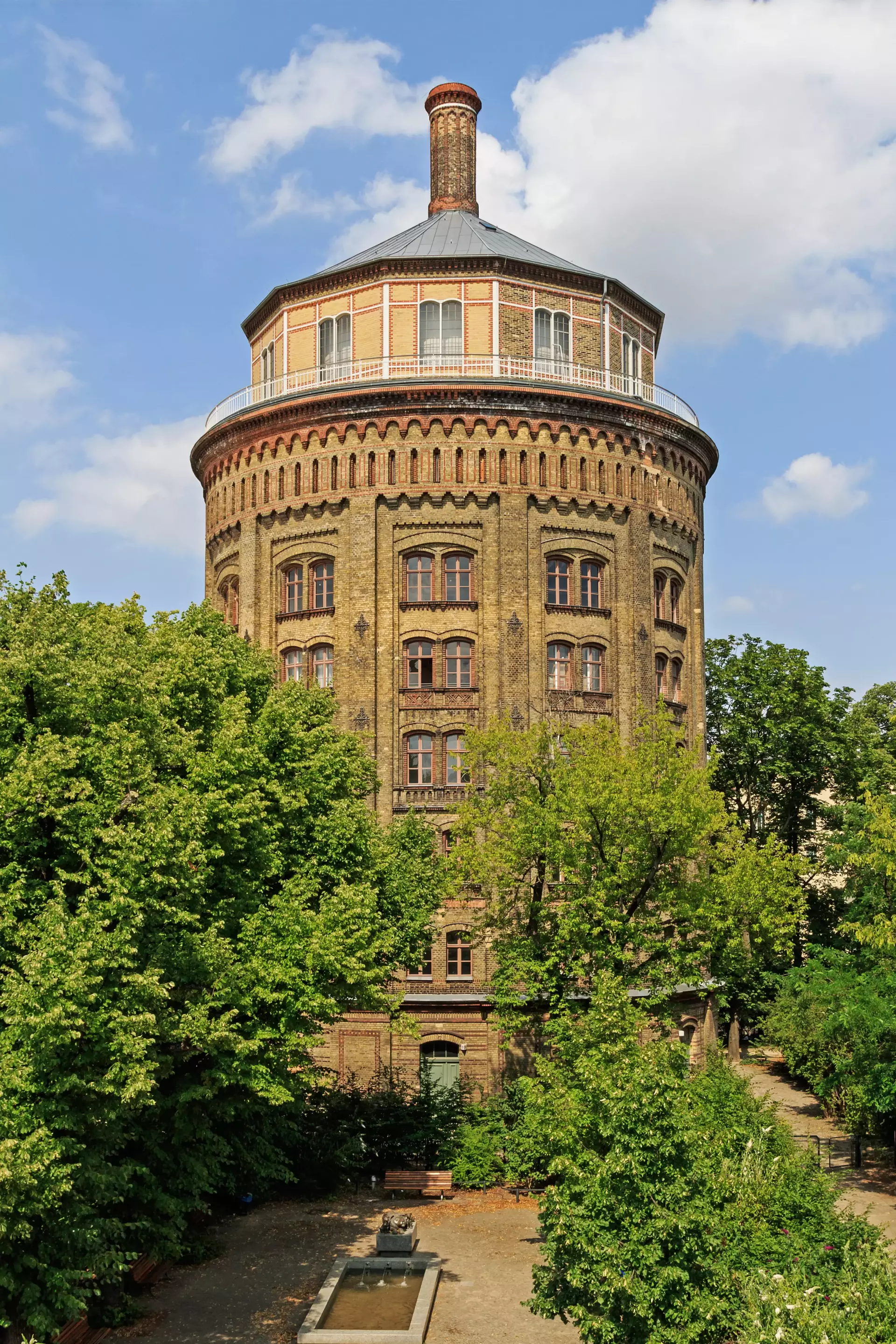
Berlin’s first water tower still rises above the streets, a brick landmark from 1877 that once powered a growing city. It is among the largest of its kind in the capital, a reminder of the era when modern utilities were transforming daily life.
Completed in 1877, the tower was built to regulate water pressure and store supplies for the expanding urban neighborhoods around it. Its sturdy cylindrical form, arched windows, and layered brickwork reflect late 19th-century industrial design, built to be both functional and enduring. The structure anchored a network of pumps and pipes that brought reliable water to homes and workshops, supporting Berlin’s rapid development.
The tower’s masonry is rich in texture, with warm-toned bricks and subtle decorative bands that break up its vertical mass. A ring of windows marks the levels where the internal tanks and machinery once operated. From street level, the silhouette stands out against the skyline, a familiar waypoint in the surrounding district.
Over time, as new systems replaced older infrastructure, the tower’s role shifted from essential service to historic symbol. Its survival offers a clear view of how industrial architecture shaped Berlin’s cityscape. The building often draws photographers and architecture enthusiasts who come to study its proportions and craftsmanship.
Source - https://en.wikipedia.org/wiki/Wasserturm_Prenzlauer_Berg
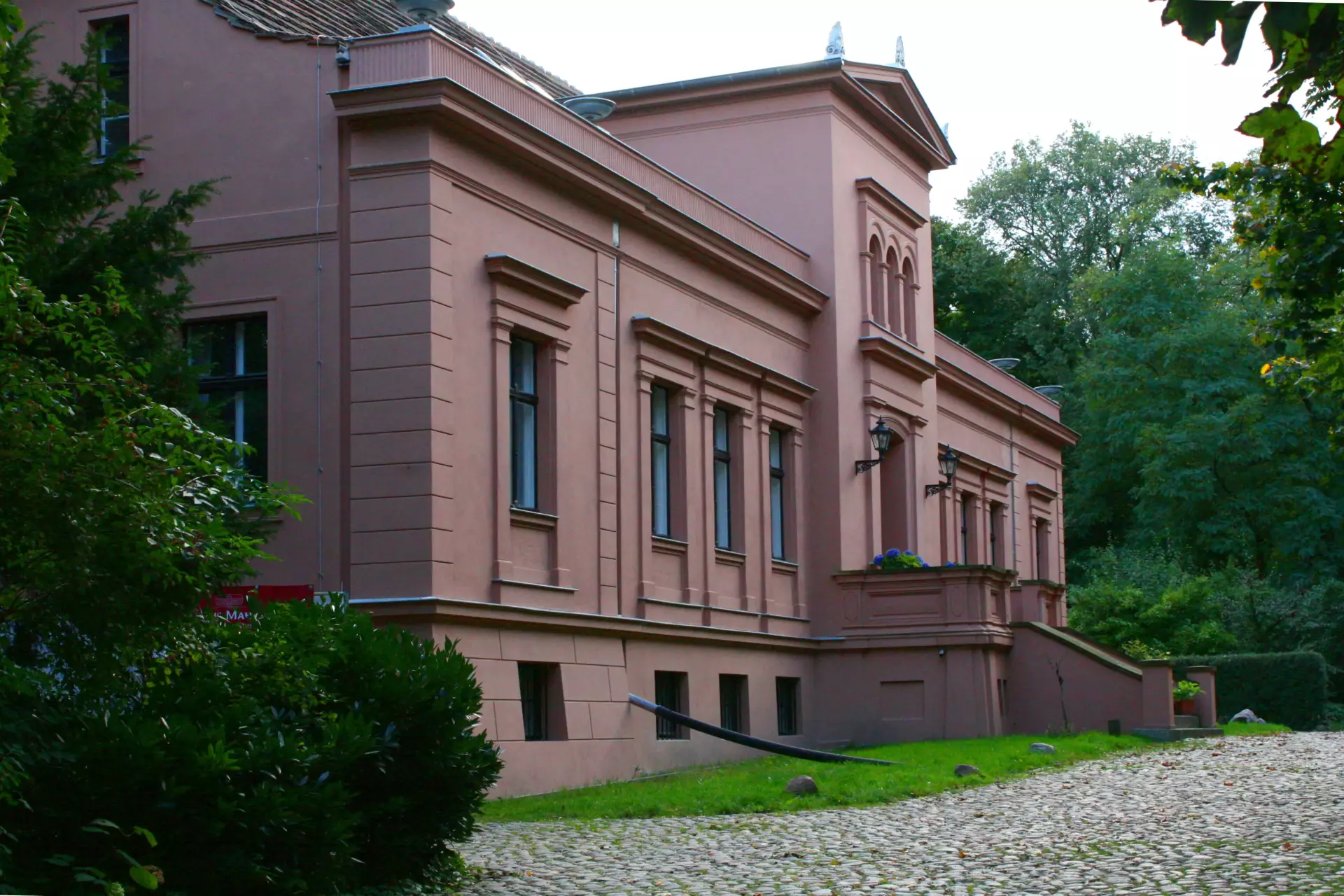
A remarkable medium-sized classical castle by the famous K.F. Schinkel built 1820 to 1824, also called "Humboldtschlösschen", because Alexander and Wilhelm von Humboldt (and their family) lived here once. Still privately owned.
This heritage-protected 120-m-long pedestrian tunnel below the river Spree was the first ferro-concrete tunnel in Germany that has been built using pneumatic caissons. Two beaches can be accessed via the tunnel which are not far from its south entrance.
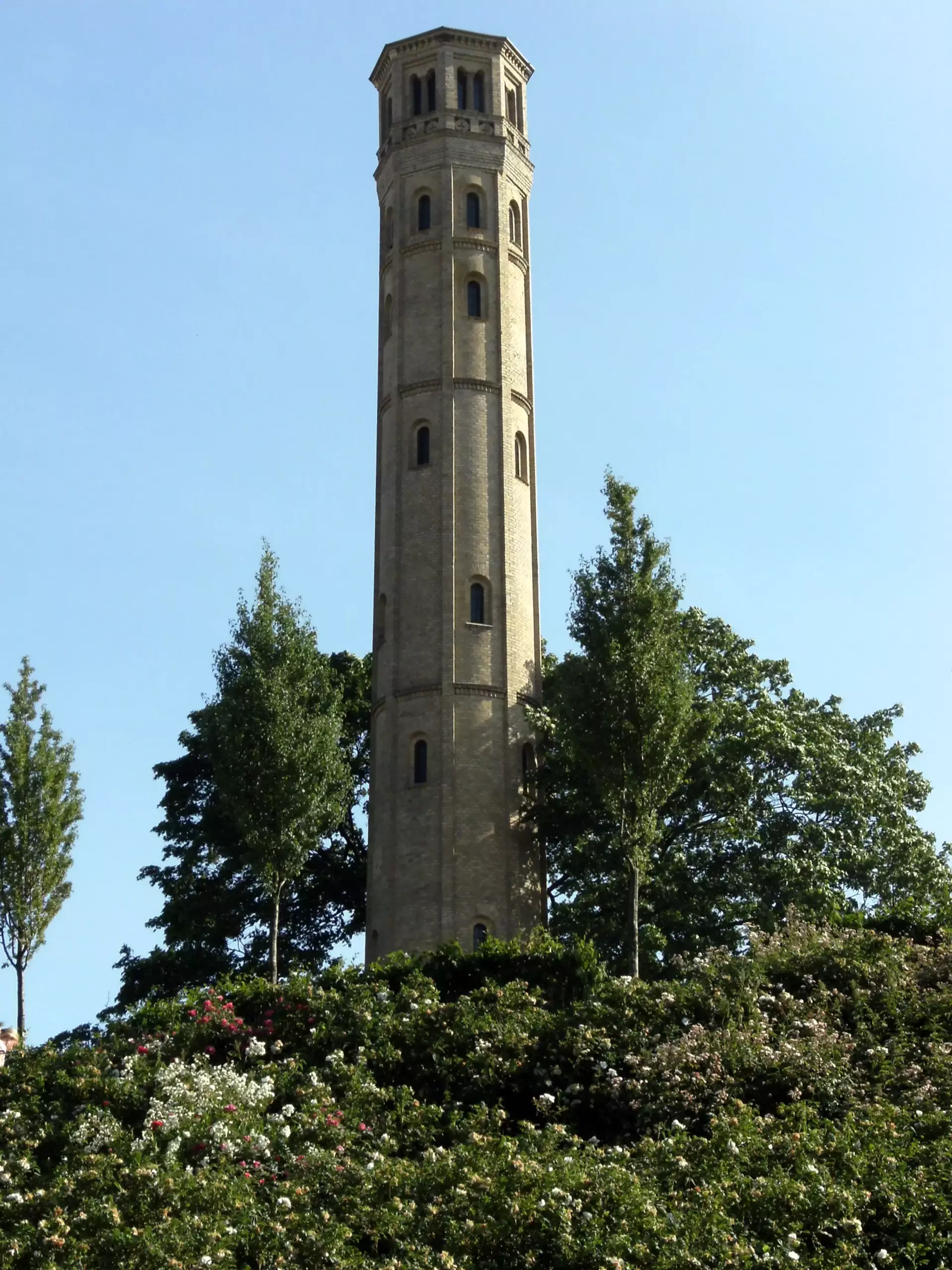
An observation tower without an elevator in Southeast Berlin, from which you can see that there is a great deal of forest around Berlin. There is a cafe at the tower.
It is the only hemp museum in Germany; you can see the history of hemp, the culture and use of it. You can see hemp grow. There is a cafe downstairs, with an open WiFi access. Everything going on here is legal - including the hemp growing under artificial light (a low THC strain grown with a special permit) - but they do not refrain from political commentary on the legal situation of cannabis in their exhibits.
This castle is one of Berlin's oldest castles and where Prince Carl used to reside. Be sure to check out Glienicke Bridge, the bridge that became renowned for the exchange of Western and Eastern secret agents. You can also visit Glienicke Park.
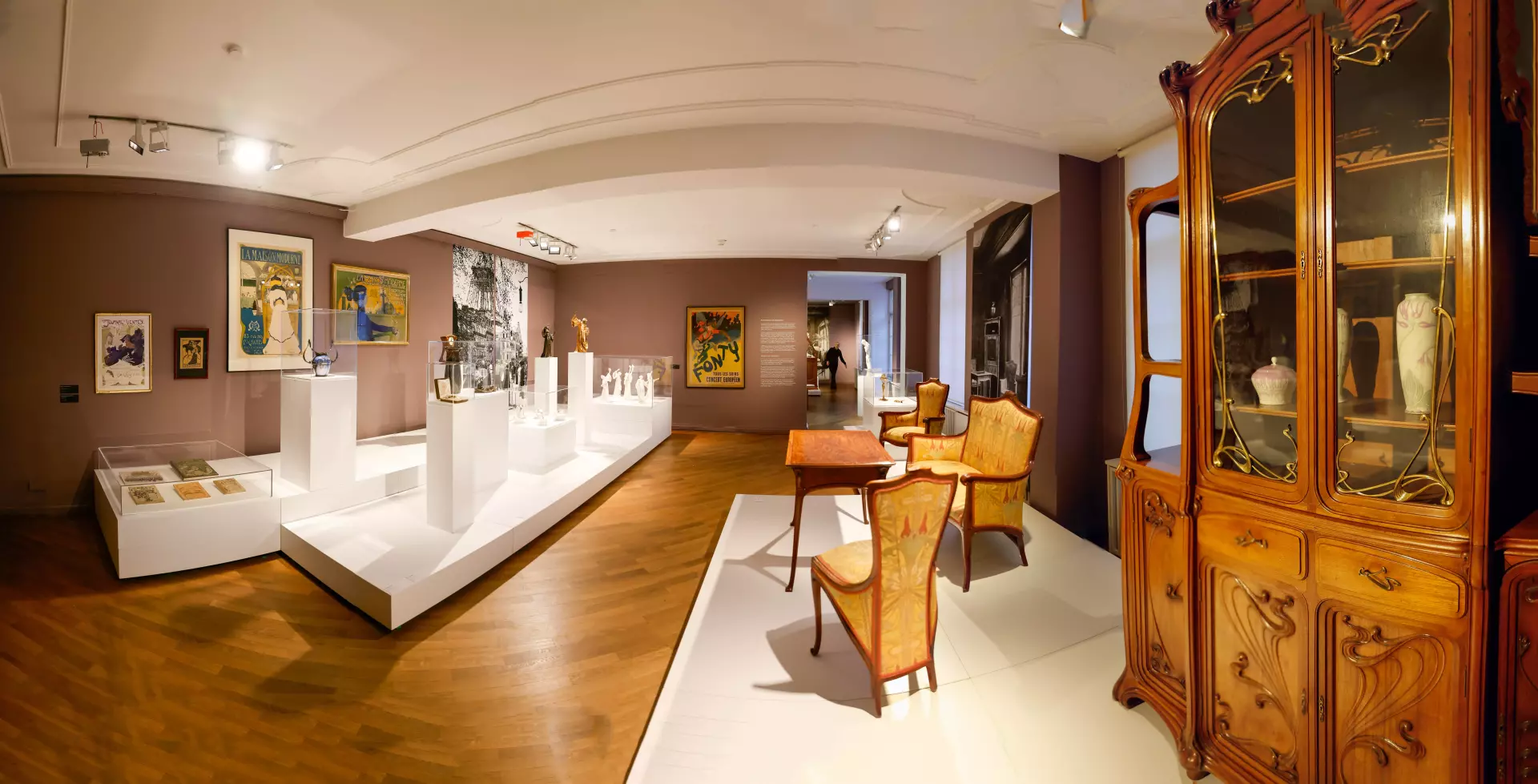
It was a museum of applied arts and a listed historical monument since 1966, and it is now a well-known Berlin exhibition hall.
The building of one of Berlin’s oldest breweries is a ravishingly beautiful and heritage-protected industrial monument.
150-200 m along the Wiener Straße (bypassing the fire house and the public swimming pool) from U-Bahn Görlitzer Bahnhof, the park is famous for the Turkish families barbecuing on summer weekends, failed contemporary art and relaxed atmosphere of students. It does have a reputation of being full of pickpockets and drug dealers though and the police makes regular visits to this place to check on the situation.
This chapel was built on the site of a church built in 1894 which sat on the "death strip" and was thus blown up by the GDR authorities in 1985. The chapel is the site of occasional memorial services for victims of the wall.
One of the oldest buildings in Charlottenburg and actually the reason for the whole city to be built.
Designed by Daniel Libeskind with an excellent exposition on the Jewish life in Berlin and the impact of the Holocaust. You can easily spend a day here. There is a metal scanner and other security features you'd rather expect at an airport than a museum.