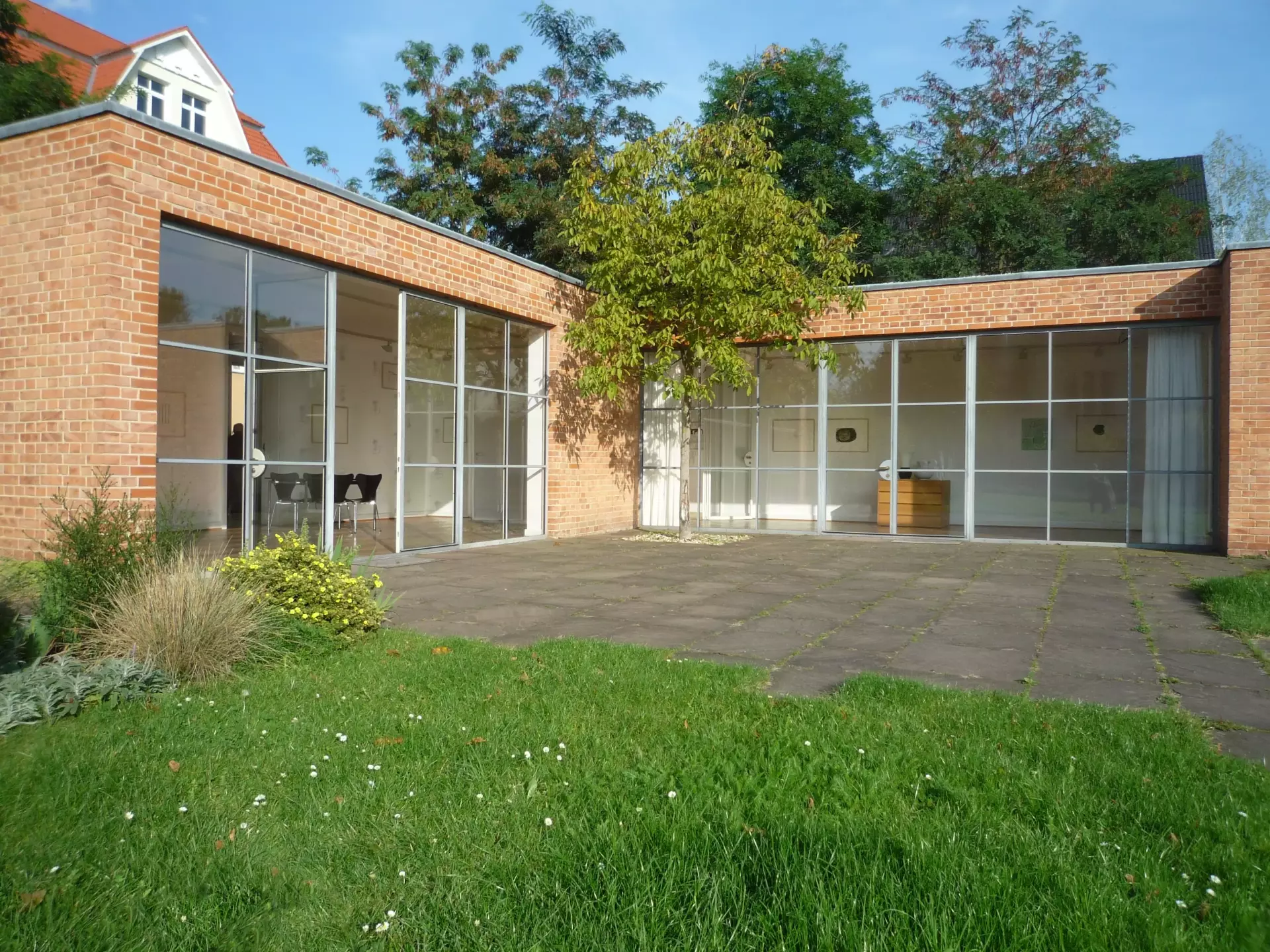
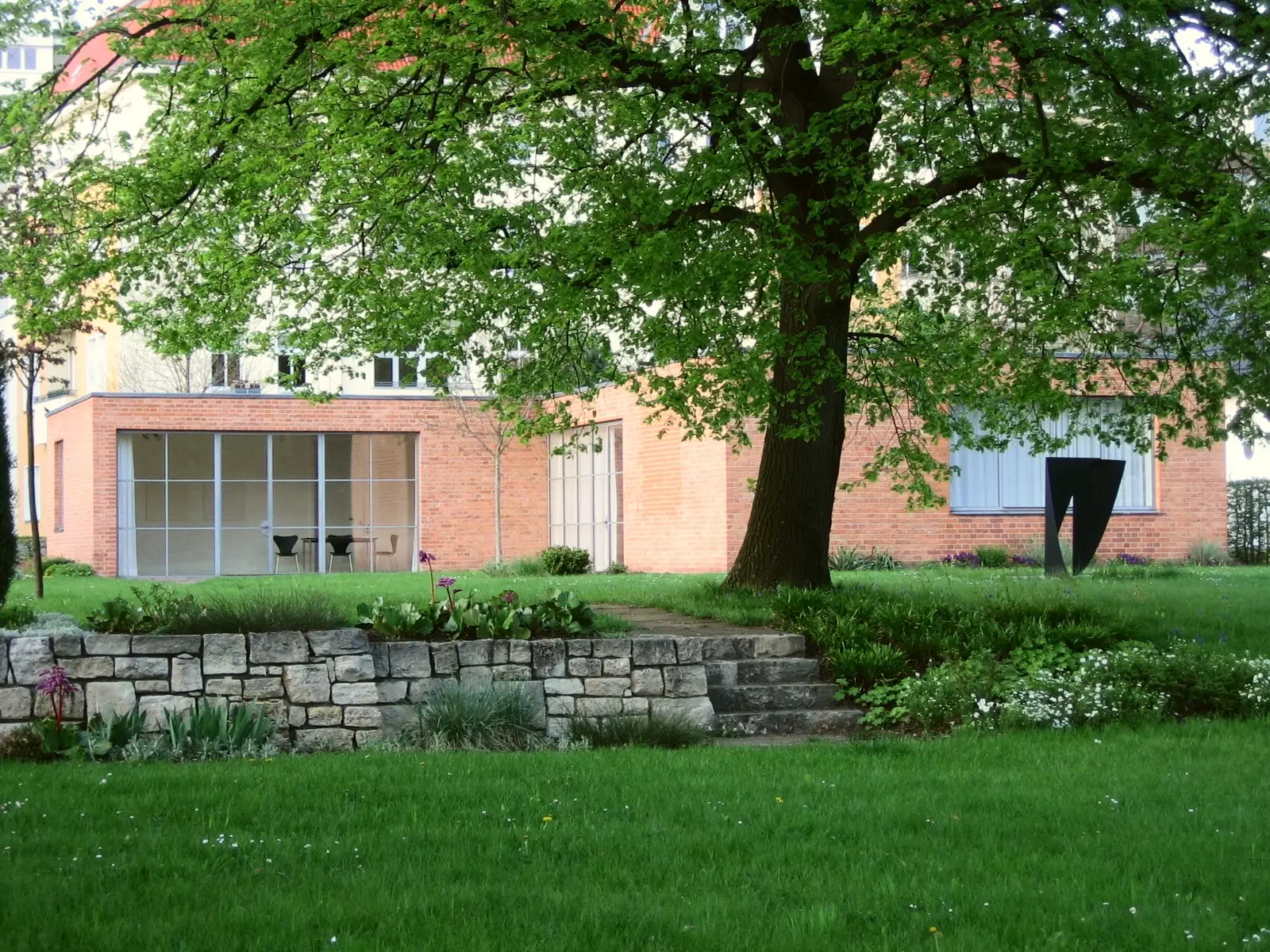
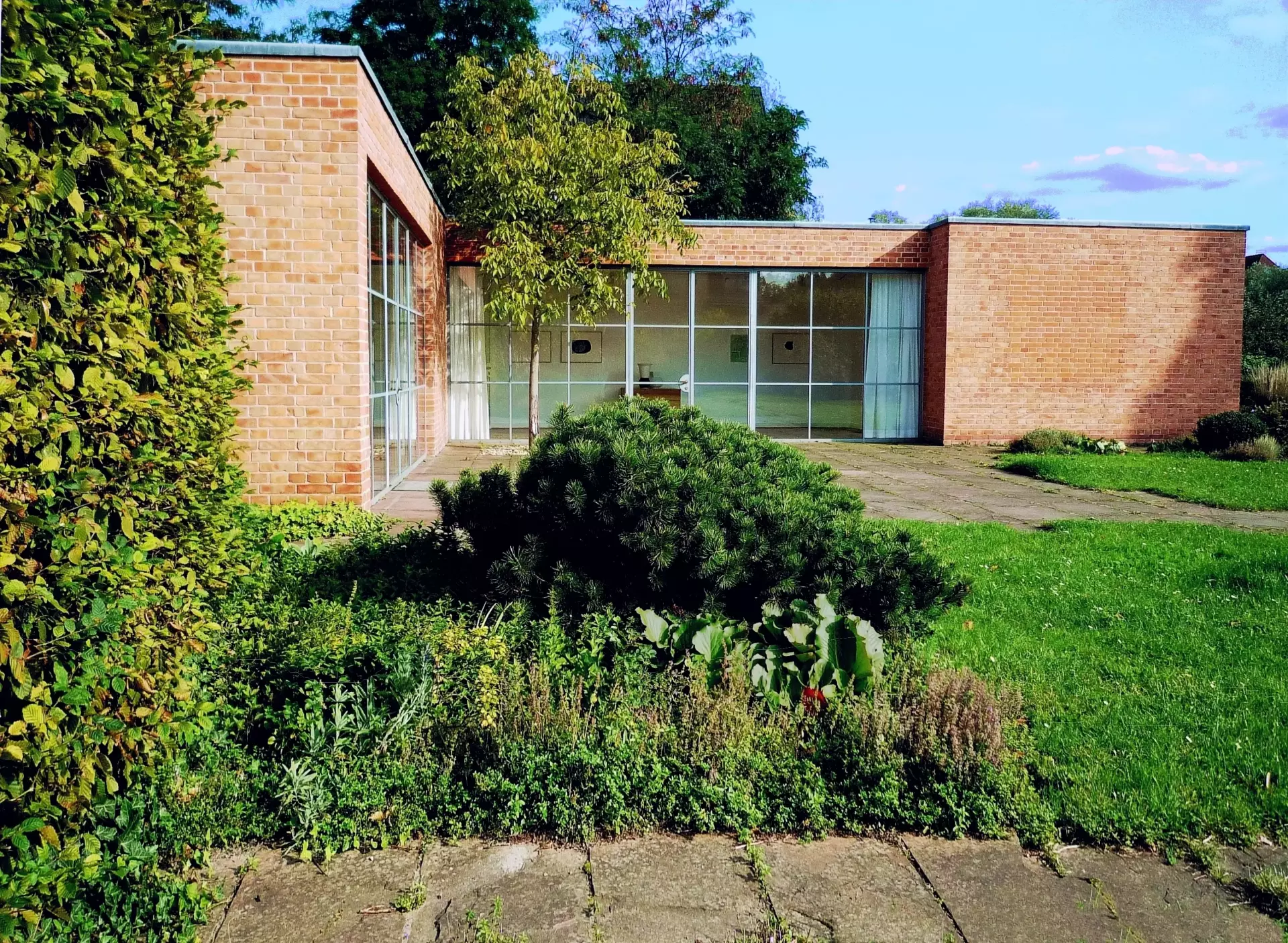
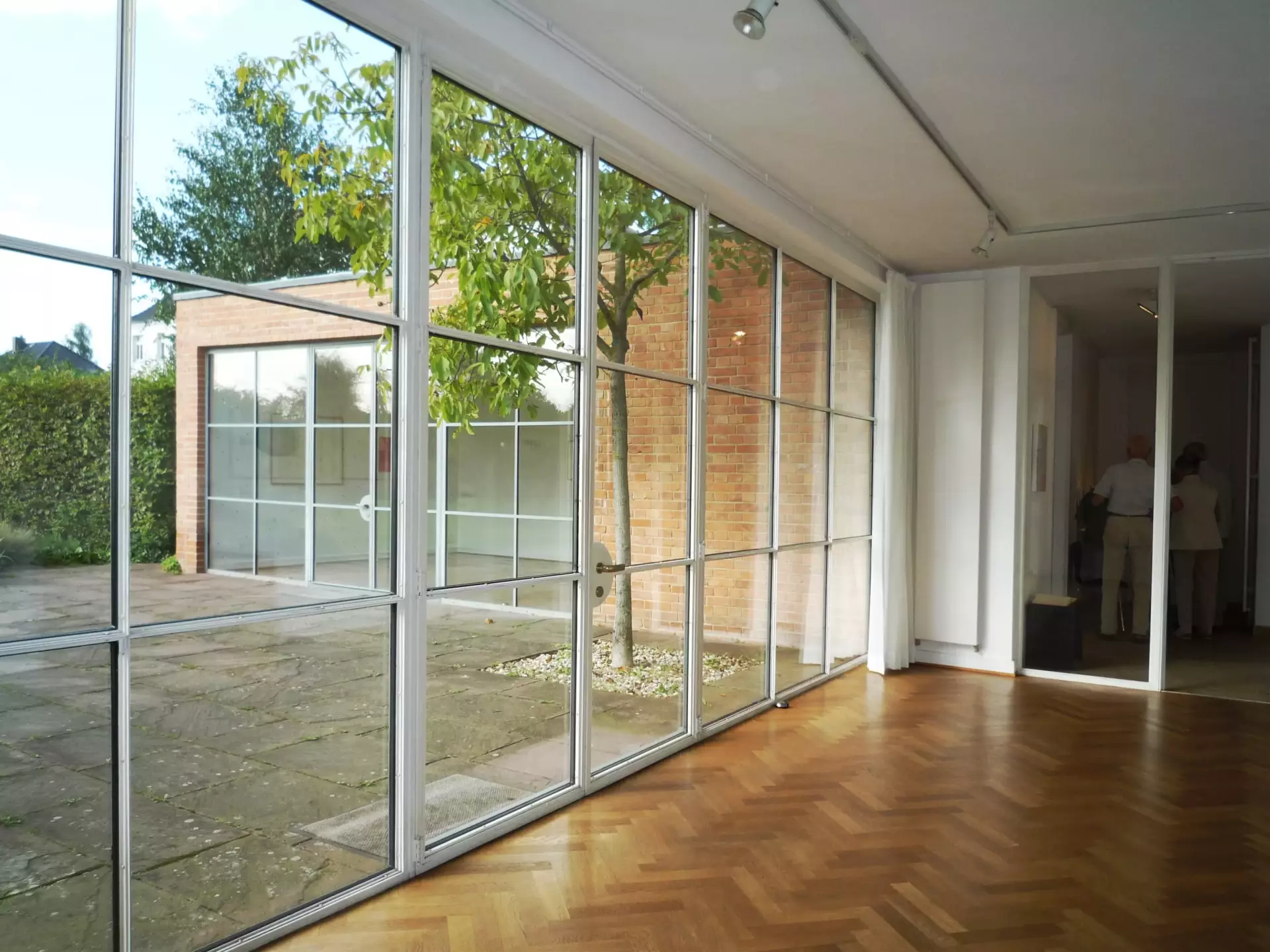
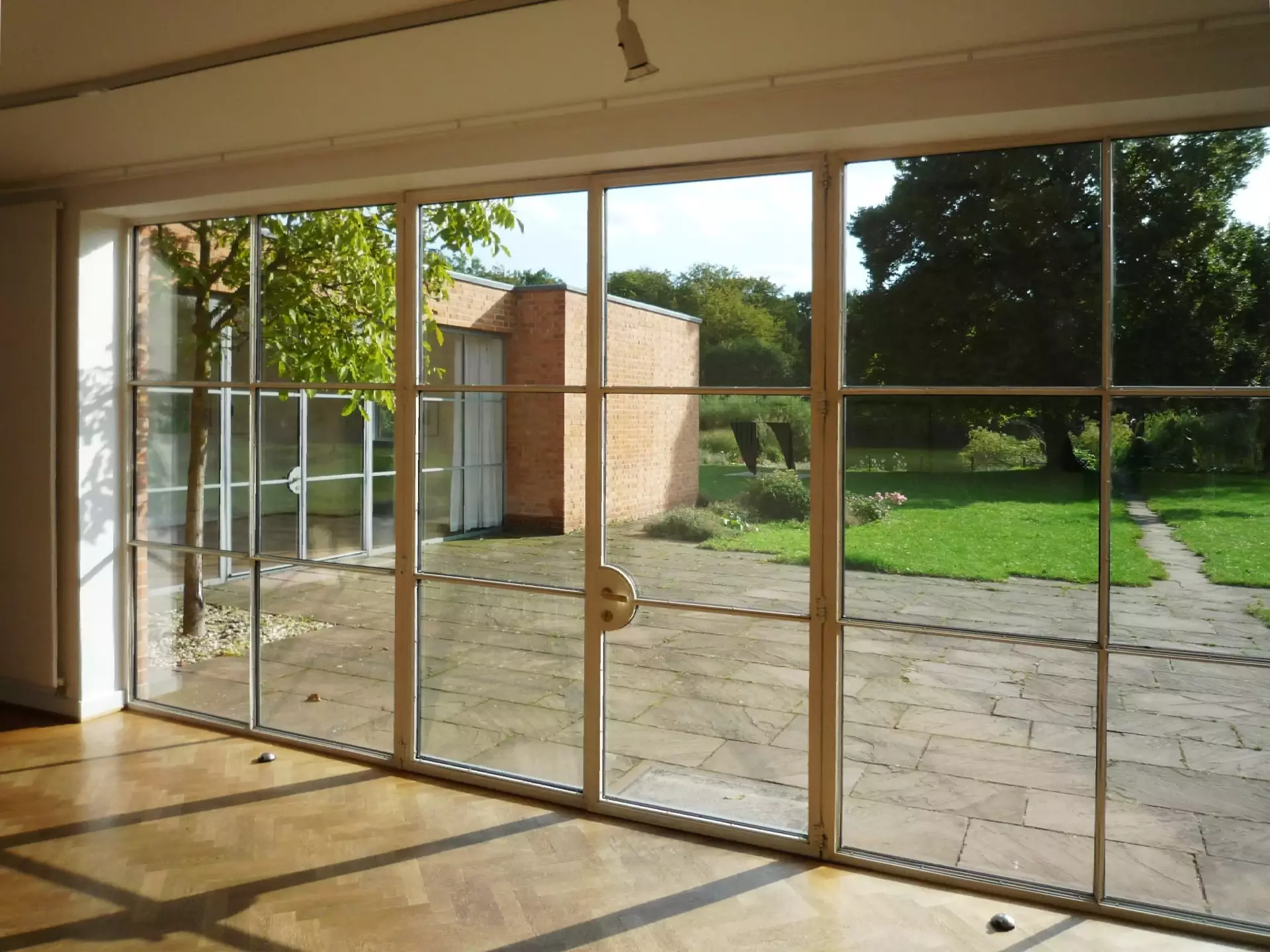
The final residential building designed by Ludwig Mies van der Rohe in Germany before his emigration to the United States in 1938 stands as a quiet chapter in modern architecture. The house marks a turning point in his career and reflects the crisp lines, open space, and honest materials that defined his approach.
Today, the building hosts small contemporary and modern art exhibitions. The minimalist setting makes each piece feel deliberate, with natural light and clean geometry shaping how artworks are seen. It is a place where architecture and art meet, and where the story of a pivotal moment in design history continues to unfold.
Built at the close of an era for Mies in Germany, the house captures the last notes of his European work before he left for the United States. The structure emphasizes clarity and proportion, with a restrained palette that foregrounds space over ornament. Its preserved character offers a direct link to the radical ideas that transformed twentieth-century design.
The intimate scale of the gallery program favors focused shows rather than large surveys. Exhibitions often rotate, bringing in works that resonate with the house’s modernist spirit. Visitors experience art within a setting that frames each piece with light, shadow, and quiet, making the building part of the exhibition itself.
The rooms open onto calm views, and the architecture encourages slow looking. Materials and details remain understated, letting the dialogue between art and space take center stage. The result is a thoughtful environment that reveals different aspects of the works on display throughout the day.
Source - https://en.wikipedia.org/wiki/Lemke_House
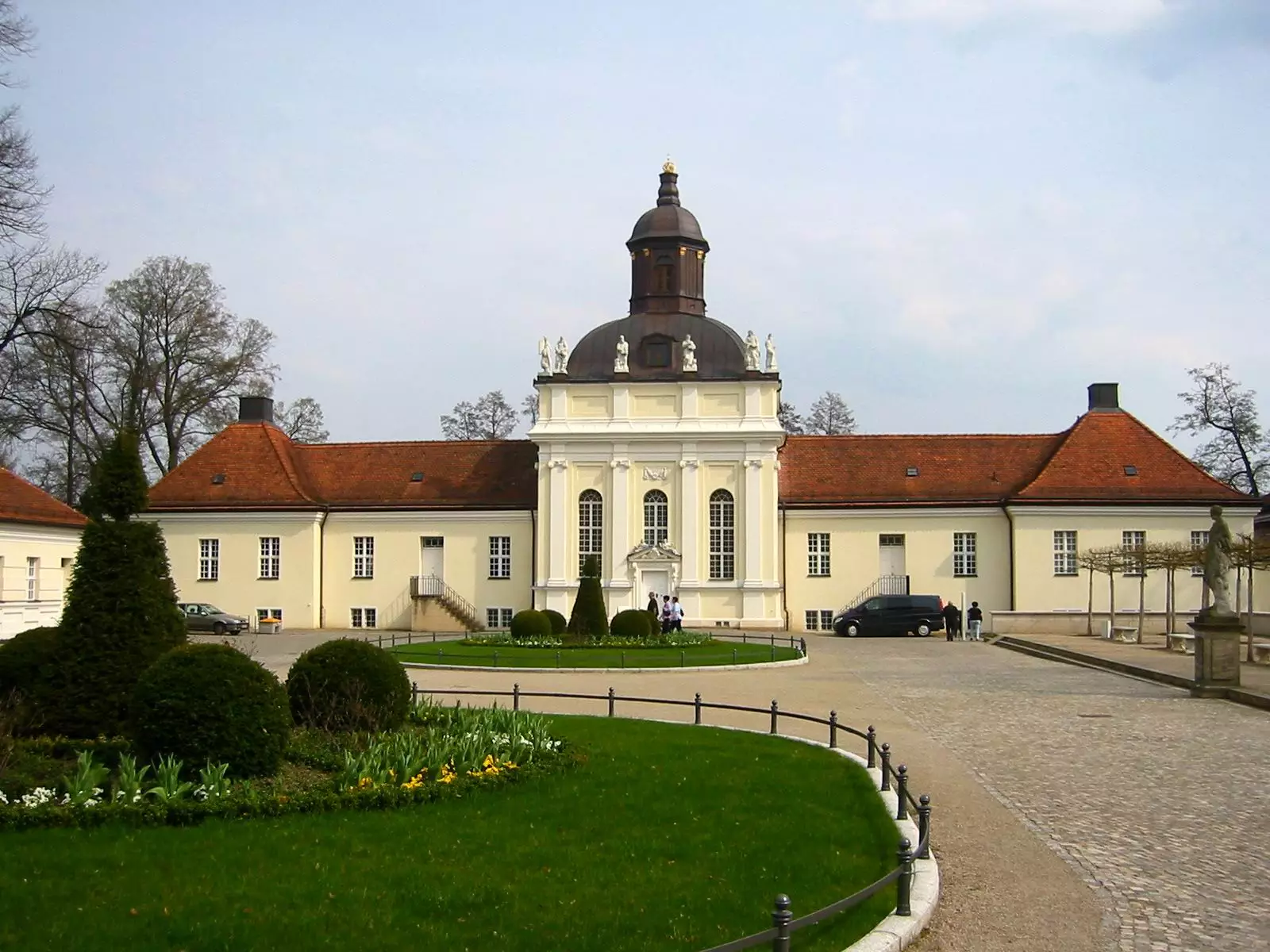
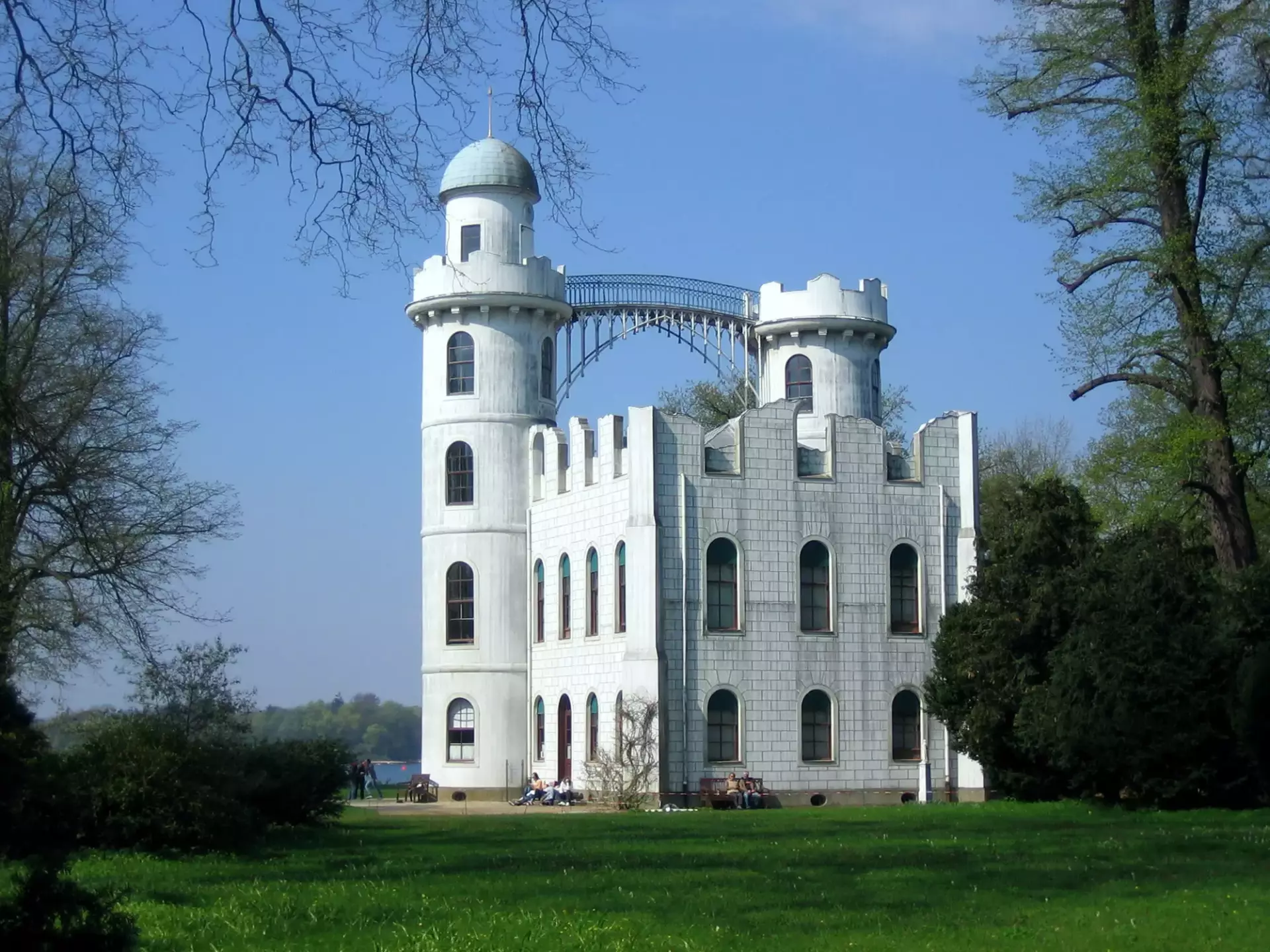
A small castle in late classical style. It was built 1868 by Martin Gropius (uncle of the Bauhaus-founder and other architects, the von Siemens family changed the castle a bit around 1900 and they enlarged the dimensions of the park, which is today renovated and nice to wander around when the sun is shining. Located within a few minutes' walking distance from Biesdorf station (take the S5 from the city centre) or Elsterwerdaer Platz station (U5).
Features many objects and even whole rooms in Wilhelminian style. Only accessible by guided tour (English tours can be arranged).
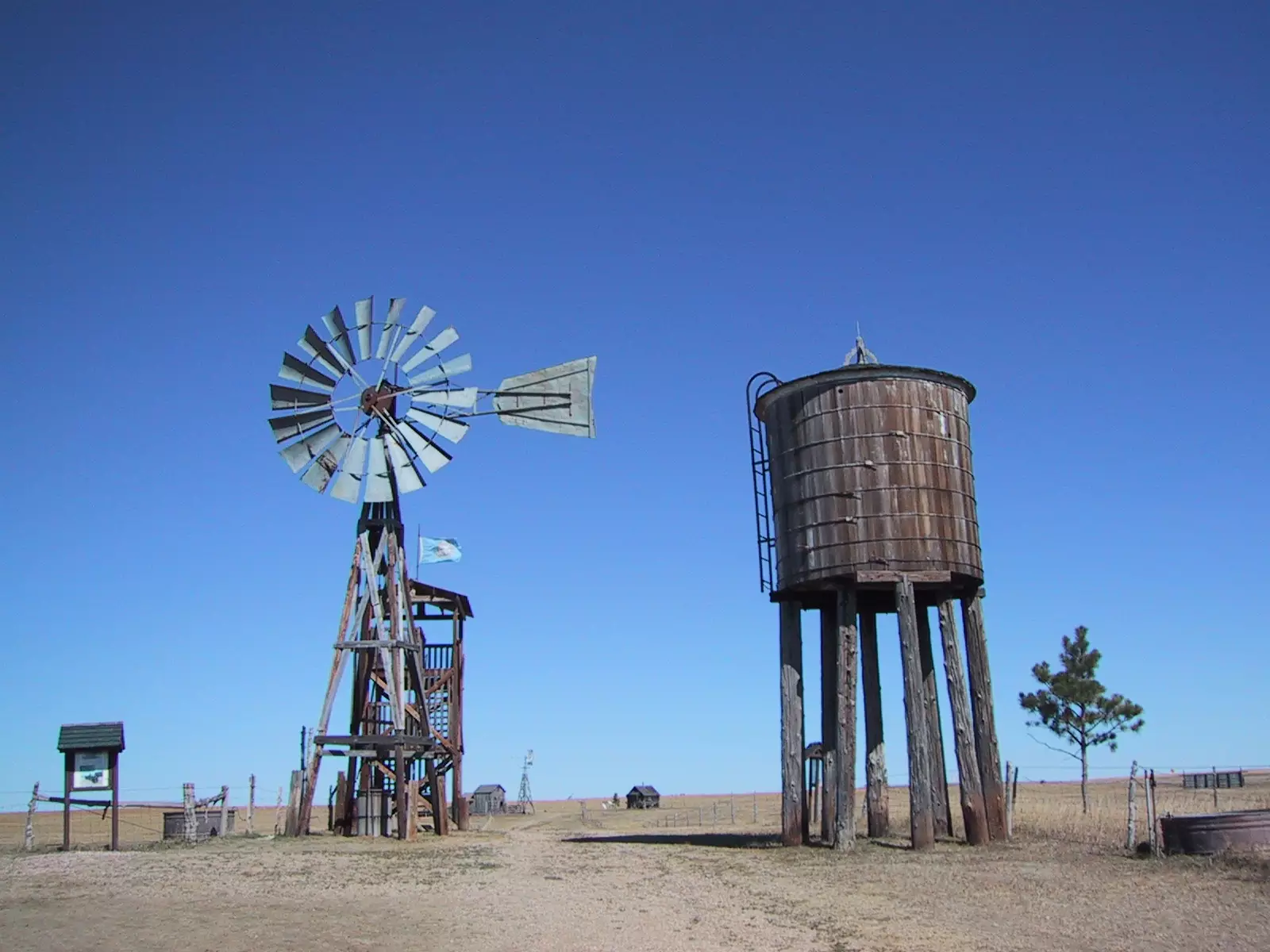
This museum is perhaps something you wouldn't expect in a major metropolis and truth be told it owes its existence in part to partition (when West Berlin schoolkids couldn't go to the surrounding Brandenburg countryside to experience rural life). Opened in 1975 it is an attempt to recreate as faithfully as feasible a medieval farming village from roughly the era of Berlin's founding (12th or 13th century). The village that existed at this place 800 years ago was not called "Düppel" back then as that name was only applied in the 1860s after the Prussian victory over Denmark at Dybbøl which was rendered into German as "Düppel" and applied to the area to honor a member of the Prussian royal family who owned land there.
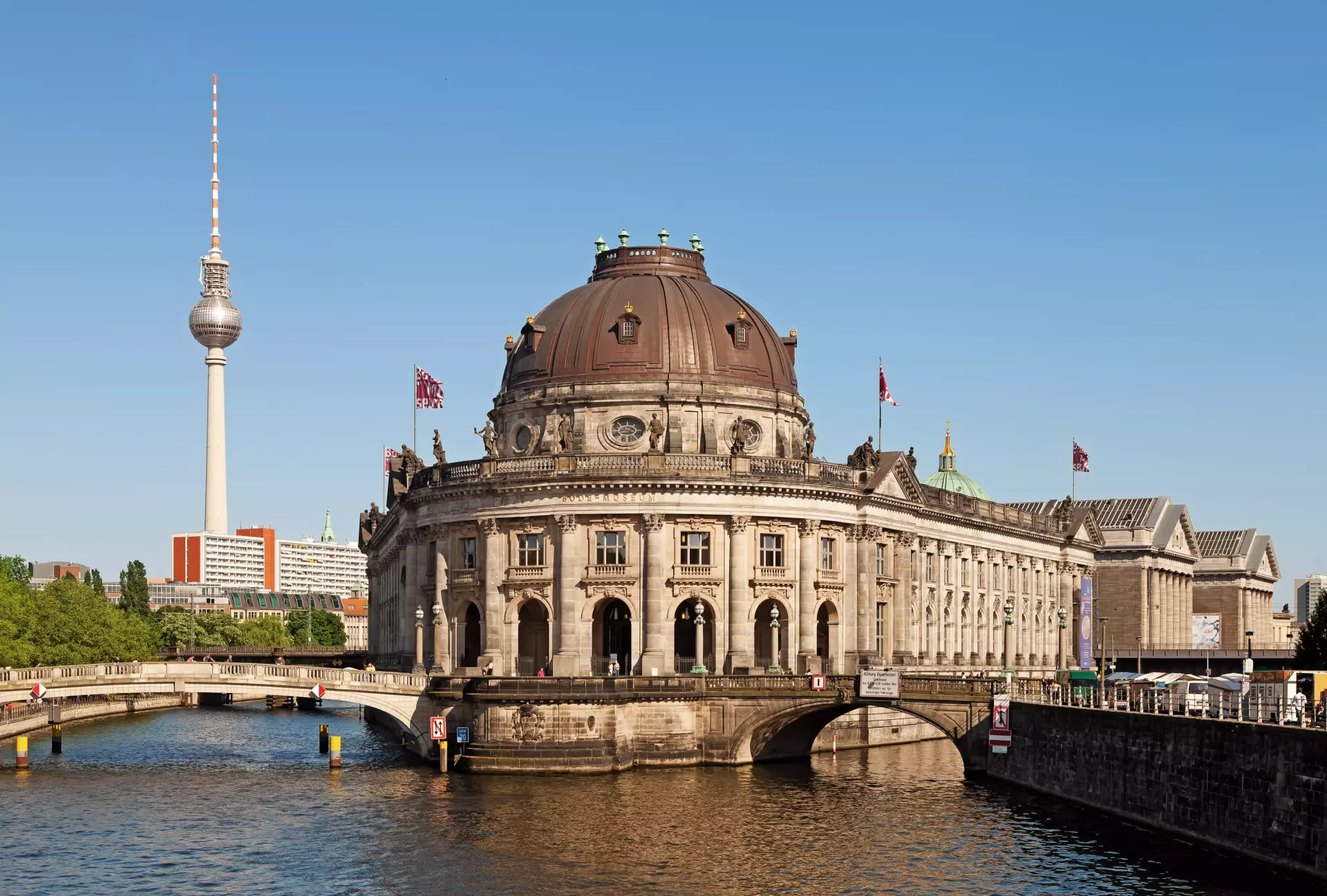
Arguably the most beautiful bridge in Berlin and the only connection between Friedrichshain and Kreuzberg. As signage on the bridge indicates, it was built twice - once in the 1890s and once in the 1990s. Before reunification the border ran where the bridge now is.
This outdoor and indoor history museum documents the terror applied by the Nazi regime. It is on the site of buildings which during the Nazi regime from 1933 to 1945 were the headquarters of the Gestapo and the SS, the principal instruments of repression during the Nazi era.
Huge technical museum, on a former railroad depot, featuring from ancient water and wind mills to computer pioneer Konrad Zuse's inventions, a collection of old to new vehicles of all types -bicycles, boats, trains, etc - and the interactive Spectrum science center with various hands-on experiments. There's an actual C-17 "Candy Bomber" airplane hanging on its façade. The railroad and aeronautical sections are hard to beat.
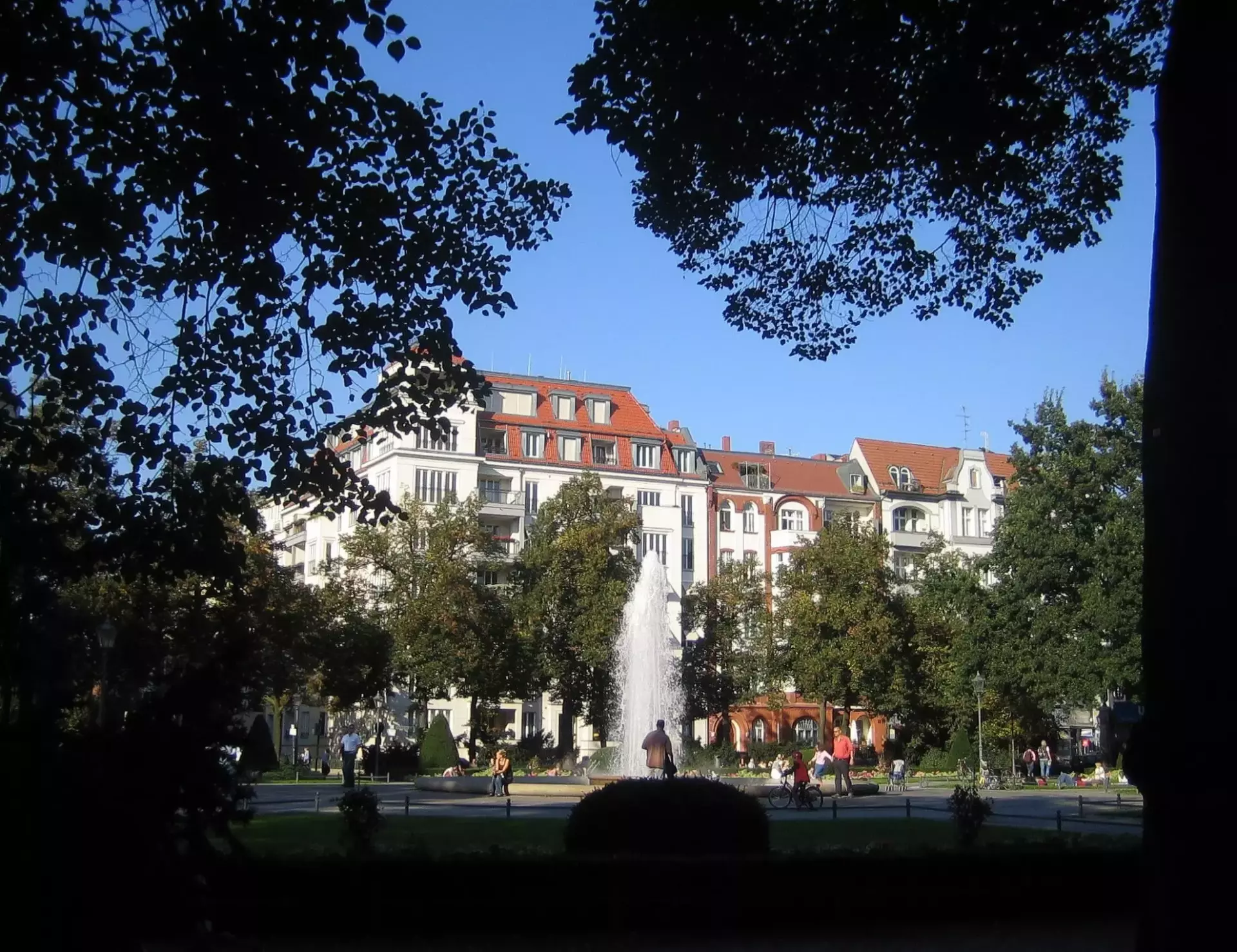
The Bayerischer Platz is the centre of the Bayerisches Viertel ("Bavarian district", with many streets named after Bavarian cities), which was destroyed a lot more during World War II (about 60%). Somewhere around there Albert Einstein lived once. You’ll find several memorial signs providing information about the Nazi regime's persecution of gays and Jews.
Not far away from Schloss Tegel (at the "große Malche") you can take a look at the oldest tree in Berlin, an oak which has been growing there since about 1192 (so it's actually older than Berlin itself). The name ("fat Mary") allegedly stems from the brother Humboldt who named the tree after their overweight cook.
The former Imperial General Post Office, now Museum for telecommunication and post with many interesting historical objects.
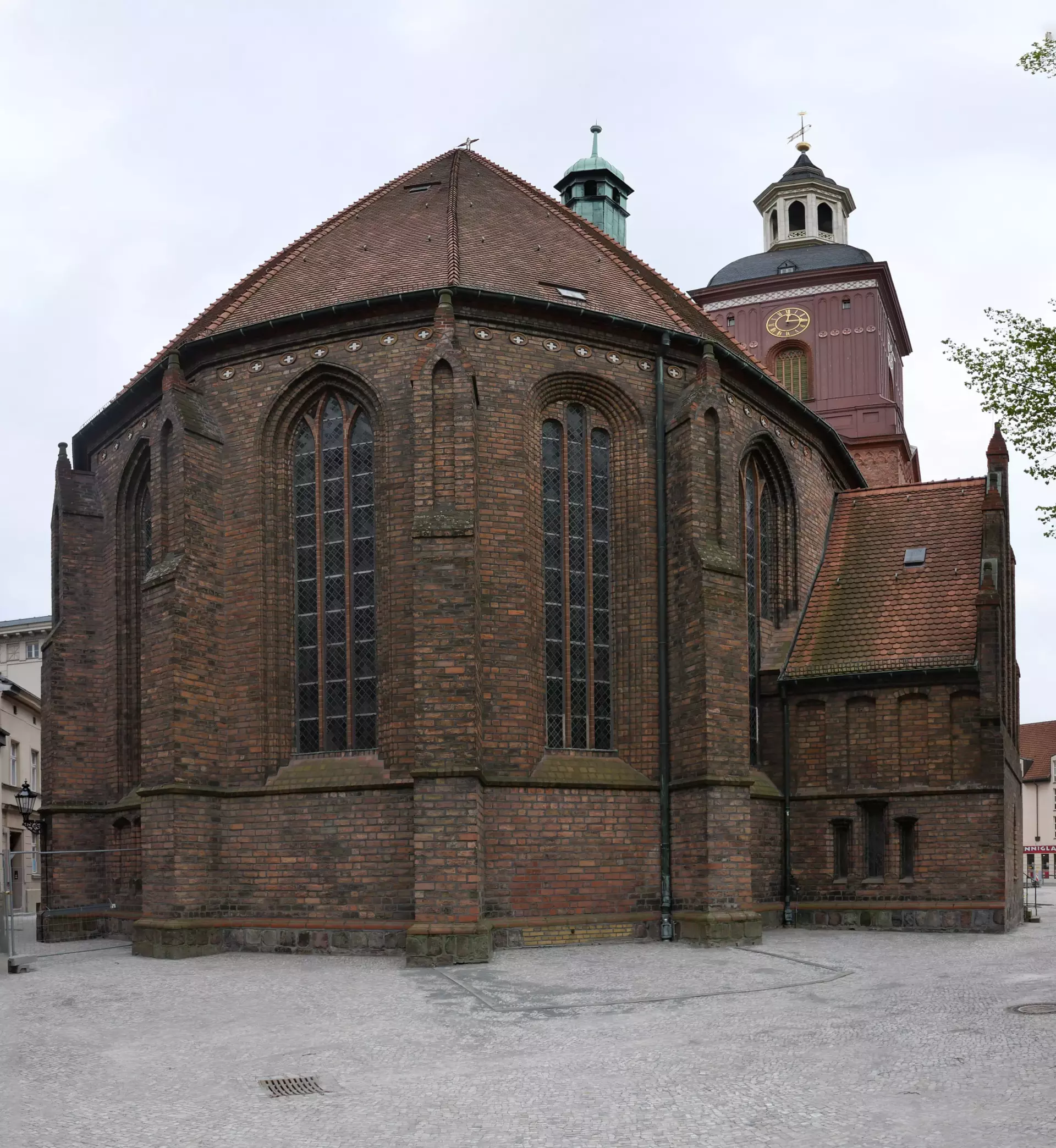
A splendid 15th-century Gothic church with many fine accoutrements.
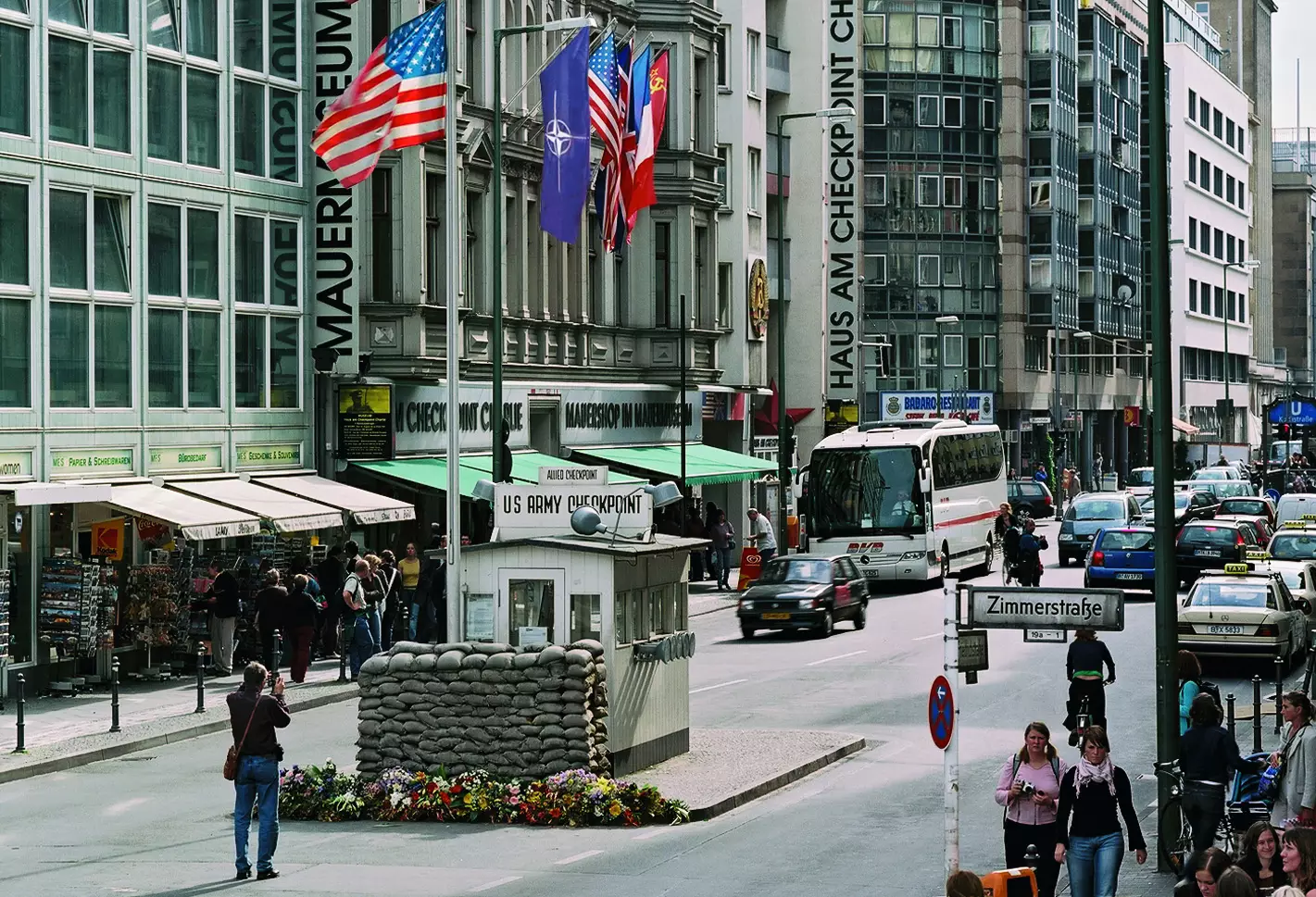
It was the only border crossing between East and West Berlin that permitted foreigners passage. Residents of East and West Berlin were not allowed to use it. This contributed to Checkpoint Charlie's mythological status as a meeting place for spies and other shady individuals. Checkpoint Charlie gained its name from the phonetic alphabet; checkpoints "Alpha" and "Bravo" were at the autobahn checkpoints Helmstedt and Dreilinden respectively. Checkpoint Charlie's atmosphere was not improved at all on 27 Oct 1961 when the two Cold War superpowers chose to face each other down for a day. Soviet and American tanks stood approximately 200 m apart, making an already tense situation worse. Now the remains of the Berlin Wall have been moved to permit building, including construction of the American Business Center and other institutions.At the intersection of Zimmerstraße and Friedrichstraße (U-Bahn Kochstraße U6) is the famous "You Are Leaving the American Sector" sign. The actual guardhouse from Checkpoint Charlie is now housed at the Allied Museum on Clayallee. For a more interesting exhibit go to the Haus am Checkpoint Charlie. This is a private museum with kitschy memorabilia from the Wall and the devices GDR residents used to escape the East (including a tiny submarine!). There are also people who set up booths here offering to stamp your passport with souvenir stamps in exchange for a small fee. You are highly advised not to put these stamps in your passport, as these are not official stamps and could invalidate it. Instead, bring along an expired passport or a small booklet to put the stamps in.
From 1941, 12,000 tons of concrete in a 15-m-high and 20-m-diameter cylinder were built to test the load-bearing capacity of the Berlin soils (turns out glacial sands are no good basis for gargantuan architecture) for Albert Speer's Germania buildings. Too massive for later blasting, this is one of the more bizarre remains of the Third Reich.
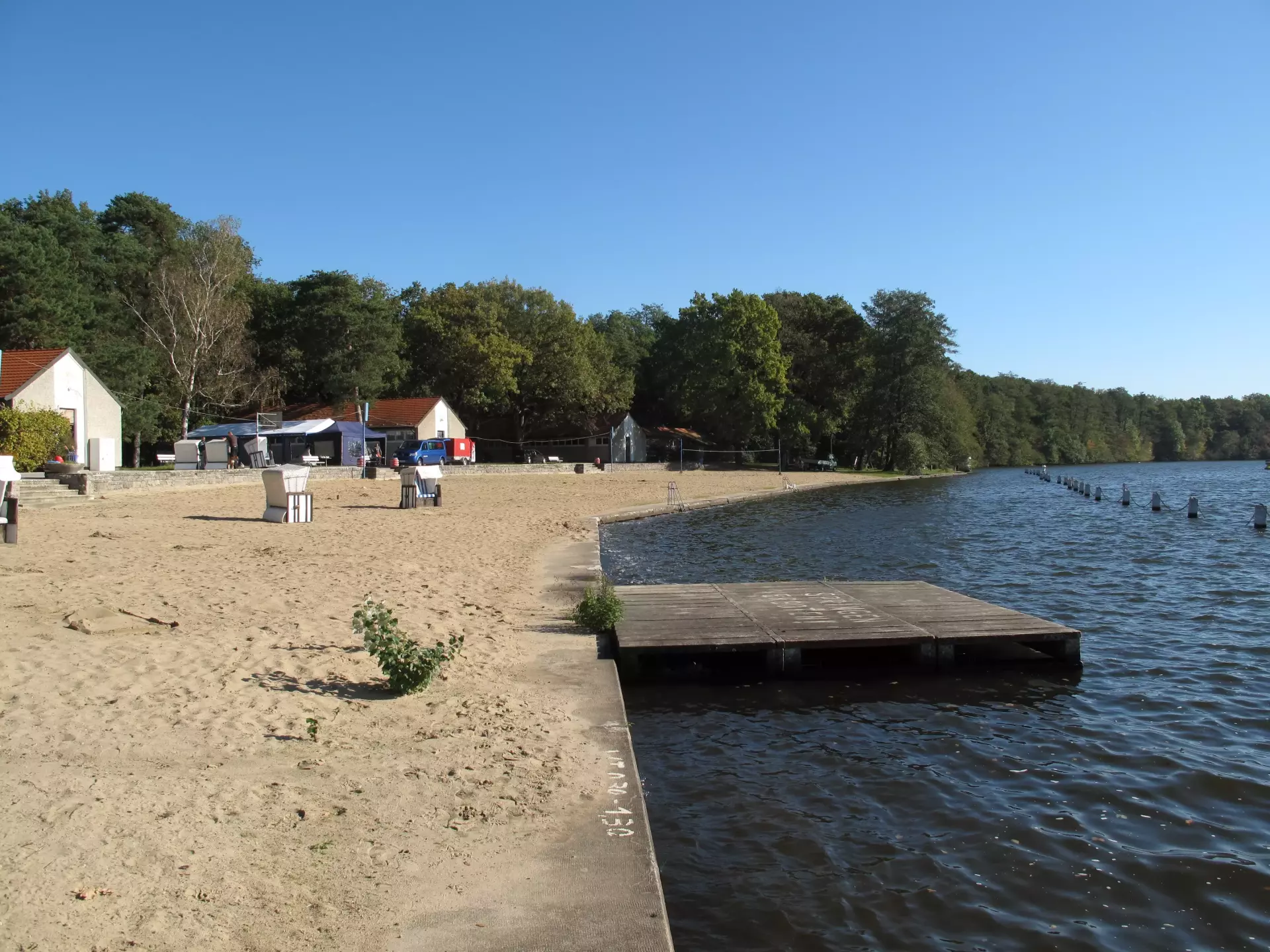
This heritage-protected public bathing beach which opened in 1907 is one of the largest inland lidos in Europe and has a 1275-m-long sand beach, a capacity for up to 30,000 guests and a popular nudist area.