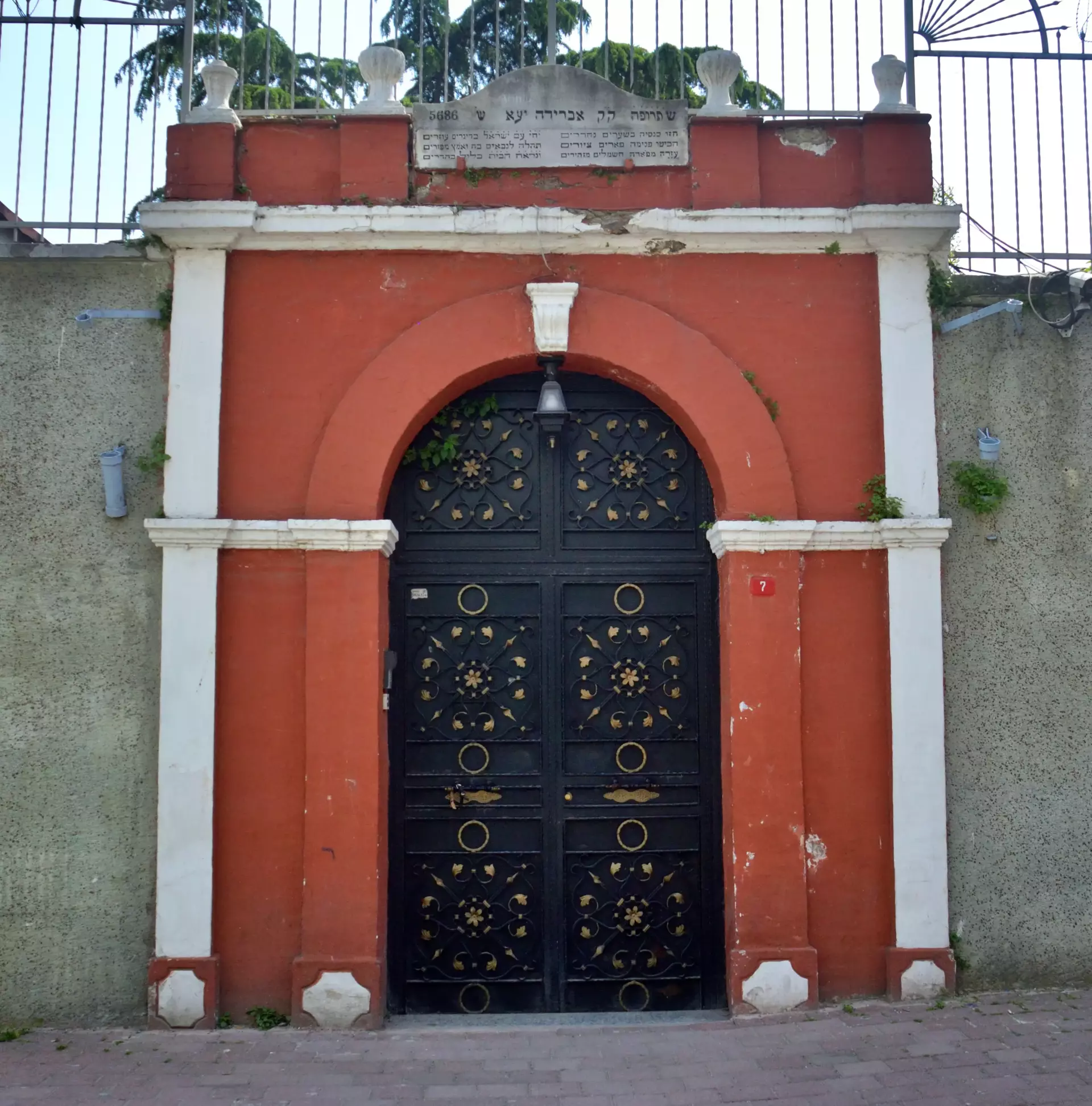
The Ahrida Synagogue stands as one of the oldest and most remarkable synagogues in Istanbul, with roots reaching back to the 1430s. Its founders were Grecian Jews, also known as Romaniotes, who arrived from the city of Ohrid, today located in North Macedonia. These early settlers brought with them their unique traditions and established a spiritual home in the growing city.
The synagogue found its place in the historic Balat district, an area that became synonymous with Istanbul’s Jewish community. After 1492, Balat welcomed a new wave of residents—Sephardic Jews, who had fled the Spanish expulsion. This influx transformed Balat, making it a vibrant center of Jewish life for centuries.
The Ahrida Synagogue continues to draw attention for its history and architecture. However, access is limited; visits can only be arranged through pre-booked tours. This measure helps preserve the site and its significance for future generations.
Source - https://en.wikipedia.org/wiki/Ahrida_Synagogue_of_Istanbul
A profusion of carpets, rugs, calligraphy, pottery, Qu'rans and other manuscripts. The museum is housed in the Palace of Pargalı Ibrahim Pasha (1495–1536), who was grand vizier to Suleiman the Magnificent, and the best of pals till Suleiman had him murdered.
Tiny house museum on the life of Turkish novelist Orhan Kemal (1914–1970).
If you are already in the area, it's worth considering to visit this waterside neo-Baroque manor, built in the 19th century for the countryside and hunting excursions of the Ottoman dynasty. The area, where the Göksu River flows into the Bosphorus, was known as "the Sweet Waters of Asia" by the pioneer European travellers of the epoch (as opposed to "the Sweet Waters of Europe", another contemporary elite recreational area on the other side of the city, where the Kağıthane and Alibeyköy Rivers empty into the Golden Horn).
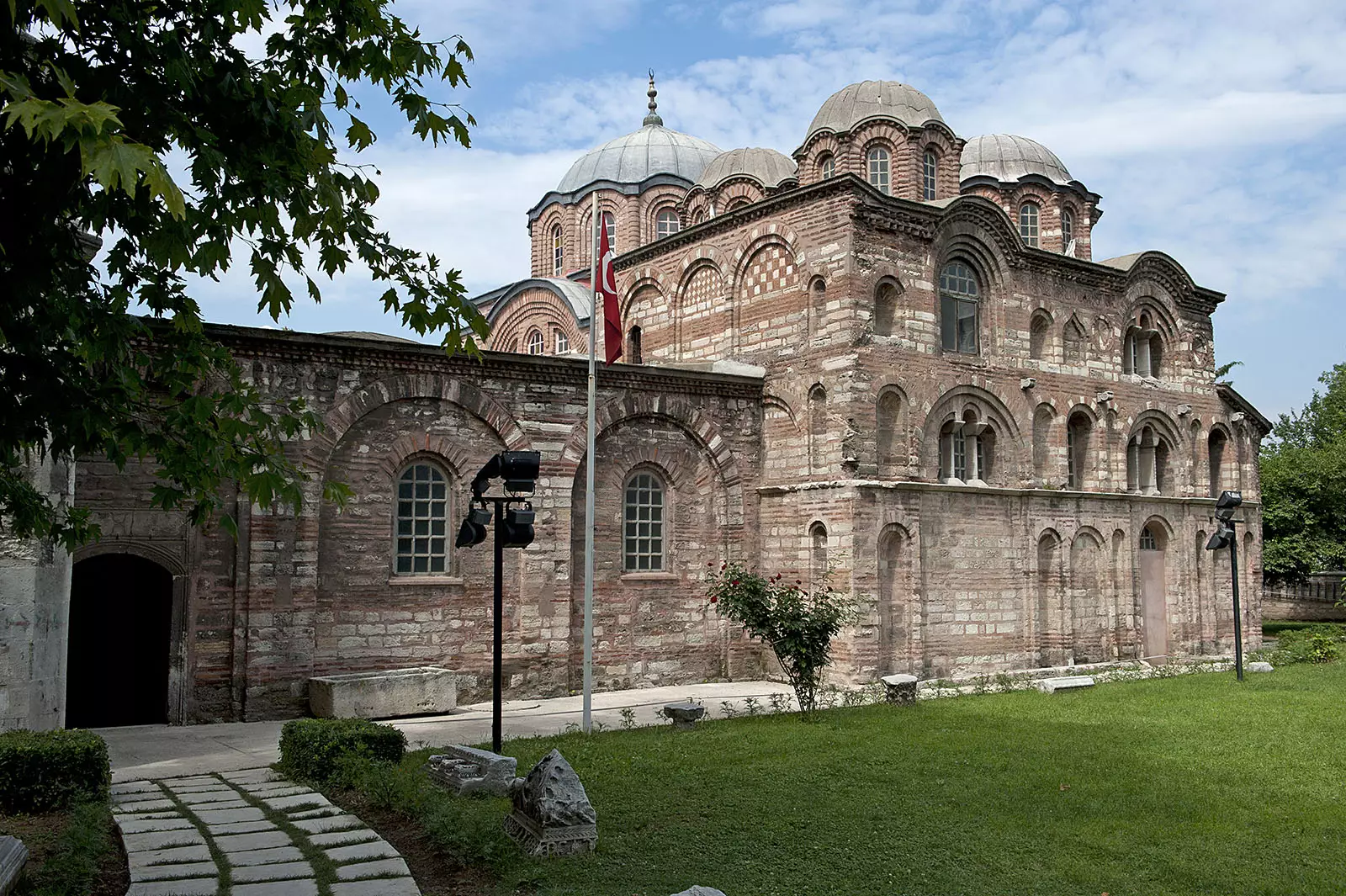
The Byzantines built several great palaces in Constantinople and this is the only one to survive almost intact. It's from the late 13th century, in typical alternating marble and red-brick rows, and was an imperial residence: Porphyrogenitus means "born to the purple" indicating the heir to the crown. Yet it was merely an annex or pavilion within the much greater Palace of Blachernae, of which nothing else remains. It's set within the north end of the Theodosian Walls and was much bashed during the Ottoman capture. Later it was variously a menagerie, brothel, pottery, poorhouse and bottle works, then fell derelict in the 20th century. In 2021 it re-opened as a museum.
This is a 1927 Beaux Arts building named after its patron Süreyya İlmen Pasha, then a deputy of Istanbul who was impressed by theatres in Europe during his visits. It became the first opera house in the Asian side of Istanbul, but due to deficiencies in its interior design, it barely staged any opera and was converted to a cinema soon afterwards. It underwent a significant restoration and reverted to its original purpose in 2007, so now houses performances of ballet, opera, and classical music; good tickets are often extremely cheap.
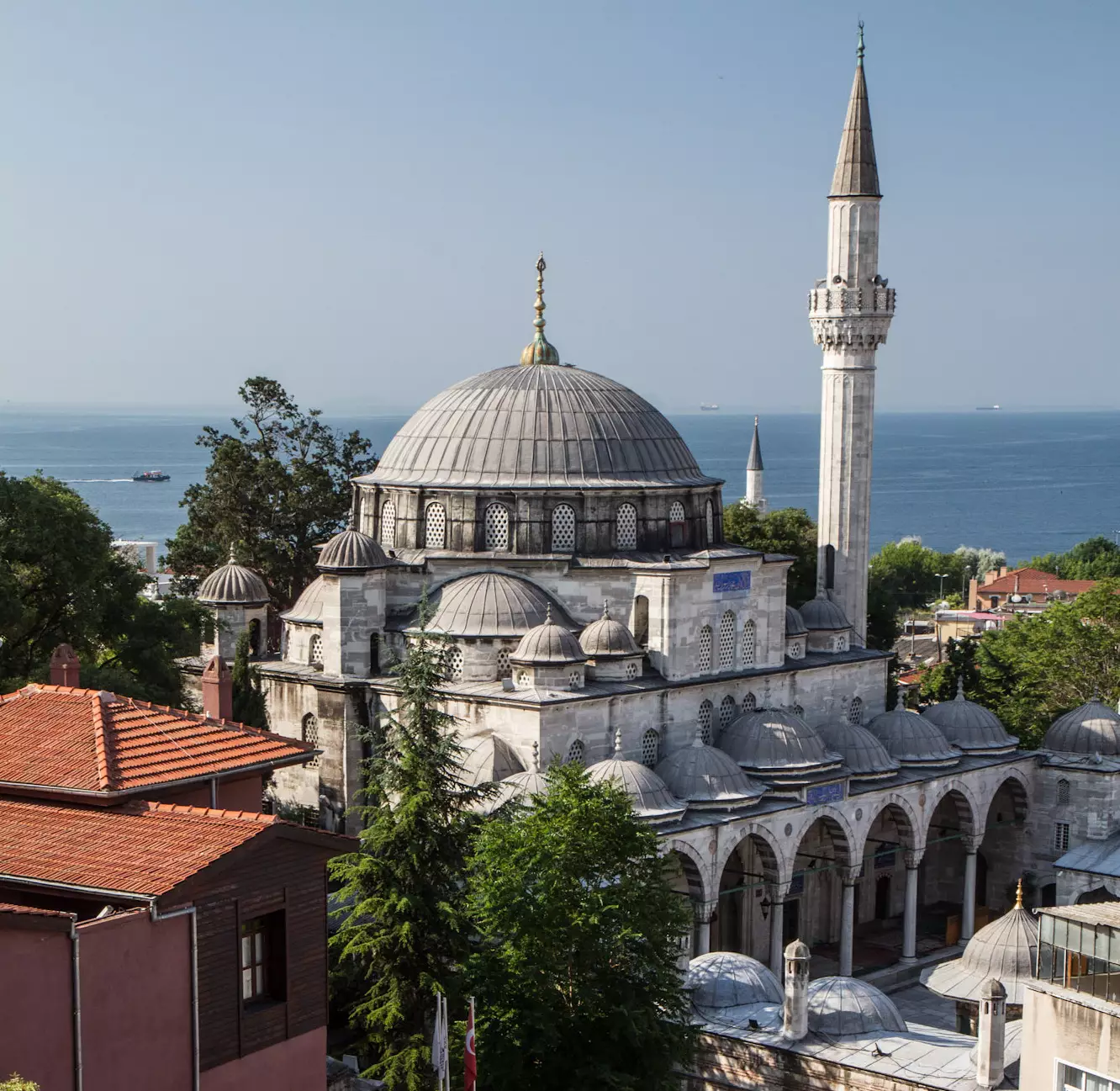
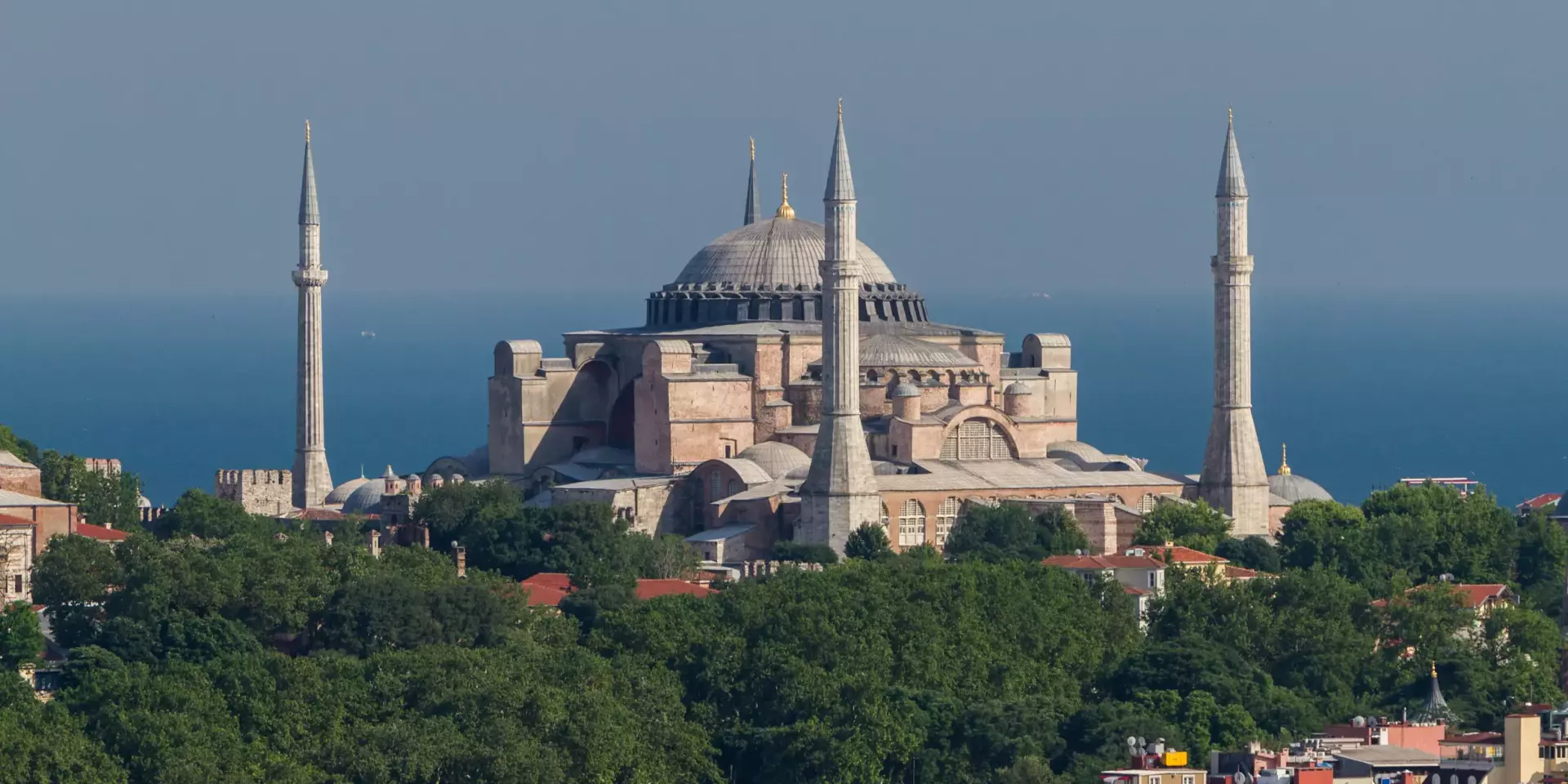
Built as the Church of Saints Sergius and Bacchus around 530 AD, the same time as Hagia Sophia, but their styles differ. Transformed into a mosque in the early 1500s, it's beautifully decorated, with fine marble details, and has a pleasanter atmosphere than the larger busy mosques. The adjoining madrasa houses craft shops.
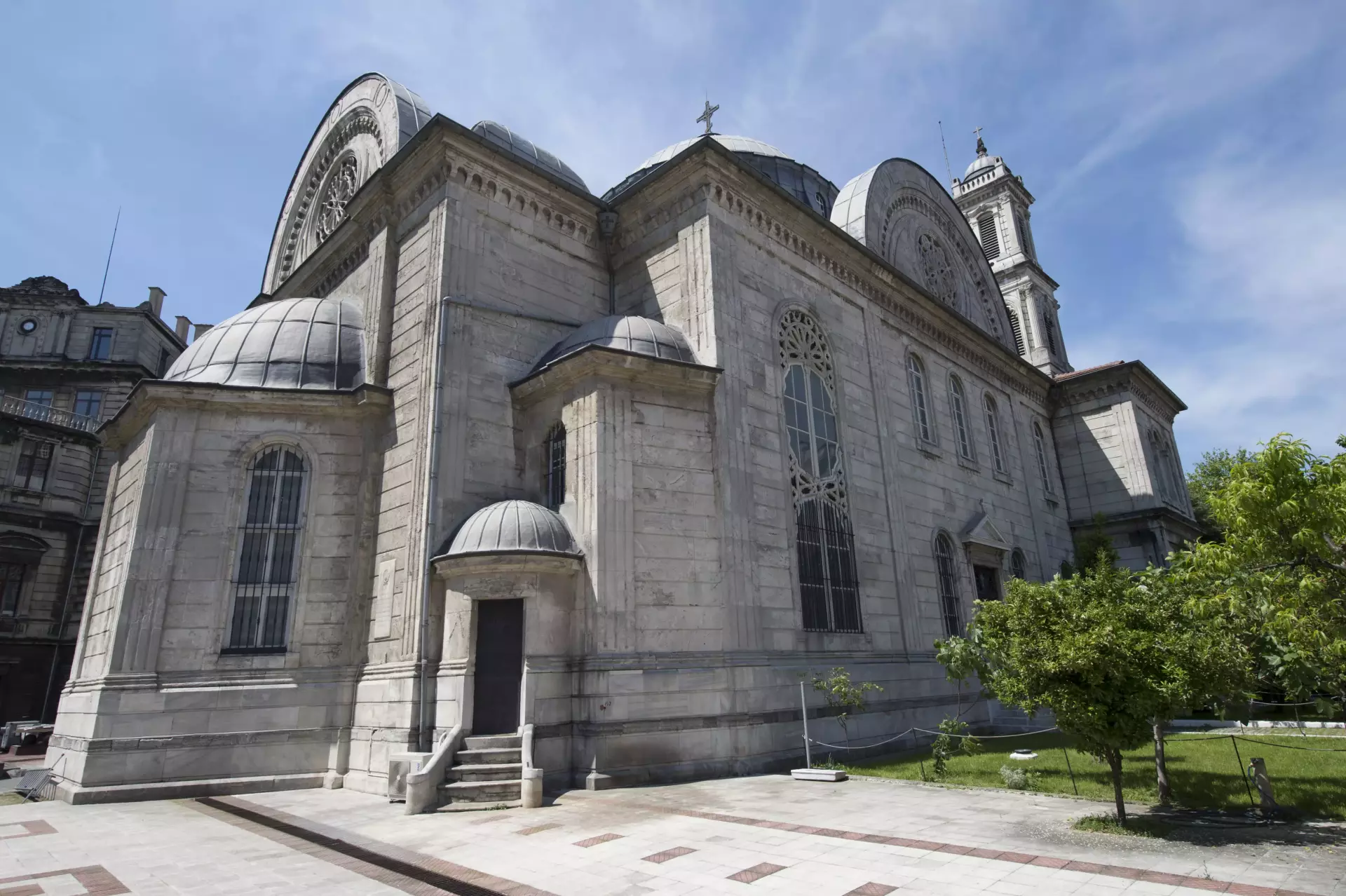
A charming domed church built in 1880 at the side of Taksim Square, now uneasily contesting with Taksim Mosque for being the main landmark of the southern edge of the square.
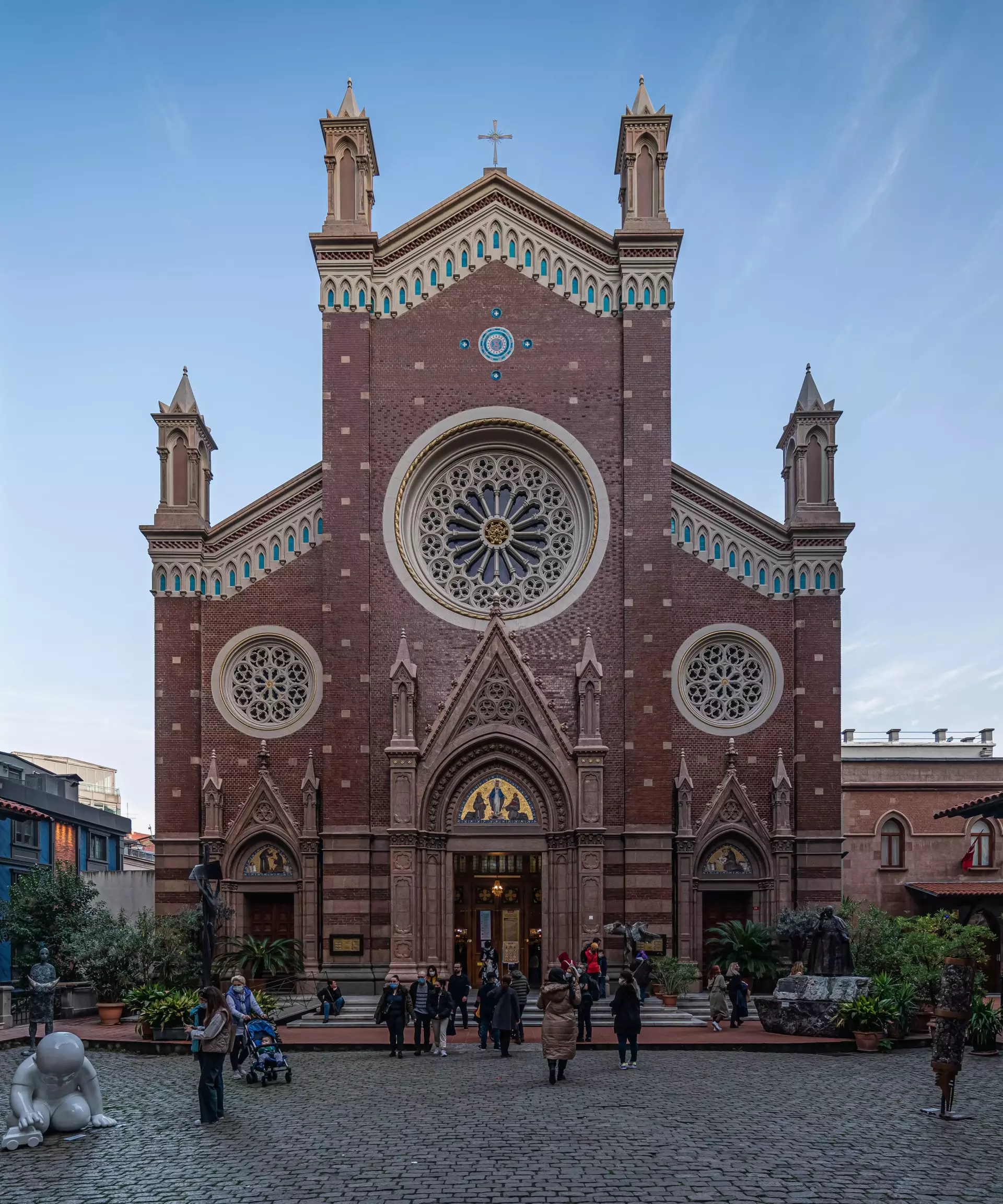
Although not at the size of Hagia Sophia, this is the largest active church in Turkey. It’s directly on Istiklal St, but somewhat hidden from view by its yard portal. Catholic Masses in Italian, Turkish, and English (in different days of the week).
This lavish palace with 285 rooms and 43 halls was the admin centre for the Ottoman Empire in its last 60 years. The palace government block (Selamlık) includes the Imperial Mabeyn (State Apartments) and Muayede Hall (Ceremonial Hall), while the Imperial Harem was the sultan's private quarters. Also here are the Painting Gallery, Music Museum, Clock Museum and Museum of Palace Collections. Free audio guide in several languages available by the ticket office. No photography inside, no backpacks but you can leave them in the cloakroom. Allow 3 hours to see everything.
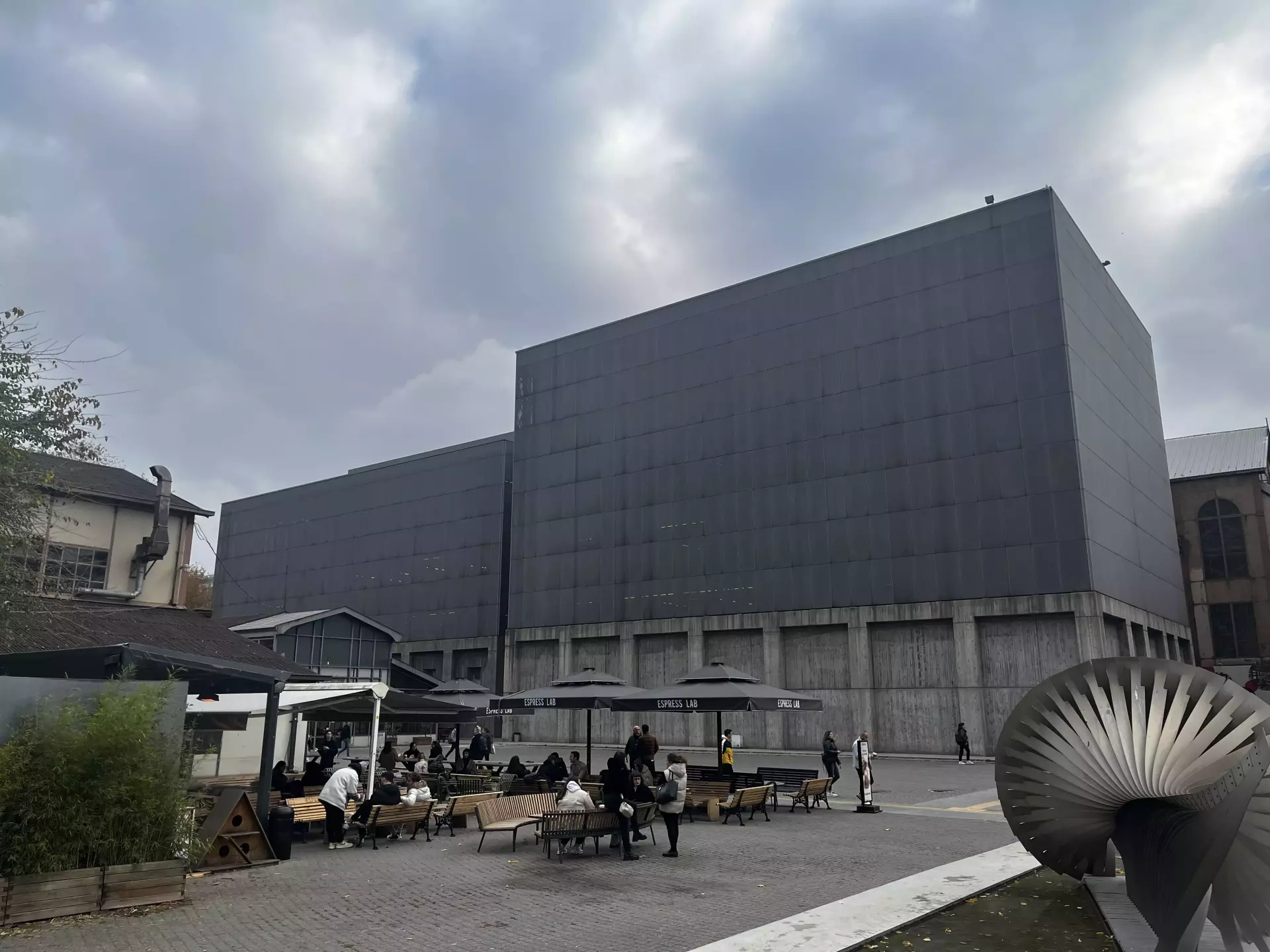
Feshane began as a factory producing fezzes (fes), the red hats made of felt adopted by the Ottomans in the early 19th century as a part of westernizing efforts in lieu of much more traditional turbans. However, the fez was scrapped in favour of western garments during Atatürk's reforms of the 1920s and 30s as it was thought to symbolize the old, decidedly oriental regime. A restoration in 1998 made it a cultural and exhibition center, and after another in 2023, it was reopened as a culture and art center under the name Artistanbul Feshane.
The building was erected as a Roman Catholic church in 1325 by the friars of the Dominican Order, near or above an earlier chapel dedicated to Saint Paul (Italian: San Paolo) in 1233. In 1299, the Dominican Friar Guillaume Bernard de Sévérac bought a house near the church, where he established a monastery with 12 friars. A new, much larger church was built near or above the chapel of San Paolo in 1325. Thereafter the church was officially dedicated to San Domenico. After the Fall of Constantinople, according to the Capitulations of the Ottoman Empire with the Republic of Genoa, the church, which by that time was known by the Turks under the name of Mesa Domenico, remained in Genoese hands, but between 1475 and 1478 it was transformed, with minor modifications, into a mosque by the Ottoman Sultan Mehmed II and became known as Galata Camii ("Galata Mosque") or Cami-i Kebir ("Great Mosque"). Towards the end of the century Sultan Bayezid II assigned the building to those Muslims of Spain (Andalusia) who had fled the Spanish Inquisition and migrated to Istanbul; hence the present name Arap Camii (Arab Mosque). Today, Arap Camii is the largest mosque on the Galata side of the Golden Horn. It is one of the most interesting mosques in the city due to its early Italian Gothic architectural style and church belfry, which has practically remained unaltered even after being converted into a minaret.
Chora means countryside, and when built as a monastery in the 4th century it stood outside the Constantine walls; a century later, it was incorporated into the Theodosian walls. It was rebuilt in the 11th century then wrecked by an earthquake, so the structure and fabulous mosaics you see now are 14th century. When the church was converted to a mosque in 1500 the mosaics were plastered over, and only restored in 1958 when it became a museum. In 2020 it was again proclaimed a mosque but here (unlike Fethiye Mosque) they saw the sense and tourist income of preserving the mosaics. You need to work around prayer times.
A nice, organized museum with contemporary installations. It may be seen as overpriced given its small size. It also has a simple cafe.
This attractive neighbourhood was home to a large Christian and Jewish population until some decades ago and still has a number of sights like two synagogues, some churches among which the Armenian Surp Krikor Lusavoriç, dozens of wooden houses and a Jewish and Christian cemetery.
A former synagogue, the museum's exhibit details how the cultures mixed with and influenced each other in the past 500+ years since the Spanish expulsion.