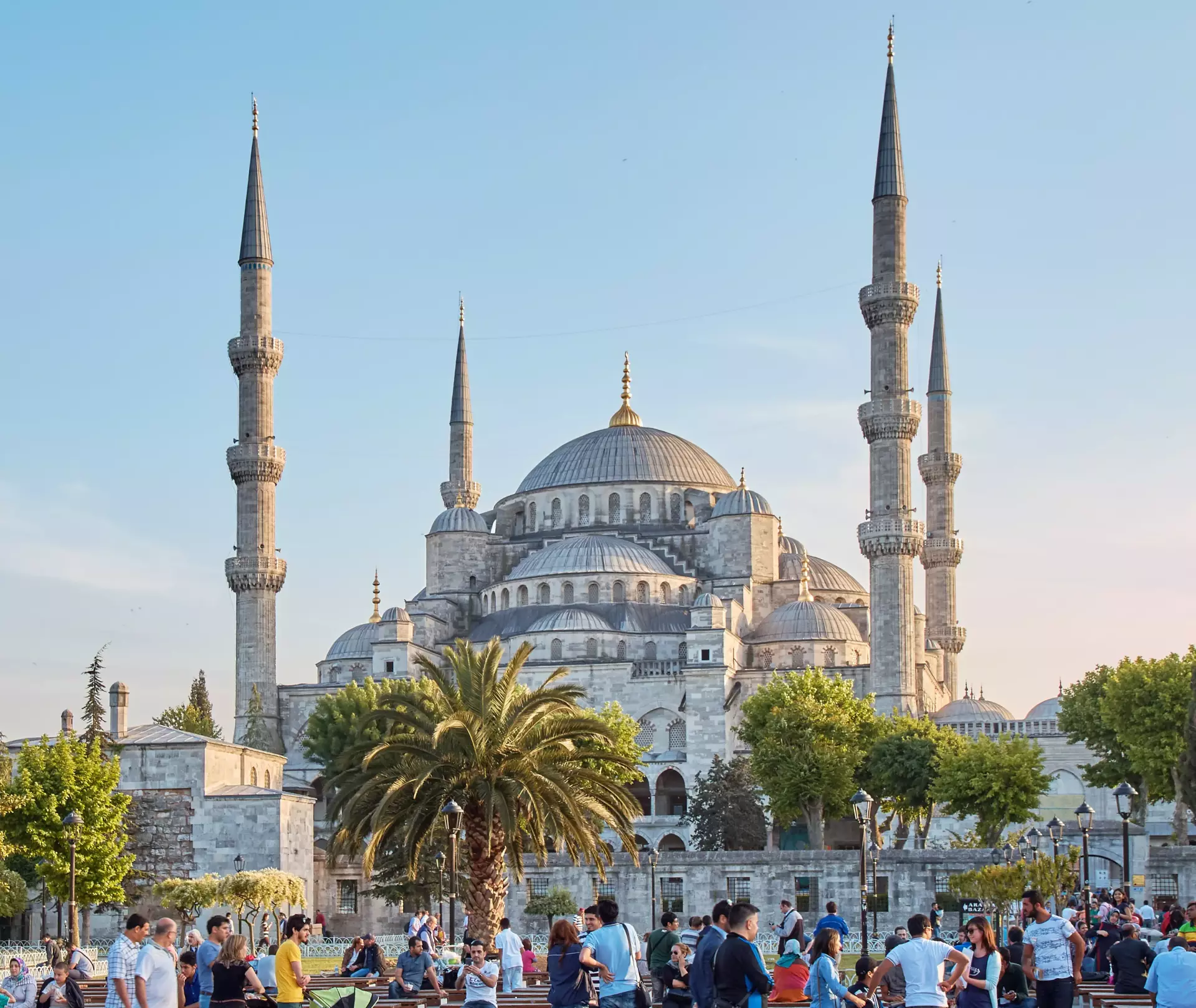
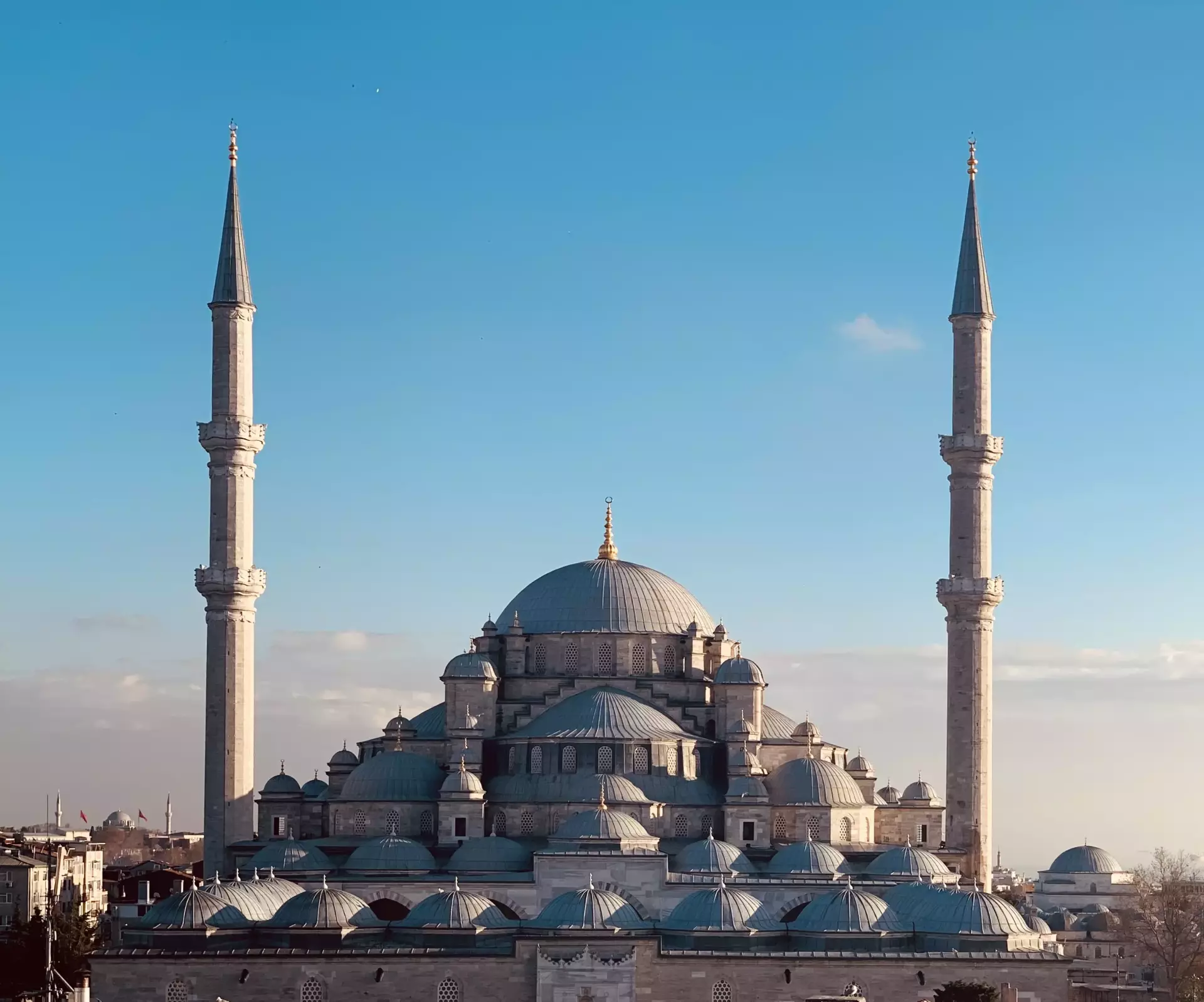
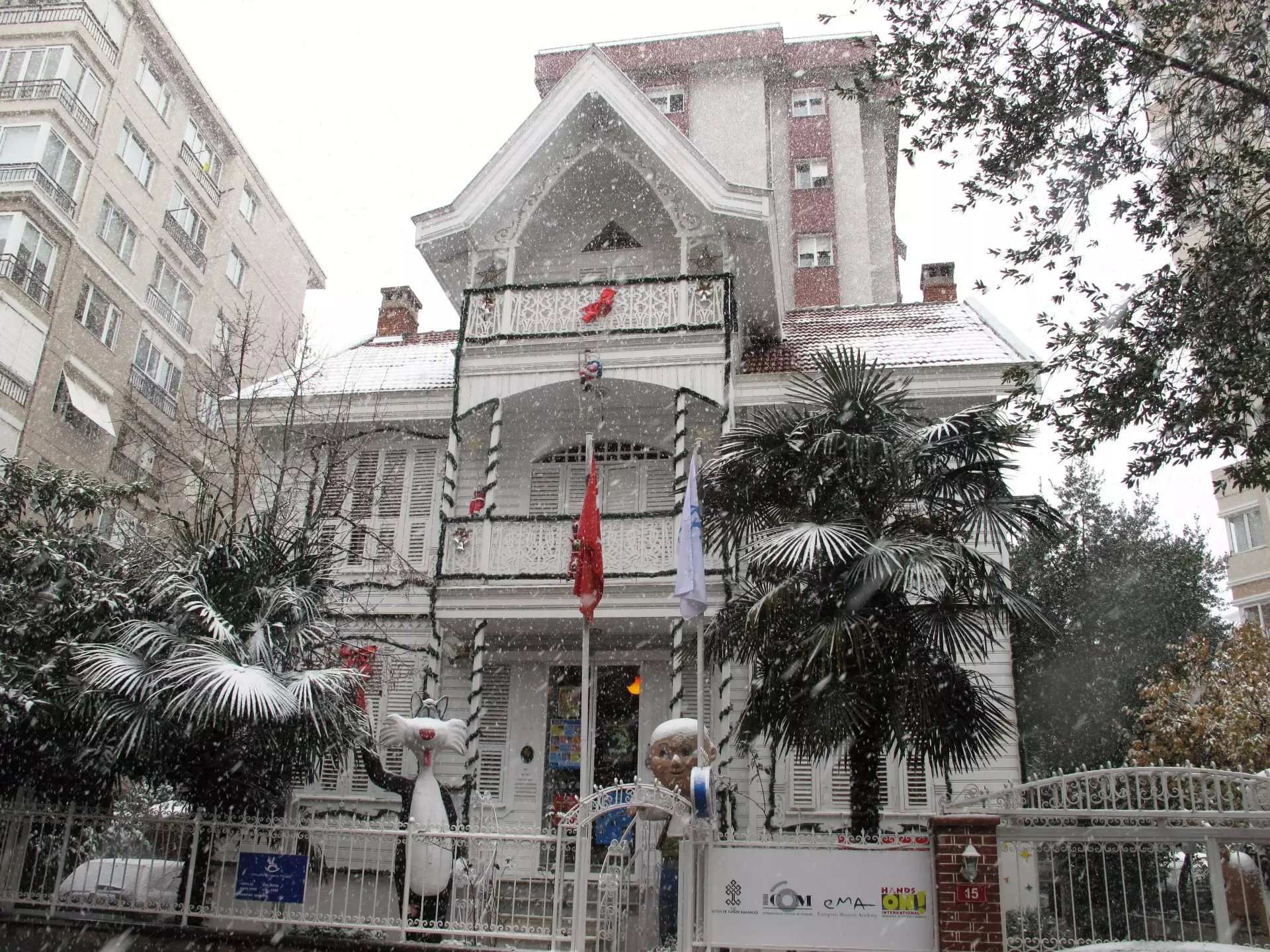
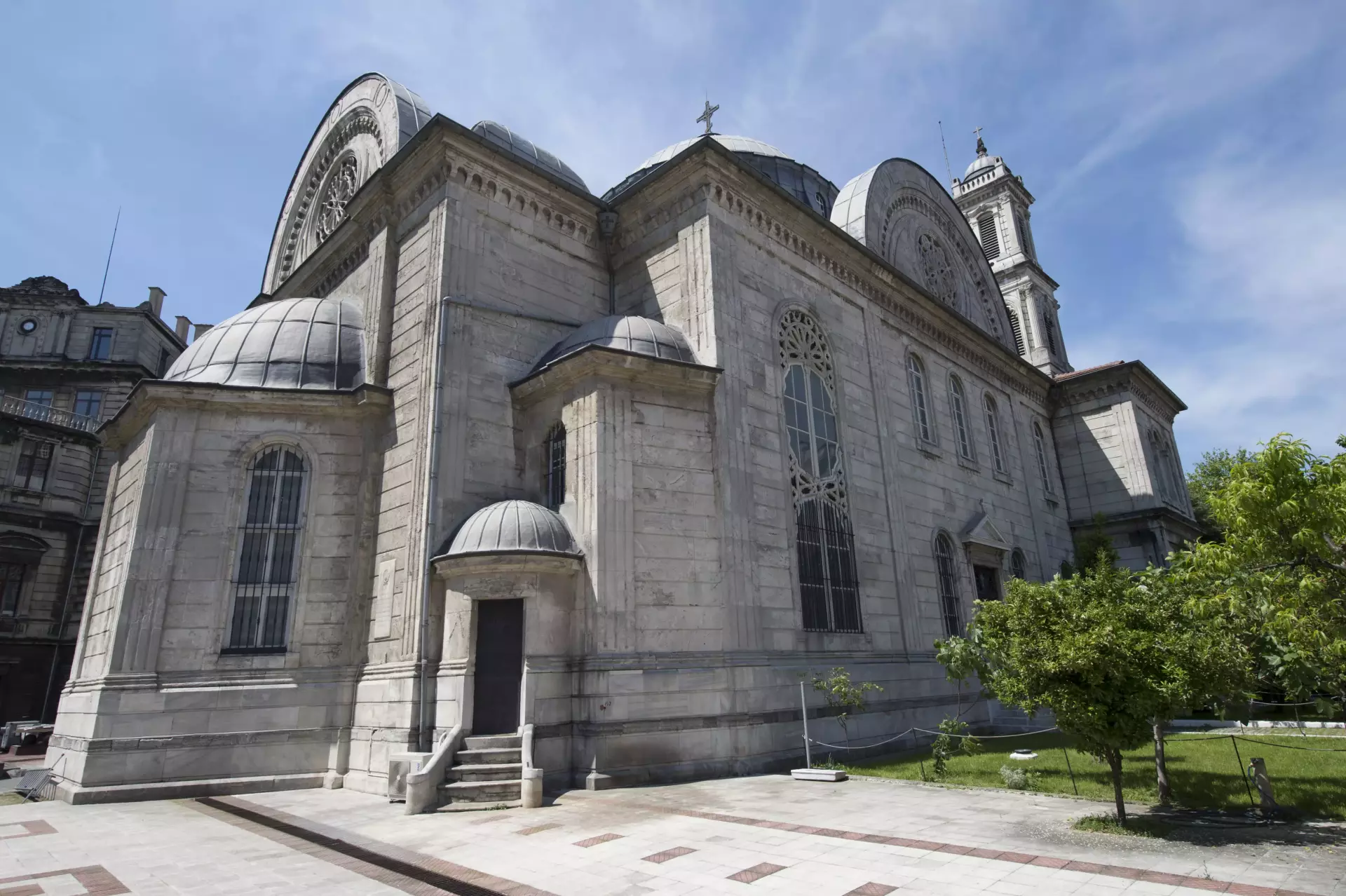
The Istanbul Radio House stands as a remarkable witness to Turkey’s modern history. Built in 1945, this solid, imposing structure is home to the city’s branch of the Turkish Radio and Television Corporation (TRT). Its design reflects the serious style of 1940s architecture, with a stately façade that some may find intriguing, particularly those interested in that era’s monumental look.
Beyond its appearance, the Istanbul Radio House is famous for its role during key moments in Turkey’s political journey. The building was taken over by the military not just once, but three times—in 1960, 1971, and again in 1980. During these turbulent times, radio was the main source of information for people across the nation. Each time a coup occurred, soldiers used this building to broadcast their messages, announcing that the army had taken control of the government. As a result, the Istanbul Radio House became a symbol of communication and power during some of the country’s most dramatic events.
One of the icons of the city is also called the Leander's Tower, on a Bosphorus islet off Salacak. The local myth ascribes its name to a princess, whose father wanted to protect her in this offshore tower from a prophecy that she would be killed by a snakebite on her birthday, but the snake found its way inside a basket of fruits — ironically a birthday present from her father — and you've probably already guessed the rest of the story. In actual timeline, it served as a defensive structure (there was a wall connecting it to the Asian mainland, and the Byzantines used to stretch a chain from here to the European mainland across the mouth of the Bosphorus to shut it to adversary shipping in times of conflict, but they didn't during the final Ottoman siege in 1453), as a customs and quarantine station, as a lighthouse, as a warehouse of various sorts of goods, and as a high-end restaurant before the last restoration finished in 2023 dedicated it as a museum. There is a light show viewable from the mainland every day at 21:00.
A nice, organized museum with contemporary installations. It may be seen as overpriced given its small size. It also has a simple cafe.
Built in first half of the 15th century, this is the large medieval castle under the Second Bosphorus Bridge. Its former name Boğazkesen (Turkish)/Laimokopia (Greek) means both "strait-blocker" and "throat-cutter" in both languages and denotes the reason of its building—to shut the supply routes from the Black Sea in the north into the slowly falling apart Byzantine Empire through the Bosphorus. Rumeli, literally "the Roman land", was the name of the European half of the Ottoman Empire, and as is usual with some other structures and villages along the Bosphorus, used as a prefix to differentiate Rumeli Hisarı from its counterpart in the Asian Side, the much smaller Anadolu Hisarı just across the Bosphorus.
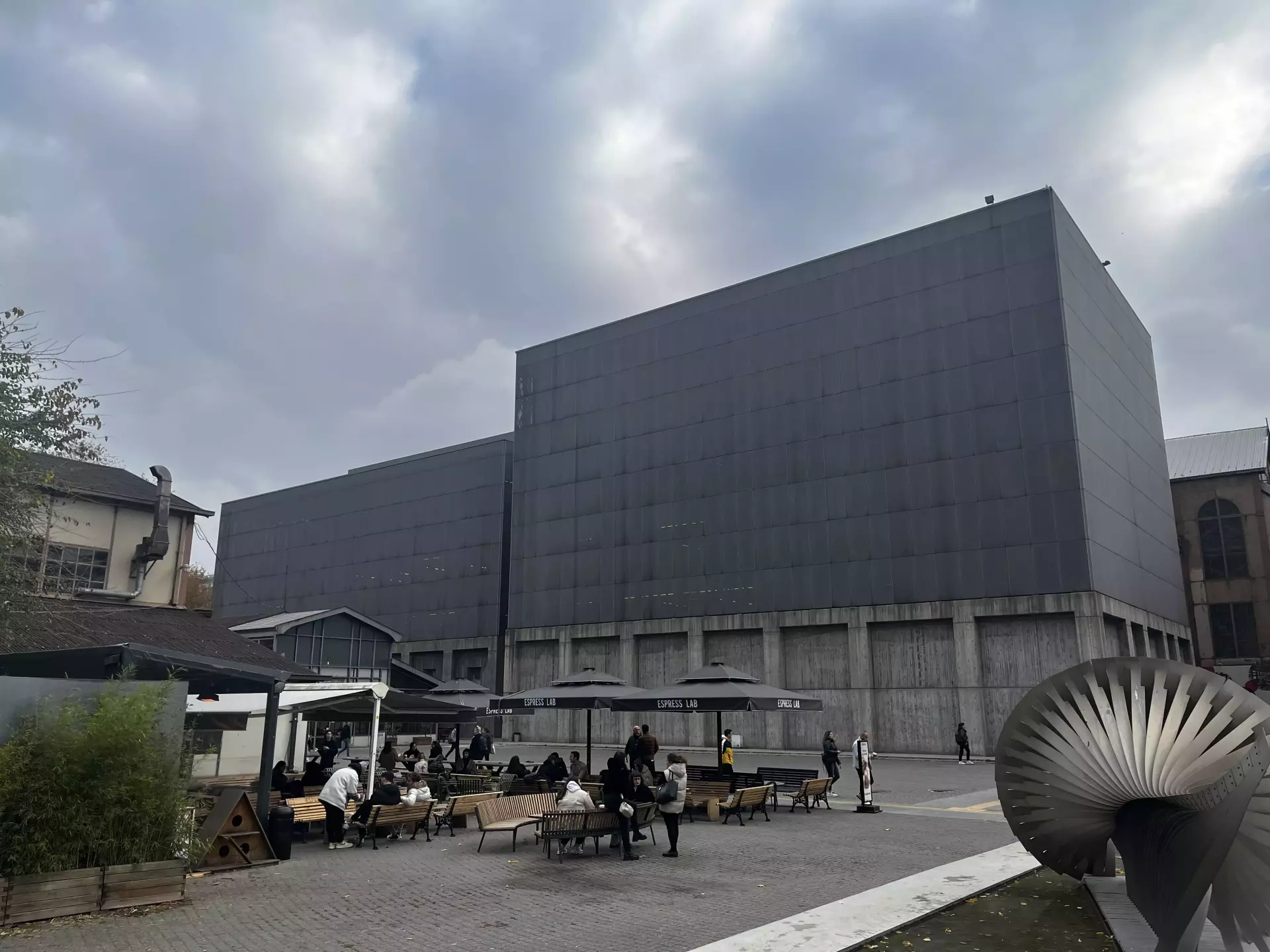
A contemporary art museum in a building converted from an old power plant: 1914-built and coal-fired, this was the oldest in Istanbul and the Ottoman Empire. Part of the plant was kept in almost exact original condition and now serves as the "Energy Museum".
A remarkable Bulgarian Orthodox church better known as Demir Kilise, "Iron Church", as it's a cast iron prefab. The Bulgarians split from the Greek Orthodox and established their own wooden church in 1870, which burned down. The ground was too weak for a masonry or concrete structure so they opted for cast iron. The sections were cast in Vienna, shipped here and assembled, to open in 1898. The church was renovated in 2018, but the archpatriarchate building across the street remains a gaunt shell.
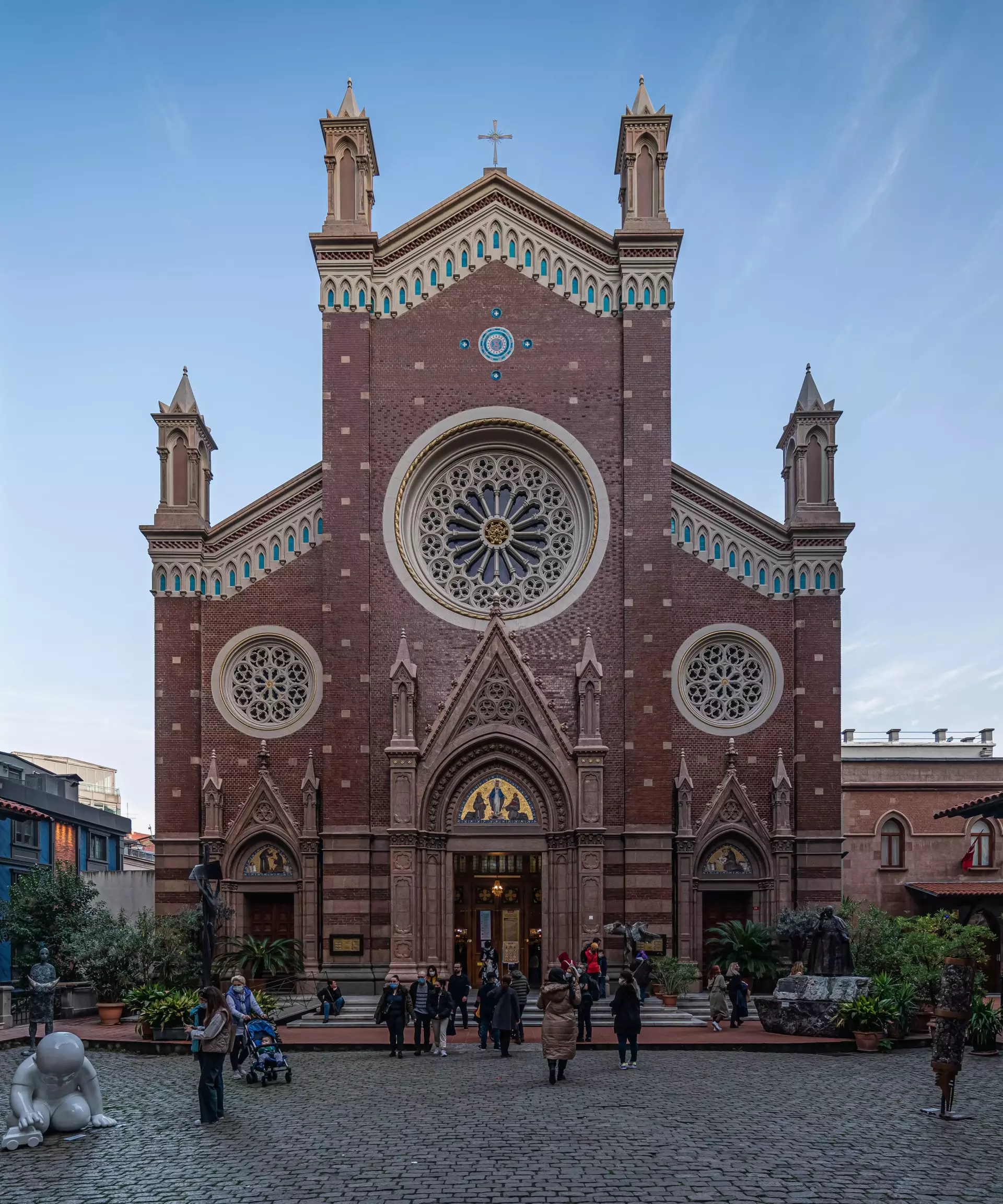
A charming domed church built in 1880 at the side of Taksim Square, now uneasily contesting with Taksim Mosque for being the main landmark of the southern edge of the square.
The avenue has little in common with Baghdad, except it was the beginning of the Ottoman-era route to that city followed by many, including Ottoman sultan Murat IV during his march upon Persia, after which he captured Baghdad. In fact, with its sidewalk cafés and Western restaurants, Bağdat Caddesi is usually considered as one of Istanbul's most western-flavoured streets, ironically located in Asia. This street is not completely pedestrianized unlike Istiklal Street, which serves a similar function on the European Side, but its broad sidewalks with tree shade offer a pleasant walk. The restaurants and cafés on the avenue are mainly upscale, but there are also some quite affordable ones scattered around occasionally. Shopping opportunities also abound. From Kadıköy, take the Bostancı-bound dolmuşes (from just south of the ferries) or the public bus #4 (its stop is near the one for the dolmuş, but separate).
Built in 1564 by Mimar Sinan for Rüstem Pasha, Grand Vizier of Suleiman the Magnificent, this small mosque has an interior covered by beautiful Iznik pottery, then at its zenith.
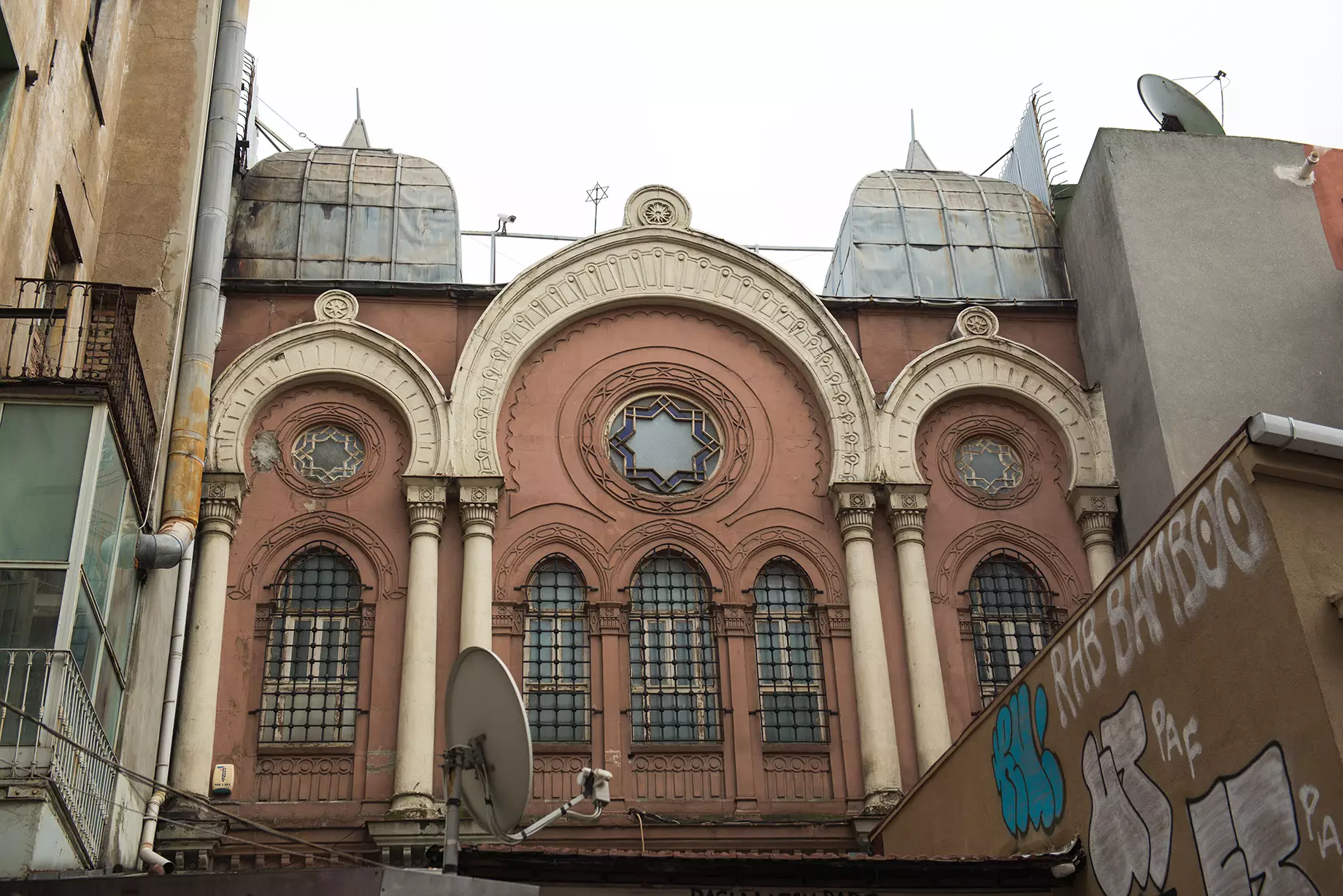
The only active Ashkenazi Synagogue open to visits and prayers.
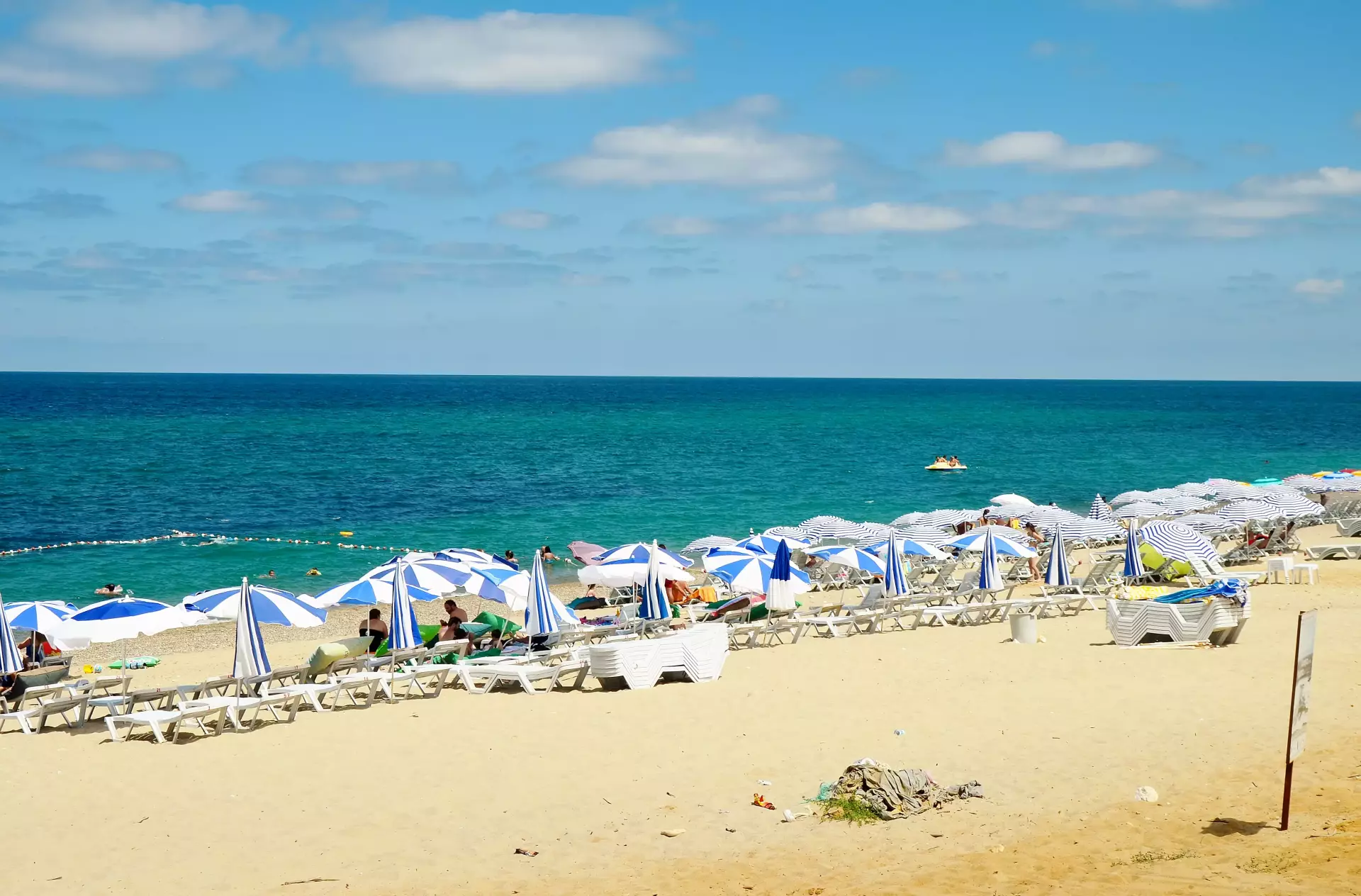
A resort on the Marmara coast. It's the westernmost part of Istanbul, between Çatalca and the province of Tekirdağ. There are some remnants of the Anastasian wall here, the scrappy ruins of a castle, an ancient cistern, the Piri Paşa Mosque, and Uzunköprü the long aqueduct.
The building was erected as a Roman Catholic church in 1325 by the friars of the Dominican Order, near or above an earlier chapel dedicated to Saint Paul (Italian: San Paolo) in 1233. In 1299, the Dominican Friar Guillaume Bernard de Sévérac bought a house near the church, where he established a monastery with 12 friars. A new, much larger church was built near or above the chapel of San Paolo in 1325. Thereafter the church was officially dedicated to San Domenico. After the Fall of Constantinople, according to the Capitulations of the Ottoman Empire with the Republic of Genoa, the church, which by that time was known by the Turks under the name of Mesa Domenico, remained in Genoese hands, but between 1475 and 1478 it was transformed, with minor modifications, into a mosque by the Ottoman Sultan Mehmed II and became known as Galata Camii ("Galata Mosque") or Cami-i Kebir ("Great Mosque"). Towards the end of the century Sultan Bayezid II assigned the building to those Muslims of Spain (Andalusia) who had fled the Spanish Inquisition and migrated to Istanbul; hence the present name Arap Camii (Arab Mosque). Today, Arap Camii is the largest mosque on the Galata side of the Golden Horn. It is one of the most interesting mosques in the city due to its early Italian Gothic architectural style and church belfry, which has practically remained unaltered even after being converted into a minaret.
Museum in a restored building that was the stables for Topkapı Palace. It exhibits various instruments for astronomy, clocks, pumps, weaponry and so on developed in Islamic realms down the centuries, but these are modern repro, and explanations of their context are skimpy. Islamic science and technology preceded that of Europe, as they insist, but they get the tone wrong, as if that was the triumphal culmination rather than the springboard for further advance.
Sokollu Mehmet Pasha was the grand vizier and de facto ruler of the Ottoman Empire during its 16th century golden age. He commissioned this mosque, one of three in the city to bear his name, but the sloping site was a challenge. He hired the best, Mimar Sinan, who completed it in 979 AH / 1571 AD, with the slope resolved by a fronting courtyard above shops and a medrese. The interior has outstanding İznik blue tiles, and three fragments of the Black Stone (Hajar al-Aswad) of the Kaaba: above the main entrance, minbar and mihrab.
This is the main attraction around this part of the city. The holiest Islamic shrine in the city, the complex includes, right next to the mosque, the tomb of Abu Ayyub al-Ansari (Eyüp Ensari Türbesi), the standard bearer of Prophet Mohammad, died and buried here during the first Muslim siege of Constantinople (674-678 AD). The neighbourhood was named after him. Muslims flock here (in such huge numbers that sometimes you have to queue for a few minutes before entering the tomb) also to see a rather uninteresting plaque made of plastic, which is purported to be Mohammad's footprint. The interior of the tomb, covered with fine tiles/faience, is nonetheless well worth a look, however. It is also interesting to see the devout Muslims leaving the place by walking backwards through its exit hallway, as not to turn their backs to al-Ansari's catafalque, though obviously no one expects everyone to quit the place in the same manner.
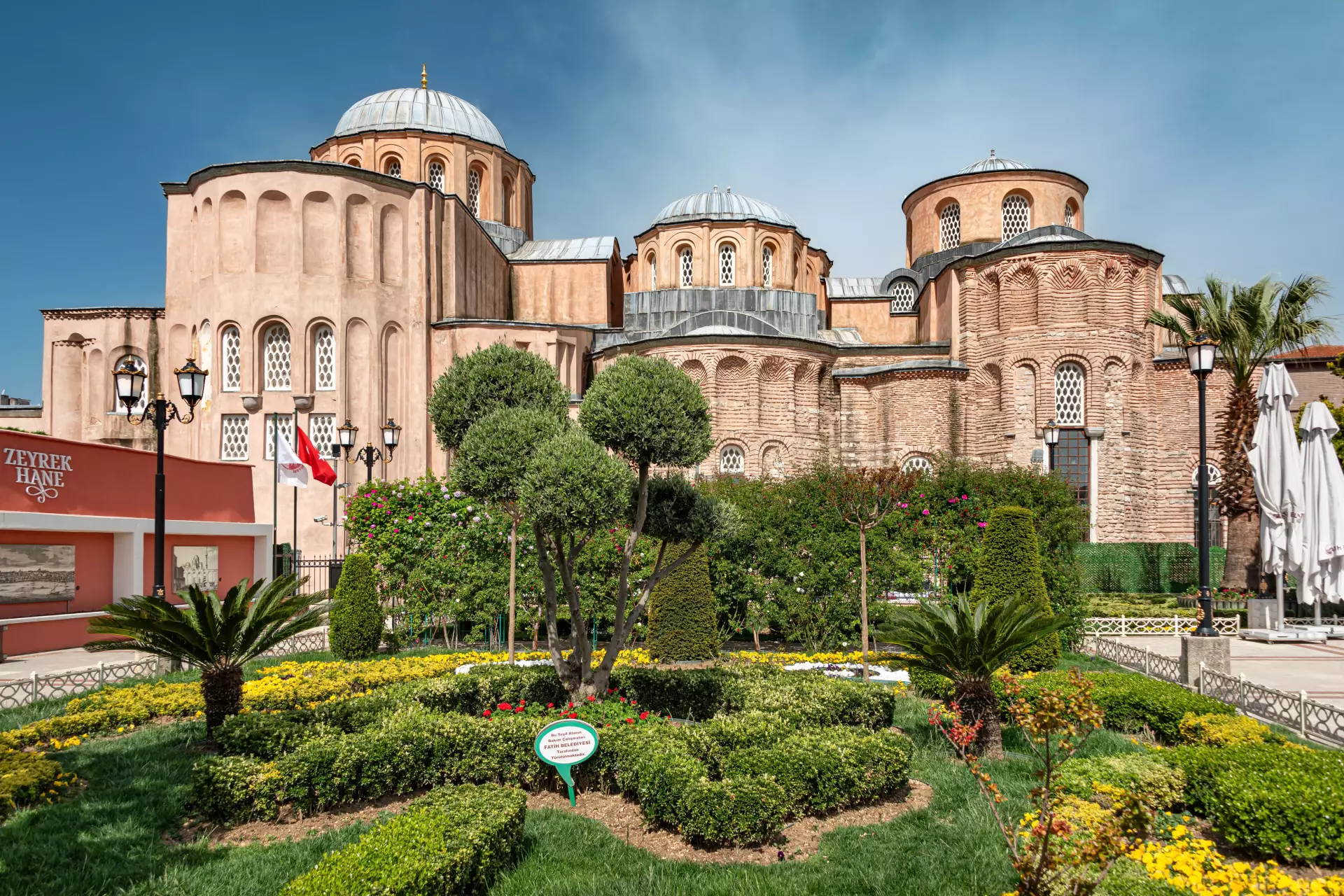
Built circa 1200 as the Eastern Orthodox Theotokos Kyriotissa Church, after the Ottoman conquest it was handed over to the Qalandari, a Sufi sect. In the mid-18th century it was converted to a Sunni mosque, and its mosaics were plastered over. The original appearance was restored in the 1970s.
The imperial enclave of the Ottoman emperors for four centuries. Lavishly decorated, with exhibitions of fine craftmanship and four courts of increasing grandeur. The second court has the Harem and the State Treasury, housing a weaponry display. The third court has the Imperial Treasury, with Islamic and Christian relics. The views from the Fourth Court over the Bosphorus are spectacular. Reckon on spending several hours here and bring water as the museum kiosk is overpriced.