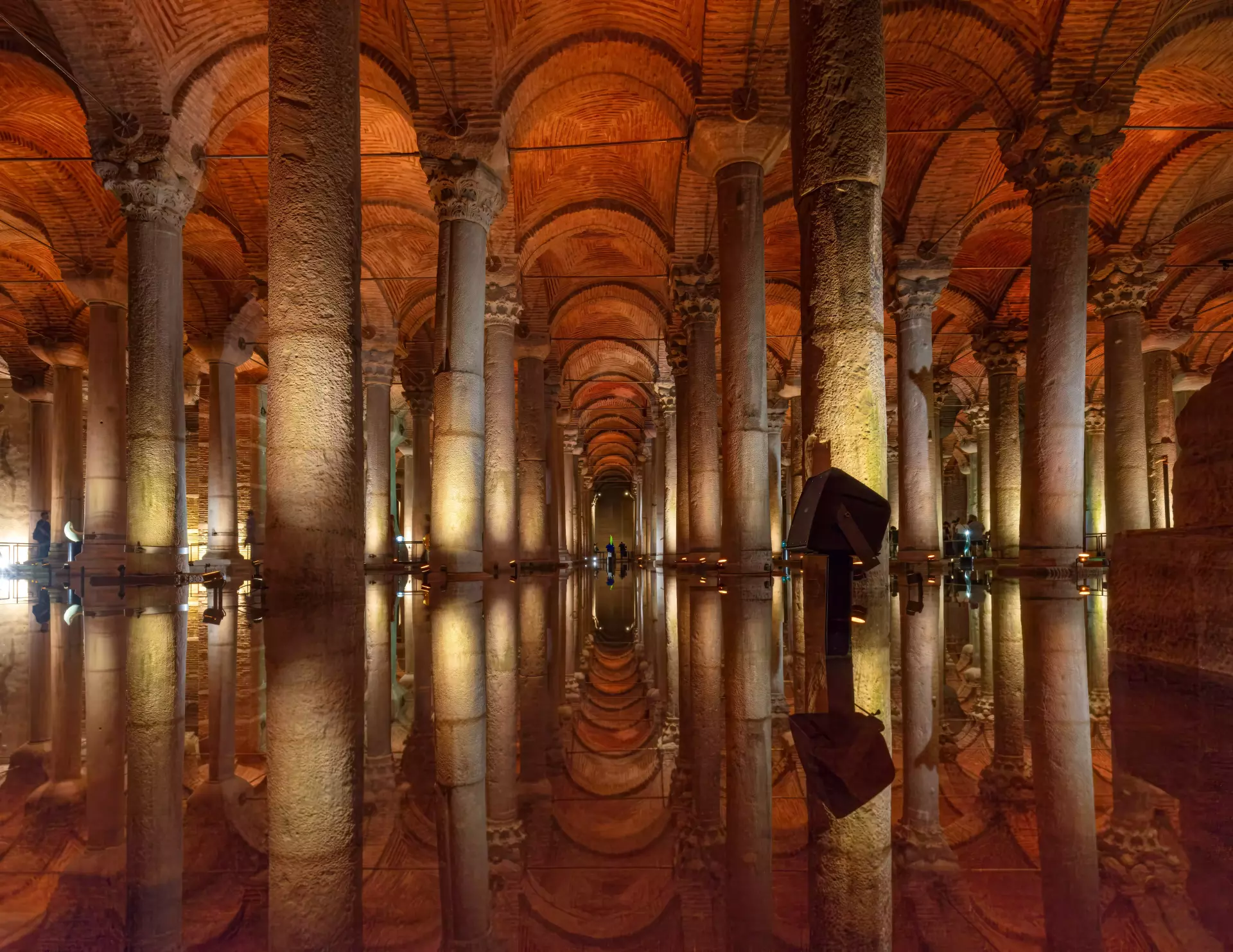
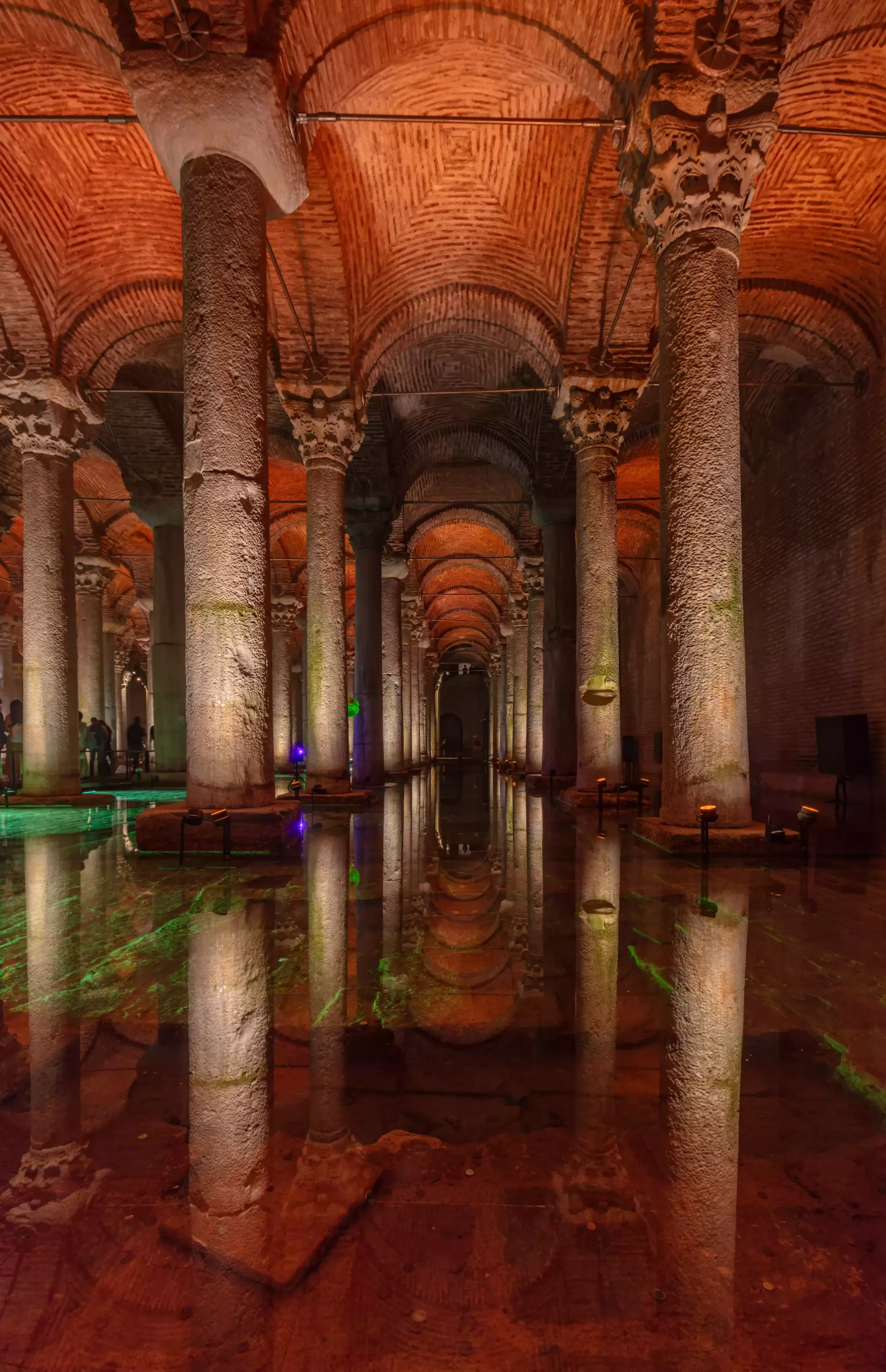
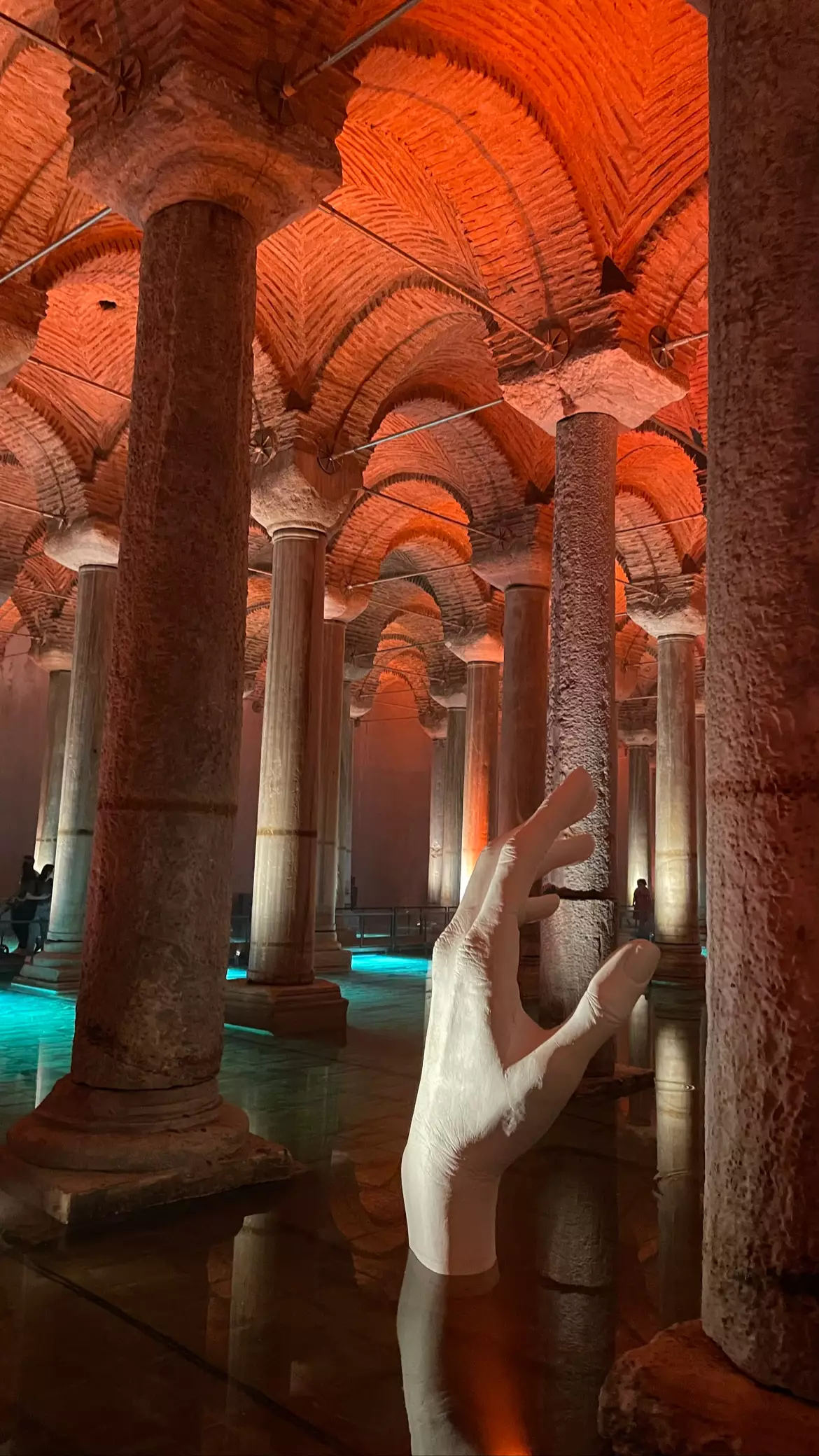
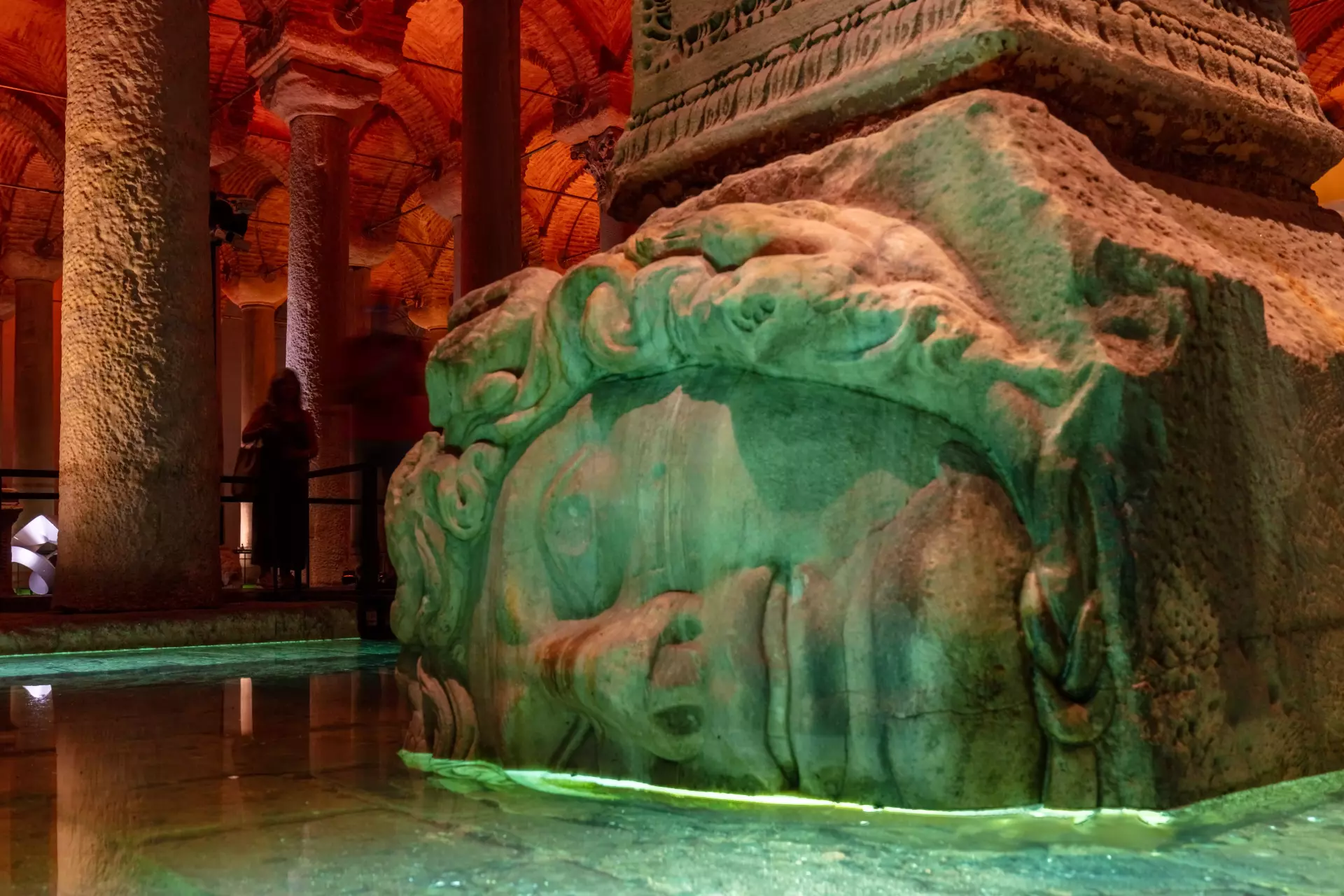
The Basilica Cistern is a remarkable underground structure, built in 532 by Emperor Justinian as a crucial water reservoir for the city. Among the many cisterns constructed during that era, this one stands out as the largest and most famous.
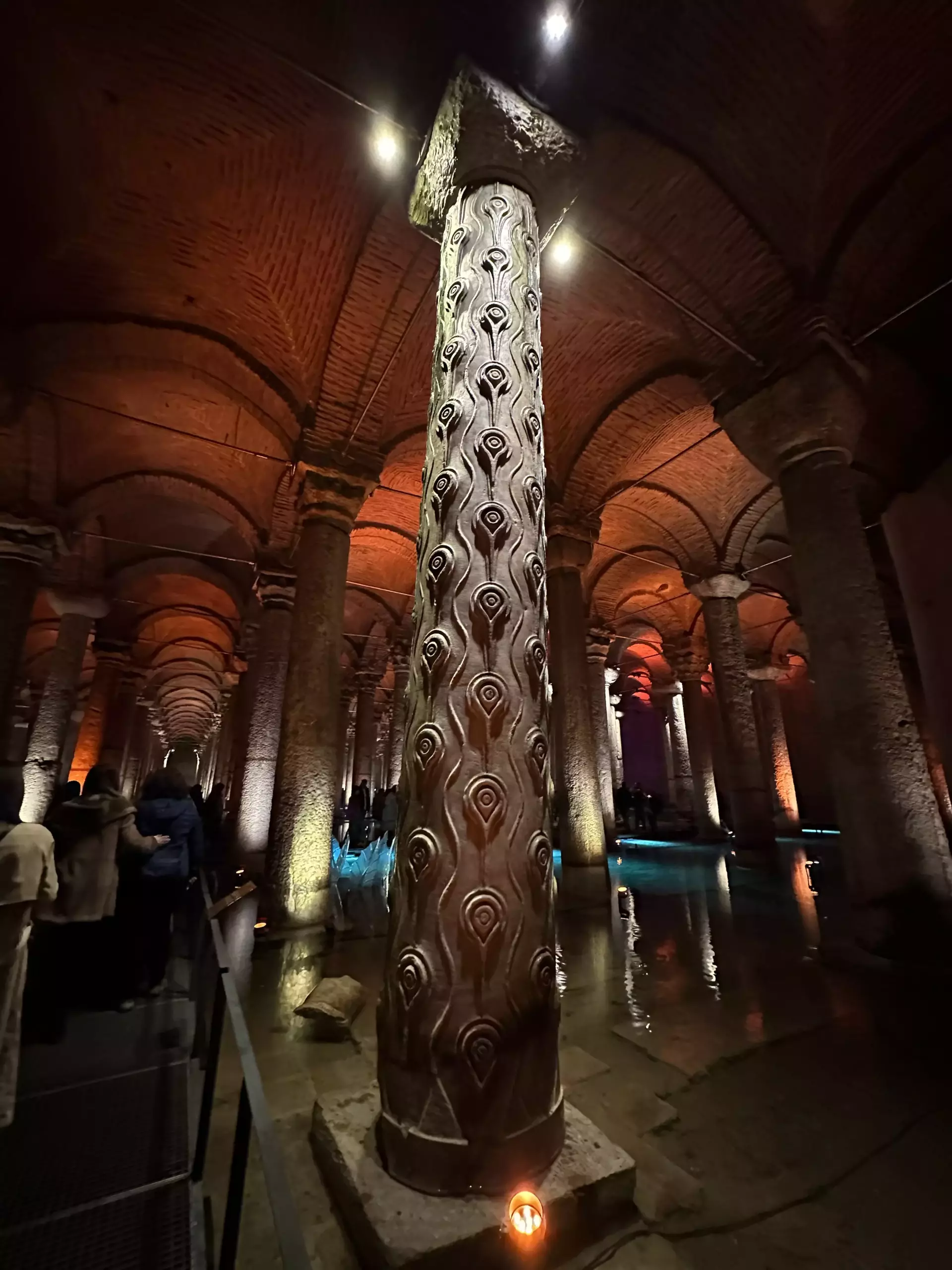
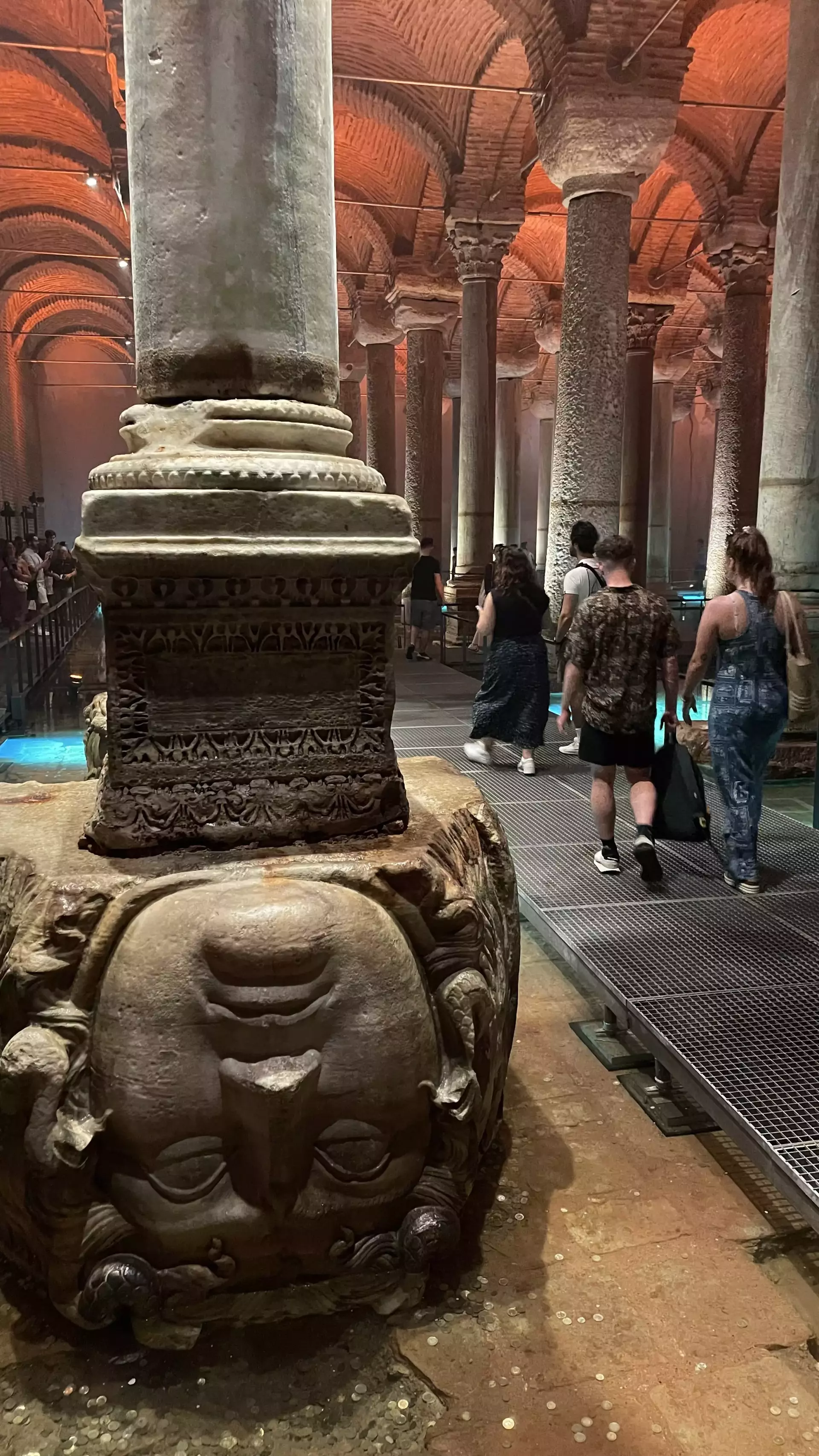
Stepping inside, visitors are met with a vast space that feels almost like a cathedral. The cistern boasts 336 columns, each richly decorated and rising from the water below. These columns create a forest of stone, and their design gives the place a mysterious and majestic atmosphere.
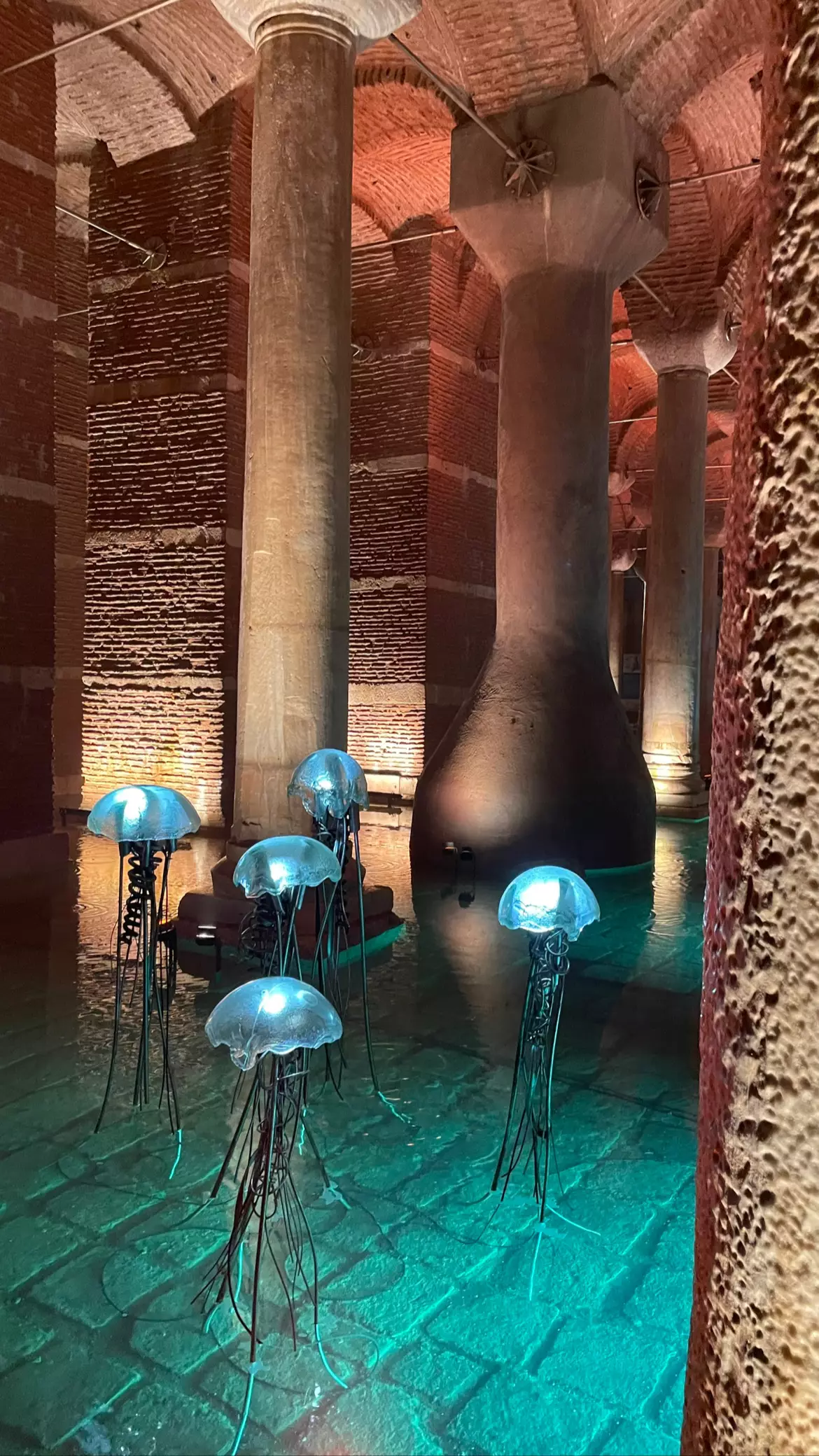
In the past, the cistern could be explored by gliding through the water in a small rowing boat. Today, rising visitor numbers and lower water levels have changed the experience. A boardwalk has been installed, allowing people to stroll through the cistern while enjoying dramatic lights, piped music, and even art installations. At times, the space transforms into a film location or hosts unique concerts, adding to its modern cultural role.
While the cistern remains an impressive sight, large crowds are now a common feature. This popularity can sometimes lessen the tranquil atmosphere that once prevailed. For those seeking a quieter exploration, lesser-known cisterns in the city might offer a more peaceful alternative.
Source - https://en.wikipedia.org/wiki/Basilica_Cistern
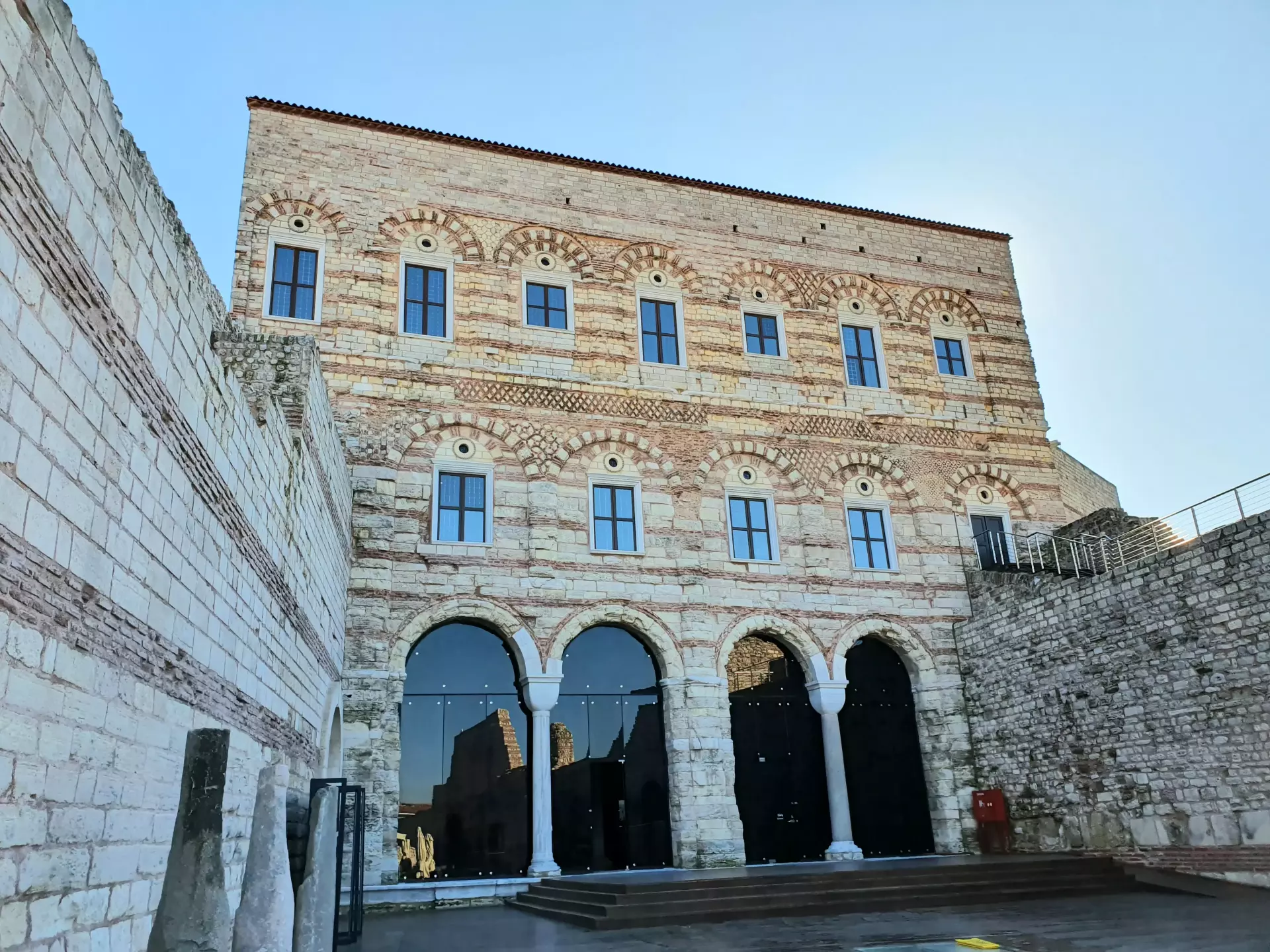
The imperial enclave of the Ottoman emperors for four centuries. Lavishly decorated, with exhibitions of fine craftmanship and four courts of increasing grandeur. The second court has the Harem and the State Treasury, housing a weaponry display. The third court has the Imperial Treasury, with Islamic and Christian relics. The views from the Fourth Court over the Bosphorus are spectacular. Reckon on spending several hours here and bring water as the museum kiosk is overpriced.
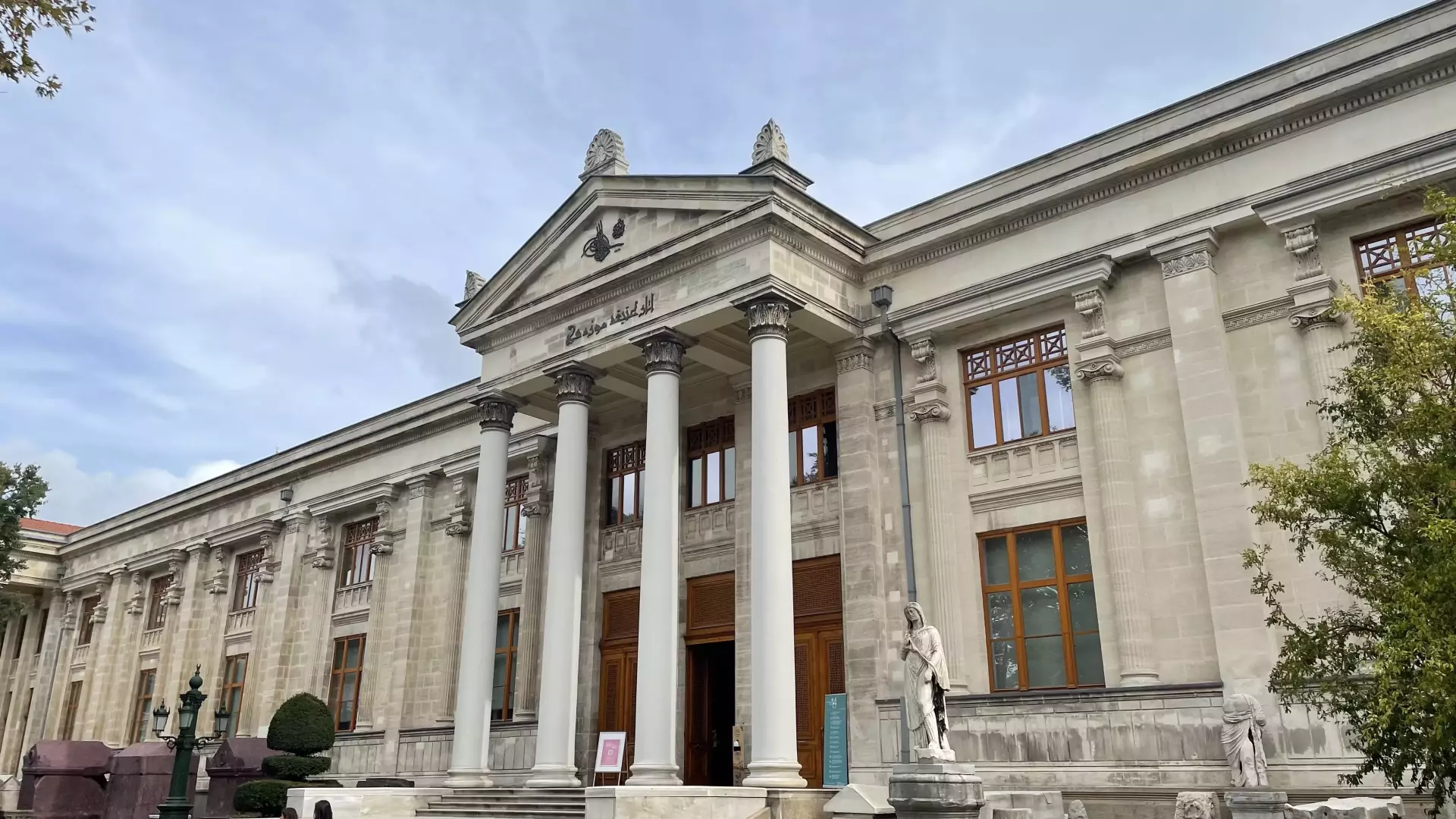
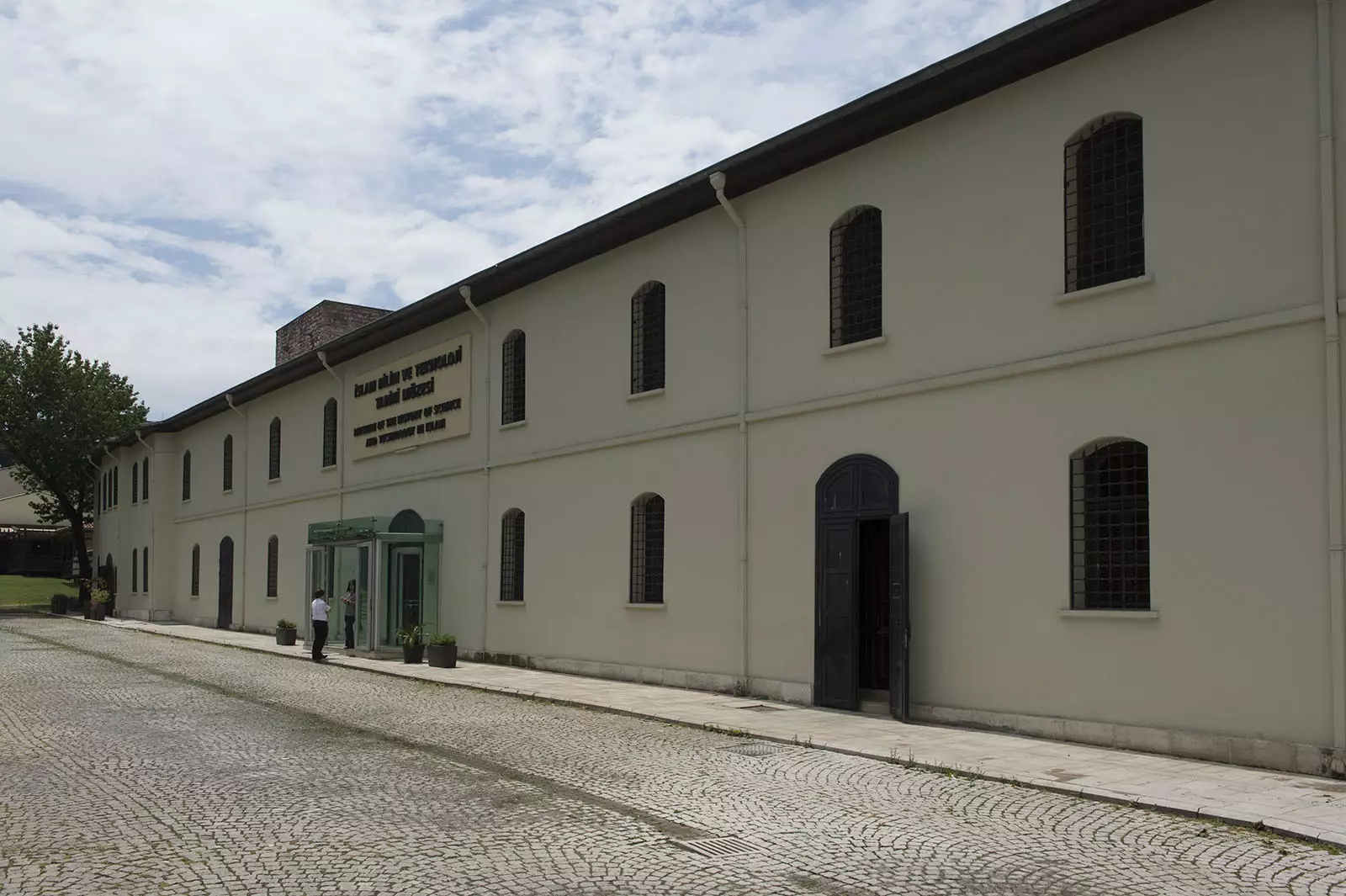
Turkey was slow to protect its antiquities and to display them properly, but in 1867 Sultan Abdülaziz toured the museums of Paris, London and Vienna and saw what was needed. The main collection is in a grand neo-classical building of 1891, with two annexes for ancient art and Islamic art. Exhibits include Sumerian tablets, pieces of the wall of Babylon, Roman statues, and the sarcophagus of Alexander the Great, which he never lay in.
Among the exhibition of this museum are five thousand pieces from the Ottoman era through WWII, with the most prominent piece possibly being the huge chain that the Byzantines stretched across the mouth of the Golden Horn to keep out the Sultan's navy in 1453 during the siege of Constantinople. In the yard of the museum, the Janissary Band (Mehter Takımı), the world’s oldest military band gives concerts of march music in traditional uniforms each afternoon, at 15:00.
Completed in 1851, this houses a mantle said to have been worn by the prophet Muhammad. The mantle is displayed during Ramadan.
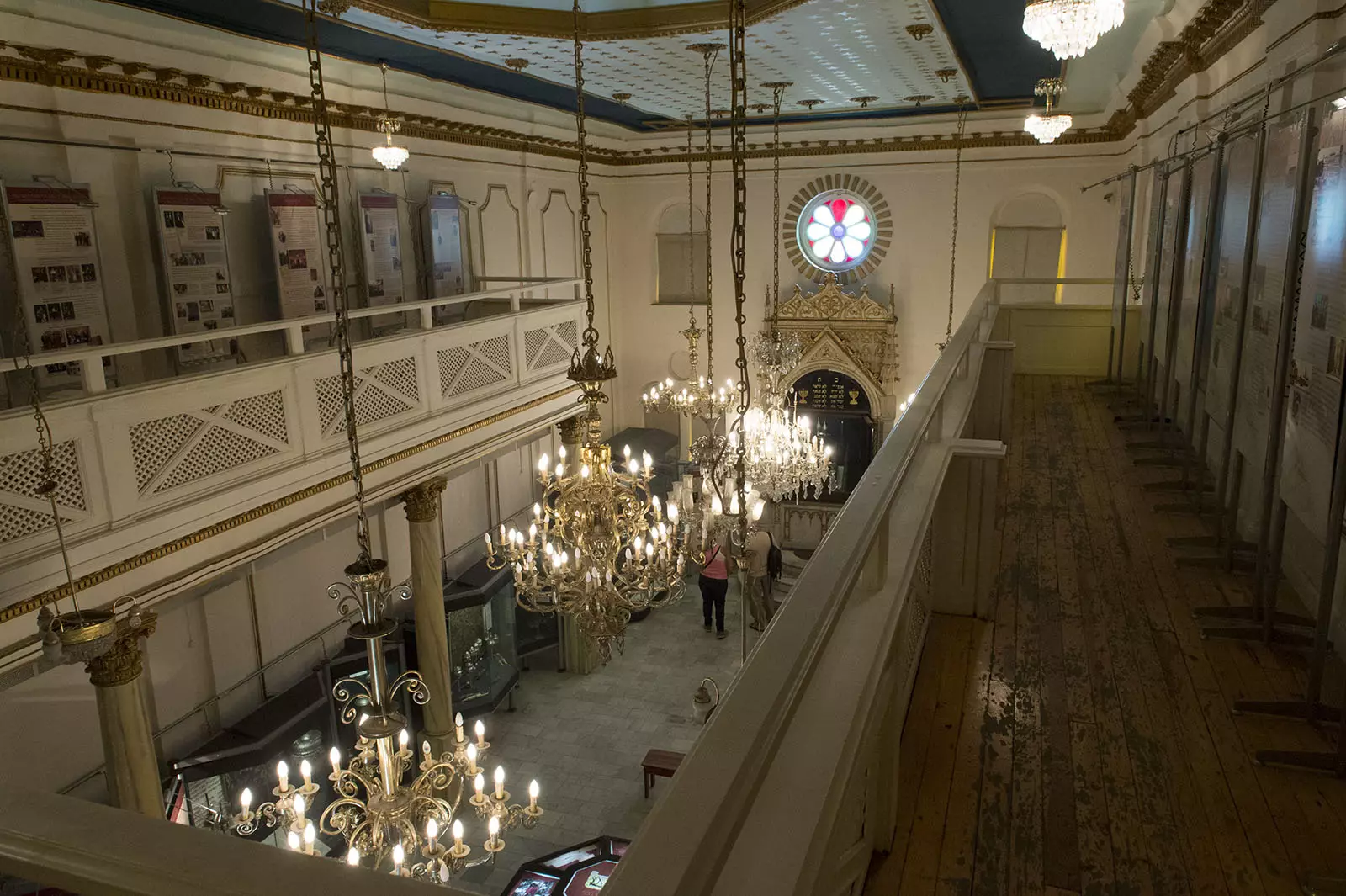
A former synagogue, the museum's exhibit details how the cultures mixed with and influenced each other in the past 500+ years since the Spanish expulsion.
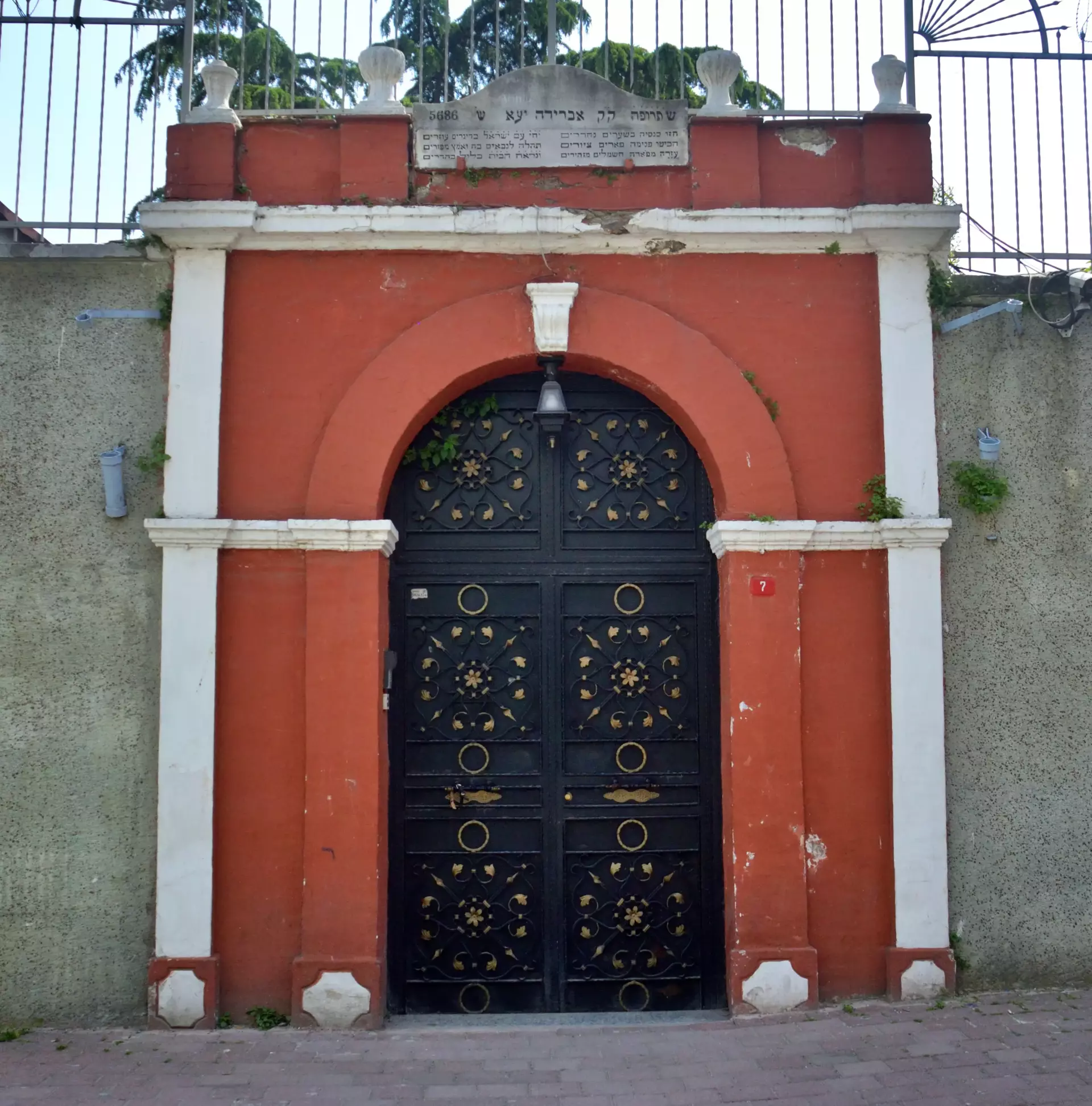
This was built in the 1430s by Grecian Jews ("Romaniotes") from the city of Ohrid, now in North Macedonia. The district of Balat was a Jewish quarter, swelled from 1492 by those expelled from Spain. The synagogue is only open for pre-arranged tours.
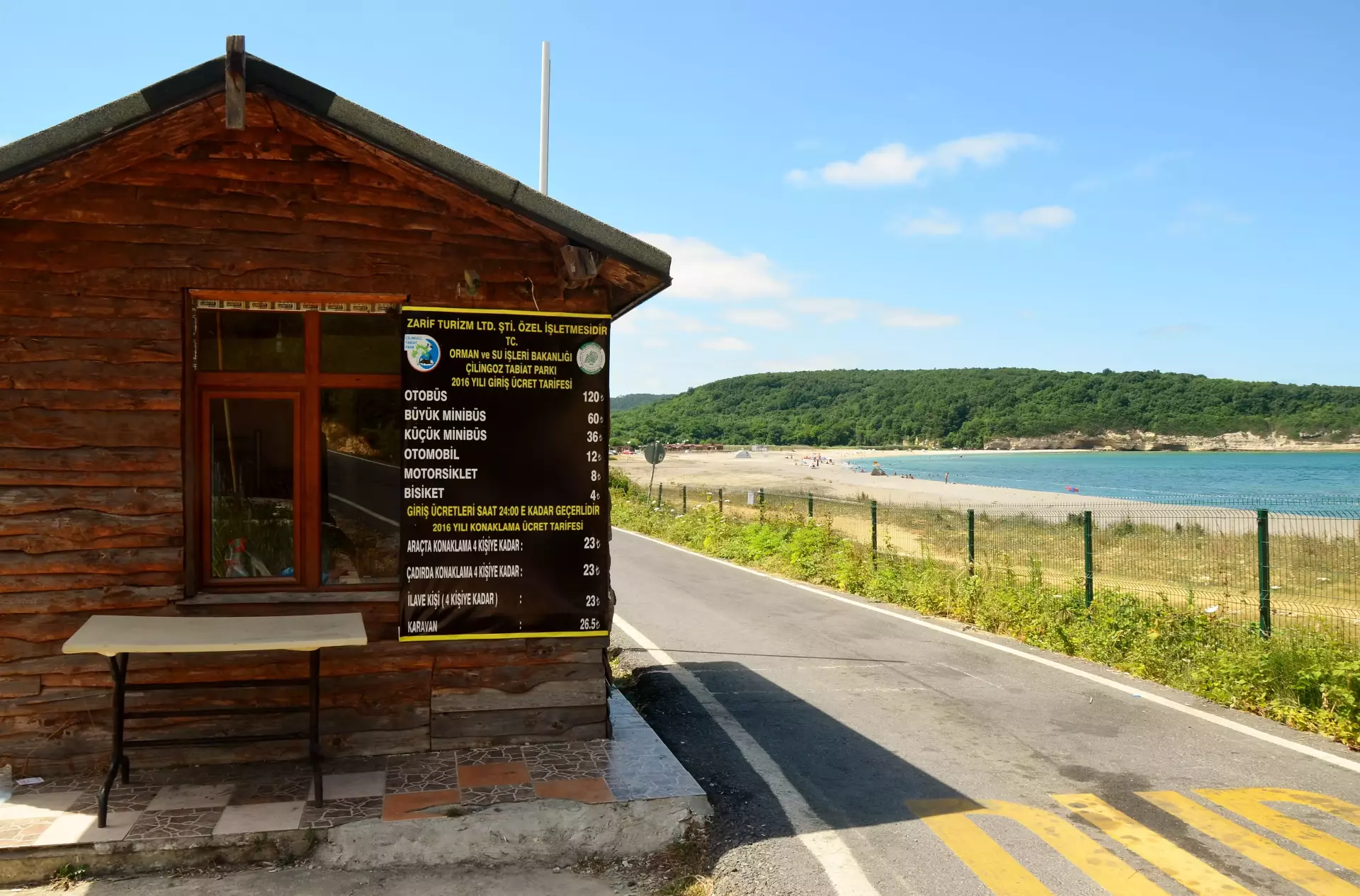
Named after a 16th-century village, founded by Serbs deported from Belgrade when it fell to the Ottomans. The village was popular as a forest resort, but its inhabitants were resettled in the 19th century and it's now a bosky ruin. The forest is mostly primordial and deciduous, predominantly oak. It's dotted with ancient aqueducts and dams as this area was a water catchment for Constantinople / Istanbul, and has lots of walking jogging and cycling trails and picnic areas. The two main ways in are via Bahçeköy (near the Arboretum entrance) and Kemerburgaz (which has the best aqueducts). There's a small access toll. The forest is supposedly a protected area but is being encroached on by highways and suburbs: this is likely to get worse as the access route to Istanbul's new airport leads right through it.
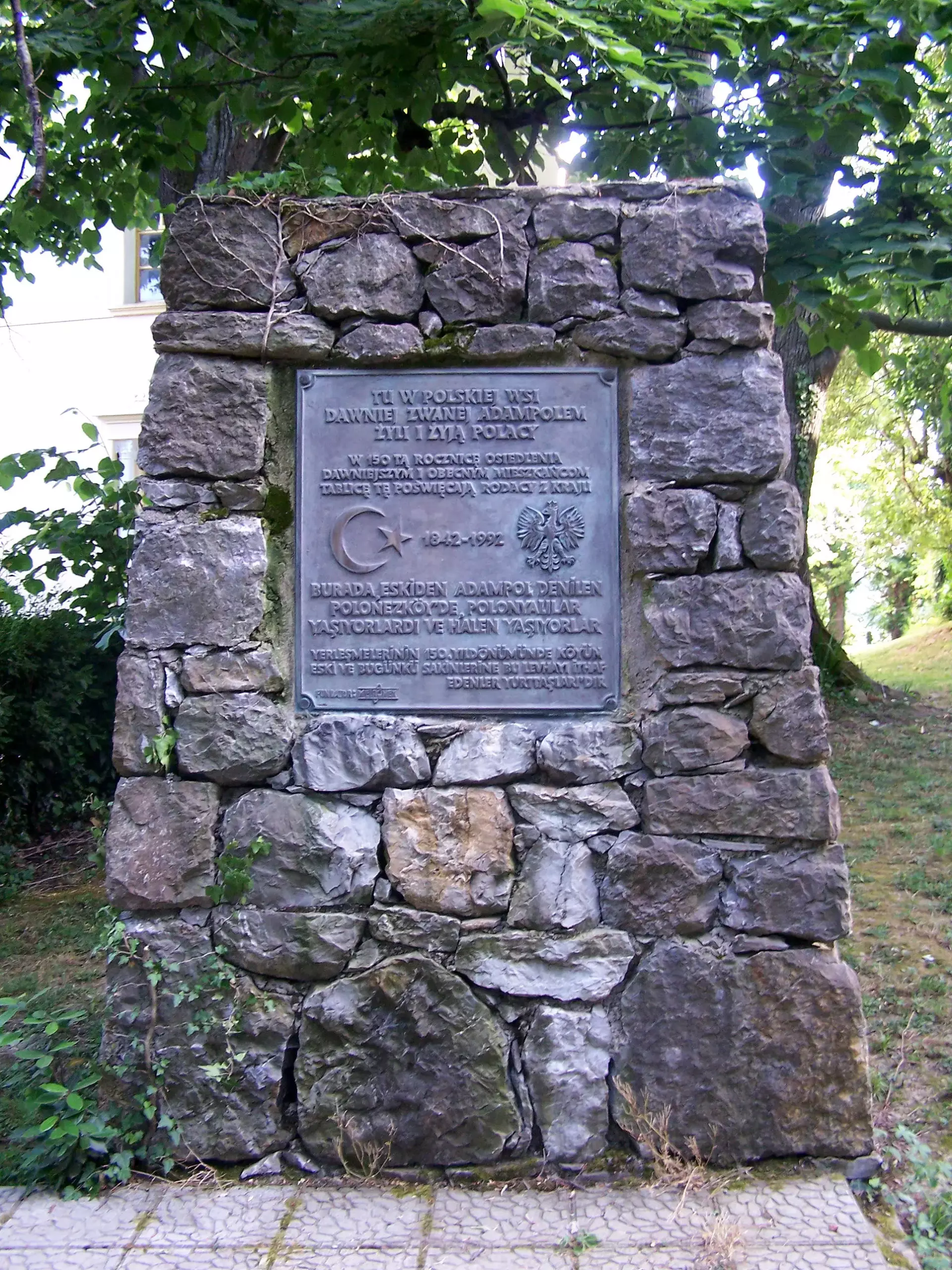
The "Polish village" was founded in 1842 by Polish settlers in the wake of the failed uprising against Russian Imperial rule, and reinforced by more settlers after every subsequent civil upheaval until Poland's independence in 1918. Most then returned, but several stayed on, adopting Turkish citizenship but maintaining their Polish language and culture. The village has houses in traditional Polish style, a 1914 little Catholic chapel, and the Church of Matka Boska Częstochowska. It's set in woodland (a nature park) and is a popular day-trip from the city. There's four restaurants and half a dozen small hotels, plus more of each in nearby Beykoz.
A remarkable Bulgarian Orthodox church better known as Demir Kilise, "Iron Church", as it's a cast iron prefab. The Bulgarians split from the Greek Orthodox and established their own wooden church in 1870, which burned down. The ground was too weak for a masonry or concrete structure so they opted for cast iron. The sections were cast in Vienna, shipped here and assembled, to open in 1898. The church was renovated in 2018, but the archpatriarchate building across the street remains a gaunt shell.
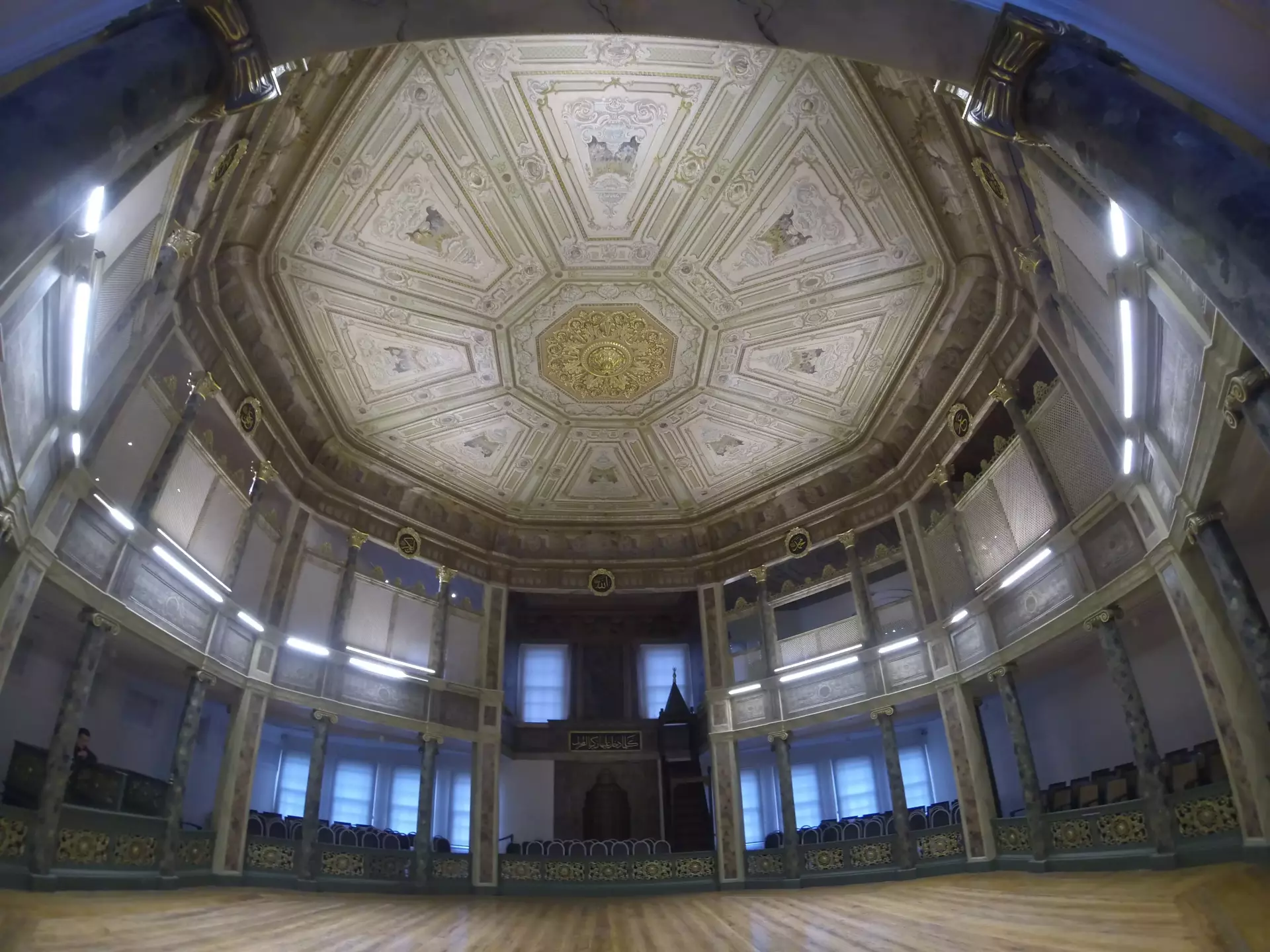
A ritual dancing hall of the mystical Mevlevi order, the followers of the teachings of Mewlānā Rumi. The quiet and peaceful garden is a welcome escape from the hustle and bustle of Beyoğlu. The oldest Mevlevi lodge in Istanbul, the convent was started in 1491, when the surrounding area was, hard to believe today but, pure wilderness beyond the city walls of Galata, although the current building dates back to 1855, as the older versions succumbed to repairs, rebuildings, and fires. However, the lodge was shut down in the early years of the republic (in 1925) along with all other 'reactionary' movements in Turkey, and the building has been serving as a museum dedicated to the Mevlevi order since 2010. Downstairs is a series of rooms dealing with the daily life of an average dervish, with informational signs in Turkish and English about the history of Islam and the Mevlevi order (also notice the original wooden pillars that support the building on this floor). On the upper floor is a dancing hall, a perfect example of 19th century Ottoman Baroque. Pre-Covid, this was where the sema whirling ceremonies were held every weekend evenings (admission by an extra ticket costing around 100 TL); check if they resumed. On the third floor is a display of various traditional Turkish/Islamic arts, including paper marbling (ebru), and calligraphy. After exiting the building, check out the small graveyard (or the "silent house" as the sign at its entrance says) on one side of the building, shaded by a number of hackberry trees, which Ottomans favoured to plant in the yards of mosques and graves to sign holiness. Here, the carved fez, or the basket of flowers in case of women, perched upon the highly detailed marble gravestone indicates the occupant's rank in the dervish hierarchy. At one corner of the necropolis is the grave of İbrahim Müteferrika, a converted Hungarian who was the first to start automated publishing in Ottoman Turkish in the 18th century, and served as the translator of Hungarian revolutionaries who sought asylum in Turkey, such as Kossuth, who stayed for a year in Kütahya, or Ferenc Rakoczi, who lived his last years in Tekirdağ.
A nice, organized museum with contemporary installations. It may be seen as overpriced given its small size. It also has a simple cafe.
Built in 1564 by Mimar Sinan for Rüstem Pasha, Grand Vizier of Suleiman the Magnificent, this small mosque has an interior covered by beautiful Iznik pottery, then at its zenith.
This is a 1927 Beaux Arts building named after its patron Süreyya İlmen Pasha, then a deputy of Istanbul who was impressed by theatres in Europe during his visits. It became the first opera house in the Asian side of Istanbul, but due to deficiencies in its interior design, it barely staged any opera and was converted to a cinema soon afterwards. It underwent a significant restoration and reverted to its original purpose in 2007, so now houses performances of ballet, opera, and classical music; good tickets are often extremely cheap.
A profusion of carpets, rugs, calligraphy, pottery, Qu'rans and other manuscripts. The museum is housed in the Palace of Pargalı Ibrahim Pasha (1495–1536), who was grand vizier to Suleiman the Magnificent, and the best of pals till Suleiman had him murdered.