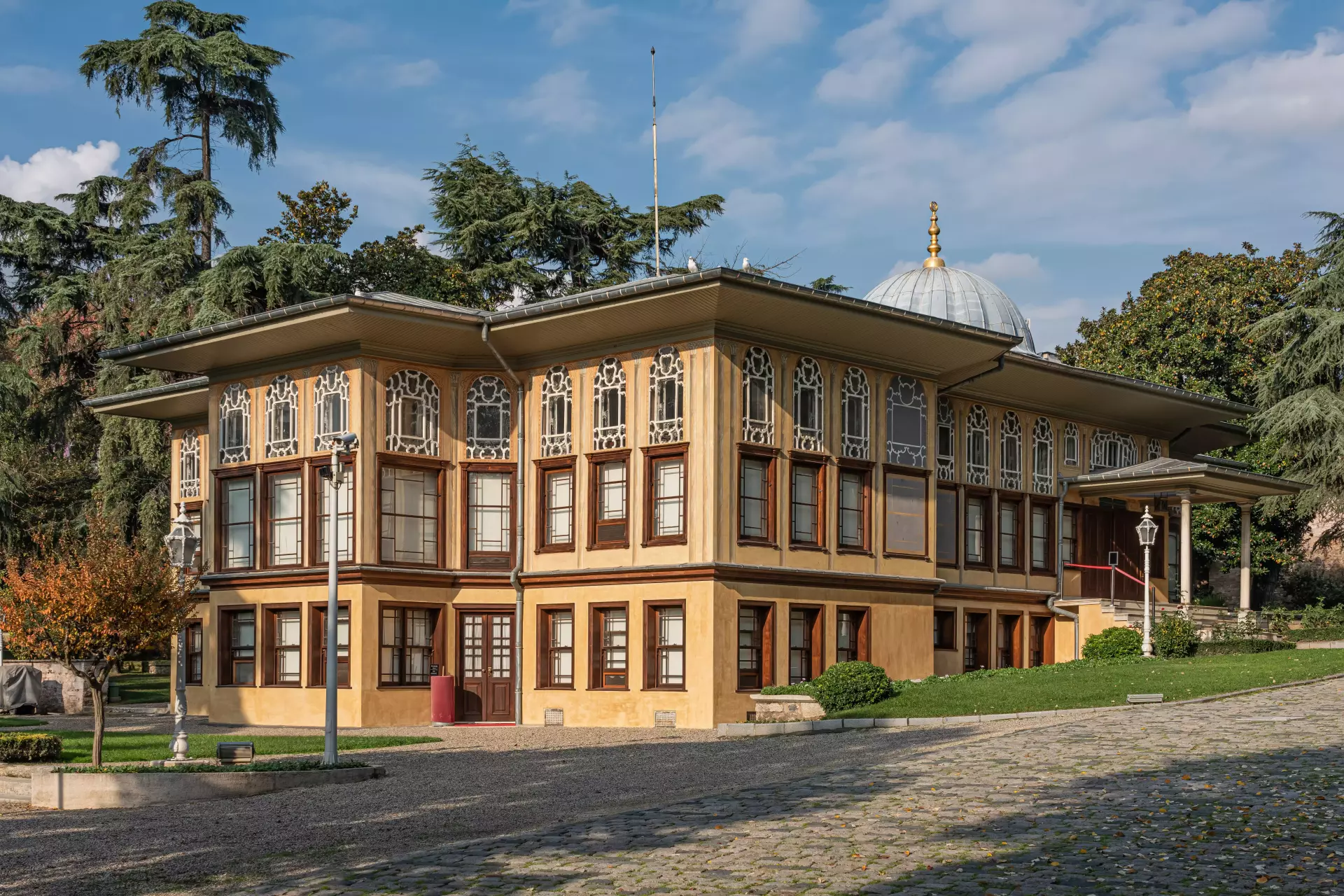
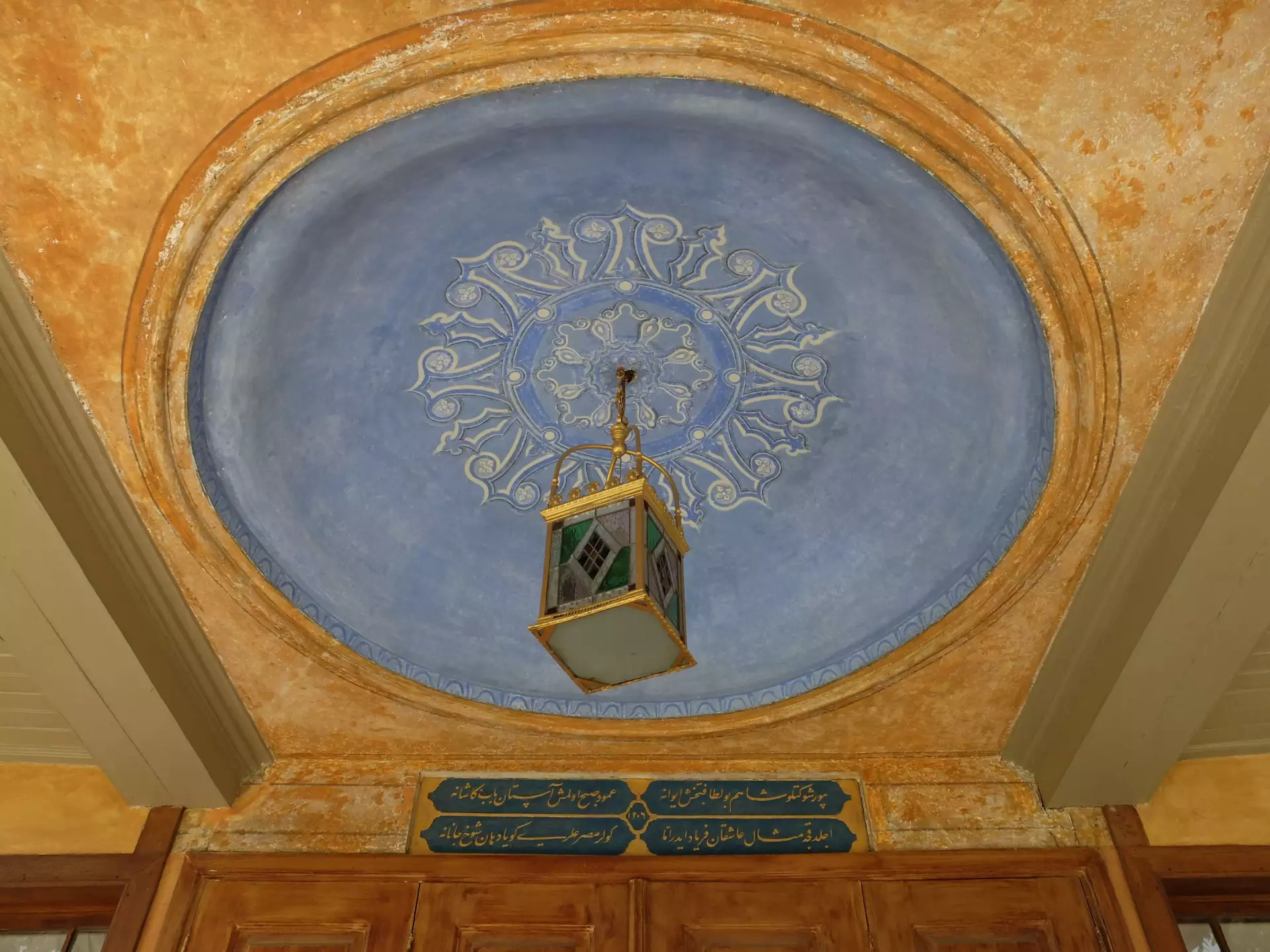
Aynalıkavak Palace stands as a remarkable piece of Istanbul’s royal history. Construction began in 1613 under Sultan Ahmet I, the same sultan who ordered the building of the famous Blue Mosque. Over the centuries, the palace saw significant changes, especially during the reign of Selim III, a ruler known for his love of art and architecture. The building visitors see today is the only structure that has survived from the era of Ahmet III, making it a rare example of Ottoman palace architecture from that time.
In its heyday, Aynalıkavak was not just a single building but the fourth largest palace complex in Istanbul. It stretched all the way to the banks of the Golden Horn. Today, only this main palace building remains, set within a peaceful garden filled with pools, old cedar trees, and magnolias. The view toward the shore is partly blocked by old, unused buildings from a closed shipyard, which now occupy much of the original grounds.
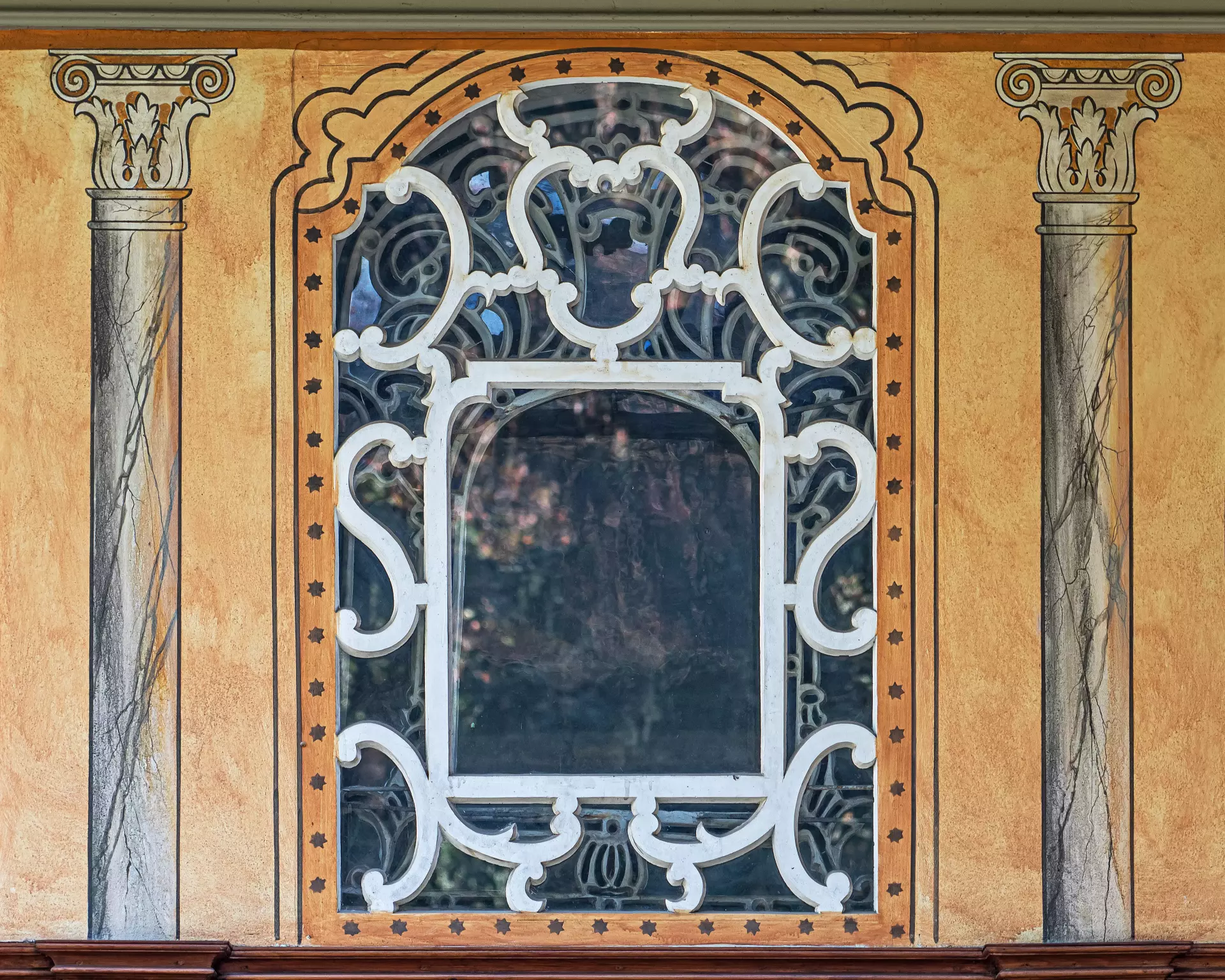
The name “Aynalıkavak” has an interesting backstory. In Turkish, it means “mirrored poplar.” According to local stories, the name comes from a set of tall mirrors once given to the palace by the Venetians. These mirrors, now lost, were said to be as tall as poplar trees, leading to the palace’s memorable name.
Stepping inside, visitors find a rich and colorful interior. Several rooms are decorated with original furniture suitable for a sultan. Some of these pieces are covered in shimmering nacre (mother-of-pearl). The walls are adorned with Ottoman poetry, much of it written in praise of the palace and Sultan Selim III himself. The intricate designs and bright colors give a sense of the luxury once enjoyed here.
On the lower floor, a small museum offers a journey into the musical past. This museum displays instruments such as violins, ouds, and kamanchehs, along with gramophone records that once belonged to Fatma Gevheri Sultana, the granddaughter of Sultan Abdülaziz I. These personal items provide a unique view of royal interests beyond politics and power.
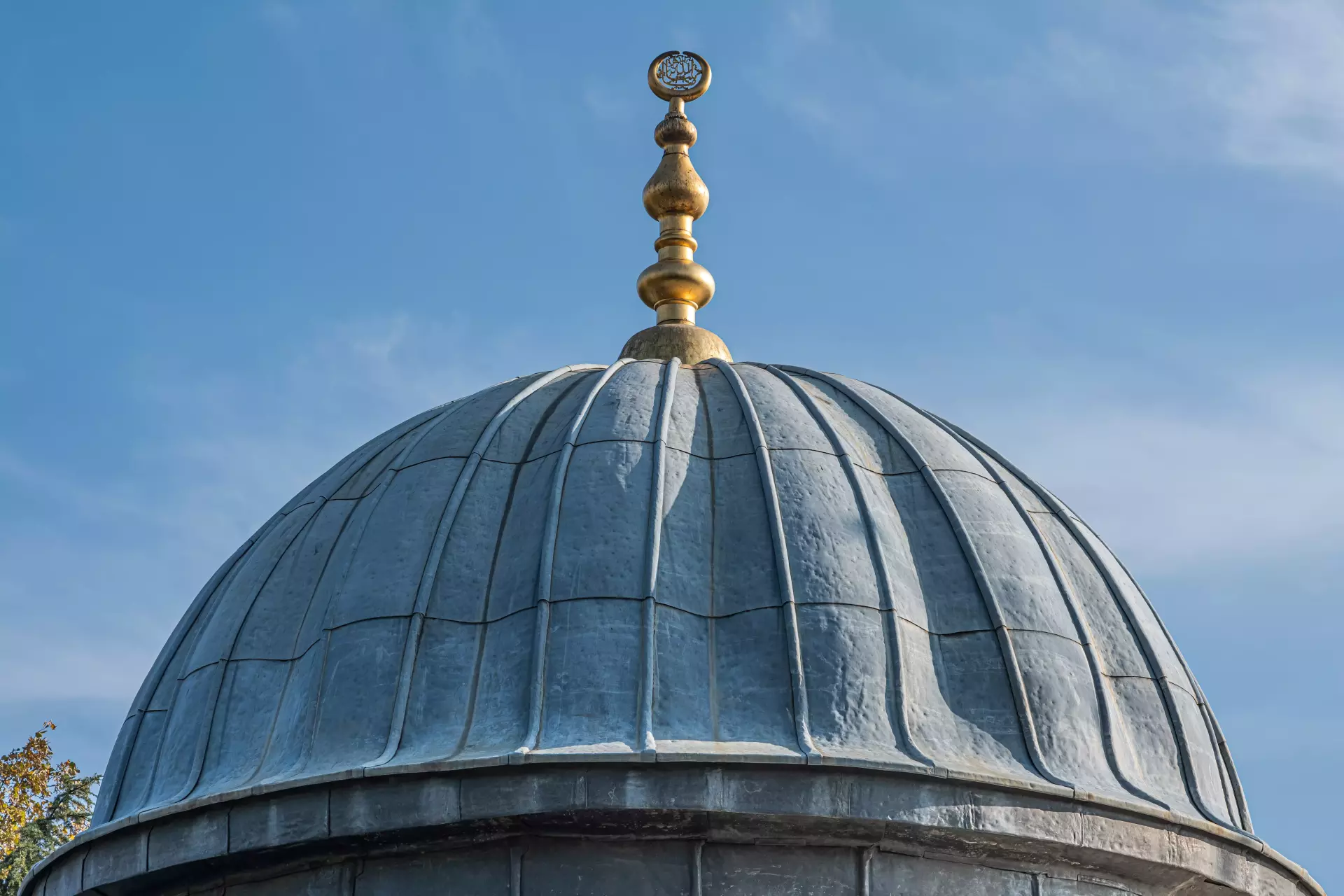
Outside, visitors may notice the old main entrance facing the Golden Horn, now closed but still topped by an impressive dome. This entrance once welcomed important guests and adds another layer to the palace's long and varied history.
Source - https://en.wikipedia.org/wiki/Aynal%C4%B1kavak_Pavilion
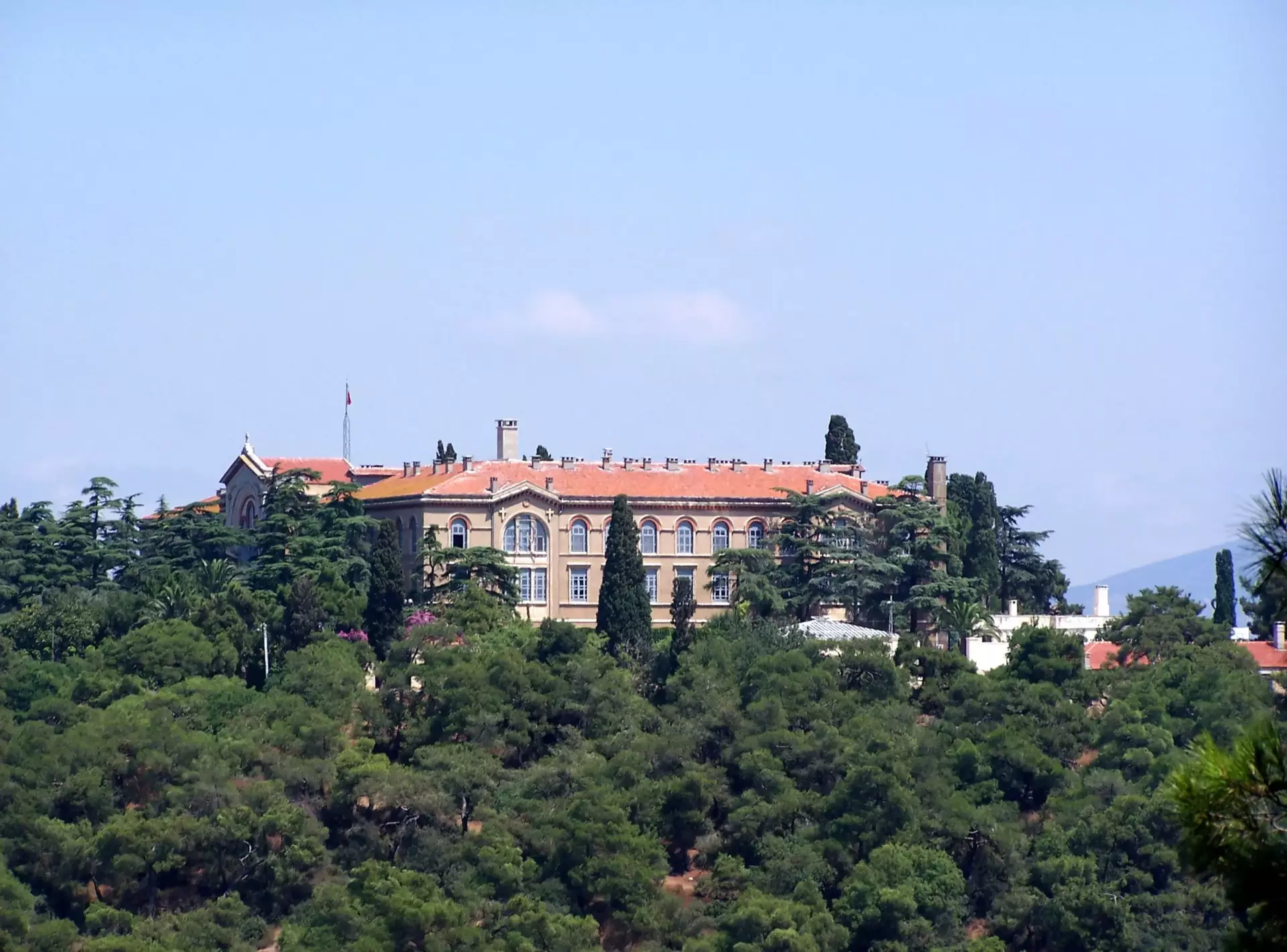
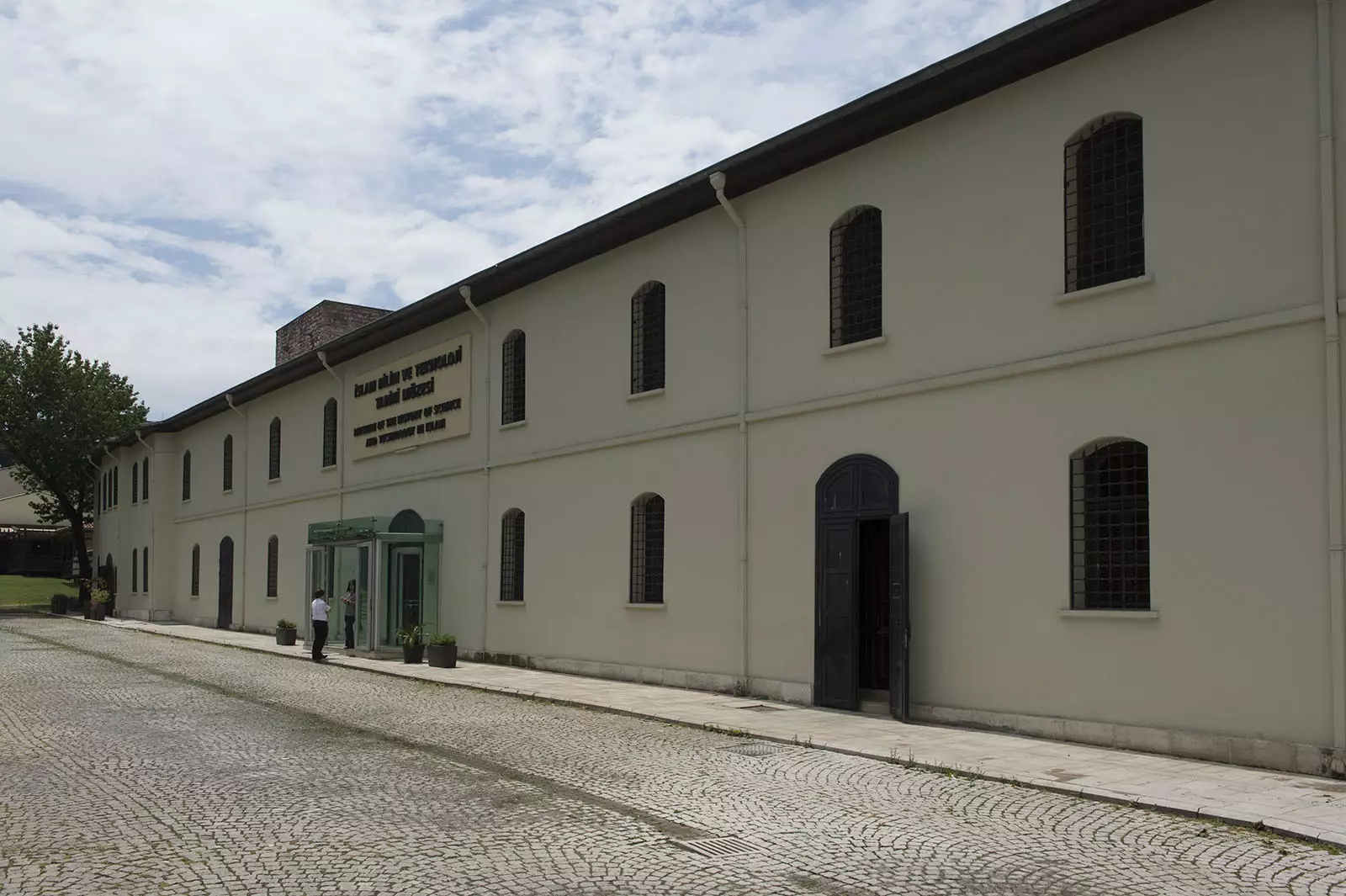
A profusion of carpets, rugs, calligraphy, pottery, Qu'rans and other manuscripts. The museum is housed in the Palace of Pargalı Ibrahim Pasha (1495–1536), who was grand vizier to Suleiman the Magnificent, and the best of pals till Suleiman had him murdered.
Completed in 1851, this houses a mantle said to have been worn by the prophet Muhammad. The mantle is displayed during Ramadan.
This is the main attraction around this part of the city. The holiest Islamic shrine in the city, the complex includes, right next to the mosque, the tomb of Abu Ayyub al-Ansari (Eyüp Ensari Türbesi), the standard bearer of Prophet Mohammad, died and buried here during the first Muslim siege of Constantinople (674-678 AD). The neighbourhood was named after him. Muslims flock here (in such huge numbers that sometimes you have to queue for a few minutes before entering the tomb) also to see a rather uninteresting plaque made of plastic, which is purported to be Mohammad's footprint. The interior of the tomb, covered with fine tiles/faience, is nonetheless well worth a look, however. It is also interesting to see the devout Muslims leaving the place by walking backwards through its exit hallway, as not to turn their backs to al-Ansari's catafalque, though obviously no one expects everyone to quit the place in the same manner.
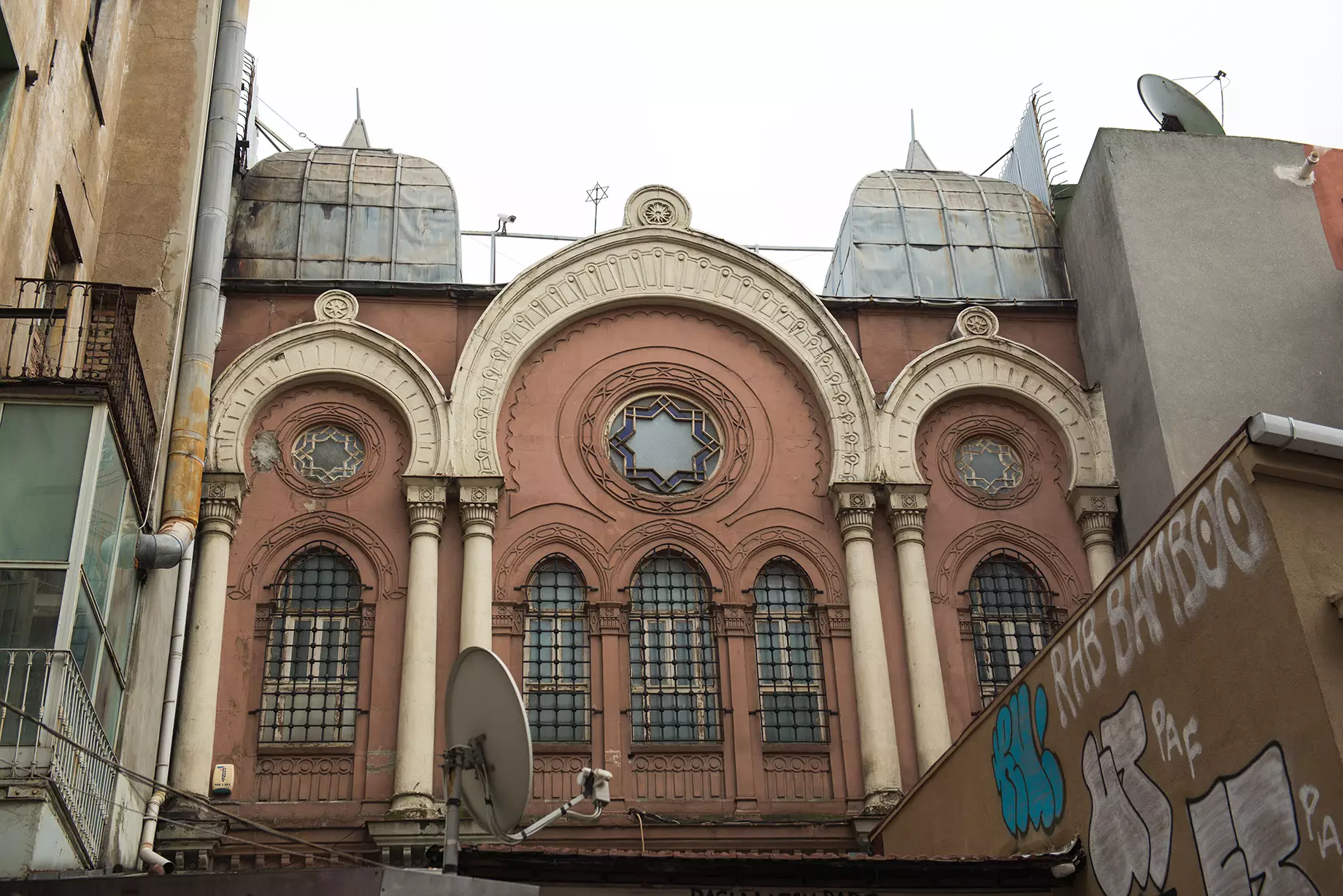
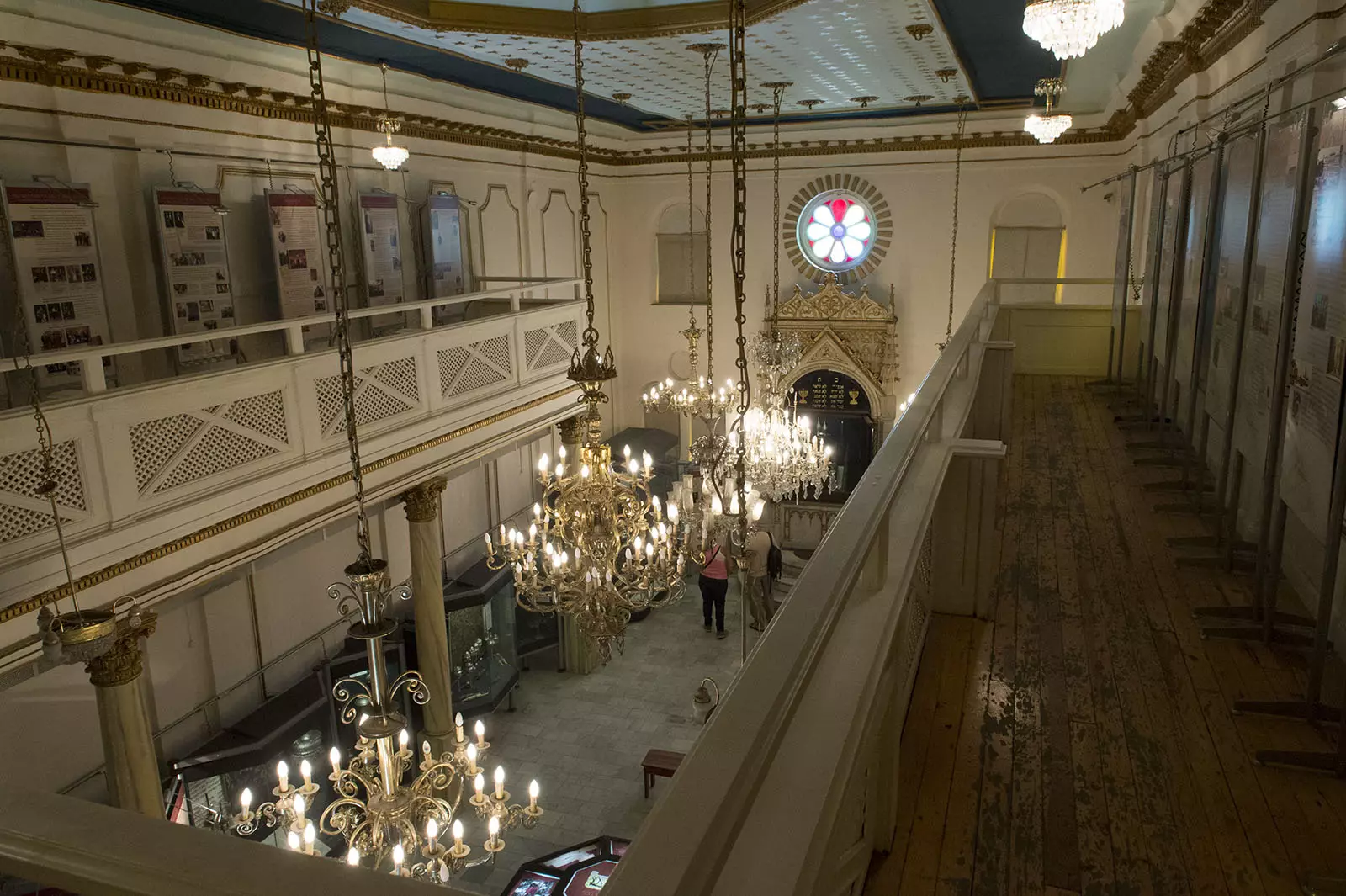
A former synagogue, the museum's exhibit details how the cultures mixed with and influenced each other in the past 500+ years since the Spanish expulsion.
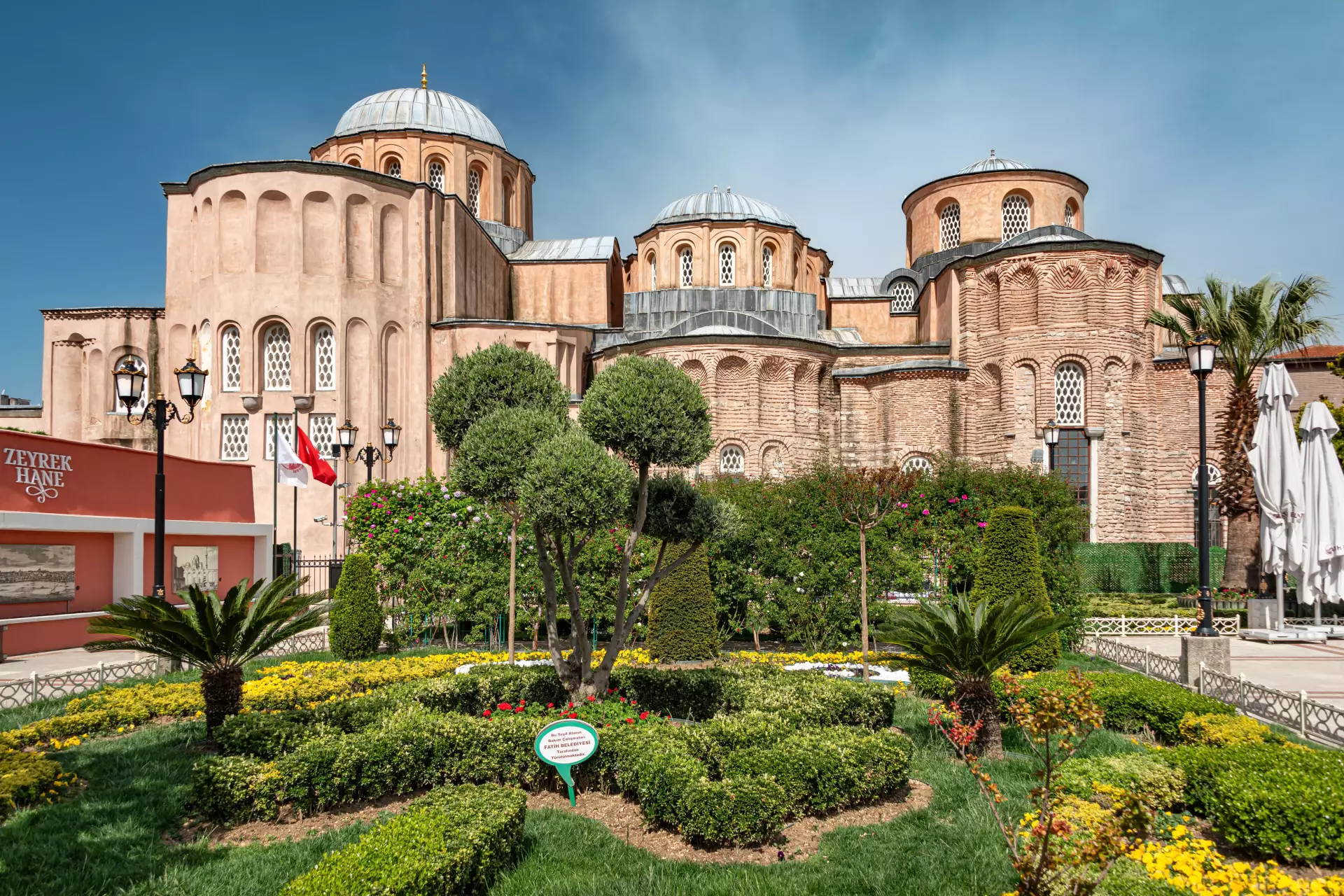
Built circa 1200 as the Eastern Orthodox Theotokos Kyriotissa Church, after the Ottoman conquest it was handed over to the Qalandari, a Sufi sect. In the mid-18th century it was converted to a Sunni mosque, and its mosaics were plastered over. The original appearance was restored in the 1970s.
The only active Ashkenazi Synagogue open to visits and prayers.
This is a 1927 Beaux Arts building named after its patron Süreyya İlmen Pasha, then a deputy of Istanbul who was impressed by theatres in Europe during his visits. It became the first opera house in the Asian side of Istanbul, but due to deficiencies in its interior design, it barely staged any opera and was converted to a cinema soon afterwards. It underwent a significant restoration and reverted to its original purpose in 2007, so now houses performances of ballet, opera, and classical music; good tickets are often extremely cheap.
It was built by the Genoese in the 14th century on the city walls of Galata, marking the highest point of their territory. Ride an elevator and take two flights of stairs to the top, then walk the parapet for a 360°-view of Istanbul, including the entire Sultanahmet peninsula: crowned by Topkapı Palace, the Blue Mosque and Hagia Sophia. A beautiful spot worthy of a lot of pictures.
An attractive stairway mixing the Neo-Baroque and early Art Nouveau styles, climbing up from Bankalar St towards the Galata Tower. It was built in the 1870s by Abraham Salomon Camondo, who belonged to a prominent Ottoman-Venetian Jewish family of financiers and philanthropists.
A medieval citadel on the Bosphorus at the mouth of the Göksu creek. It was built in the late 14th century to control (polite word for "choke off") shipping along the Bosphorus, which narrows to 660 m at this point. It worked in tandem with Rumeli Citadel, built some 50 years later on the European bank. It fell into disrepair but was restored in the 1990s. You can't go in, but it's a pleasant setting; the entire village is named Anadolu Hisarı after the fort and has many traditional wooden houses (yalı). Ferries along the Bosphorus call here.
A ritual dancing hall of the mystical Mevlevi order, the followers of the teachings of Mewlānā Rumi. The quiet and peaceful garden is a welcome escape from the hustle and bustle of Beyoğlu. The oldest Mevlevi lodge in Istanbul, the convent was started in 1491, when the surrounding area was, hard to believe today but, pure wilderness beyond the city walls of Galata, although the current building dates back to 1855, as the older versions succumbed to repairs, rebuildings, and fires. However, the lodge was shut down in the early years of the republic (in 1925) along with all other 'reactionary' movements in Turkey, and the building has been serving as a museum dedicated to the Mevlevi order since 2010. Downstairs is a series of rooms dealing with the daily life of an average dervish, with informational signs in Turkish and English about the history of Islam and the Mevlevi order (also notice the original wooden pillars that support the building on this floor). On the upper floor is a dancing hall, a perfect example of 19th century Ottoman Baroque. Pre-Covid, this was where the sema whirling ceremonies were held every weekend evenings (admission by an extra ticket costing around 100 TL); check if they resumed. On the third floor is a display of various traditional Turkish/Islamic arts, including paper marbling (ebru), and calligraphy. After exiting the building, check out the small graveyard (or the "silent house" as the sign at its entrance says) on one side of the building, shaded by a number of hackberry trees, which Ottomans favoured to plant in the yards of mosques and graves to sign holiness. Here, the carved fez, or the basket of flowers in case of women, perched upon the highly detailed marble gravestone indicates the occupant's rank in the dervish hierarchy. At one corner of the necropolis is the grave of İbrahim Müteferrika, a converted Hungarian who was the first to start automated publishing in Ottoman Turkish in the 18th century, and served as the translator of Hungarian revolutionaries who sought asylum in Turkey, such as Kossuth, who stayed for a year in Kütahya, or Ferenc Rakoczi, who lived his last years in Tekirdağ.
The defining image of Istanbul, dominating the skyline with its great dome and six minarets. Completed in 1617 for Sultan Ahmed I, it's still a working mosque, so dress appropriately and avoid prayer times. Enter via the courtyard on the SW side. You step (shoeless) into the blue-tiled prayer hall beneath the main dome and its semi-domes. The mihrab is of finely carved marble, well-lit, and the minbar (pulpit) next to it is visible from almost all parts.
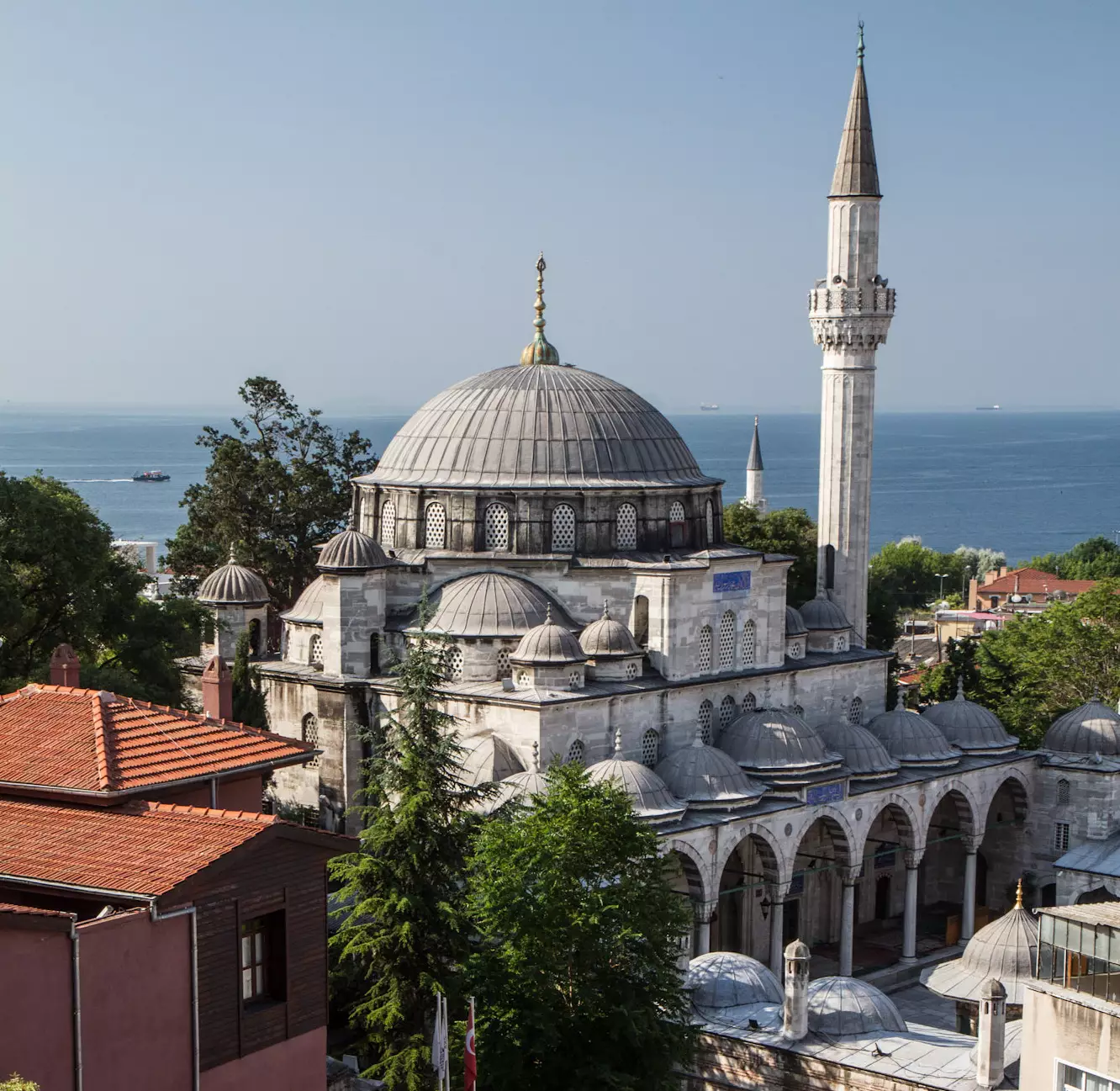
Sokollu Mehmet Pasha was the grand vizier and de facto ruler of the Ottoman Empire during its 16th century golden age. He commissioned this mosque, one of three in the city to bear his name, but the sloping site was a challenge. He hired the best, Mimar Sinan, who completed it in 979 AH / 1571 AD, with the slope resolved by a fronting courtyard above shops and a medrese. The interior has outstanding İznik blue tiles, and three fragments of the Black Stone (Hajar al-Aswad) of the Kaaba: above the main entrance, minbar and mihrab.
This lavish palace with 285 rooms and 43 halls was the admin centre for the Ottoman Empire in its last 60 years. The palace government block (Selamlık) includes the Imperial Mabeyn (State Apartments) and Muayede Hall (Ceremonial Hall), while the Imperial Harem was the sultan's private quarters. Also here are the Painting Gallery, Music Museum, Clock Museum and Museum of Palace Collections. Free audio guide in several languages available by the ticket office. No photography inside, no backpacks but you can leave them in the cloakroom. Allow 3 hours to see everything.
This attractive neighbourhood was home to a large Christian and Jewish population until some decades ago and still has a number of sights like two synagogues, some churches among which the Armenian Surp Krikor Lusavoriç, dozens of wooden houses and a Jewish and Christian cemetery.
Tiny house museum on the life of Turkish novelist Orhan Kemal (1914–1970).