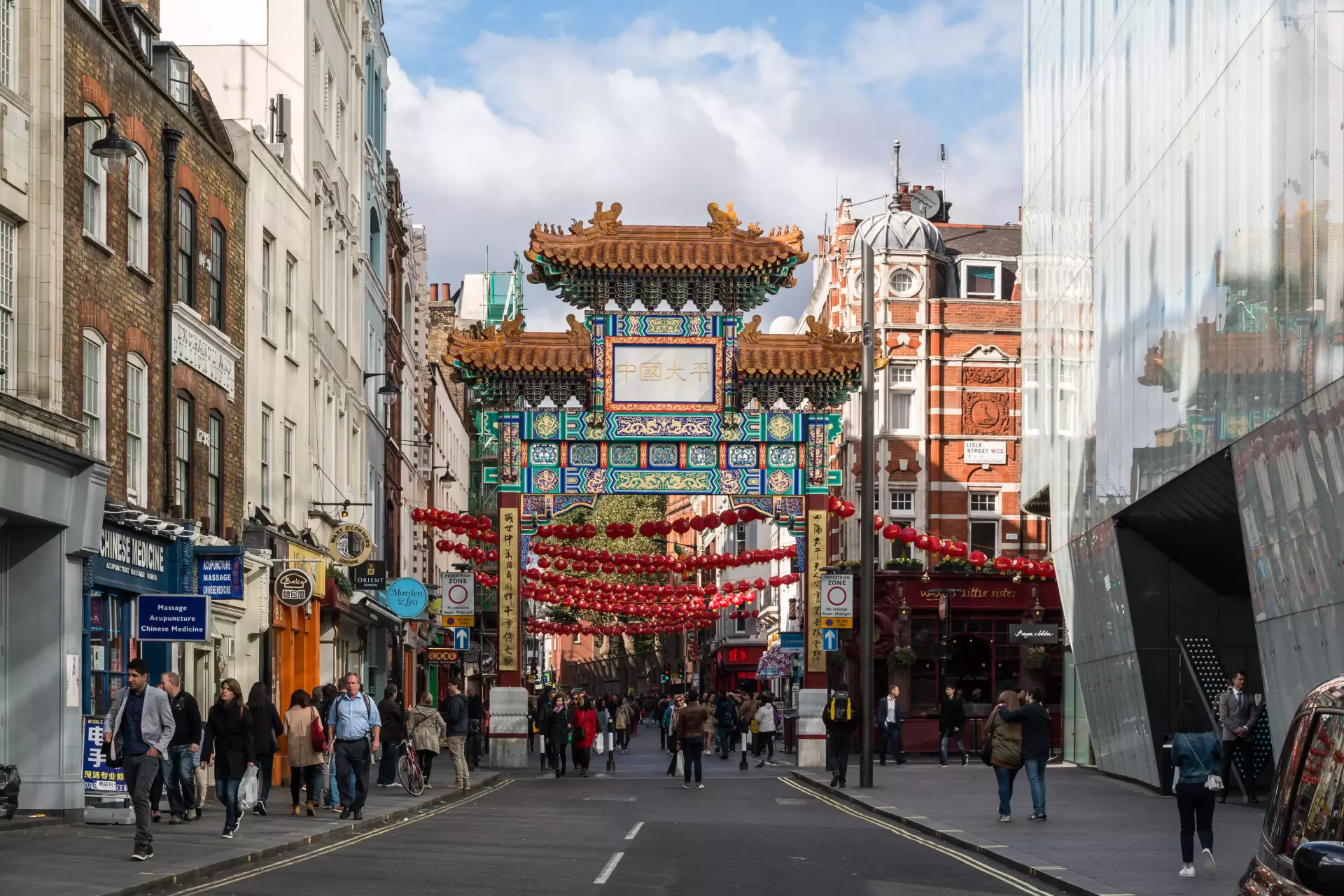
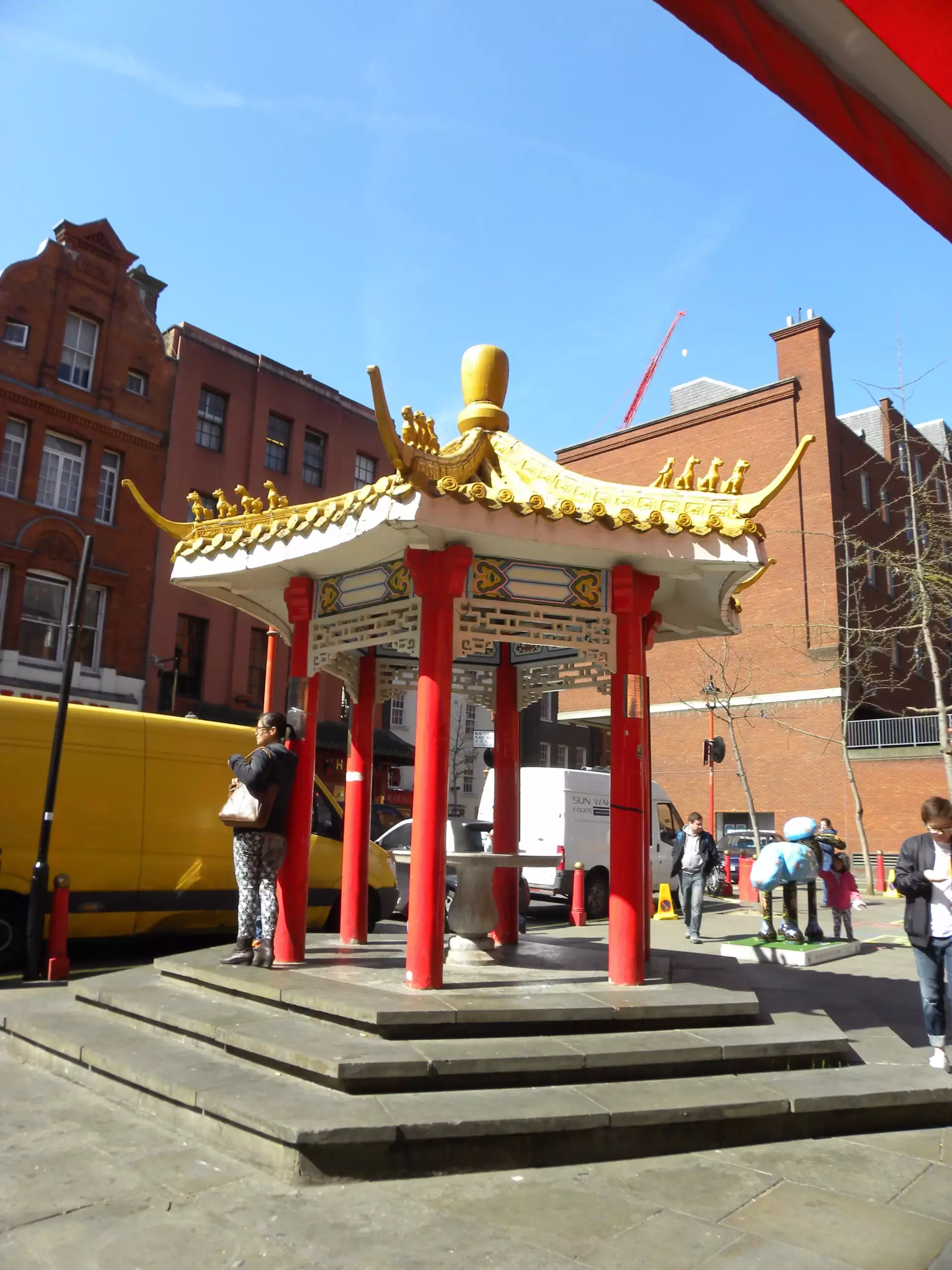
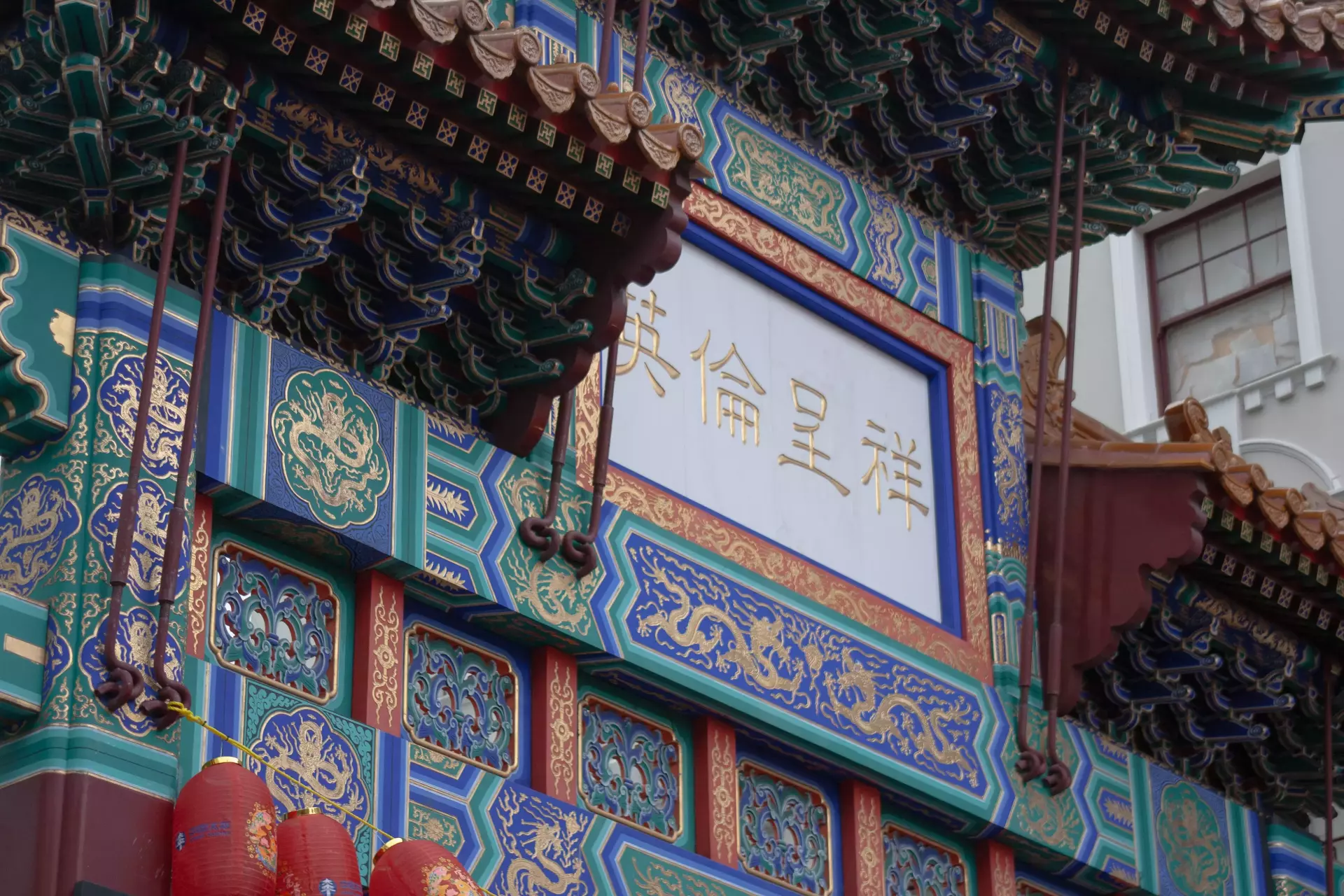
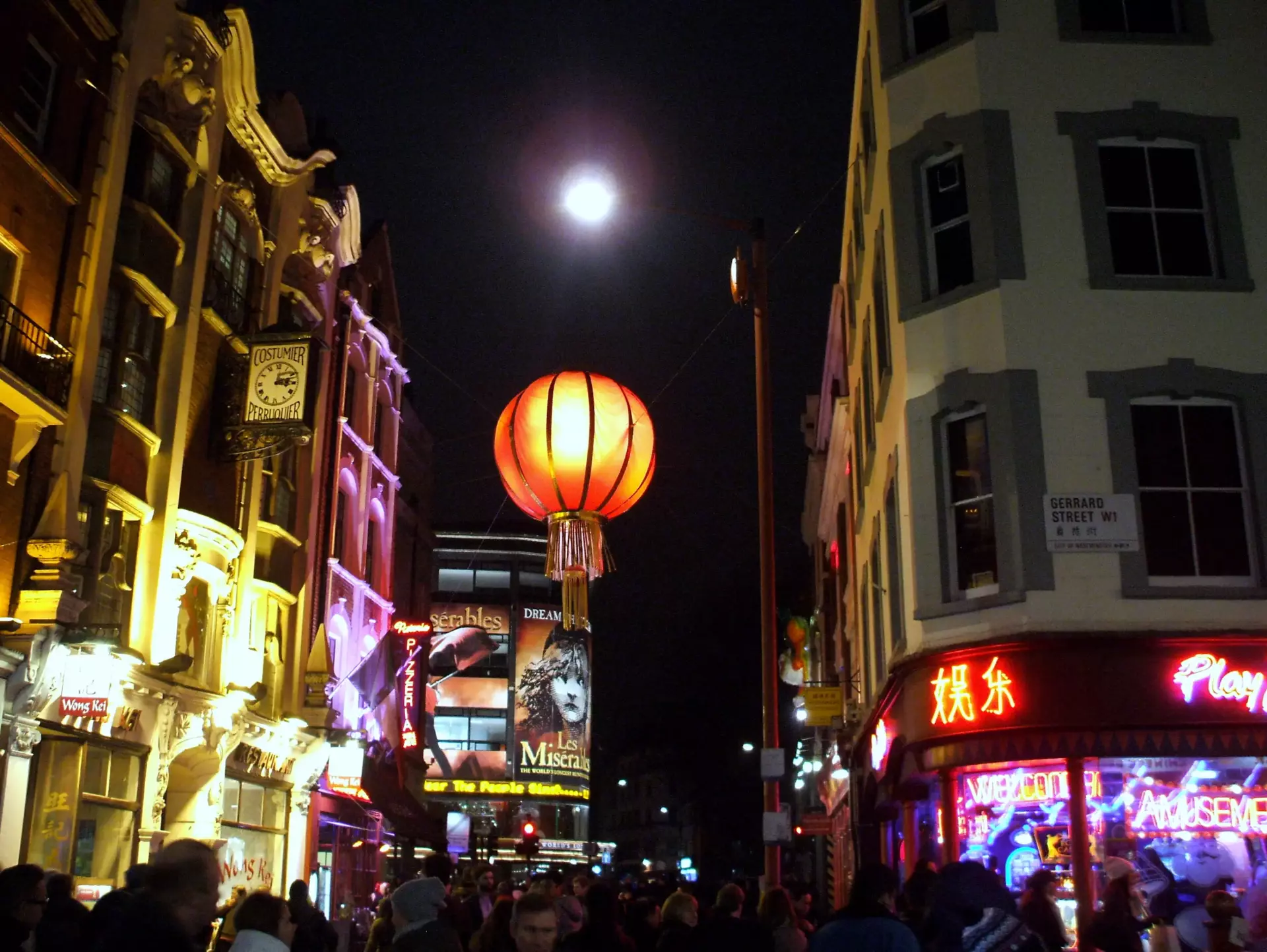
In London's Chinatown, visitors can immerse themselves in a rich tapestry of Chinese culture and Eastern ambiance. It's a vibrant area known for its lively streets and authentic experiences, perfect for anyone seeking a taste of Chinese traditions right in the heart of the city.
One of the standout features in Chinatown are the three stunning ornamental arches. These arches, with their intricate designs and vivid colors, capture the eye and offer a glimpse into traditional Chinese architecture. They serve as beautiful gateways that invite you to explore further.
The area offers unique blends of British and Chinese elements. A fascinating example is the traditional British phone booths, creatively topped with pagoda-style sloping roofs, adding a touch of Eastern flair to an iconic British symbol. It's these charming details that highlight the harmonious fusion of the two cultures.
Chinatown is also famous for its delightful array of Chinese cuisine. From savory dim sum to mouth-watering Peking duck, the neighborhood boasts an impressive selection of restaurants, offering meals that cater to both traditional tastes and modern palates.
Source - https://en.wikipedia.org/wiki/Chinatown,_London
In many cities a local transport museum would be of very narrow interest - not London, however! London's public transport is iconic, and the story of how it developed from horse and cart through early buses, Tube trains and trolleybuses to the present day is well worth coming to find out about. There is plenty of opportunity to clamber aboard the historic buses and Tube trains on display. Also, because London's transport is so well known, the museum shop contains plenty of items that make interesting and original gifts and souvenirs.
The former home of Sigmund Freud. A wide range of exhibits, most famously including the psycho-analytic couch that all of his patients used. Freud was an avid collector of antiquities and there is a fine collection of Greek, Roman and Oriental pieces on show.
An enormous art gallery converted from the former Bankside Power Station, a visit to Tate Modern could easily take half a day. The gallery collects together contemporary and modern art from around the world, arranged thematically. The most stunning aspect of the building, is the enormous Turbine Hall, which plays host to a single piece of work commissioned for the space each year. An extension of the gallery has opened in a ten-storey building behind the existing power station.
A vast shopping, eating, entertainment and (primarily) business complex, home to Britain's second tallest skyscraper, One Canada Square. Now increasingly lively at weekends as well, but still at its most impressive during the week. Spectacular main exit from the Jubilee line Tube station. There is a substantial amount of information about the history and the architecture of the development on the website of Canary Wharf Group, the company that owns the development.
Garden founded by apothecaries in the 17th century to the medicinal properties of plants. It was only opened to the public in the 1980s, when it became a charity. The heat-sink caused by its thick walls, combined with the general waste heat of London itself, keeps the garden much warmer than it would otherwise be at this latitude. Due to this, the garden contains the world's most northerly example of a grapefruit outside of a greenhouse, and the largest fruiting olive tree in the country. The collection contains thousands of different plant species.
Discover mementoes of the famous fictional detective. In reality, this was a lodging house used in the late 1800s and has three floors. The first floor contains Sherlock Holmes' study with Watson's desk, and has bullet holes spelling the initials VR (for Victoria Regina, Latin for Queen Victoria) much to the chagrin of the landlady Mrs. Hudson. Next to that is Holmes' bedroom with a rogues' gallery containing photographs of several notable Victorian-era murderers including Lizzy Bourdain. The remaining rooms upstairs have waxwork figures and artefacts referencing the novels, as well as their adaptations to stage and screen. Photography allowed, though filming requires permission. Prebooking is recommended to circumvent long queues.
Named in honour of Queen Victoria and her consort Prince Albert, this museum has existed for over 150 years. It contains a huge collection of decorative arts from all over the world and far back in time. Trying to see everything in one day would be exhausting, so use the excellent maps the V&A provides to plan where you want to go. There are regular exhibitions concentrating on a particular theme from Chinese art to fashion designers. Frequently they put on children's activities and late DJ nights.
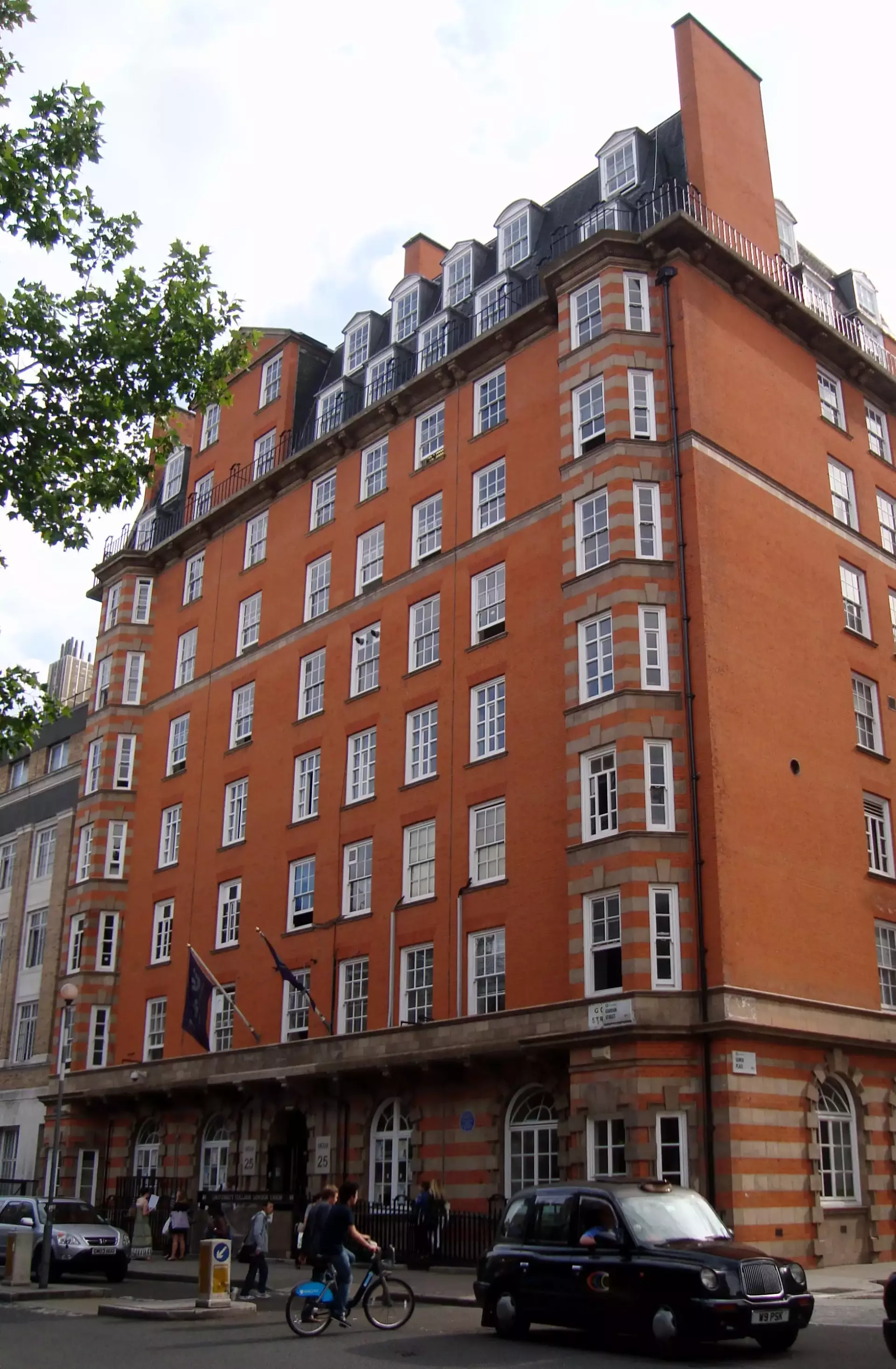
Art deco headquarters of University of London featured in the film Nineteen Eighty-Four.
Eccentric Gothic home of 18th-century poet and author, Horace Walpole, son of England's first prime minister.
A vast repository of the world's cultures, controversially including hundreds of items that were looted from their places of origin. Entire sections are devoted to Egyptian, Greek, and Middle Eastern artifacts, as well as the piece which united them all, the Rosetta Stone. Other items on everyone's list are the largest collection of mummies outside Egypt and the Elgin Marbles. The collection also includes some of the world's finest collections of Chinese and Sub-Saharan African art; perhaps the most famous of the latter are the Benin bronzes. A definite highlight of a trip to London. Temporary exhibitions are invariably excellent and meticulously researched, but can be expensive. It has a fine store, mainly selling replicas of items in the collection.
London Stone is a historic landmark housed in a public display case at 111 Cannon Street in the City of London. It is an irregular block of oolitic limestone measuring 53 × 43 × 30 cm (21″ × 17″ × 12″), the remnant of a once much larger object that had stood for many centuries on the south side of the street.
A splendid Regency house with enormous gardens and woodlands. The gardens alone are worth the visit and are a superb example of 18th-century landscaping. On show at the house is art by masters such as Rembrandt, Turner, Reynolds and Vermeer, and the gardens have a very notable sculpture by Henry Moore. A regular program of outdoor opera takes place here every summer. Movie buffs will recognise Kenwood from Mansfield Park among other famous films. Administered by English Heritage, separately from the rest of Hampstead Heath.
This garden square was established by Lord Southampton in 1665 and is the oldest square in London. It was opened to the public in the 1950s. The square is surrounded by a number of beautiful 18th- and 19th-century buildings and terraces.
Magnificent 19th-century bridge, decorated with high towers and featuring a drawbridge. The bridge opens several times each day to permit ships to pass through – timings are dependent on demand, and are not regularly scheduled. When Tower Bridge was built, the area to the west of it was a bustling port – necessitating a bridge that could permit tall boats to pass. Now the South Bank area sits to its west, and the regenerated Butler's Wharf area of shops and riverside restaurants lie to its east. You can get the lift to the top level of the bridge and admire the view. Glass floors provide an interesting perspective for the brave. The museum highlights the bridge's history and engineering, and there are photographic exhibitions along the walkways between the towers.
Beautiful Italianate church created during the Catholic revival of the 19th century.