Place Vendôme is a grand, eight-sided square designed in 1699. Its original purpose was to showcase a majestic statue of King Louis XIV on horseback. This impressive monument was meant to highlight the power and prestige of the French monarchy at the time.
In 1792, during the excitement and chaos of the French Revolution, the statue of Louis XIV was taken down. Years later, in 1806, a new monument rose in the center of the square—the Colonne de la Grande Armée. Inspired by Trajan’s column in Rome, this new column told the story of Napoleon’s military successes with detailed decorations winding up its sides.
The column standing today is a replica. The original was destroyed in 1871 during the Paris Commune, a turbulent period in the city’s history. The replica continues to hold a prominent place at the heart of the square, serving as a powerful reminder of the past.
Place Vendôme remains a symbol of Parisian elegance and luxury. The square is lined with exclusive boutiques, high-end jewelers, and famous fashion houses like Cartier, Boucheron, Trussardi, and Van Cleef & Arpels. Alongside these prestigious shops are several banks, the French Ministry of Justice, and the world-famous Hotel Ritz. Every corner of the square reflects the refined and sophisticated atmosphere Paris is known for.
Source - https://en.wikipedia.org/wiki/Colonne_Vend%C3%B4me
a Roman Catholic church on the east side of the Place Saint-Sulpice within the rue Bonaparte, in the Luxembourg Quarter of the VIe arrondissement. At 113 metres long, 58 metres in width and 34 metres tall, it is only slightly smaller than Notre-Dame and thus the second largest church in the city. It is dedicated to Sulpitius the Pious. During the 18th century, an elaborate gnomon, the Gnomon of Saint-Sulpice, was constructed in the church. In front of the church itself is the magnificent Place Saint-Sulpice which contains the 'Fountain of the Four Bishops'. The church has a long-standing tradition of talented organists that dates back to the eighteenth century. In 1862, Aristide Cavaillé-Coll reconstructed and improved the existing organ built by François-Henri Clicquot. Though using many materials from Clicquot's French Classical organ, it is considered to be Cavaillé-Coll's magnum opus, featuring 102 speaking stops, and is perhaps the most impressive instrument of the romantic French symphonic-organ era. Its organists have also been renowned, starting with Nicolas Séjan in the 18th century, and continuing with Charles-Marie Widor (organist 1870-1933) and Marcel Dupré (organist 1934-1971), both great organists and composers of organ music. The current organists are 'titulaire' Daniel Roth (since 1985) and 'assistant titulaire' Sophie-Véronique Cauchefer-Choplin. In Saint-Sulpice Sunday organ recitals are held on a regular basis (Auditions du Dimanche, following the High Mass, usually from 11:30am till 12:05pm, during the subsequent mass, a visit of the organ loft is possible).
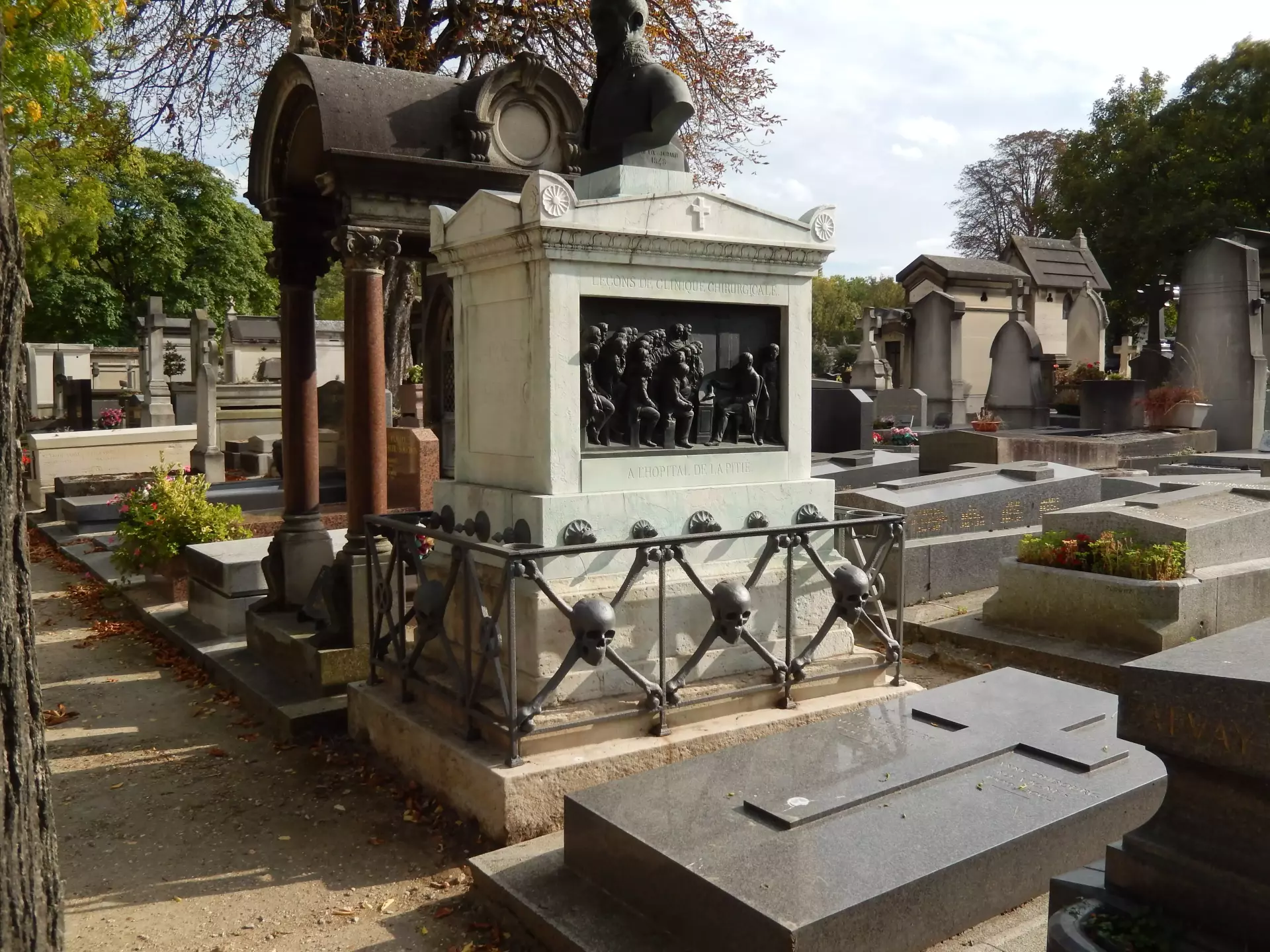
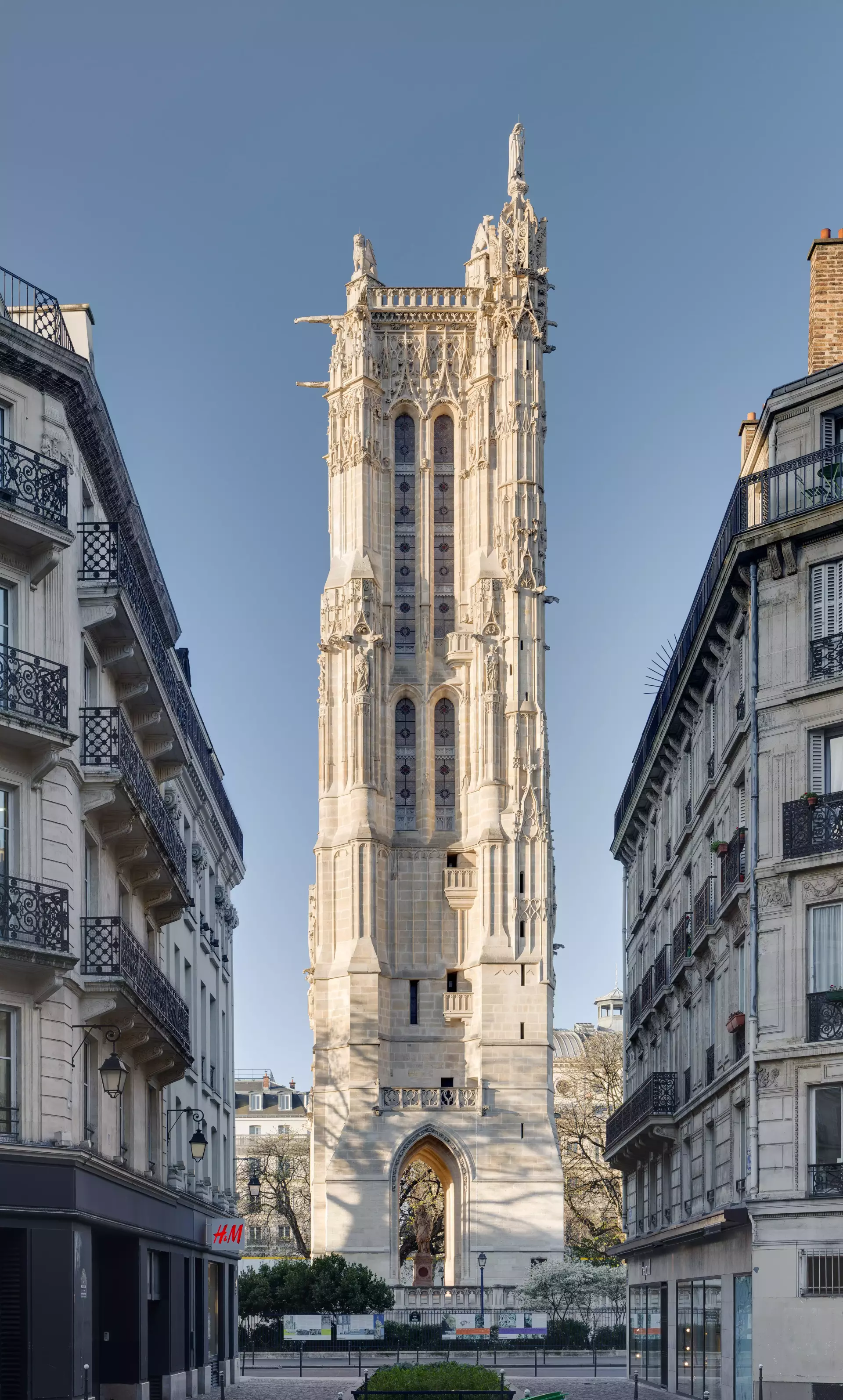
Many feel that this, Paris' town hall, is one of the loveliest buildings in the city. You might not get that from the front view, but try watching the light change on its roofs and towers during sunset from one of the cafés on the Ile de St. Louis, the Lutece for instance. Alternatively, go to the top floor of the Bazar de l'Hôtel de Ville (BHV) department store opposite, on rue de Rivoli and walk up a flight of stairs to the roof terrace (terrasse), from which there is a dramatic view of both the roof of the Hôtel de Ville and the immediate surroundings and river. The present Hôtel de Ville replaced the 16th century original which was burned down during the Commune in 1871. A pastiche of its predecessor, but on a far larger scale, it was designed by the architects Ballu and Deperthes, chosen after a competition, and was mostly completed by 1882. The building is lavishly, and some would say heavy-handedly, decorated both inside and out, and finished in an arrestingly white stone, similar to that used for the even more eye-catching Sacre-Coeur basilica. The statue on the garden wall on the south side is of Etienne Marcel, the most famous holder of the post of "prevôt des marchands" (provost of merchants) which pre-dated the office of mayor. Marcel came to a sticky end, lynched in 1358 by an angry mob after trying to assert the city's powers a little too energetically. The Hôtel de Ville was for many years the private fiefdom of Jacques Chirac, France's president before Sarkozy, and was the site of a scandal centring on both illegal jobs given to Chirac's party members and an immense entertainment budget. General de Gaulle greeted the crowds from a front window in 1944 when Paris was liberated from the Germans and Robespierre was shot in the jaw and arrested in the original building in 1794. Admirers of Hôtel de Ville's architecture will want to know that Ballu also built the Church of La Trinité in the 9th arrondissement and the belfry of the town hall of the 1st arrondissement, opposite the Louvre's east façade. Ballu also restored the Tour St Jacques (see below), which was uncovered after restoration work lasting over a decade.
Probably the most visited graveyard in any Western city, the vast Père-Lachaise features literally thousands of often elaborately decorated graves separated by narrow lanes and avenues. The roll call of famous burials includes: Chopin, Champollion, Sarah Bernhardt, Edith Piaf, Oscar Wilde, Delacroix, Bizet, Proust, Balzac, Colette, Molière, and Jim Morrison of The Doors.
The massive parish church of the Les Halles area is a notable example of late Gothic interspersed with Renaissance details (including the entire front façade), as it was only completed in the 17th century. Its unique form results from a combination of relatively short length and impressive height of over 30 metres inside. The latter allows room not only for an array of stained glass windows and paintings, but also France's largest church organ of 8,000 pipes. The sculpture Écoute, depicting an oversized human head, was placed in front of the church's southern facade and has become a favourite photo spot.
This street is named in honor for Nicolas Appert, a French businessman who invented airtight food preservation. On January 7th, 2015, it was the site of the Charlie Hebdo terrorist attack, which resulted in the deaths of 12 people. A plaque in front of a former office building memorializes the victims of the satirical magazine's staff.
CLOSED UNTIL LATE 2024 OR 2025 FOR RENOVATION WORKS. Built in 1900 for the universal exposition, the Grand Palais was an engineering feat and a milestone of design, marking the transition between historicism and modern architecture. It remain impressive today due to its unique, exquisite style and sheer volume of its main nave. The Grand Palais, managed by the state-owned institution Rnm who also manage the Musee de Luxembourg, is used both for temporary exhibitions of historic and contemporary art collections (both beaux arts and applied) and unique events, such as catwalk shows during the Paris Fashion Week, Bonhams car auctions and prestigious galas.
The C.I.U.P. is a student quarter established in 1925, providing homes for about 10,000 students, scientists, and artists from 120 countries. It has 40 houses attributed to individual nations. The individual houses organise top quality cultural and political events. Among the most remarkable buildings are the Fondation Deutsch de la Meurthe, the Heinrich Heine House (Maison Heinrich Heine - Fondation de l'Allemagne), the Swedish Student House (Maison des Etudiants Suédois), and the Swiss Pavilion (Pavillon Suisse) which was built in 1933 on plans of Le Corbusier.
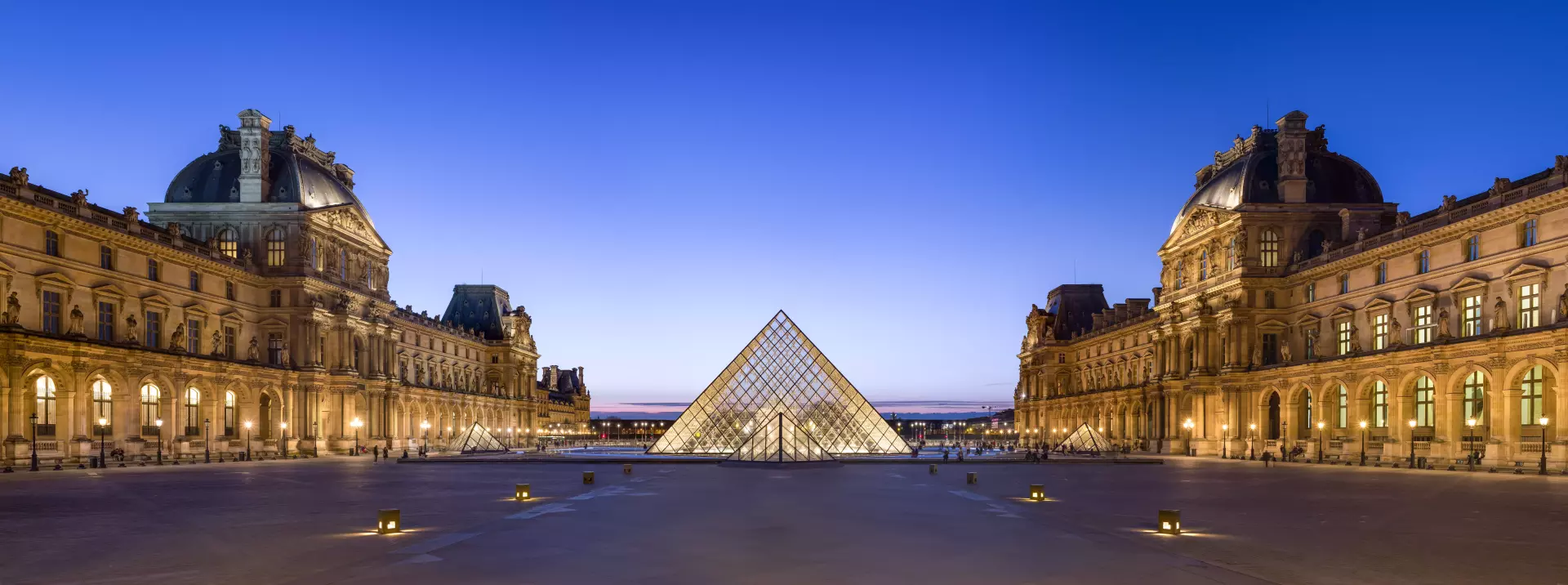
A monument to the French art de vivre, housed in a 19th-century wing of the Louvre that has been restored to beaux-arts splendour, its galleries and period rooms showcase eight centuries of Gallic taste in interior decoration.
A sculpture by Auguste Rodin in memory of the French novelist Honoré Balzac. The artwork is sometimes considered the first truly modern sculpture.
Since 2021 the 18th-century former Bourse de Commerce building has been the Paris home of the art collection of the French business magnate François Pinault, showing a rotating selection of contemporary artworks either newly commissioned or taken from his collection.
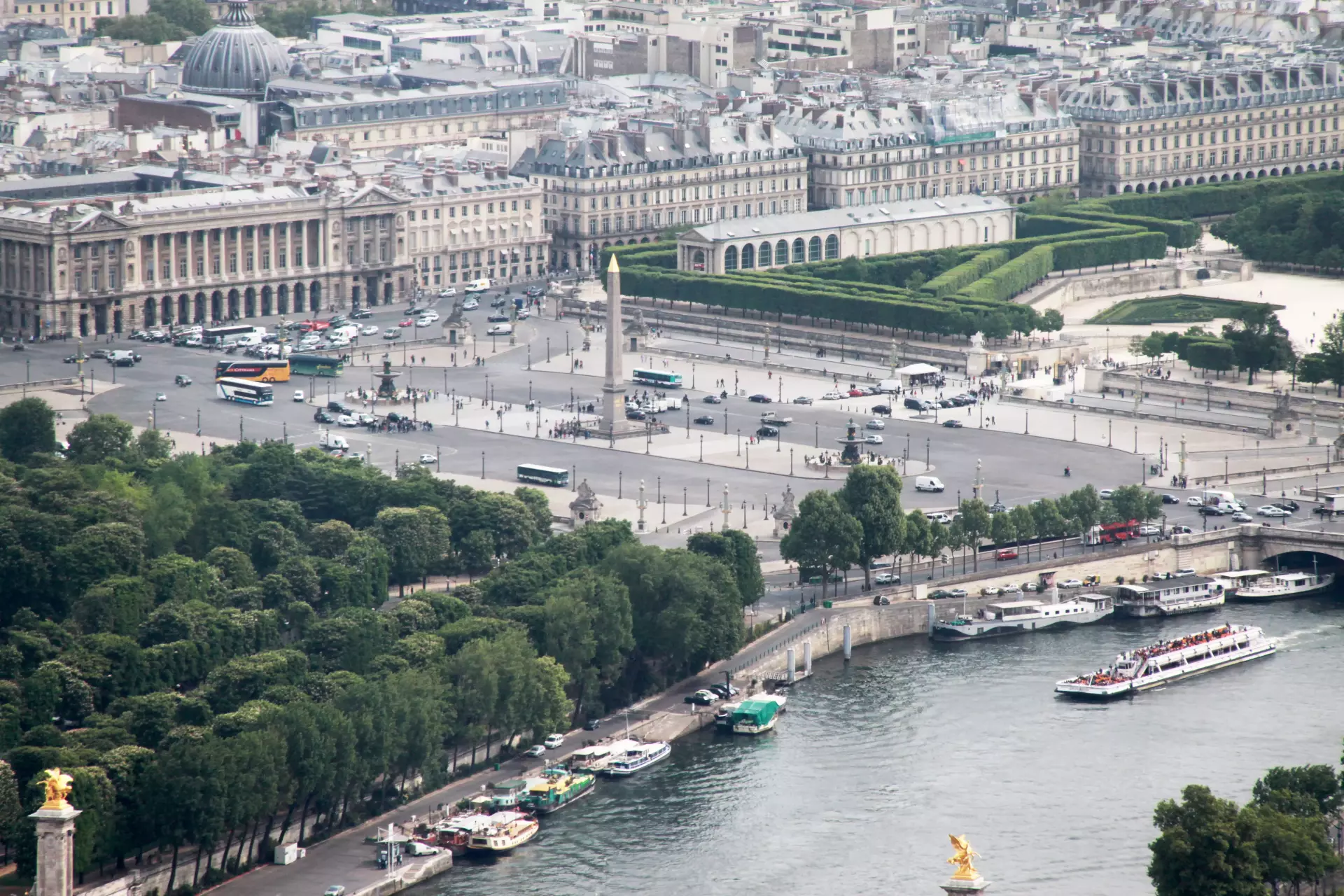
The largest square in Paris with fantastic vistas in every direction. It was in this square (then called la Place de la Revolution) that the French King Louis XVI, Marie Antoinette and many others were guillotined during the Terror. The large Egyptian obelisk in the centre of the Place de la Concorde was brought from the Temple of Luxor.
Reopened after extensive renovations, this small museum near the Louvre houses the Jean Walter and Paul Guillaume Collection, sold to the French Republic on very generous terms and numbering 143 paintings from the late 19th century and the first half of the 20th century (15 Cézannes, 24 Renoirs, 10 Matisses, 12 Picassos, 28 Derains, 22 Soutines). The collection joined the eight immense Water Lilies that Monet gave France in 1922 and which have been displayed since 1927 in two huge oval rooms purpose-built on the artist's instructions.
The building has a freely accessible rooftop which allows for a beautiful bird's-eye view of the northern half of Paris.
Castel Béranger is an apartment building that was the first entirely art nouveau building in Paris, insulted at the time as "Castel Derangé". Its richly decorated facade won a city competition in 1898. It contains 36 apartments, all of which are still privately owned and not open to the public.
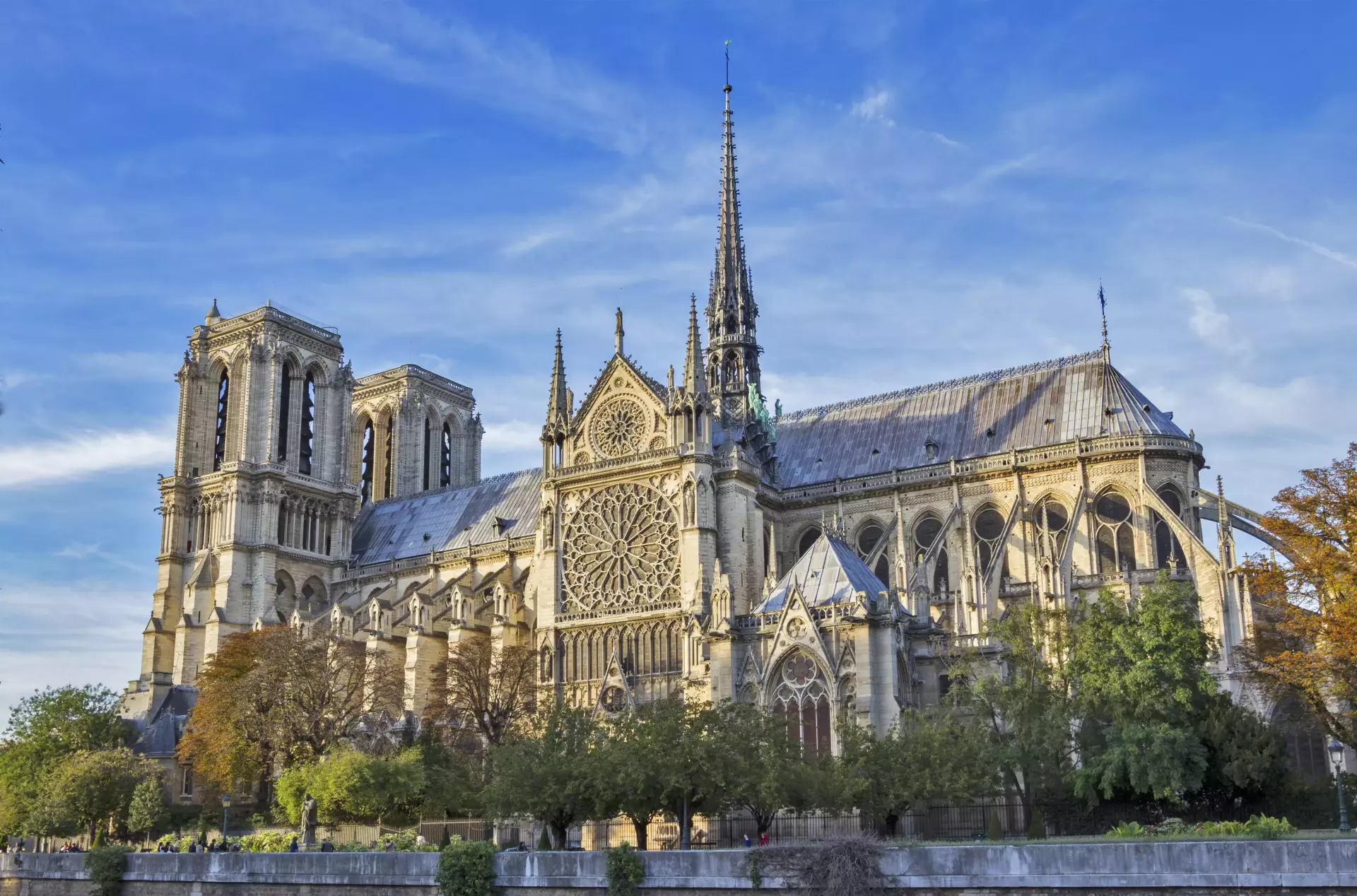
The early Gothic Cathédrale de Notre Dame (Our Lady) has a 12th century design but wasn't completed until the 14th. Still it is a good example of the development of the style, though the west or main portal is a bit unusual in its rigidity. A April 2019 fire caused severe damage, but after extensive renovation the cathedral was reopened to the public in December 2024.
Suspended above the train tracks this garden is surprisingly calm and chilled-out.