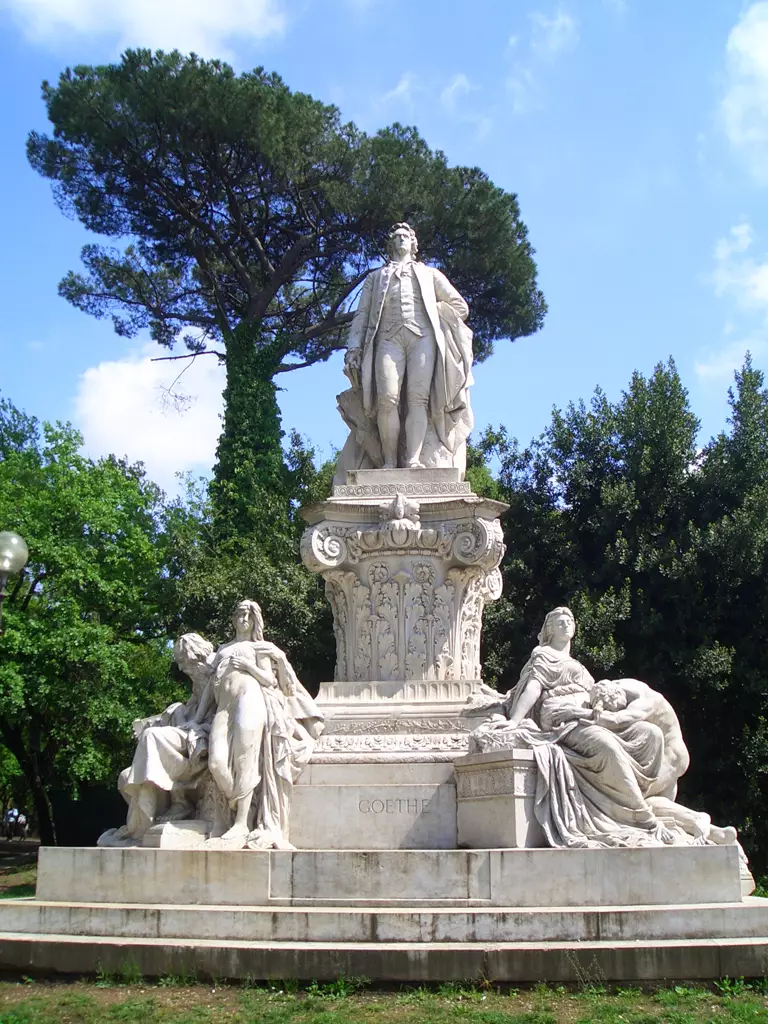
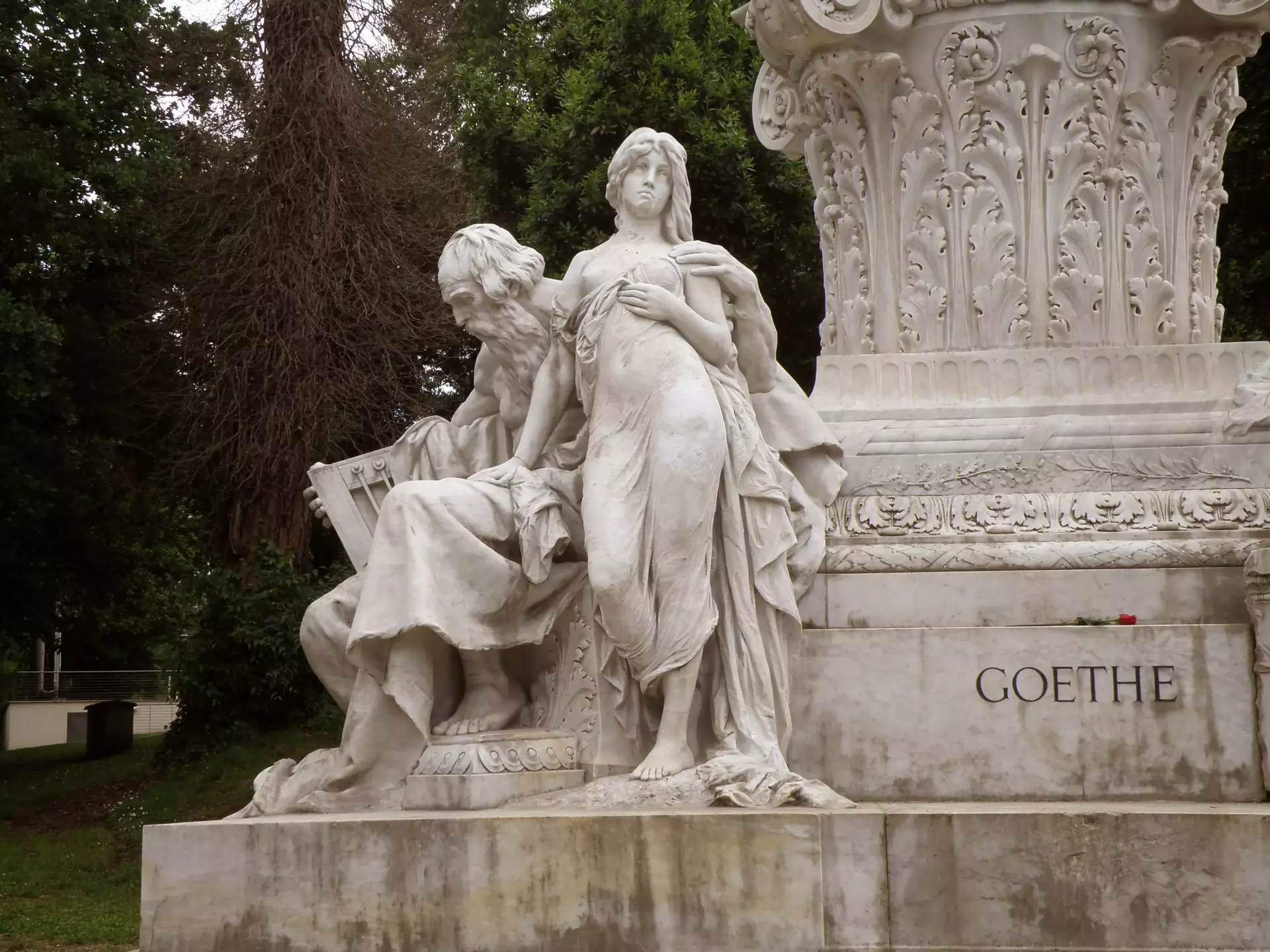
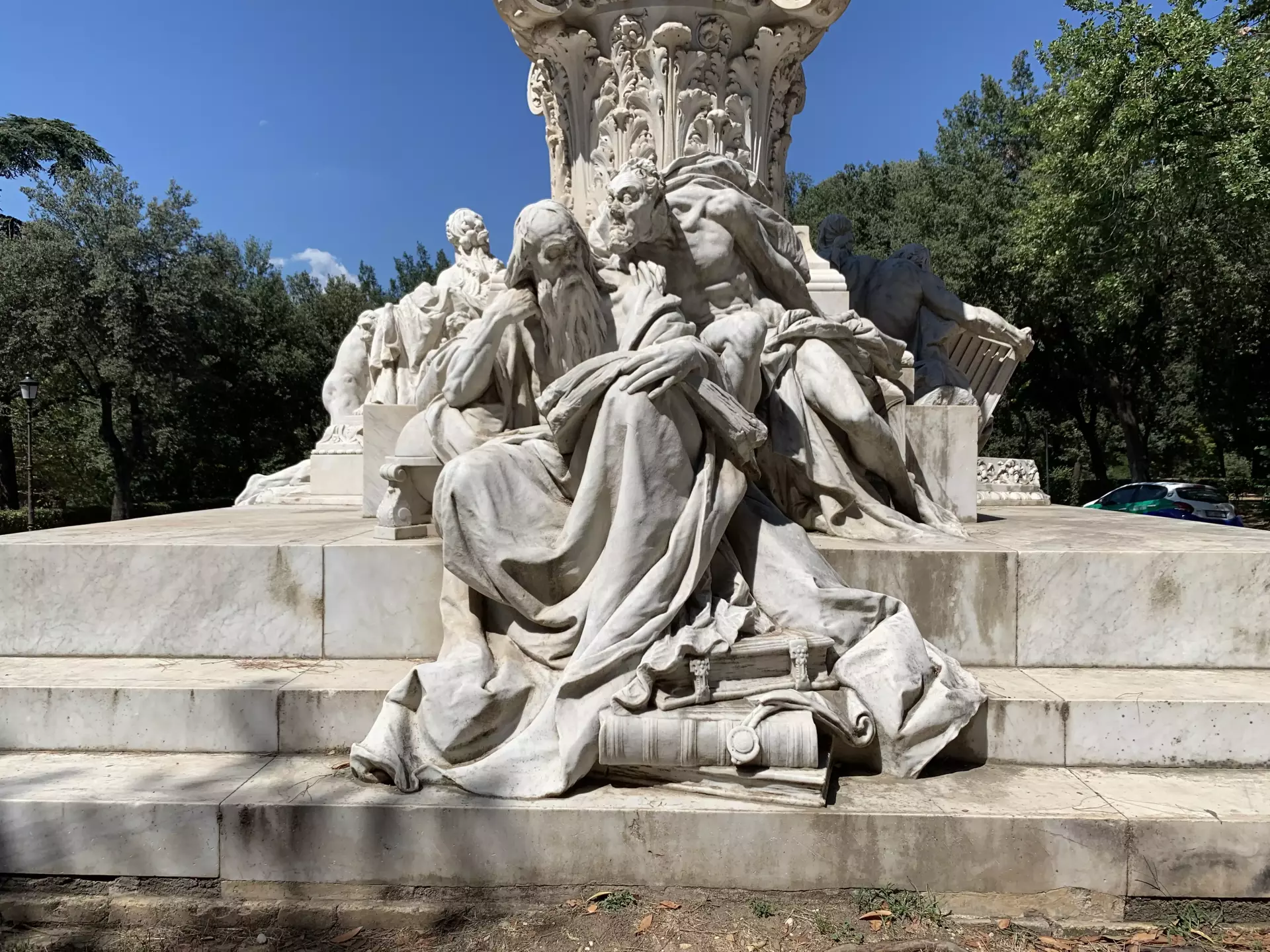
Set in a peaceful corner near the Villa Borghese gardens, the Goethe monument in Rome honors one of Germany's most celebrated writers, Johann Wolfgang von Goethe. Surrounded by leafy trees and classical Roman scenery, this impressive statue stands as a symbol of the writer’s deep connection to Italy’s capital.
The Goethe monument was inaugurated in 1904, reflecting the high regard Italians and Germans alike have for Goethe’s work and his influence on European culture. Goethe spent several years in Italy in the late 18th century, with his Roman experience inspiring much of his writing. The city and its artistic treasures deeply shaped his creativity, leaving a mark on literary history.
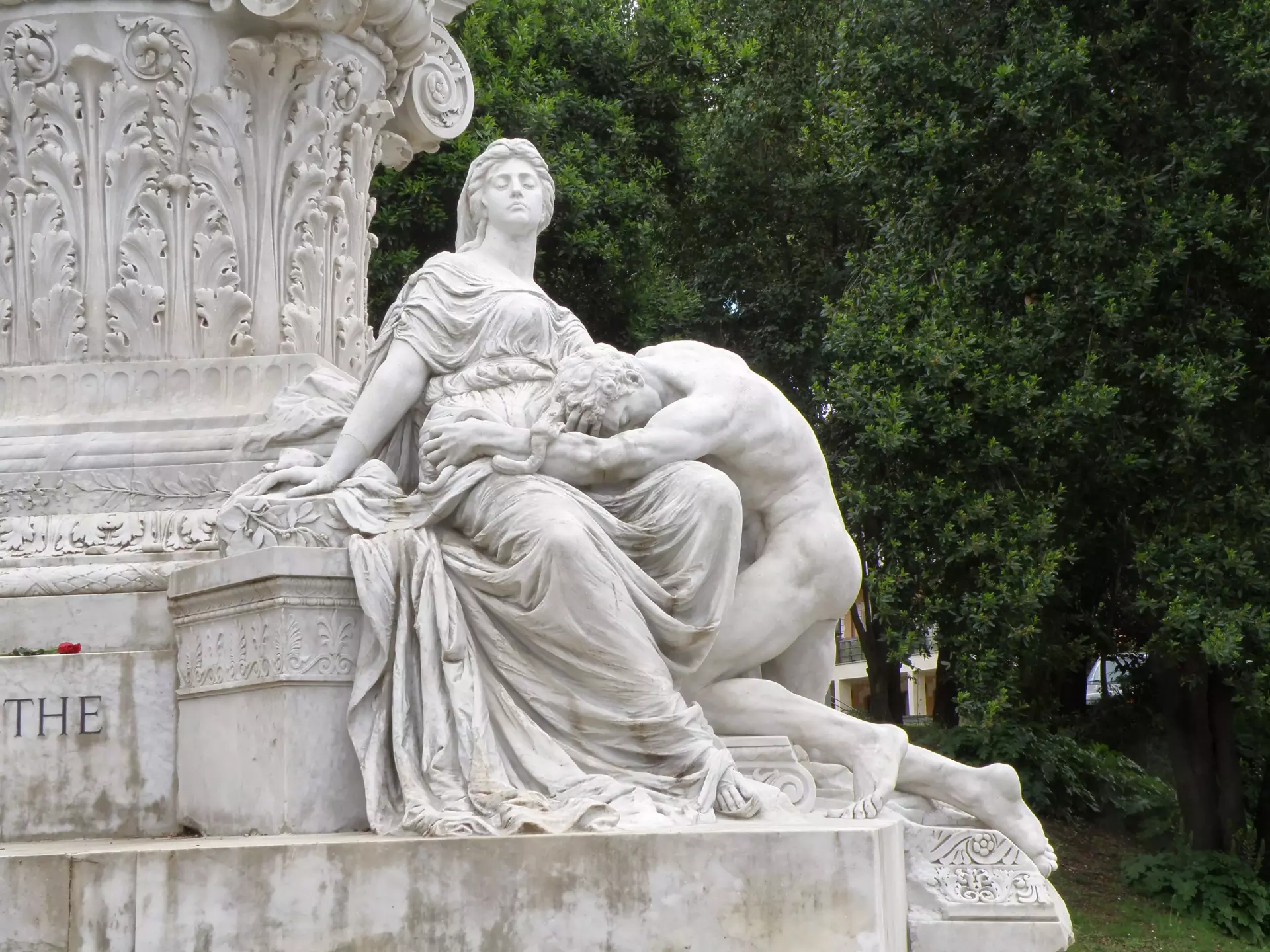
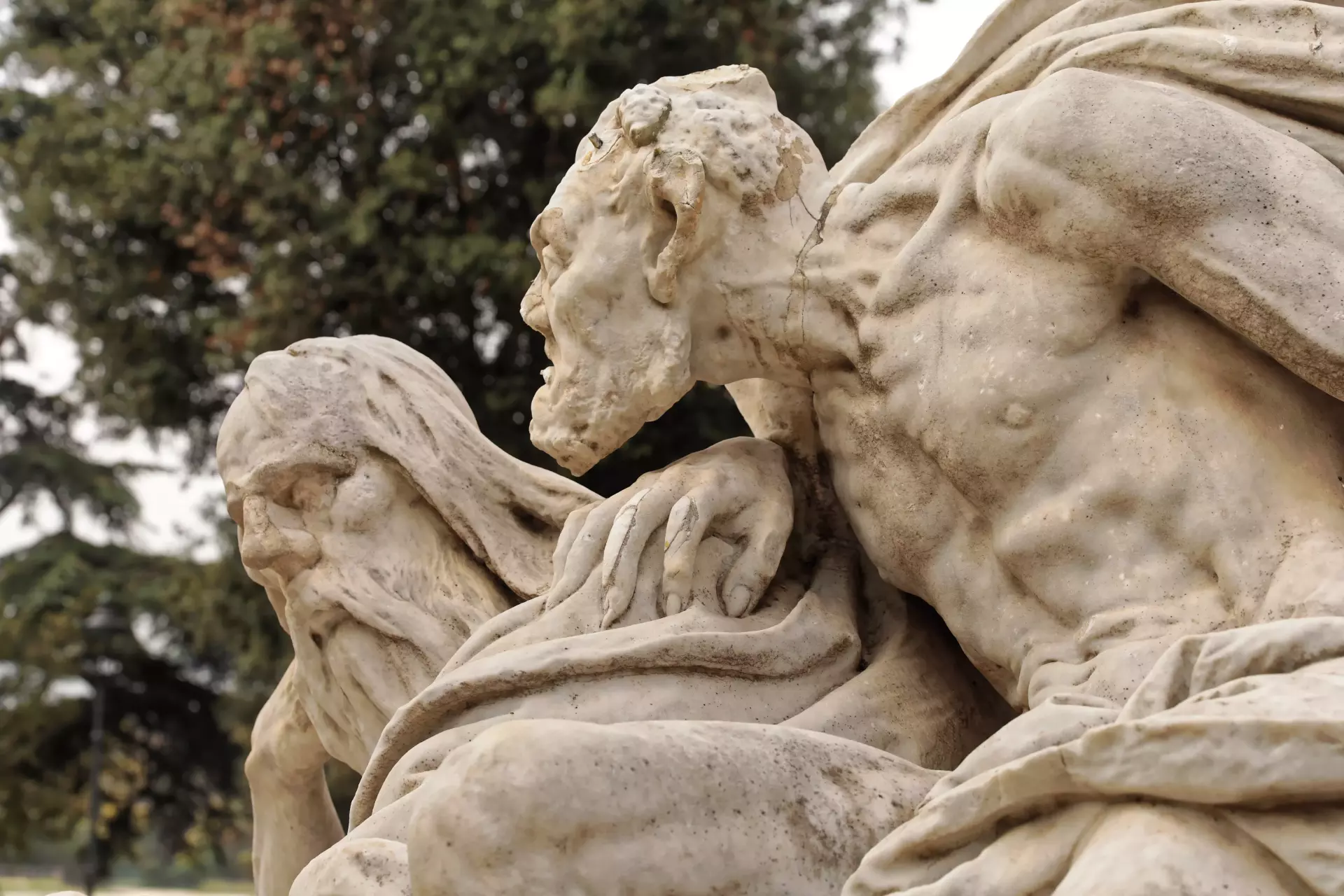
The monument features a larger-than-life statue of Goethe, set atop a pedestal. Around him, smaller figures represent characters from his famous literary works, including "Faust" and "Iphigenia in Tauris." This thoughtful design invites visitors to reflect on his imaginative worlds while standing in a tranquil Roman setting. The monument's location near the Villa Borghese gardens makes it a quiet stop for those exploring the city’s green spaces.
The Goethe monument highlights the longstanding cultural exchange between Italy and Germany. It not only celebrates Goethe’s literary achievements but also the inspiration he found in Italian art, history, and landscape. Today, visitors from around the world pause here to appreciate both the beauty of the statue and the cultural ties it represents.
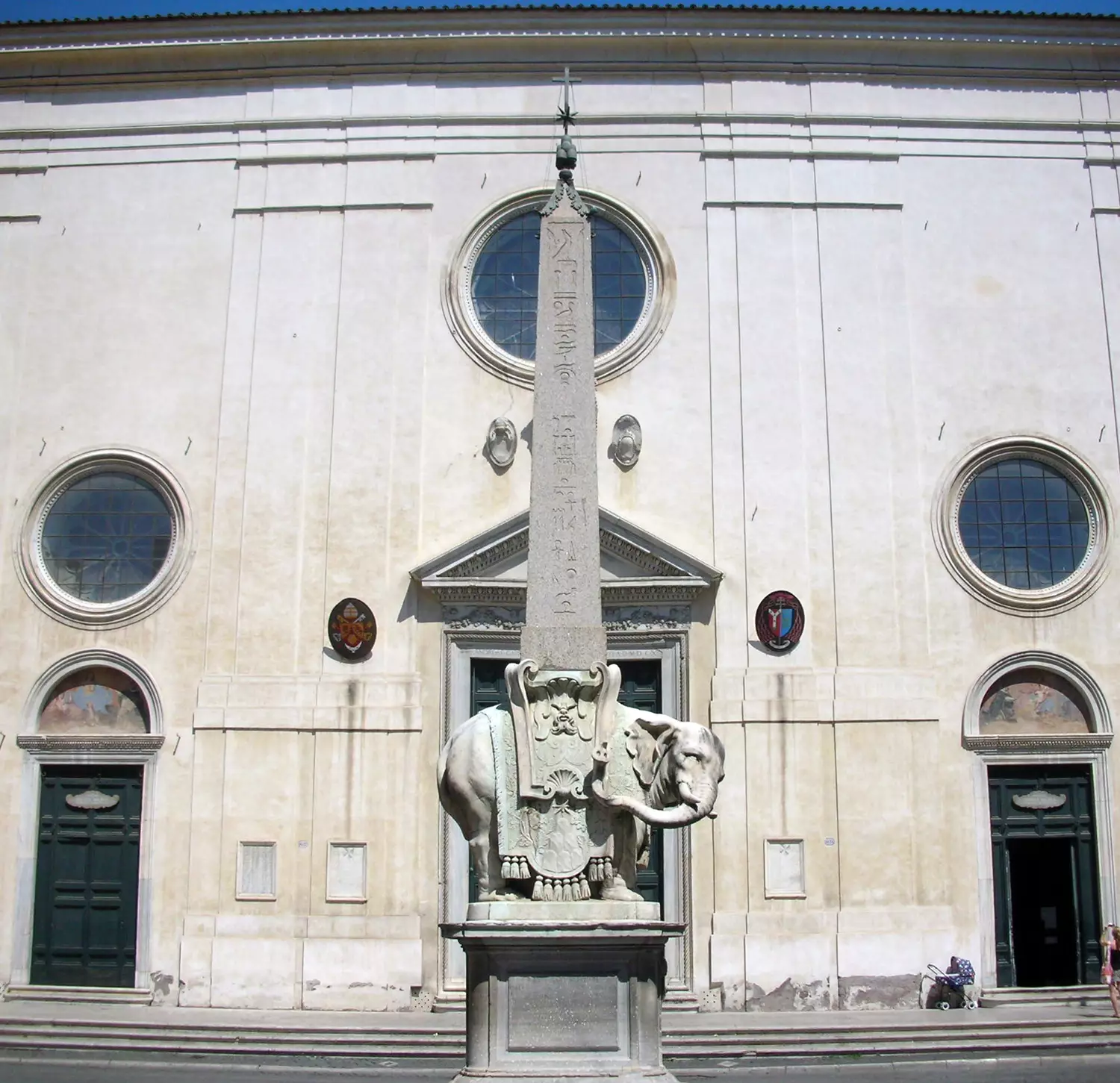
One of Bernini's masterpieces, an obelisk on the back of an elephant.
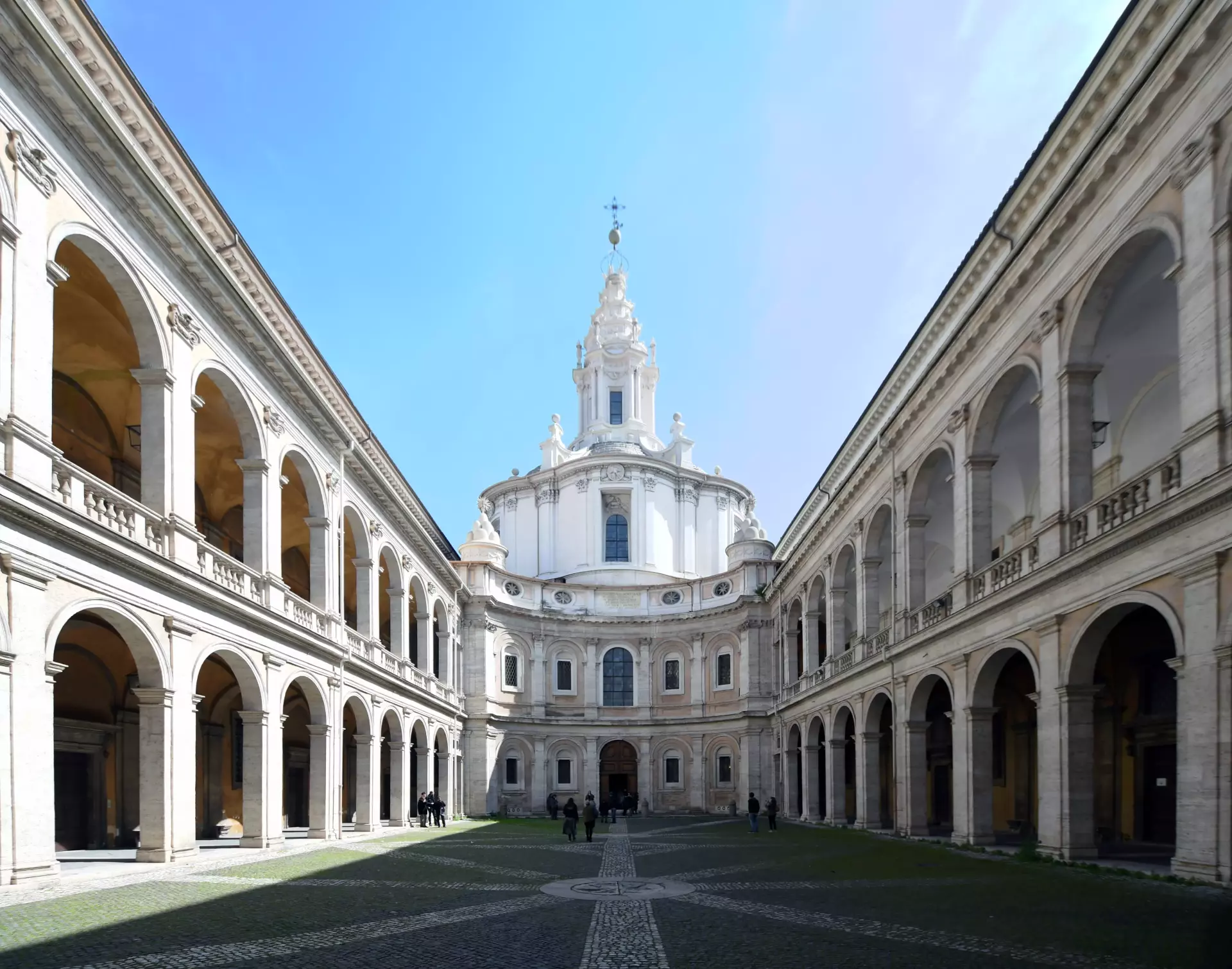
This little church is hard to find but well worth the extra effort although it is often closed when you get there. One of Borromini's masterpieces. It is located only a block from Piazza Navona, but not usually visible from the street, as you must enter the courtyard of an old palazzo to reach the church. Sant'Ivo is a small church the dome of which is shaped like the Star of David, but with every other point rounded. The steeple seen from the outside looks like it has a staircase wrapped around it that ascends to heaven. As the church was commissioned by the Barberini family that produced a number of popes and whose family symbol was the bee—some say the steeple resembles the stinger of the insect.
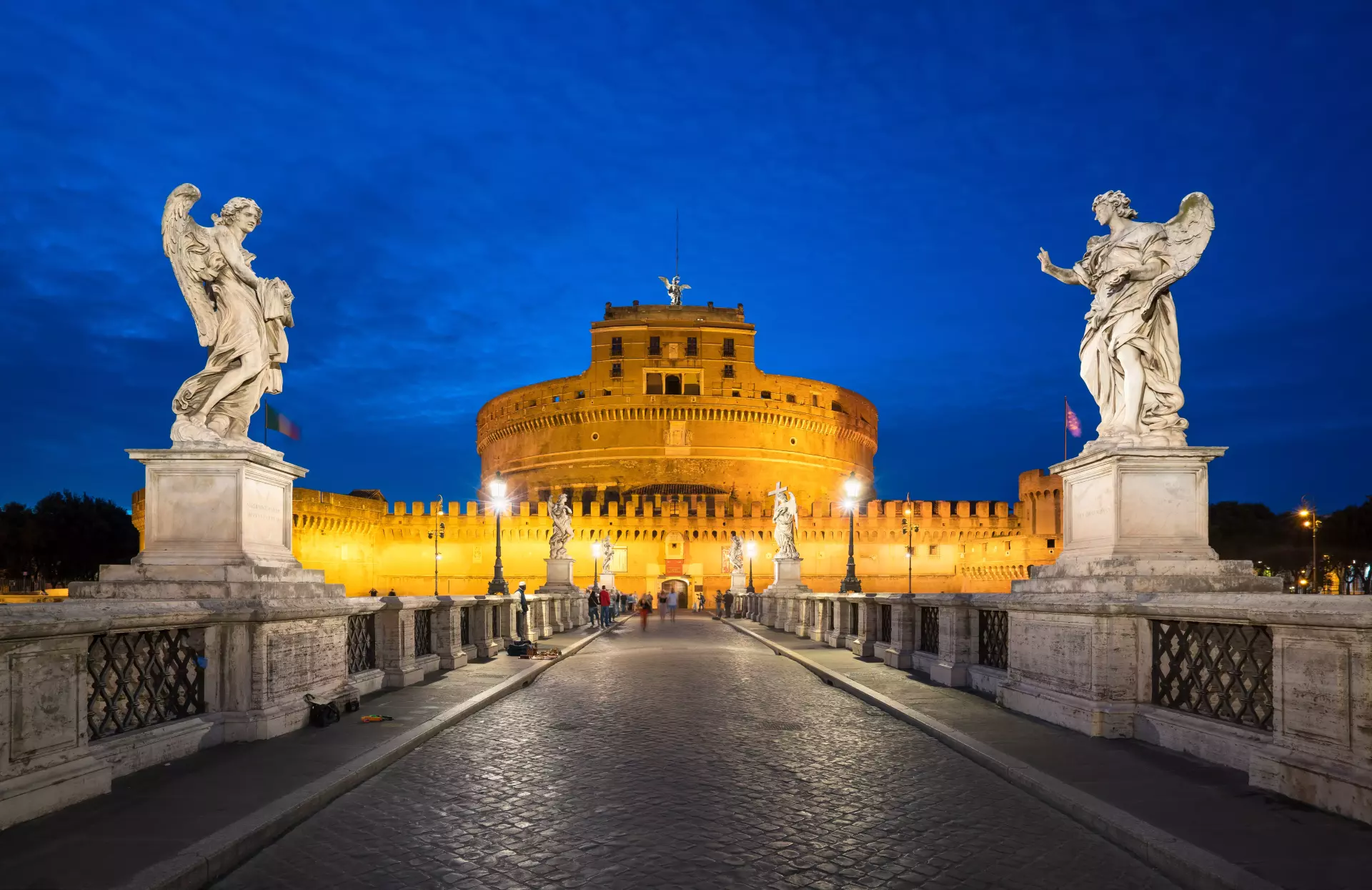
Perhaps the most fascinating building in Rome. The core of the structure began life as the mausoleum of Emperor Hadrian, built between 135 and 139 AD. Subsequent strongholds built on top of the mausoleum were in turn incorporated into a residence and castle by medieval Popes. The building was used as a prison until 1870 but now houses a museum. Opera buffs will be exhilarated to visit the balcony from which Tosca leaps to her death. Film buffs will recognise it as a setting from Angels and Demons.
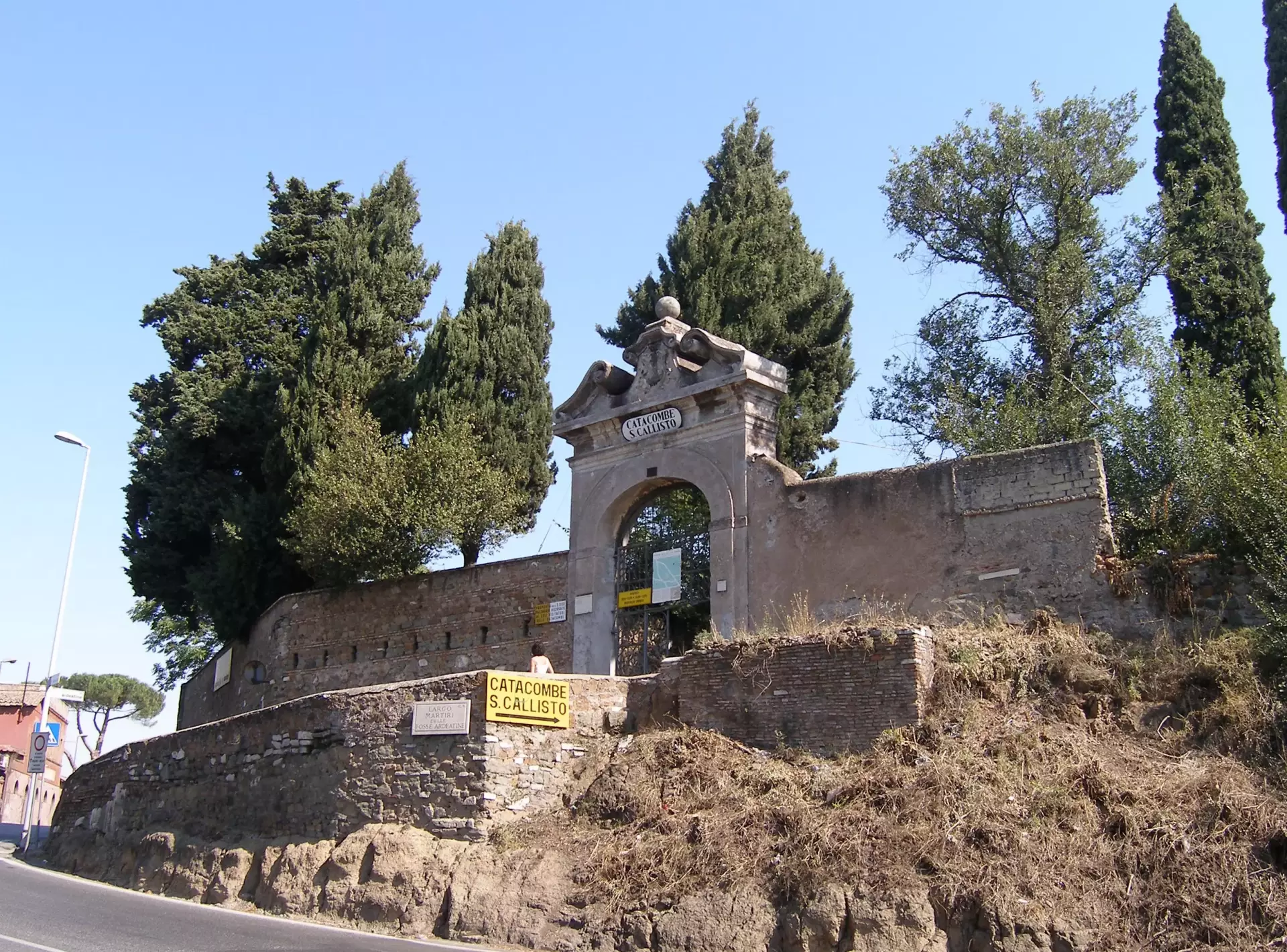
Although started in the 2nd century, San Callisto has had many more recent burials, including 16 popes. The burial arcades are almost 20 km long.
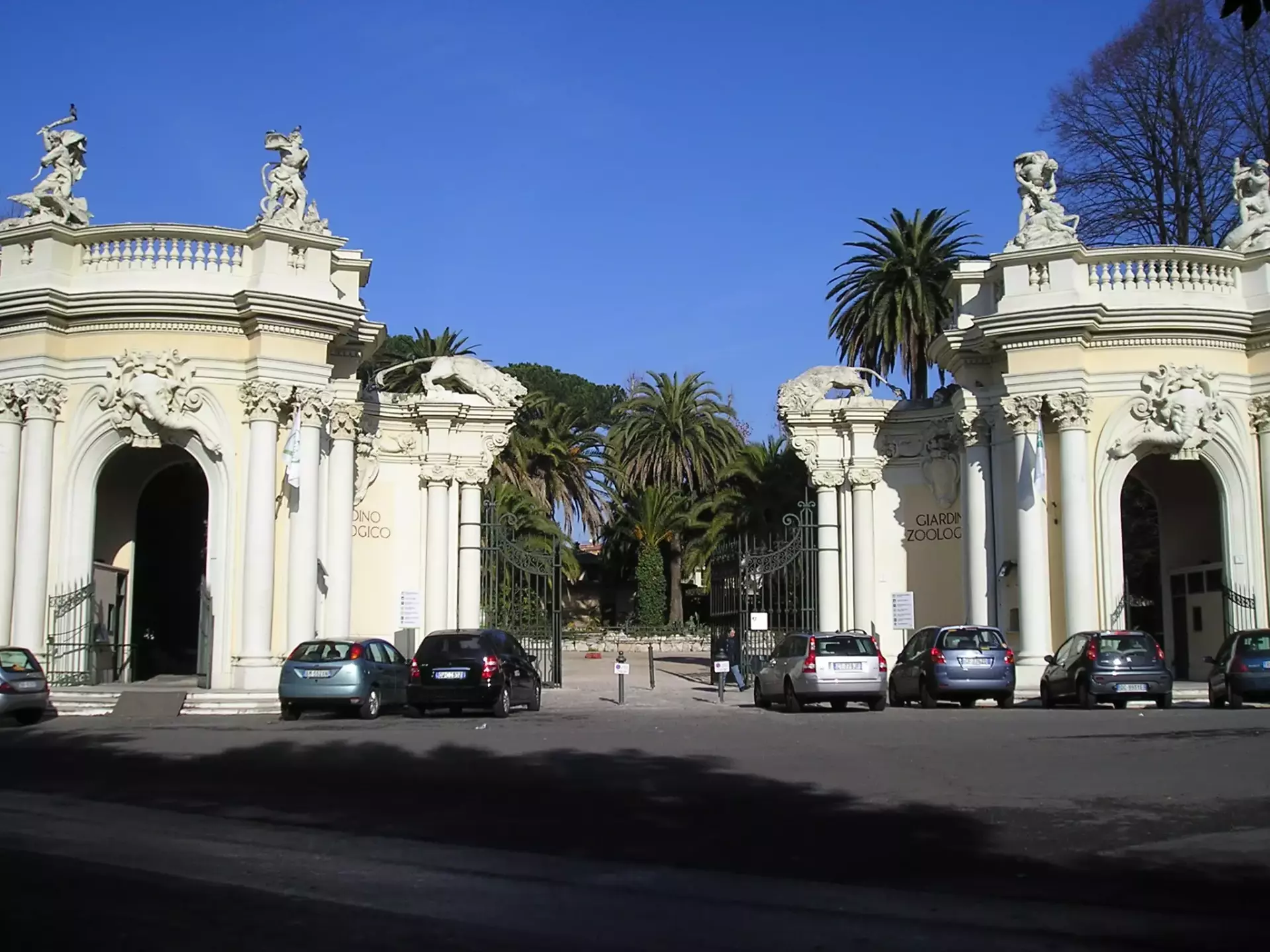
The renamed Rome Zoo, one of the oldest in Europe, founded in 1911. On the edge of the Borghese Gardens, a short, well-signposted walk from the Gallery. They try hard, but San Diego this isn't. If you are a regular zoo-goer you will be disappointed.
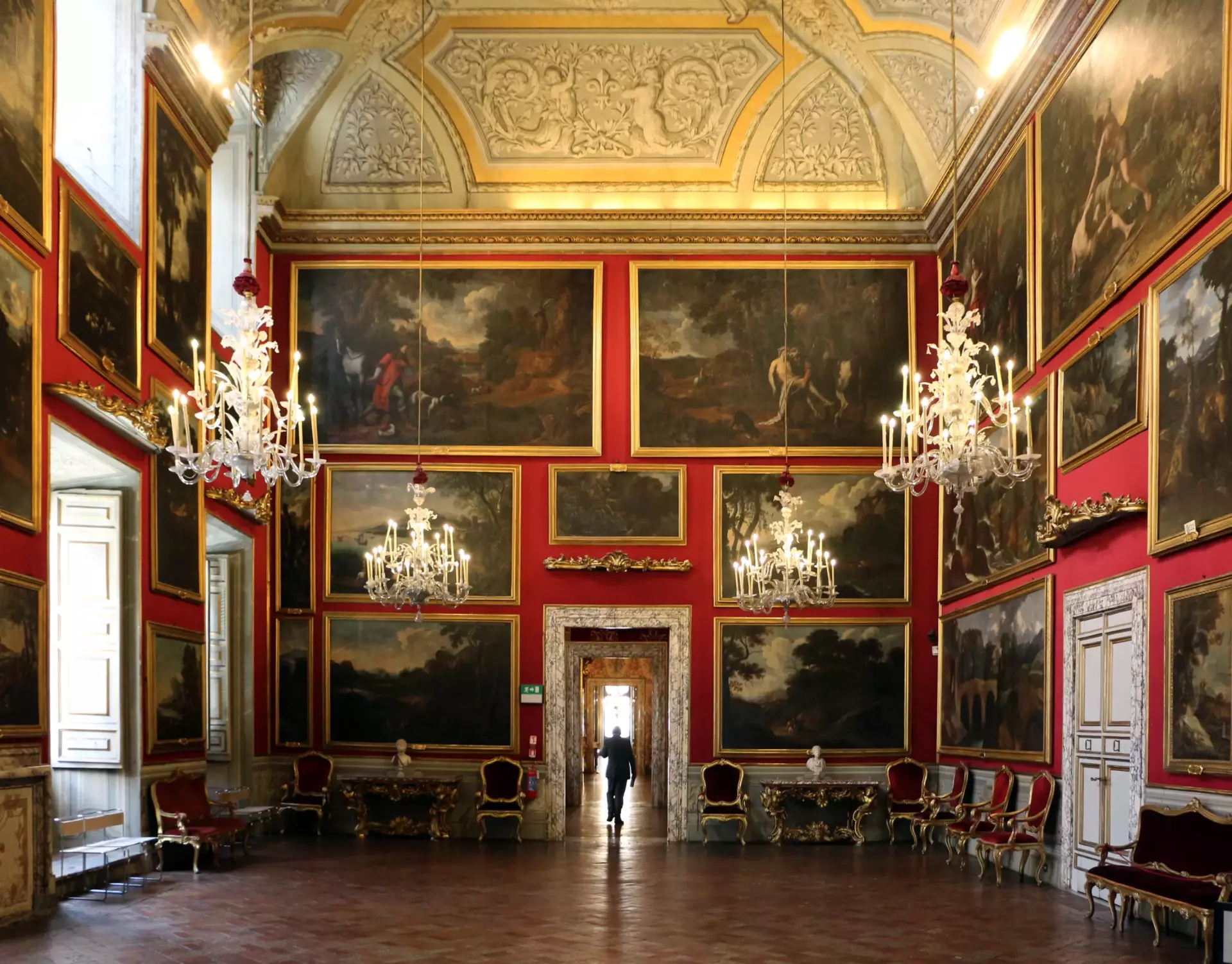
Good collection of Renaissance and Baroque art, including by Velasquez, Titian, Raphael, and Bernini, all owned by the Doria Pamphilj family. Excellent audio guides really bring the paintings to life.
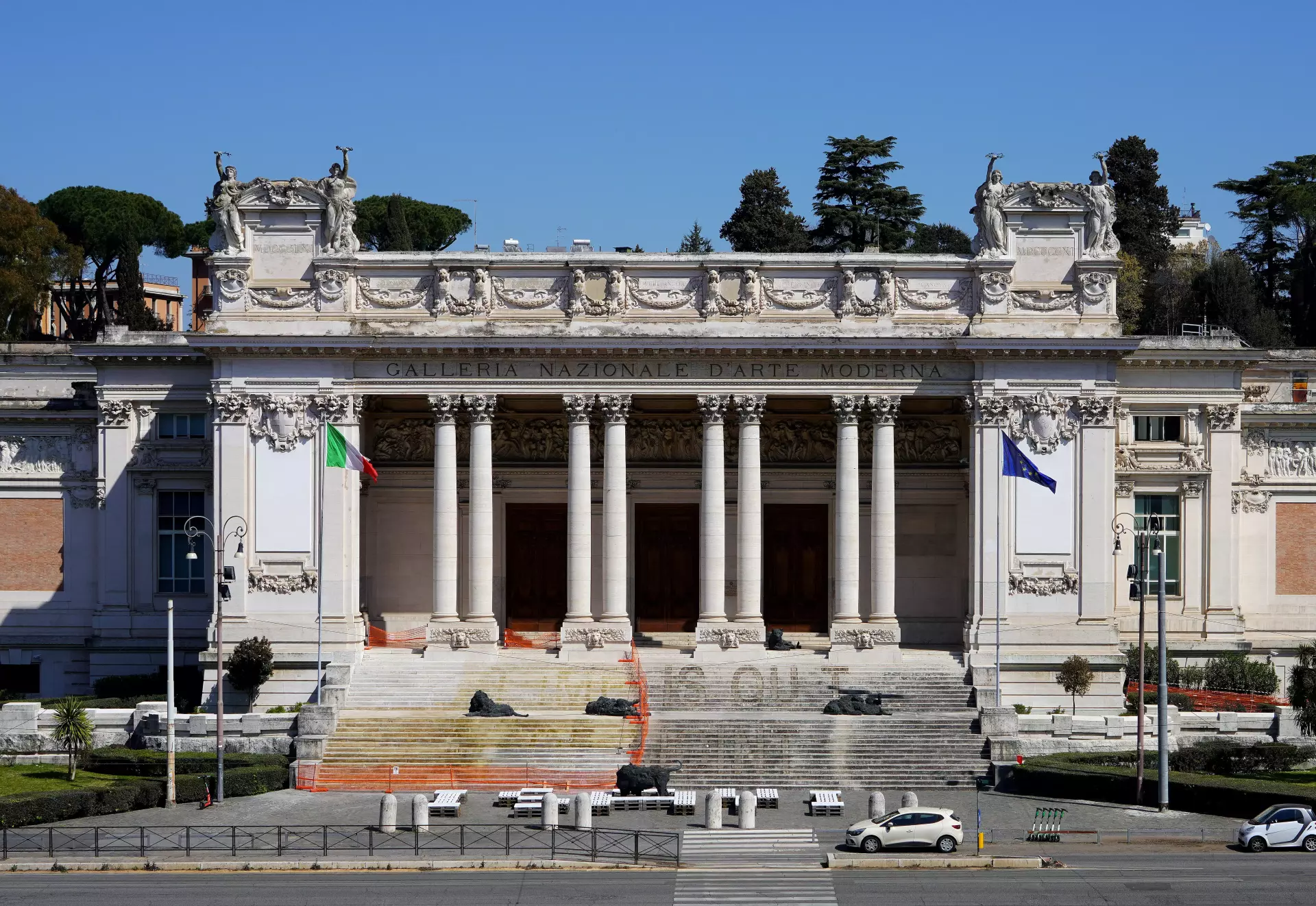
An underrated way to see fantastic art made after the Renaissance. Mainly Italian artists, notably De Chirico, but Cézanne, Degas, Kandinsky, Man Ray, Modigliani, Monet, Pollock and Van Gogh are also represented.
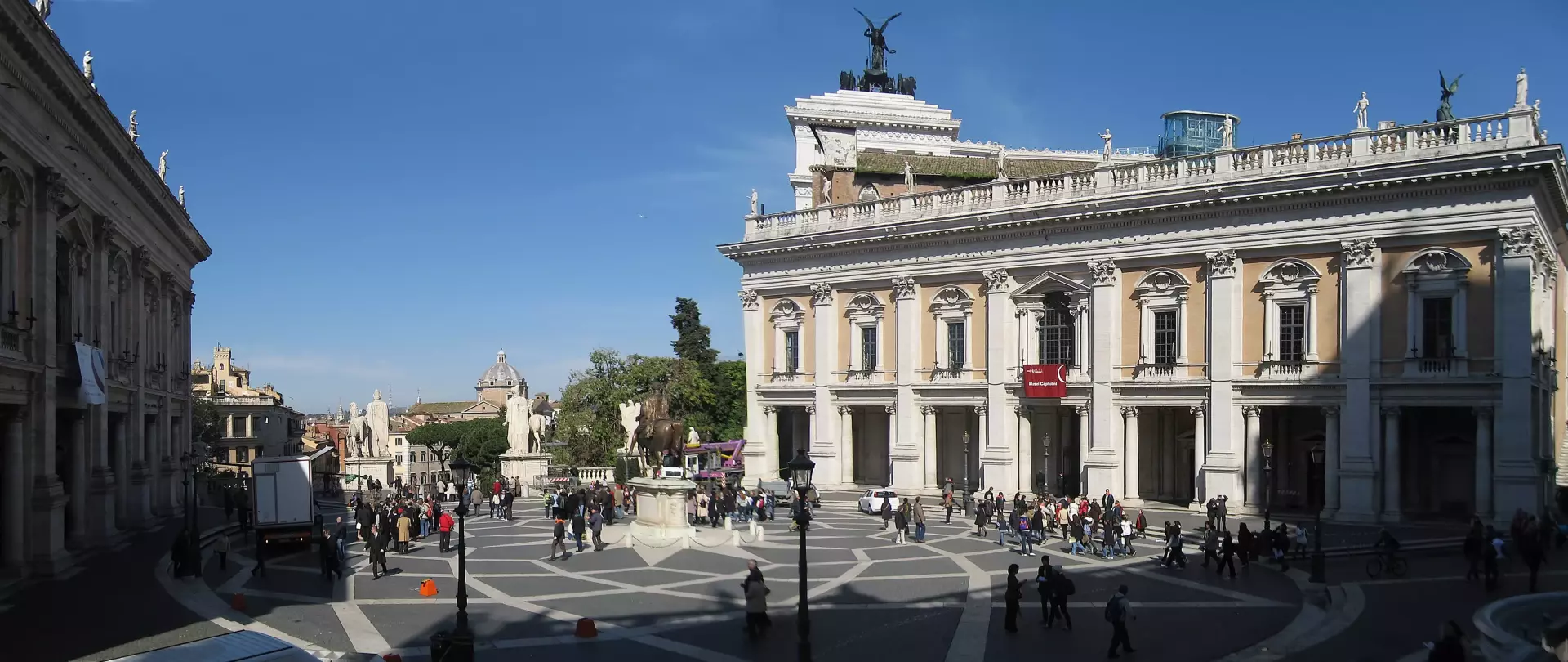
Built in the 17th century to a design based on an architectural sketch by Michelangelo. Highlights include the ancient Colossus of Constantine statue (the Colosseum was probably named for another giant statue, the Colossus of Nero which stood near the Flavian Amphitheatre as the Colosseum was originally known), The Dying Gaul, a magnificent marble sculpture that copies a bronze Greek original of the 3rd century BC and the Capitoline Venus. It also contains the remarkable original gilt bronze equestrian statue of emperor Marcus Aurelius (the one in the piazza is a replica).
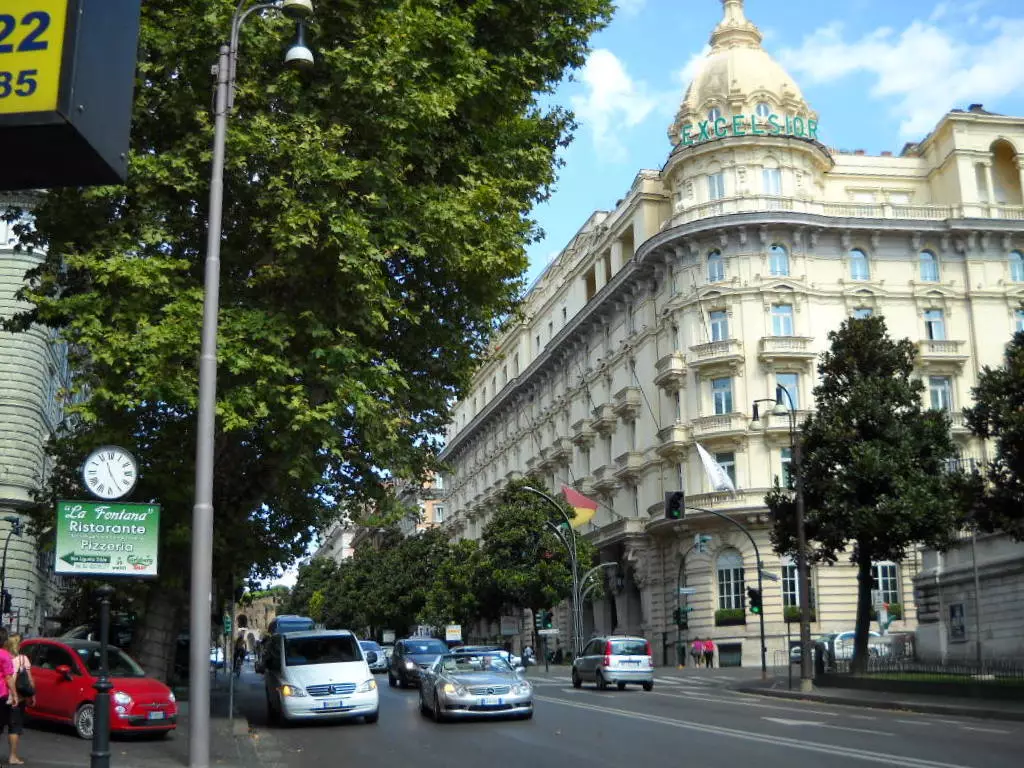
It was immortalised in 1960 by the Federico Fellini film La Dolce Vita. It is also the location of the US Embassy, in the massive Palazzo Margherita. Via Veneto went into a period of decline in the 1980s but has returned to popularity and the roadside cafes are the place to be seen if you are into that sort of thing.
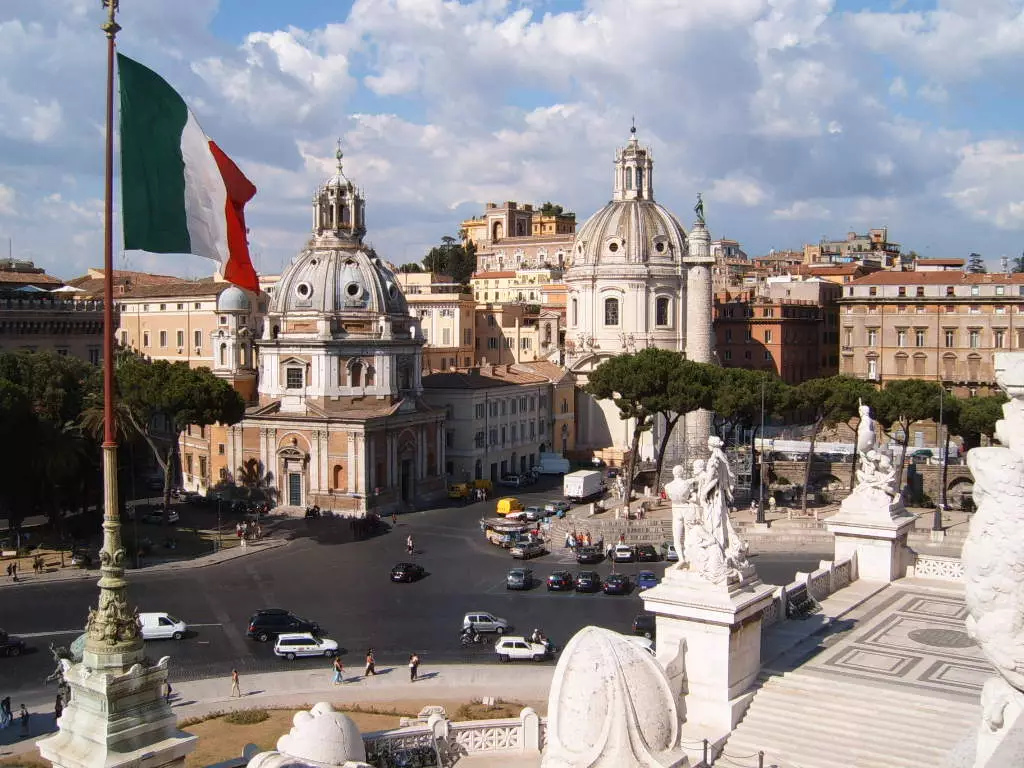
More of an enormous traffic circle than a piazza, but a good central location. The centerpiece is the enormous Vittorio Emanuele Monument (aka the Wedding Cake or the Typewriter) with the Capitoline hill next door. Mussolini used to harangue Romans from the first floor balcony of Palazzo Venezia (see under Museums), to the west of the square.
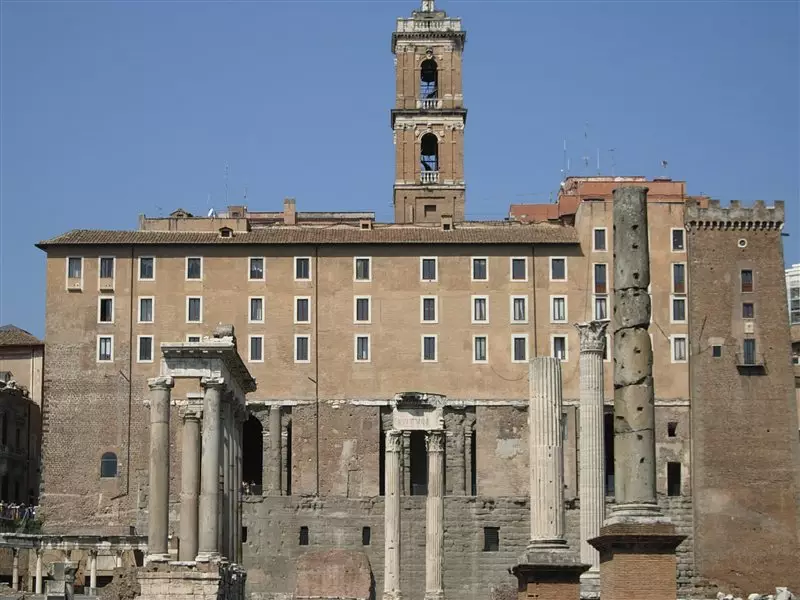
The remains of the ancient Roman archives, where Cicero and Seneca did research. Visible from the Forum and accessible through the Capitoline Museum.
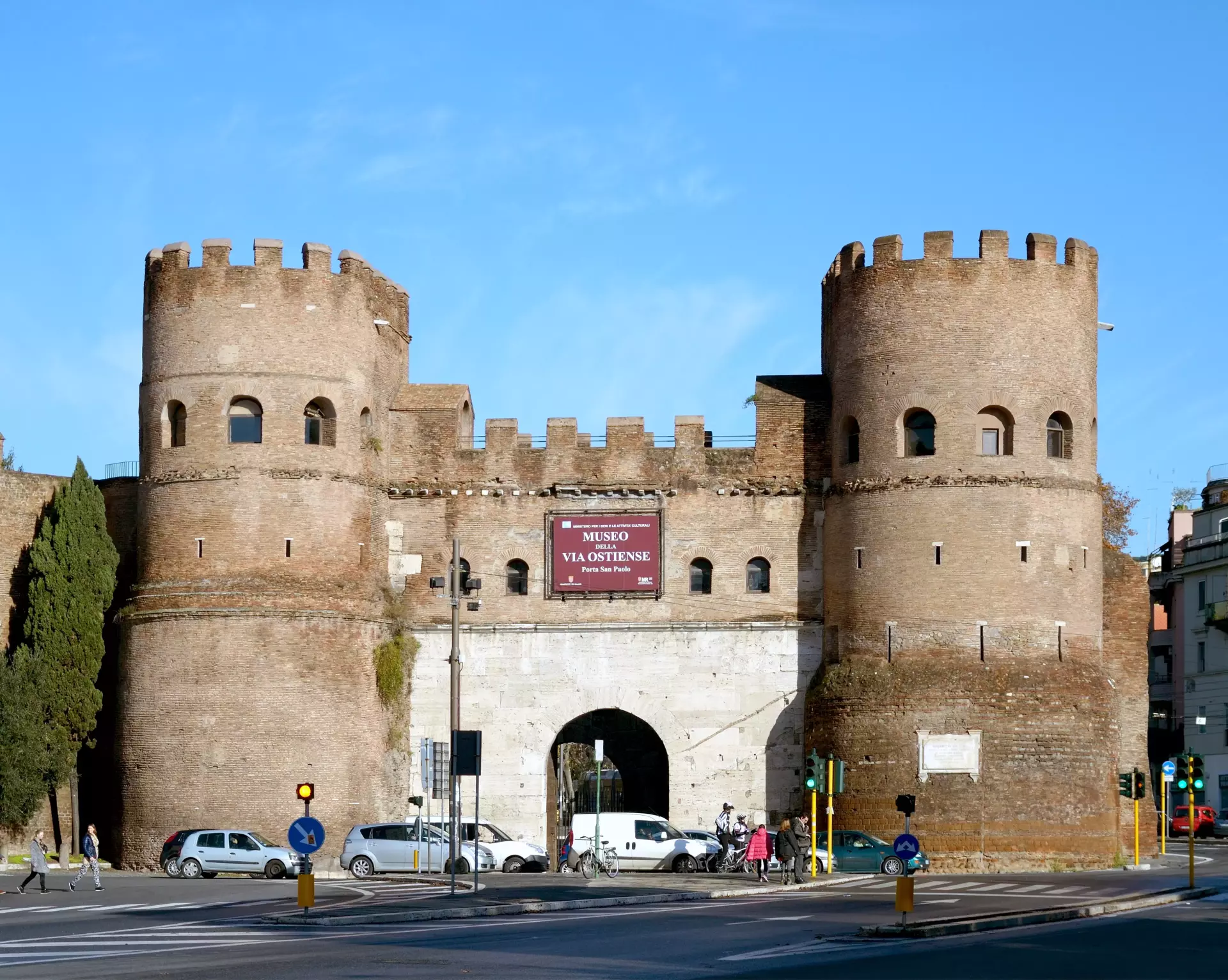
Next door to the Pyramid, this fine gate in the Aurelian Wall is named after St. Paul as the Via Ostiense leads to the basilica of St. Paul's Outside the Walls (see Rome/South).
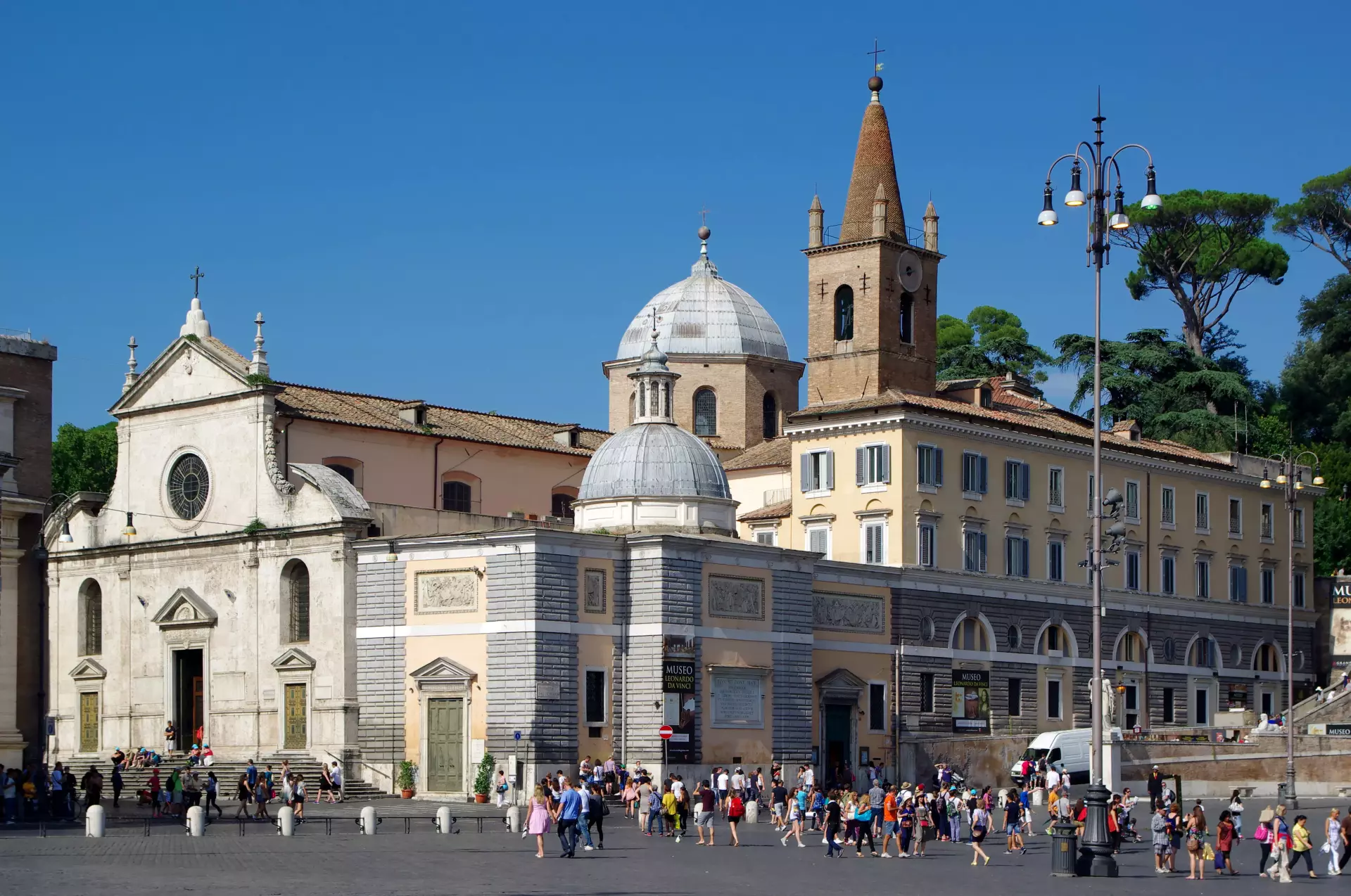
This is a treasure-trove of art. There are a couple of paintings by Caravaggio: "The Crucifixion of Saint Peter" and "The Conversion of Saint Paul" (in a dim alcove to the left of the altar, both at right angles to the viewer, with a machine wanting €2 to switch on the lighting) together with a sculpture by Bernini, frescoes by Pinturicchio and mosaics by Raphael. Part of the Dan Brown tour, this church featured in Angels and Demons, although the Vatican did not allow filming inside.
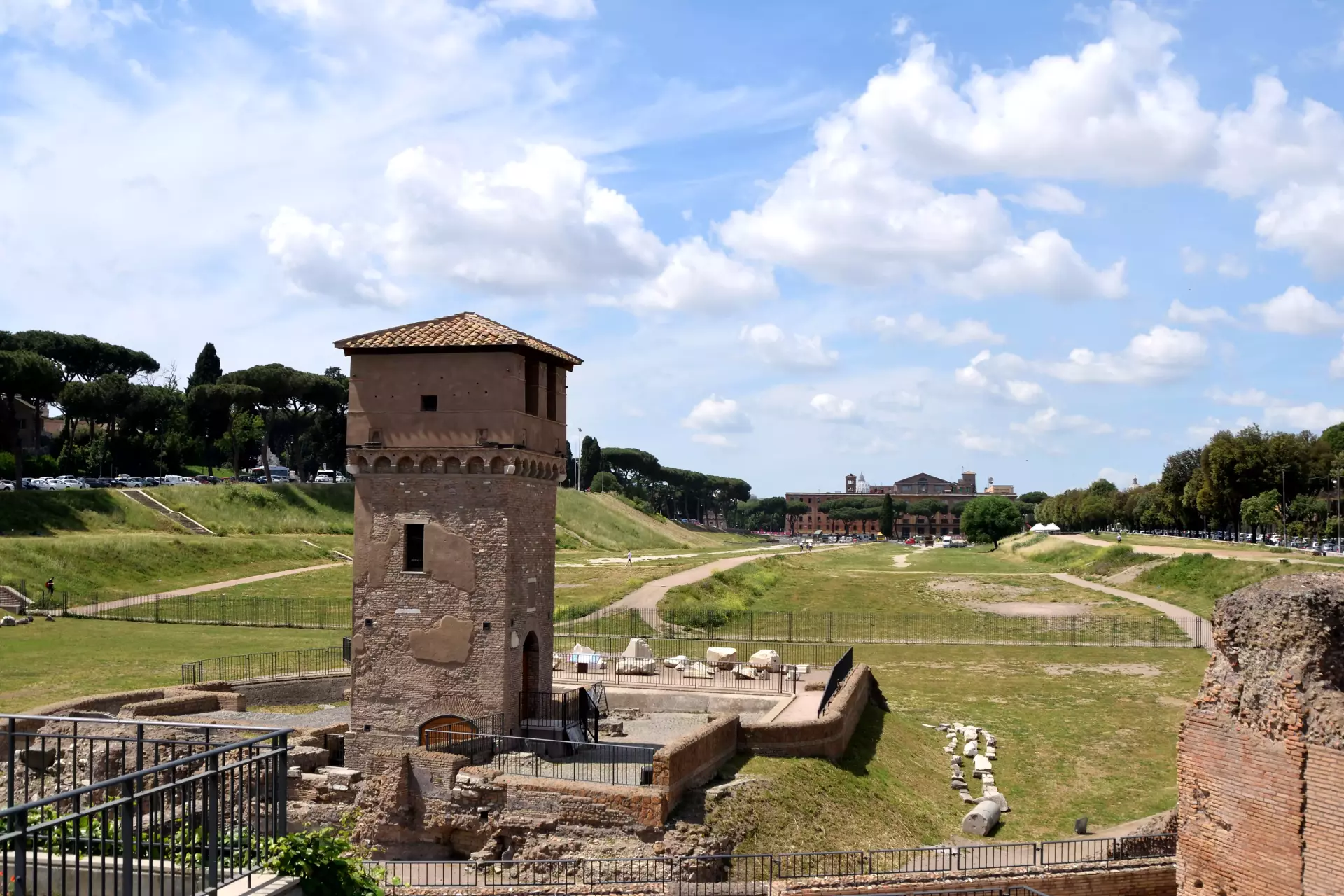
The contours of the ancient stadium, built in the 6th Century B.C., are still visible in what is now a park in the shadow of the Palatine. Circus Maximus was primarily devoted to chariot races and was used for this purpose until around 550 AD. The stadium could seat up to 150,000 people. Originally built of wood, it burnt down twice, on the second occasion starting the great fire when the Emperor Nero was said to fiddle while Rome burned. It was in one of the tunnels here that Caligula met his end. Excavations began in 2009 at the east end of the circus and are likely to go on for some years.
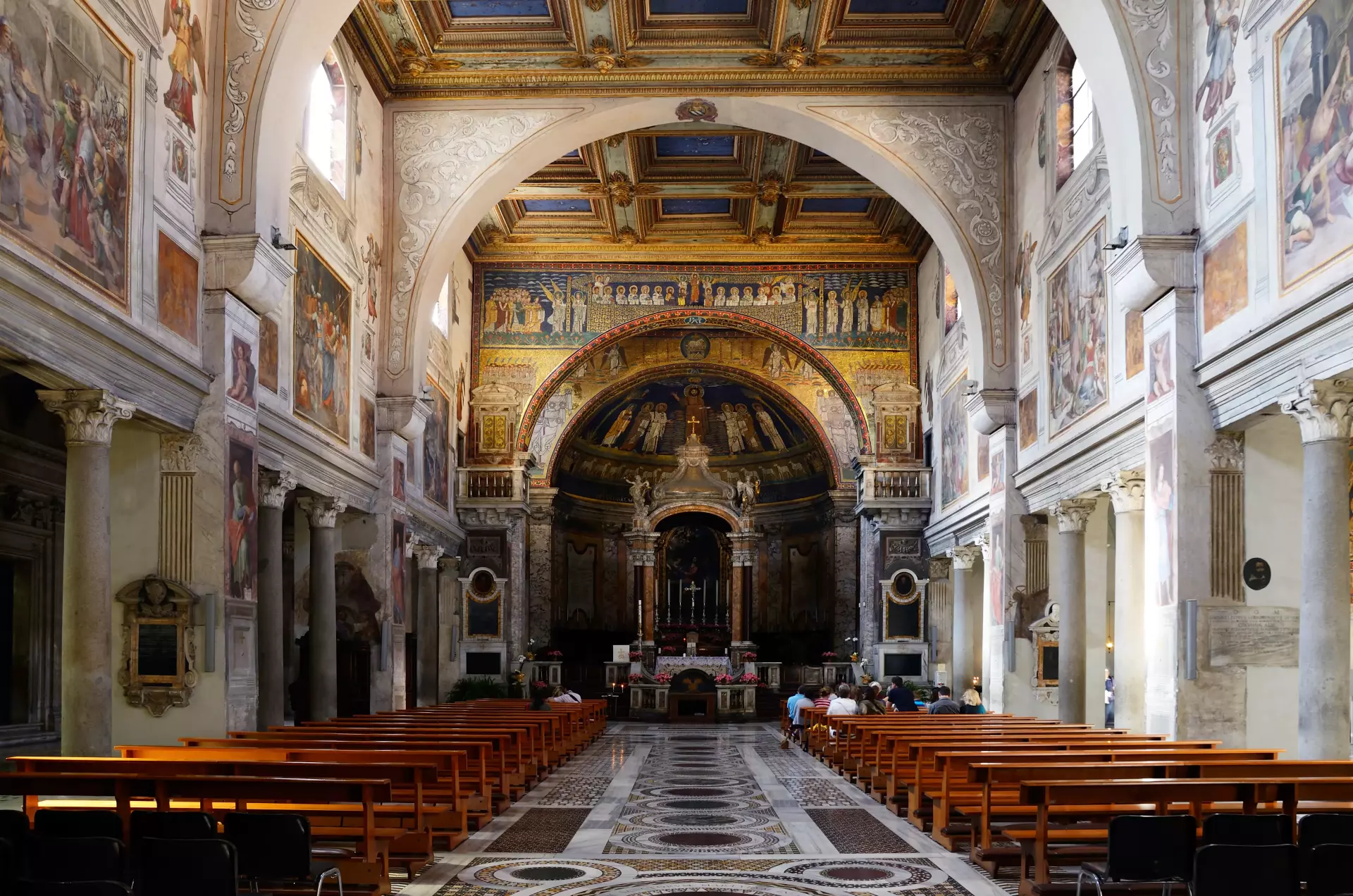
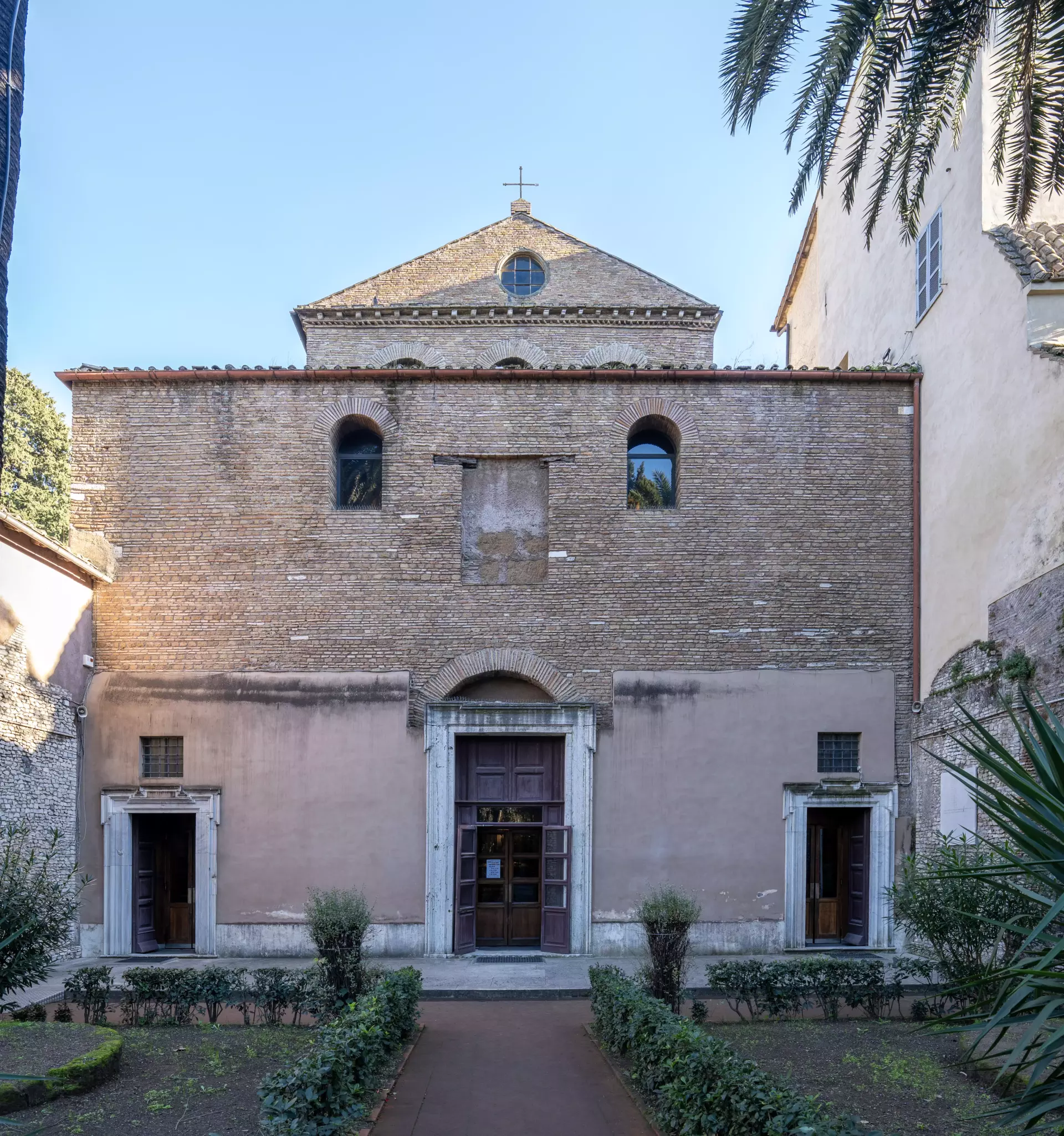
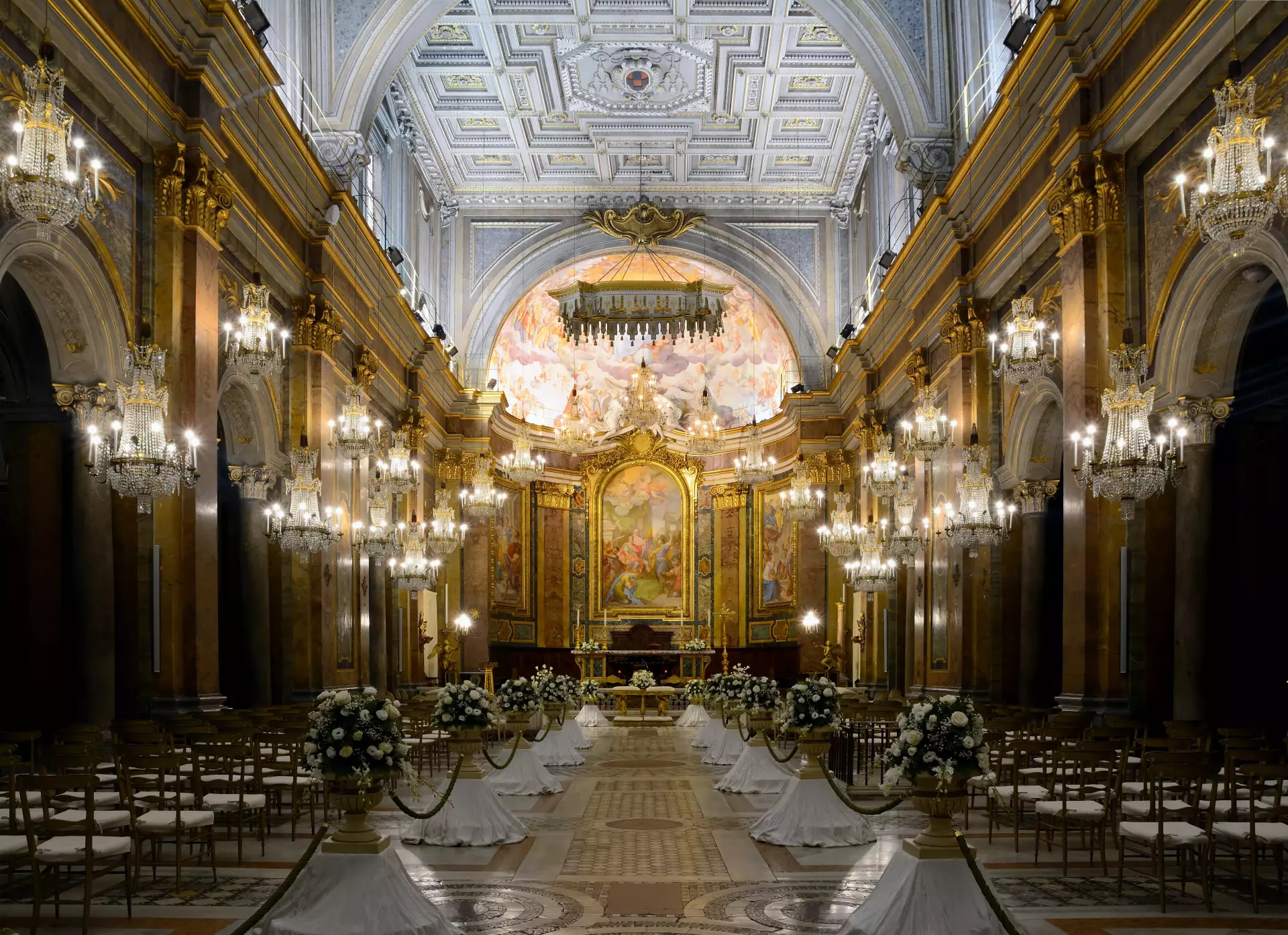
According to the legendary passio, two brothers, John and Paul, who were officials at the imperial court, suffered martyrdom in 362 in their home on the Caelian hill, during the reign of emperor Flavius Claudius Julianus. This basilica dedicated to these two Roman officers was erected starting from 398 and was used first as a domus ecclesiae by the Christian community.