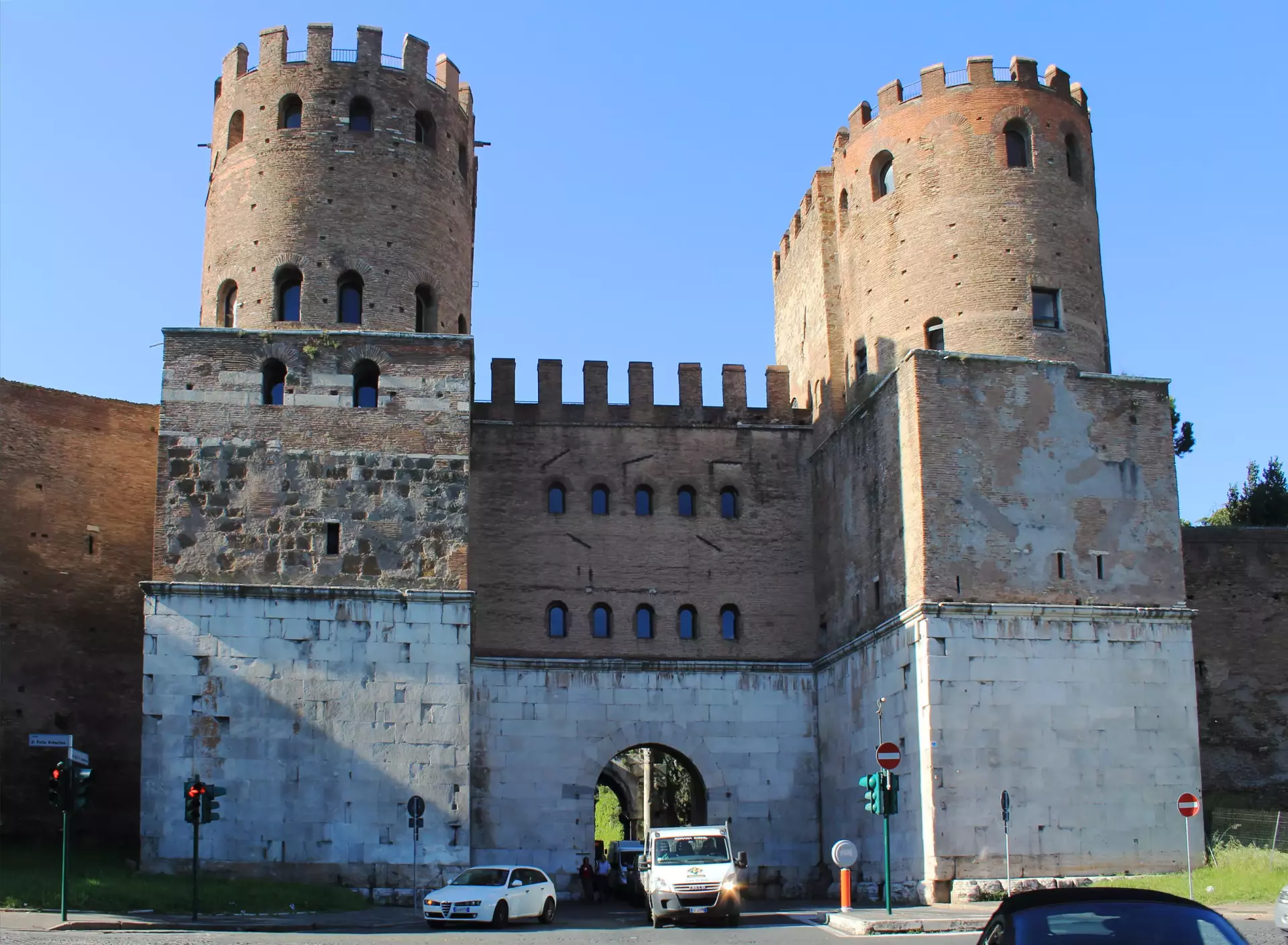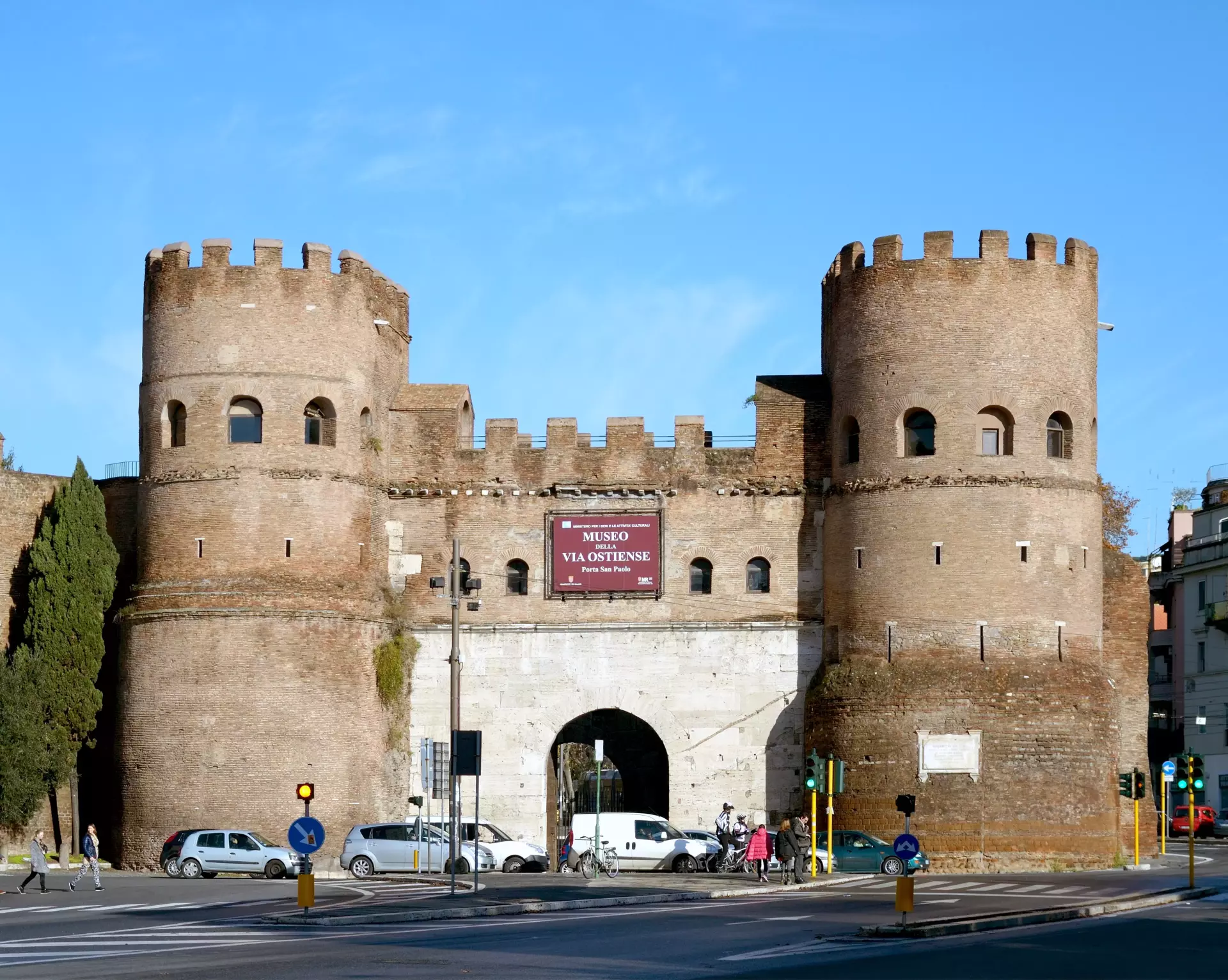
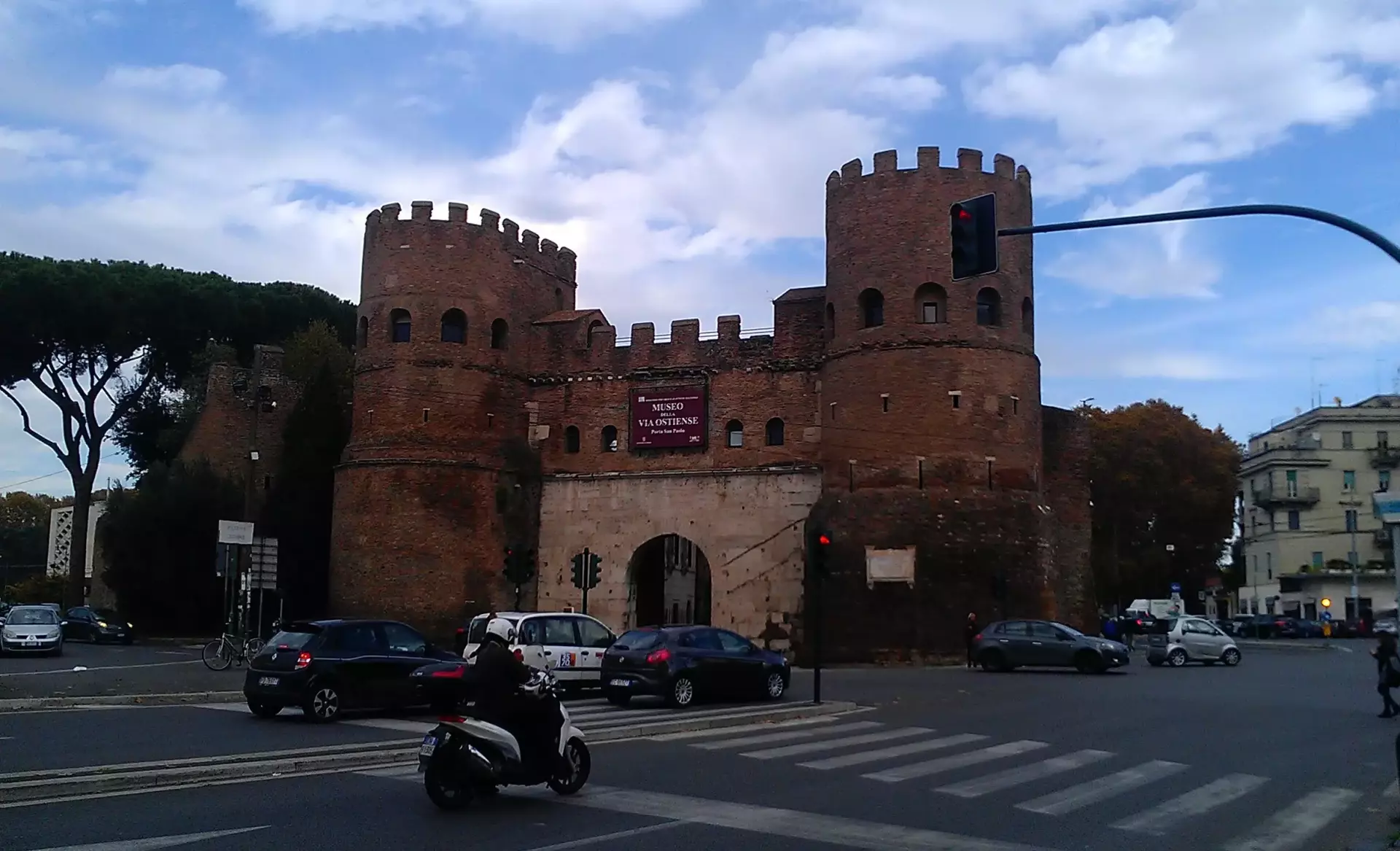
Porta San Paolo stands right next to the famous Pyramid of Cestius in Rome. This impressive gate is part of the ancient Aurelian Walls, which once surrounded the city to defend it from invaders.
The gate takes its name from Saint Paul, as the Via Ostiense—a historic road that begins here—leads directly to the Basilica of St. Paul Outside the Walls, one of the four major papal basilicas in Rome. This strategic location has long served as a link between the city and important religious destinations beyond its ancient boundaries, welcoming travelers and pilgrims alike.
Source - https://en.wikipedia.org/wiki/Porta_San_Paolo
On the site of the Roman baths, this museum houses an enormous collection of statues, etc.
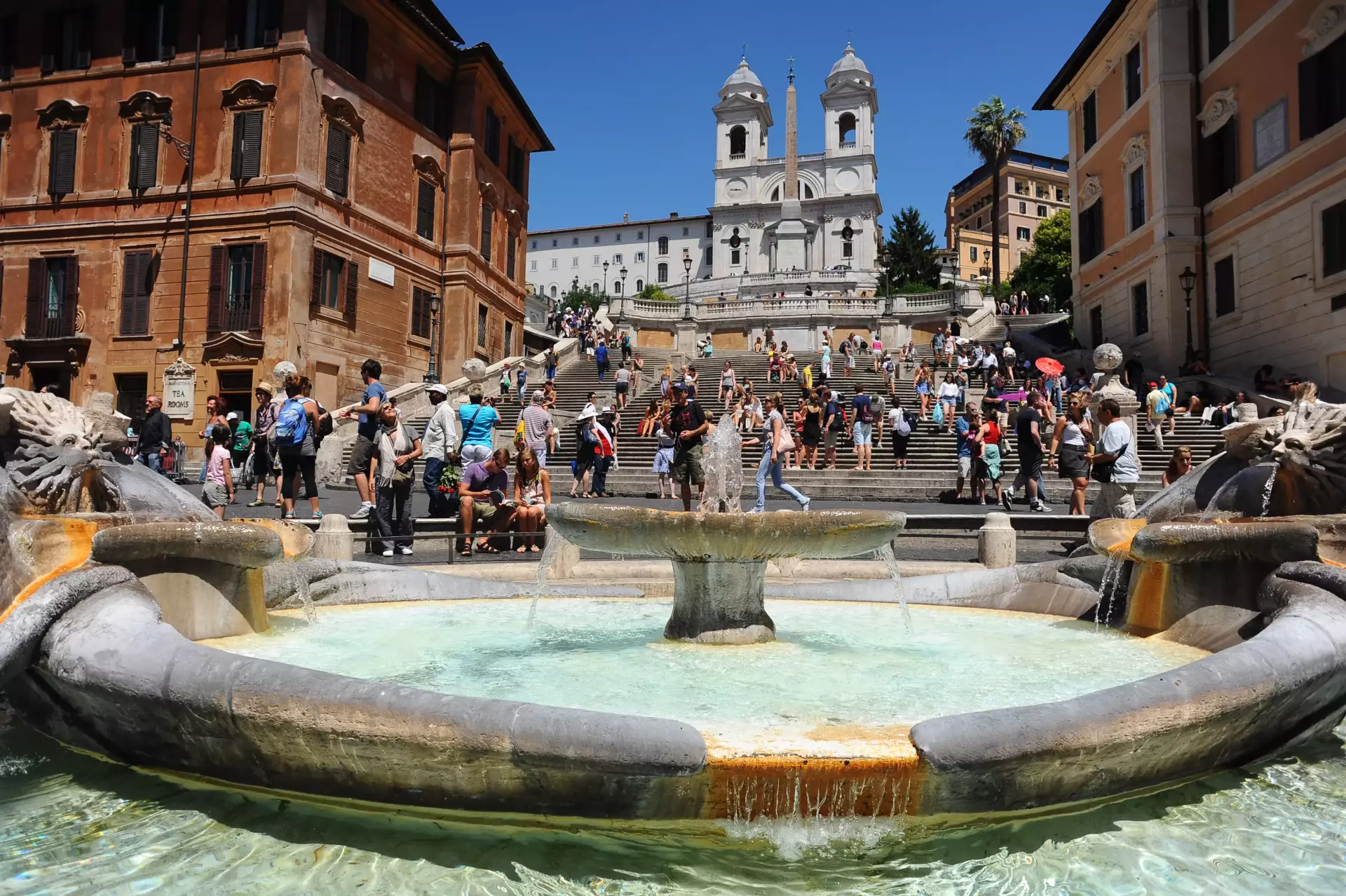
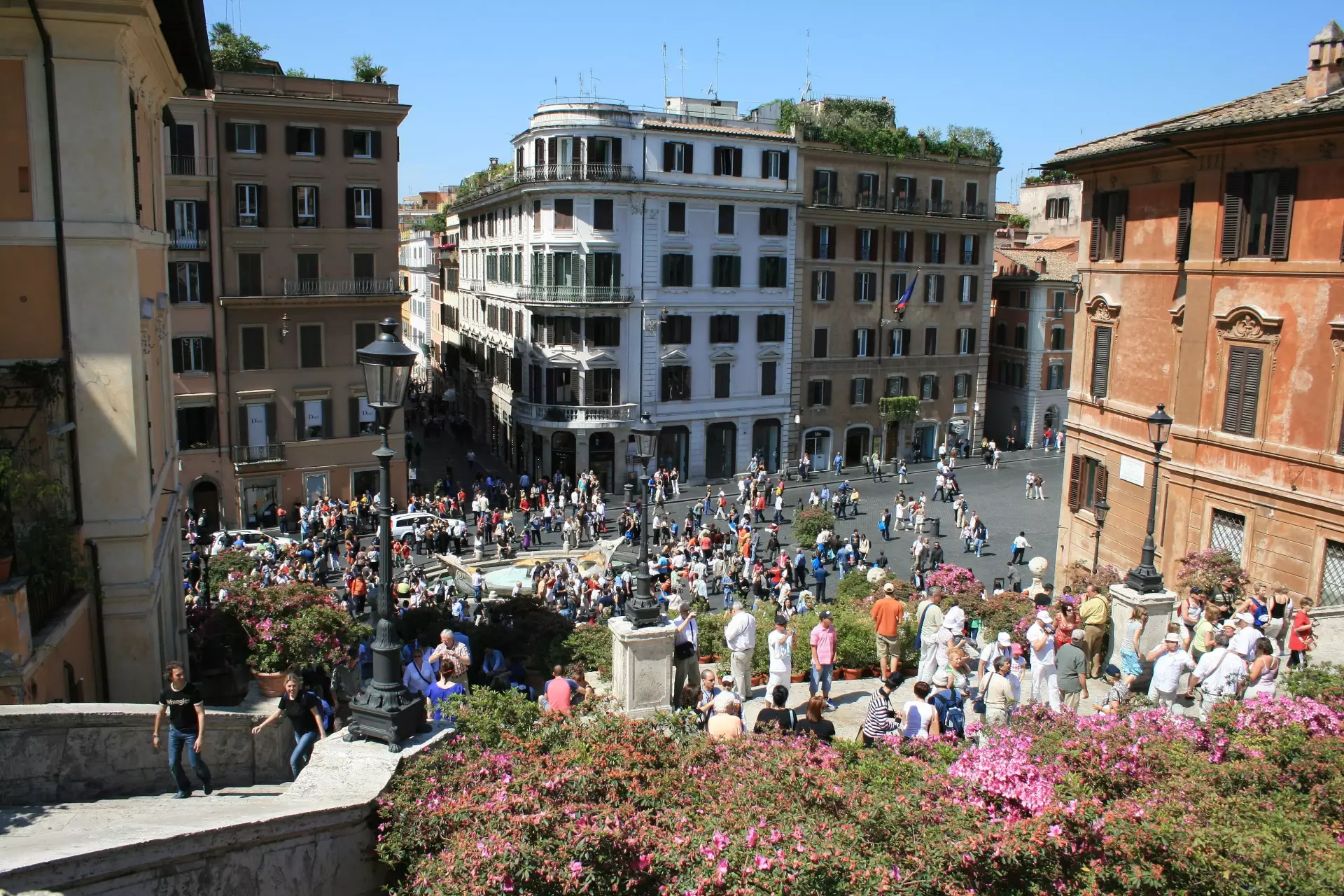
The Piazza di Spagna (Spanish Square) is the most famous square in Rome. For a very long time it was the meeting point of all foreigners coming to Rome. In the 17th century it was the residence of the Spanish Ambassador to the Holy See. The area around the residence was Spanish territory and foreigners who stayed here without permission were forced to serve in the Spanish army. The Fontana della Barcaccia (Old Boat Fountain) on Piazza di Spagna was designed and built in 1627-29 by Pietro Bernini, father of the more famous Gian Lorenzo Bernini. The fountain celebrates the fact that before high walls were built along the banks of the Tiber Rome often used to flood. Once the waters were so high that a boat ended up in the square. The decorations on the fountain imitate the coat of arms of Pope Urban VII, Barberini'p, who ordered the fountain to be built. A less aesthetic occupant of the square is Italy's first McDonalds, dating back to 1986. Also in the piazza is a column erected in 1856 to commemorate the Immaculate Conception. The column is topped by a statue of the Virgin Mary, and rests on a base with statues of Moses, David, Isaiah and Ezekiel. The Pope visits the Piazza every year on December 8th to celebrate Immaculate Conception.
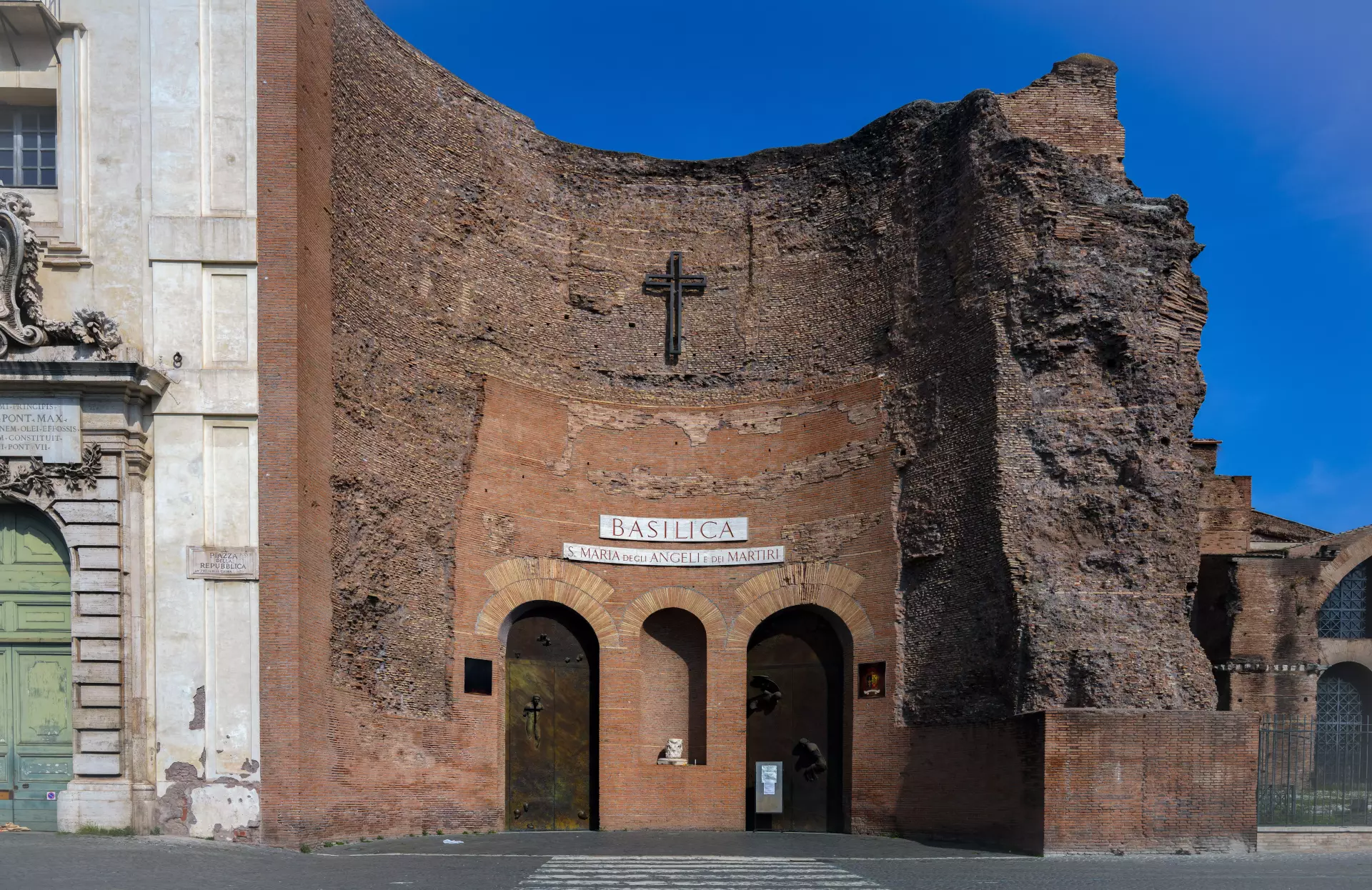
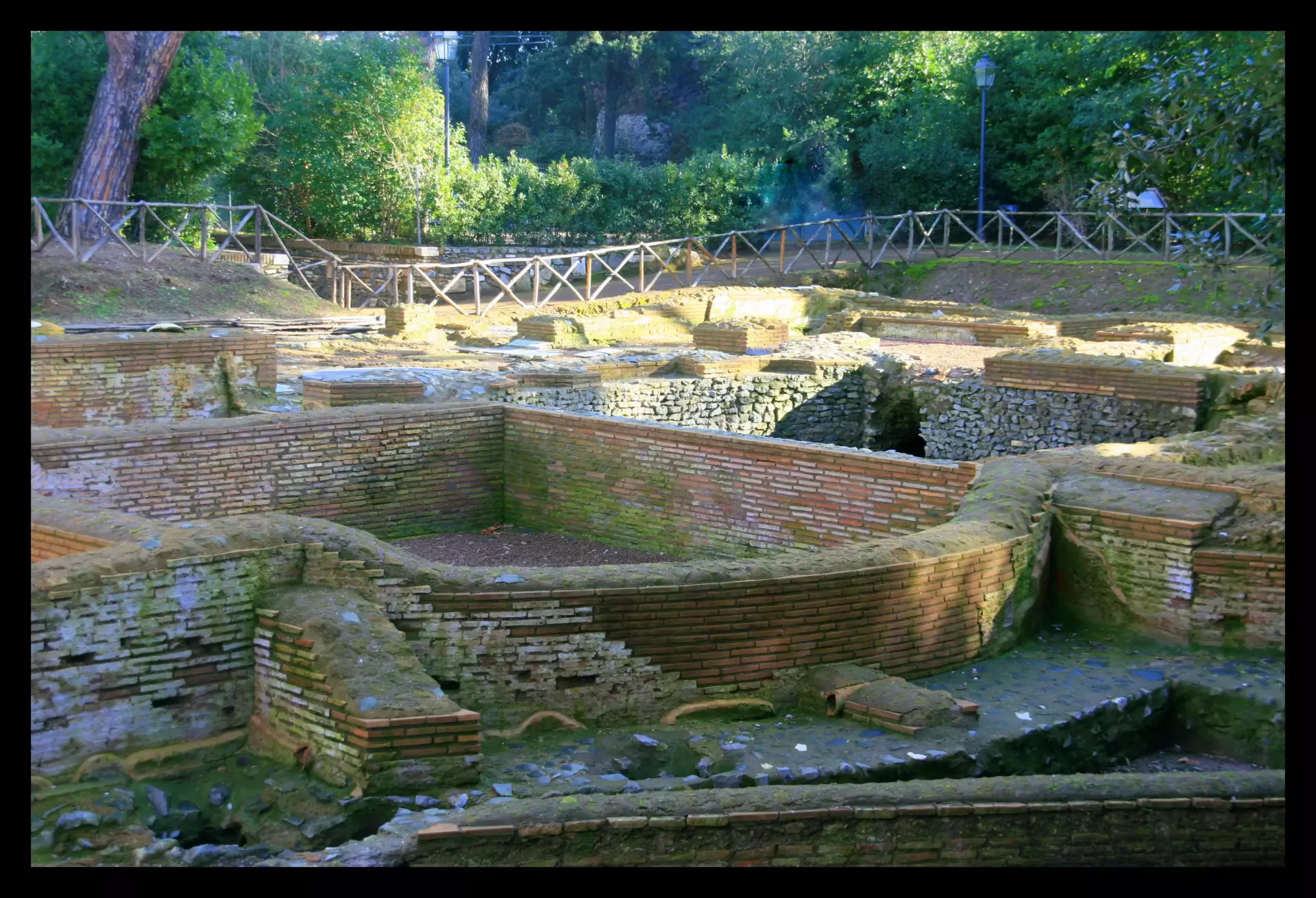
Inaugurated in 217 AD and used until the 6th Century. The baths were big enough for 1600 bathers at a time. Impressive and well-preserved. Used for operas in summer months (see Opera di Roma for details) and was the location for the famous "three tenors" concert in July 1990, at the time of the World Cup (soccer).
The contours of the ancient stadium, built in the 6th Century B.C., are still visible in what is now a park in the shadow of the Palatine. Circus Maximus was primarily devoted to chariot races and was used for this purpose until around 550 AD. The stadium could seat up to 150,000 people. Originally built of wood, it burnt down twice, on the second occasion starting the great fire when the Emperor Nero was said to fiddle while Rome burned. It was in one of the tunnels here that Caligula met his end. Excavations began in 2009 at the east end of the circus and are likely to go on for some years.
Built in the 9th century, this ancient basilica crowns the top of the Esquiline Hill. Tons of gold decorate the interior together with impressive mosaics (particularly when the floodlights are turned on), and there is a museum on the premises. If you are in Rome on Corpus Christi (Corpus Domini), which is the Thursday after the 8th Sunday after Easter, an early-evening service is held in San Giovanni by the Pope followed by a procession along Via Merulana to Santa Maria. Good opportunity for a close up view of the Pope. This is a very large church with lots to see, as for example, the main part of the church has two layers of mosaics and paintings high on the walls, the altar and apse are spectacular, and then there are several more or less large chapels you won't want to miss, including the one with the amazing golden baptismal font. Allow at least an hour if not an hour and a half or more to visit the interior, even if you do not take any special tours, and also allow time to view the exterior from all sides. Overall, at least 2 hours would not be too much time to allot.
Small collection of railway carriages and related stuff. Really just for those with special interest in the topic. Entrance through the station if the main entrance is closed.
Also based on a Michelangelo architectural plan, this compact gallery is well endowed in classical sculpture and paintings. Highlights include the small 1st-century-BC bronze Lo Spinario, a Greek statue of a little boy picking a thorn from his foot; the Lupa Capitolina (Capitoline Wolf), a rare Etruscan bronze statue probably dating from the 5th century BC; and (in the entrance courtyard), the massive head, hands, foot and kneecap from a colossal statue of Constantine the Great. The palace also contains a Pinacoteca (Picture Gallery) with paintings mainly from the 16th and 17th centuries - highlights include: Caravaggio's Fortune-Teller and his curious John the Baptist; The Holy Family, by Dosso Dossi; Romulus and Remus, by Rubens; and Titian's Baptism of Christ.
Known properly as the Flavian Amphitheatre, this most famous of Roman landmarks takes its name from the giant statue of the emperor Nero that once stood near this location. The amphitheatre was capable of seating 50,000 spectators for animal fights and gladiatorial combats. It was a project started by the Emperor Vespasian in 72 and completed by his son Domitian sometime in the 80s. The Colosseum when completed measured 48 m high, 188 m in length, and 156 m in width. The wooden arena floor was 86 m by 54 m, and covered by sand.;Expect a long queue and an even longer wait. You can skip the queue if you decide to take a tour, but if you don't want a tour, you can STILL skip the queue. If you walk to the entrance for the Roman Forum, you can buy tickets there which allow you to bypass the queues. You can also buy tickets online. There are lots of people offering tours in English just outside the entrance to the Colosseum. Inside you can take a tour (English, Spanish, or German) every 30 minutes or so for an additional fee. The tours are given by knowledgeable archeologists, but they don't take you to any areas you couldn't visit on your own.
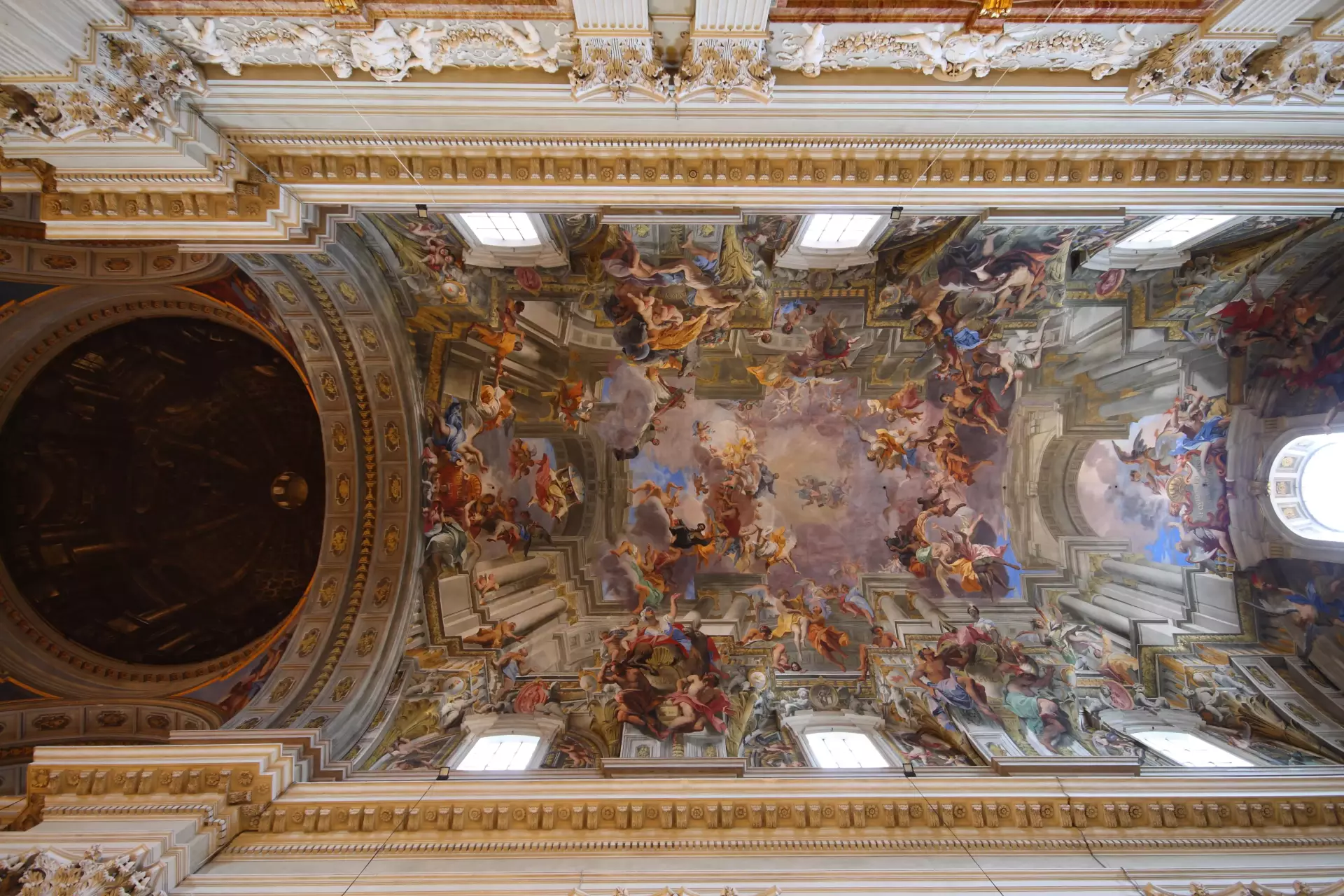
This is one of the two main Jesuit churches in Rome, the other being the nearby Sant'Ignazio. The interior is Baroque art on steroids. Simply astounding.