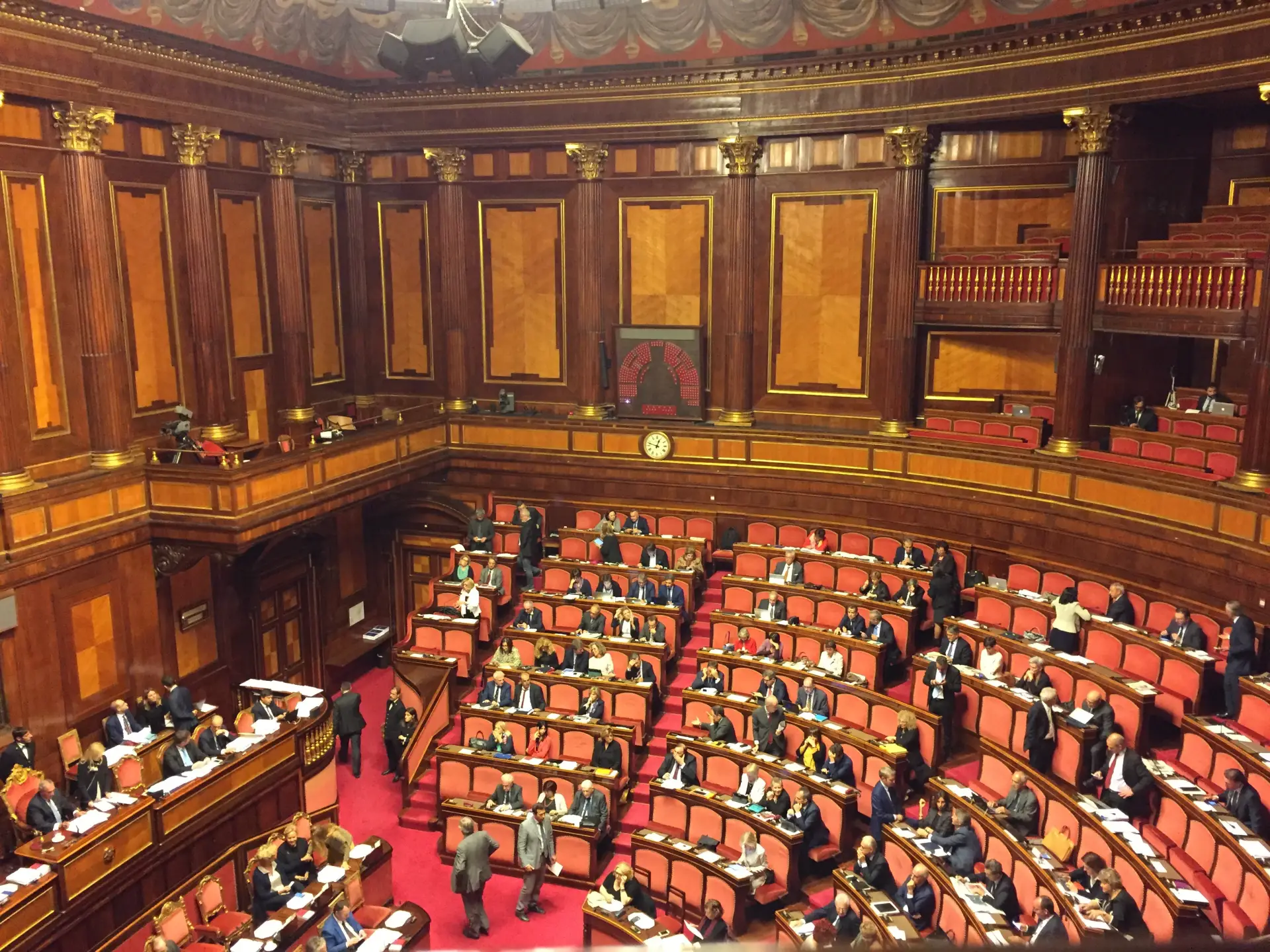
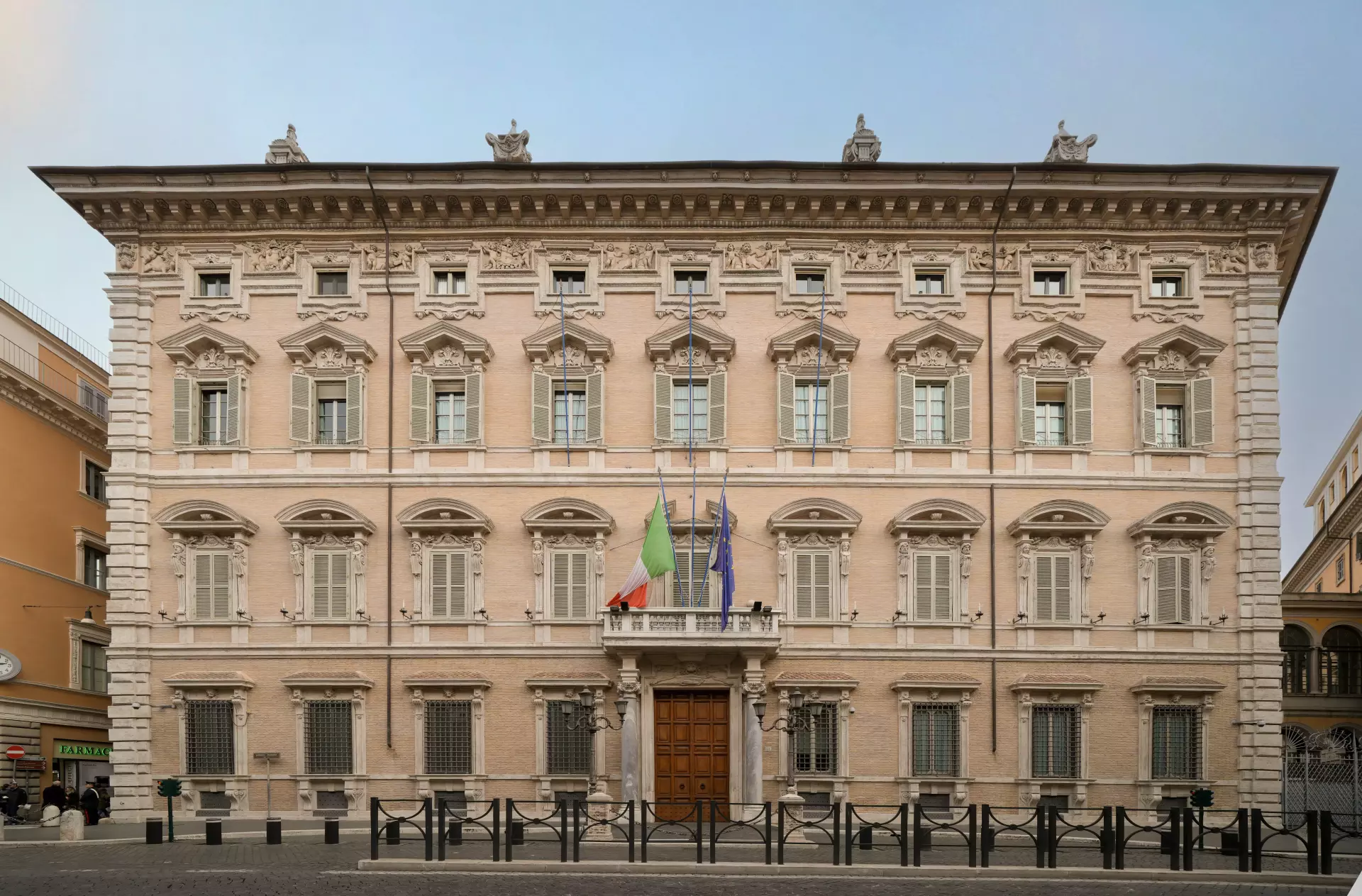
The Palazzo Madama tells a story that spans centuries, with roots reaching back to the 16th century. Built by the influential Medici family, the palace became home to two important figures: Cardinals Giovanni and Giuliano Medici. Both men would eventually become popes, known as Leo X and Clement VII.
Catherine de Medici, niece of Pope Clement VII, spent her early years within these historic walls. Her stay lasted until 1553, when she married Prince Henry, who was the son of France’s King Francis I. These family ties connected Italian and French royalty, giving the palace a unique place in European history.
The building owes its name to Madama Margarita of Austria, the daughter of Emperor Charles V, though she was born outside of marriage. Over time, the Palazzo Madama continued to be at the center of important events. In 1871, it took on a new role as the seat of the Italian Senate, a tradition that continues to this day.
Source - https://en.wikipedia.org/wiki/Palazzo_Madama,_Rome
The most extensive collection of Etruscan art and artifacts anywhere. Fantastic collection and well worth the admission charge. A difficult museum to find, but a lovely display in a beautiful villa setting.
This is one of the two main Jesuit churches in Rome, the other being the nearby Sant'Ignazio. The interior is Baroque art on steroids. Simply astounding.
A relaxing place to sit and recover from the exertions of sightseeing. Permanent collection plus annual competition.
The Catacombs of Domitilla are considered to be the best preserved of all Roman catacombs. They are the only ones still to contain bones. Domitilla also has a subterranean basilica, much of which was reconstructed in 1870.
Unusual and fascinating round church dedicated to St. Stephen. It is the national church of Hungary in Rome. Dating from the 5th Century this is believed to be the largest round church in the world. Charles Dickens described its wall paintings of martyrdom and butchery as "hideous". A good starting point to visit the attractions of the Celio Hill (see Rome/Aventino-Testaccio).
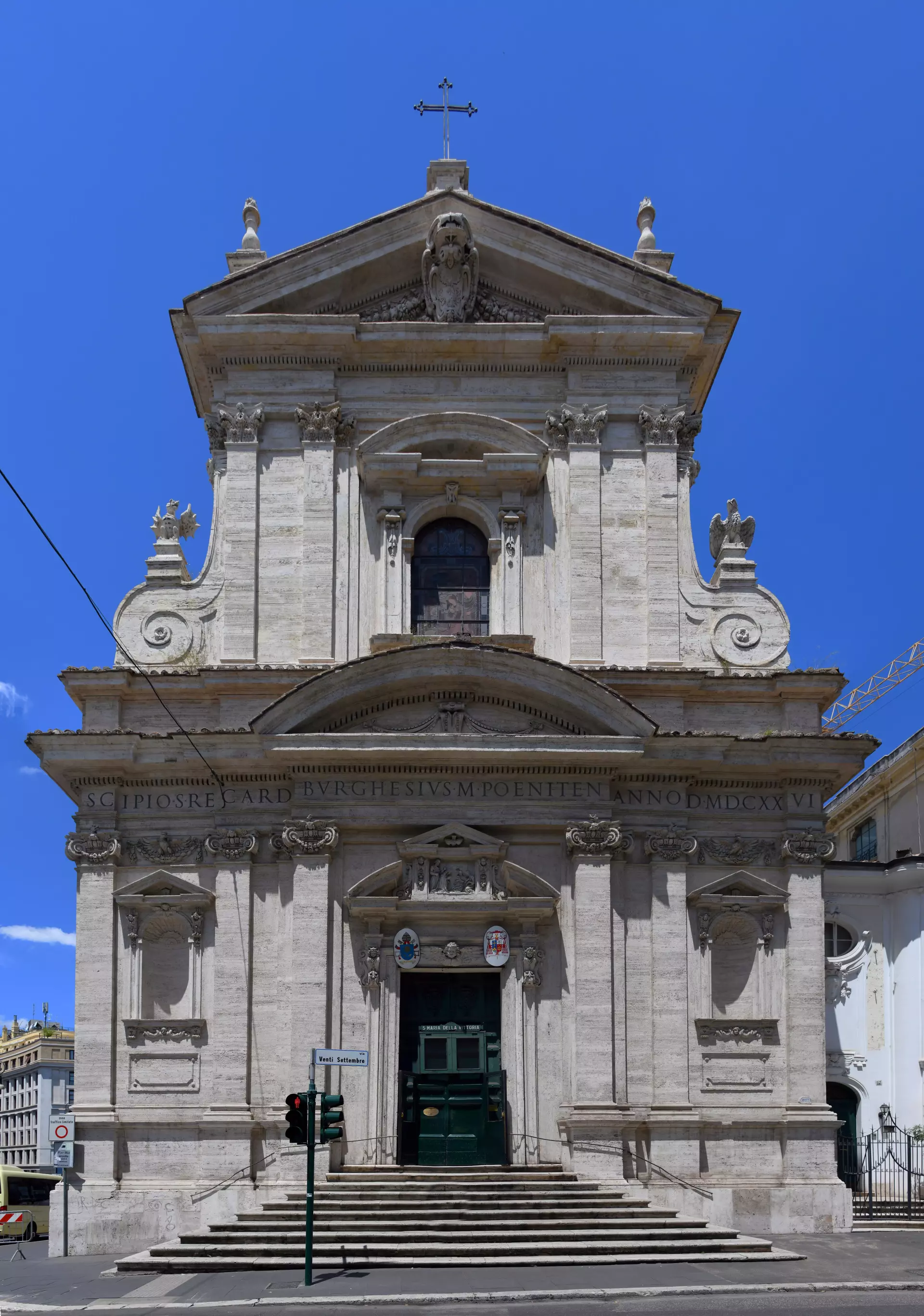
Minor basilica in 17th-century baroque style with good art inside. In a smaller Italian city, this might be a prime attraction, but in Rome, with its abundance of great churches, this is merely a pleasant church of secondary interest to visit if you are in the area.
Pope Nicholas III connected Castel Sant'Angelo to St. Peter's by a covered fortified corridor called the Passetto di Borgo. This proved useful for Pope Clement VII during the Sack of Rome (1527). You can still see much of the Passetto by walking along the Borgo Sant'Angelo, which runs parallel to, and north of, the Via della Conciliazione.
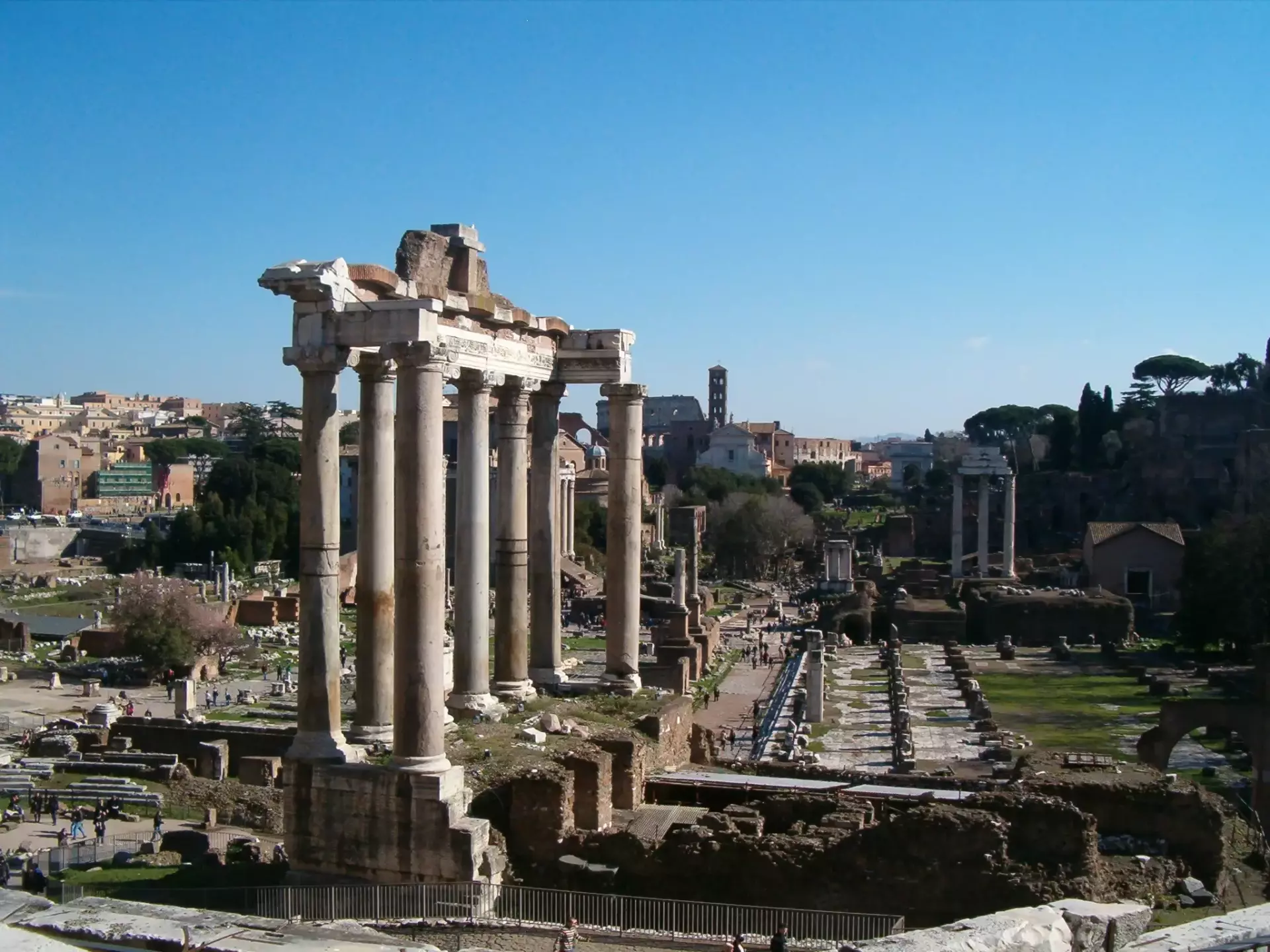
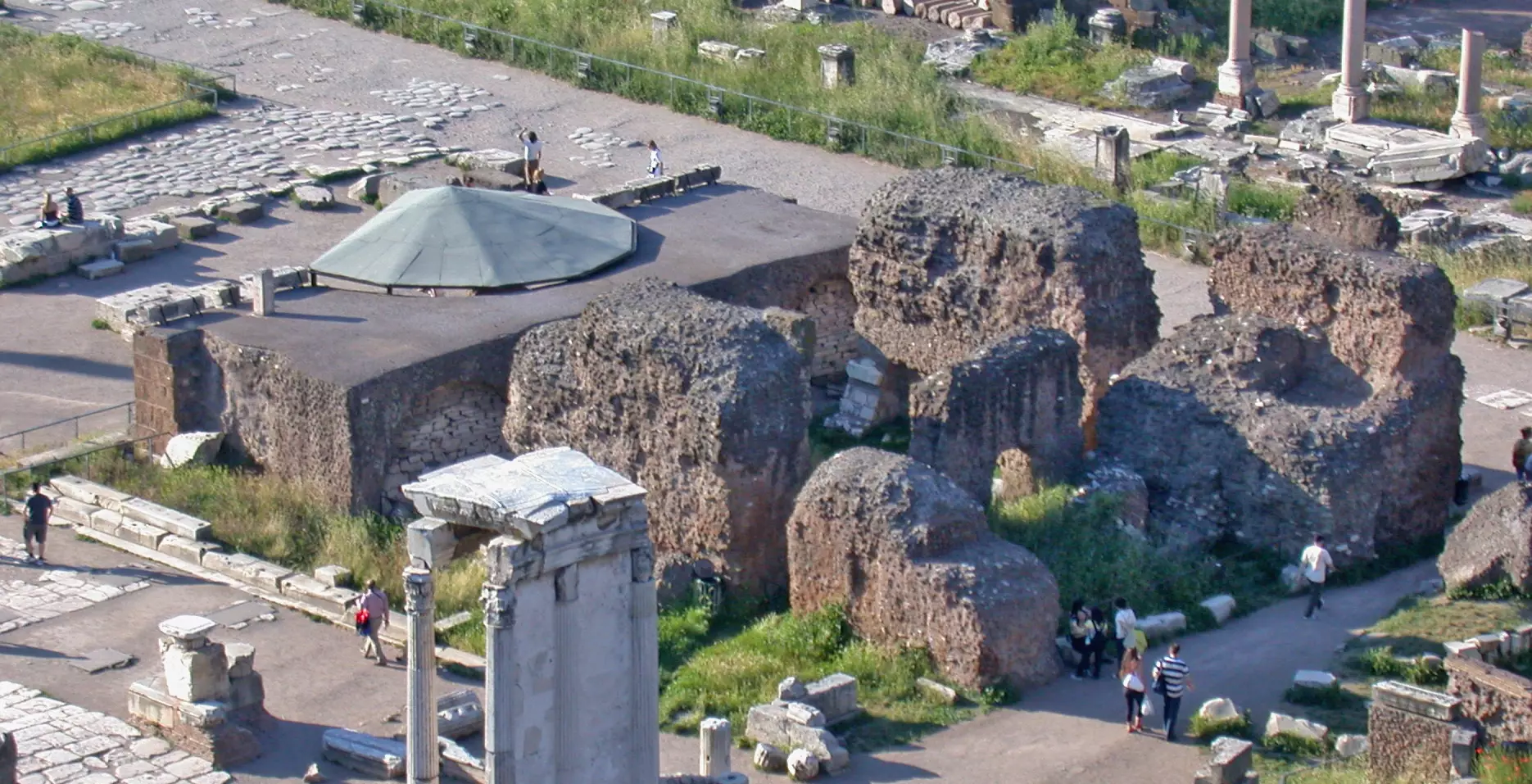
The 4th rebuilding of the meeting place for the Roman Senate, once converted into a church during the Middle Ages, but now restored since the 1930s.
This is the largest square in Rome. It sometimes hosts pop concerts and is the focal point for Rome's New Year's Eve celebrations. The twin churches Santa Maria dei Miracoli (1681) and Santa Maria in Montesanto (1679) used to provide a clear welcome to Rome for those coming from the north. Much older, to the north of the piazza is yet another Santa Maria (see below). The Piazza del Popolo is considered as one of the most beautiful squares in Europe. It was enlarged and two streets, the Via di Ripetta and the Via del Babuino were added by order of Pope Sixtus V. In the middle of the square is an obelisk (see below). In 1809-1816, Giuseppe Valadier, Roman architect of French origin, gave the square its characteristic oval shape.
Beautiful park, the 2nd largest in Rome (after Villa Doria Pamphili) at 450 acres/182 hectares. Hosts concerts on summer evenings. former summer residence of Italian monarchs. Also known for it's bunker.
A lovely, if somewhat run-down park (parts of it are blocked due to the poor state of the roads) with statues and a great view on the city.
This church can be an interesting deviation if you are passing through its neighbourhood. It is believed to be the grave of the Saints Ciro and Giovanni, killed during the time of the Emperor Diocletian. The original name was Abba Cyrus and through Appaciro and then Appacero it finally became Pacera, very close to today's Passera. The building is on top of a 3rd century building still visible in the lower floor and in the underground. The main part of the building dates back to the 9th century as do the frescoes on the higher floor. Some of the frescoes have been restored. Downstairs there is a small quadrangular room and the underground, where the remains of the two Saints are supposed to be. There are still visible 3rd century traces of Roman frescoes; in front of the stair you can enjoy a small bird, the Justice, and an athlete while in the vault some eight apex stars. Bus 128,780,781,775 (first stop in Via della Magliana).
The house in which the famous English poet John Keats succumbed to consumption, now preserved as a memorial to his life and that of his friend Shelley, both of whom are buried in Rome's Protestant Cemetery (see Testaccio).
Brand new museum designed to celebrate the art and architecture of the 21st century.
A pleasant fountain in an out-of-the-way square. It was originally meant to have four dolphins rather than turtles, but the dolphins proved to be too large for the water pressure, so the turtles were added as an afterthought.