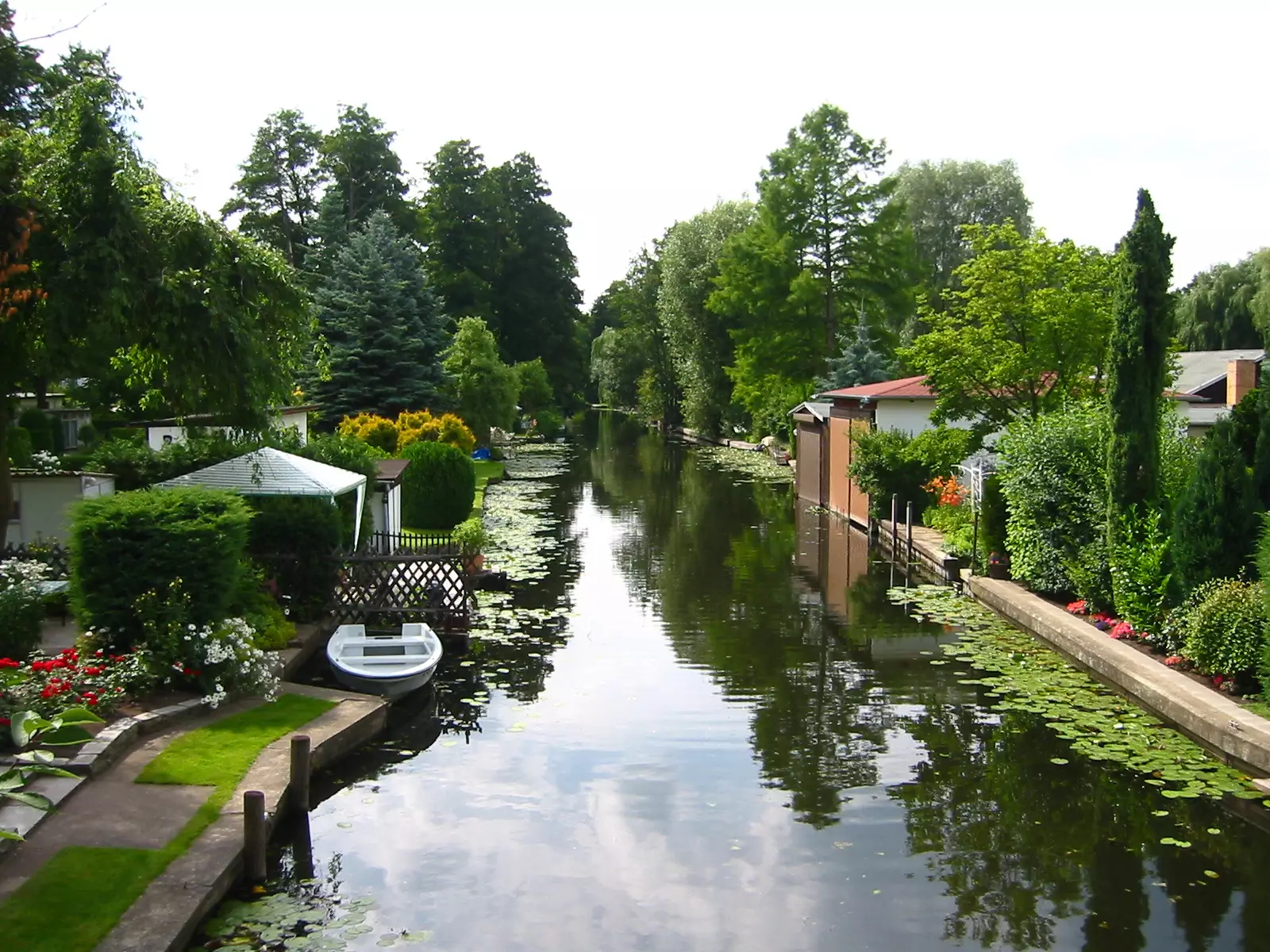
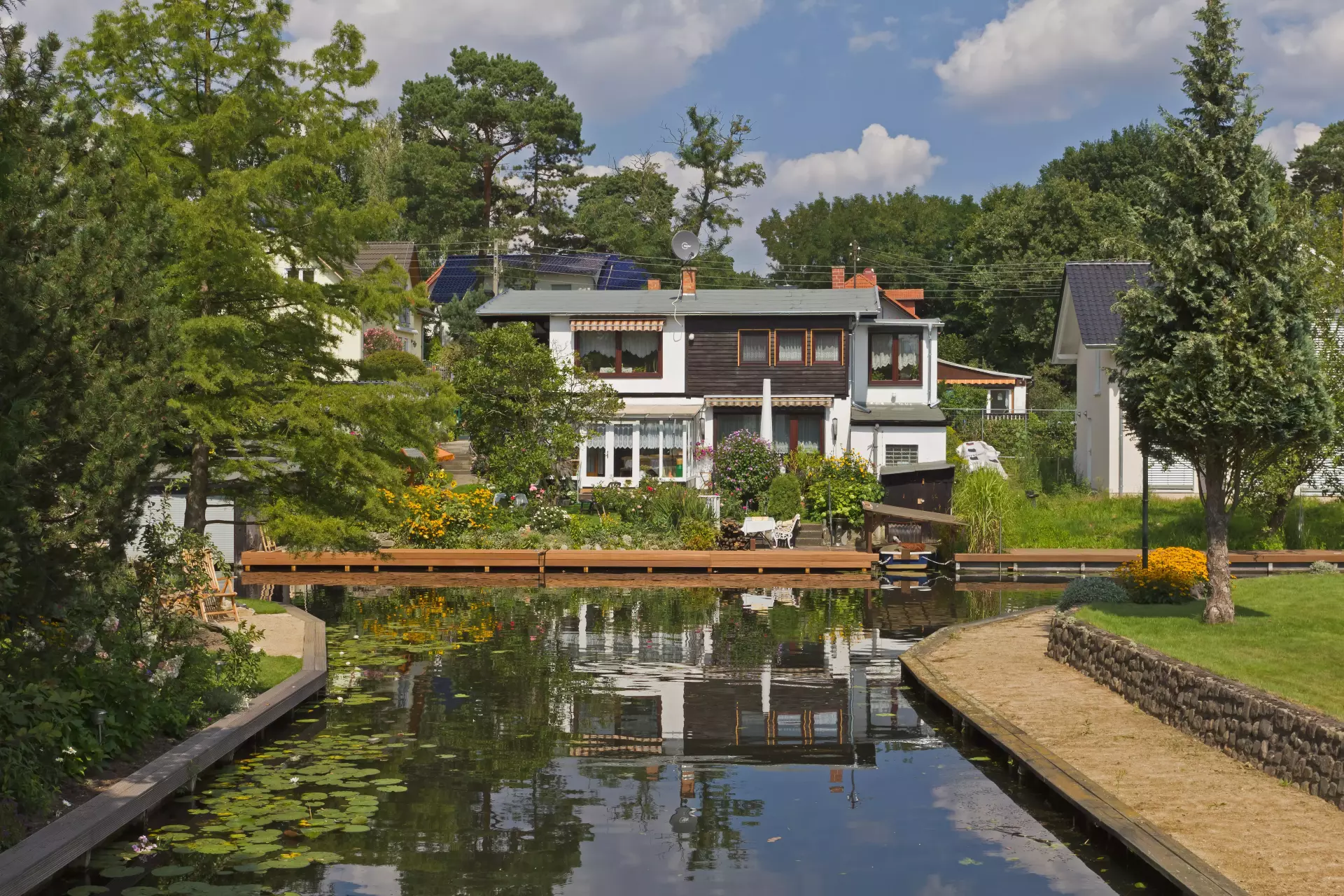
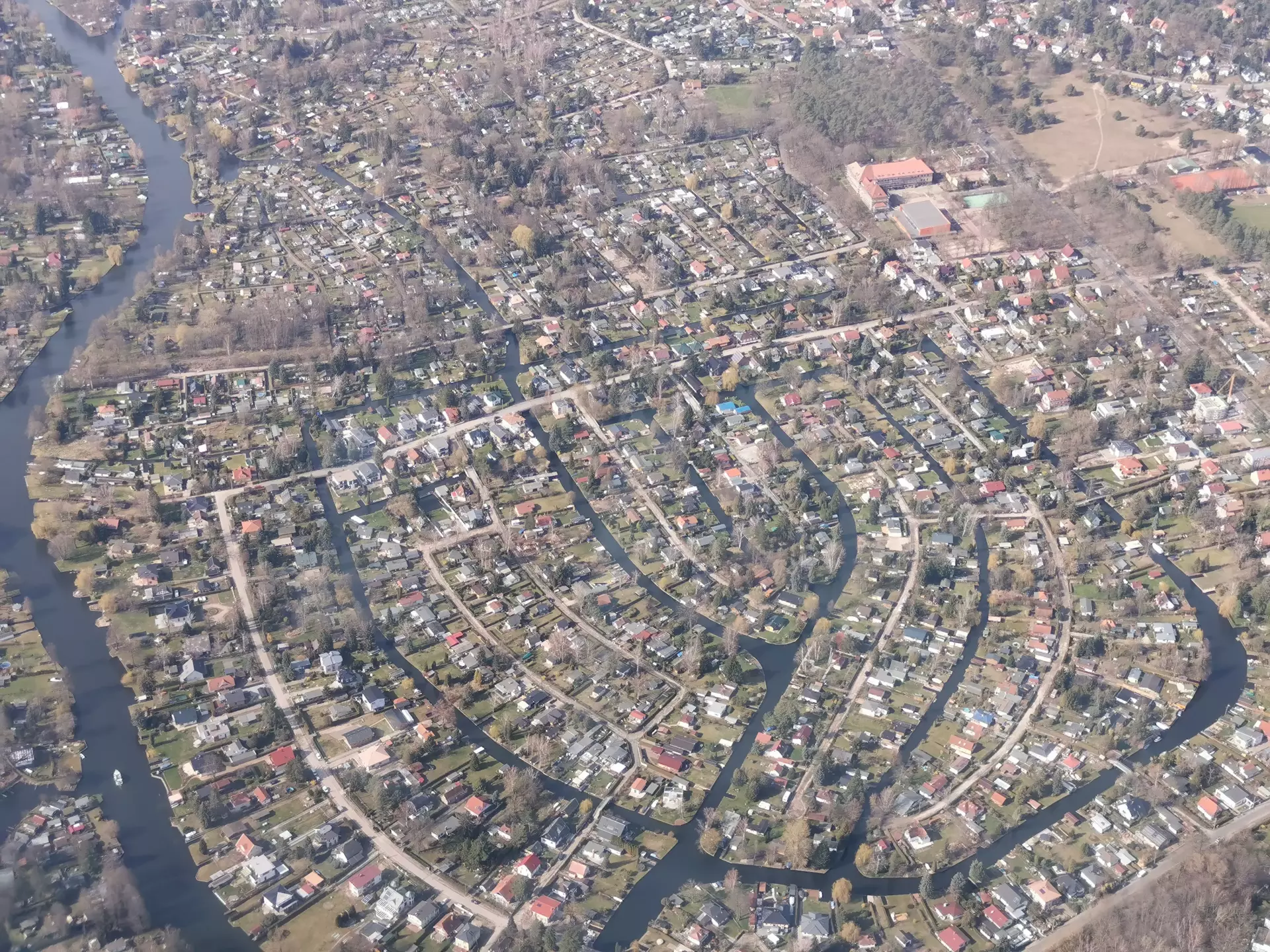
A waterside landscape unfolds with calm canals, bright reeds, and trees reflected like brushstrokes on a mirror. Small boats drift past wooden docks, and footbridges link quiet banks where dragonflies skim the surface. The air carries a light, briny scent, and the soft ripple of water sets an easy rhythm to the day.
Along the edges of the waterways, paths wind through tall grasses and clusters of wildflowers. Herons stand still in the shallows, while gentle currents move through patches of lily pads. Locals glide by in narrow boats, guiding them with long poles, and the occasional bicycle bell rings from a shaded towpath. The scene shifts with the sun—morning mist lifting from the reeds, midday light brightening the water, and evening glow turning everything gold.
By the quays and at the ends of quiet lanes, little fish restaurants open their doors. Wooden signs creak softly, and chalkboards list the day’s catch: grilled fish with lemon, fried smelts in paper cones, and bowls of seafood stew. Tables spill onto terraces, some perched right above the water, where guests watch tiny waves lap at the pilings. The kitchens work simply and confidently—fresh fillets sizzling on hot plates, herbs crushed with olive oil, and bread warmed just enough to tear by hand.
Evenings draw neighbors and visitors together on quayside benches. Lanterns glow against the darkening canals, and the clink of cutlery blends with soft conversation. A breeze threads through the reeds, carrying hints of charred lemon and sea salt. From time to time, a boat passes under a low arch, a lantern casting a slow arc of light across the water, and the canal settles back into its quiet, steady hush.
Huge technical museum, on a former railroad depot, featuring from ancient water and wind mills to computer pioneer Konrad Zuse's inventions, a collection of old to new vehicles of all types -bicycles, boats, trains, etc - and the interactive Spectrum science center with various hands-on experiments. There's an actual C-17 "Candy Bomber" airplane hanging on its façade. The railroad and aeronautical sections are hard to beat.
A fortress built between 1560 and 1590 to Italian design on the site of a 12th-century castle. The Juliusturm housed part of the huge indemnity (in physical gold coins) France had to pay after the war of 1870/71 until what was left of it was returned to France after Germany's loss in World War I. The term "Juliusturm" remained in usage in German for a large "rainy day fund" into the 1960s. Museums housed within the citadel cover the history of the town of Spandau, monumental public art in Berlin, and artillery.
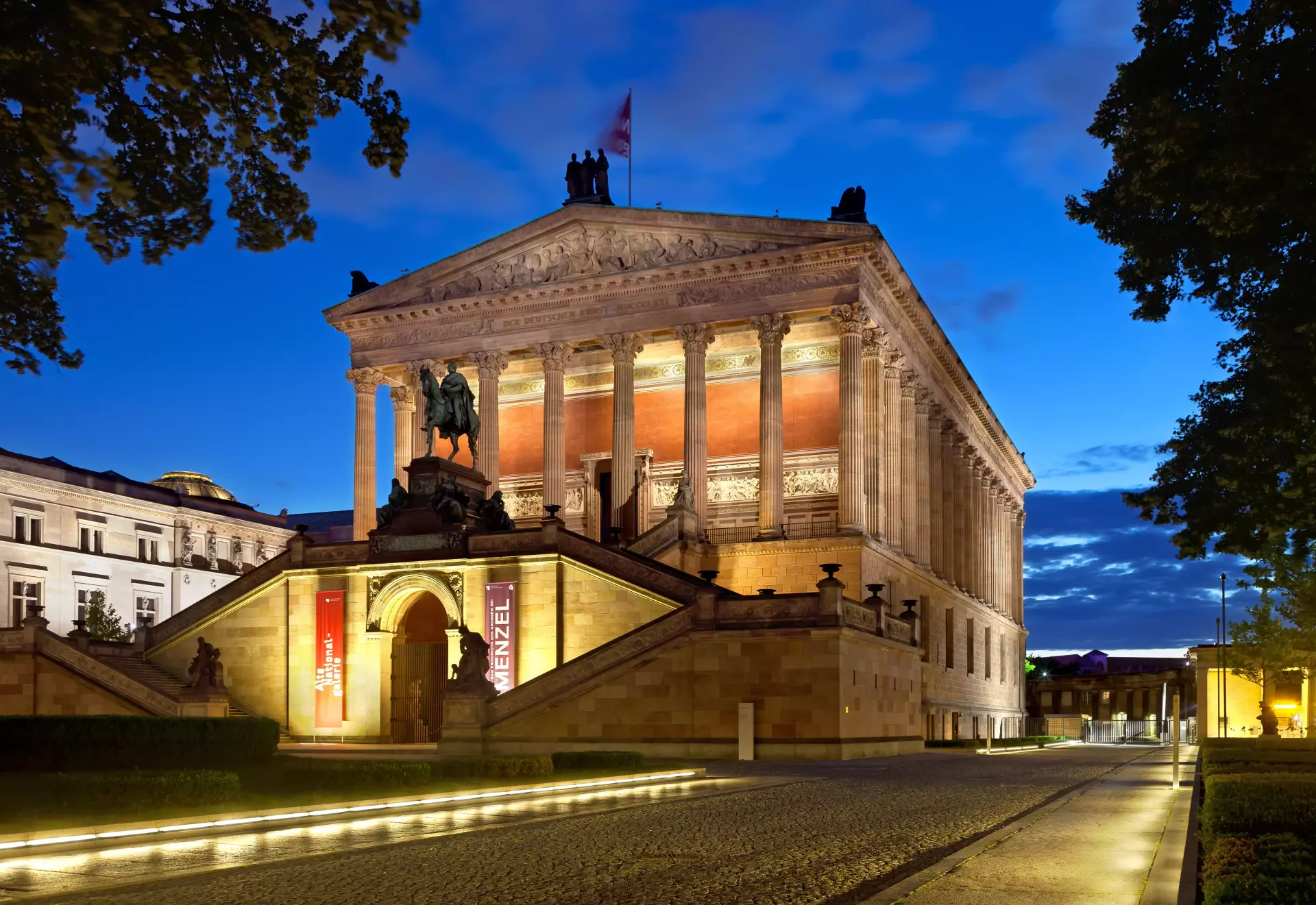
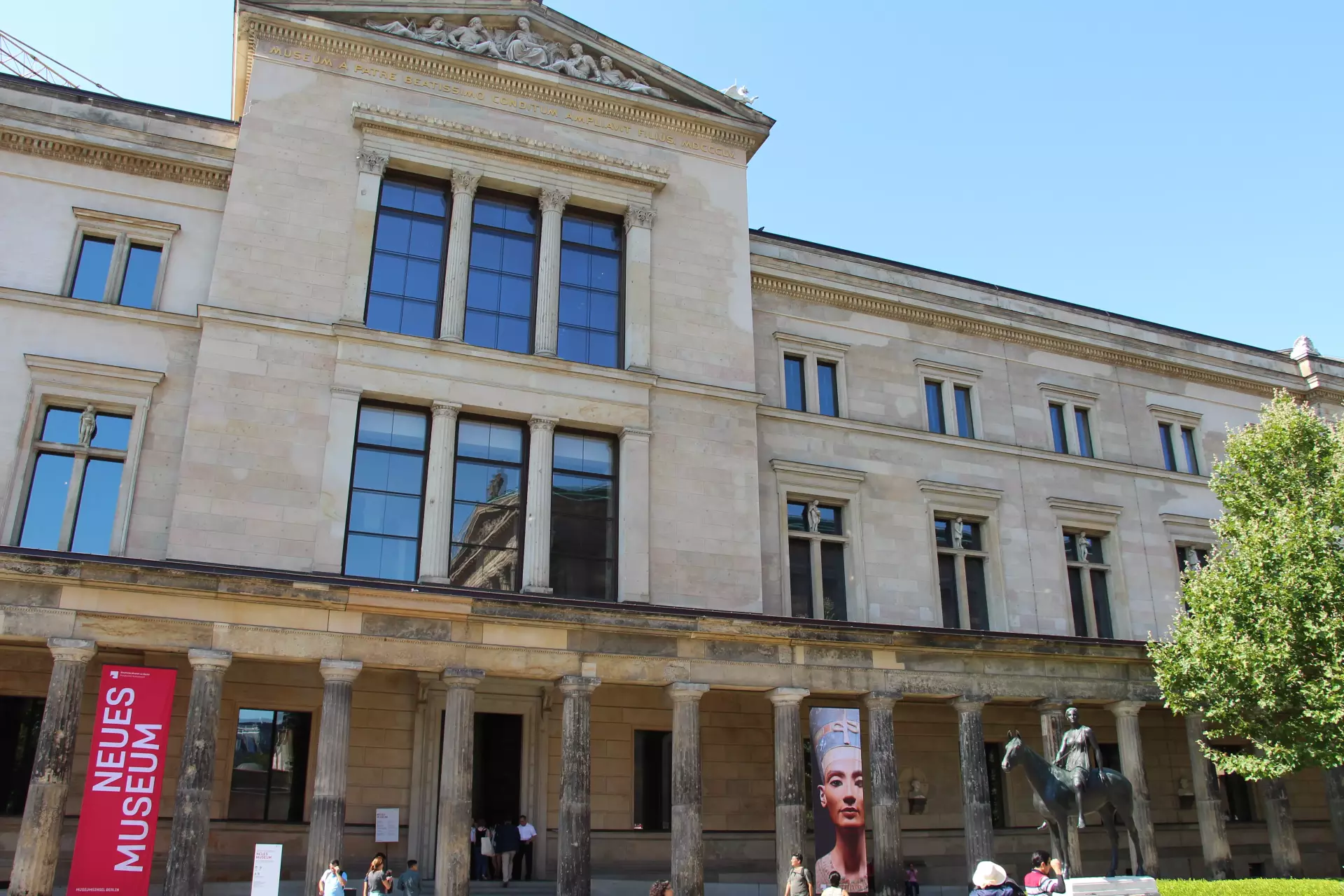
The main floor houses the antiquities collection in an ongoing exhibit called "Neue Antike im Alten Museum" (New Antiquities in the Old Museum). Directly through the front door, entering from the Lustgarten (Pleasure Garden, now under reconstruction), there is a domed rotunda with red and white cameos, Greek-style, with statues of the gods. To reach the Hildesheim silver collection, go to the back of the rotunda, turn left, walk through the long gallery and turn left into a small room at the end.
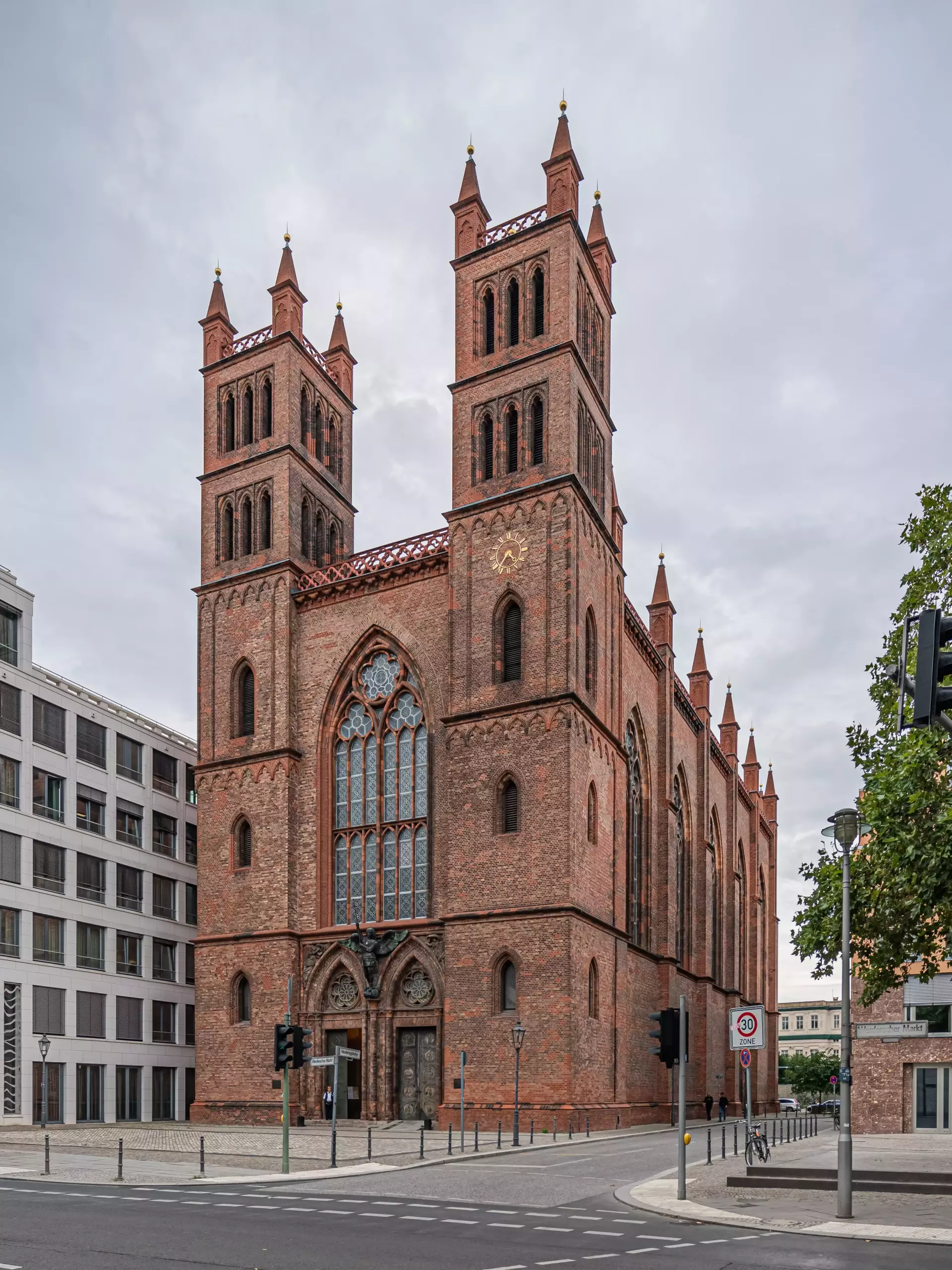
The meeting point of one of the leading oppositions against the GDR regime and is a great Neogothic church. Also the only ecumenical Lord's supper with Protestants and Catholics together took place in the Gethsemanekirche (2003).
The longest stretch of the Berlin Wall still in existence, painted by artists in 1991 and restored in 2009, after years of decay. At Mühlenstraße, next to the river Spree. The murals are painted on the east side of the wall after the fall of Communism; so they are not from the Cold War, during which murals could only be painted on the west side. Make sure not to miss the famous mural of a car seemingly crashing through the wall with Leonid Brezhnev and Erich Honecker kissing above it. It is actually on the back side of the gallery (it is facing away from the street.) It is just inside the entrance of the Eastern Comfort Hostel, near the east end of the gallery.
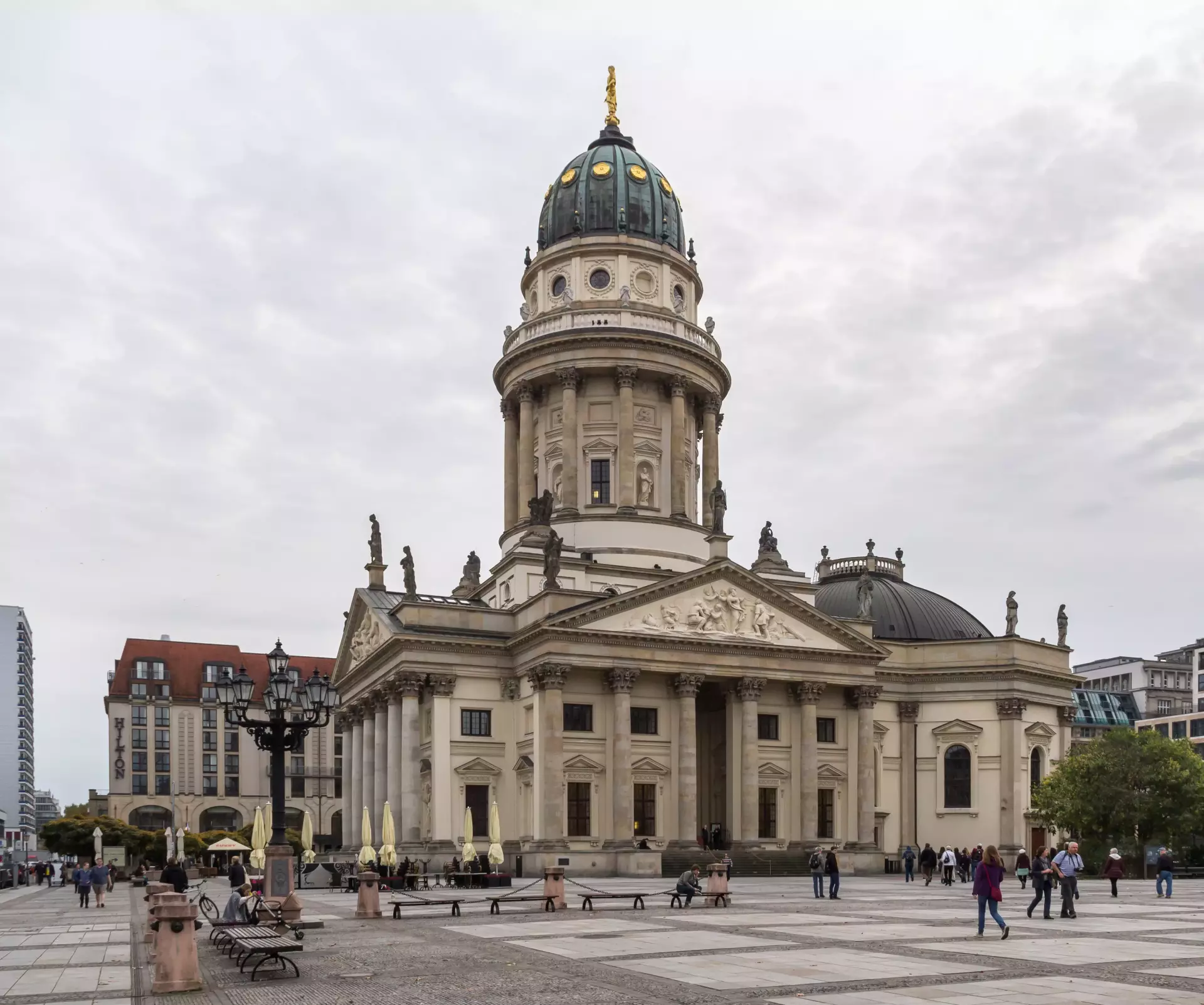
The Gendarmenmarkt is a square in the Friedrichstadt with the Konzerthaus (concert hall) and in front of the statue of Germany's poet Friedrich Schiller, the Neue Kirche (New church) and the Französischer Dom (French cathedrals). Berlin’s Deutscher Dom on the magnificent Gendarmenmarkt square is not to be confused with the Berliner Dom. It was built in 1708. Since 1992 a German Parliament exhibition can be seen here entitled “Paths, Loosing Track and Detours” or the development of parliamentary democracy in Germany – ways and roundabouts. No religious services are held here. The French cathedral houses the Hugenottenmuseum. It represents the ongoing influence on Berlin by the Huguenots who emigrated from France after the revocation of the Edict of Nantes. Crown Prince Friedrich William encouraged them to settle here because most of them were skilled workers or otherwise useful to the kingdom. One memorable artwork, in room nine of the museum, pictures Crown Princess Dorothea exclaiming "But he's a refugee!" upon being presented a very valuable set of jewels by Pierre Fromery. The generally agreed-upon view of refugees as poor, without resources let alone diamonds, was blown apart by the talented French Protestants forced to leave their country due to religion. One of the most notable effects of having such a large French population was their influence on the infamous Berlin dialect. Berlinerisch words such as Kinkerlitzchen (from French "quincaillerie" - kitchen equipment) and Muckefuck (from French "mocca faux" - artificial coffee, though that etymology is not universally accepted) are unique to the area. The Französischen Dom (cathedral) itself was built to resemble the main church of the Huguenots in Charenton, France, destroyed in 1688. It has housed the museum since 1929. Closed till 2019
Heritage listed Art Nouveau railway station and charming surrounding city square.
Started in the 15th century and finished in the mid-18th century, the baroque palace was the residence of electors, kings and emperors until 1918, when it became a museum. The palace was badly damaged during World War II and later razed in 1950, replaced by the GDR with a modernist Palast der Republik. The Palast was in turn gradually dismantled at the turn of the century, as it was discovered to contain asbestos and its former function of housing the GDR parliament became obsolete. Berlin has started in June 2013 construction on a new version of its historic Stadtschloss. The Schlüterhof, an inner courtyard, was also rebuilt. The building opened with a delay in 2021 with museums inside and a roof terrace with a good view. Among the Berlin museums this is perhaps the most controversial due to reconstruction of a monarchist palace being seen as a questionable political statement and due to the fact that many of the exhibits were sourced from German colonies under ethically questionable circumstances leading to demands to return some or all of them to their places of origin.
The museum’s treasures include the sculpture collection with works of art from the middle ages to the 18th century. The Bode museum is best known for its Byzantine art collection and the coin cabinet.
The zoo in the former East Berlin is more spacious than its West Berlin counterpart, the historic Berlin Zoo and has been open for some 50 years. The Tierpark has nearly as many animals, but fewer reptiles and aquatic animals. It appears rather like a park with animals than a classic zoo, in fact it is one of the biggest zoos in Europe. There is an old castle from the late 17th century in the northeast of the Tierpark (Schloss Friedrichsfelde).
This heritage-protected public bathing beach which opened in 1907 is one of the largest inland lidos in Europe and has a 1275-m-long sand beach, a capacity for up to 30,000 guests and a popular nudist area.
Designed by Hans Poelzig in 1929, it is the first self-contained broadcasting house in the world and it is still in use today.
House museum on Max Liebermann, German painter and printmaker. Has about 15 Lieberman paintings.
Museum established in 1888, with a collection of 3,500 instruments.