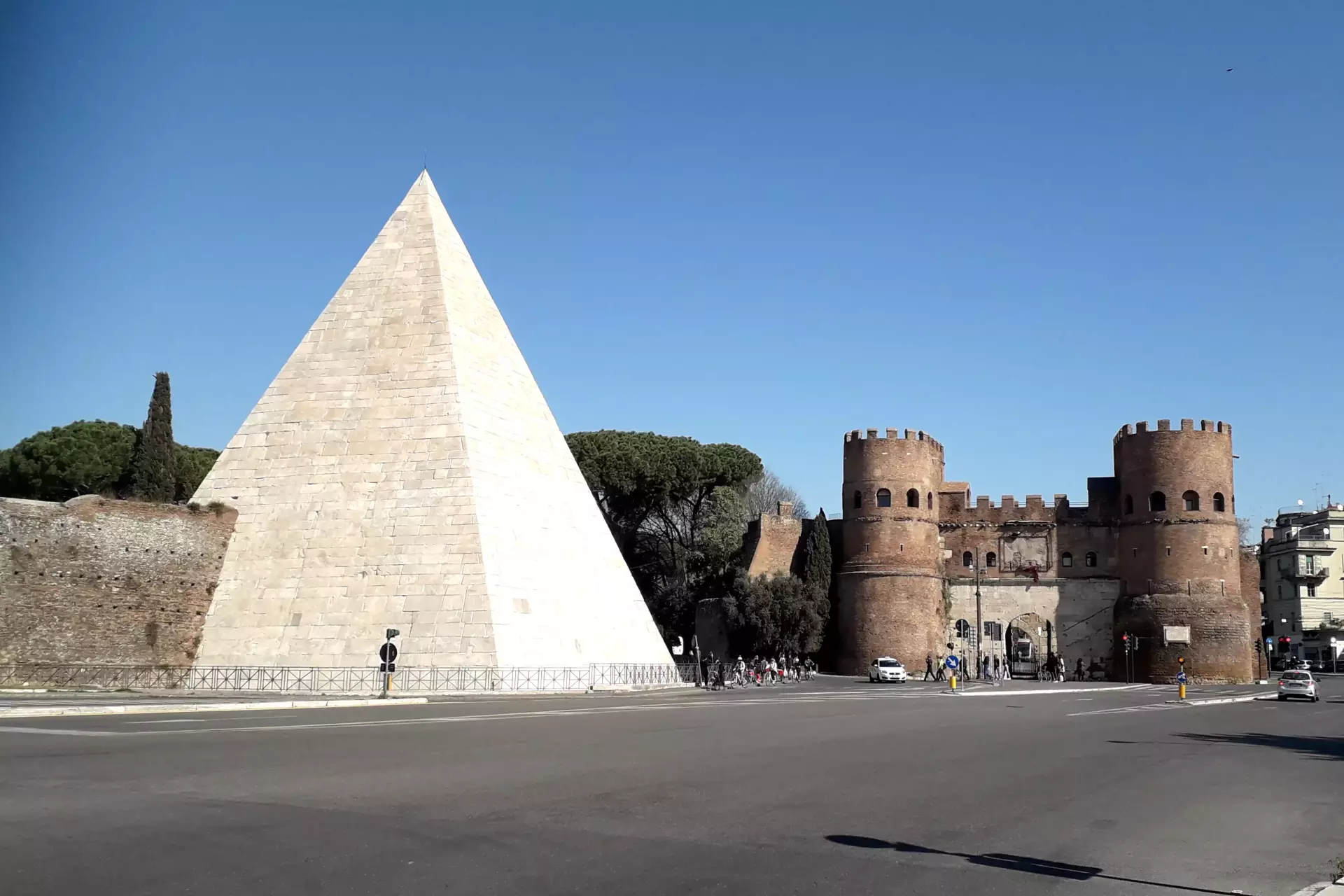
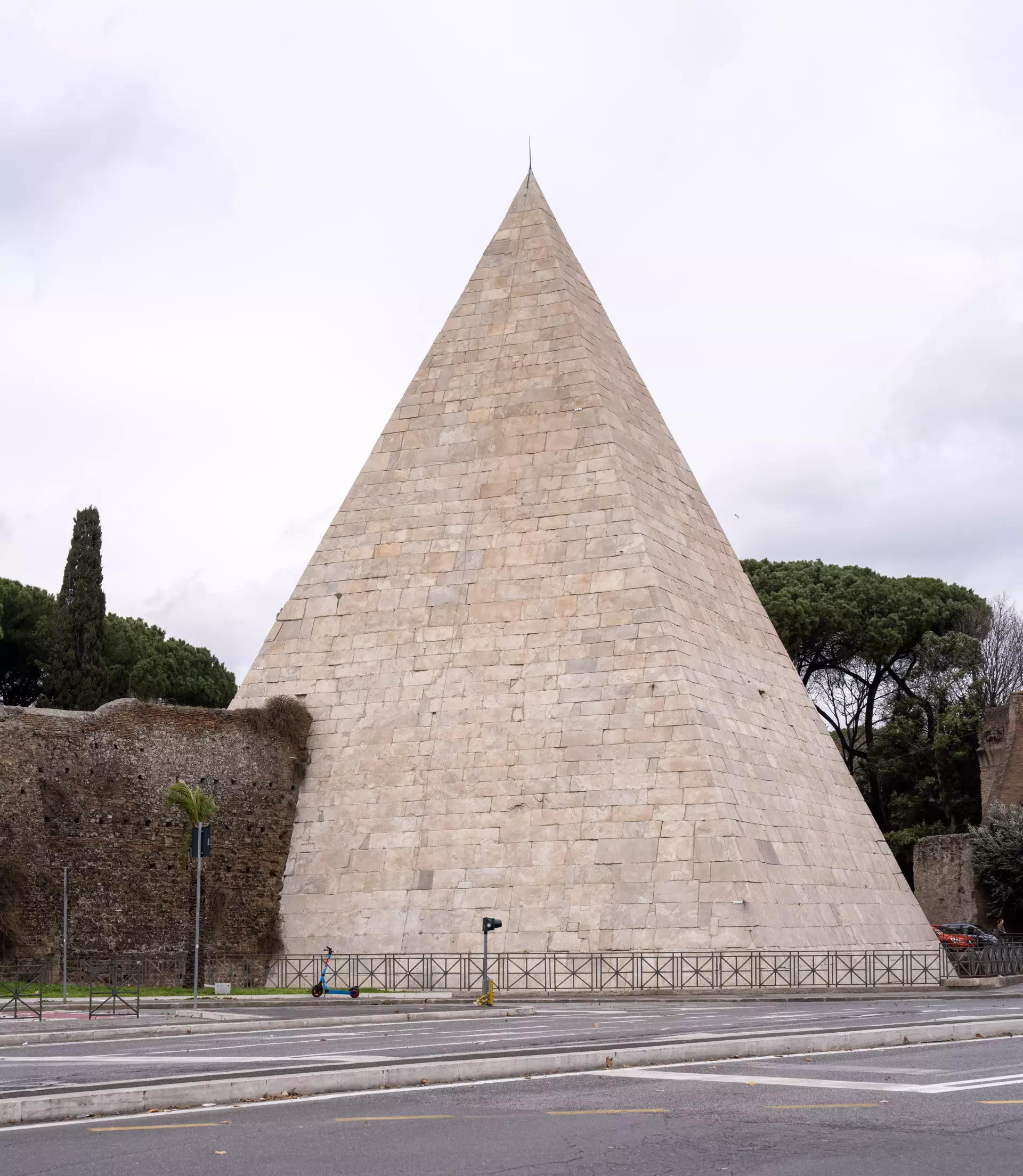
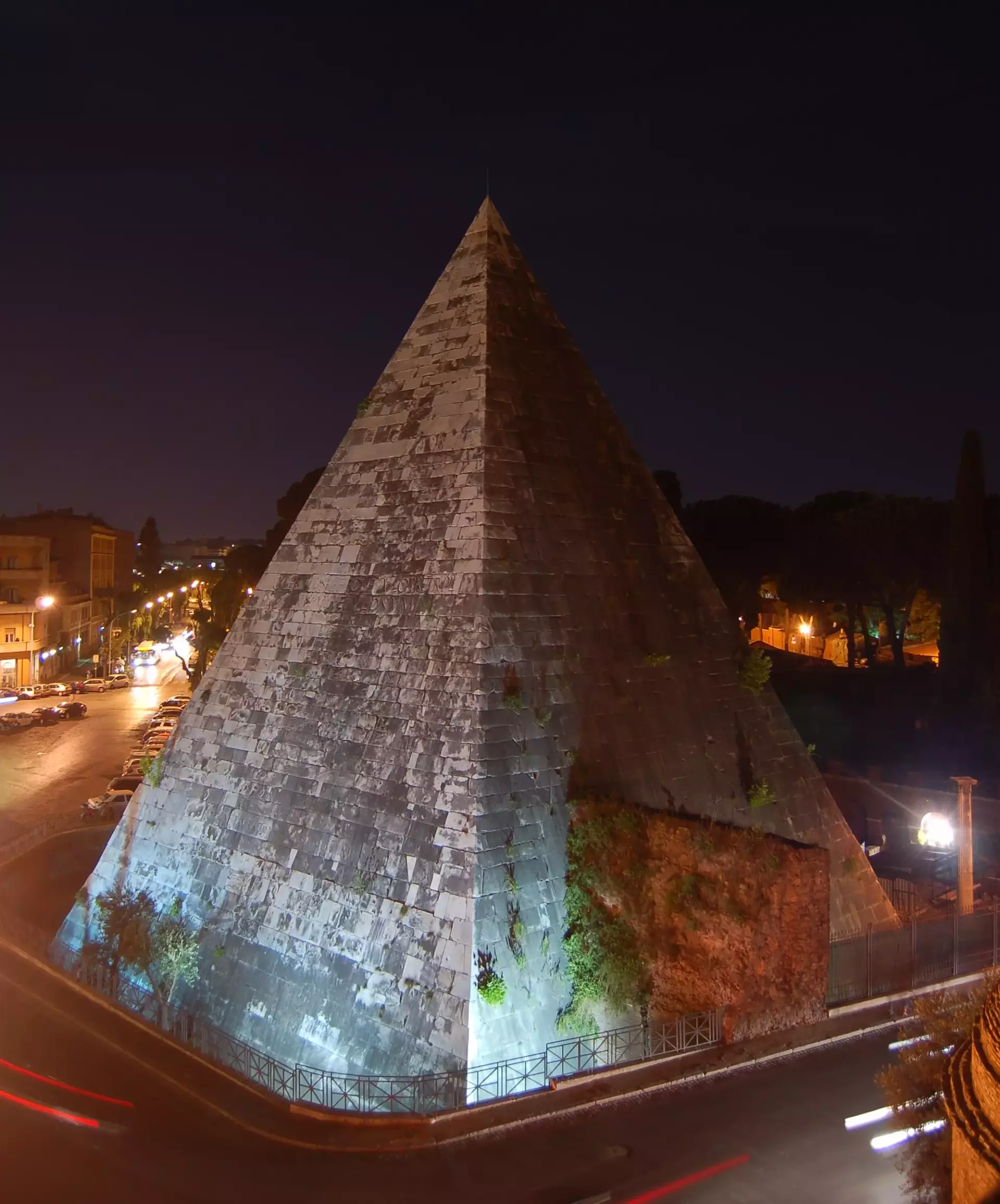
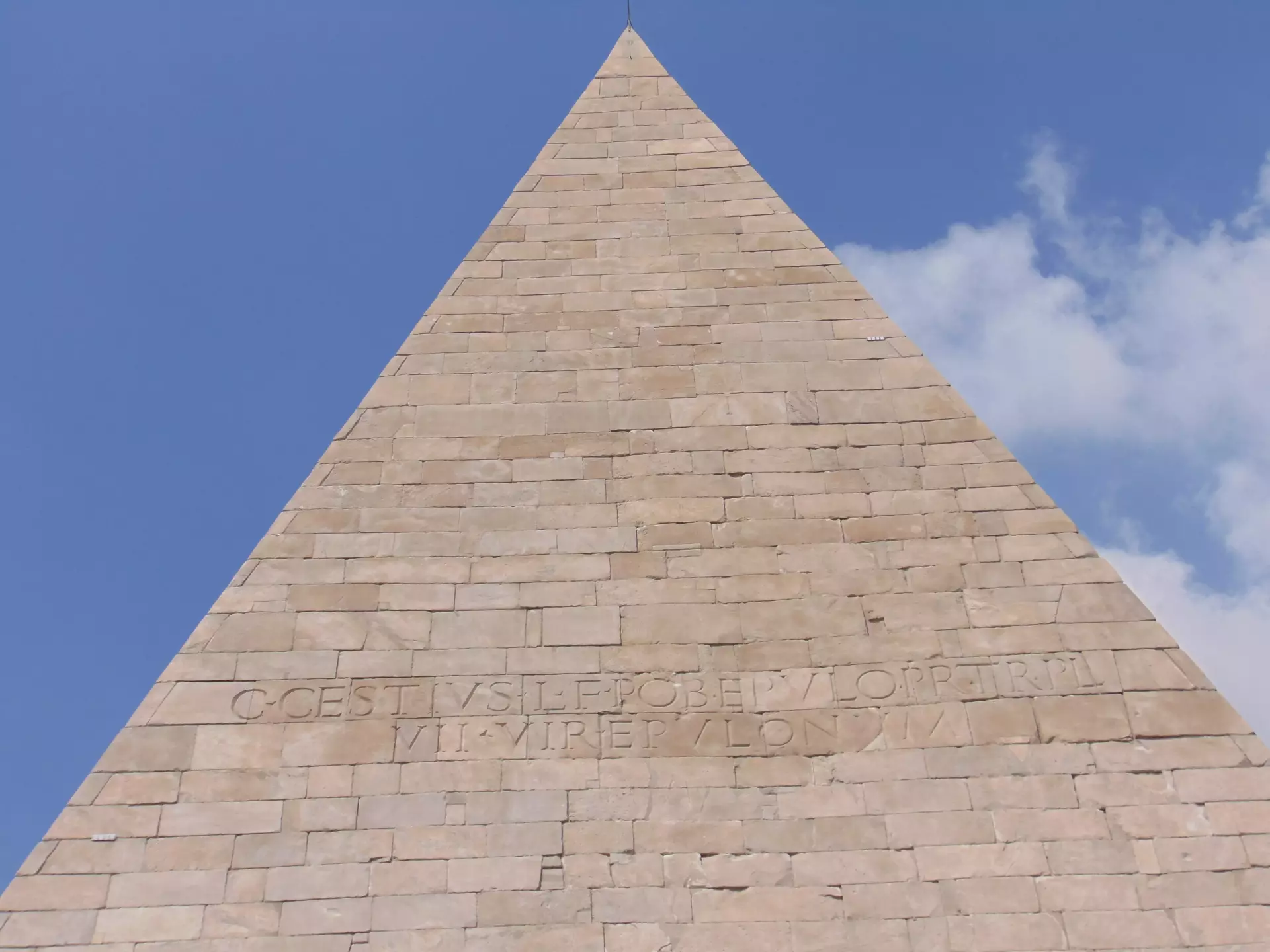
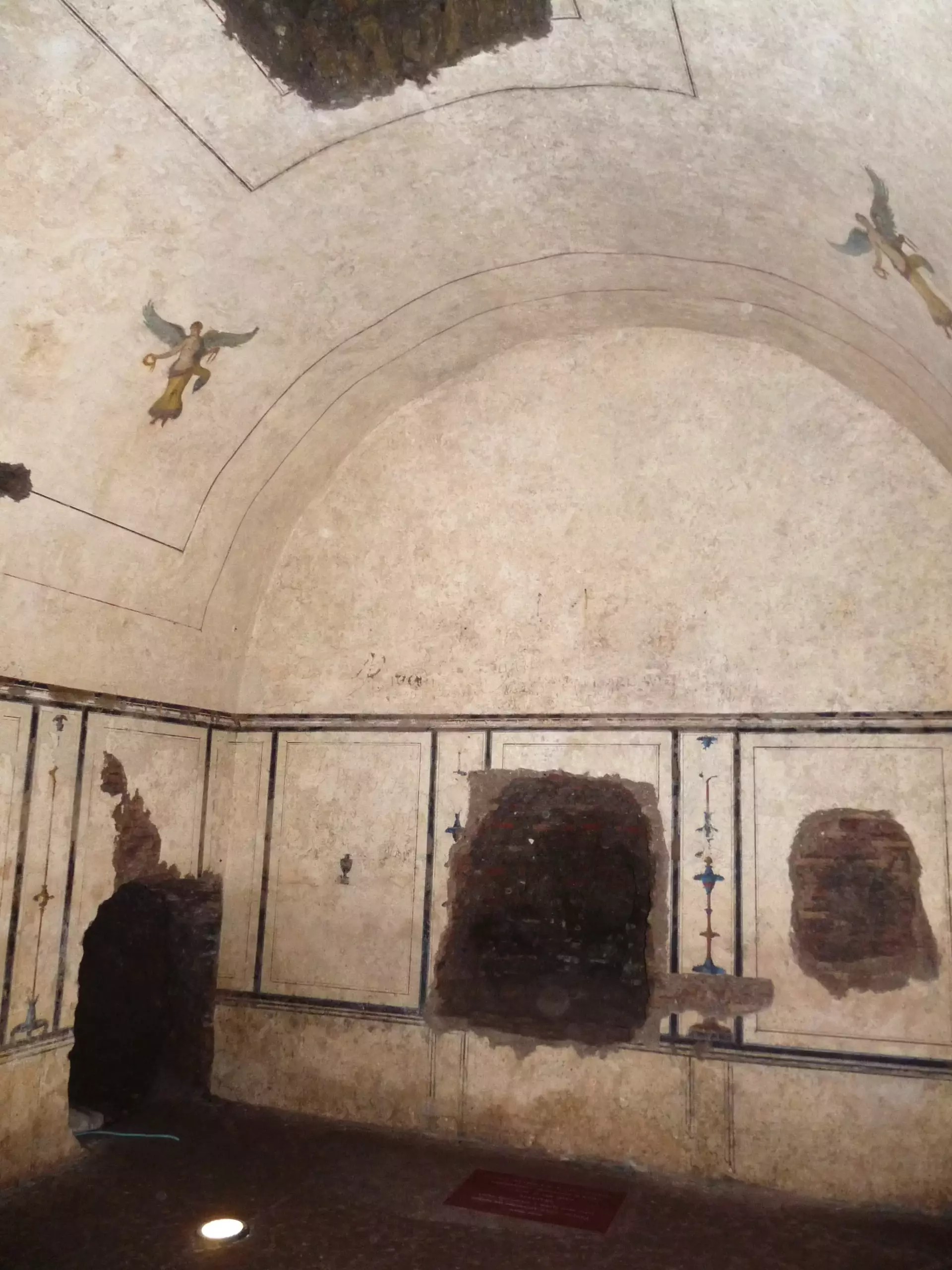
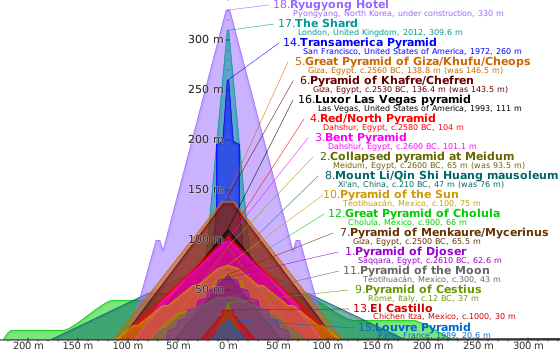
The Pyramid of Cestius is an ancient tomb built for the wealthy Roman, Gaius Cestius, who passed away in 12 BC. This unique monument stands out in Rome with its striking Egyptian-style architecture, a reminder of the city’s fascination with distant cultures during that era.
Entry to the Pyramid of Cestius is possible only through guided tours, which are available on specific dates. Tours are scheduled for the 2nd and 4th Saturday of every month. Additionally, visitors who purchase a ticket to the nearby Museum of Via Ostiense can also join tours on the 1st and 3rd Saturday of each month. This system helps to protect the site while allowing curious travelers to learn about its history and significance.
Source - https://en.wikipedia.org/wiki/Pyramid_of_Cestius
Perhaps the most fascinating building in Rome. The core of the structure began life as the mausoleum of Emperor Hadrian, built between 135 and 139 AD. Subsequent strongholds built on top of the mausoleum were in turn incorporated into a residence and castle by medieval Popes. The building was used as a prison until 1870 but now houses a museum. Opera buffs will be exhilarated to visit the balcony from which Tosca leaps to her death. Film buffs will recognise it as a setting from Angels and Demons.
Pope Nicholas III connected Castel Sant'Angelo to St. Peter's by a covered fortified corridor called the Passetto di Borgo. This proved useful for Pope Clement VII during the Sack of Rome (1527). You can still see much of the Passetto by walking along the Borgo Sant'Angelo, which runs parallel to, and north of, the Via della Conciliazione.
This is the attractive park on the hillside directly west of the Colosseum. Visible ruins in the area come from the Baths of Trajan. These baths were built on the top of the ruins of Domus Aurea - the Golden House of Nero (the Colosseum was built on the drained site of Nero's lake). The area underneath the park contains an enormous area from Nero's villa. It was restored at great expense in the 1980s and 1990s, opened to the public, and then closed again after a few years when it began to leak!
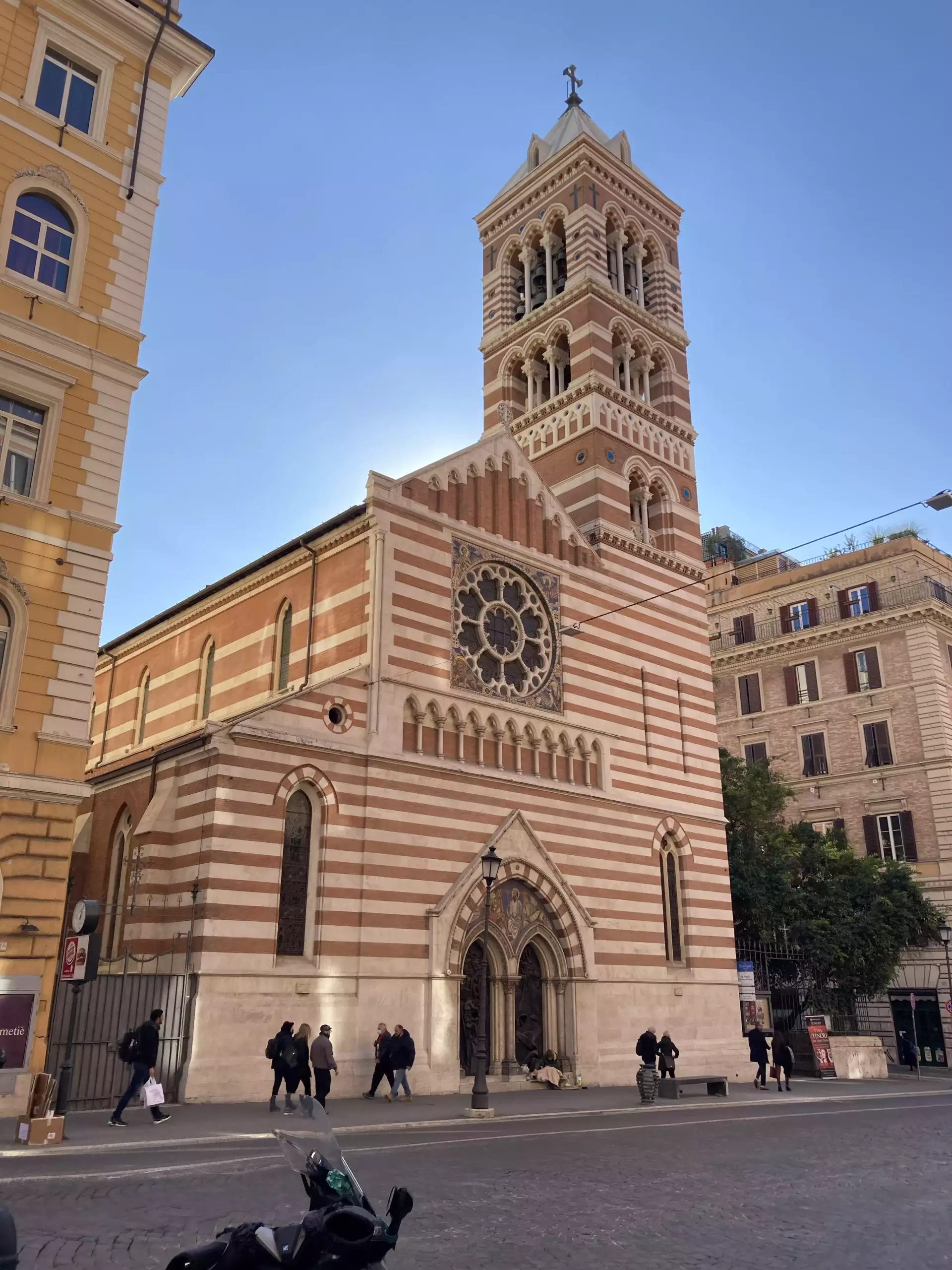
More modern than most Roman churches: it was not started until 1873. This is Rome’s Episcopalian church. Some very interesting artwork, particularly the mosaics by Edward Burne-Jones of the Pre-Raphaelite school.
A pleasant fountain in an out-of-the-way square. It was originally meant to have four dolphins rather than turtles, but the dolphins proved to be too large for the water pressure, so the turtles were added as an afterthought.
Inaugurated in 217 AD and used until the 6th Century. The baths were big enough for 1600 bathers at a time. Impressive and well-preserved. Used for operas in summer months (see Opera di Roma for details) and was the location for the famous "three tenors" concert in July 1990, at the time of the World Cup (soccer).
A 1st-century tomb surrounded by two farmhouses from the Middle Ages, one of which used to be a cheese store. Rather hidden behind a high wall, the tomb is rarely open to the public. You might be lucky on a Sunday: on the third Sunday of every month there is a guided tour at 11:00.
The 4th rebuilding of the meeting place for the Roman Senate, once converted into a church during the Middle Ages, but now restored since the 1930s.
The western end of the ancient Via Appia road connecting Rome to Brindisi in the heel of Italy, and as such the third world heritage site in Rome together with the Old Center and the Vatican. As such it's an important historical location, even if the remains of the gate aren't as impressive as the city's major sites. As Via Appia heads southeast out of Rome, and after a few kilometers the route is officially named Via Appia Antica and starts looking more historical: it gets narrow as a city street, the asphalt is replaced by a rock surface and the road is lined with parks and park-like areas and walled old buildings. This section has been described as the world's longest museum.
Church built on the site of three Roman pagan temples, which can be explored underground for a small fee paid at a desk near the church entrance.
An ethnographic collection of around 60,000 pieces from European indigenous cultures. Documents evolution from the Palaeolithic age to the Iron Age.
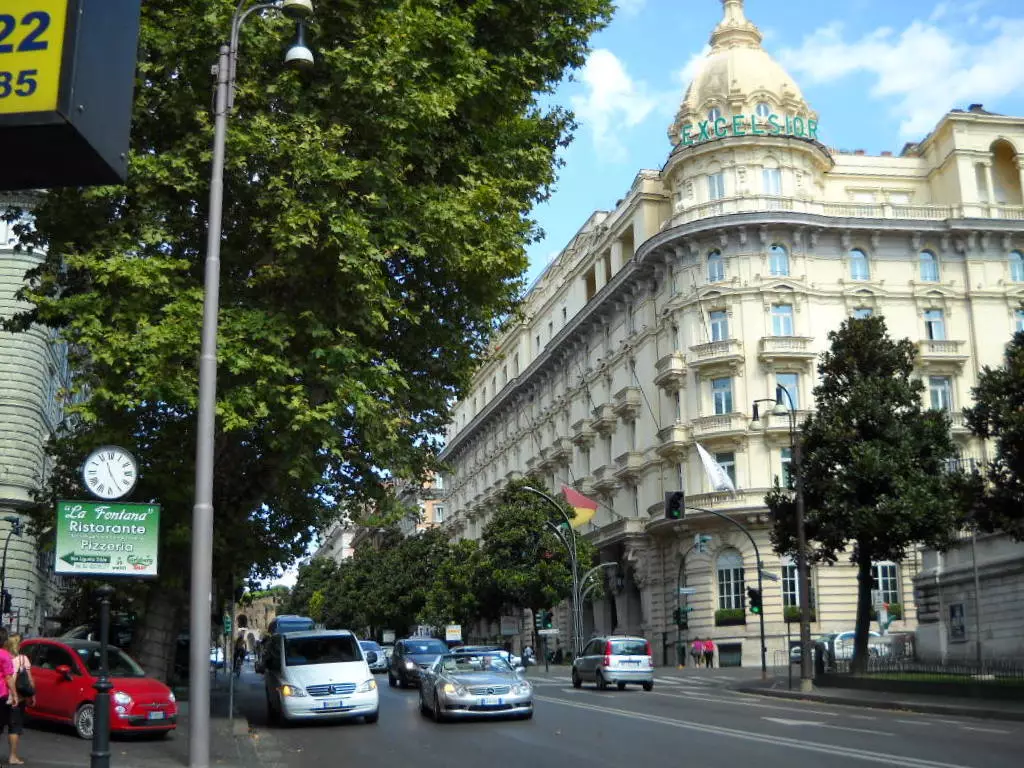
It was immortalised in 1960 by the Federico Fellini film La Dolce Vita. It is also the location of the US Embassy, in the massive Palazzo Margherita. Via Veneto went into a period of decline in the 1980s but has returned to popularity and the roadside cafes are the place to be seen if you are into that sort of thing.