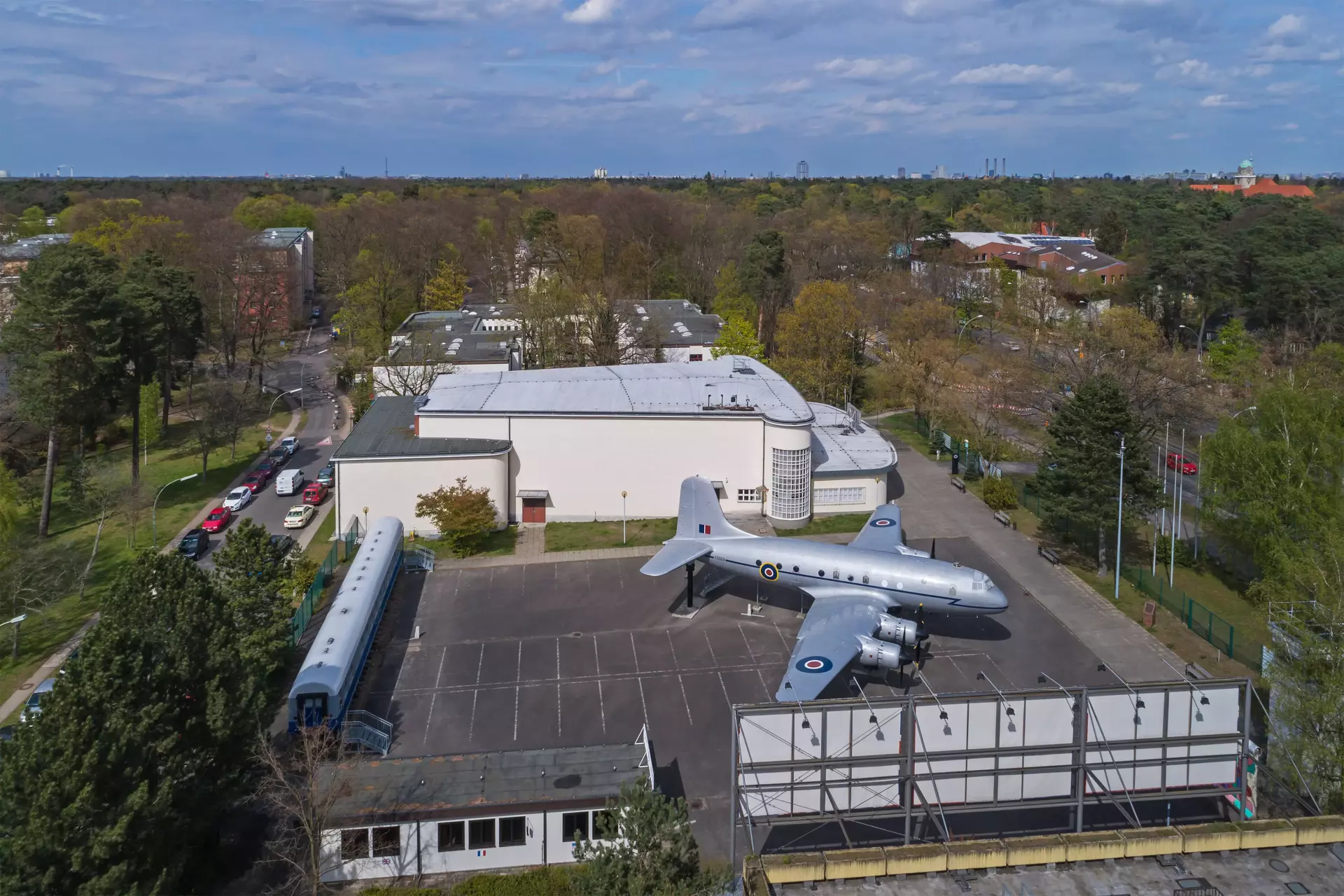
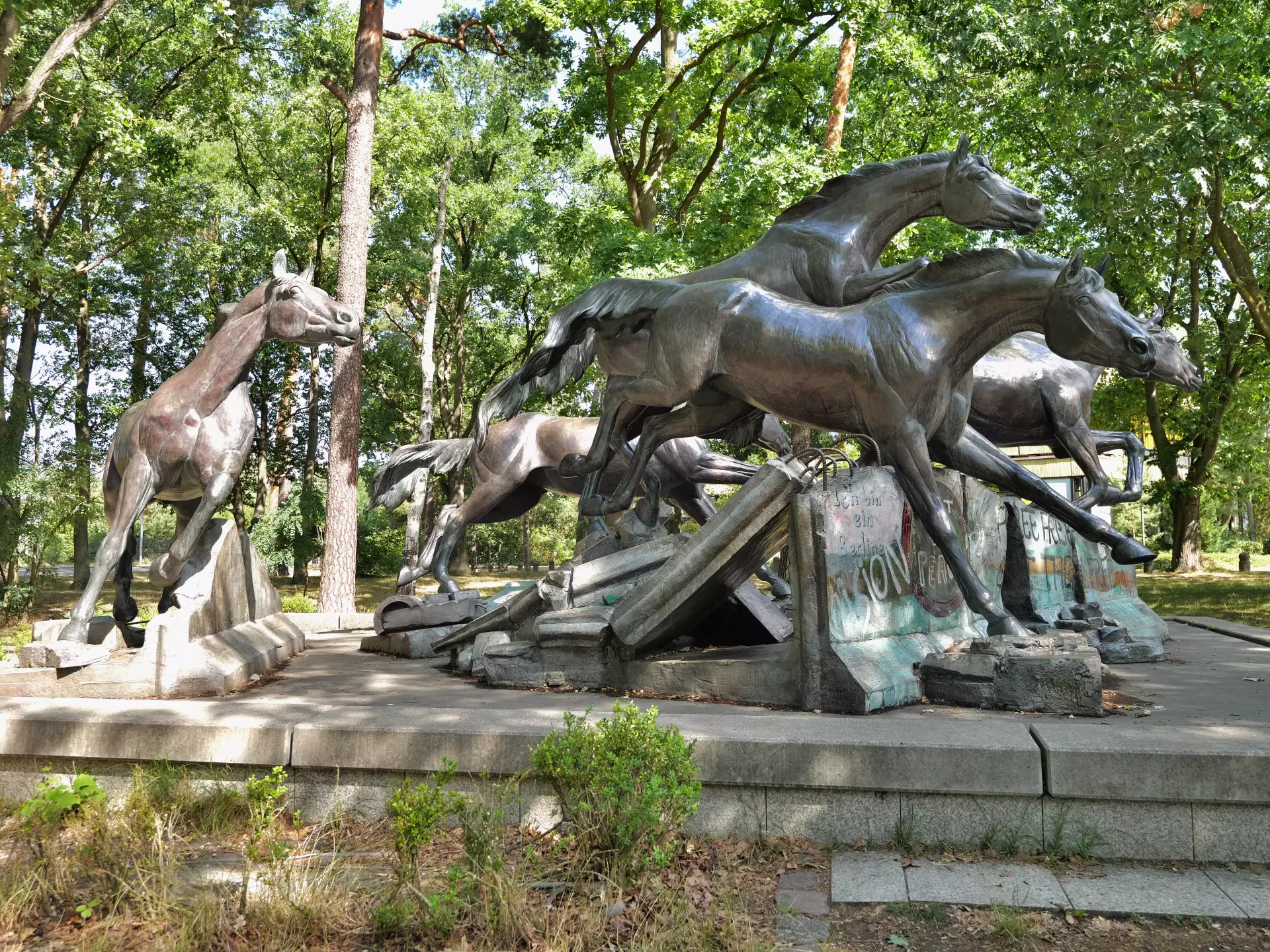
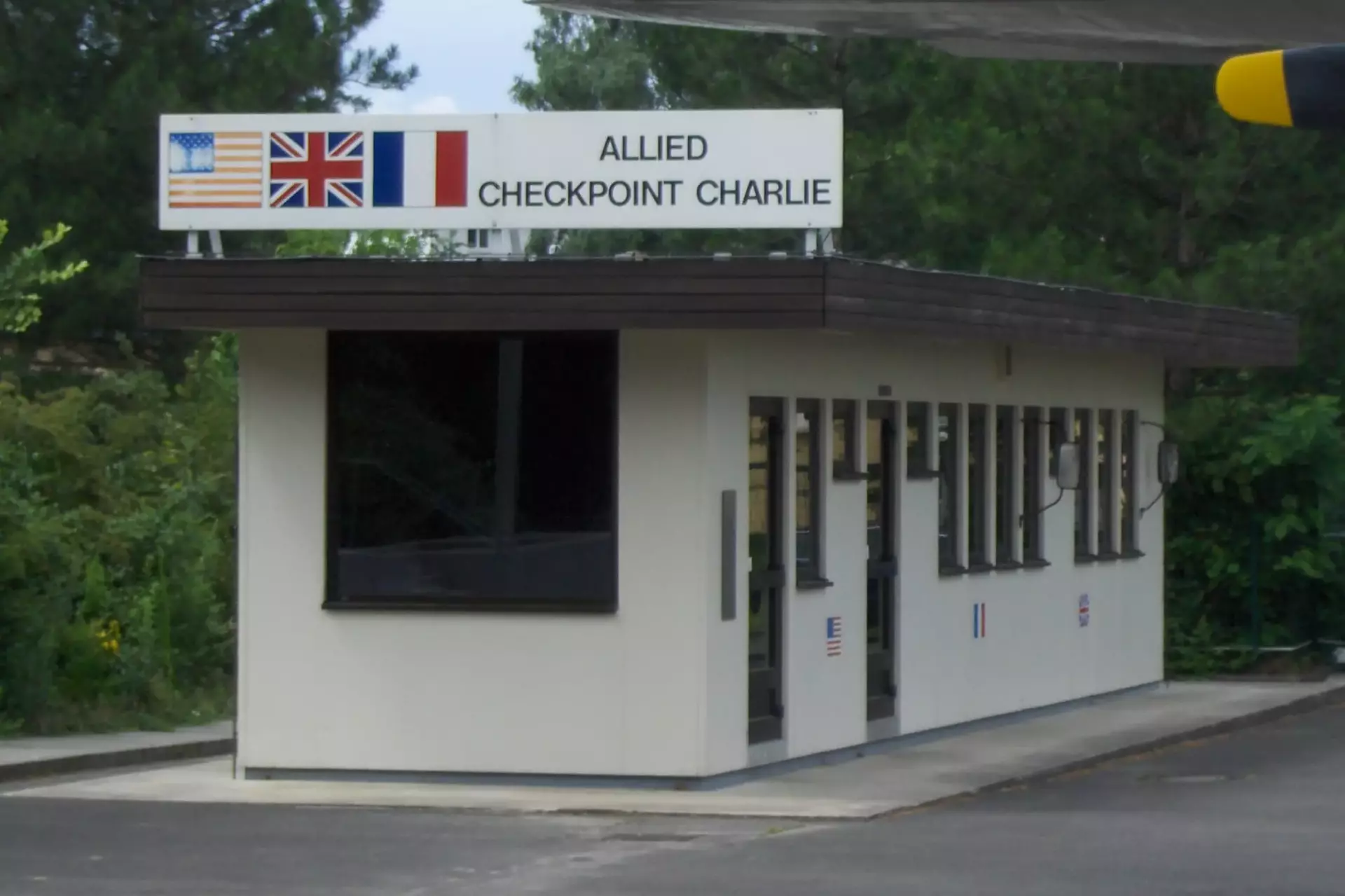
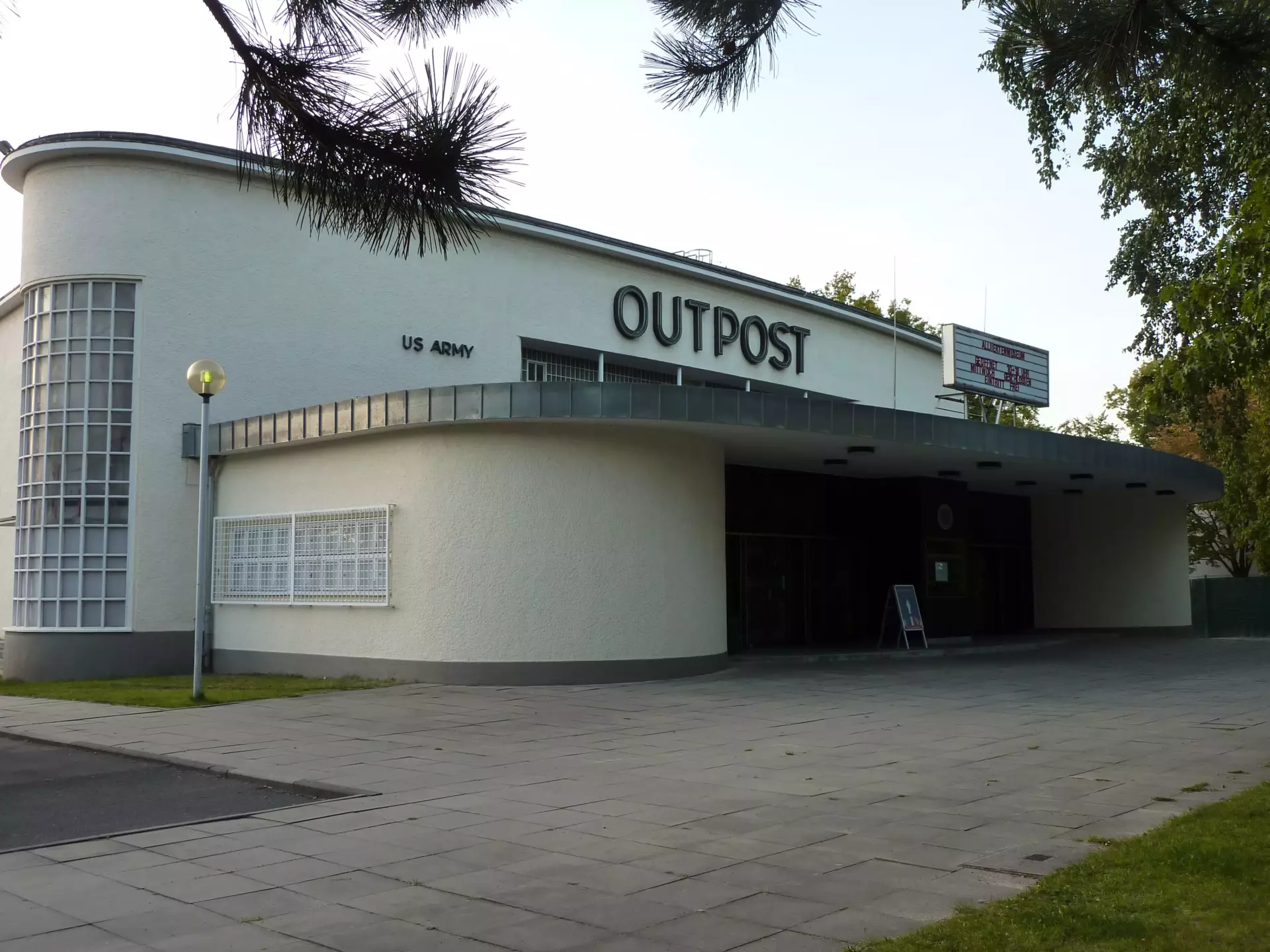
The Allied Museum in Berlin tells the story of the Western Allies in the Cold War. Exhibits trace daily life, diplomacy, and military strategy from 1945 to 1994, when Allied forces left the city. The collection focuses on how West Berlin functioned under the protection of the United States, the United Kingdom, and France, and how their presence shaped the city’s politics, culture, and public spaces.
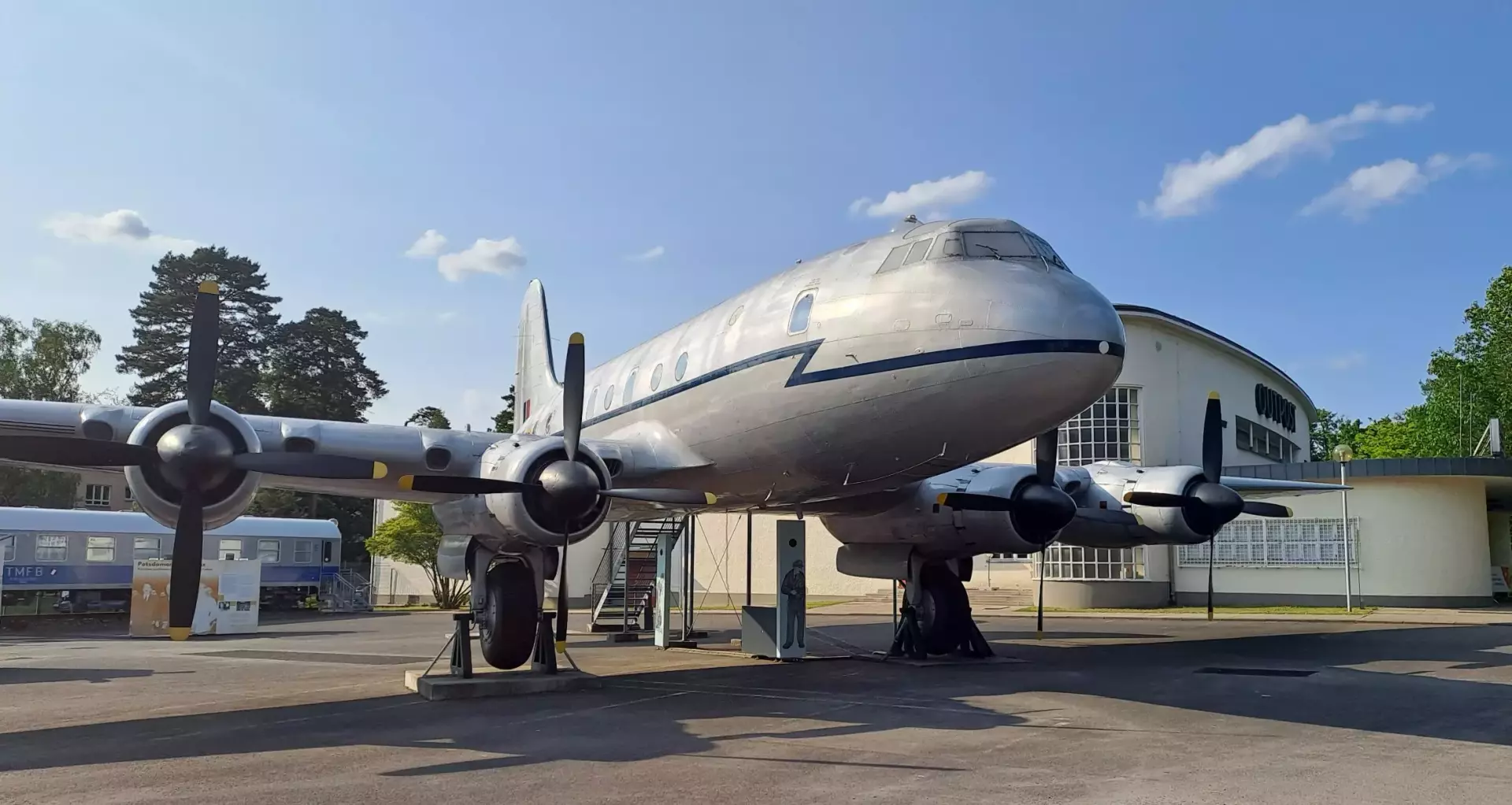
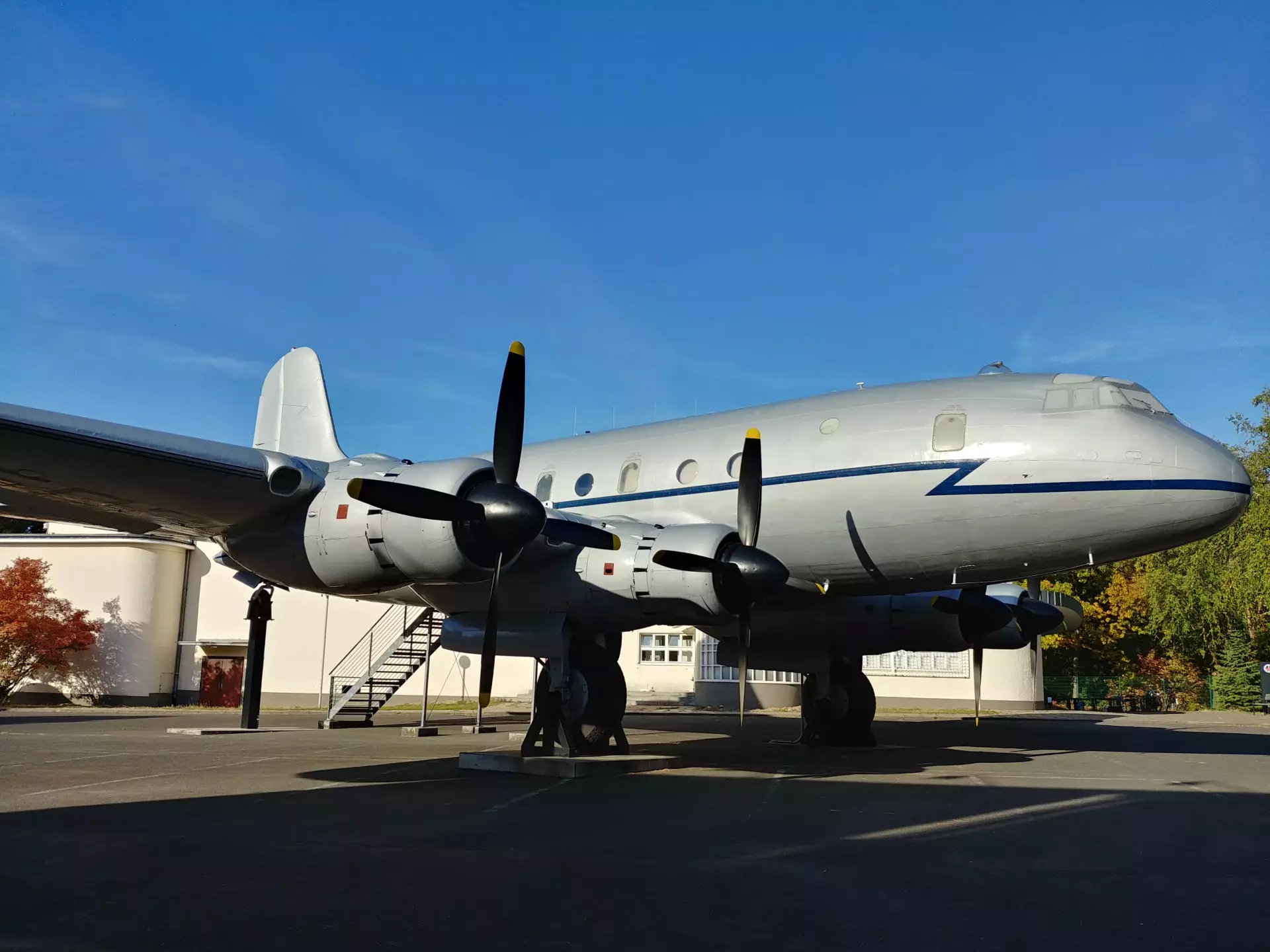
One of the museum’s highlights is the Berlin Airlift, presented through original equipment, photos, and personal accounts. Visitors see how supplies were flown into the city during the Soviet blockade, keeping two million people fed and warm. A large transport aircraft and an original guardhouse illustrate the scale of the operation and the everyday routine of Allied personnel stationed in Berlin.
The museum explores checkpoints, intelligence work, and propaganda on the Western side. Uniforms, maps, radios, and declassified documents show how information moved across a divided city. Exhibits on Checkpoint Charlie and the role of Allied military police explain how traffic, security, and diplomacy played out at the border between two systems.
Beyond strategy and security, the displays cover daily life on Allied bases: cinemas screening new releases, clubs with live music, and schools for the families of service members. Posters, record players, and canteen menus paint a picture of the social world that grew up around the garrisons, showing how Western culture spread through concerts, film nights, and sports teams.
The final section follows the changes after 1989. Photographs, newsreels, and farewell ceremonies mark the drawdown of troops and the handover of sites to the city. The museum traces how former airfields, barracks, and headquarters found new roles in a reunited Berlin, while plaques and memorials keep the Allied story visible in today’s streetscape.
Source - https://en.wikipedia.org/wiki/Allied_Museum
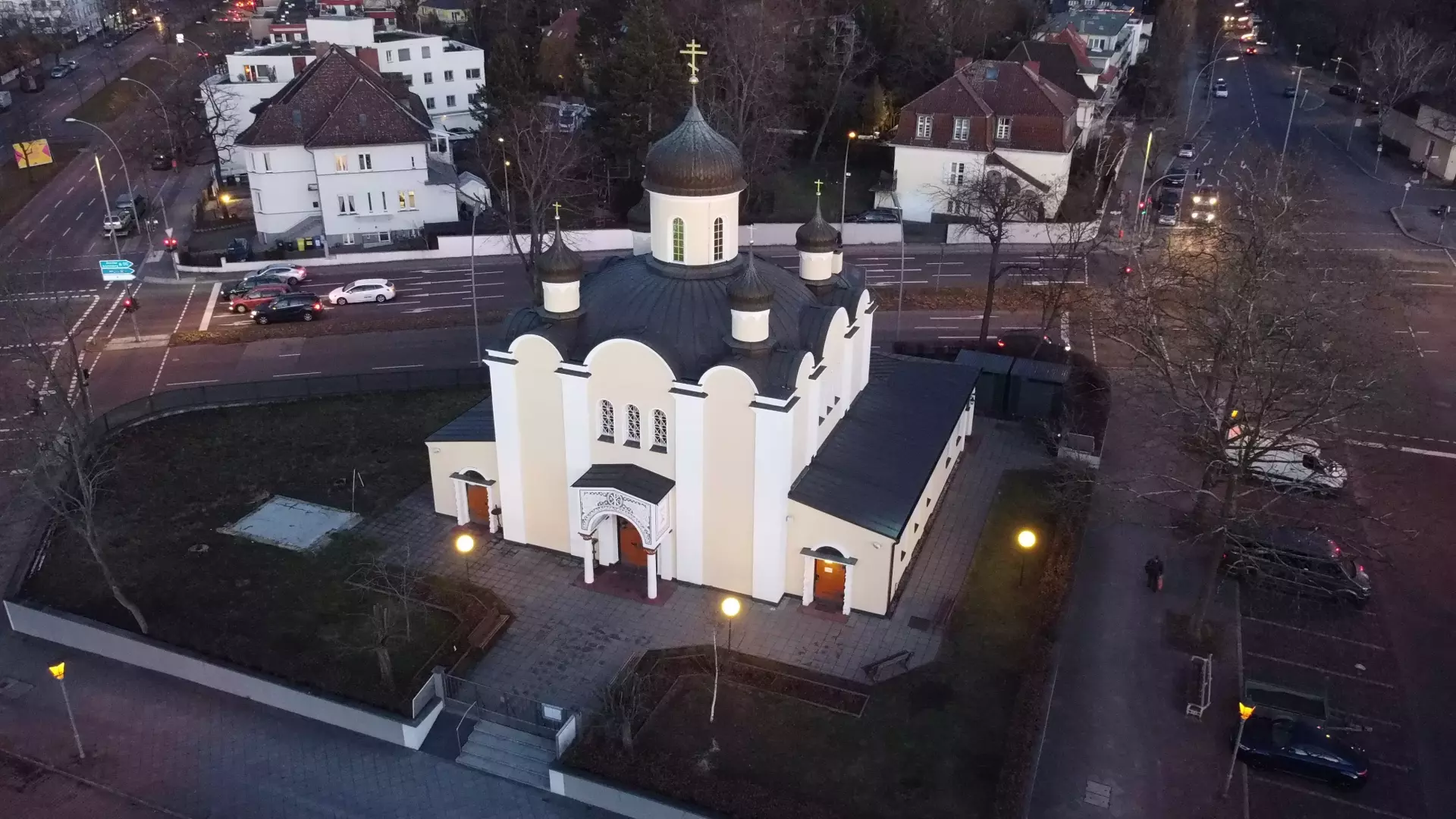
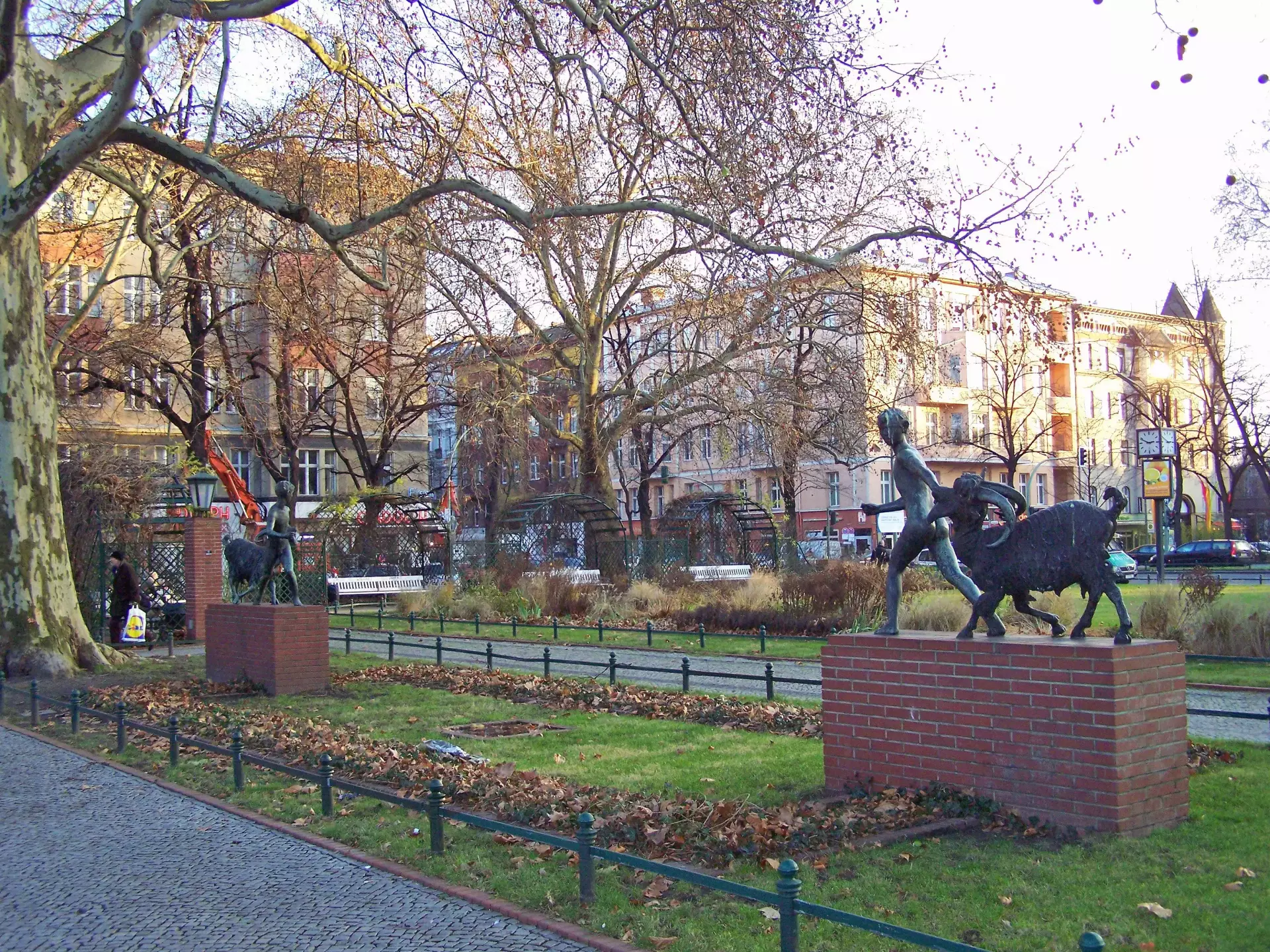
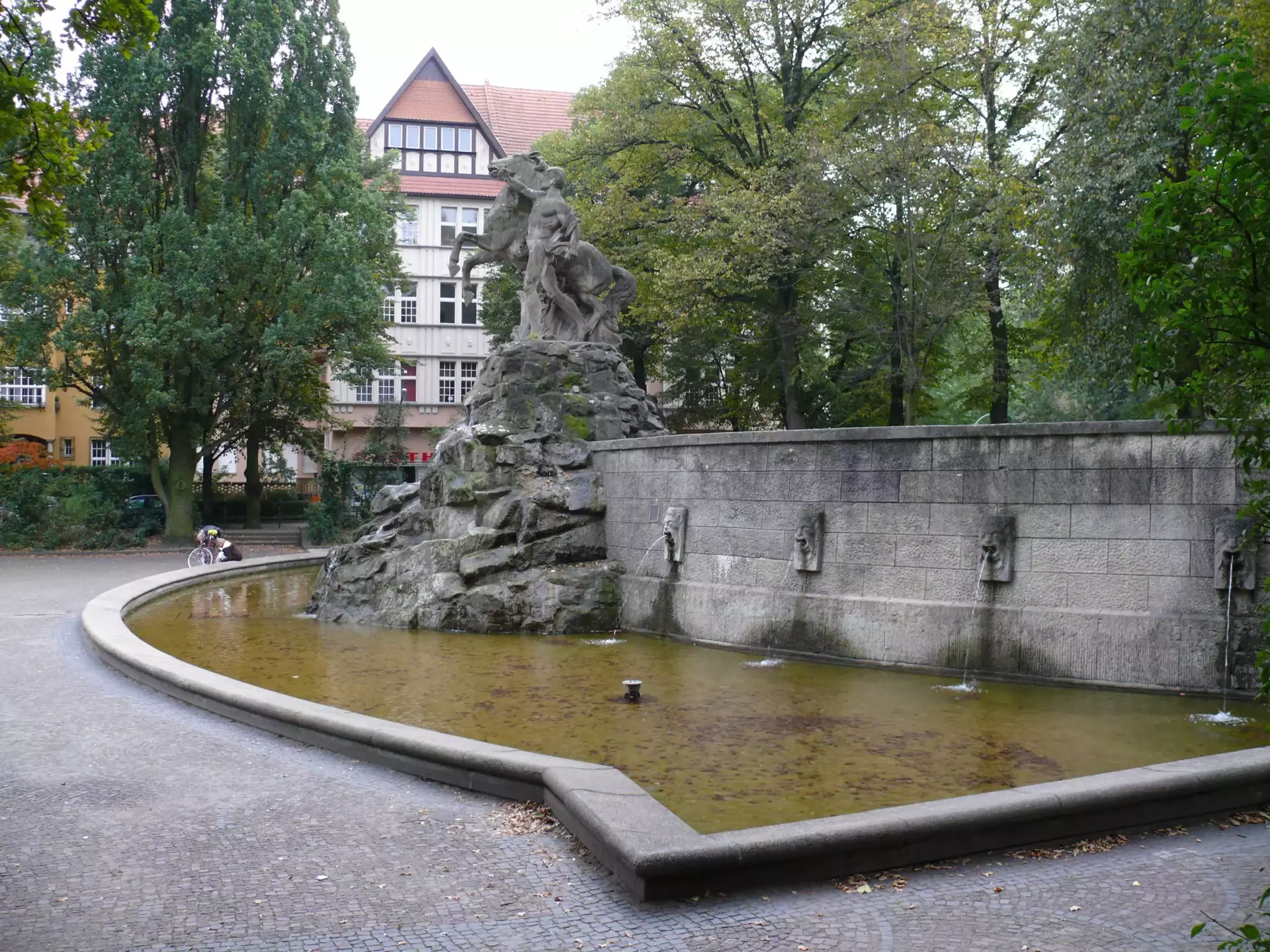
Features a nice fountain, stately old houses and a good night time hot spot. Many people hang out in the platz in good weather.
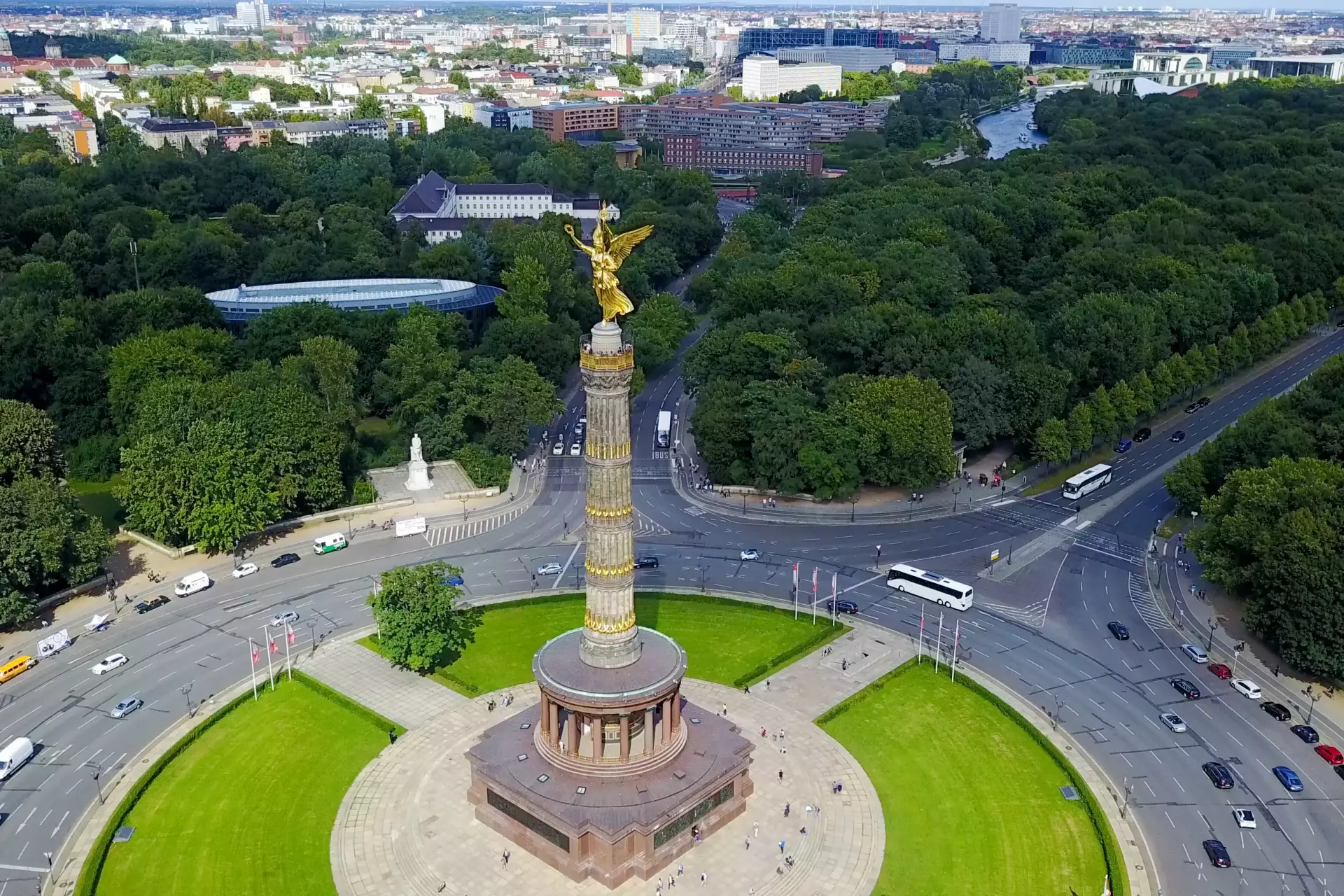
Want to feel like one of the angels in Wim Wenders' classic film Der Himmel über Berlin (a.k.a. Wings of Desire)? Climb to the top of Gold-Else, as the statue of Victory on the top of the Victory Column is known. Just don't jump off if you're not actually an angel. Unfortunately there is no elevator, so be prepared for 285 steps to the platform at 50.7 m.Else was built to commemorate Prussian military prowess in the wars against Denmark (1864), Austria (1866) and France (1870-71), and moved to her present location by the Nazis. Five roads run into a traffic circle called Grosser Stern, in the centre of which is the Siegessäule. Else is visible from much of the city district known as Tiergarten. At the base of the statue are reliefs of war scenes representing the conflicts which this monument memorializes. The Allies forced Germany to take those panels down in 1945, but they were remounted in 1984 and 1987. It also served as a backdrop for a speech by then senator Obama in 2008, after his request to speak in front of Brandenburger Tor caused a political debate in Germany.
It was the only border crossing between East and West Berlin that permitted foreigners passage. Residents of East and West Berlin were not allowed to use it. This contributed to Checkpoint Charlie's mythological status as a meeting place for spies and other shady individuals. Checkpoint Charlie gained its name from the phonetic alphabet; checkpoints "Alpha" and "Bravo" were at the autobahn checkpoints Helmstedt and Dreilinden respectively. Checkpoint Charlie's atmosphere was not improved at all on 27 Oct 1961 when the two Cold War superpowers chose to face each other down for a day. Soviet and American tanks stood approximately 200 m apart, making an already tense situation worse. Now the remains of the Berlin Wall have been moved to permit building, including construction of the American Business Center and other institutions.At the intersection of Zimmerstraße and Friedrichstraße (U-Bahn Kochstraße U6) is the famous "You Are Leaving the American Sector" sign. The actual guardhouse from Checkpoint Charlie is now housed at the Allied Museum on Clayallee. For a more interesting exhibit go to the Haus am Checkpoint Charlie. This is a private museum with kitschy memorabilia from the Wall and the devices GDR residents used to escape the East (including a tiny submarine!). There are also people who set up booths here offering to stamp your passport with souvenir stamps in exchange for a small fee. You are highly advised not to put these stamps in your passport, as these are not official stamps and could invalidate it. Instead, bring along an expired passport or a small booklet to put the stamps in.
The district town hall was the main town hall for West Berlin during the Cold War. The freedom bell (a present from the American people) and several memorials from that time can be found here. On the main balcony in 1963 U.S. President John F. Kennedy made his famous statement, "All free men, wherever they may live, are citizens of Berlin, and, therefore, as a free man, I take pride in the words ‘Ich bin ein Berliner!’". On 10 November 1989 Helmut Kohl (chancellor (Bundeskanzler) 1982-1998) and Willy Brandt (former Bundeskanzler and mayor of Berlin) cheering the crowd as they saw the end of the Berlin Wall the night before. The town hall is an emotional place for most people in Berlin (especially West Berlin).
More than 30 million objects in the scientific collection and a fascinating exhibition in one of the most significant institutions of its kind in the world. Some parts still under construction.
It was a museum of applied arts and a listed historical monument since 1966, and it is now a well-known Berlin exhibition hall.
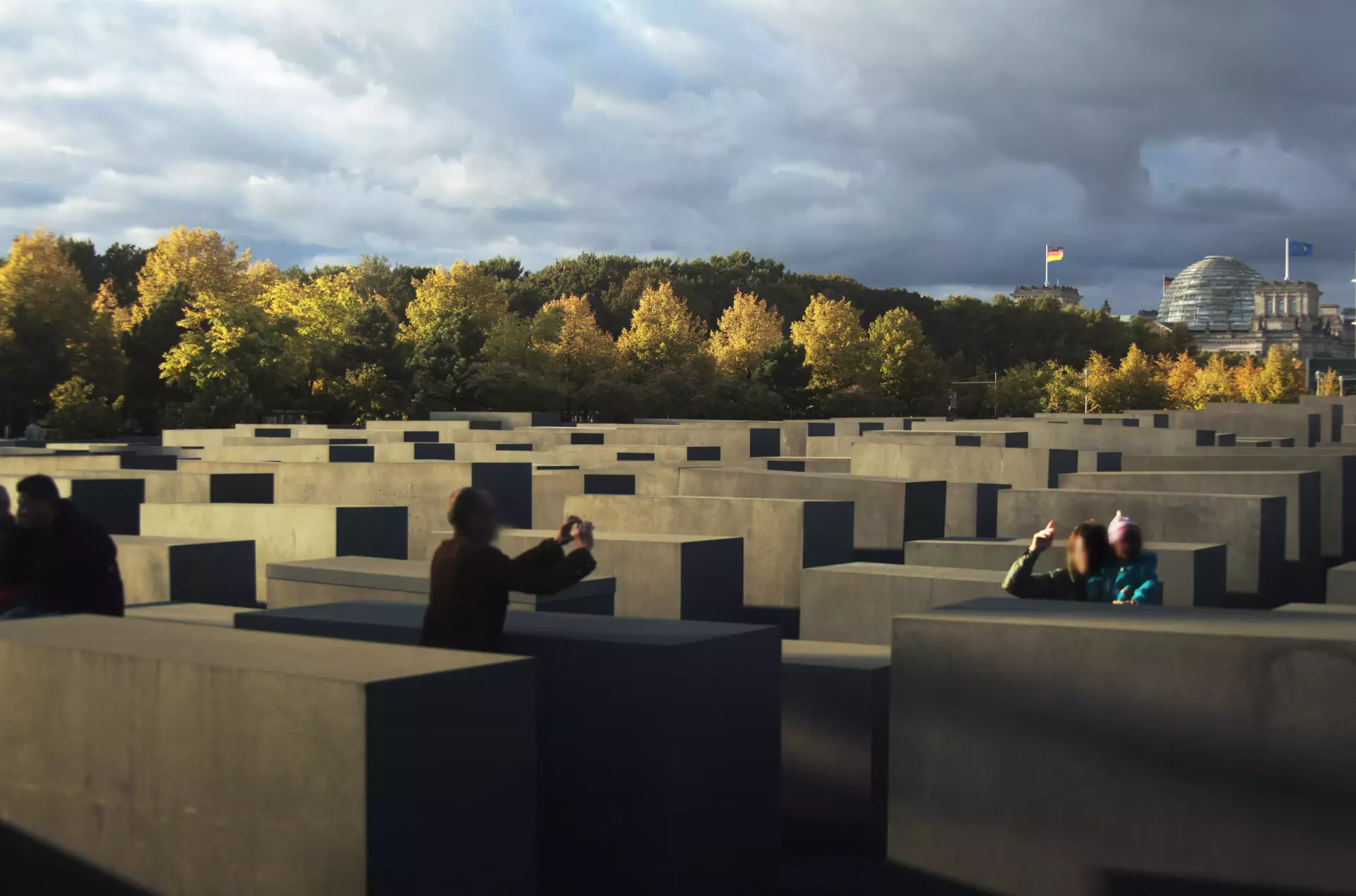
Nazi Propaganda Minister Josef Goebbels made Bebelplatz (then called Opernplatz) infamous on 10 May 1933, when he used the square across from Humboldt University to burn 20,000 books by "immoral" authors of whom the Nazis did not approve. Their list included Thomas and Heinrich Mann, Arnold Zweig, Kurt Tucholsky and Sigmund Freud. Today a monument is the reminder, though it blames Nazi students for the episode. When entering the square it's easy to miss the monument. It is in that part of Bebelplatz bounded on one side by the Opera House and on the other side by Humboldt University. Look dead centre: the monument is underground. A piece of plexiglass allows the viewer to look underground into a large, white room, filled with entirely empty, blank white bookcases. The room is large enough to hold the 20,000 books that were burnt. The absence of books reminds the viewer just what was lost here: ideas. But the event did reveal things to come, as ethnically Jewish author and philosopher Heinrich Heine, whose books were burned, let one of his characters say in an 1821 play: "This was only the foreplay. Where they burn books, they will also burn people." He was correct.
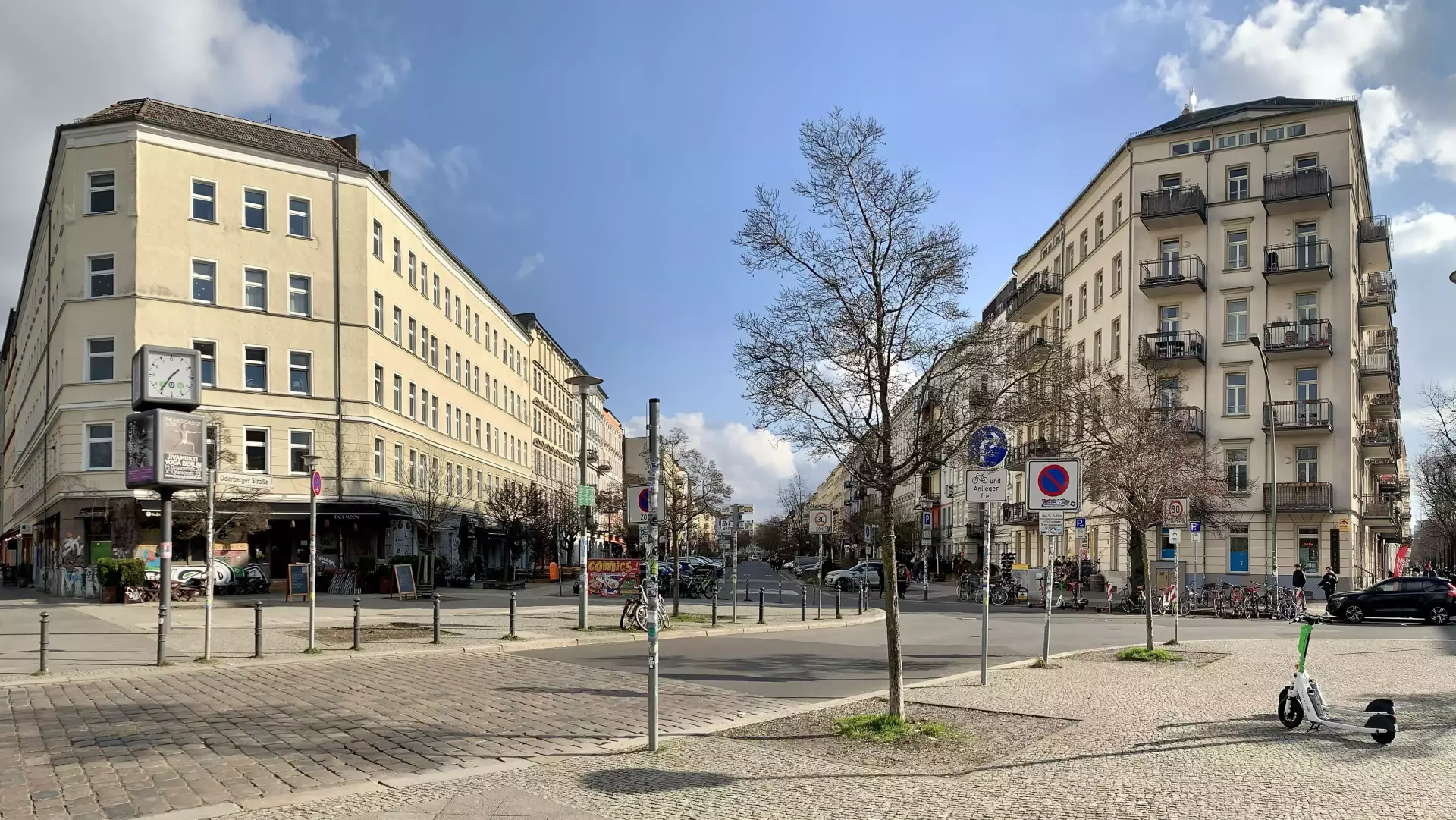
Oderberger Straße is known for its beautiful and generous Gründerzeit architecture, as well as its cafés and restaurants. Since before Germany's reunification the street has been the desired place for alternative folks and avant-gardists, but the area has seen continual gentrification since the early 2000s.
This abandoned amusement park with its iconic large Ferris wheel opened in the German Democratic Republic in 1969. After its closing in 2002 the rotting theme park and its apocalyptic atmosphere became a target of international media coverage, amongst others by the New York Times. In 2016 it was announced that the venue will be restored and reopened as an art and culture park.
This chapel was built on the site of a church built in 1894 which sat on the "death strip" and was thus blown up by the GDR authorities in 1985. The chapel is the site of occasional memorial services for victims of the wall.
Berlin's oldest church (1230) is a 3-nave hall church. It is in the centre of an area destroyed by bombs in the war which was then turned into a faux "old town" by the East German authorities called Nikolaiviertel. The area is more a hodge-podge of relocated buildings than an authentic reproduction, and the newly-built 1988 apartments that attempt to "harmonize" with the older buildings are embarrassing. The church is one of the only structures that was renovated rather than rebuilt. It is best known for a sandstone sculpture called the Spandauer Madonna (1290), but there are other interesting pieces here. When the church was destroyed in 1938 and rebuilt in the 1970s, the communist officials intended to use it as a museum, which did not open until 1987. The museum includes sacred textiles and religious sculpture from the fourteenth to the sixteenth centuries. The Nikolaikirche is the showplace of the Nikolaiviertel, which isn't saying much.
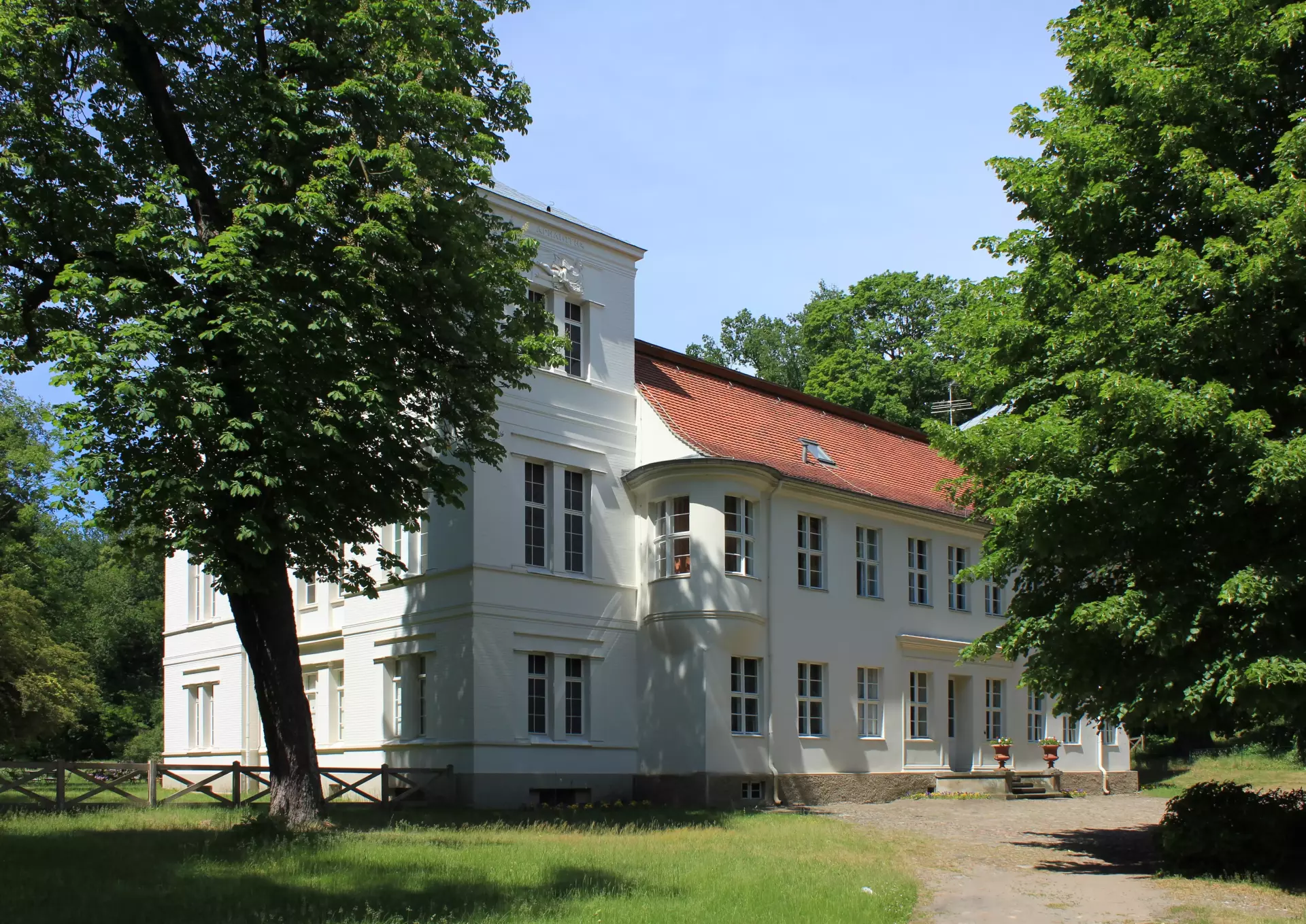
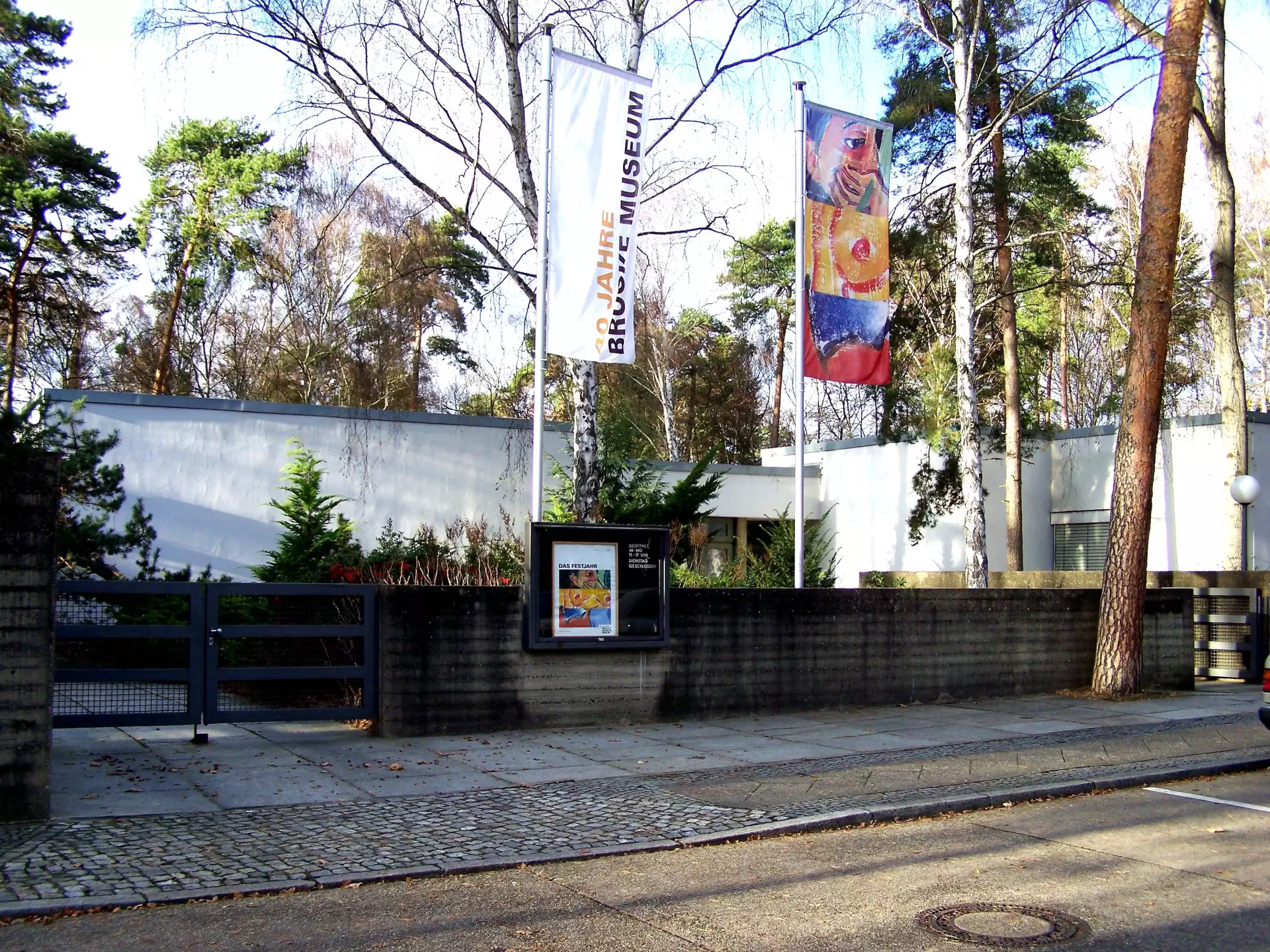
The last Mies van der Rohe building (a dwelling house) in Germany before his emigration to the U.S. (1938). Now there are small contemporary/modern art exhibitions.
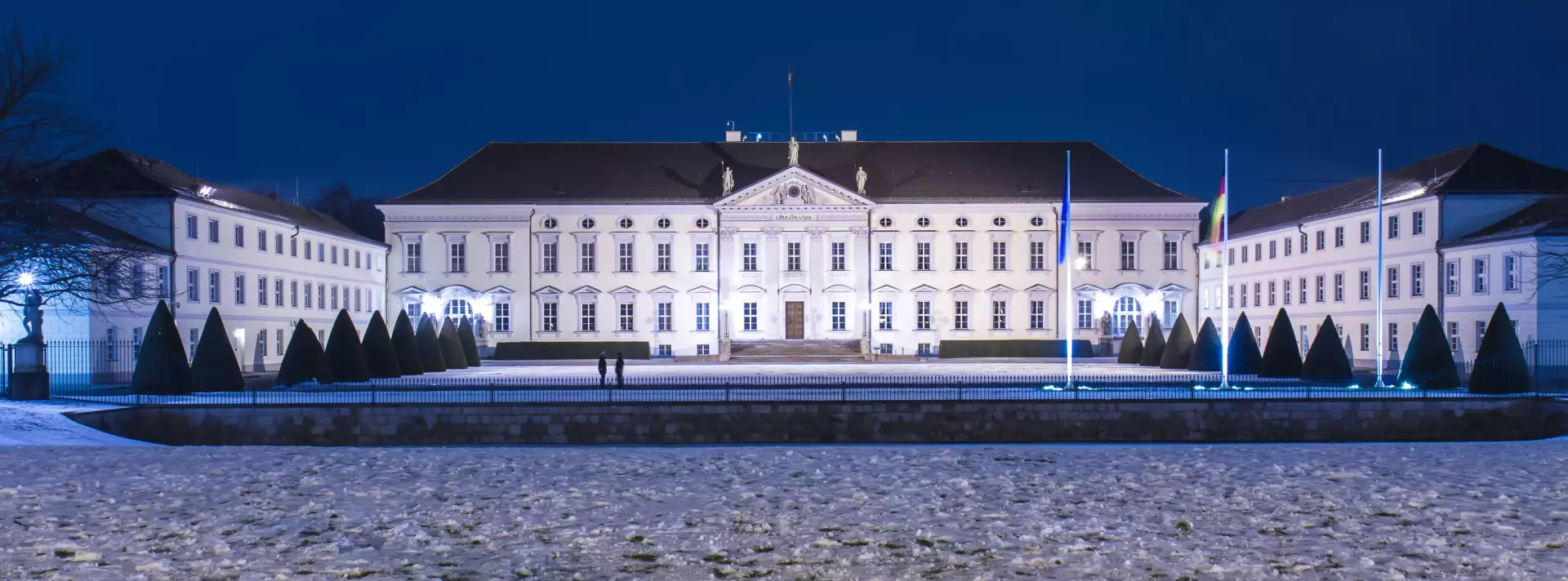
Official residence of the (largely ceremonial) President of Germany since 1994. Only Roman Herzog (president 1994-1999) actually lived here, his successors have preferred a quiet apartment on the outskirts of Berlin, but this is where the president will usually host guests and do public events. Guided tours are possible, but plan to book up to nine months ahead and be prepared for having to reschedule if the president decides to hold an event on short notice which preempts tours.
150 m high lattice tower with open-air observation deck 124 m above ground.
The Gemäldegalerie contains an astounding array of paintings, including works by Rembrandt, Rubens, Botticelli, Raphael, Titian, Goya, Velasquez and Watteau. The collection contains works from the old Bodemuseum on Museumsinsel in the East, now closed, and the former Gemäldegalerie in Dahlem. Its strong points are German paintings of the 13-16th centuries, Netherlandish painting of the 15th and 16th centuries, Flemish paintings of the 17th century, and miniature paintings of the 16th-19th centuries. In the newer section of the museum, designed by architects Heinz Hilmer and Christoph Sattler, there is enough space to display 1,150 masterpieces in the main gallery and 350 in the studio gallery - of the almost 2,900 pieces in the European painting collections. Established in 1830, the newly built gallery from 1998 has about 7,000 sq m of exhibition space (a complete tour of the 72 rooms covers almost 2 km).
This aeronautical experimental park on the grounds of Germany's first air field Johannisthal consists of a group of several individual technical monuments such as the walkable Großer Windkanal (High-speed wind channel, 1932–34), the Trudelturm (Fatty tower), a vertical wind tunnel for spinning tests (1934–36), the Schallgedämpfter Motorenprüfstand (Sound-insulated engine test bed, 1933–35) and the Isothermische Kugellabore (Adlershofer Busen, Isothermal spheric laboratories, 1959–1961), which are about 500 metres away from the other monuments.
The oldest museum of its kind in Germany which, despite great losses during the World War II, still possesses one of the world's primary collections of European applied art. There are two sections to the collection: one located at the Kulturforum in Tiergarten, the other at Köpenick Palace.