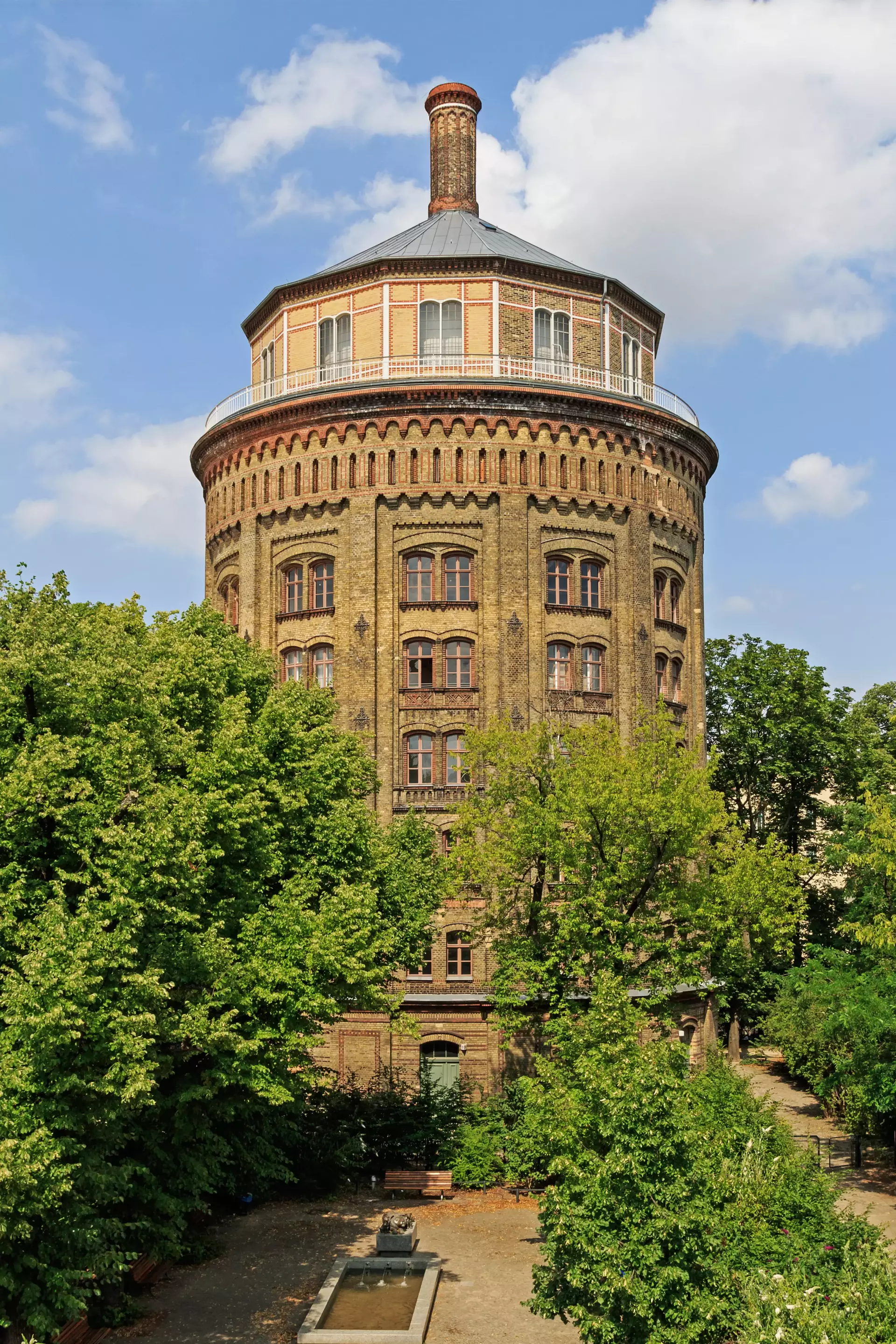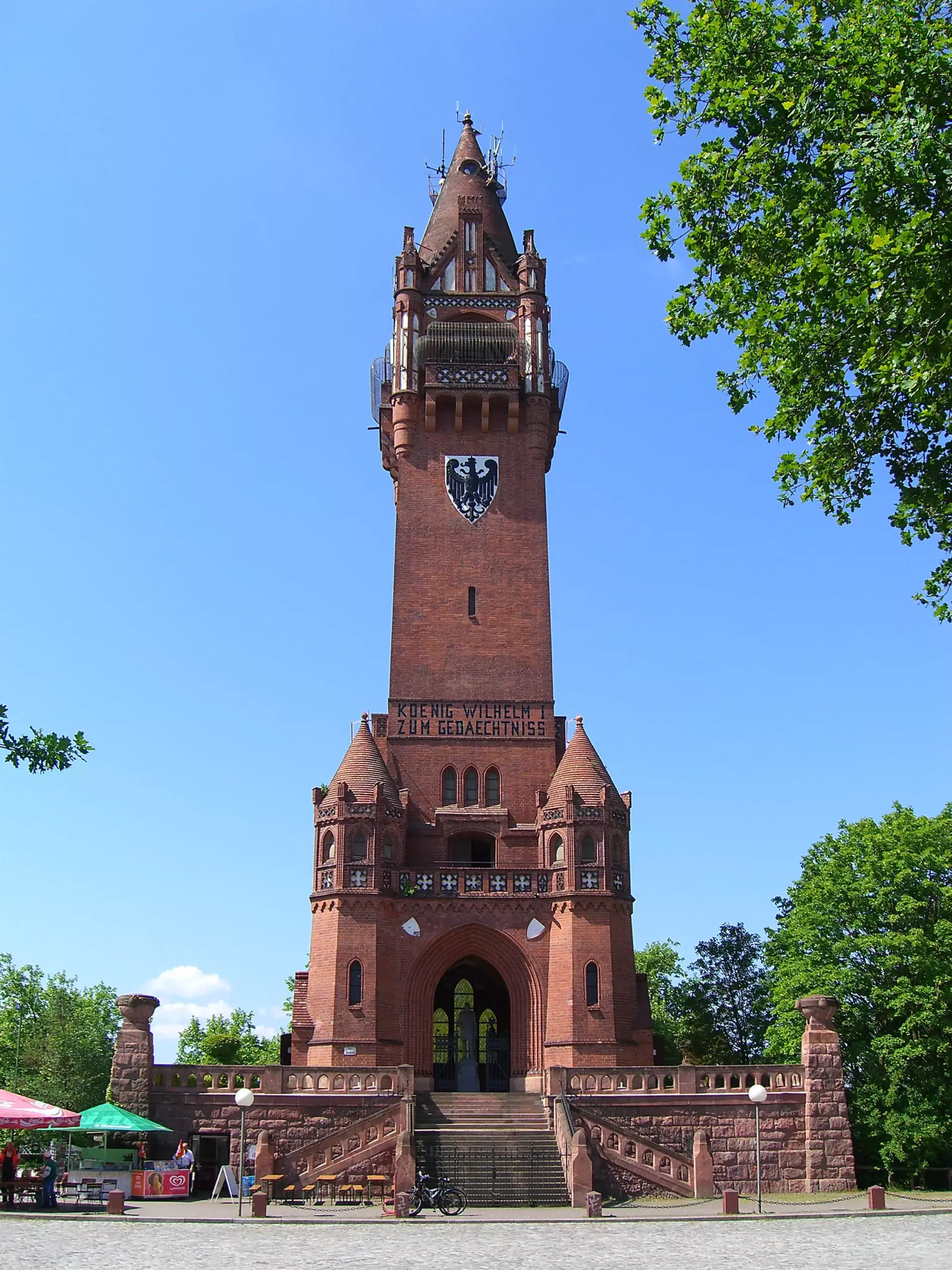
Rising above the trees, an old brick tower watches over a wide bend of the Havel River. Built as an observation point and landmark, it stands in the middle of a deep, quiet forest, where birdsong and the rustle of leaves set the pace. The tower’s red-brick façade and arched details show a historic style that contrasts with the soft, green canopy around it.
The tower sits on a hill in the Grunewald woodland, a broad stretch of pine and oak on the western edge of Berlin. Trails weave through sandy soil and shaded paths, leading to clearings where the river glints through the branches. On calm days, the Havel appears like a long, silver ribbon, with boats drifting past and wind rippling the surface.
From the ground, the structure has a solid, almost fortress-like look. Its brickwork carries decorative bands and recessed arches, with narrow windows that climb toward the viewing level. A small stair entrance leads inside to a spiral ascent. At the top, an open platform frames views that stretch across the forest, the water, and the distant city skyline.
Morning brings cool air and long beams of light slanting through the trees. By midday, the forest path is bright and warm, with the scent of resin and pine needles underfoot. Late afternoon often turns the tower’s brick a deeper shade, and the river reflects gold and blue as the sun lowers. Even on overcast days, the platform offers a clear sense of the landscape’s scale.
Over the years, the tower has served as a lookout, a meeting point, and a marker on countless walks through the woods. It connects urban life to the broad waterway that shaped this part of the city, standing as a reminder of both engineering and natural quiet. Surrounded by forest and facing the Havel, it keeps watch over a scene that changes with seasons, light, and weather.
Source - https://en.wikipedia.org/wiki/Grunewald_Tower
This heritage-protected public bathing beach which opened in 1907 is one of the largest inland lidos in Europe and has a 1275-m-long sand beach, a capacity for up to 30,000 guests and a popular nudist area.
This imposing building houses the Federal German Parliament or "Bundestag" and was completed in 1894 to meet the need of the newly-unified German Empire of the Kaisers for a larger parliamentary building. The Reichstag was intended to resemble a Renaissance palace, and its architect, Paul Wallot, dedicated the building to the German people. The massive inscription in front still reads: "Dem Deutschen Volke" - 'For the German people'. The Nazi leader Adolf Hitler exploited the fire which gutted the Reichstag building in 1933 by blaming the Communists for the arson and for attempted revolution. There is good evidence to suggest, however, that his followers were actually responsible and that this was a manufactured crisis. The iconic photo symbolizing the Soviet victory over Nazi Germany shows a Soviet soldier planting the Soviet flag on top of the building and there are to this day graffiti left by Soviet soldiers on some walls of the Reichstag which were deliberately preserved by the new Germany as a memento of the war. It's perhaps the only national parliament to have traces left by a foreign army deliberately preserved. When German reunification became a reality, the new republic was proclaimed here at midnight on 2 October 1990. The Reichstag building is well-known in the art world thanks to Paris-based Bulgarian artist Christo's mammoth 'Wrapped Reichstag' project in 1995. The entire building was swathed in silver cloth for two weeks that summer.The Reichstag has undergone considerable restoration and alteration, including the addition of a spectacular glass dome designed by the British architect Norman Foster completed in 1999. You can visit the Reichstag building proper and even listen to a parliamentary debate but you need to book on their website sometimes weeks or even months in advance. Fortunately its much easier to visit the glass dome. You can reserve a visiting time and date on their website or in the small building across Scheidmannstrasse, except during the high season you should be able to arrange a time later the same day or the next day. Photo ID or passport is required to make the booking. A passsport is required during your visit. This is a very popular tourist attraction in Berlin and can get quite crowded however it is worth the effort. The helical path up the inside of the dome is a lot of fun and the 360 degree views at the top are splendid.
Exhibition of digital interactive entertainment culture. You can actually play almost all of the exhibits making it a more "hands on" museum than most.
Features many objects and even whole rooms in Wilhelminian style. Only accessible by guided tour (English tours can be arranged).
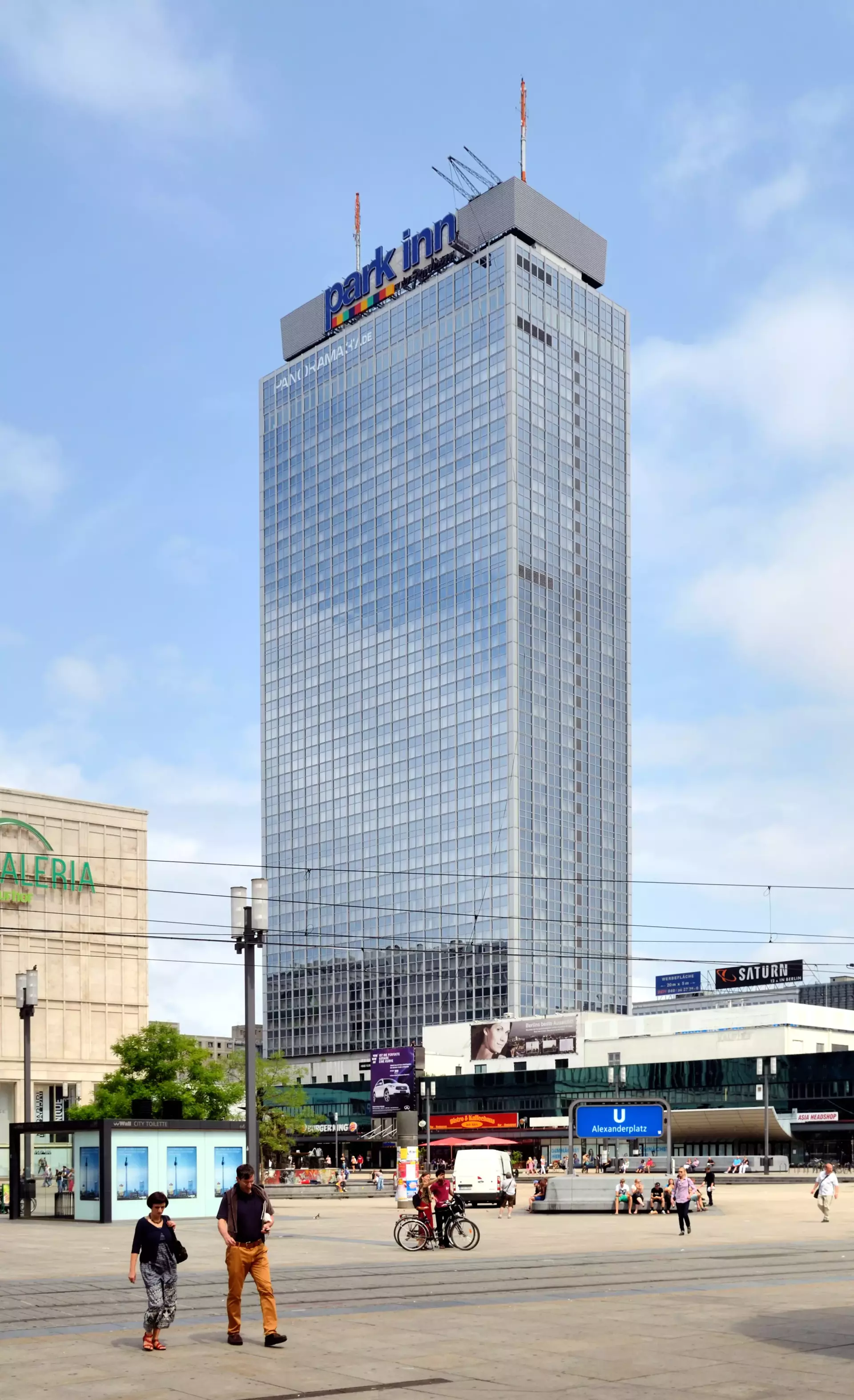
Includes the Panoramapunkt, the viewing terrace located 101 metres above ground, accessible by Europe's fastest elevator.
This abandoned amusement park with its iconic large Ferris wheel opened in the German Democratic Republic in 1969. After its closing in 2002 the rotting theme park and its apocalyptic atmosphere became a target of international media coverage, amongst others by the New York Times. In 2016 it was announced that the venue will be restored and reopened as an art and culture park.
Nice church near Unter den Linden/Museum Island, finished in 1830 by Schinkel in English Neogothic style. Nice exhibition inside (neoclassical statues and an exhibition about Schinkel's life and work upstairs).
Became famous from the film named after this street. During the Cold War, the street was split, with one section belonging to East Berlin and one to West Berlin.
The district town hall was the main town hall for West Berlin during the Cold War. The freedom bell (a present from the American people) and several memorials from that time can be found here. On the main balcony in 1963 U.S. President John F. Kennedy made his famous statement, "All free men, wherever they may live, are citizens of Berlin, and, therefore, as a free man, I take pride in the words ‘Ich bin ein Berliner!’". On 10 November 1989 Helmut Kohl (chancellor (Bundeskanzler) 1982-1998) and Willy Brandt (former Bundeskanzler and mayor of Berlin) cheering the crowd as they saw the end of the Berlin Wall the night before. The town hall is an emotional place for most people in Berlin (especially West Berlin).