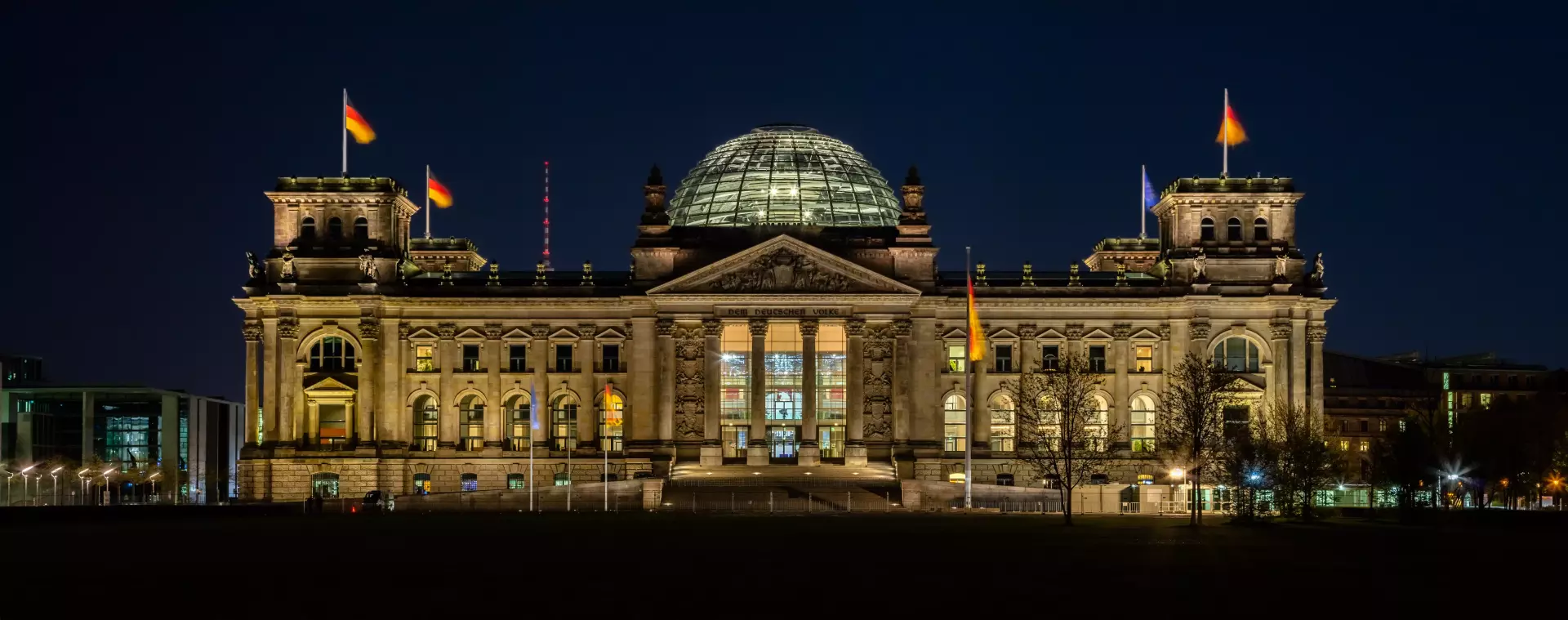
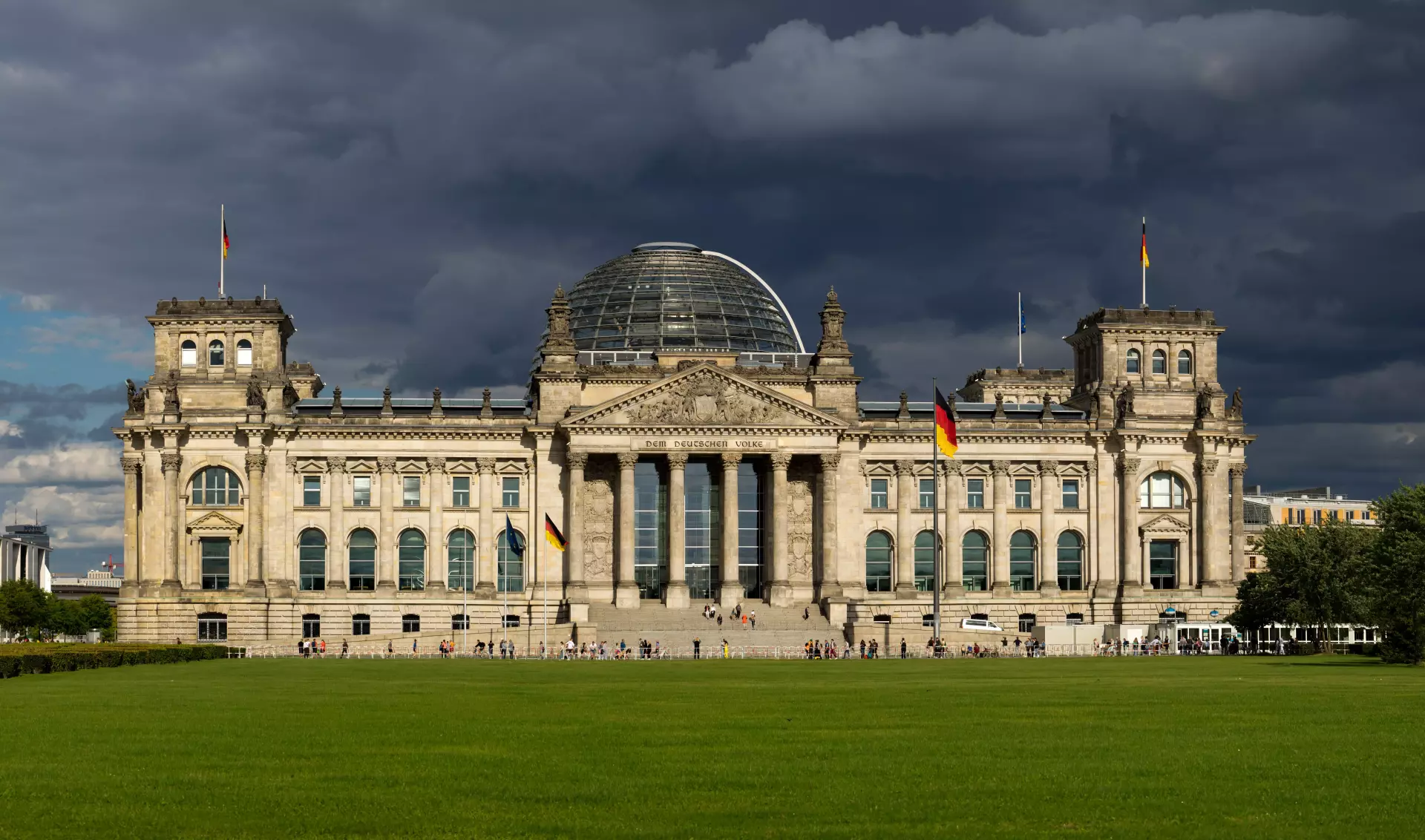
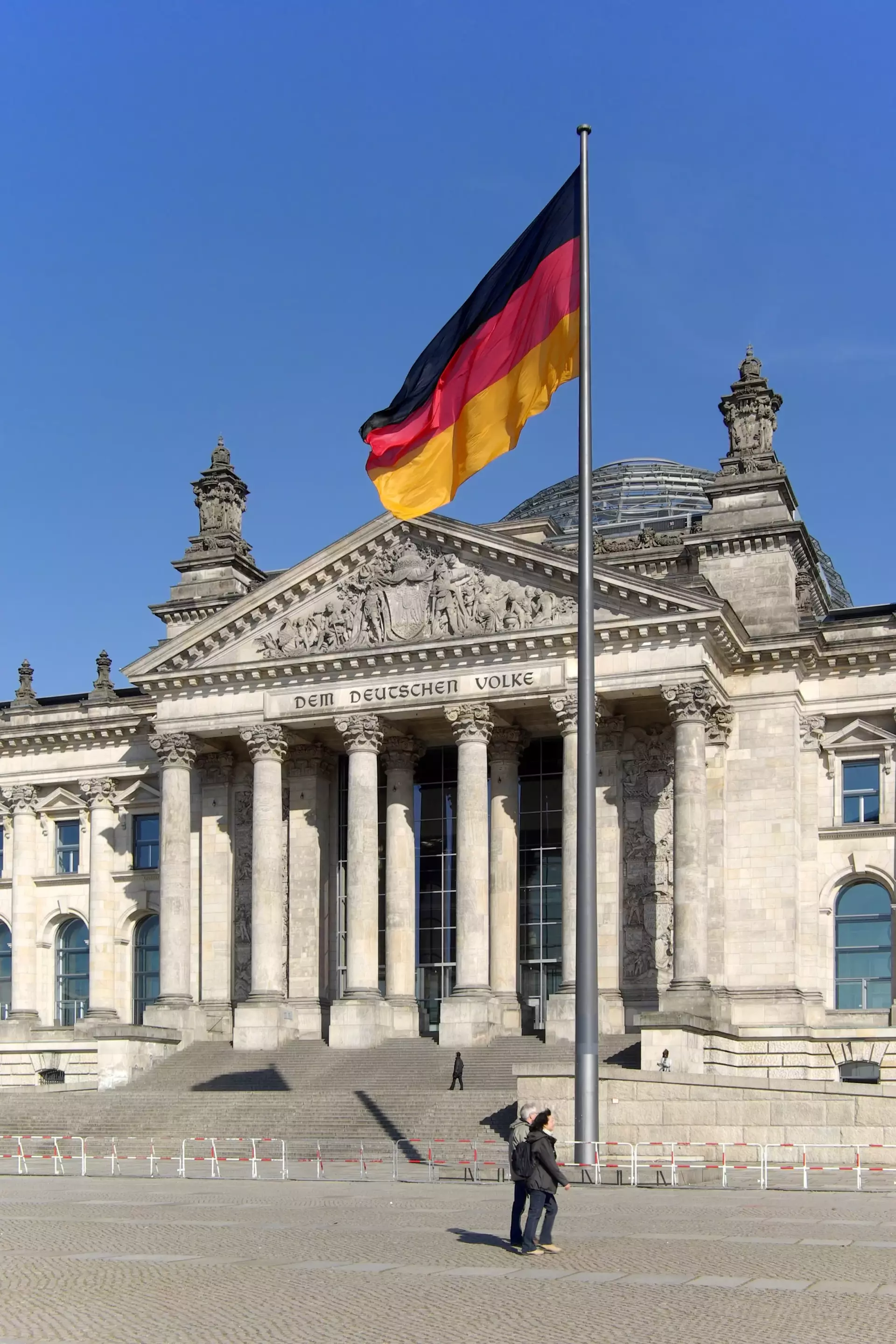
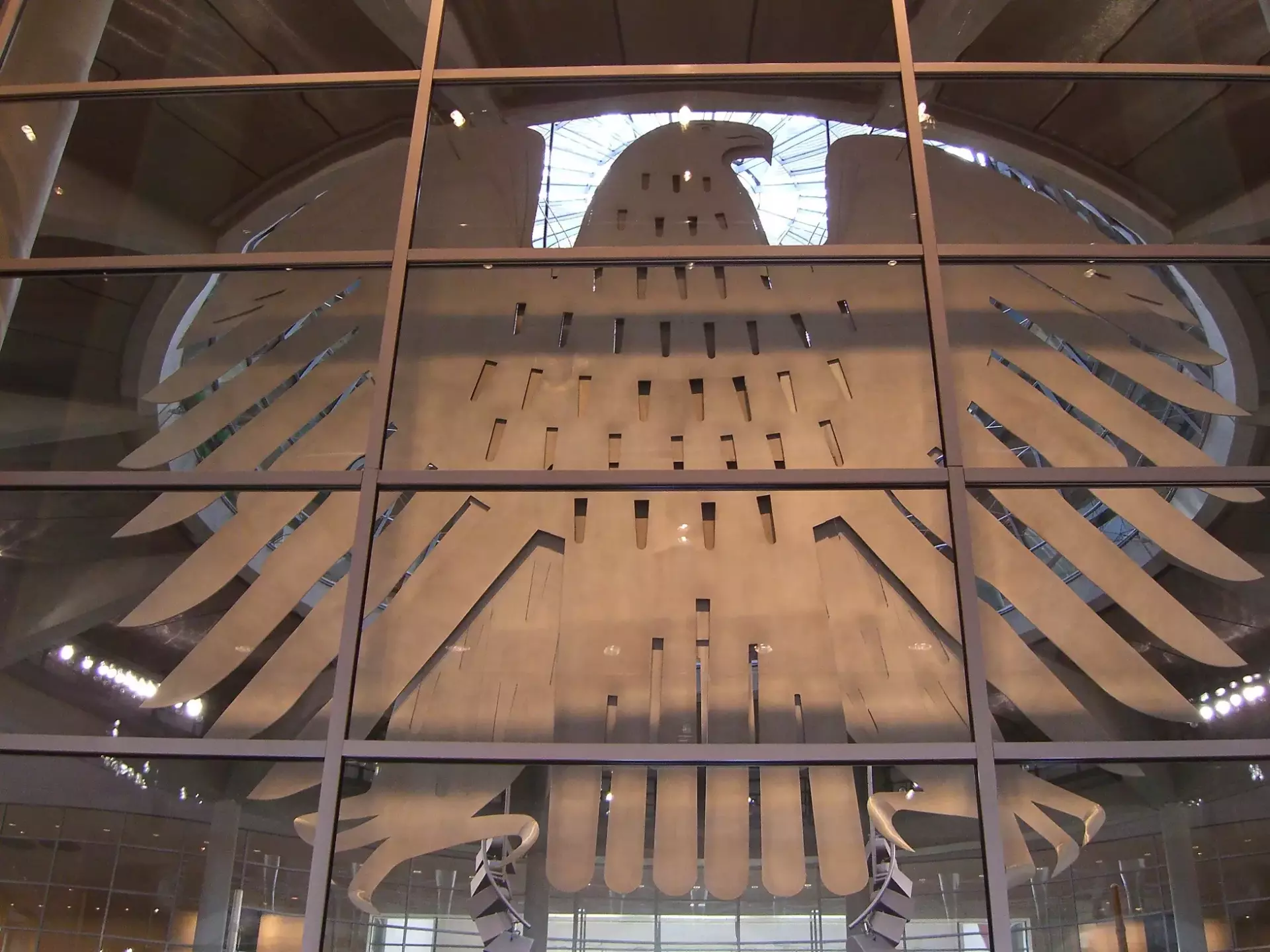
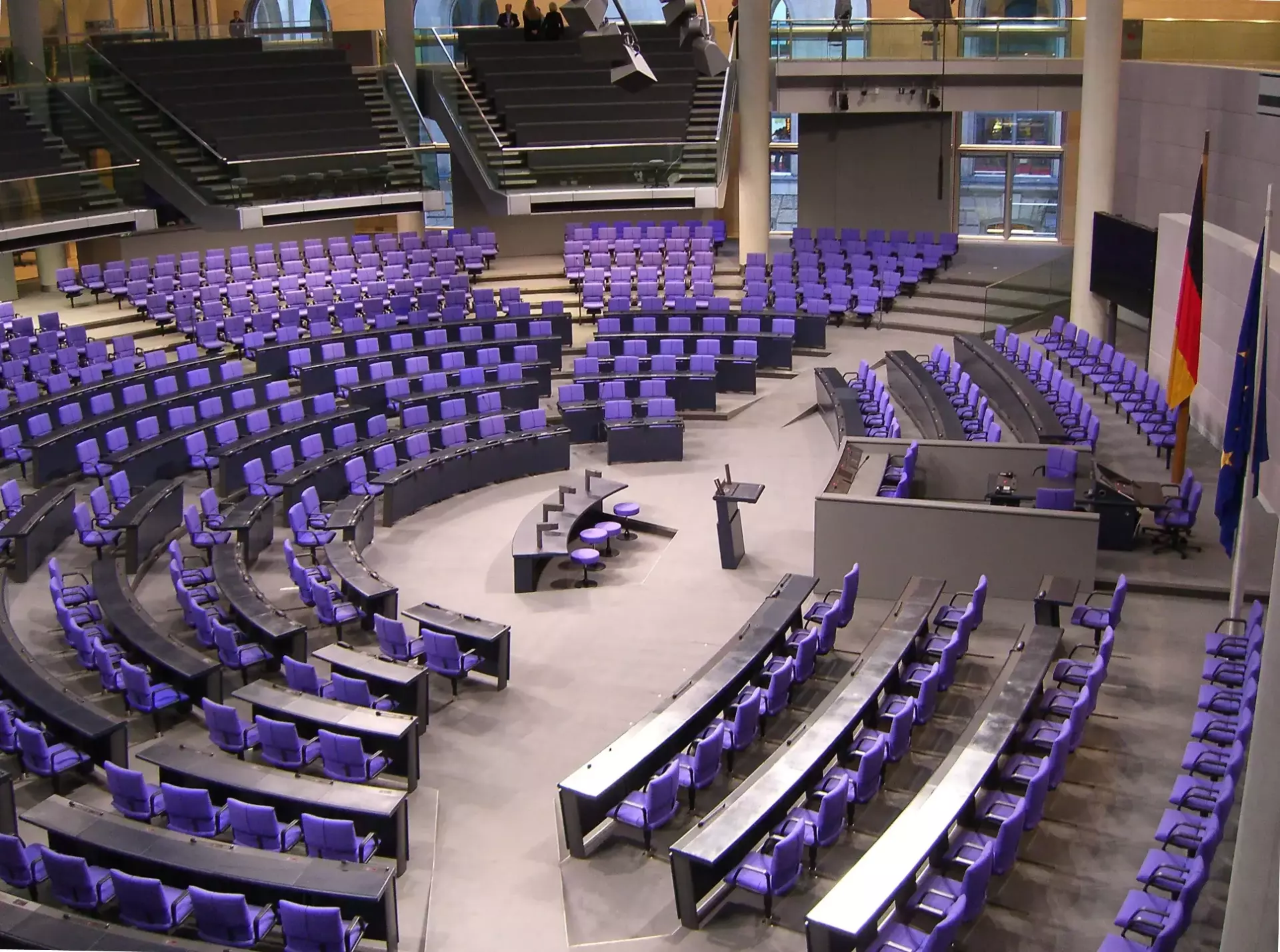
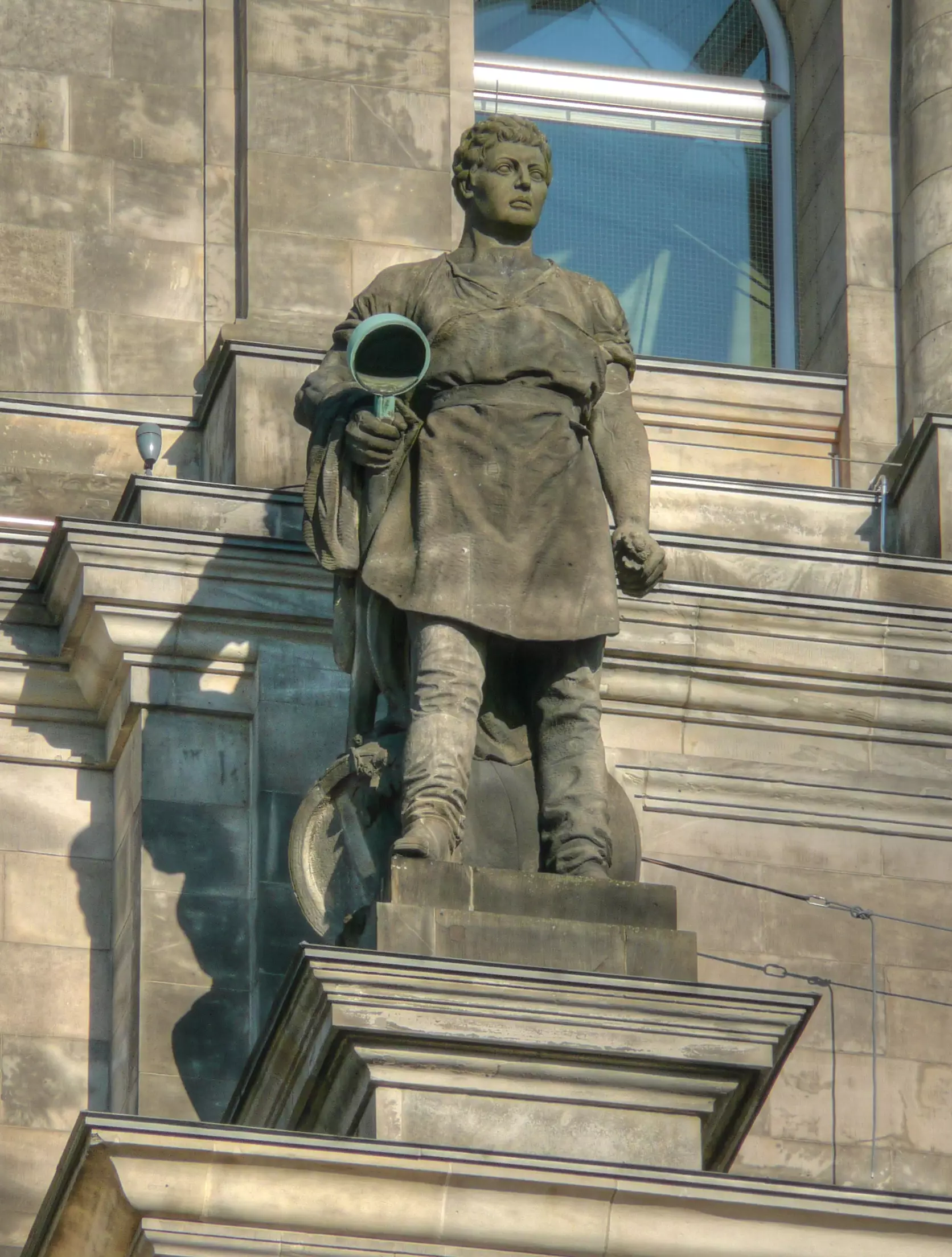
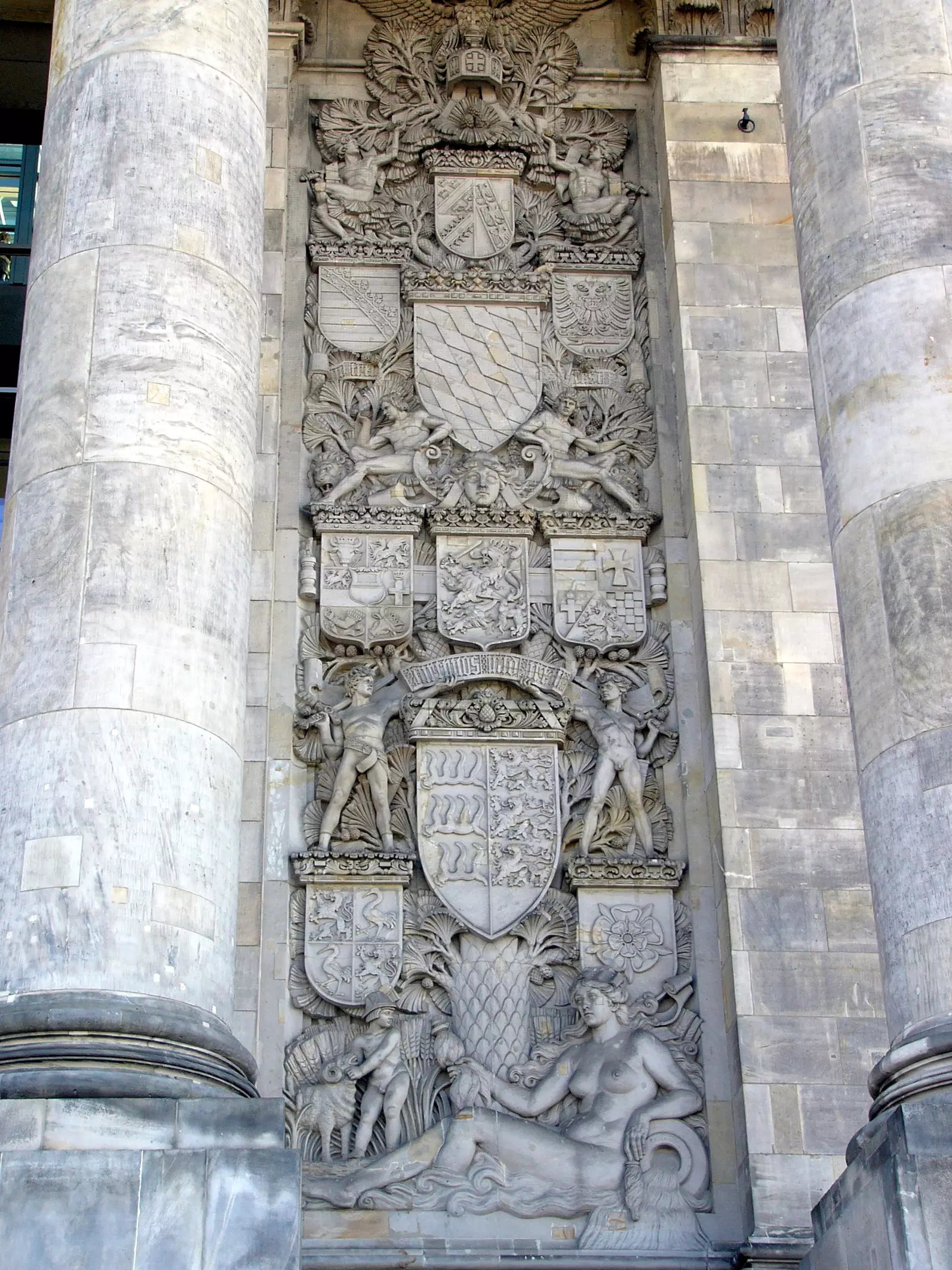
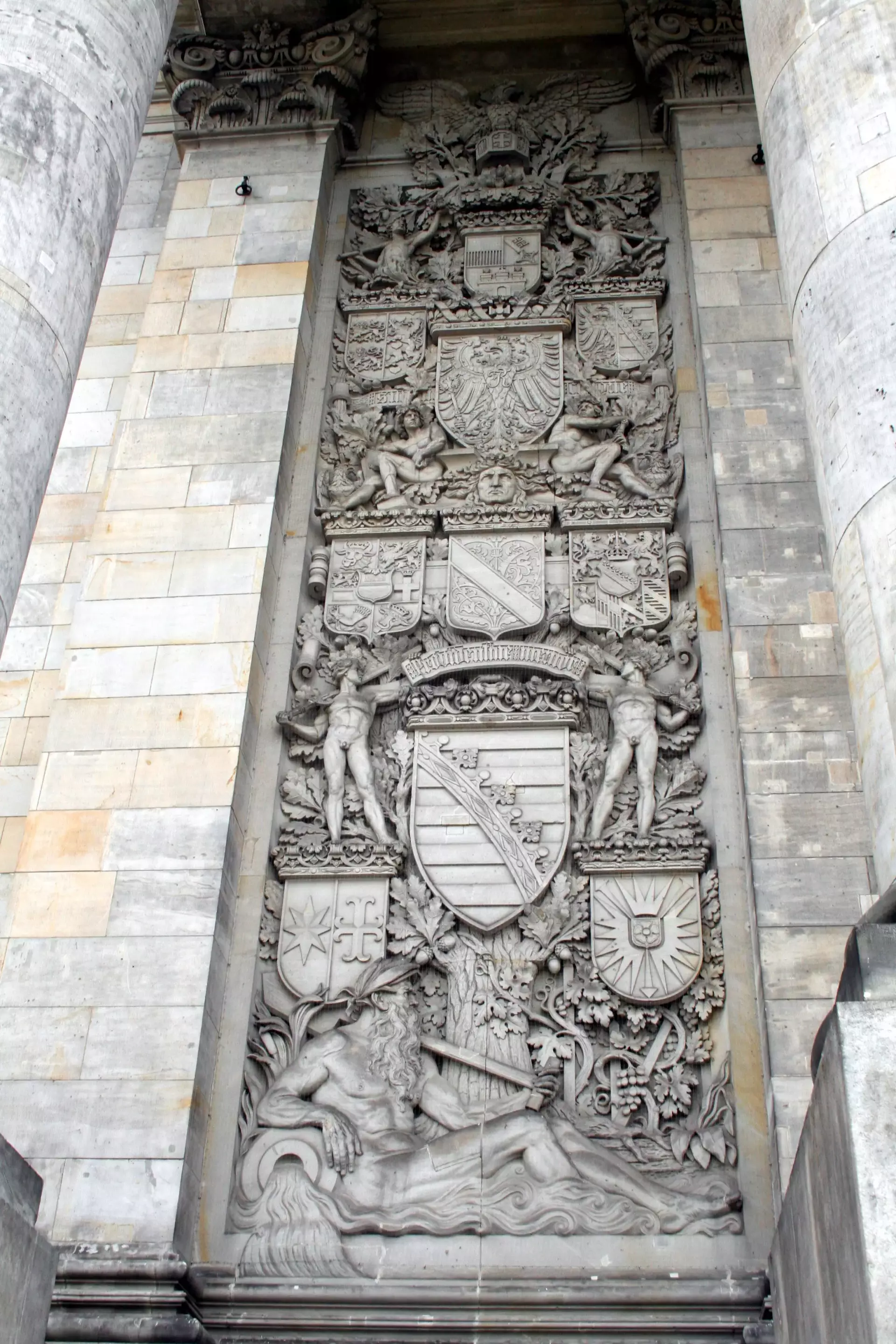
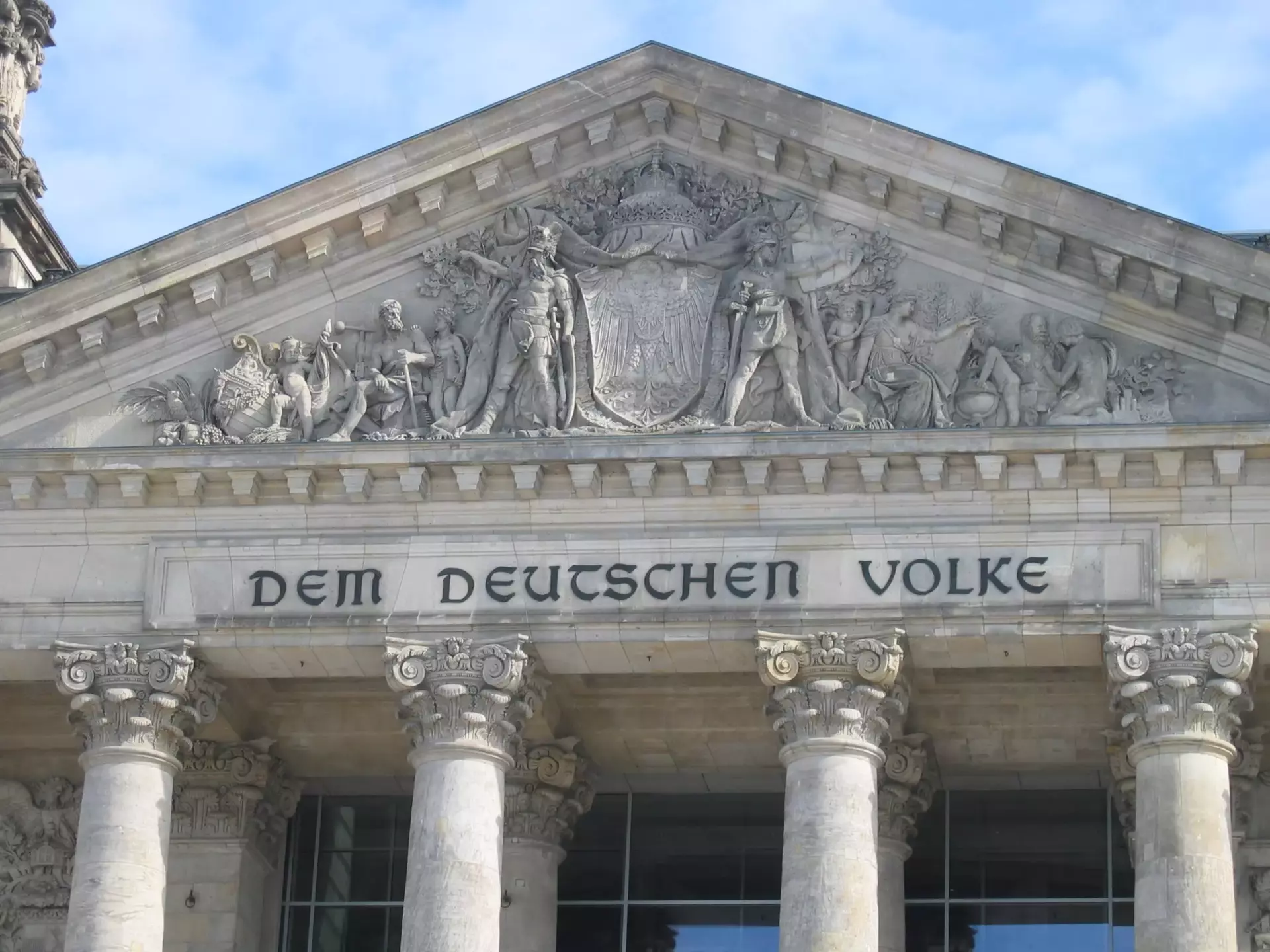
The Reichstag is the home of Germany’s federal parliament, the Bundestag. Completed in 1894 for the newly unified German Empire, it was designed by architect Paul Wallot to evoke a Renaissance palace. A bold inscription on the front still reads “Dem Deutschen Volke” — “For the German people,” a dedication that has outlasted turbulent decades.
In 1933, a fire devastated the building. Adolf Hitler used the blaze to accuse Communists of plotting a revolution, tightening his grip on power. Many historians point to strong evidence that the regime itself engineered the crisis. Later, the Reichstag became a symbol of the Soviet advance in 1945: a famous photograph shows a Red Army soldier raising the Soviet flag atop the roof. Inside, sections of wartime graffiti left by Soviet soldiers remain visible, preserved on purpose as a stark reminder of the conflict — a rare choice for a national parliament.
After decades of division, German reunification was proclaimed here at midnight on 2 October 1990. The building stepped into global art history in 1995 when artist Christo wrapped the entire structure in shimmering silver fabric for two weeks, transforming the cityscape and drawing worldwide attention.
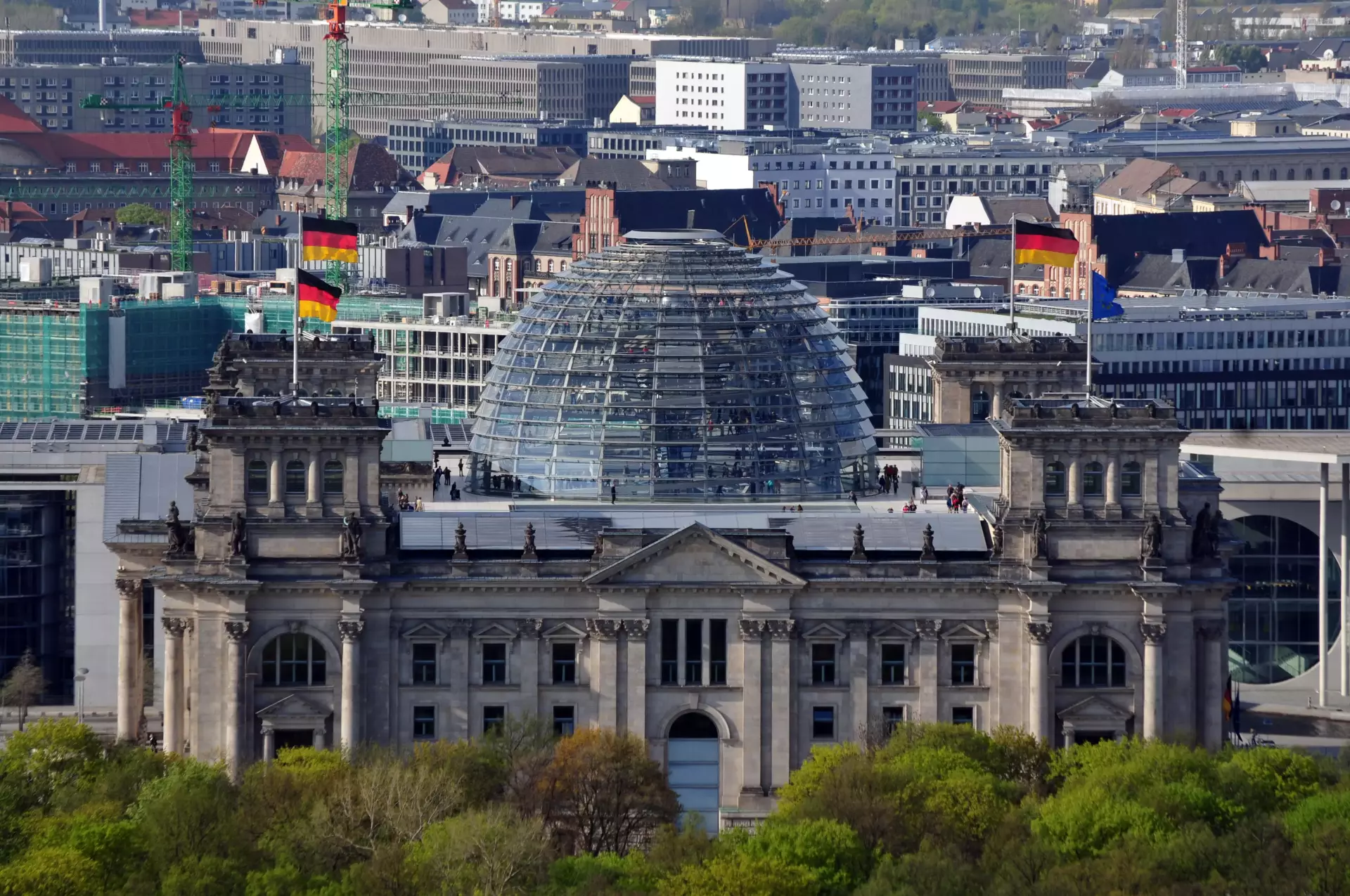
Extensive restoration culminated in 1999 with the addition of a striking glass dome by British architect Norman Foster. The dome sits above the debating chamber, bringing light into the heart of the parliament and offering sweeping city views. Inside, a gently sloping helical ramp spirals upward to a lookout point with a full 360-degree panorama.
Entry to the Reichstag and even public access to parliamentary debates are possible with advance registration via the official website. Bookings for the building itself may fill weeks or months ahead. Visiting the glass dome is usually easier: reserve online or at the service point across Scheidemannstraße, where same-day or next-day slots are often available outside peak season. A passport or photo ID is required for booking, and a passport is needed on the day of the visit. Expect crowds at this popular Berlin landmark.
Source - https://en.wikipedia.org/wiki/Reichstag_building
A fortress built between 1560 and 1590 to Italian design on the site of a 12th-century castle. The Juliusturm housed part of the huge indemnity (in physical gold coins) France had to pay after the war of 1870/71 until what was left of it was returned to France after Germany's loss in World War I. The term "Juliusturm" remained in usage in German for a large "rainy day fund" into the 1960s. Museums housed within the citadel cover the history of the town of Spandau, monumental public art in Berlin, and artillery.
It was the only border crossing between East and West Berlin that permitted foreigners passage. Residents of East and West Berlin were not allowed to use it. This contributed to Checkpoint Charlie's mythological status as a meeting place for spies and other shady individuals. Checkpoint Charlie gained its name from the phonetic alphabet; checkpoints "Alpha" and "Bravo" were at the autobahn checkpoints Helmstedt and Dreilinden respectively. Checkpoint Charlie's atmosphere was not improved at all on 27 Oct 1961 when the two Cold War superpowers chose to face each other down for a day. Soviet and American tanks stood approximately 200 m apart, making an already tense situation worse. Now the remains of the Berlin Wall have been moved to permit building, including construction of the American Business Center and other institutions.At the intersection of Zimmerstraße and Friedrichstraße (U-Bahn Kochstraße U6) is the famous "You Are Leaving the American Sector" sign. The actual guardhouse from Checkpoint Charlie is now housed at the Allied Museum on Clayallee. For a more interesting exhibit go to the Haus am Checkpoint Charlie. This is a private museum with kitschy memorabilia from the Wall and the devices GDR residents used to escape the East (including a tiny submarine!). There are also people who set up booths here offering to stamp your passport with souvenir stamps in exchange for a small fee. You are highly advised not to put these stamps in your passport, as these are not official stamps and could invalidate it. Instead, bring along an expired passport or a small booklet to put the stamps in.
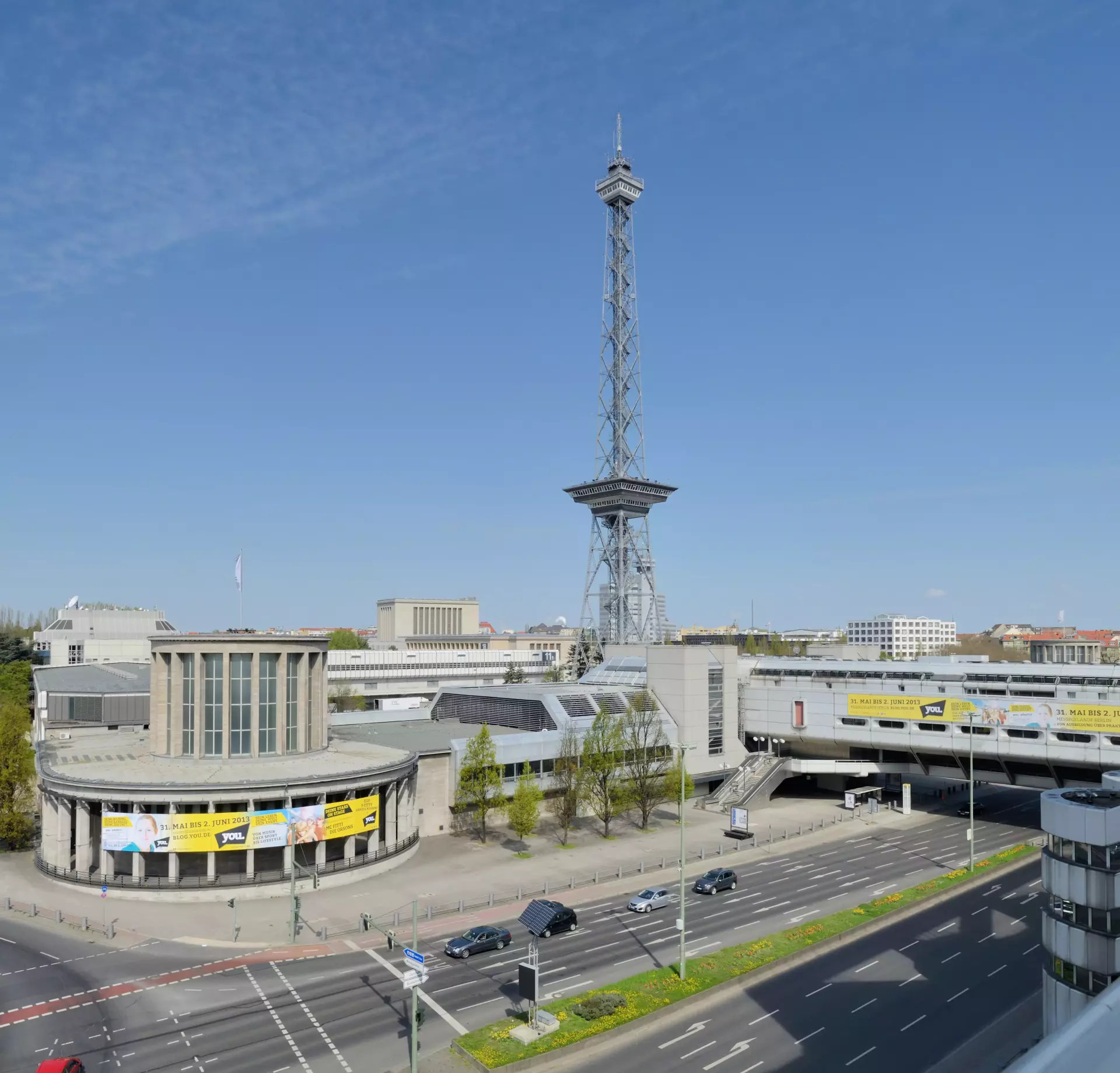
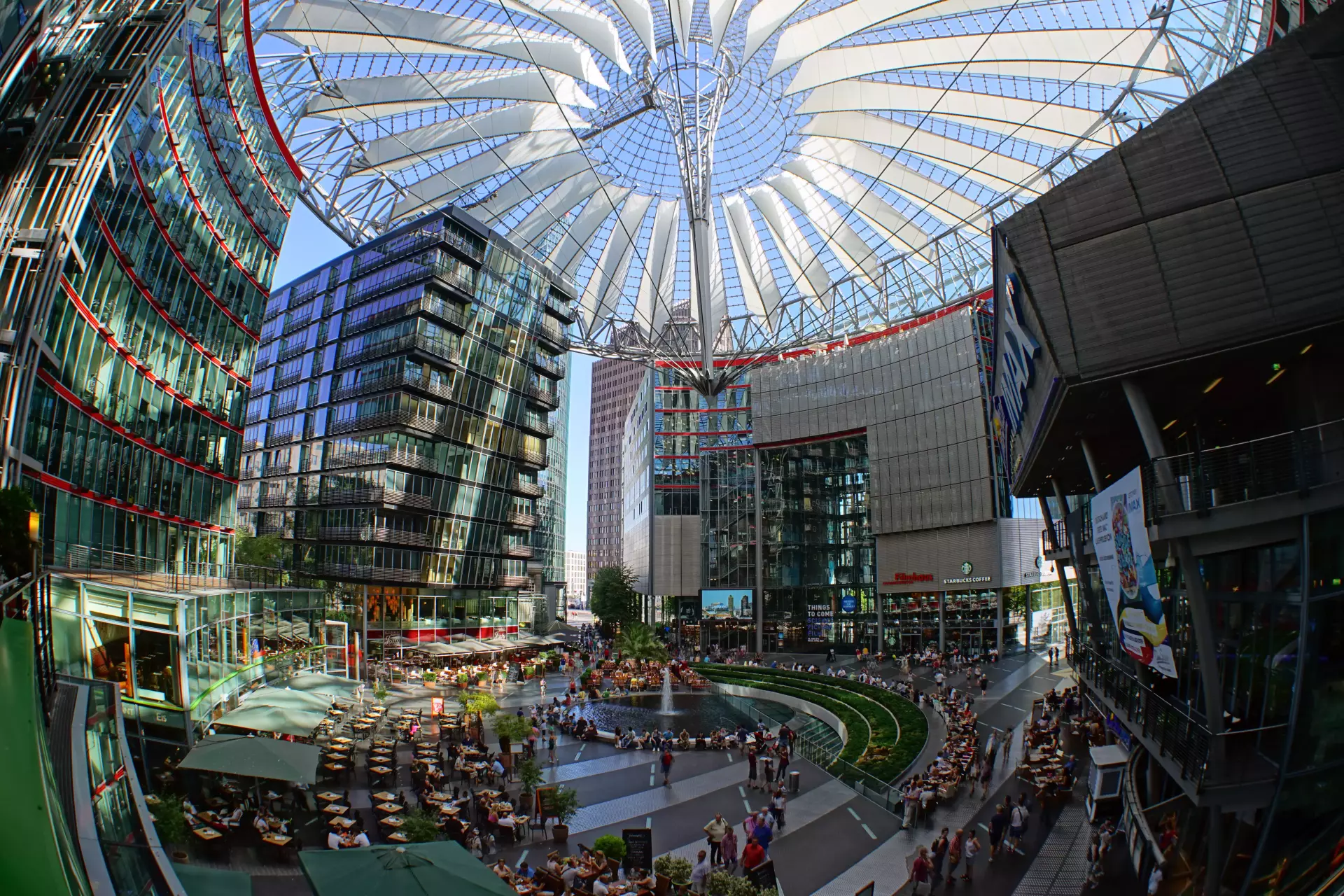
Includes the Panoramapunkt, the viewing terrace located 101 metres above ground, accessible by Europe's fastest elevator.
Features many objects and even whole rooms in Wilhelminian style. Only accessible by guided tour (English tours can be arranged).
The area to the north of Tiergarten, along the bow of the river Spree (Spreebogen), is home to the German federal institutions such as the parliament (Bundestag, in the historic Reichstag building) and the federal government, as well as the new central train station (Hauptbahnhof) across the river.
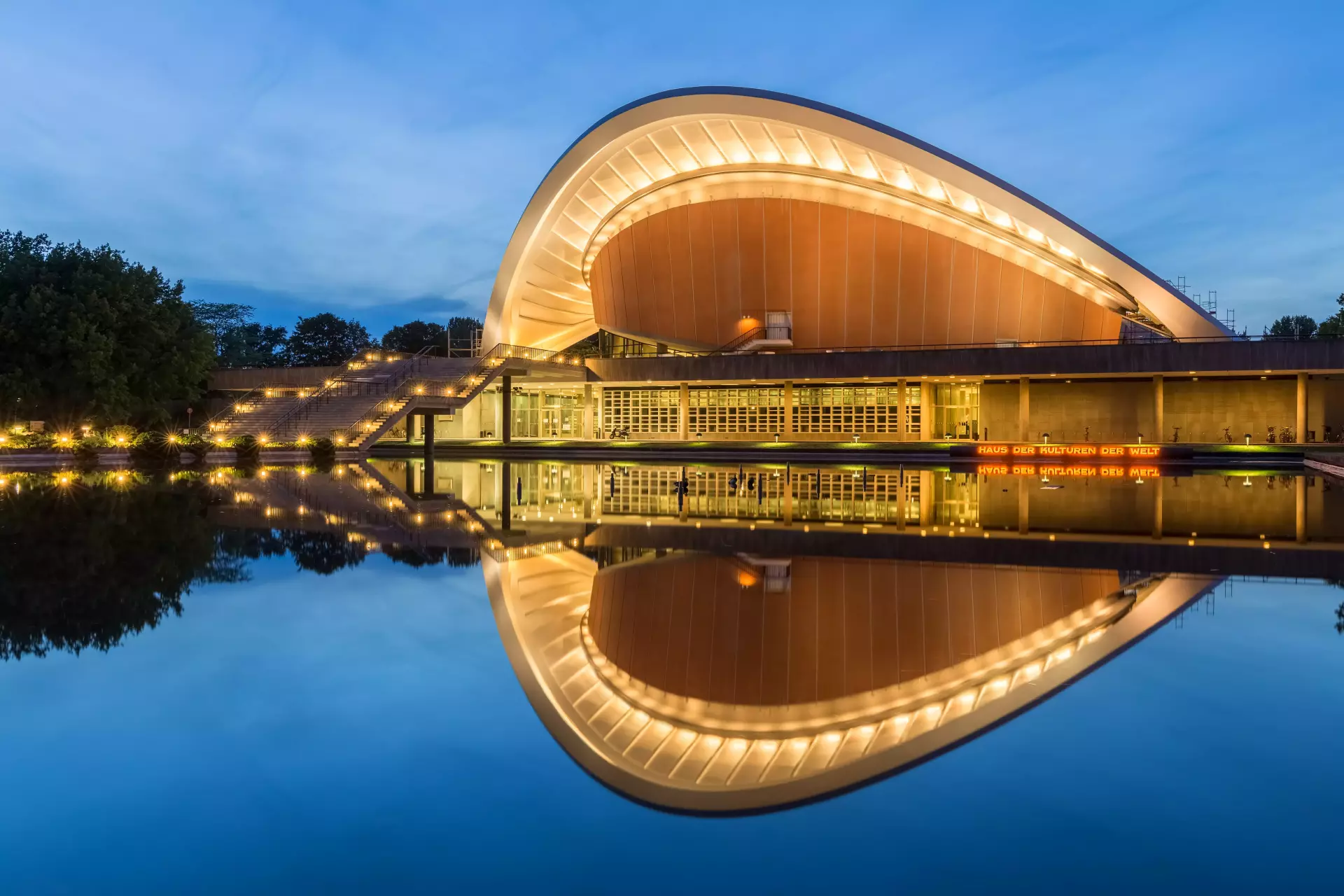
Germany's national centre for contemporary non-European art. The house is a leading centre for the contemporary arts and a venue for projects breaking through artistic boundaries. This architectural landmark was an American contribution to the international building exhibition INTERBAU 1957 as an embodiment of the free exchange of ideas. Colloquially called Schwangere Auster (Pregnant Oyster).
The city's Protestant cathedral and the burial place of the Prussian kings. You can climb to the top and get a view of the city.
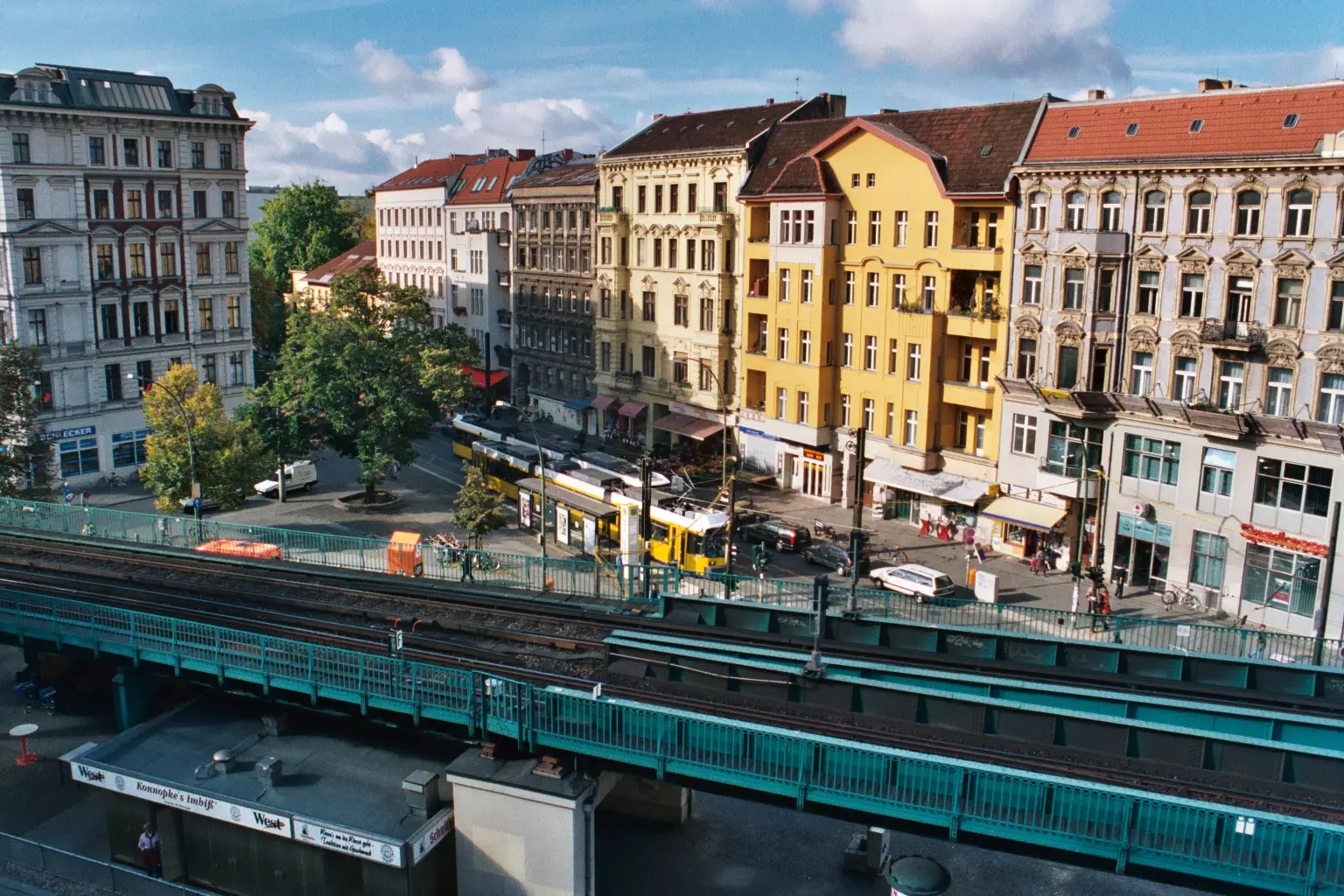
Places with markets on Wednesdays and Saturdays are popular with locals at Winterfeldplatz. Buy a coffee and browse amongst the stalls; this is a place to unearth hidden gems. Breakfast is served usually until 14:00-15:00.
The Bierpinsel ("beer brush") is a building in Steglitz which resembles an observation tower and is famous for its pop-art appearance. The futuristic, landmarked building was built from 1972 to 1976 and has since been used as restaurant, night club, bar, radio station and art café.
The museum’s treasures include the sculpture collection with works of art from the middle ages to the 18th century. The Bode museum is best known for its Byzantine art collection and the coin cabinet.
Started in the 15th century and finished in the mid-18th century, the baroque palace was the residence of electors, kings and emperors until 1918, when it became a museum. The palace was badly damaged during World War II and later razed in 1950, replaced by the GDR with a modernist Palast der Republik. The Palast was in turn gradually dismantled at the turn of the century, as it was discovered to contain asbestos and its former function of housing the GDR parliament became obsolete. Berlin has started in June 2013 construction on a new version of its historic Stadtschloss. The Schlüterhof, an inner courtyard, was also rebuilt. The building opened with a delay in 2021 with museums inside and a roof terrace with a good view. Among the Berlin museums this is perhaps the most controversial due to reconstruction of a monarchist palace being seen as a questionable political statement and due to the fact that many of the exhibits were sourced from German colonies under ethically questionable circumstances leading to demands to return some or all of them to their places of origin.