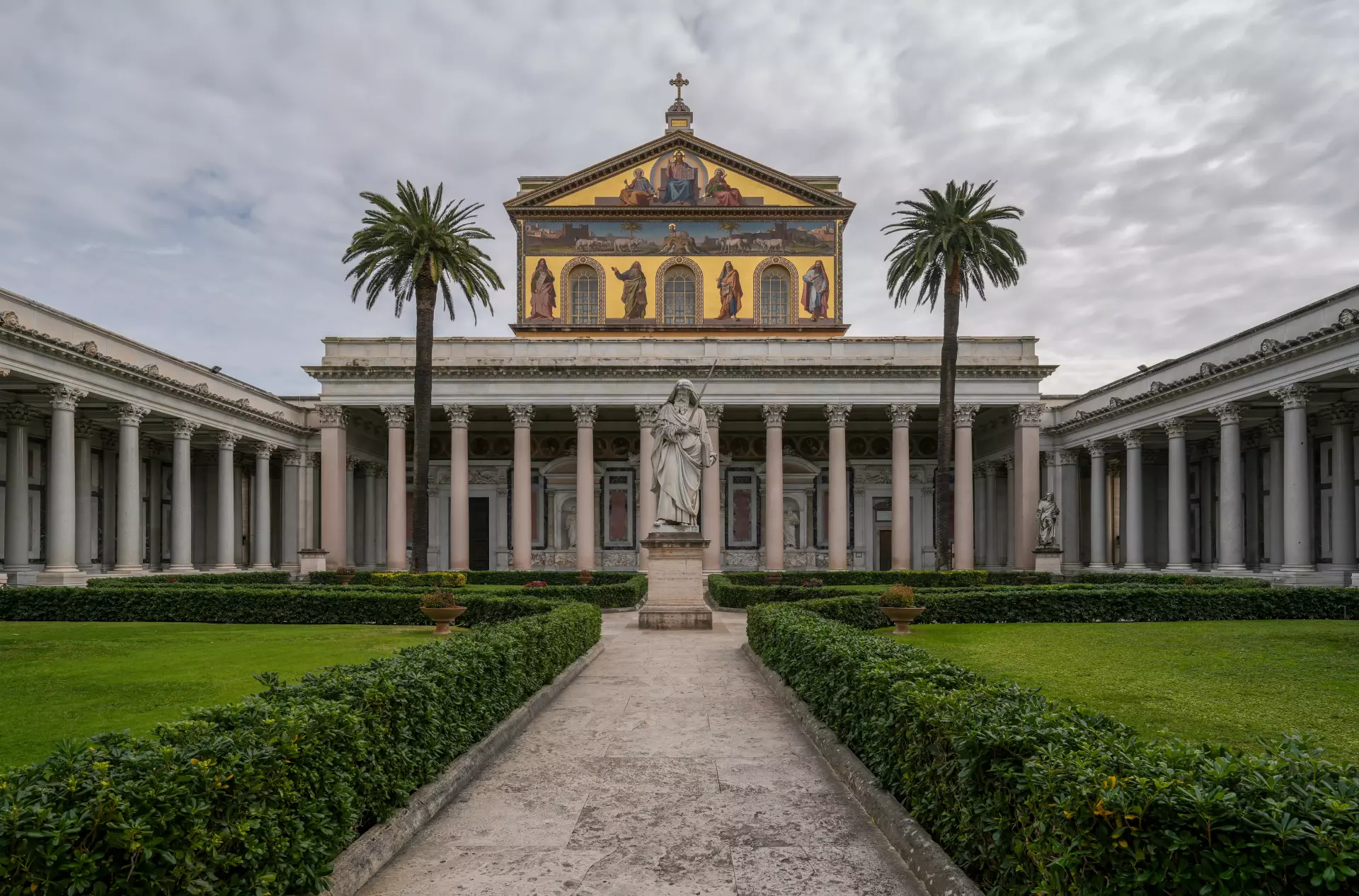
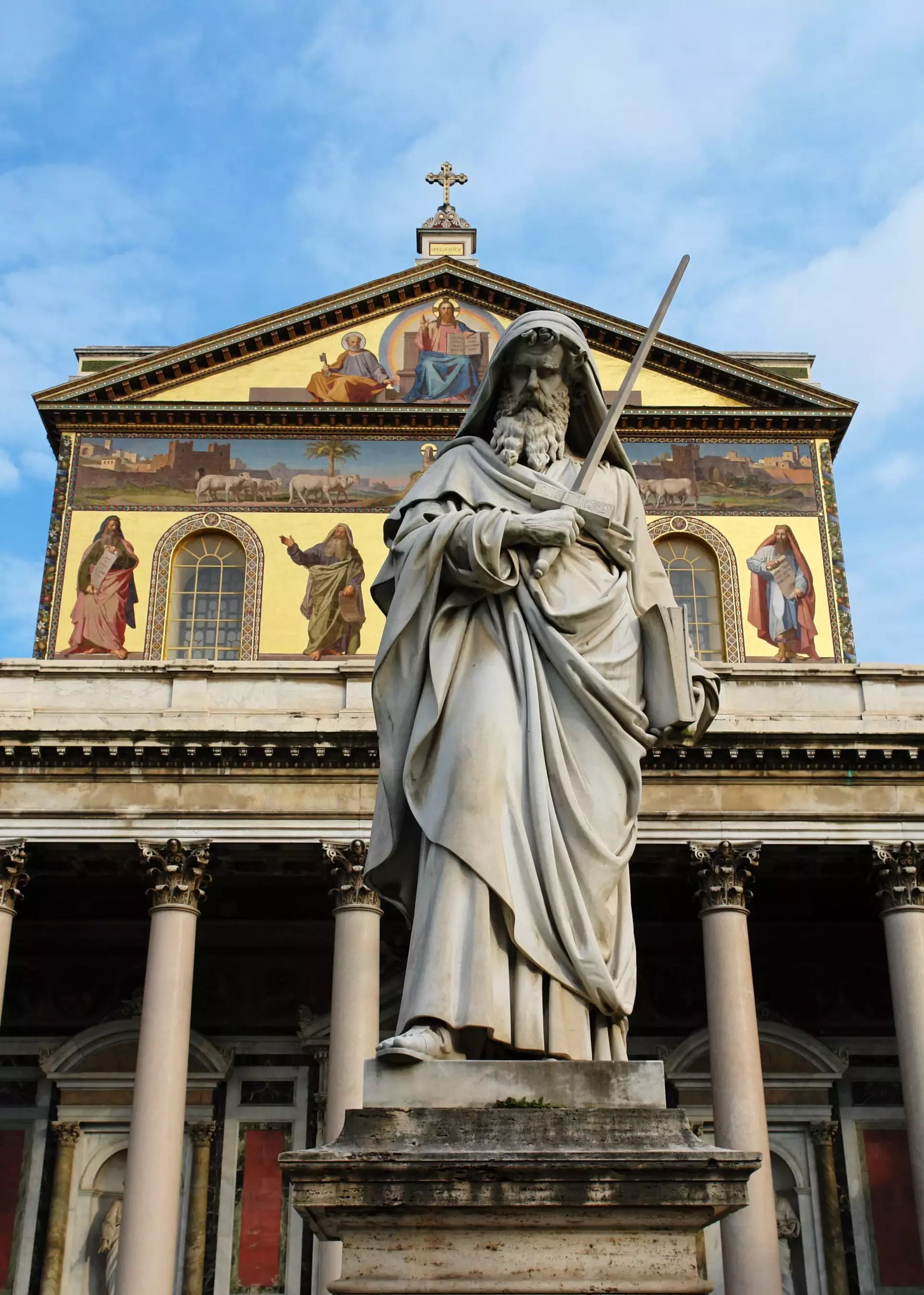
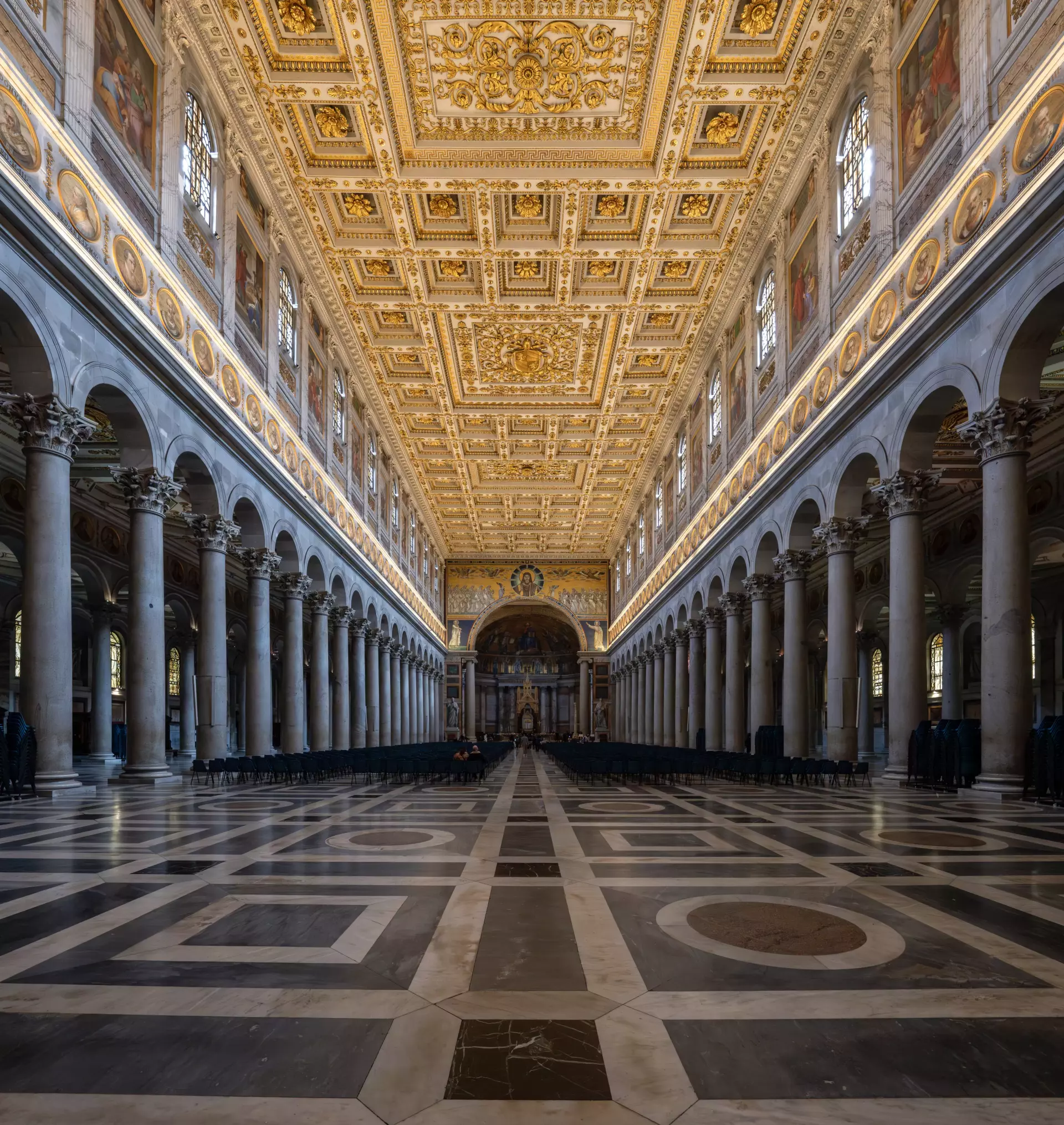
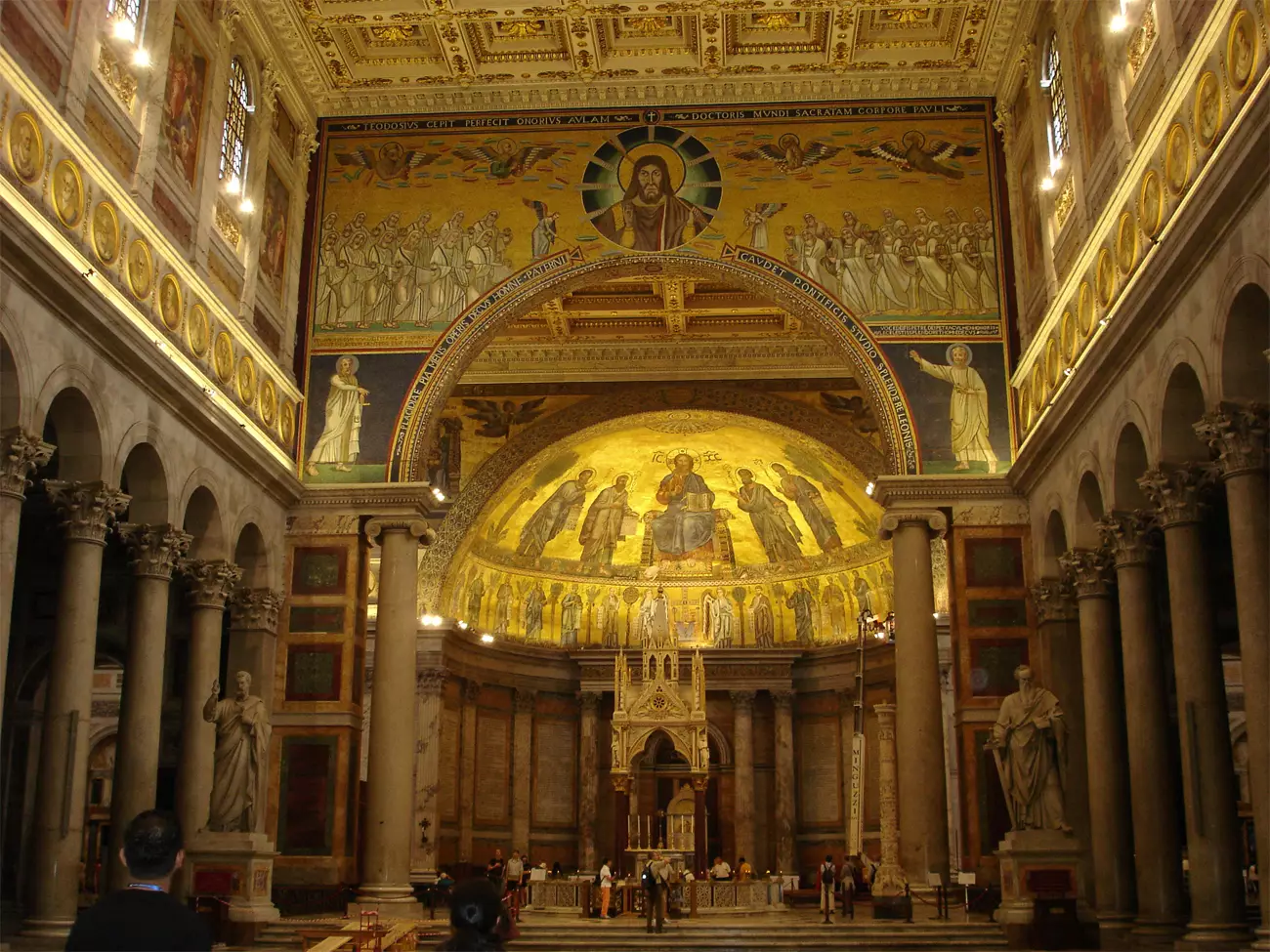
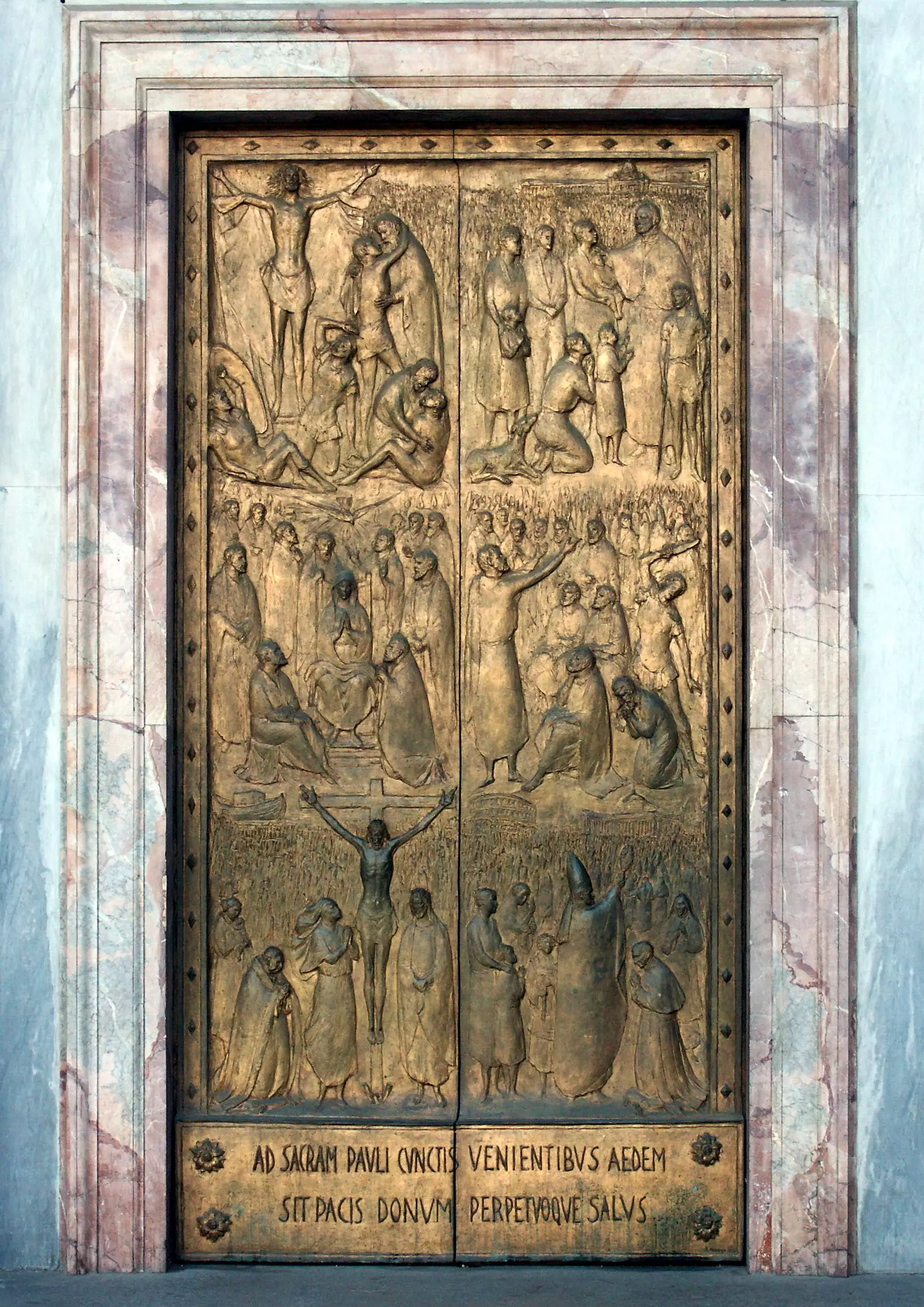
St Paul Outside the Walls, also called the Basilica of Saint Paul Outside the Walls, stands on the outskirts of Rome. Surrounded by a mostly modern and unremarkable neighborhood, the basilica offers a striking contrast with its grand architecture and deep history.
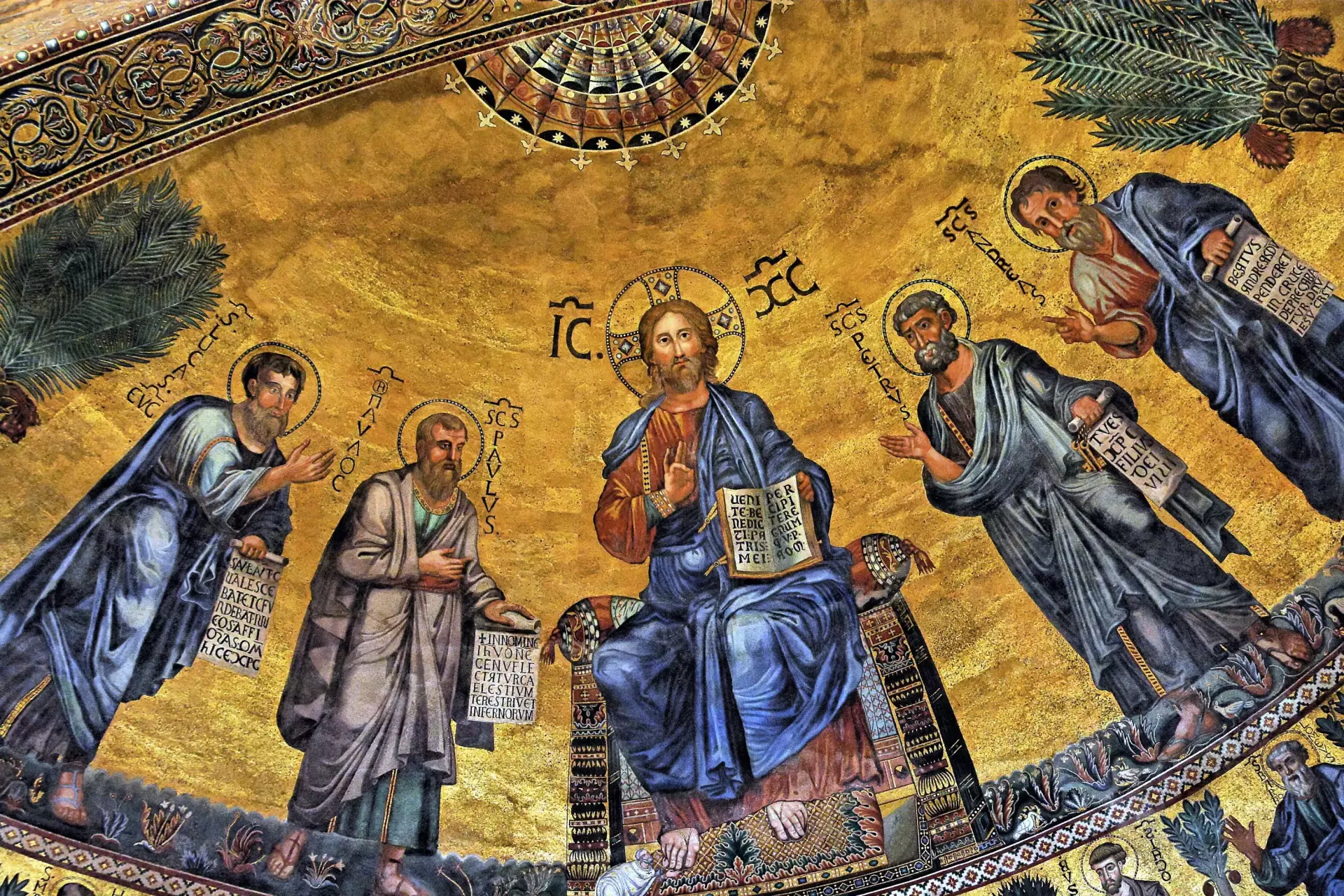
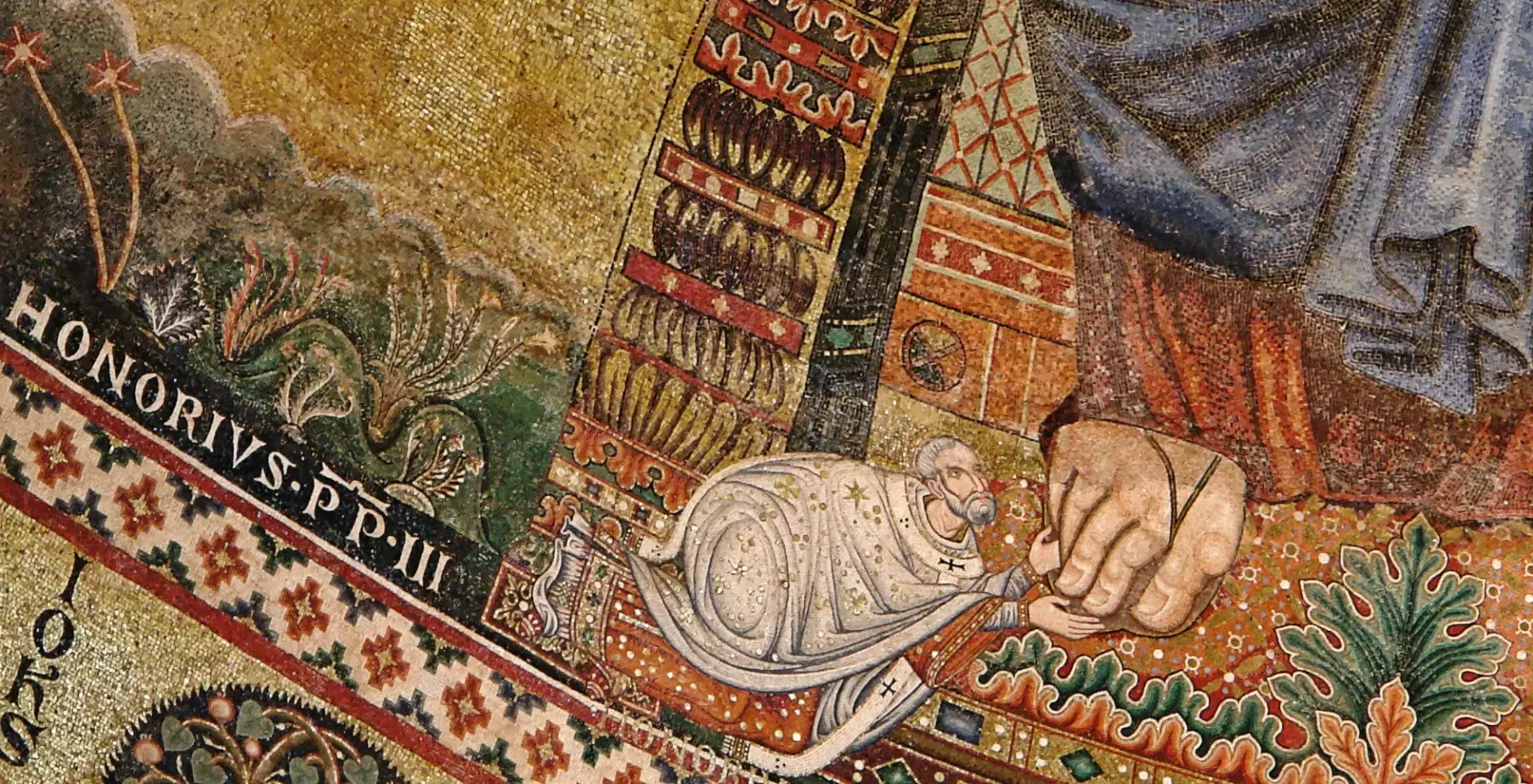
This enormous basilica is not the original structure. The ancient basilica, one of Rome's earliest Christian sites, suffered a devastating fire in 1823. What visitors see today is a careful and faithful reconstruction, completed in 1854. Despite the destruction, dedicated efforts saved several parts of the old interior. These rescued pieces have been painstakingly restored, allowing a glimpse into the artistry and devotion of earlier centuries.
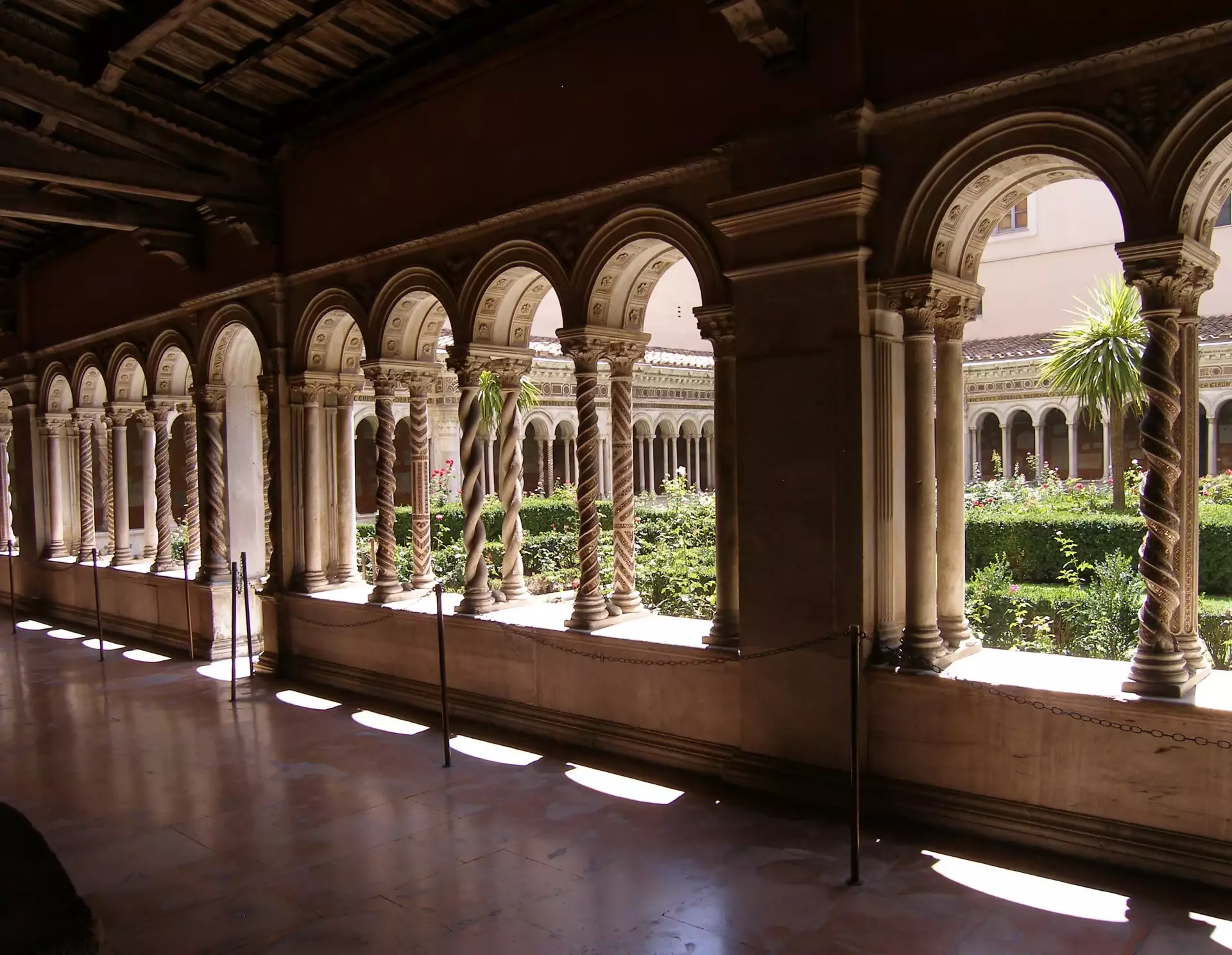
Afternoon tends to be a quieter time to explore, as large tourist groups are less common later in the day. One of the most enchanting areas is the medieval cloister, which managed to survive the fire. Its peaceful atmosphere and historic details stand as a reminder of the basilica’s long past.
Source - https://en.wikipedia.org/wiki/Basilica_of_Saint_Paul_Outside_the_Walls
Although started in the 2nd century, San Callisto has had many more recent burials, including 16 popes. The burial arcades are almost 20 km long.
Built in honour of Victor Emmanuel, the first king of a unified Italy, this vast structure may appear to be solid white marble but actually contains many rooms inside. There are two permanent museums, one on Italian Reunification and one on emigration from Italy, as well as other spaces that host rotating exhibitions. A walk through the Flag Room leads to the tomb of the unknown soldier. Good views from half-way up but you can also pay €10 (€2 concessions) and take a lift all the way to the top.
A truly quiet oasis close to the hustle and bustle of EUR. There are three churches in this complex and the doors are open all day, unlike city churches. The monks produce a range of products such as liqueurs, chocolate and honey, as well as a cure for the illnesses Romans suffer when the Scirocco wind blows in from the Sahara. These are on sale at a shop at the Abbey.
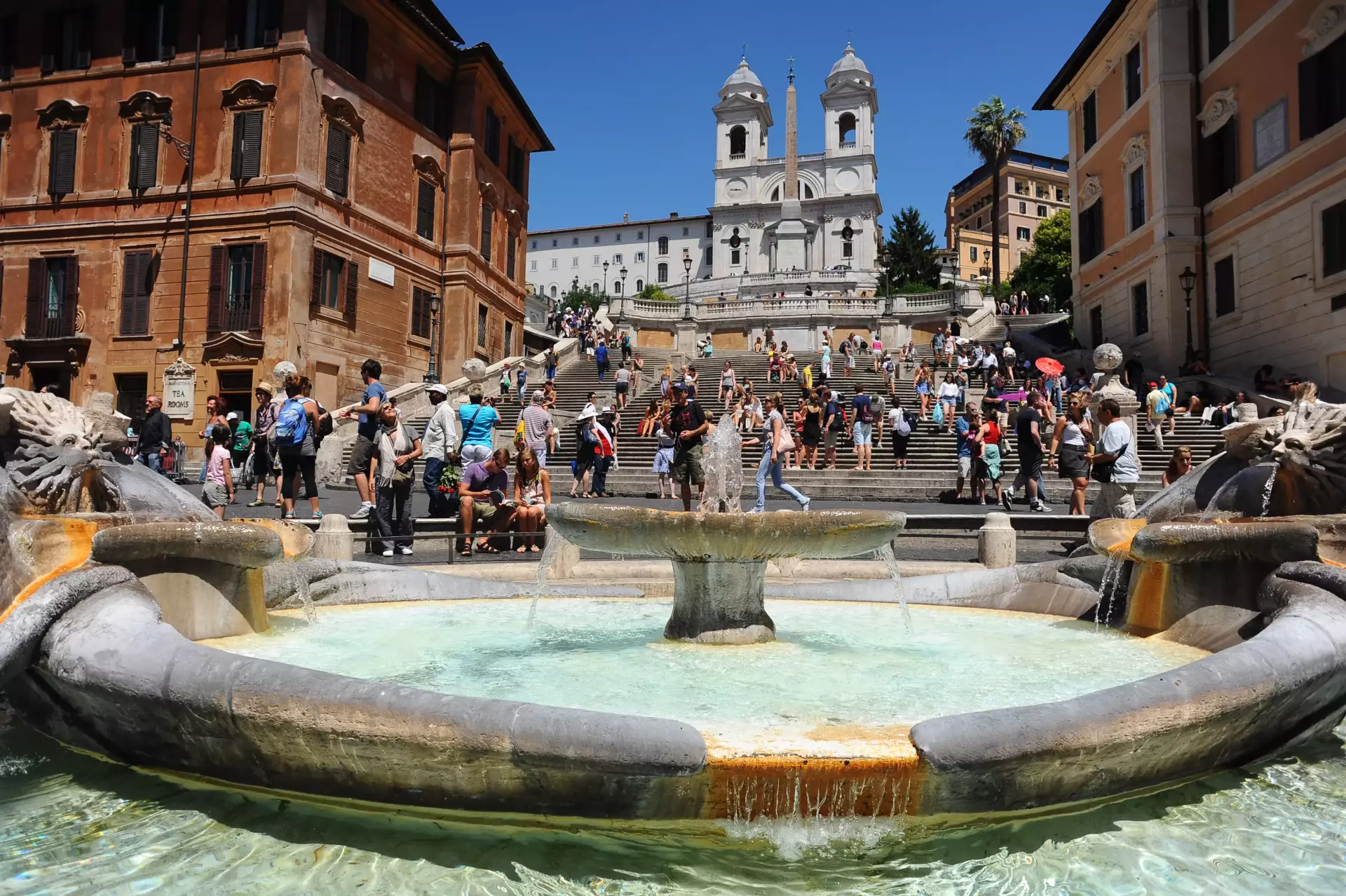
At the southern end of the Piazza, designed by Bernini but the main statue of the Moor was done by Giacomo della Porta and the other statues are 19th-century copies of the originals.
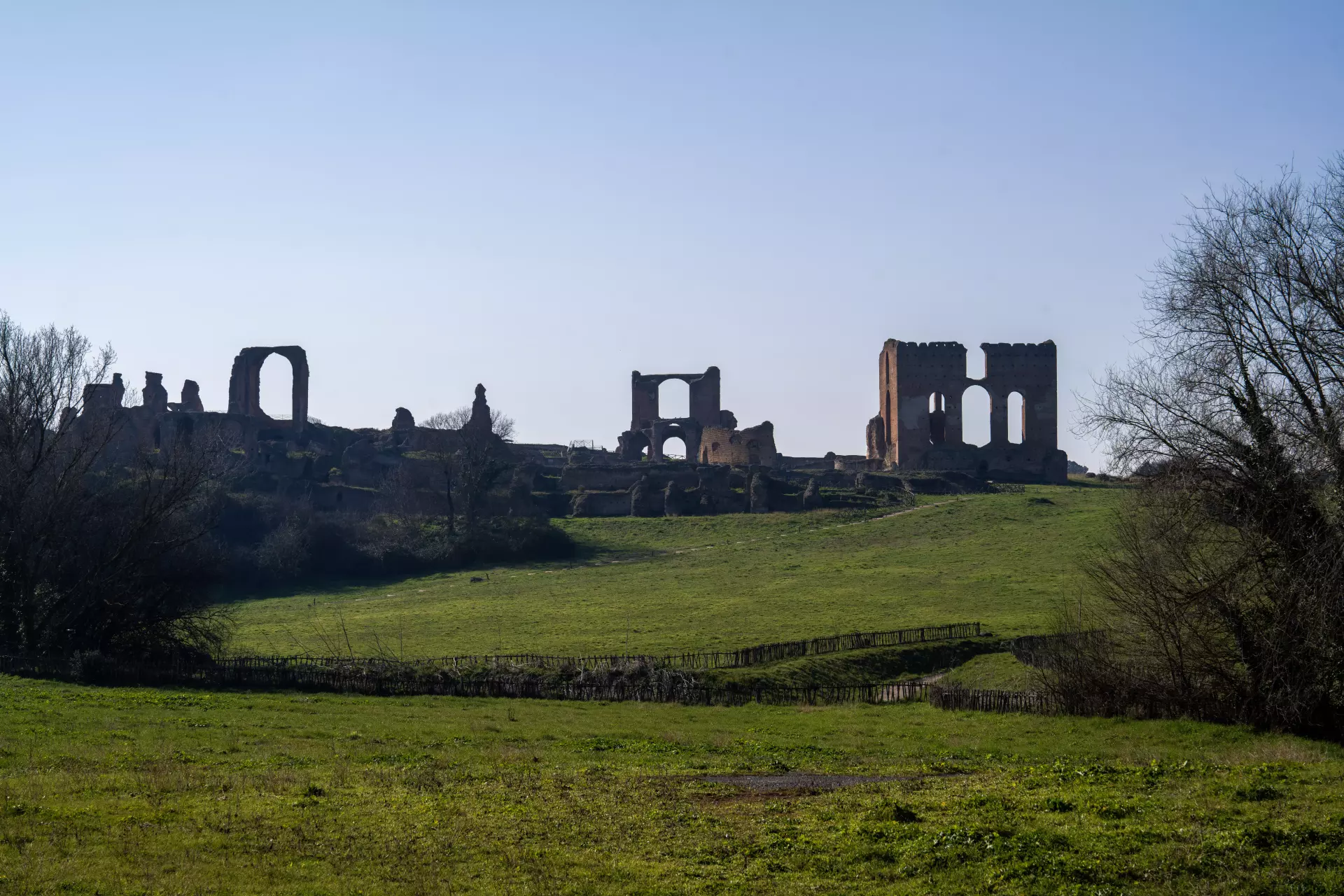
Casal Rotondo is the biggest mausoleum on the Appian Way, at about the sixth mile. It now incorporates a small private villa, originally a farmhouse. It is not known for whom it was built. The wall of fragments next to it, constructed by Luigi Canina, has ruins referring to the Cotta family but this family is now believed to not be associated with the Casal Rotondo.
The remains of the ancient Roman archives, where Cicero and Seneca did research. Visible from the Forum and accessible through the Capitoline Museum.
Early Roman houses dating back to the 1st century, believed to be homes of early Christians. Well-preserved frescoes and a small museum.
More of an enormous traffic circle than a piazza, but a good central location. The centerpiece is the enormous Vittorio Emanuele Monument (aka the Wedding Cake or the Typewriter) with the Capitoline hill next door. Mussolini used to harangue Romans from the first floor balcony of Palazzo Venezia (see under Museums), to the west of the square.
Permanent collection features paintings and drawings of Rome between the 18th and 20th centuries together with a fascinating black and white photo exhibition of Rome from 1950-80. Also offers rotating exhibitions, usually of the work of photographers.
This small museum records the liberation of Rome from German occupation during the Second World War. During the occupation the building was used as a prison. Stair lifts and chair lifts available for wheelchair users (call ahead).
The Collegio Romano was a college of the Jesuit order. Many popes, cardinals and bishops were educated here. Since 1870 it has been a secular (non-monastic) school. The coat of arms on the doorway is that of Pope Gregory XIII (1572–1585). The tower was erected in 1787 and served as an observatory. Until 1925 all clocks in Rome were set after that of the Collegio Romano.