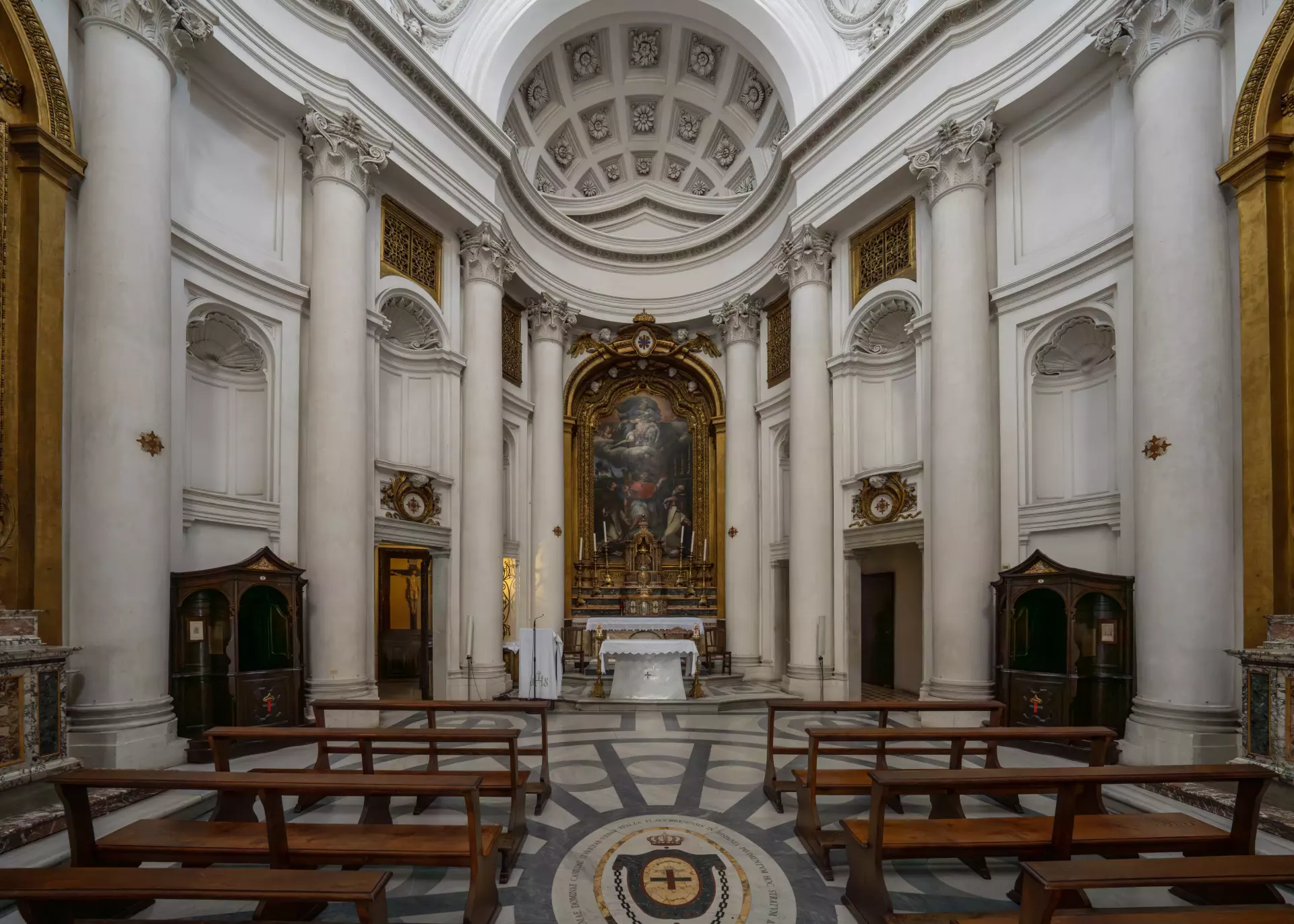
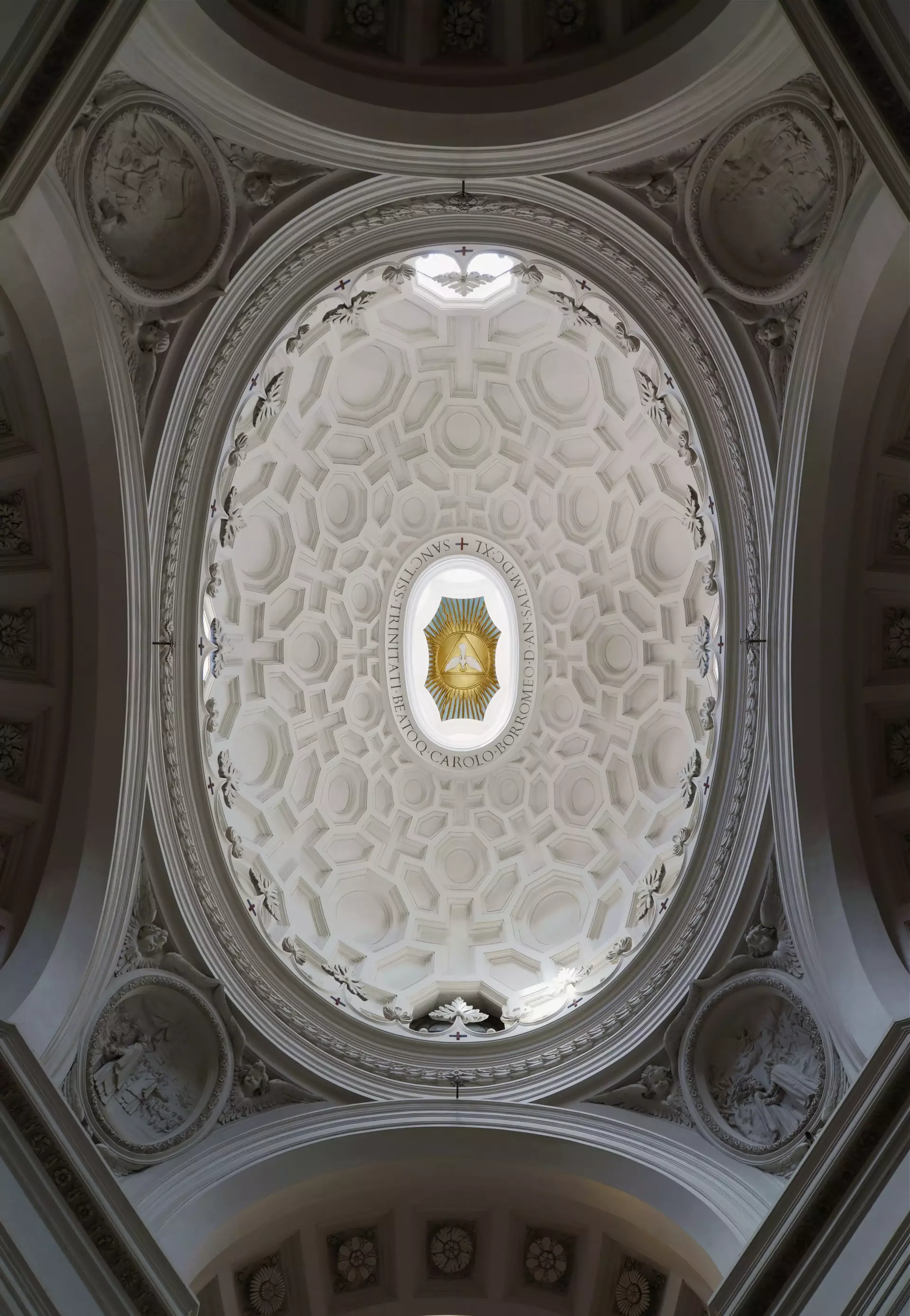
In Rome, there is a very small and beautiful church that draws the attention of visitors for its unique design. This church, known for its graceful appearance, marks the first architectural project of the famous Baroque architect Francesco Borromini.
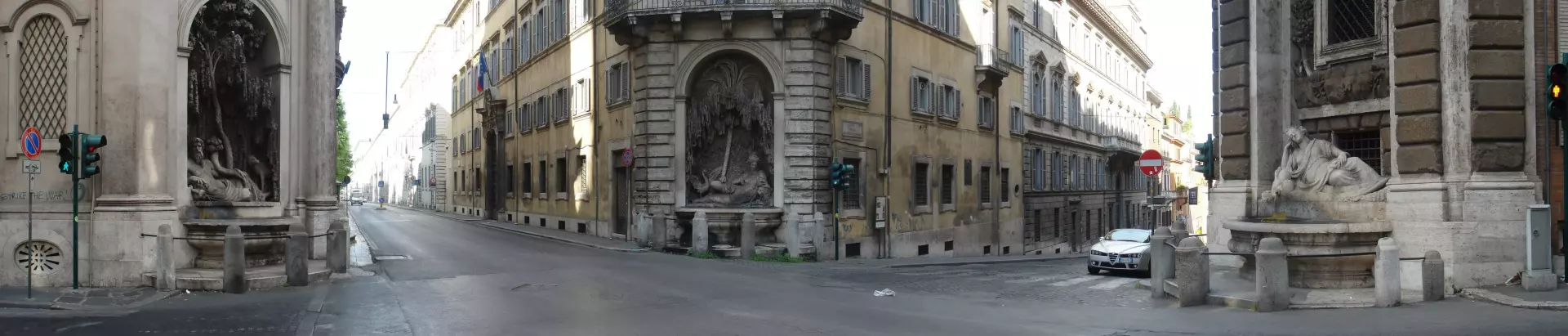
Saint Charles at the Four Fountains, or San Carlo alle Quattro Fontane, holds a special place in architectural history. Designed by Borromini in the early 17th century, this church stands at a busy intersection where four historic fountains decorate each corner. Despite limited space, Borromini managed to create an elegant and inviting structure filled with interesting details and flowing lines.
The church is admired for its innovative use of curves and light. The façade seems to move with gentle waves, making it different from other churches of its time. Inside, the ceiling rises in an oval dome, letting natural sunlight filter through and fill the small space with a peaceful glow. These design choices make the church feel open and welcoming, despite its compact size.
Source - https://en.wikipedia.org/wiki/San_Carlo_alle_Quattro_Fontane
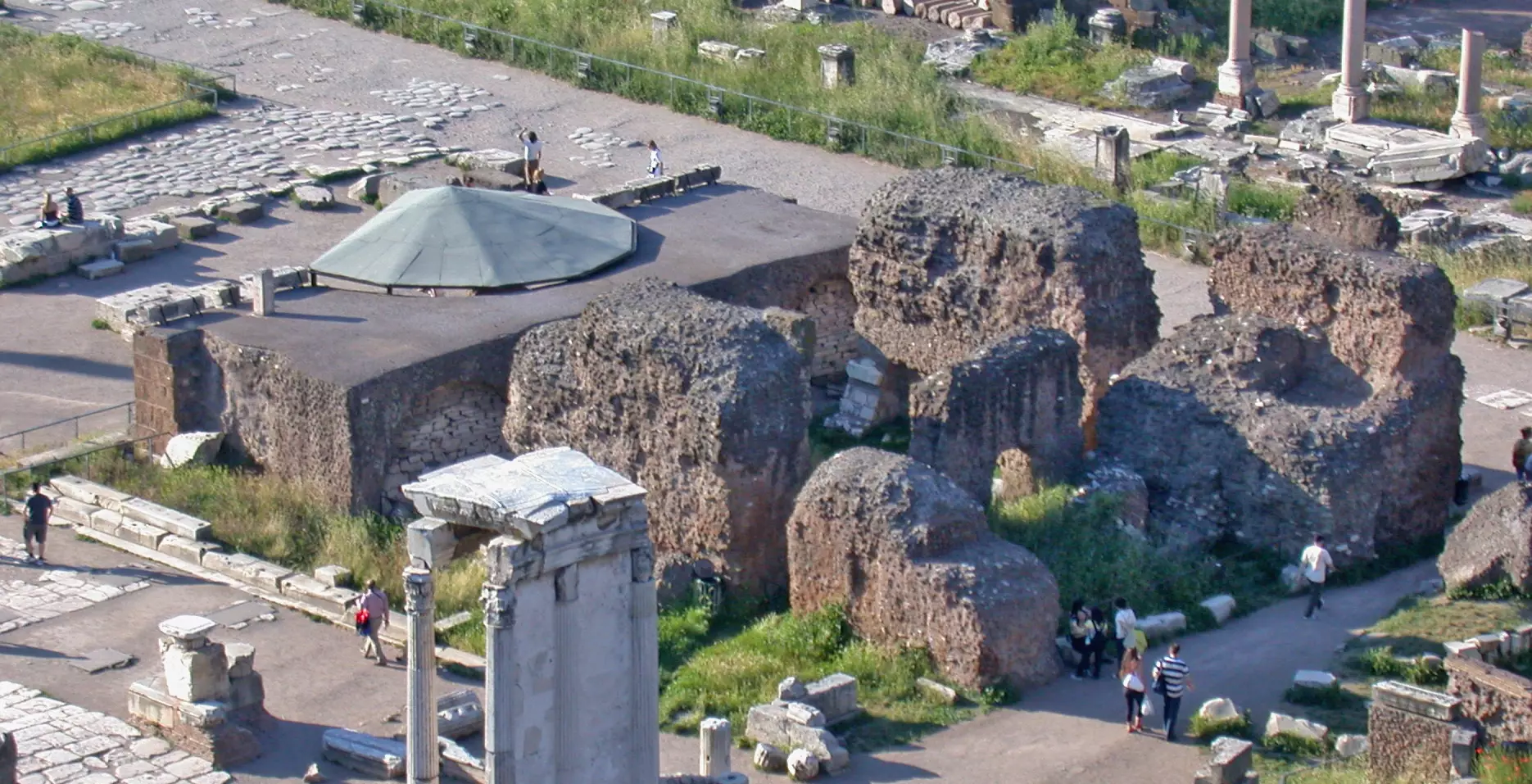
Romans and leaders of Rome's defeated enemies were imprisoned here where they either died of starvation or strangulation. According to legend, St. Peter was also imprisoned here.
This building housed the University of Rome from the middle of the 15th century until 1935. The splendid interior courtyard was created by Giacomo della Porta. The inside church of Sant'Ivo (see above) is one of the masterpieces of the architect Borromini.
Minor basilica in 17th-century baroque style with good art inside. In a smaller Italian city, this might be a prime attraction, but in Rome, with its abundance of great churches, this is merely a pleasant church of secondary interest to visit if you are in the area.
Underground burial place of an ancient Roman family and of seven early popes.
More modern than most Roman churches: it was not started until 1873. This is Rome’s Episcopalian church. Some very interesting artwork, particularly the mosaics by Edward Burne-Jones of the Pre-Raphaelite school.
This little church is hard to find but well worth the extra effort although it is often closed when you get there. One of Borromini's masterpieces. It is located only a block from Piazza Navona, but not usually visible from the street, as you must enter the courtyard of an old palazzo to reach the church. Sant'Ivo is a small church the dome of which is shaped like the Star of David, but with every other point rounded. The steeple seen from the outside looks like it has a staircase wrapped around it that ascends to heaven. As the church was commissioned by the Barberini family that produced a number of popes and whose family symbol was the bee—some say the steeple resembles the stinger of the insect.
A 19th-century addition to the square, made to balance the Fontana del Moro.
Inaugurated in 217 AD and used until the 6th Century. The baths were big enough for 1600 bathers at a time. Impressive and well-preserved. Used for operas in summer months (see Opera di Roma for details) and was the location for the famous "three tenors" concert in July 1990, at the time of the World Cup (soccer).
A relaxing place to sit and recover from the exertions of sightseeing. Permanent collection plus annual competition.
The Catacombs of Domitilla are considered to be the best preserved of all Roman catacombs. They are the only ones still to contain bones. Domitilla also has a subterranean basilica, much of which was reconstructed in 1870.
The renamed Rome Zoo, one of the oldest in Europe, founded in 1911. On the edge of the Borghese Gardens, a short, well-signposted walk from the Gallery. They try hard, but San Diego this isn't. If you are a regular zoo-goer you will be disappointed.