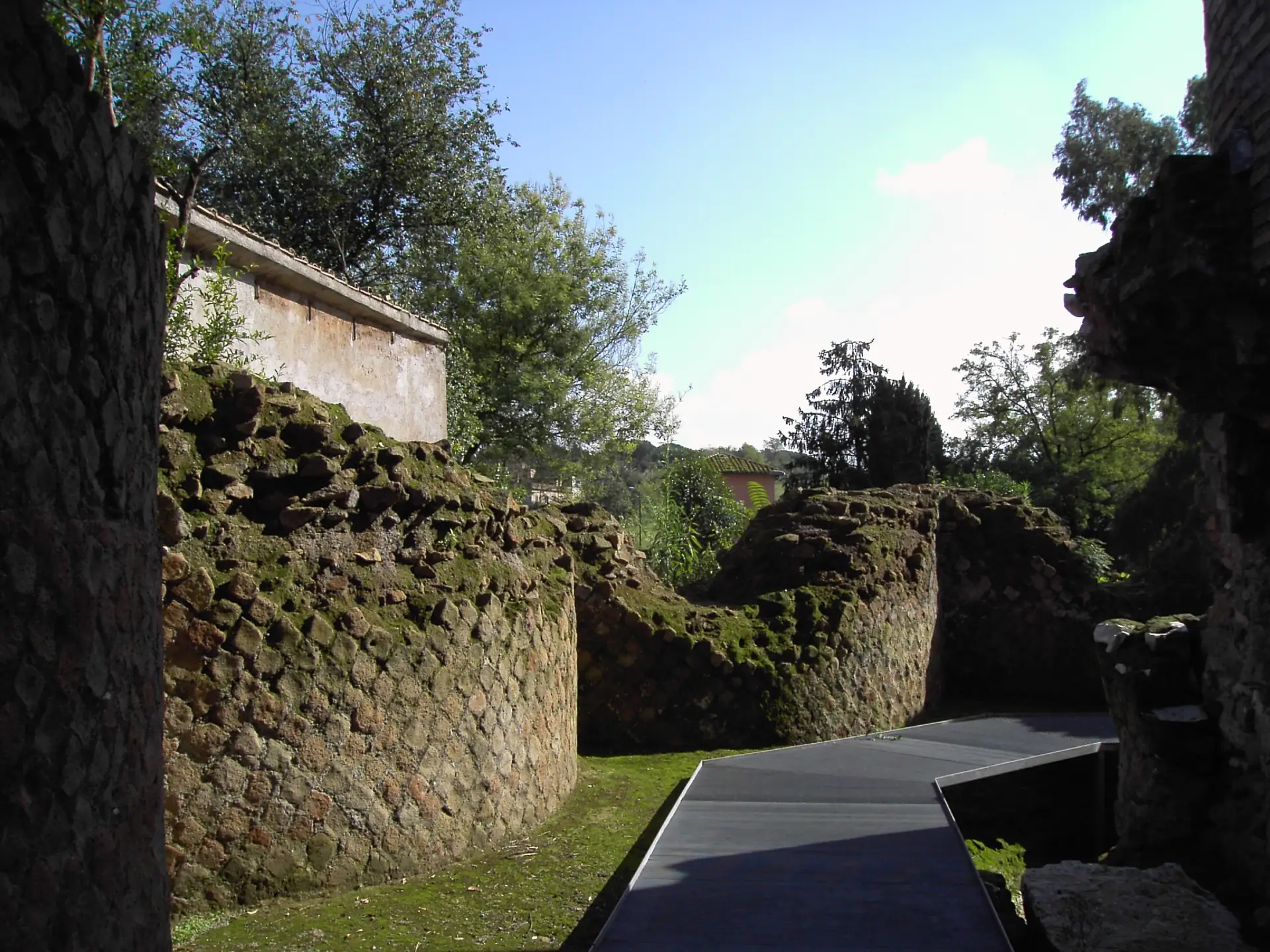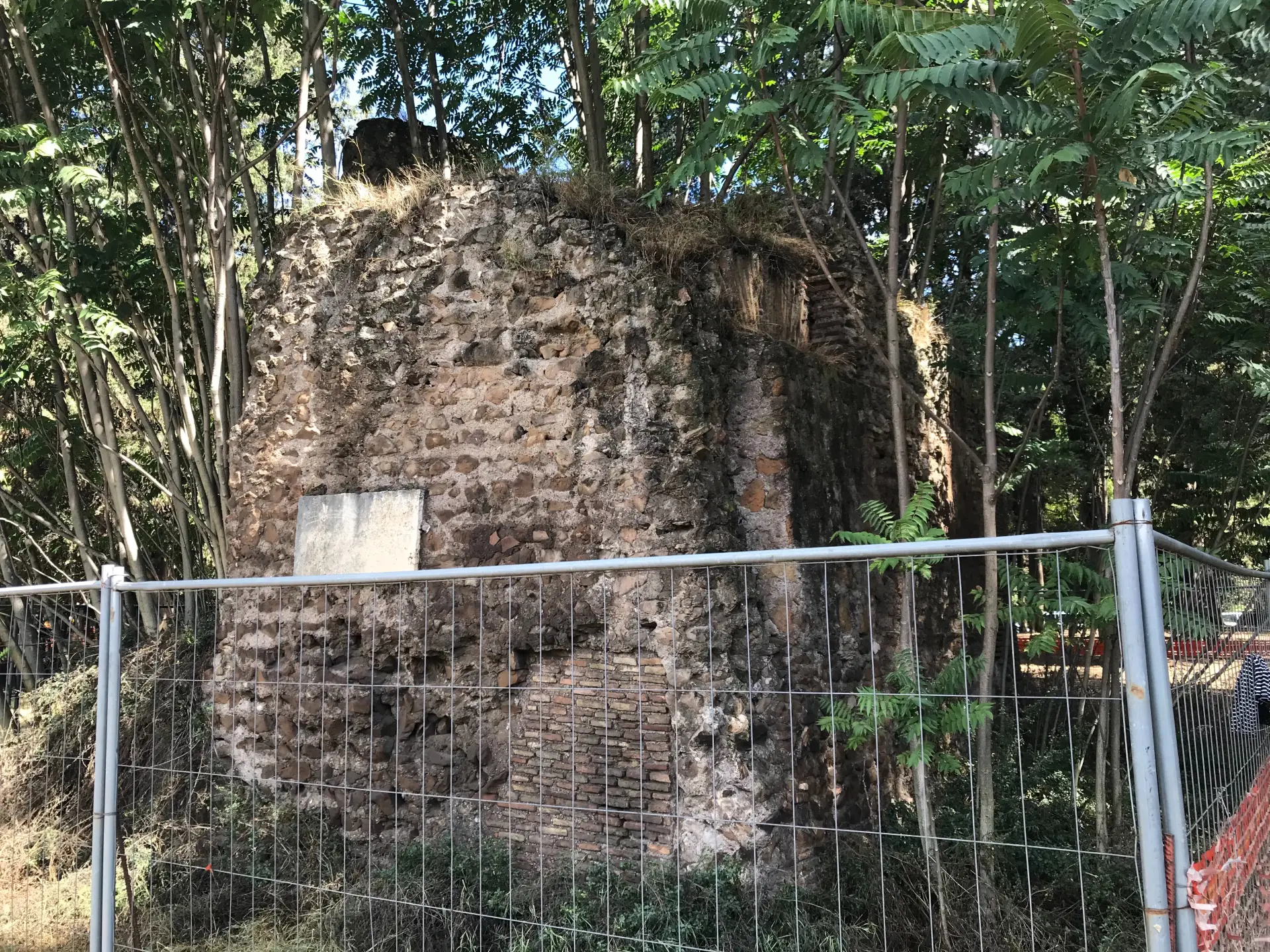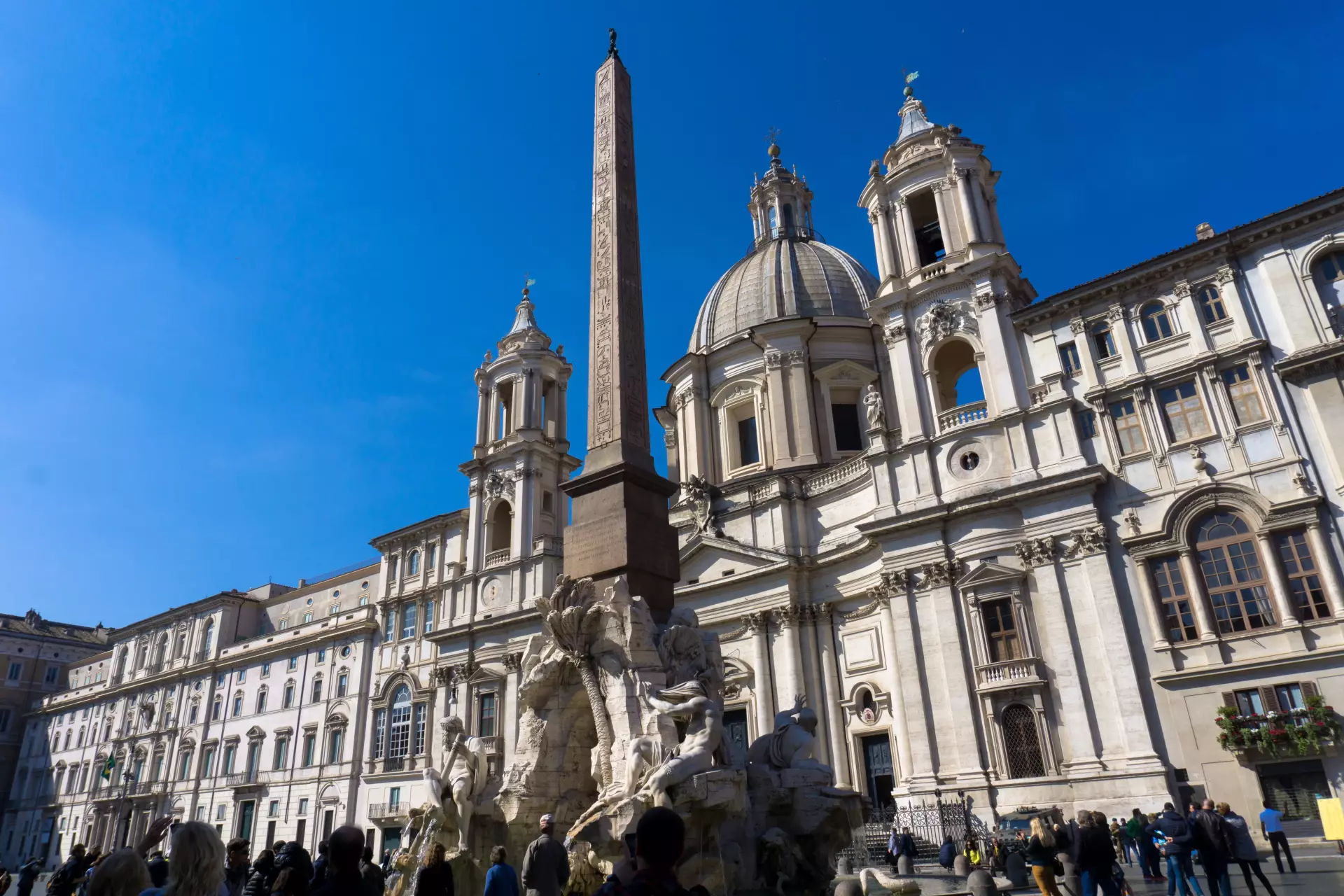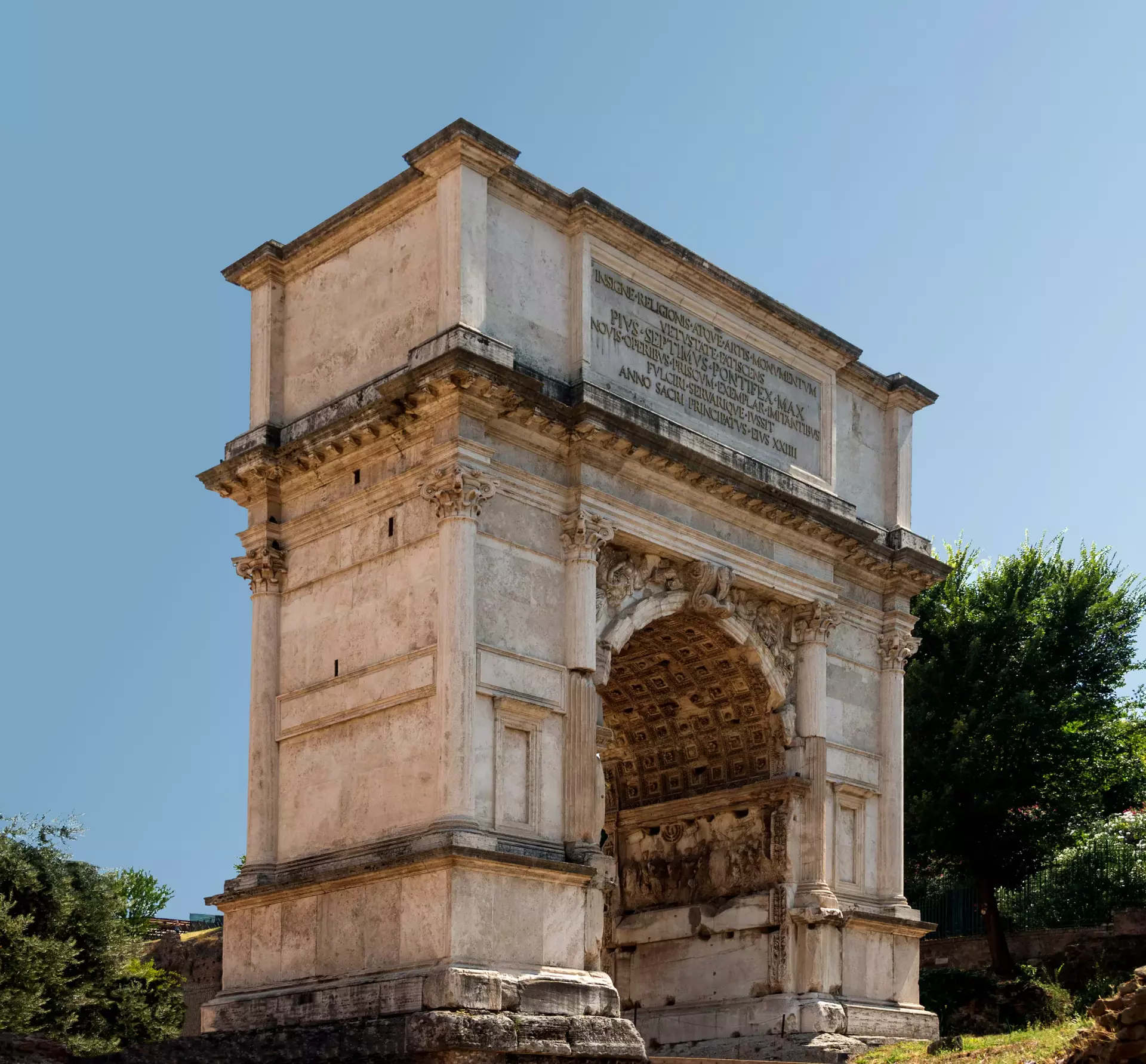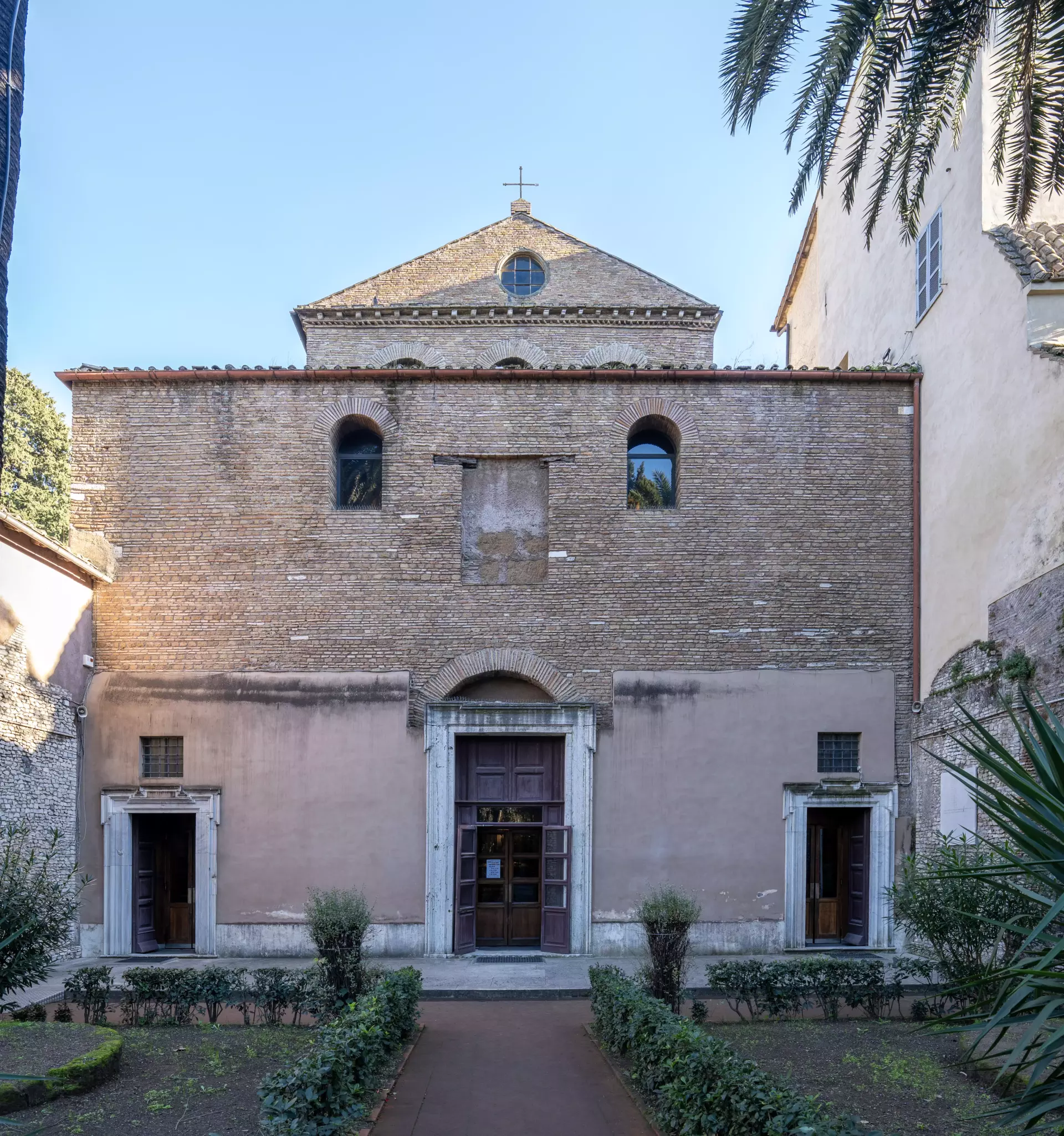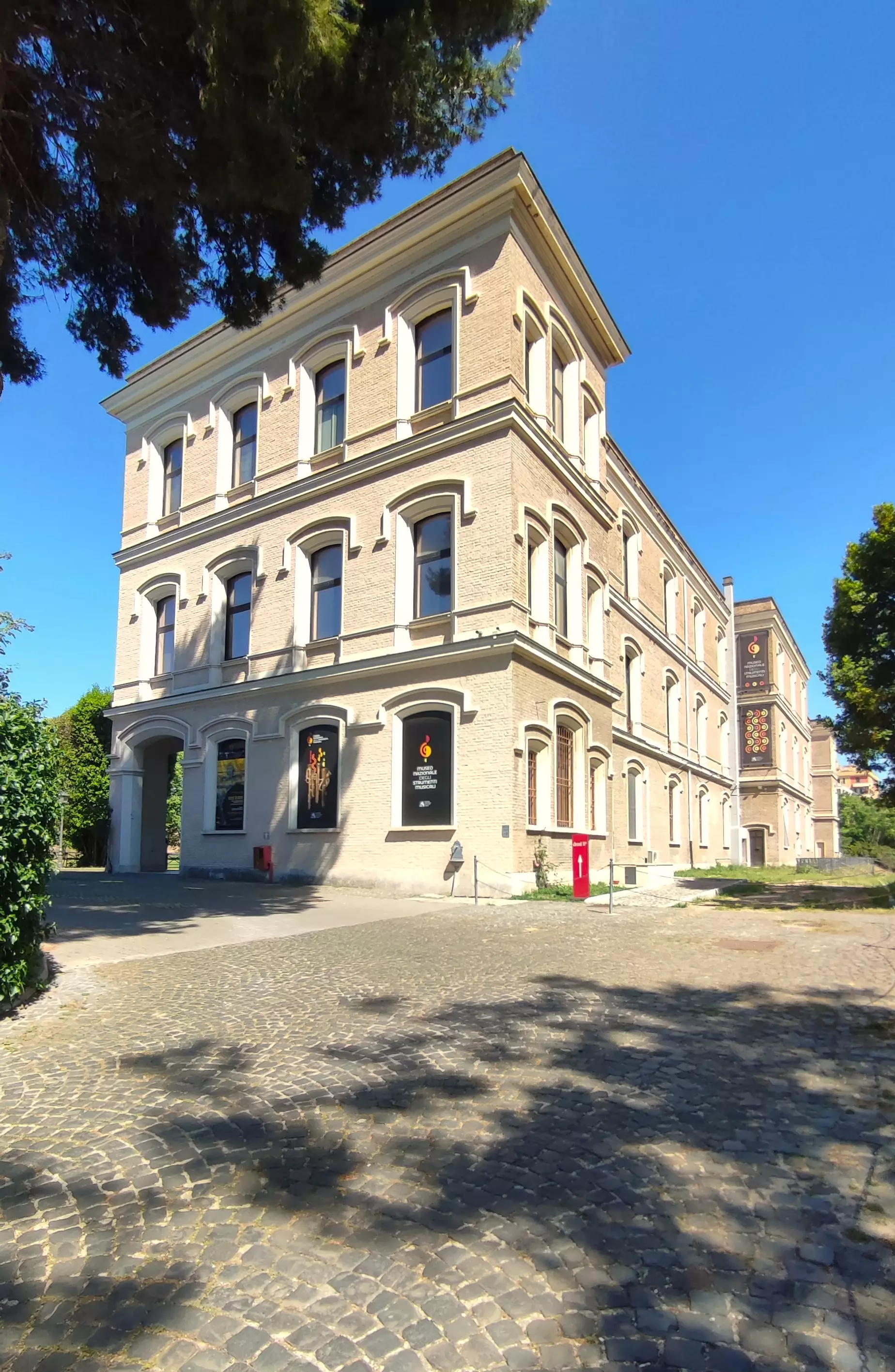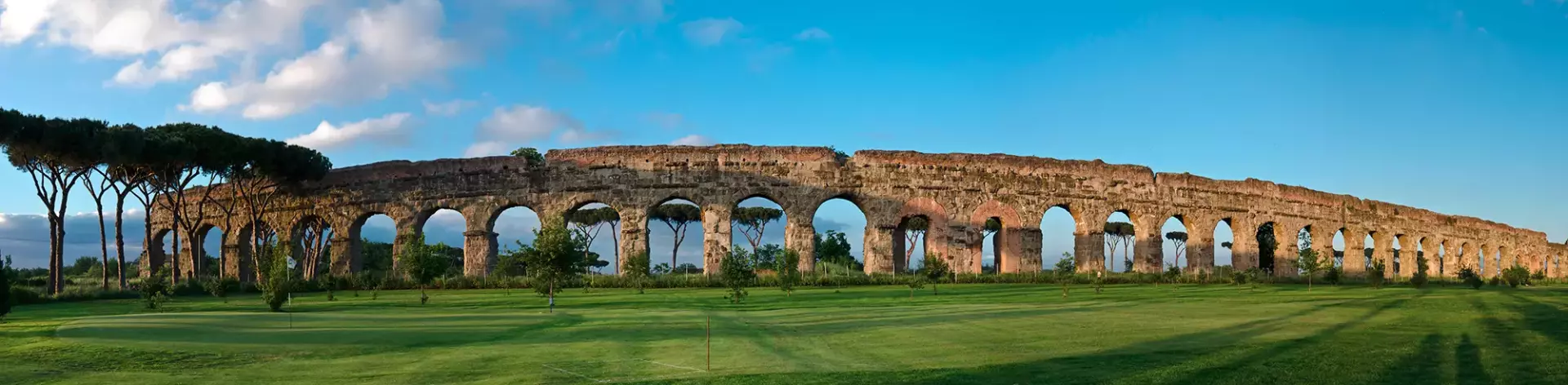
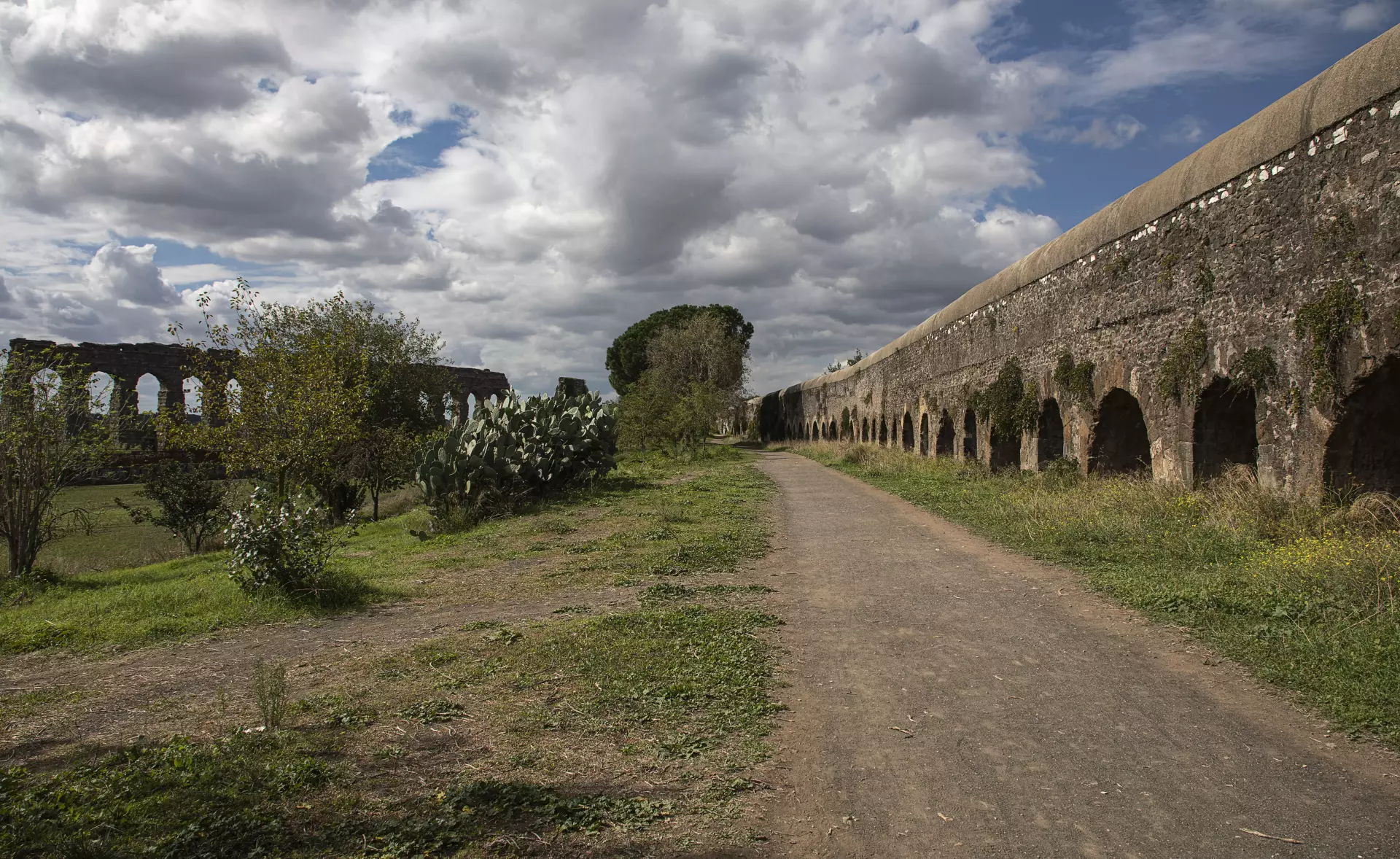
Parco degli Acquedotti offers visitors a peaceful green space dotted with impressive ancient ruins. The park is home to two remarkably well-preserved Roman aqueducts, showcasing the enduring skill of ancient engineering. Quiet paths wind through grassy meadows, leading to segments of the original Roman Via Latina—one of the oldest roads leading out of the city.
On Sundays, the park comes alive with families and groups enjoying the outdoors, making it a lively spot for social gatherings. During the rest of the week, especially when schools are in session, the park is much quieter, providing an almost secluded escape from the city’s bustle. Wide open spaces and scenic routes attract joggers looking for a scenic place to run among Roman ruins and open countryside.
Source - https://en.wikipedia.org/wiki/Parco_degli_Acquedotti
Parco Savello is the name of the grounds and orange grove next to the Santa Sabina church at the top of the Aventino and also where you have one of the best views of the city. Families gather here to sit under the dozens of orange trees. The "Giardino degli Aranci" is also a well known spot for lovers at night. The best views are arguably from Janiculum hill, just across the Tevere (Tiber) river. Immediately below you, the Tiber snakes its way through the city, and directly beyond it you can see the lively medieval quarter of Trastevere. Beyond that is the majestic dome of St. Peter's Basilica, with the historic centre of Rome visible to the right.
The palace was built by the architect Baldassare Peruzzi on behalf of the Massimo family. The former palace was destroyed during the pillage of Rome in 1527. The Massimo family can be traced back to Quintus Fabius Maximus who defeated Hannibal in the 3rd century BC. The building is open to the public on March 16, only in order to commemorate the miraculous reanimation of Paolo Massimo by St. Philip Neri in 1538.
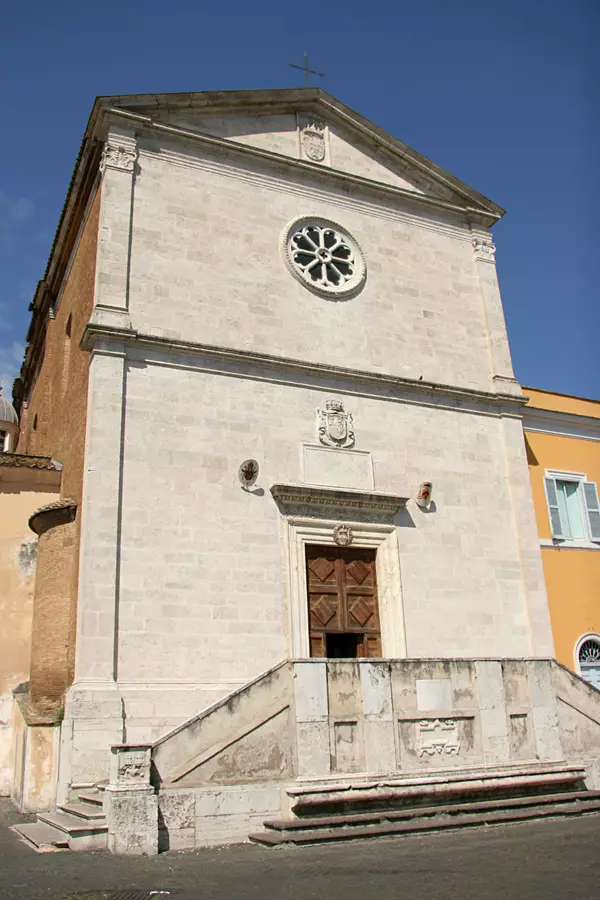
A strange building, constructed by Reginald Pole, an English cardinal and later Archbishop of Canterbury, allegedly on the spot where he was able to escape from assassins sent by the English King Henry VIII.
The Catacombs of Domitilla are considered to be the best preserved of all Roman catacombs. They are the only ones still to contain bones. Domitilla also has a subterranean basilica, much of which was reconstructed in 1870.
Brand new museum designed to celebrate the art and architecture of the 21st century.
Built in the 17th century to a design based on an architectural sketch by Michelangelo. Highlights include the ancient Colossus of Constantine statue (the Colosseum was probably named for another giant statue, the Colossus of Nero which stood near the Flavian Amphitheatre as the Colosseum was originally known), The Dying Gaul, a magnificent marble sculpture that copies a bronze Greek original of the 3rd century BC and the Capitoline Venus. It also contains the remarkable original gilt bronze equestrian statue of emperor Marcus Aurelius (the one in the piazza is a replica).
This palace of the 16th century was erected by the famous Medici family. It was the residence of Cardinals Giovanni and Giuliano Medici, later Pope Leo X. and Clement VII. Catherine de Medici, Pope Clement VII's niece lived here until her marriage in 1553 with Prince Henry, the son of King Francis I of France. The palace is named after Madama Margerita of Austria, the illegitimate daughter of Emperor Charles V. Since 1871 it has been the seat of the Italian Senate.
Minor basilica in 17th-century baroque style with good art inside. In a smaller Italian city, this might be a prime attraction, but in Rome, with its abundance of great churches, this is merely a pleasant church of secondary interest to visit if you are in the area.
A truly monumental stairway of 135 steps (similar to climbing eight flights of stairs), built with French funds between 1721 and 1725 in order to link the Bourbon Spanish embassy to the Holy See (still located in the piazza below), with the Bourbon French church (its monastery founded in 1495) above. Don't sit on them though, or eat, or push a baby stroller on them, or do anything else that might obstruct pedestrians, make them dirty, or cause additional wear and tear, or else you will have to pay a fine that ranges from €250 to €400.
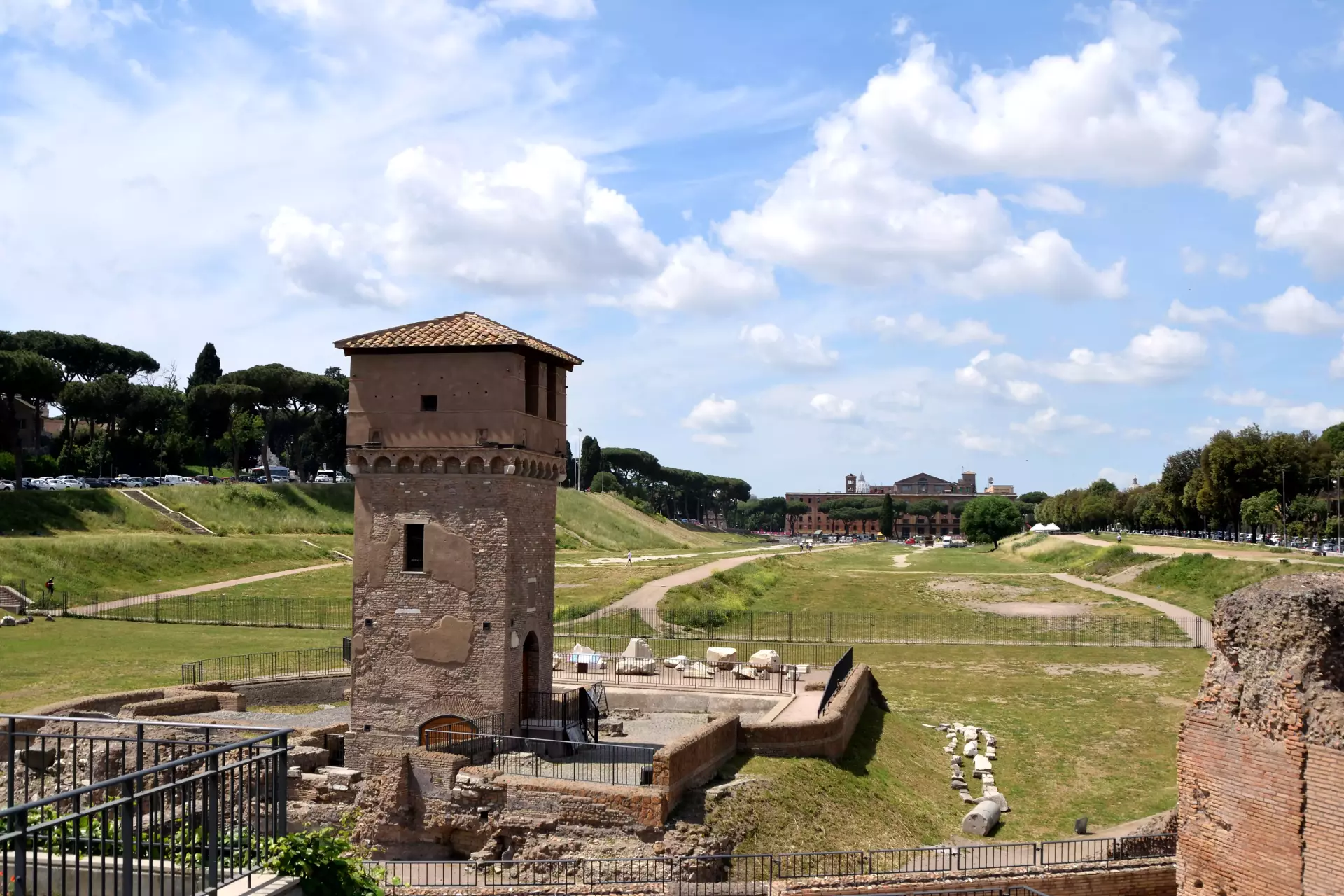
The enormous building at the southeast end of the Circus Maximus is the headquarters of the UN Food and Agriculture Organization (FAO). From its roof are undoubtedly the best views of Rome, but you will need to know someone who works there to get past the strict security.
The house in which the famous English poet John Keats succumbed to consumption, now preserved as a memorial to his life and that of his friend Shelley, both of whom are buried in Rome's Protestant Cemetery (see Testaccio).
Next door to Santa Croce. A collection of around 3000 pieces, although only a third of these are displayed.
Located a short walk west of the Colosseum, this well-preserved monumental arch was erected (soon after 315) to commemorate the victory of Constantine, the first Christian emperor, over his rival Maxentius at the Battle of the Milvian Bridge in 312. In general design, the Arch of Constantine imitates the century-earlier Arch of Septimius Severus (nearby in the Forum). The three arches are decorated utilizing mainly materials plundered from other imperial monuments by Trajan, Hadrian and Marcus Aurelius. The quality of its sculptural decoration, however, betrays the slow degradation that Classical Roman sculpture had experienced in the 3rd century AD.
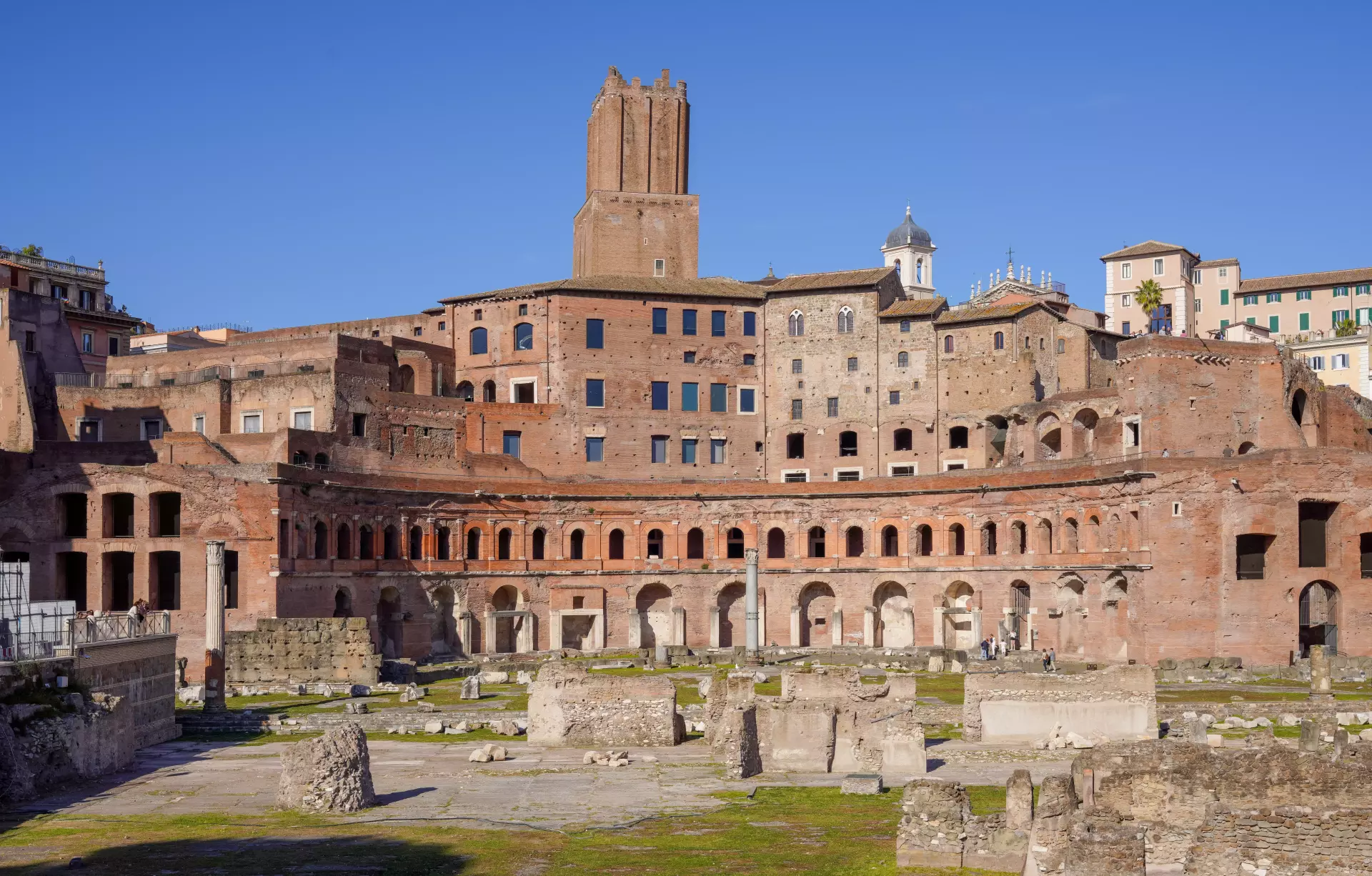
On the other side of the Via dei Fori Imperiali to the Roman Forum. Well-preserved market area that doubled as a way of stopping the Quirinal Hill from collapsing. Below in the Forum is Trajan's Column, built in 113 with reliefs depicting the Emperor Trajan's vistories in battle.
Perhaps the most fascinating building in Rome. The core of the structure began life as the mausoleum of Emperor Hadrian, built between 135 and 139 AD. Subsequent strongholds built on top of the mausoleum were in turn incorporated into a residence and castle by medieval Popes. The building was used as a prison until 1870 but now houses a museum. Opera buffs will be exhilarated to visit the balcony from which Tosca leaps to her death. Film buffs will recognise it as a setting from Angels and Demons.